
What is UL 1973 Certification for Battery Energy Storage System Safety?
May 27, 2026 / Battery Expert Team / battery energy storage
Introduction
The global transition toward clean energy has driven an unprecedented surge in the deployment of a stationary Battery Energy Storage System across utility grids, commercial facilities, and electric vehicle (EV) charging infrastructures. According to recent grid-scale market data from 2025 and projections extending into 2026, the global demand for reliable stationary battery systems has scaled up exponentially. However, as energy density increases, industry stakeholders have faced mounting concerns regarding severe operational risks, specifically battery safety and thermal runaway—a dangerous phenomenon where an internal electrochemical malfunction leads to uncontrollable temperature spikes, toxic gas release, and intense fires. Consequently, stringent safety certifications have transitioned from optional validation tools to critical prerequisites for project approvals, financial underwriting, and grid interconnection. Among these, the UL 1973 certification stands out as one of the most recognized and rigorous battery safety standards required to navigate the modern, high-stakes power landscape.
The purpose of this comprehensive guide is to break down the technical architecture of the UL 1973 standard, detail the evaluation procedures, examine concrete compliance benefits, and demonstrate its indispensable role in ensuring long-term commercial project success. By thoroughly inspecting these facets, engineers and investors can make highly informed procurement decisions that protect assets, personnel, and institutional capital.
What Is UL 1973 Certification?
Navigating compliance requires a fundamental understanding of what this benchmark evaluates and where its jurisdictional boundaries lie within the broader energy sector.
Definition of UL 1973
Formally titled the Standard for Batteries for Use in Stationary Applications, Vehicle Auxiliary Power and Light Electric Rail (LER) Applications, UL 1973 is a harmonized safety standard developed jointly by Underwriters Laboratories (UL) and recognized regulatory authorities across North America. The primary purpose of this certification is to evaluate the ability of a battery system to safely withstand severe electrical, mechanical, and environmental abuse conditions without exhibiting signs of catastrophic failure. It is vital to clarify that UL 1973 focuses explicitly on the safety of battery cells, modules, and integrated system packs, rather than evaluating the entire, complete finished multi-megawatt energy storage installation as a single operating environment.
Applications Covered by UL 1973
The scope of products requiring a verified UL 1973 battery certification is extensive. Stationary applications utilizing chemical energy storage require this baseline safety clearance to protect critical operations across several core sectors:
- Commercial Energy Storage Systems: Used by enterprises for peak shaving, demand charge management, and backup power configurations.
- Industrial Battery Storage Systems: Designed to maintain power quality, operate large manufacturing equipment, and mitigate heavy voltage dips.
- Utility-Scale BESS: Massive, centralized storage sites that provide grid stabilization, frequency regulation, and load leveling.
- Solar + Storage Projects: Co-located renewable installations where captured solar power is dispatched via a high-capacity UL 1973 approved lithium battery storage system.
- Data Centers: Uninterruptible Power Supply (UPS) setups moving away from legacy lead-acid tech toward advanced lithium-ion chemistries.
- EV Charging Infrastructure: High-power, buffer-battery systems deployed alongside DC fast chargers to lower demand spikes on local distribution grids.
- Microgrids: Islanded or grid-connected localized networks providing energy resilience to remote areas or military installations.
Who Requires UL 1973 Certification?
Compliance is mandated by a tight network of critical industry gatekeepers. Authorities Having Jurisdiction (AHJs)—such as local fire marshals and electrical inspectors—frequently refuse to grant occupancy or operational permits unless a UL listed battery system is installed. Furthermore, major utilities require this compliance during grid interconnection reviews to ensure local grid stability is not threatened by hardware vulnerabilities. EPC contractors, institutional investors, and major insurance companies also require it, knowing that uncertified systems represent massive, unhedged liabilities.
Why UL 1973 Certification Is Important for Energy Storage Systems
Understanding why project owners and asset managers insist on utilizing a certified Battery Energy Storage System comes down to evaluating safety risk mitigation and financial bankability.
Safety Assurance Against Thermal Runaway
The fundamental risk in large-scale lithium-ion deployments is an uncontrolled thermal event. If a single internal cell experiences an individual short circuit, manufacturing defect, or localized overheating, it can trigger a domino effect across adjacent modules. A primary focus of UL 1973 is verifying cell-to-cell propagation prevention. Certified architectures use multi-layer physical containment, active thermal barriers, and precision liquid-cooling pathways designed to ensure that even if a single cell fails catastrophically, the thermal event is entirely contained, preventing full-scale plant destruction.
Regulatory Compliance and Faster Project Approval
Building codes throughout the North America energy storage market, such as the National Electrical Code (NEC) and local municipal fire codes, explicitly specify that battery systems must hold valid safety listings. Deploying hardware that carries a UL 1973 certified commercial energy storage solution mark cuts down administrative friction with AHJs, accelerating engineering design approval and minimizing costly multi-month delays in commissioning timelines.
Improved Market Access
For system integrators and tier-one manufacturers, holding a valid safety listing is the ultimate competitive passport. Most corporate RFPs, utility procurement standards, and government municipal tenders explicitly bar unlisted hardware from participating in the bidding process. Compliance unlocks access to premium, highly lucrative commercial contracts across domestic and international territories.
Greater Trust from Stakeholders
Large-scale energy infrastructure requires substantial financial leverage. By procuring a UL 1973 certified industrial energy storage manufacturer system, developers provide verifiable proof to institutional lenders and insurance underwriting groups that the asset conforms to rigorous engineering stress testing. This drastically lowers insurance premiums and improves overall project bankability.
Global Relevance Beyond North America
While originating out of North American safety frameworks, UL 1973 has gained massive traction worldwide. Many international regulatory bodies across Europe, APAC, and Latin America recognize and accept UL 1973 testing data as equivalent to local safety frameworks, establishing it as a truly global gold standard for technical excellence.
Key Components Evaluated Under the UL 1973 Standard
The UL 1973 standard does not treat the battery as a simple box; instead, it enforces a granular, holistically audited inspection of the entire integrated system layer.
| System Core Layer | Primary Technical Evaluation Focus Area |
|---|---|
| Cells, Modules & Packs | Electrochemical stability, structural integrity of casings, and high-stress internal venting mechanisms. |
| Battery Management System (BMS) | Overvoltage/undervoltage limits, dynamic cell balancing, and proactive thermal fault protection logic. |
| Power Conversion System (PCS) | Electrical isolation boundaries, grounding continuity, and fast-acting circuit fault containment. |
| Energy Management System (EMS) | System-wide safety sequencing, emergency alarm dispatches, and manual system E-Stop overrides. |
Battery Cells, Modules, and Packs
Testing begins at the fundamental electrochemical unit: the battery cell. Laboratories evaluate individual cells for chemical composition safety, moving upward to inspect how cells are connected into modules and enclosed within high-strength steel or composite racks. Mechanical casing robustness and venting pathways are carefully reviewed to ensure off-gasses vent safely away from critical electronics.
Battery Management System (BMS)
The BMS serves as the digital guardian of the system. Achieving battery management system safety compliance requires proving that the control software and electronic hardware maintain strict control over vital signs like state-of-charge (SoC), operational temperature, and individual cell balancing. If any parameter falls outside safe ranges, the BMS must automatically execute isolation protocols before a physical hazard develops.
Power Conversion System (PCS)
A Battery Energy Storage System relies heavily on a PCS to act as an bi-directional power bridge, transforming DC power stored in the chemistry to usable AC power dispatched to industrial networks. UL 1973 evaluates the electrical boundaries and communication relays between the battery and the PCS, verifying that feedback faults or massive surge currents cannot propagate back into the live battery modules.
Energy Management System (EMS)
At the highest software orchestration tier, the EMS manages long-term operation, scheduling, and external communication. UL 1973 ensures the EMS smoothly coordinates with fire suppression relays, site HVAC controls, and external SCADA interfaces, guaranteeing flawless execution of high-priority emergency shutdown sequences across the facility.
UL 1973 Certification Requirements and Testing Procedures
The actual laboratory testing framework required to secure a UL 1973 ESS listing is notorious for its destructive nature, deliberately pushing systems far past their designed operational thresholds.
Electrical Safety Testing
Technicians subject the active battery configurations to intensive electrical overstress. This includes prolonged overcharging at maximum current, deep over-discharging states, and direct external short-circuiting of the main output terminals. High-voltage dielectric withstand tests are also administered to confirm the internal electrical insulation remains uncompromised under extreme voltage spikes.
Mechanical and Structural Testing
To simulate real-world shipping hazards, seismic events, or construction accidents, the hardware undergoes intense physical abuse testing. Modules are dropped from elevated platforms, crushed under hydraulic rams, and subjected to heavy mechanical impacts and continuous high-axis multi-frequency vibration tables to prove zero structural deformation occurs.
Environmental Testing
Recognizing that a Containerized BESS with UL 1973 certification can be deployed in harsh outdoor climates—ranging from scorching desert regions to freezing sub-zero environments—the standard requires comprehensive thermal chamber conditioning. Systems must operate flawlessly during extreme heat cycles, deep freezing shifts, high relative humidity exposures, and salt-spray tests to verify long-term resistance against environmental corrosion.
Lithium-Ion Battery Safety Evaluation
Given the volatile nature of specific lithium-ion chemical formulations, special emphasis is placed on verifying lithium battery safety standards. Laboratories perform internal fault simulation testing to confirm that localized software failures, single-point wire clipping, or localized fan failures do not compromise the system’s core stability.
Thermal Runaway and Propagation Assessment
To evaluate fire risk mitigation, a target cell centered deep inside a packed module is intentionally forced into thermal runaway using specialized internal heaters or localized laser piercing. The system passes only if the multi-layer physical insulation, cell-level safety vents, and advanced cooling plate architecture completely contain the resulting fire and heat, preventing any thermal propagation to surrounding cells.
How the UL 1973 Compliance Process Works
Securing compliance is a structured, multi-month engineering journey requiring deep collaboration between the manufacturer’s R&D team and a Nationally Recognized Testing Laboratory (NRTL).
1. Product Design Evaluation
Engineers submit exhaustive schematics, component bills of materials (BOMs), plastic flammability ratings, and BMS firmware source code logic to the NRTL. Reviewers analyze the paperwork to confirm the theoretical design complies with foundational spacing and material requirements before physical prototypes are built.
2. Laboratory Testing
Physical production-grade prototypes are shipped to specialized testing facilities. The hardware undergoes destructive electrical, mechanical, and environmental stress profiles over several weeks or months.
3. Factory Inspection and Manufacturing Assessment
Simultaneously, auditors inspect the manufacturing plant to evaluate production quality control. This step ensures that mass-produced units roll off assembly lines with the exact same component tolerances and quality controls as the prototype units evaluated in the lab.
4. Certification Approval
Once both laboratory test records and factory audit reports confirm flawless compliance, the NRTL issues an official certificate of compliance, granting authorization to apply the formal listing mark directly to the product’s exterior serial plates.
5. Ongoing Compliance Audits
Compliance is an ongoing commitment. Field inspectors perform unannounced quarterly audits at the manufacturing facilities to review production logs and verify that no undocumented design updates or unauthorized component substitutions have occurred.
The Cost of Non-Compliance with UL 1973
Opting to procure cheap, unlisted equipment to save upfront capital is a dangerous strategy that regularly backfires, imposing severe financial and operational penalties on developers.
- Delayed Project Approvals: Local AHJs and utility engineering teams can instantly stop a project’s activation if uncertified battery systems are discovered on-site, forcing developers to leave millions of dollars of hardware sitting idle.
- Increased Insurance Costs: Actuarial risk profiles for unlisted high-voltage battery arrays are incredibly high. Insurance providers will either refuse coverage outright or charge extortionate premiums that completely wipe out a project’s projected operating margin.
- Limited Market Access: Major commercial and industrial enterprises cannot allow non-certified energy equipment inside or near their facilities due to internal corporate safety mandates, locking non-compliant developers out of the primary market.
- Greater Operational Risk: Running uncertified hardware greatly increases the risk of early cell degradation, unexpected system downtime, and catastrophic thermal runaway incidents that can ruin a company’s reputation.
- Reduced Investor Confidence: Institutional financiers and equity infrastructure funds will refuse to finance projects that do not use certified hardware, cutting off essential project capital.
UL 1973 vs Other Energy Storage Safety Standards
A major point of confusion for procurement managers is distinguishing between various overlapping safety and compliance standards in the industrial battery storage safety sector. It is vital to map out how these distinct certifications interact.
UL 1973 vs UL 9540
The critical difference lies in system boundaries: UL 1973 evaluates the component battery pack, modules, cells, and safety auxiliary circuits. Conversely, UL 9540 certification evaluates the entire complete functional system installation as a whole, focusing on the combination of the UL 1973 battery pack, the power conversion system (PCS), and integrated fire suppression enclosures working together. You cannot achieve UL 9540 system certification without first utilizing a UL 1973 listed battery sub-system.
UL 1973 vs UL 9540A
While UL 1973 is a strict pass/fail safety certification standard, UL 9540A testing is an analytical data-gathering test methodology specifically designed to characterize fire propagation and gas emission behavior during an intentional thermal runaway event. The data generated during a UL 9540A test is used by fire protection engineers to plan optimal system spacing, enclosure ventilation, and fire suppression layouts for specific project sites.
UL 1973 and NFPA 855
UL 1973 applies strictly to the manufactured product itself. In contrast, NFPA 855 energy storage standard is a deployment code written by the National Fire Protection Association. It dictates where a system can be safely installed on a physical site, specifying mandatory physical separation distances from buildings, public pathways, and property boundaries to ensure safety.
UL 1973 vs IEC 62619
This represents a regional and technical division. UL 1973 serves as the primary cornerstone for North American installations and enforces incredibly strict mechanical abuse and propagation testing parameters. On the other hand, IEC 62619 is the international standard widely adopted across European markets, applying a slightly different testing framework for cell and module evaluation.
Why UL 1973 Is Essential for Modern BESS Projects
As the industry deploys high-capacity installations closer to densely populated commercial hubs and critical manufacturing centers, the business case for enforcing strict product listing rules becomes undeniable. Utilizing a certified Battery Energy Storage System is the ultimate mechanism to achieve multi-tier asset protection:
- Protecting Personnel and Assets: Ensuring on-site technicians, facility staff, and emergency first responders are fully shielded from unexpected explosive failures or highly toxic gas emissions.
- Supporting Long-Term System Reliability: System components that pass rigorous environmental and mechanical stress cycles experience lower field failure rates, maximizing long-term project uptime.
- Reducing Operational and Financial Risks: Mitigating the risk of catastrophic asset write-downs and protecting the enterprise from massive legal liabilities.
- Facilitating Large-Scale Deployment: Creating a standardized, predictable permitting process with diverse local authorities, enabling fast multi-state portfolio expansions.
- Strengthening Project Investment Confidence: Providing institutional tax-equity investors and commercial banks with verifiable engineering proof to clear rigorous due diligence checks.
Our UL 1973 Certified Energy Storage Solutions
As a pioneering leader in high-performance power distribution and industrial system architecture, we offer an advanced lineup of energy storage hardware engineered to exceed modern safety and compliance standards.
Our premier product line features the UL 1973 certified battery energy storage system configuration, utilizing premium Lithium Iron Phosphate (LFP) cell chemistry. LFP is highly regarded within the lithium-ion battery certification sector for its superior thermal stability, long cycle life, and resistance to thermal runaway compared to legacy nickel-manganese-cobalt (NMC) alternatives.
Industrial Solution Spotlight: Liquid-Cooled C&I Enclosures
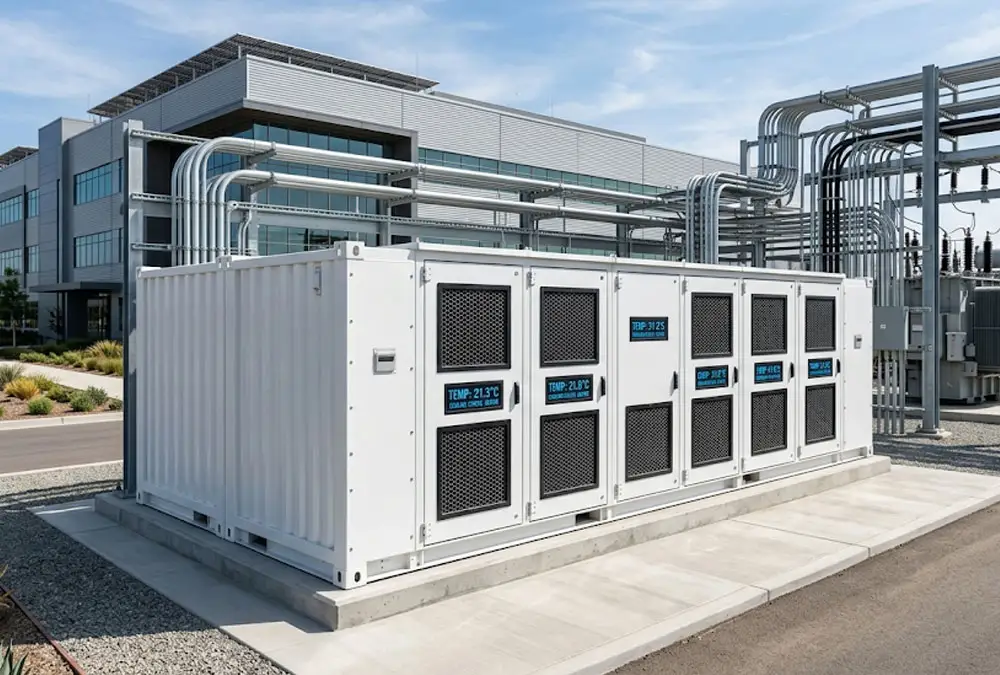
For demanding industrial environments and high-power EV fast-charging buffers, we recommend our specialized UL 1973 certified industrial energy storage manufacturer series. This outdoor enclosure features an advanced liquid thermal management loop that maintains a cell-to-cell temperature delta of less than 2°C. This design vastly extends battery life while providing multi-layer propagation isolation that complies with battery energy storage system safety standards.
Whether you require a compact system for localized peak-shaving or a robust containerized BESS with UL 1973 certification for utility-scale grid services, our platforms feature intelligent multi-tier BMS controls and integrated power conversion safety boundaries. These components are fully optimized to pass the most stringent AHJ site inspections across North America.
Frequently Asked Questions About UL 1973
What does UL 1973 certify?
UL 1973 certifies the fundamental safety of the battery pack, modules, individual cells, and internal monitoring systems intended for stationary power uses. It ensures the battery sub-assembly can safely survive severe electrical, mechanical, and thermal abuse without bursting, catching fire, or exploding.
Is UL 1973 mandatory for energy storage projects?
While not a federal law, it is effectively mandatory across North America. Local building codes, fire marshals (AHJs), and utility companies require a valid UL 1973 listing before granting grid interconnection or building occupancy permits.
How is UL 1973 different from UL 9540?
UL 1973 tests the individual battery system components (cells, modules, and packs). UL 9540 is an overarching certification that evaluates the complete integrated system, including the UL 1973 battery, the power conversion inverter (PCS), and external fire suppression enclosures working in unison.
Does UL 1973 address thermal runaway risks?
Yes, thermal runaway containment is a key focus of the standard. It subjects battery modules to localized cell failure tests to verify that the internal physical separation and thermal management prevent fire from cascading to adjacent cells.
How can buyers verify a UL 1973 certified battery system?
Buyers can ask the manufacturer for an official Certificate of Compliance issued by an accredited NRTL (such as UL, Intertek, or TÜV SÜD). This listing can also be verified on the NRTL’s online public certification database.
Can UL 1973 certification improve project financing and insurance approval?
Absolutely. Holding a valid certification vastly lowers the project’s risk profile, enabling institutional lenders to finance the development and helping project owners secure much lower commercial insurance premiums.
Key Takeaways
| Core Question | Quick Answer & Operational Reality |
|---|---|
| What is UL 1973? | A comprehensive battery safety certification standard focused strictly on stationary power applications. |
| Why is UL 1973 important? | It guarantees system safety, streamlines AHJ regulatory approvals, and unlocks project bankability. |
| What does UL 1973 evaluate? | Battery cells, interconnected modules, electrical insulation, internal BMS controls, and thermal containment. |
| Is UL 1973 enough for a BESS project? | It serves as the essential baseline sub-assembly listing required to successfully clear full-scale UL 9540 system certifications. |
| Who benefits from the certification? | Project developers, EPC contractors, utility companies, financial lenders, and commercial facility owners. |
| Does UL 1973 help prevent fires? | Yes, by requiring physical and environmental testing to ensure single-cell thermal runaway cannot propagate. |
Conclusion
In the modern power sector, securing a verified UL 1973 certification has become one of the most vital milestones for validating battery safety, mitigating thermal runaway risks, and ensuring long-term system compliance. As multi-megawatt commercial and utility projects scale up through 2026, relying on uncertified energy storage systems introduces major liabilities, including the risk of local AHJ permit rejections, extreme insurance premiums, and catastrophic asset failures.
Prioritizing hardware sourced from certified manufacturers ensures project developers, EPC contractors, and end-users satisfy strict building codes while protecting their personnel and financial investments. As global demand for high-capacity grid stabilization and EV charging buffer infrastructure continues to accelerate, utilizing certified battery platforms remains a crucial requirement for achieving operational safety, secure project financing, and long-term commercial success.
Ready to Secure Your Next Energy Storage Project?
Do not let regulatory hurdles or safety compliance delays slow down your deployment timelines. Contact our application engineering team today to review our complete line of UL 1973-certified industrial systems.
“`
Related Posts
 https://anengjibattery.com/wp-content/uploads/2026/10/AnengJIBattery-Top-10-Forklift-Battery-Manufacturers-for-Cold-Storage.webp
675
1000
Battery Expert Team
https://anengjibattery.com/wp-content/uploads/2025/06/logo2-300x138.png
Battery Expert Team2026-10-26 09:12:412026-10-26 09:13:00Top 10 Forklift Battery Manufacturers for Cold Storage
https://anengjibattery.com/wp-content/uploads/2026/10/AnengJIBattery-Top-10-Forklift-Battery-Manufacturers-for-Cold-Storage.webp
675
1000
Battery Expert Team
https://anengjibattery.com/wp-content/uploads/2025/06/logo2-300x138.png
Battery Expert Team2026-10-26 09:12:412026-10-26 09:13:00Top 10 Forklift Battery Manufacturers for Cold Storage https://anengjibattery.com/wp-content/uploads/2026/10/AnengjiBattery-Cell-to-Pack-Energy-Density-Comparison.webp
675
1000
Battery Expert Team
https://anengjibattery.com/wp-content/uploads/2025/06/logo2-300x138.png
Battery Expert Team2026-10-23 06:58:392026-10-23 06:58:41What Does Lithium-Ion Battery Energy Density Really Mean?
https://anengjibattery.com/wp-content/uploads/2026/10/AnengjiBattery-Cell-to-Pack-Energy-Density-Comparison.webp
675
1000
Battery Expert Team
https://anengjibattery.com/wp-content/uploads/2025/06/logo2-300x138.png
Battery Expert Team2026-10-23 06:58:392026-10-23 06:58:41What Does Lithium-Ion Battery Energy Density Really Mean? https://anengjibattery.com/wp-content/uploads/2026/10/AnengjiBattery-Lithium-Battery-Management-in-Daily-Operation.webp
675
1000
Battery Expert Team
https://anengjibattery.com/wp-content/uploads/2025/06/logo2-300x138.png
Battery Expert Team2026-10-22 08:17:332026-10-23 06:58:57How Does a Lithium BMS Improve Battery Longevity?
https://anengjibattery.com/wp-content/uploads/2026/10/AnengjiBattery-Lithium-Battery-Management-in-Daily-Operation.webp
675
1000
Battery Expert Team
https://anengjibattery.com/wp-content/uploads/2025/06/logo2-300x138.png
Battery Expert Team2026-10-22 08:17:332026-10-23 06:58:57How Does a Lithium BMS Improve Battery Longevity? https://anengjibattery.com/wp-content/uploads/2026/10/AnengjiBattery-Industrial-Power-Under-Real-Load.webp
675
1000
Battery Expert Team
https://anengjibattery.com/wp-content/uploads/2025/06/logo2-300x138.png
Battery Expert Team2026-10-22 07:04:542026-10-22 07:05:30How Does a 48V LiFePO4 BMS Protect Industrial Power?
https://anengjibattery.com/wp-content/uploads/2026/10/AnengjiBattery-Industrial-Power-Under-Real-Load.webp
675
1000
Battery Expert Team
https://anengjibattery.com/wp-content/uploads/2025/06/logo2-300x138.png
Battery Expert Team2026-10-22 07:04:542026-10-22 07:05:30How Does a 48V LiFePO4 BMS Protect Industrial Power?


Leave a Reply
Want to join the discussion?Feel free to contribute!