
What Is mAh in Batteries? Complete Battery Capacity Guide
July 24, 2026 / Battery Expert Team / Battery Basics
Introduction
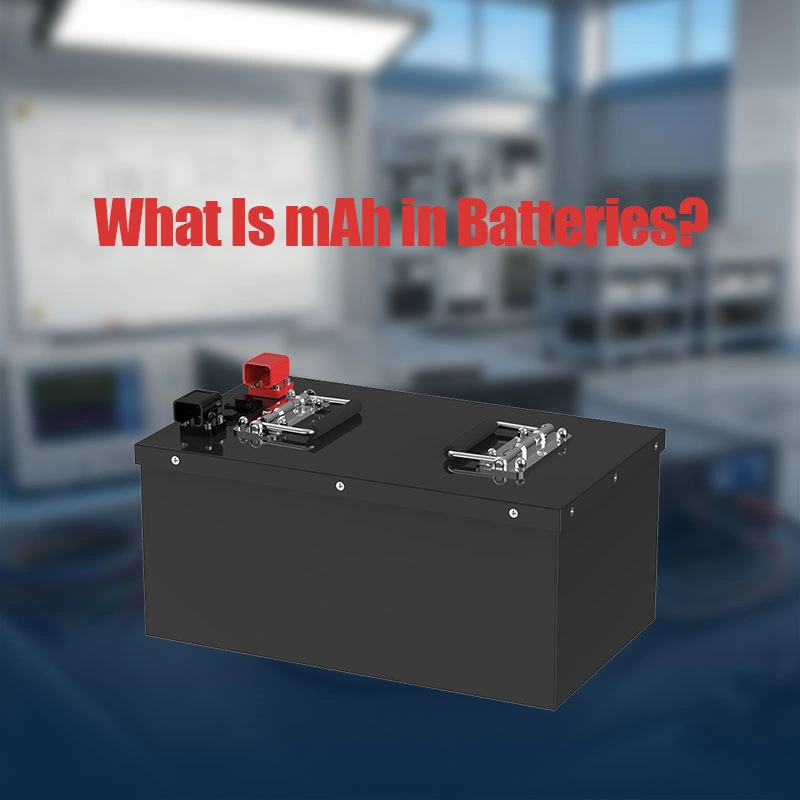
When you shop for a new industrial pack or check small power specs, you see those digits printed right on the label. But what does a mah battery rating actually tell you about daily gear performance? Simply put, mAh stands for milliampere-hour. It measures the total electrical charge a cell can hold and push out over time. If you grab a 5000mAh cell or a massive 10000mAh battery pack, you expect longer gear work hours. Higher ratings generally mean longer runtime between wall plugs. Yet, overall working time depends on working voltage ($V$), total power draw ($W$), cell chemistry, and internal loss. Let us look deeper into what these ratings mean for real industrial applications, from golf carts to automated warehouse movers.
What Is mAh in Batteries? Understanding Battery Capacity and Energy Storage
Understanding rating numbers saves you money and stops sudden equipment dropouts. When dealing with energy storage, battery capacity numbers show how much work your equipment can pull off before shutting down cold.
What Does mAh Mean in a Battery?
So, what is mAh in battery terminology? The abbreviation breaks down into three distinct electrical parts:
- m A: Milliampere (one-thousandth of an amp, measuring current flow).
- h: Hour (measuring time).
This metric tells you how much current a cell delivers steadily for an hour. Take a 1000mAh battery pack, for example. In ideal laboratory conditions, it pushes 1000mA of current for one full hour. Or, if your gear draws just 500mA, that same pack runs for two hours straight before going flat.
The Formula of mAh and Battery Capacity Calculation
Calculating battery capacity needs just simple arithmetic. The basic relationship works like this:
$$\text{Capacity (mAh)} = \text{Current (mA)} \times \text{Time (hours)}$$
If your portable scanner pulls 500mA and must operate across a 10-hour work shift without dying, your minimal capacity requirement is straightforward:
$$500\text{ mA} \times 10\text{ hours} = 5000\text{ mAh}$$
Always buy slightly higher capacity than your math shows. Internal heat and voltage conversions waste energy during real-world tasks.
Difference Between mAh, Ah and Wh in Battery Systems
If you manage fleet gear or buy industrial power setups, small milliampere-hour numbers get confusing. B2B buyers rarely use milliampere numbers for big equipment. They deal in Ampere-hours ($\text{Ah}$) or Watt-hours ($\text{Wh}$).
| Unit Type | Full Name | Typical Field Application | Practical Buyer Advantage |
|---|---|---|---|
| mAh | Milliampere-hour | Phones, portable sensors, handheld meters | Easy Small Specs: Shows micro-power limits without cluttering labels with fractions. |
| Ah | Ampere-hour ($1\text{ Ah} = 1000\text{ mAh}$) | AGVs, golf carts, forklifts, floor sweepers | Streamlined Sizing: Simplifies capacity math for heavy commercial vehicles. |
| Wh | Watt-hour ($\text{Wh} = \text{V} \times \text{Ah}$) | Solar storage, RV power banks, industrial grids | True Power Comparison: Compares total energy across different voltage systems easily. |
Operational Advantage: Looking at Watt-hours ($\text{Wh}$) lets you compare different voltage setups directly. A 12V 100Ah pack holds $1200\text{ Wh}$, while a 48V 100Ah module holds $4800\text{ Wh}$ of usable power!
According to the Global Energy Storage Market Outlook published by BloombergNEF, industrial sectors are shifting rapidly toward higher voltage systems. Higher system voltages cut line current, reduce resistive heating losses, and increase overall runtime across commercial setups.
What Does mAh Mean in Different Battery Applications?
Real-world application dictates how capacity ratings convert into operational performance. Let’s look at how capacity scales across light tools and commercial heavy machinery.
mAh in Smartphone Batteries | Understanding Small Battery Capacity
Small consumer gear like phones relies on tiny internal spaces. A modern phone might pack a 5000mAh battery. That single cell runs on a modest 3.7V nominal level. It gives long standby times because phone processors draw very few milliamps when idle.
mAh in Rechargeable Batteries
Compact rechargeable items use AA or 18650 cells rated between 2000mAh and 3500mAh. They power handheld test meters, emergency lights, and mobile tools. Higher ratings mean your field technicians spend less time swapping dead cells mid-task.
mAh and Capacity in Golf Cart Lithium Batteries
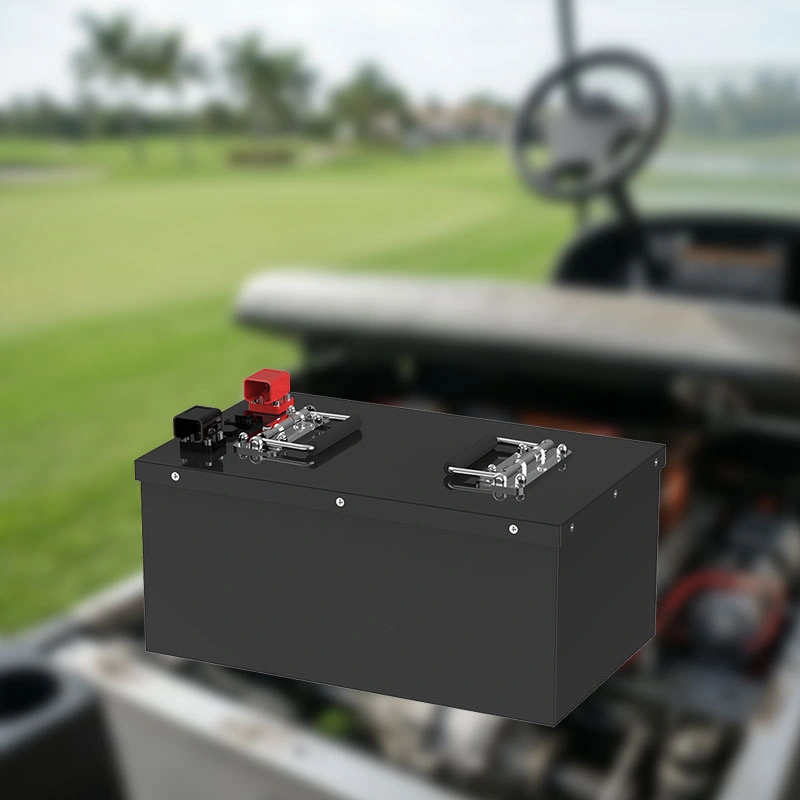
Utility carts need serious power to carry heavy passenger loads up steep grass hills. They don’t use milliampere ratings. Instead, they run on heavy 36V or 48V lithium setups rated in Ah.
A standard 48V 100Ah pack equals $100,000\text{ mAh}$ in raw capacity terms! It packs $4800\text{ Wh}$ ($4.8\text{ kWh}$) of energy. This ensures golf carts complete full 18-hole rounds easily without trailing off in speed near the end of the day.
mAh and Capacity in AGV and Industrial Vehicle Batteries
Automated Guided Vehicles (AGVs) work non-stop inside modern warehouses. Fleet leads care about actual working shift hours, cycle life, and fast charging windows rather than raw rating labels. An AGV running a 48V 100Ah pack works long shifts without needing frequent trips to charging pads, boosting warehouse output.
mAh and Battery Capacity in Electric Sightseeing Cars and Utility Vehicles
Sightseeing buses and resort tuk-tuks carry heavy passenger loads across varied terrain. Selecting a small capacity pack drops vehicle range fast when climbing hills with full loads. A high-capacity $150\text{ Ah}$ or $200\text{ Ah}$ lithium pack handles heavy weight while delivering steady driving range all day long.
mAh Requirements for Cleaning Machines and Floor Sweepers
Industrial scrubbers run heavy vacuum motors and spinning brushes simultaneously. They draw high continuous amps. Equipping floor sweepers with high-capacity lithium units ensures cleaning teams finish large warehouse floors on a single charge without mid-shift stops.
mAh in RV, Parking Air Conditioner and Solar Storage Batteries
Sleeper truck parking coolers and off-grid RV setups need sustained power overnight. An 800W parking air conditioner running off a 12V setup pulls nearly 67 amps continuously! That’s why truckers install heavy 12V 200Ah ($200,000\text{ mAh}$) or 48V 100Ah LiFePO4 banks to keep cabs cool through long overnight stops.
How Does mAh Affect Battery Life and Runtime?
A common misconception plagues buyers: assuming a higher capacity rating guarantees a longer-lasting battery pack over years of service.
Does Higher mAh Mean Longer Battery Life?
We must separate daily operational runtime from long-term service lifespan:
- Daily Runtime: Higher capacity gives you longer gear working hours on a single charge.
- Service Lifespan: High capacity does not guarantee a long cycle life. That depends on cell quality, operating thermal management, and BMS control.
Factors That Influence Actual Battery Runtime
Real-world equipment runtime rarely matches simple division on paper. Several field variables degrade output:
- Device Power Consumption: Heavy motor loads drain energy reserves far faster than low-power electronics.
- System Voltage Alignment: Running higher voltage setups keeps current draw low, reducing internal resistive losses ($I^2R$).
- Cell Chemistry Types: Older lead-acid units suffer from Peukert’s Law—drawing high amps cuts usable capacity by up to 40%! Lithium cells deliver almost all their rated capacity even under heavy loads.
- Working Environment: Freezing ambient air thickens internal liquid electrolytes, raising internal resistance and dropping usable runtime temporarily.
How to Choose the Right Battery mAh Capacity for Your Application?
Sizing a battery bank properly keeps equipment light while avoiding mid-day shutdowns. You don’t want to overpay for weight you don’t need or underpower heavy industrial gear.
Calculate Battery Capacity Based on Power Requirements
Use this practical engineering formula to size battery banks accurately:
$$\text{Battery Capacity (Ah)} = \frac{\text{Power (Watts)} \times \text{Desired Runtime (Hours)}}{\text{Nominal Voltage (Volts)} \times \text{Discharge Efficiency}}$$
Say you run an 800W parking cooler for 5 hours on a 48V system (assuming 90% efficiency):
$$\text{Capacity} = \frac{800 \times 5}{48 \times 0.90} \approx 92.5\text{ Ah}$$
A standard 48V 100Ah lithium module handles this load easily, protecting cells from deep over-discharge.
Choosing Battery Capacity for Golf Carts
Match your cart usage to recommended lithium capacity tiers:
| Golf Cart Application Profile | Recommended Lithium Capacity | Estimated Driving Range | Direct Buyer Benefit |
|---|---|---|---|
| Gated Community / Short Distance | 48V 50Ah ($50,000\text{ mAh}$) | 18 – 25 Miles | Low Entry Cost: Replaces heavy lead-acid sets while dropping 200 lbs off the frame. |
| Standard Course Daily Fleet Use | 48V 100Ah ($100,000\text{ mAh}$) | 35 – 45 Miles | All-Day Capability: Easily finishes 36 holes on a single charge with zero mid-day top-ups. |
| Commercial / Heavy Utility Duty | 48V 150Ah+ ($150,000\text{ mAh}+$) | 60+ Miles | Maximum Load Range: Hauls heavy cargo or tools up steep hills without dropping speed. |
Operational Advantage: Upgrading to a 100Ah LiFePO4 module cuts overall vehicle weight, protecting delicate golf course turf from rut damage.
Choosing Battery Capacity for AGVs and Material Handling Equipment
Warehouse vehicles require fast charging and high cycle life. Selecting a 48V 100Ah or 150Ah LiFePO4 setup allows rapid opportunity charging during breaks. That keeps automated vehicles running across 24-hour multi-shift operations.
Choosing Battery Capacity for Electric Tricycles and Two-Wheel Vehicles
Cargo delivery tricycles need compact, high-density power modules. A 48V 30Ah or 60Ah lithium pack offers long delivery ranges while fitting neatly into narrow chassis compartments.
Choosing Battery Capacity for Solar Storage and RV Applications
Off-grid systems rely on total watt-hour storage capacity. Combine expected daily appliance draws with two days of backup reserve to calculate your ideal battery bank size.
Common Misunderstandings About mAh Battery Capacity
Avoid these common industry traps when evaluating battery specs for new equipment.
Bigger mAh Does Not Always Mean Better Battery
Slapping a massive capacity pack onto small gear adds unwanted weight and bulk. You must balance capacity against physical dimensions, total weight, and system operating voltage.
mAh Alone Cannot Determine Battery Quality
A high rating print on a cheap label means nothing if the underlying cells are poor. Long service life depends on quality grade-A cells, robust spot welding, internal insulation, and a reliable Battery Management System (BMS).
High Capacity Batteries Need Proper Charging Systems
Plugging a heavy 100Ah lithium bank into a low-current trickle charger takes forever to reach full charge. Always match high-capacity packs with smart high-amp chargers built for your specific cell chemistry.
How Lithium Battery Technology Improves Capacity and Performance
Modern lithium technology has changed commercial mobile power storage, outperforming old heavy lead-acid units across every metric.
Why LiFePO4 Batteries Provide Better Energy Solutions
Lithium Iron Phosphate ($LiFePO_4$) chemistry stands out for heavy commercial duty. Key advantages include:
- Extended Cycle Life: Retains capacity through 3,500 to 5,000+ deep charge cycles, compared to just 500 cycles for lead-acid.
- High Chemical Safety: Superior thermal stability eliminates thermal runaway risks under tough working conditions.
- Constant Output Voltage: Maintains steady power delivery throughout the entire discharge curve without sluggish slowdowns.
| Performance Feature | Traditional Flooded Lead-Acid | Modern LiFePO4 Lithium Module | Commercial Fleet Advantage |
|---|---|---|---|
| Usable Capacity Depth | 50% Max Discharge limit | 100% Full Discharge capability | Double Usable Energy: Gives you twice the working power from the same capacity rating. |
| Average Weight | Heavy ($120+\text{ lbs}$) | Lightweight ($35 – 45\text{ lbs}$) | Less Equipment Wear: Cuts tire wear and protects drive motors from heavy strains. |
| Routine Maintenance | Needs weekly water refills & cleaning | 100% Sealed & Maintenance-Free | Lower Labor Expenses: Saves hundreds of worker hours on fleet maintenance. |
Operational Advantage: LiFePO4 technology cuts fleet total cost of ownership by eliminating maintenance labor and lasting up to five times longer.
High Capacity Lithium Battery Solutions for Modern Applications
Whether you manage rental utility carts, industrial AGV movers, or off-grid power sites, custom high-capacity lithium modules deliver reliable, cost-effective long-term power.
Frequently Asked Questions About mAh Battery Capacity
What does mAh mean in batteries?
Milliampere-hour (mAh) measures electrical charge capacity. It shows how much current a cell delivers over an hour before needing a recharge.
Is a higher mAh battery better?
A higher rating offers longer operational runtime on a single charge. However, it must match your equipment’s operating voltage, physical compartment size, and weight limits.
How many mAh battery do I need?
Calculate your gear’s amp draw and multiply by your required shift hours. Adding a 20% safety margin covers conversion losses and tough operating conditions.
What is the difference between mAh and Ah?
They measure the exact same thing at different scales: $1\text{ Ah} = 1000\text{ mAh}$. Small electronics use mAh ratings, while vehicle and storage setups use Ah.
How do I calculate lithium battery capacity?
Multiply working current ($\text{mA}$ or $\text{A}$) by operational hours ($\text{h}$) to find total $\text{mAh}$ or $\text{Ah}$. To find total Watt-hours ($\text{Wh}$), multiply $\text{Ah}$ by system voltage ($V$).
Choose the Right Lithium Battery Capacity Solution for Your Application
Picking the right capacity rating keeps equipment running smoothly while cutting fleet operating expenses. Our engineering team designs custom LiFePO4 battery systems with integrated BMS safety, fast charging, and tough thermal management. Whether building new golf carts, outfitting industrial AGVs, or distributing replacement packs, we build custom power solutions tailored to your needs. Contact our engineering team today to request a quote or discuss custom capacity setups for your equipment fleet!
Related Posts
 https://anengjibattery.com/wp-content/uploads/2026/09/AnengJIBattery-Best-LiFePO4-Battery-How-to-Choose-the-Right-One.webp
675
1000
Battery Expert Team
https://anengjibattery.com/wp-content/uploads/2025/06/logo2-300x138.png
Battery Expert Team2026-09-17 08:52:142026-09-17 08:52:31How to Choose the Best LiFePO4 Battery
https://anengjibattery.com/wp-content/uploads/2026/09/AnengJIBattery-Best-LiFePO4-Battery-How-to-Choose-the-Right-One.webp
675
1000
Battery Expert Team
https://anengjibattery.com/wp-content/uploads/2025/06/logo2-300x138.png
Battery Expert Team2026-09-17 08:52:142026-09-17 08:52:31How to Choose the Best LiFePO4 Battery https://anengjibattery.com/wp-content/uploads/2026/09/anengjiBattery-lifepo4-battery-cell-packaging-wholesale.webp
675
1000
Battery Expert Team
https://anengjibattery.com/wp-content/uploads/2025/06/logo2-300x138.png
Battery Expert Team2026-09-16 09:52:342026-09-16 09:52:57LiFePO4 Battery Wholesale Guide: Best Suppliers in Spain
https://anengjibattery.com/wp-content/uploads/2026/09/anengjiBattery-lifepo4-battery-cell-packaging-wholesale.webp
675
1000
Battery Expert Team
https://anengjibattery.com/wp-content/uploads/2025/06/logo2-300x138.png
Battery Expert Team2026-09-16 09:52:342026-09-16 09:52:57LiFePO4 Battery Wholesale Guide: Best Suppliers in Spain https://anengjibattery.com/wp-content/uploads/2026/09/anengjibattery-Top-Lithium-Ion-Battery-Producers-for-Spain-Market-Growth.webp
675
1000
Battery Expert Team
https://anengjibattery.com/wp-content/uploads/2025/06/logo2-300x138.png
Battery Expert Team2026-09-16 01:13:392026-09-16 01:14:05Top Lithium Ion Battery Producers for Spain’s Market Growth
https://anengjibattery.com/wp-content/uploads/2026/09/anengjibattery-Top-Lithium-Ion-Battery-Producers-for-Spain-Market-Growth.webp
675
1000
Battery Expert Team
https://anengjibattery.com/wp-content/uploads/2025/06/logo2-300x138.png
Battery Expert Team2026-09-16 01:13:392026-09-16 01:14:05Top Lithium Ion Battery Producers for Spain’s Market Growth https://anengjibattery.com/wp-content/uploads/2026/09/Bulk-Lithium-Ion-Battery-Cells-Procurement-Guide-B2B-Sourcing.webp
675
1000
Battery Expert Team
https://anengjibattery.com/wp-content/uploads/2025/06/logo2-300x138.png
Battery Expert Team2026-09-14 09:47:322026-09-14 09:47:48Bulk Lithium-Ion Battery Cells Procurement Guide | B2B Sourcing
https://anengjibattery.com/wp-content/uploads/2026/09/Bulk-Lithium-Ion-Battery-Cells-Procurement-Guide-B2B-Sourcing.webp
675
1000
Battery Expert Team
https://anengjibattery.com/wp-content/uploads/2025/06/logo2-300x138.png
Battery Expert Team2026-09-14 09:47:322026-09-14 09:47:48Bulk Lithium-Ion Battery Cells Procurement Guide | B2B Sourcing


Leave a Reply
Want to join the discussion?Feel free to contribute!