
Charge a Lithium Battery: First Time Guide & Charging Time
July 21, 2026 / Battery Expert Team / Battery Basics
Introduction
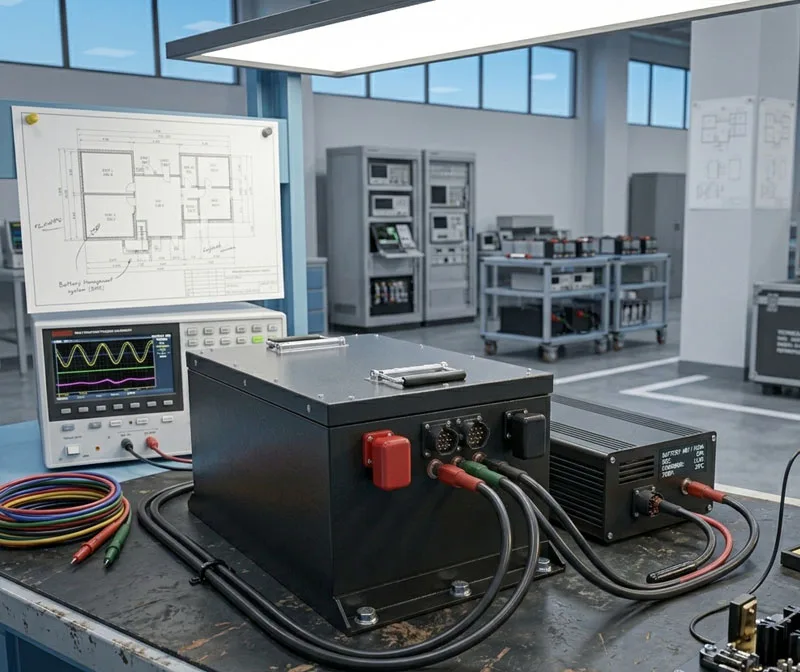
If you just unboxed a brand-new pack for your setup, you’re probably asking yourself: how long does it take to charge a lithium battery for the first time? Let me clear the air immediately. Forget those old legends about plugging it in for 12 straight hours to “activate” the chemistry. Modern lithium cells don’t have memory effects, so there’s zero need for overnight marathon charges.
Most fresh factory packs arrive pre-charged at around 30% to 50% State of Charge (SOC) due to strict shipping safety rules. So, when you first charge a lithium battery, it usually takes between 2 to 5 hours using a proper matched charger. It really boils down to your pack’s amp-hour capacity and your charger’s current output. Doing this initial charge right isn’t about conditioning the lithium; it’s about giving your internal battery management system time to calibrate cell voltages and ensure smooth long-term operation.
What Is a Lithium Battery? | Understanding Lithium Battery Types and Applications
Before throwing current into a new pack, you need to know what’s actually under the casing. We talk about “lithium” as if it’s one single product, but different chemical setups behave completely differently during their initial charge cycle.
Different Types of Lithium Batteries
The marketplace relies on a few core chemistries, each designed for specific performance goals:
- Lithium Iron Phosphate Battery (LiFePO4): This chemistry is absolute gold for industrial gear. It offers unmatched thermal safety, extremely long cycle counts, and stable operating voltages. You’ll see it everywhere in golf carts, material handling AGVs, RV house banks, marine systems, and off-grid solar energy storage setups.
- Nickel Manganese Cobalt (NMC): NMC packs incredible energy density into a small, lightweight frame. That makes it the primary choice for passenger electric vehicles, high-speed scooters, and portable power tools.
- Lithium Titanate (LTO): Highly specialized, extremely fast at accepting current, and operates down in sub-zero freezes. It’s expensive, but it handles brutal industrial work cycles without breaking a sweat.
Key Characteristics of Lithium Batteries
Why has the industrial world largely abandoned lead-acid? Lithium packs hold a massive amount of energy relative to their physical footprint. They weigh up to 70% less, charge up to four times faster, and deliver continuous, stable voltage even when down to their last 10% of capacity.
Common Applications of Lithium Batteries
From automated guided vehicles on logistics floors to neighborhood electric vehicles and floor scrubbers, lithium provides consistent energy delivery without the messy, time-consuming acid maintenance that drags down daily operational efficiency.
Why the First Lithium Battery Charge Matters | Impact on Battery Life and Performance
There is plenty of confusion around lithium battery first charge protocols. Let’s separate internet myths from actual field engineering realities.
Does the First Charge Affect Lithium Battery Lifespan?
To be crystal clear, you aren’t “forming” chemical layers on a modern cell cathode like technicians used to do decades ago. The factory already handled that primary conditioning during production testing. However, that initial charge is still critical because it lets the internal electronics align. It provides a baseline reference point so your fuel gauge doesn’t lie to you later on.
How Proper First Charging Improves Battery Performance
During shipping, individual cells inside a multi-series pack can drift apart slightly in voltage. When you bring the entire assembly up to 100% capacity during that very first session, you give the internal balancing circuits time to bleed off tiny voltage spikes. This keeps all cells perfectly synchronized, preventing early cutoffs when you put the pack under heavy load.
Preparing for the First Lithium Battery Charge | Safety and Equipment Requirements
Plugging in a high-capacity lithium system isn’t something you should rush. Taking two minutes to verify your equipment prevents costly electrical mishaps.
Check Battery Specifications Before Charging
Always double-check the label on your battery casing. Verify nominal system voltage (like 12V, 24V, 36V, or 48V) and total Amp-hour (Ah) capacity. A 48V 100Ah deep cycle lithium battery expects a completely different voltage ceiling than a standard 12V automotive starting unit.
Choose the Correct Lithium Battery Charger
Using a traditional lead-acid charger on a lithium pack is a massive mistake. Lead-acid profiles use aggressive equalization modes and desulfation pulses that can trigger over-voltage trips on a lithium pack. You need a dedicated charger designed for your exact chemistry to ensure a safe lithium battery charging process.
| Battery Chemistry Type | Recommended Charger Profile | User Benefit of Matching Correct Hardware |
|---|---|---|
| LiFePO4 (Lithium Iron Phosphate) | Dedicated CC/CV LiFePO4 Charger | Maximized Safety: Maintains precise 3.65V per cell voltage limits, preventing thermal stress and early capacity fade. |
| NMC (Nickel Manganese Cobalt) | NMC Specific Lithium-ion Charger | Optimized Lifespan: Stops charging precisely at nominal cutoffs, preventing lithium plating on the anode. |
| Lead-Acid (AGM/GEL) – Incompatible | Standard Multi-Stage Lead Charger | Risk Warning: Lacks proper BMS communication, risking sudden high-voltage cutoffs or damaged electronics. |
Note for equipment managers: Always select a dedicated unit designed as the best charger for lithium battery charging applications. Matching your hardware guarantees smooth energy transfer without risking premature pack lockouts.
Prepare a Safe Charging Environment
Place your battery on a clean, hard surface in a well-ventilated space. Keep it away from direct afternoon sunlight, water spray, or tight, unvented enclosures. Room temperature (around 15°C to 25°C) is the absolute sweet spot for energy absorption.
How Long Does It Take to Charge a Lithium Battery for the First Time?
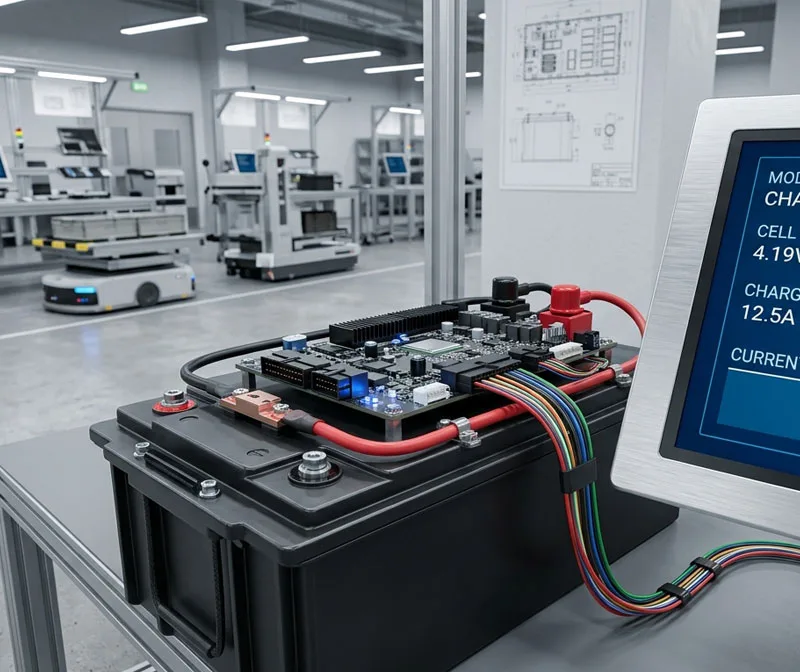
Let’s break down the actual math so you can plan your workflow without guessing. Calculating your initial charge timeline is straightforward when you know your equipment specs.
Typical First Charging Time for Lithium Batteries
Because factory batteries ship at roughly 30% to 50% capacity, you only need to supply the remaining half of the total amp-hours. Here is the standard baseline engineering formula:
Charging Time (Hours) = [ Battery Capacity (Ah) × Remaining SOC % ] ÷ Charger Output Current (A)
For example, if you have a 100Ah pack arriving at 50% charge, you need to supply 50Ah of energy. If you use a 20A charger, 50Ah divided by 20A equals roughly 2.5 hours of charge time.
Charging Time Comparison by Battery Capacity
Here is a quick reference guide showing typical initial charging times across popular pack sizes and charger outputs, assuming a standard 50% factory arrival charge state:
| Pack Capacity (Ah) | 10A Output Charger | 20A Output Charger | 50A Fast Charger | Operational Efficiency Advantage |
|---|---|---|---|---|
| 50 Ah Pack | ≈ 2.5 Hours | ≈ 1.25 Hours | ≈ 0.5 Hours | Quick Turnaround: Ideal for lightweight sweepers or small utility carts needing fast turnarounds. |
| 100 Ah Pack | ≈ 5.0 Hours | ≈ 2.5 Hours | ≈ 1.0 Hour | Standard Commercial Fleet Size: Perfectly balanced for standard overnight or mid-shift top-offs. |
| 200 Ah Pack | ≈ 10.0 Hours | ≈ 5.0 Hours | ≈ 2.0 Hours | High Energy Reservoir: Delivers long runtime for off-grid solar arrays or heavy material handling gear. |
Operational Takeaway: Knowing how long does a lithium battery take to charge allows fleet managers to schedule charging shifts precisely, keeping machines productive without unnecessary downtime.
Why Lithium Batteries Automatically Stop Charging
When the battery reaches 100% capacity, you don’t need to panic if you’re a few minutes late unplugging it. Modern packs feature automatic cutoff controls that stop current flow the instant target cell voltages are reached.
Why Lithium Batteries Do Not Need Special First Charging | Modern Battery Management Technology
If someone tells you to charge your new lithium battery for 12 to 14 hours straight, they’re passing along outdated advice from the 1990s.
Lithium Batteries vs Older Nickel-Based Batteries
Old Nickel-Cadmium (Ni-Cd) and Nickel-Metal Hydride (Ni-MH) batteries suffered from severe “memory effect.” If you didn’t charge them fully during their initial setup, they lost total capacity over time. Lithium-ion chemistry does not have a memory effect. You can charge it to 80%, use it, and top it off later without harming the chemistry.
How BMS Controls Lithium Battery Charging
Every quality commercial pack contains an integrated electronic board called a Battery Management System (BMS). The BMS acts as a non-stop digital monitor guarding the cells:
- Cell Balancing: Equalizes small voltage variations across cell strings automatically.
- Over-Voltage Protection: Disconnects internal charge circuits if input voltage surges above safe levels.
- Over-Current Cutoff: Prevents excess amperage from overheating internal connections.
- Thermal Monitoring: Halts charging instantly if ambient temperatures swing too high or too low.
What This Means for Larger Battery Systems
According to research highlighted in battery market reports from energy analysts like BloombergNEF in 2025, advanced BMS integrations have cut battery failure rates down to near-zero in commercial fleets. For larger equipment, your focus shouldn’t be on long initial charge cycles—it should be on choosing compatible charging profiles and managing daily operating temperatures.
Lithium Battery Charging Methods | Standard Charging vs Fast Charging
Choosing between conservative charge rates and high-speed chargers comes down to your daily operational timeline.
Standard Charging Method
Standard charging uses a moderate output rate (typically 0.2C to 0.3C, meaning a charge current equal to 20%–30% of total pack capacity). This gentle approach generates minimal heat, puts almost zero stress on internal components, and represents the best method for maximizing total pack lifespan.
Fast Charging Method
Fast charging ramps up current (0.5C to 1C or higher), allowing equipment like industrial AGVs to charge up in under an hour. While fast charging reduces downtime on high-utilization warehouse floors, it requires clean temperature controls and a BMS engineered to handle high current loads safely.
Factors Affecting Lithium Battery Charging Time | Capacity, Charger and Temperature
If your battery is taking longer to charge than expected, one of these three primary factors is usually responsible.
Battery Capacity and Energy Size
It’s basic math: a massive 48V 200Ah golf cart bank requires far more total energy to top off than a compact 12V 20Ah mobility scooter battery.
Charger Output Current
Your charger’s amperage rating dictates how quickly energy enters the pack. Pushing current through a 5-amp trickle charger takes four times longer than using a robust 20-amp commercial unit.
Temperature Effects on Lithium Battery Charging
Temperature plays a huge role in charging efficiency. Cold temperatures slow down lithium ion migration inside the cell. In fact, charging a standard lithium cell below freezing (0°C/32°F) can cause permanent short-circuits via lithium plating on the anode. Always verify your pack’s LiFePO4 charging temperature limits before plugging in during cold weather.
Best Practices for First Lithium Battery Charging
Follow these simple engineering guidelines to get the best performance out of your new battery pack from day one.
Fully Charge Before First Use?
Yes, running a complete initial charge up to 100% capacity is recommended before putting a new battery into service. This step aligns the fuel gauge readings and ensures you start your first work shift with full rated capacity.
Monitor Charging During First Use
Keep an eye on the pack during its initial charge session. Feel the casing occasionally to ensure it stays near ambient temperature, and verify that your charger indicators switch cleanly from “Charging” to “Full” or “Green.”
Avoid Deep Discharge After First Charging
Once your initial charge is complete, avoid running the battery completely down to 0% SOC on its first outing. Discharging down to roughly 20% SOC before recharging protects the active cathode materials while the system settles into its regular cycle routine.
Common Lithium Battery Charging Mistakes | Myths vs Facts
Let’s debunk a few common misconceptions that lead to improper charging practices in the field.
Myth: New Lithium Batteries Need 12 Hours Charging
Fact: Completely false. Once the charger indicator turns green and the BMS cuts off current flow, keeping the battery plugged in adds zero additional energy and simply wastes electricity.
Myth: Lithium Batteries Must Always Be Fully Charged
Fact: Lithium batteries actually prefer partial state-of-charge operational cycles. Keeping a pack sitting at 100% SOC continuously in high heat accelerates chemical aging. Staying between 20% and 80% SOC can significantly extend total calendar life.
Myth: Any Charger Can Charge Lithium Batteries
Fact: Using incorrect chargers is a leading cause of premature battery failure. Always match the charger’s output voltage and current algorithm to your specific lithium chemistry.
How to Know When a Lithium Battery Is Fully Charged?
Knowing when your system has reached full capacity is simple once you know what indicators to look for.
Using Charger Indicators
Most commercial chargers use clear LED status lights. A solid red or amber light indicates constant-current charging, while a solid green light signals that the charger has switched to float status and current has stopped flowing.
Monitoring Voltage and BMS Data
For high-end industrial systems, check your Bluetooth BMS app or digital display screen. A fully charged 12V LiFePO4 battery resting with no load typically reads around 13.6V to 14.4V (or 54.4V to 57.6V on a 48V commercial system).
Signs of Incorrect Charging
If a battery feels excessively hot to the touch, emits strange odors, or if the charger stays stuck in charge mode for over 12 hours on a small pack, disconnect power immediately. These symptoms point to improper charger voltage settings or an internal cell fault.
How to Maintain Lithium Battery Health After Charging
Maintaining long-term battery health requires simple, consistent habits after that initial charge session.
Keep Lithium Batteries at Proper Temperature
Store and operate your equipment in moderate climates whenever possible. Extreme heat degrades internal chemistry, while extreme cold temporarily reduces usable output capacity.
Avoid Overcharging and Deep Discharging
Let your BMS manage cutoff thresholds, and avoid forcing energy into a pack that has entered thermal lockout. Recharging when capacity drops to around 20% SOC prevents excessive chemical stress on the cell structure.
Store Lithium Batteries Correctly
If you plan to store your equipment over winter or during seasonal downtime, don’t leave the battery completely empty or parked at 100% full charge. Store it in a dry, cool space at roughly 40% to 60% SOC, and top it off every 3 to 6 months to maintain health.
Charging Lithium Batteries for Different Applications
Different equipment types require tailored charging protocols to match their daily operational demands.
How to Charge a Golf Cart Lithium Battery
Commercial 48V golf cart systems handle frequent stop-and-go acceleration. Use a high-amperage 48V LiFePO4 charger, and feel free to plug the fleet in during lunch breaks to keep carts running throughout busy afternoons.
How to Charge an AGV Lithium Battery
Warehouse automated guided vehicles thrive on rapid opportunity charging. Automated magnetic floor charging pads deliver high-current top-offs during short operational pauses, keeping AGVs running 24/7 without manual battery swaps.
How to Charge RV and Marine Lithium Batteries
Deep-cycle house batteries on RVs and boats are typically charged via multi-input setups, including solar controllers, shore power chargers, or smart alternator DC-DC chargers while driving.
How to Charge Solar Energy Storage Batteries
Stationary solar storage banks rely on charge controllers programmed with precise LiFePO4 cutoffs. They soak up mid-day solar energy efficiently and supply stable power through peak evening utility hours.
Frequently Asked Questions About Charging Lithium Batteries
How long does it take to charge a lithium battery for the first time?
It typically takes between 2 to 5 hours, depending on the battery’s capacity and your charger’s output amperage. Because factory packs ship roughly half-full, that initial charge finishes faster than a full cycle from 0%.
Do lithium batteries need to be fully charged before use?
Yes, completing a full charge up to 100% capacity before initial use is recommended. This allows the internal BMS to balance cell voltages and calibrate your battery monitor accurately.
Can I leave a lithium battery charging overnight?
Yes, provided you are using a smart lithium charger paired with an active BMS. The BMS will cut off charging automatically once full capacity is reached, preventing overcharge damage.
Can I use any charger for a lithium battery?
No, you must use a charger designed for your specific lithium chemistry and voltage. Standard lead-acid chargers use desulfation profiles that can damage lithium electronics.
How often should I charge a lithium battery?
Charge your battery whenever convenient. Lithium batteries do not suffer from memory effects, so partial charging and opportunity top-offs will not reduce total service life.
Get Professional Lithium Battery Solutions for Your Application
Looking to upgrade your commercial fleet, industrial machinery, or solar storage projects with long-lasting lithium performance? Our team provides custom-engineered LiFePO4 battery pack designs, perfectly matched high-efficiency charging systems, and full B2B technical support tailored to your exact operational requirements.
Related Posts
 https://anengjibattery.com/wp-content/uploads/2026/09/AnengJIBattery-Best-LiFePO4-Battery-How-to-Choose-the-Right-One.webp
675
1000
Battery Expert Team
https://anengjibattery.com/wp-content/uploads/2025/06/logo2-300x138.png
Battery Expert Team2026-09-17 08:52:142026-09-17 08:52:31How to Choose the Best LiFePO4 Battery
https://anengjibattery.com/wp-content/uploads/2026/09/AnengJIBattery-Best-LiFePO4-Battery-How-to-Choose-the-Right-One.webp
675
1000
Battery Expert Team
https://anengjibattery.com/wp-content/uploads/2025/06/logo2-300x138.png
Battery Expert Team2026-09-17 08:52:142026-09-17 08:52:31How to Choose the Best LiFePO4 Battery https://anengjibattery.com/wp-content/uploads/2026/09/anengjiBattery-lifepo4-battery-cell-packaging-wholesale.webp
675
1000
Battery Expert Team
https://anengjibattery.com/wp-content/uploads/2025/06/logo2-300x138.png
Battery Expert Team2026-09-16 09:52:342026-09-16 09:52:57LiFePO4 Battery Wholesale Guide: Best Suppliers in Spain
https://anengjibattery.com/wp-content/uploads/2026/09/anengjiBattery-lifepo4-battery-cell-packaging-wholesale.webp
675
1000
Battery Expert Team
https://anengjibattery.com/wp-content/uploads/2025/06/logo2-300x138.png
Battery Expert Team2026-09-16 09:52:342026-09-16 09:52:57LiFePO4 Battery Wholesale Guide: Best Suppliers in Spain https://anengjibattery.com/wp-content/uploads/2026/09/anengjibattery-Top-Lithium-Ion-Battery-Producers-for-Spain-Market-Growth.webp
675
1000
Battery Expert Team
https://anengjibattery.com/wp-content/uploads/2025/06/logo2-300x138.png
Battery Expert Team2026-09-16 01:13:392026-09-16 01:14:05Top Lithium Ion Battery Producers for Spain’s Market Growth
https://anengjibattery.com/wp-content/uploads/2026/09/anengjibattery-Top-Lithium-Ion-Battery-Producers-for-Spain-Market-Growth.webp
675
1000
Battery Expert Team
https://anengjibattery.com/wp-content/uploads/2025/06/logo2-300x138.png
Battery Expert Team2026-09-16 01:13:392026-09-16 01:14:05Top Lithium Ion Battery Producers for Spain’s Market Growth https://anengjibattery.com/wp-content/uploads/2026/09/Bulk-Lithium-Ion-Battery-Cells-Procurement-Guide-B2B-Sourcing.webp
675
1000
Battery Expert Team
https://anengjibattery.com/wp-content/uploads/2025/06/logo2-300x138.png
Battery Expert Team2026-09-14 09:47:322026-09-14 09:47:48Bulk Lithium-Ion Battery Cells Procurement Guide | B2B Sourcing
https://anengjibattery.com/wp-content/uploads/2026/09/Bulk-Lithium-Ion-Battery-Cells-Procurement-Guide-B2B-Sourcing.webp
675
1000
Battery Expert Team
https://anengjibattery.com/wp-content/uploads/2025/06/logo2-300x138.png
Battery Expert Team2026-09-14 09:47:322026-09-14 09:47:48Bulk Lithium-Ion Battery Cells Procurement Guide | B2B Sourcing


Leave a Reply
Want to join the discussion?Feel free to contribute!