
Do Lithium Batteries Freeze? Cold Weather Guide for Fleets
July 23, 2026 / Battery Expert Team / Battery Basics
Introduction
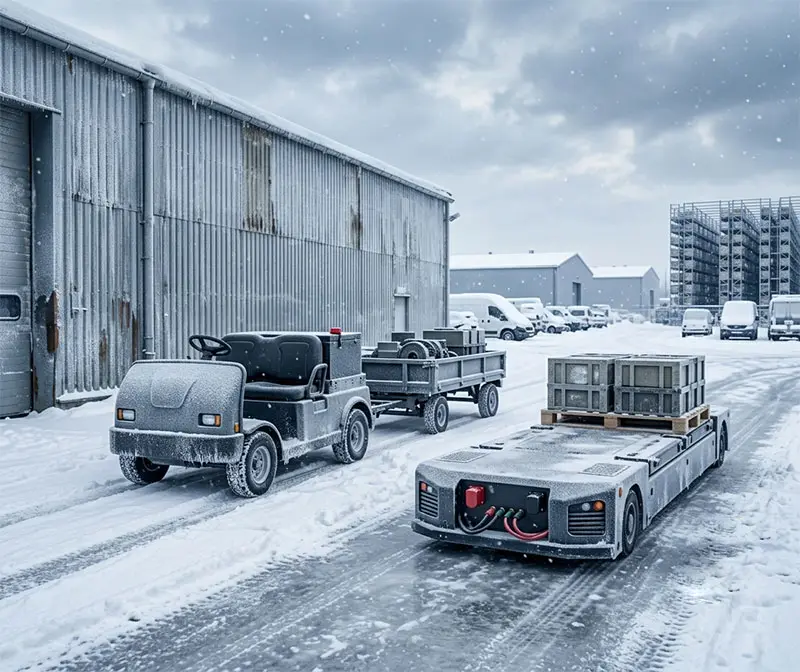
Do lithium batteries freeze when severe winter weather hits your commercial fleet? No, standard lithium batteries do not freeze into solid ice like water does, but severe winter cold drastically cripples their internal performance. You will quickly notice sluggish acceleration, shorter daily runtime, severe voltage drop, and charger rejection errors during cold shifts. Freezing air thickens internal liquid electrolytes, slowing moving ions and creating high internal resistance inside each cell. For facility directors operating automated guided vehicles (AGVs) or golf course operators managing utility fleets, unmanaged cold weather brings massive operational risks. Knowing how cold impacts your lithium pack helps protect your investment, lower fleet repair bills, and keep heavy equipment working smoothly all winter long.
Understanding Lithium Batteries | How Lithium Ion Battery Technology Works
Cold weather power loss makes sense once you see how modern cell chemistry behaves during daily equipment use. Industrial machinery relies heavily on modern lithium ion battery technology due to high energy density, compact weight, and zero routine maintenance requirements.
What Is a Lithium Ion Battery?
A lithium ion battery is a advanced rechargeable energy storage system that shuttles lithium ions between positive and negative internal plates to store and release electrical power. Unlike old flooded lead-acid batteries requiring weekly watering and acid cleaning, lithium packs remain sealed throughout their operational life. Today, custom lithium modules power commercial golf carts, passenger resort shuttles, electric floor scrubbers, industrial AGVs, and off-grid solar storage banks.
How Does a Lithium Battery Work?
During discharge, stored lithium ions leave the negative graphite anode, passing through a porous separator layer to enter the positive cathode. This movement releases electrons through your vehicle’s wiring, driving the traction motor. When you plug in a smart charger, the electrical current reverses this process, forcing ions back into the anode matrix. Smooth, rapid ion movement requires a low-resistance fluid internal path.
Three Main Components of a Lithium Battery
Every commercial lithium cell relies on three core internal components to deliver consistent voltage:
- Anode: The negative electrode, typically constructed from synthetic graphite layered on copper foil, storing lithium ions while charged.
- Cathode: The positive electrode, formulated from metallic compounds like Lithium Iron Phosphate (LiFePO4) or Nickel Manganese Cobalt (NMC), establishing system voltage.
- Electrolyte: An organic carbonate liquid mixture carrying dissolved lithium salts, creating the chemical highway for moving ions during charge cycles.
Factors Affecting Lithium Battery Performance in Cold Weather
Freezing temperatures alter physical properties inside the cell casing, creating severe electrochemical bottlenecks that directly hurt operating performance.
Temperature Effects on Electrolyte Conductivity
Liquid electrolyte inside a cell acts much like motor oil in an engine during sub-zero conditions. As ambient temperatures drop below freezing, the liquid carbonate solvent grows thick and viscous. Viscous electrolyte chokes liquid-phase ionic conductivity , making it difficult for ions to shuttle between electrodes during high-power work.
Internal Resistance Increase at Low Temperatures
Thicker electrolyte fluid creates high Internal DC Resistance (DCR). Under Ohm’s Law ($V_{loss} = I \times R$), pulling high current ($I$) across high internal resistance ($R$) causes instant voltage sag. Your electric utility vehicle or automated cart feels sluggish, losing hill-climbing power even if the SOC battery indicator displays a high charge level.
Battery Chemistry Differences in Cold Weather
Different chemical formulations exhibit distinct performance traits when exposed to harsh winter climates:
| Battery Chemistry Type | Cold Weather Performance Level | Key Operating Limitation | Operational Benefit for Commercial Buyers |
|---|---|---|---|
| LiFePO4 (Lithium Iron Phosphate) | High thermal safety; sensitive during cold charging | Requires pre-heating before charging below 0°C (32°F) | Maximum Service Lifespan: Delivers 4,000+ stable cycles in commercial fleets with smart BMS low-temperature protection. |
| NMC (Nickel Manganese Cobalt) | Higher low-temperature energy discharge density | Higher thermal runaway sensitivity under severe physical damage | Compact Winter Power: Delivers higher power output in smaller, lighter battery trays for mobile utility gear. |
| Flooded Lead-Acid | Poor; suffers massive 50% capacity loss in extreme cold | Freezes solid when discharged; high self-discharge rate | Low Upfront Price Only: Requires constant watering maintenance and frequent winter replacements, driving up long-term costs. |
Operational Takeaway: Selecting LiFePO4 paired with modern thermal management gives you maximum safety, long operational life, and zero routine maintenance expenses across cold operating seasons.
Battery Management System (BMS) Role in Cold Conditions
The Battery Management System (BMS) acts as an integrated protective guardian. It continuously monitors individual cell voltages, current rates, and thermistor temperature readings. When ambient air plunges below safe thresholds, a smart BMS blocks incoming charge current, preventing micro-structural cell destruction.
Do Lithium Batteries Freeze? Scientific Explanation of Cold Temperature Effects
Clearing up common myths regarding winter storage helps fleet operators make smarter maintenance decisions.
Can Lithium Batteries Actually Freeze?
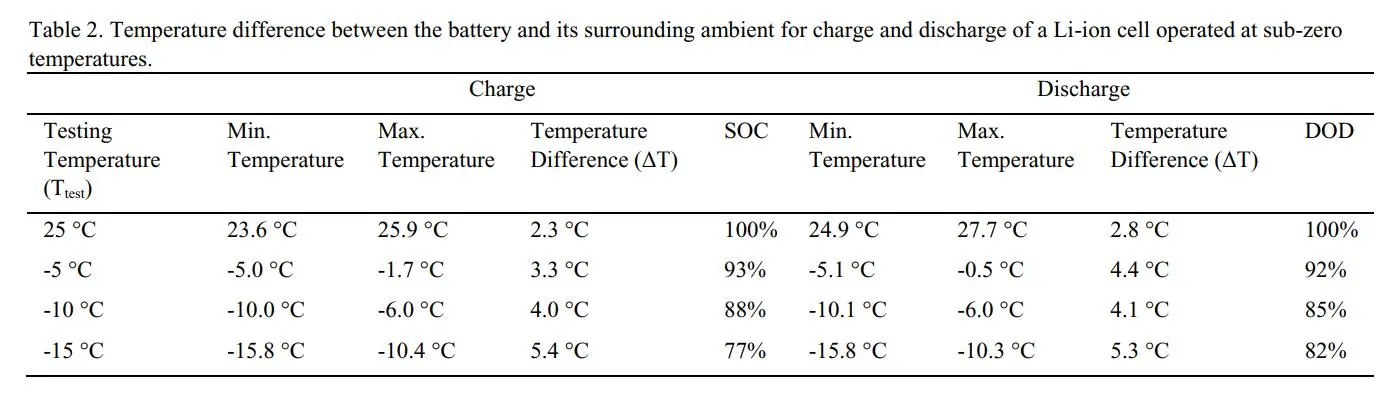
Commercial lithium cells do not contain free water, meaning they do not freeze solid at $0^\circ\text{C}$ like water buckets do. The organic carbonate electrolyte solvent blends dissolved lithium hexafluorophosphate ($LiPF_6$), lowering its physical freezing point well below $-40^\circ\text{C}$. However, while the liquid does not solidify into ice, severe cold stalls chemical activity, bringing ion movement to a near-standstill.
What Is the Minimum Operating Temperature of Lithium Batteries?
Industrial battery performance follows strict thermal boundaries across seasonal work environments:
| Operating Condition Mode | Standard Temperature Limit Range | Real-World Fleet Operational Impact | Buyer Advantage with Heated Technology |
|---|---|---|---|
| Safe Discharging Mode | -20°C to 60°C (-4°F to 140°F) | Equipment operates in winter, but usable runtime drops by 20% to 30%. | Prevents sudden mid-shift equipment shutdowns inside unheated distribution centers. |
| Optimal Performance Zone | 15°C to 35°C (59°F to 95°F) | Packs deliver 100% rated capacity and maximum acceleration power. | Extends daily equipment mileage, eliminating mid-day charging breaks. |
| Strict Charging Limit | 0°C to 45°C (32°F to 113°F) | Standard BMS blocks charging below freezing to avoid permanent cell damage. | Self-heating systems pre-heat cells automatically, enabling safe outdoor charging anywhere. |
Operational Takeaway: While you can safely discharge lithium batteries in sub-zero weather, attempting to charge them below freezing without pre-heating permanently damages the internal cell structure.
Can Freezing Temperatures Permanently Damage Lithium Batteries?
Simply storing a discharged lithium battery in freezing air will not permanently ruin its structure. However, forcing charging current into a frozen cell causes immediate chemical destruction. Freezing temperatures prevent lithium ions from entering the graphite matrix, forcing metallic lithium to build up on the anode surface instead.
What Happens When Lithium Batteries Are Exposed to Freezing Temperatures?
Pushing equipment hard during winter without thermal preparation generates clear physical and operational symptoms across your fleet.
Reduced Current Output and Power Capability
High internal resistance reduces peak output current. An electric utility cart climbing a frozen trail may feel sluggish. Industrial AGVs hauling heavy pallets inside cold storage rooms may trigger low-voltage alarms during sharp acceleration.
Slower Charging Speed in Cold Conditions
Cold cell temperatures reduce charging efficiency. The cell absorbs electrical energy slowly to prevent internal overheating. A charge cycle taking two hours during summer can stretch past four hours in winter conditions.
Reduced Electrode Efficiency and Energy Capacity
Freezing cold temporarily locks up available chemical energy. A 100Ah battery pack may only deliver 70Ah of actual working power at $-10^\circ\text{C}$. This capacity loss is temporary; full power returns naturally once the battery warms back up.
Long-Term Impact on Battery Lifespan
Repeatedly operating equipment under heavy electrical load while cells remain freezing cold stresses internal electrode coatings. Over time, this mechanical strain causes premature capacity loss, reducing service life from ten years down to three.
Can Lithium Batteries Be Charged Below Freezing Temperatures?
This is the single most vital technical rule for every fleet director: **never force charge current into a standard lithium pack below freezing.**
Why Charging Lithium Batteries Below 0°C Can Be Dangerous
When charging below $0^\circ\text{C}$, slow intercalation causes lithium plating. Because cold graphite cannot absorb incoming ions fast enough, lithium accumulates as metallic metal on the anode surface. Over repeated cold charges, metallic lithium grows into microscopic needle structures called dendrites.
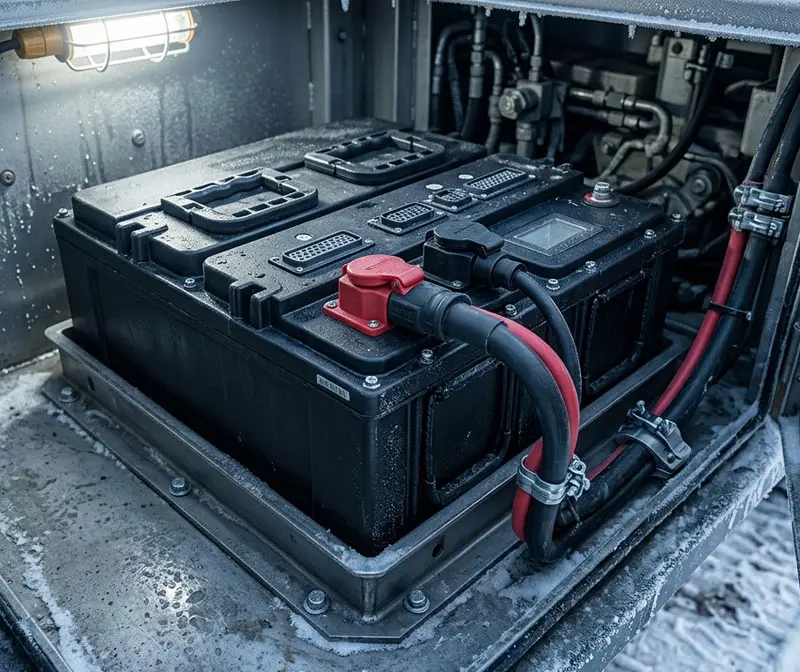
Lithium Plating Pathway: Sub-Zero Charge Current → Metallic Dendrite Growth → Separator Breach → Micro-Short Circuit & Fire Hazard
How Smart BMS Protects Lithium Batteries During Cold Charging
Modern commercial battery packs feature low-temperature charging protection cutoff sensors. The moment an operator plugs in a charger in sub-zero conditions, the BMS opens internal solid-state switches, blocking incoming current until temperatures rise into safe territory.
Recommended Cold Weather Charging Practices
To ensure safe charging during winter months, adopt these practical maintenance steps:
- Move mobile machinery inside heated service bays before connecting charging cables.
- Plug in chargers immediately after finishing work shifts while internal cell core temperatures remain warm from active discharge.
- Equip commercial vehicles with smart self-heating battery packs designed for cold outdoor environments.
How to Prevent Lithium Batteries from Freezing in Cold Weather
Protecting commercial equipment does not require complex engineering. Simple thermal management habits yield massive performance gains.
Use Heated Lithium Batteries
The simplest way to conquer winter conditions is installing self-heating LiFePO4 battery packs. These intelligent units incorporate internal positive temperature coefficient (PTC) heating elements. When connected to a charger in freezing air, the battery diverts incoming power to warm its cells to $5^\circ\text{C}$ before allowing charge current into the chemistry.
Insulate Battery Packs
Installing custom thermal insulation boxes crafted from thick closed-cell foam or neoprene traps operational heat inside the battery tray. Retaining heat generated during normal work keeps battery temperatures well above freezing ambient air during long outdoor shifts.
Maintain Proper Battery Temperature Before Use
Park commercial vehicles inside warm service bays overnight whenever possible. Starting shifts with warm battery packs guarantees full acceleration power, eliminating sluggish performance and unexpected voltage drops.
Benefits of Using Self-Heating Lithium Batteries in Cold Climates
For outdoor commercial equipment operating in northern climates, upgrading to self-heating modules eliminates winter maintenance headaches.
Reliable Charging Below Freezing Temperatures
Self-heating systems allow operators to charge equipment outdoors without checking weather forecasts. The onboard BMS manages cell heating automatically, protecting your investment without requiring manual labor.
Longer Battery Lifespan in Winter Conditions
Preventing destructive lithium plating during cold charging cycles preserves long-term cell health. Your battery bank retains its rated amp-hour capacity year after year, delivering maximum financial return.
Better Performance for Outdoor Applications
Off-grid solar installations, commercial RV fleets, passenger shuttles, and street sweepers keep working reliably through winter storms. Drivers enjoy steady power output without fear of mid-shift breakdowns.
Best Practices for Lithium Battery Storage and Use in Winter
If you need to park seasonal equipment like resort golf carts or sightseeing buses over winter, follow these practical storage guidelines.
Store Lithium Batteries at Proper Charge Levels
Never store lithium batteries completely empty or 100% full over long winter periods. Park equipment with a 40% to 60% State of Charge (SOC). This charge range keeps internal cell stress minimal during months of inactivity.
Keep Batteries Away from Extreme Temperature Changes
Avoid parking battery packs next to space heaters or uninsulated metal walls subject to freeze-thaw cycles. Condensation can collect inside battery enclosures during rapid temperature swings, causing electronic corrosion over time.
Regularly Check Battery Condition
Inspect stored battery banks every two months using a digital multimeter or Bluetooth BMS mobile app. If SOC drops below 30%, give the pack a short maintenance charge back up to 50% inside a warm environment.
Use a Battery Management System
Ensure your battery system incorporates an active BMS with integrated low-temperature cutoffs. A reliable BMS protects individual cells against small parasitic loads that can drain packs flat during winter storage.
Step-by-Step Guide for Winter Lithium Battery Storage
- Fully Check Battery Condition: Inspect battery terminals, clean off dust or debris, and check casing surfaces for physical damage.
- Charge Battery to Recommended Storage Level: Bring the pack to roughly 50% State of Charge (SOC) using a smart charger inside a warm room.
- Disconnect Unnecessary Loads: Turn off main breaker switches or disconnect terminal cables to stop slow phantom drain from onboard accessories.
- Store in a Dry and Temperature-Controlled Environment: Place packs on wooden pallets inside a clean, dry room kept between $5^\circ\text{C}$ and $20^\circ\text{C}$.
- Inspect Battery Before Reuse: Test resting open-circuit voltage in spring before reinstalling packs, charging them fully before returning to active service.
Five Effective Ways to Extend Lithium Battery Life in Cold Weather
- Avoid Charging Below Recommended Temperature: Always verify cell temperatures sit safely above $0^\circ\text{C}$ before applying charge current.
- Keep Battery Warm Before Operation: Park equipment indoors overnight to retain core warmth for morning shifts.
- Use Proper Charger and Charging Profile: Always match your battery chemistry with a smart dedicated CC/CV lithium charger.
- Select the Right Lithium Battery Chemistry: Choose stable LiFePO4 chemistry for heavy-duty commercial equipment to ensure maximum safety and longevity.
- Choose Batteries Designed for Cold Climate Applications: Invest in built-to-order packs equipped with smart internal heating elements for cold outdoor use.
Common Winter Fleet Pain Points & Technical Solutions
Operating electric commercial fleets in freezing conditions creates distinct operational friction. Here is how upgrading your energy system solves daily winter headaches:
Pain Point 1: Equipment Loses Power Mid-Shift Under Heavy Load
The Operational Reality: Operating electric utility carts or floor scrubbers in unheated facilities often leads to sudden power loss. Operators report that vehicles displaying 70% charge abruptly shut down when climbing ramps or lifting heavy cargo.
The Root Cause: Freezing temperatures increase internal battery resistance. Drawing high starting current creates severe voltage sag ($V = I \times R$), pulling total pack voltage below the BMS Undervoltage Cutoff threshold.
The Solution: Retrofit machinery with custom LiFePO4 battery modules equipped with high-discharge cells and insulated battery enclosures. Adding closed-cell thermal insulation retains core operating heat generated during work, keeping internal resistance low and preventing premature low-voltage cutoffs.
Pain Point 2: Smart Chargers Throw Error Codes & Reject Charging
The Operational Reality: Mechanics plug in golf carts or AGVs after outdoor winter shifts, only to find red fault lights flashing on chargers next morning, leaving fleets uncharged and useless.
The Root Cause: Integrated BMS temperature sensors detect freezing cell cores ($T < 0^\circ\text{C}$) and open protection switches to prevent metallic lithium plating. The charger senses an open circuit and halts operations.
| Common Charger Error Symptom | Underlying Cold Weather Issue | Immediate Operator Solution | Long-Term Strategic Fix |
|---|---|---|---|
| Red Flashing Fault Light (E-04) | BMS low-temperature charging lockout triggered | Move vehicle into heated service bay for 2 hours before plugging in | Upgrade fleet to self-heating LiFePO4 battery packs |
| Charger Stuck in Low Current Trickle Mode | BMS restricting current to prevent cell damage | Allow charger to slowly warm internal core via mild current draw | Install temperature-controlled smart chargers with pre-heat communication |
| Zero Amperage Draw Displayed | Charge circuit MOSFETs completely opened by BMS | Disconnect charger; warm battery pack above 5°C before retrying | Utilize custom battery heating blankets during overnight storage |
Operational Takeaway: Stop wasting technician hours manually warming batteries; upgrading to self-heating technology automates cold charging safely.
Pain Point 3: Rapid Capacity Degradation After Just One Winter Season
The Operational Reality: Fleet owners notice battery runtime drops permanently by 30% after one winter, forcing costly premature pack replacements long before expected warranty expiration.
The Root Cause: Unprotected charging below freezing forces lithium ions to convert into solid metallic lithium on graphite anode surfaces. These metallic deposits form sharp dendrites that consume active lithium and pierce internal separators.
The Solution: Install custom LiFePO4 packs featuring smart BMS current-scaling algorithms. Advanced BMS controllers automatically restrict charge rates to safe trickle levels when temperatures hover near freezing, preventing metallic plating entirely.
5-Year Fleet Total Cost of Ownership (TCO): Standard vs Heated Lithium Packs
Evaluating initial purchase prices without factoring in winter downtime leads to poor financial planning. Comparing total ownership costs across 50 commercial vehicles operating in cold climates reveals clear long-term savings:
| 5-Year Cost Factor | Standard Unheated LiFePO4 Fleet | Smart Self-Heating LiFePO4 Fleet | Buyer Advantage with Self-Heating Tech |
|---|---|---|---|
| Initial Battery Purchase Cost | $100,000 (Baseline) | $118,000 (+18% Upfront) | Higher Initial Asset Value: Includes integrated PTC heating elements and advanced low-temp BMS firmware. |
| Winter Labor & Downtime Expense | $45,000 (Manual warming, shift delays) | $0 (Automated 15-minute pre-heating) | Zero Wasted Worker Hours: Vehicles charge automatically outdoors overnight without employee supervision. |
| Premature Pack Replacement Expense | $50,000 (50% fleet replacement due to plating) | $0 (Retains full 4,000+ cycle lifespan) | Eliminates Surprises: Avoids purchasing mid-life replacement packs caused by sub-zero charging damage. |
| Efficiency Losses During Charge | $12,000 (High internal resistance loss) | $3,000 (Optimal electrochemical transfer) | Lower Utility Bills: Wastes far less grid electricity warming up cold resistive cells manually. |
| NET TOTAL COST OF OWNERSHIP | $207,000 | $121,000 | NET SAVINGS OF $86,000 (300%+ Upfront ROI) |
Operational Takeaway: Paying a modest upfront premium for self-heating technology yields massive net savings by eliminating operational downtime and doubling total battery service life.
Are Lithium Batteries Worth Using in Cold Weather?
Despite winter challenges, modern lithium packs remain far superior to legacy lead-acid setups for commercial fleet applications.
Why Lithium Batteries Are Still Preferred in Winter
Lead-acid batteries lose over 50% of usable capacity in freezing conditions and freeze solid when discharged, cracking plastic cases. Lithium batteries deliver steady output voltage, charge much faster, shave off hundreds of pounds of dead weight, and last four times longer when paired with thermal management.
Applications Requiring Cold Weather Lithium Batteries
Key commercial sectors relying on high-performance cold weather lithium modules include:
| Target Industry Sector | Typical Equipment Used | Recommended Cold Weather Battery Configuration | Primary Buyer Benefit |
|---|---|---|---|
| Resort & Commercial Mobility | Golf Carts, Passenger Shuttles, Sightseeing Buses | 48V / 72V Self-Heating LiFePO4 Pack | Zero Winter Downtime: Keeps guest transport moving reliably across freezing mountain resort routes. |
| Cold Storage Logistics | AGVs, AMRs, Warehouse Forklifts | 24V / 48V Low-Temp High-Rate Fast Pack | 24/7 Freezer Operations: Operates continuously inside $-20^\circ\text{C}$ freezer rooms with opportunity charging. |
| Off-Grid Power & Marine | Commercial RVs, Marine Vessels, Solar Microgrids | 12V / 24V Heated Deep-Cycle LFP System | Uninterrupted Off-Grid Energy: Charges safely directly from solar arrays during freezing winter days. |
Operational Takeaway: Equipping commercial equipment with custom self-heating lithium battery modules eliminates winter power failures and lowers ongoing fleet operating costs.
Frequently Asked Questions About Lithium Batteries Freezing
Can lithium batteries freeze?
No, liquid organic carbonate electrolytes inside lithium batteries do not freeze into solid ice at $0^\circ\text{C}$ like water does. However, sub-zero cold drastically slows internal chemical activity, reducing output power and blocking safe charging.
What temperature is too cold for lithium batteries?
Discharging standard lithium batteries below $-20^\circ\text{C}$ ($-4^\circ\text{F}$) or attempting to charge them below $0^\circ\text{C}$ ($32^\circ\text{F}$) without pre-heating triggers BMS safety shutdowns or causes permanent lithium plating damage.
Can LiFePO4 batteries charge below freezing?
Standard LiFePO4 batteries cannot safely charge below $0^\circ\text{C}$ without risking metallic lithium plating. However, self-heating LiFePO4 packs safely warm internal cell cores first, enabling normal charging in freezing weather.
How do I protect lithium batteries in winter?
Protect packs by storing equipment inside warm service bays, using insulating battery boxes, maintaining a 50% SOC level during storage, and choosing smart self-heating battery models.
Are heated lithium batteries worth it?
Yes. For commercial fleet operators in cold climates, self-heating packs prevent cell damage, eliminate charging delays, and lower overall labor expenses, paying for themselves quickly.
Choose Reliable Cold Weather Lithium Battery Solutions
Struggling with sluggish winter fleet performance or cold weather battery failures? Our engineering team designs high-performance custom LiFePO4 battery packs equipped with smart BMS thermal protection and automatic self-heating technology. Whether you build commercial golf carts, manage industrial AGV warehouse fleets, or integrate off-grid solar microgrids, we deliver built-to-order power solutions that operate reliably in severe cold. Contact our technical team today to request a custom quote, review technical engineering drawings, or consult directly with an expert battery engineer on your fleet requirements.
Related Posts
 https://anengjibattery.com/wp-content/uploads/2026/09/AnengJIBattery-Best-LiFePO4-Battery-How-to-Choose-the-Right-One.webp
675
1000
Battery Expert Team
https://anengjibattery.com/wp-content/uploads/2025/06/logo2-300x138.png
Battery Expert Team2026-09-17 08:52:142026-09-17 08:52:31How to Choose the Best LiFePO4 Battery
https://anengjibattery.com/wp-content/uploads/2026/09/AnengJIBattery-Best-LiFePO4-Battery-How-to-Choose-the-Right-One.webp
675
1000
Battery Expert Team
https://anengjibattery.com/wp-content/uploads/2025/06/logo2-300x138.png
Battery Expert Team2026-09-17 08:52:142026-09-17 08:52:31How to Choose the Best LiFePO4 Battery https://anengjibattery.com/wp-content/uploads/2026/09/anengjiBattery-lifepo4-battery-cell-packaging-wholesale.webp
675
1000
Battery Expert Team
https://anengjibattery.com/wp-content/uploads/2025/06/logo2-300x138.png
Battery Expert Team2026-09-16 09:52:342026-09-16 09:52:57LiFePO4 Battery Wholesale Guide: Best Suppliers in Spain
https://anengjibattery.com/wp-content/uploads/2026/09/anengjiBattery-lifepo4-battery-cell-packaging-wholesale.webp
675
1000
Battery Expert Team
https://anengjibattery.com/wp-content/uploads/2025/06/logo2-300x138.png
Battery Expert Team2026-09-16 09:52:342026-09-16 09:52:57LiFePO4 Battery Wholesale Guide: Best Suppliers in Spain https://anengjibattery.com/wp-content/uploads/2026/09/anengjibattery-Top-Lithium-Ion-Battery-Producers-for-Spain-Market-Growth.webp
675
1000
Battery Expert Team
https://anengjibattery.com/wp-content/uploads/2025/06/logo2-300x138.png
Battery Expert Team2026-09-16 01:13:392026-09-16 01:14:05Top Lithium Ion Battery Producers for Spain’s Market Growth
https://anengjibattery.com/wp-content/uploads/2026/09/anengjibattery-Top-Lithium-Ion-Battery-Producers-for-Spain-Market-Growth.webp
675
1000
Battery Expert Team
https://anengjibattery.com/wp-content/uploads/2025/06/logo2-300x138.png
Battery Expert Team2026-09-16 01:13:392026-09-16 01:14:05Top Lithium Ion Battery Producers for Spain’s Market Growth https://anengjibattery.com/wp-content/uploads/2026/09/Bulk-Lithium-Ion-Battery-Cells-Procurement-Guide-B2B-Sourcing.webp
675
1000
Battery Expert Team
https://anengjibattery.com/wp-content/uploads/2025/06/logo2-300x138.png
Battery Expert Team2026-09-14 09:47:322026-09-14 09:47:48Bulk Lithium-Ion Battery Cells Procurement Guide | B2B Sourcing
https://anengjibattery.com/wp-content/uploads/2026/09/Bulk-Lithium-Ion-Battery-Cells-Procurement-Guide-B2B-Sourcing.webp
675
1000
Battery Expert Team
https://anengjibattery.com/wp-content/uploads/2025/06/logo2-300x138.png
Battery Expert Team2026-09-14 09:47:322026-09-14 09:47:48Bulk Lithium-Ion Battery Cells Procurement Guide | B2B Sourcing


Leave a Reply
Want to join the discussion?Feel free to contribute!