
What Is Solar EPC? A Full Guide to Turnkey Solar Solutions
June 8, 2026 / Battery Expert Team / battery energy storage
Introduction
The global transition toward clean energy has accelerated rapidly, making utility-scale and commercial solar infrastructure critical assets for modern enterprises. Implementing a large-scale photovoltaic system requires navigating complex supply chains, strict grid interconnection standards, and intricate engineering designs. For asset owners, developers, and industrial plant managers, executing these projects seamlessly demands a specialized delivery framework. This is where a professional Solar EPC framework becomes indispensable. By consolidating all phases of asset deployment under a single execution model, stakeholders can avoid the structural fragmentation that traditionally leads to costly delays and operational bottlenecks, ensuring that your capital investments translate into highly optimized, high-yield renewable energy infrastructure.
What Is Solar EPC?
Solar EPC (Engineering, Procurement, and Construction) is a comprehensive, turnkey project delivery model where a single contractor manages the entire lifecycle of a solar asset. This includes custom site engineering, Tier-1 equipment procurement, civil and electrical construction, grid synchronization, and final commissioning, providing a seamless transition from concept to clean power generation.
What Is Solar EPC?
Solar EPC Definition
The term Solar EPC stands for Engineering, Procurement, and Construction. It represents a contract structure where the Solar EPC Contractor assumes full, end-to-end responsibility for delivering a fully operational solar energy facility. Let’s break down each core operational division:
- Engineering (E): This phase involves comprehensive site assessments, solar resource analysis, shading optimization, structural loading calculations, and precise electrical engineering (including DC/AC layouts, sub-station matching, and protection systems).
- Procurement (P): Leveraging large-scale supply chain mechanics, the contractor handles the sourcing, logistics, and quality assurance of vital components, including high-efficiency photovoltaic modules, advanced inverters, mounting structures, and balance of system (BOS) materials.
- Construction (C): This entails complete on-site physical deployment, including civil works (grading, trenching, road installation), structural installation, electrical integration, grid synchronization, and performance testing.
In contrast to traditional, fragmented project management models—where an owner must separately hire independent design firms, negotiate with dozens of hardware manufacturers, and manage various third-party installation crews—the Solar EPC model streamlines accountability. Under legacy approaches, conflicts between designers and installation teams frequently cause budget overruns and finger-pointing during delays. The EPC structure eliminates this friction by binding a single point of contact to strict timelines, fixed costs, and guaranteed system performance metrics.
How Solar EPC Works
The execution of a Turnkey Solar Solution follows a highly structured, sequential workflow designed to eliminate risk at each milestone. It begins with the initial feasibility study and moves directly into high-fidelity engineering simulations. Once engineering designs pass local regulatory checks, the procurement division coordinates the delivery of hardware to the site, aligning with the civil engineering schedule.
As construction advances, specialized electrical engineering services guide the installation of the balance of plant (BOP). The final phase covers grid synchronization and commissioning, where rigorous performance-ratio (PR) tests ensure the plant meets its engineered yield projections before formal commercial operation dates (COD) are achieved.
Real-World Example of a Solar EPC Project
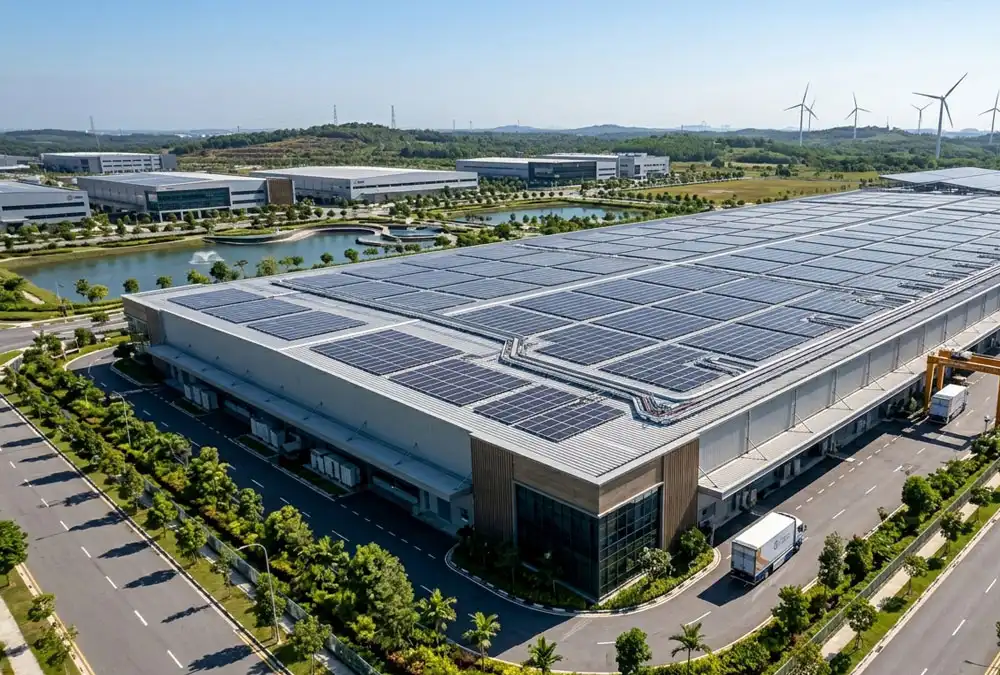
Industrial Application Case: Consider a heavy manufacturing facility consuming over 15,000 MWh of electricity annually. By hiring an experienced Commercial Solar EPC Company, the facility ensured a smooth transition to renewable energy from initial design to final commissioning.
The hired firm took full ownership of the project lifecycle: upgrading roof structural supports, resolving complex local utility grid constraints, and deploying a multi-megawatt rooftop PV array alongside an integrated battery storage room. Because a single Solar EPC Contractor managed both design and execution, construction was completed 45 days ahead of schedule, preventing expensive operational downtime for the factory floor and instantly lowering the facility’s peak demand charges by 35%.
Why Solar EPC Is Important for Modern Solar Projects
Reducing Project Complexity
Modern renewable infrastructure projects are highly intricate. Industrial stakeholders often face severe challenges when managing multiple independent entities. Siloed workflows regularly lead to design mismatches—such as mounting structures arriving with hole configurations that do not match the specified bifacial PV modules, or central inverters mismatching with localized grid voltages. A Solar EPC firm absorbs this complexity entirely. By integrating design, procurement, and field construction under one organizational umbrella, any engineering modifications are instantly shared with the logistics and field installation teams, maintaining complete alignment throughout the project.
Improving Project Quality and Reliability
Standardized asset deployment is crucial for long-term reliability. By working with a mature provider of Solar EPC Services, projects benefit from unified, multi-tiered Quality Assurance and Quality Control (QA/QC) programs. Engineering teams design systems utilizing highly reliable components, while the procurement branch directly verifies factory acceptance test (FAT) reports from Tier-1 manufacturers. This continuous oversight guarantees that sub-standard materials never reach the field, minimizing the risk of micro-cracks, insulation faults, or premature component failures during the system’s 25-year operational life.
Accelerating Time-to-Operation
In large-scale energy deployments, time is quite literally money. Delays in achieving commercial operation postpone your energy savings and delay your return on investment (ROI). Because the engineering and procurement phases occur concurrently in an EPC model, long-lead equipment—such as step-up medium-voltage transformers or custom high-capacity switchgear—can be ordered while site civil permits are still being finalized. This overlapping timeline significantly compresses the overall project schedule, allowing commercial and utility entities to energize their assets and capture clean energy yields much sooner.
The Importance of Solar EPC in Today’s Energy Landscape
Supporting Global Renewable Energy Goals
The momentum behind the global energy transition has driven rapid growth in the Renewable Energy EPC market. According to recent international energy transition reports, achieving global net-zero targets requires a tripling of installed solar capacity by 2030. Meeting these targets demands industrial-scale execution capabilities. Sophisticated Solar Project Development frameworks allow the industry to scale rapidly, converting large capital investments into operational utility-scale generation assets efficiently and reliably.
Meeting Growing Energy Demand
Industrial and commercial operations are facing unprecedented pressure from rising and volatile retail electricity tariffs. At the same time, massive structural trends like electrification and expanding data center infrastructure are straining regional grids. To secure cost stability and ensure energy resilience, enterprises are increasingly moving toward on-site distributed generation. Utilizing comprehensive Industrial Solar Solutions allows heavy industries to establish predictable, long-term leveled costs of energy (LCOE), protecting their bottom lines from volatile wholesale energy market pricing.
Driving Sustainable Infrastructure Development
Modern commercial infrastructure is evolving into a network of highly integrated, low-carbon microgrids. Today’s sustainable warehouses, manufacturing hubs, and smart logistics parks require advanced Solar System Integration that extends far beyond simple rooftop solar panels. This modern infrastructure requires combining solar arrays with smart energy management systems, vehicle-to-grid (V2G) electric vehicle charging networks, and large-scale battery storage. This complex integration requires the deep technical expertise found within an experienced Solar Construction Company.
| Operational Metric | Turnkey Solar EPC Model | Traditional Multi-Contractor Model |
|---|---|---|
| Accountability Structure | Single Point of Responsibility: One contract governs design, performance, and construction milestones. | Fragmented Responsibility: Owner must manage separate contracts for design, procurement, and installation. |
| Cost Control & Predictability | High Predictability: Fixed-price EPC contracts protect against design errors and change orders. | Low Predictability: High risk of unexpected costs arising from disputes between designers and builders. |
| Project Delivery Timeline | Accelerated Fast-Track: Overlapping engineering, procurement, and construction phases. | Sequential & Prolonged: Construction bidding can only begin after engineering designs are fully completed. |
| Risk Allocation | Transferred to Contractor: The EPC firm absorbs risks related to delays, weather, and performance issues. | Retained by Owner: The asset owner carries the financial risk for scheduling delays and design mismatches. |
| Long-Term Asset Performance | Guaranteed: Contracts include clear performance ratio (PR) and annual energy yield guarantees. | Variable: Equipment suppliers and installers frequently deflect blame for lower-than-expected energy yields. |
Applications and Use Cases of Solar EPC Services
Commercial Solar Projects
For corporate offices, shopping malls, and large retail centers, optimizing real estate like rooftops and parking lots is a prime opportunity to lower operating costs. A professional Commercial Solar EPC Company tailors designs to fit within urban architectural constraints. These systems utilize specialized, lightweight racking and advanced rapid-shutdown safety mechanisms to protect public spaces while maximizing clean power generation per square meter.
Industrial Solar Projects
Industrial manufacturing centers, cold-storage warehouses, and chemical processing facilities often have massive, flat roofs and highly intensive, consistent baseload energy needs. Deploying Industrial Solar Solutions in these environments requires deep technical expertise. EPC engineers must design around complex rooftop configurations—such as heavy-duty HVAC systems, exhaust vents, and monitoring gear—while ensuring that installation work never disrupts ongoing manufacturing shifts or violates strict industrial safety protocols.
Utility-Scale Solar Farms
Developing multi-megawatt ground-mounted installations requires an experienced Utility Scale Solar EPC Contractor capable of managing extensive civil works. These massive Utility Scale Solar Projects require deep expertise in environmental permitting, complex hydrological studies, automated single-axis tracking systems, and high-voltage substation engineering. Navigating these requirements ensures the plant can safely connect to regional transmission grids under stringent utility interconnect agreements.
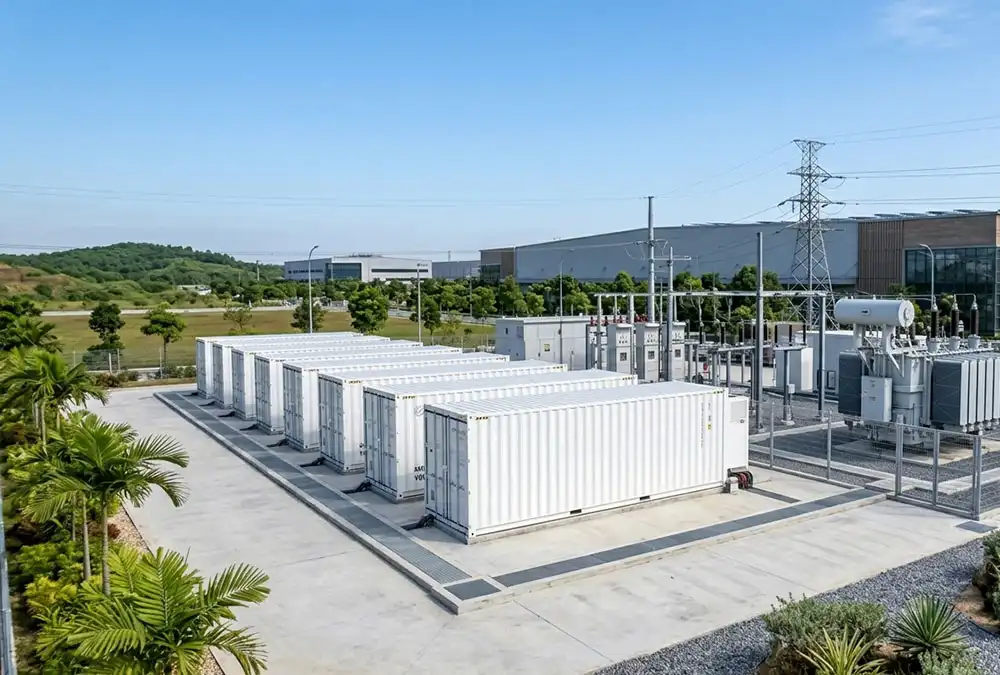
Solar Plus Energy Storage Projects (BESS EPC)
Because solar power is inherently intermittent, modern energy projects are increasingly incorporating Battery Energy Storage Systems (BESS). An integrated Solar EPC approach ensures that the solar array and the BESS work together seamlessly. This allows industrial facilities to capture excess daytime generation and discharge it during high-tariff peak evening hours—a strategy known as peak shaving or load shifting. Additionally, these systems can provide critical backup power during grid outages, ensuring operational continuity.
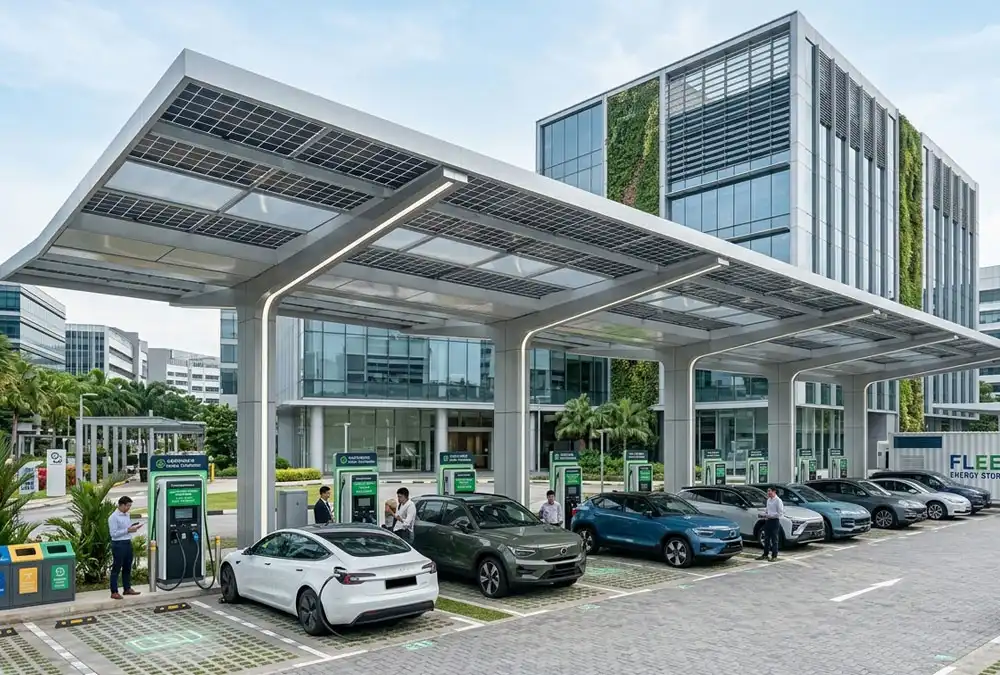
EV Charging Infrastructure Integrated with Solar
The rapid growth of corporate and municipal electric vehicle fleets has fueled high demand for integrated “Solar-Storage-Charging” microgrids. An experienced Solar EPC Contractor can design a unified system that routes solar power through local energy storage units directly into high-speed DC fast-charging stations. This intelligent system design prevents sudden, massive power draws from overloading the local utility grid, avoiding expensive peak-demand surcharges and providing truly zero-emission transportation fuel.
Key Components of the Solar EPC Process
1. Project Planning and Development
Every successful project begins with deep technical due diligence. Developers conduct thorough site assessments using high-resolution drone mapping and satellite topography to evaluate shading risks and soil load-bearing capacities. Advanced solar resource software analyzes long-term meteorological data to create highly accurate energy yield simulations. This data is fed into detailed financial models that map out exact payback periods, net present value (NPV), and internal rates of return (IRR) based on local commercial utility tariffs.
2. Engineering and System Design
During the engineering phase, highly skilled teams provide specialized Solar Engineering Services to turn raw site data into detailed construction Blueprints. This process involves two core design tracks:
- Electrical Design: Engineers map out optimal string configurations, design efficient DC/AC wire routing to minimize voltage drop, and select perfectly matched smart inverters. They also design essential system protections, including arc-fault detection, grounding grids, and rapid-shutdown safety networks.
- Structural Design: Structural engineers calculate localized wind-loading and seismic risks to design robust mounting foundations—whether dealing with ballasted rooftop mounts, driven steel ground piles, or specialized tracking arrays.
3. Procurement and Equipment Sourcing
The procurement phase leverages strategic Solar Procurement Services to source high-performance equipment that fits the project budget. Experienced EPC firms maintain direct relationships with Tier-1 BloombergNEF (BNEF) certified module manufacturers, advanced string or central inverter suppliers, and leading structural steel providers. This direct supply chain access ensures all components carry comprehensive long-term warranties and guarantees timely on-site delivery, preventing expensive field construction delays.
4. Construction and Installation
This is where the project comes to life on-site. Managed by an experienced Solar Construction Company, specialized field crews execute the physical deployment step-by-step:
- Civil Works: Clearing terrain, leveling and grading soil, installing access roads, and digging utility trenches.
- Mechanical Installation: Driving structural posts, assembling mounting racks, and securely installing solar modules.
- Electrical Installation: Running all high-voltage DC/AC wiring, integrating combiners, installing central inverters, and setting up the final medium-voltage step-up transformers.
5. Testing and Commissioning
Before a system is energized, it must pass a strict quality and safety inspection. Commissioning engineers perform extensive open-circuit voltage ($V_{oc}$) and short-circuit current ($I_{sc}$) tests, use thermal imaging to check for hot-spots, and conduct insulation resistance testing. Once internal quality checks are complete, the team coordinates with local utility engineers to perform anti-islanding and grid-synchronization tests, securing the formal Permission to Operate (PTO).
6. Operation and Maintenance (O&M)
A successful project delivery marks the beginning of a multi-decade operational lifecycle. Leading EPC firms offer continuous post-delivery support through dedicated Operation and Maintenance (O&M) programs. These services include 24/7 remote performance monitoring using cloud-based SCADA systems, regular preventive washings and physical inspections, and rapid predictive maintenance to resolve any string anomalies before they impact your energy yields.
Understanding Solar EPC Cost Structure
Investing in a utility or commercial-scale solar asset requires a clear understanding of capital expenditures (CAPEX). A typical Solar EPC turnkey contract breaks down into several key cost centers:
- Engineering & Permitting Costs (5% – 8%): Covers comprehensive site surveys, environmental studies, structural blueprints, electrical engineering, and local building and utility interconnection permitting fees.
- Equipment Procurement Costs (60% – 75%): The largest portion of the investment. This covers high-efficiency PV modules, inverters, structural racking, and basic electrical balance of system (BOS) components like high-voltage cabling and switchgear.
- Construction & Installation Costs (15% – 20%): Covers all on-site labor, heavy machinery rentals, civil engineering works, mechanical assembly, and electrical integration.
- Grid Interconnection & Substation Upgrades (5% – 10%): Relates to the infrastructure needed to safely connect to the utility grid, such as dedicated step-up transformers, protective relays, and any required local network upgrades.
Solar EPC Project ROI and Financial Benefits
Factors Affecting Solar Project ROI
The financial return of a solar asset depends on several key variables. First is the local Solar Irradiance—the amount of sunlight available at the site. Second is the local Electricity Price structure; regions with high retail commercial tariffs or heavy peak-demand charges see much faster payback times. Finally, taking advantage of local financial incentives, tax credits, and accelerated depreciation benefits can significantly lower initial net project costs.
Typical Solar Project Payback Period
Payback timelines vary based on application size, structure, and location. According to global renewable energy benchmarks from 2025 and 2026, typical payback trends look like this:
- Commercial Rooftop Arrays: Typically achieve full capital payback within 4 to 6 years, depending heavily on local state incentives and self-consumption rates.
- Industrial Rooftop Deployments: Usually see full payback within 3 to 5 years, driven by high on-site energy utilization during peak daytime production shifts.
- Utility-Scale Solar Farms: Generally operate on a 6 to 9-year payback model, secured by long-term Power Purchase Agreements (PPAs) with stable utility buyers.
How EPC Optimization Improves ROI
An experienced EPC contractor directly improves project returns through smart engineering design and optimized procurement. By using advanced 3D shading simulations, engineers can position rows to prevent energy loss, maximizing generation per square meter. Sourcing top-tier, high-efficiency bifacial modules and premium inverters ensures maximum energy conversion, while smart system layouts lower long-term maintenance costs and keep the plant running at peak performance.
Solar EPC and Energy Storage for Higher Returns
Adding a Battery Energy Storage System (BESS) creates new ways to maximize financial returns. Rather than selling excess daytime solar power back to the utility at low feed-in rates, businesses can store that energy on-site. This stored power can then be used to run operations during the evening when grid tariffs are highest, or used to participate in regional demand response programs, creating new revenue streams and boosting overall project returns.
Featured Technical Deep-Dive: Advanced Industrial Storage Integration
For modern industrial applications, selecting the right battery chemistry and energy management system is critical for safety and long-term investment protection. Let’s look at the leading technologies and their alternatives:
Battery Technologies Decoded
- Lithium Iron Phosphate (LFP): The industry standard for fixed energy storage. LFP batteries offer excellent thermal stability, eliminating the risk of thermal runaway. They provide a long cycle life (often exceeding 6,000 to 8,000 cycles at 80% Depth of Discharge), making them highly reliable for daily peak-shaving applications.
- Solid-State Battery Technology: An emerging alternative entering high-end industrial projects between 2025 and 2026. By replacing volatile liquid electrolytes with a solid conductive material, these batteries provide much higher energy density and improved safety profiles, though they currently carry higher initial manufacturing costs.
Alternative Industrial Storage Technologies
- Flow Batteries (e.g., Vanadium Redox): An excellent alternative for long-duration energy storage (exceeding 8+ hours). These systems store energy in external liquid electrolyte tanks. They experience almost zero degradation over decades of use and are highly scalable, though they require a larger physical footprint than compact lithium setups.
- Green Hydrogen Storage: A cutting-edge long-duration energy solution. Excess solar power runs an electrolyzer to split water into clean hydrogen gas, which is stored in pressurized tanks. This stored hydrogen can later be converted back into electricity via fuel cells or used directly as clean fuel for industrial manufacturing processes.
Recommended Industrial Solution: For standard industrial configurations, we highly recommend deploying pre-engineered, liquid-cooled LFP Containerized BESS Projects (2MWh – 5MWh capacities). These systems feature integrated smart string Battery Management Systems (BMS) and automated HVAC units, delivering the ideal balance of high round-trip efficiency, proven fire safety, and fast financial payback.
How to Choose the Right Solar EPC Contractor
Selecting an execution partner is the most critical decision a project developer or asset owner will make. To safeguard your investment, use this professional evaluation framework:
- Evaluate Proven Project Experience: Look for a partner with a deep portfolio of successfully commissioned projects that match your scale. A proven track record demonstrates their ability to handle complex site conditions and manage large construction logistics smoothly.
- Review Technical and Engineering Capabilities: Ensure the firm employs an experienced, in-house team of electrical, structural, and civil engineers. This expertise is vital for solving unexpected field challenges and designing optimized, high-yield systems.
- Check Certifications and Compliance: Confirm the contractor holds all necessary regional licenses, high-voltage electrical certifications, and strict ISO quality and safety management credentials. Compliance guarantees your asset will meet code requirements and pass utility grid inspections.
- Assess Supply Chain Strength: A strong contractor maintains direct relationships with Tier-1 hardware manufacturers. This buying power secures competitive pricing, reliable warranty support, and guaranteed delivery schedules.
- Analyze Post-Sales Support and O&M Services: Solar plants are 25-year investments. Partner with a company that offers comprehensive, long-term asset management, real-time remote monitoring, and rapid field maintenance support.
Frequently Asked Questions About Solar EPC
What does EPC mean in solar projects?
EPC stands for Engineering, Procurement, and Construction. It means a single company manages the entire project lifecycle—from designing the electrical layouts and sourcing all components to building the physical plant and handling grid connection—offering a true交钥匙 (turnkey) solution.
What is included in Solar EPC services?
A full-service contract covers initial site feasibility studies, complete structural and electrical design engineering, equipment sourcing and logistics, full site construction, utility grid synchronization testing, and transition to long-term operations and maintenance.
What is the difference between EPC and O&M?
EPC focus on the initial delivery phase, taking the project from an empty site or roof to a fully operational, grid-connected power plant. O&M (Operations & Maintenance) takes over once the plant is live, focusing on day-to-day monitoring, cleaning, and ongoing maintenance to keep the system running efficiently over its lifetime.
How much does a Solar EPC project cost?
Total costs depend heavily on project size, site conditions, structural requirements, and whether energy storage is included. Commercial and industrial projects benefit from significant economies of scale; a detailed site assessment and custom engineering study are required to provide an exact fixed-cost proposal.
How long does a Solar EPC project take?
A standard commercial or industrial installation typically takes between 3 to 6 months from initial contract signing to grid connection. Larger utility-scale solar farms can take from 9 months to over a year, depending on the scale of civil engineering works and local utility grid upgrade timelines.
Can Solar EPC projects include battery storage systems?
Yes, absolutely. Modern solar projects frequently integrate advanced Battery Energy Storage Systems (BESS). A modern Solar EPC Contractor can design and deliver fully integrated solar-plus-storage systems, optimizing them for peak shaving, backup resilience, or microgrid operations.
Need Professional Solar EPC Consultation?
Are you ready to optimize your corporate energy strategy, secure long-term price stability, and deploy high-performance renewable infrastructure?
Whether you are developing Commercial Solar Projects, upgrading Industrial Solar Projects, deploying large-scale Utility-Scale Solar Farms, or looking to integrate smart Solar + Battery Energy Storage Systems and zero-emission Solar-Powered EV Charging Infrastructure—our expert engineering teams are here to help.
Comprehensive Turnkey Solutions Driven by Industry Experts
From initial feasibility mapping and custom electrical engineering to global Tier-1 hardware procurement, complete site construction, and professional long-term O&M management—we deliver fully optimized energy assets built for maximum financial return.
Contact Us to Maximize Your Solar Project Performance
Looking for more insights into advanced solar PV technologies, containerized BESS innovations, and smart EV charging networks? Visit our clean energy blog to stay ahead of the latest renewable market trends and technology breakthroughs.
Related Posts
 https://anengjibattery.com/wp-content/uploads/2026/10/AnengjiBattery-Cell-to-Pack-Energy-Density-Comparison.webp
675
1000
Battery Expert Team
https://anengjibattery.com/wp-content/uploads/2025/06/logo2-300x138.png
Battery Expert Team2026-10-23 06:58:392026-10-23 06:58:41What Does Lithium-Ion Battery Energy Density Really Mean?
https://anengjibattery.com/wp-content/uploads/2026/10/AnengjiBattery-Cell-to-Pack-Energy-Density-Comparison.webp
675
1000
Battery Expert Team
https://anengjibattery.com/wp-content/uploads/2025/06/logo2-300x138.png
Battery Expert Team2026-10-23 06:58:392026-10-23 06:58:41What Does Lithium-Ion Battery Energy Density Really Mean? https://anengjibattery.com/wp-content/uploads/2026/10/AnengjiBattery-Lithium-Battery-Management-in-Daily-Operation.webp
675
1000
Battery Expert Team
https://anengjibattery.com/wp-content/uploads/2025/06/logo2-300x138.png
Battery Expert Team2026-10-22 08:17:332026-10-23 06:58:57How Does a Lithium BMS Improve Battery Longevity?
https://anengjibattery.com/wp-content/uploads/2026/10/AnengjiBattery-Lithium-Battery-Management-in-Daily-Operation.webp
675
1000
Battery Expert Team
https://anengjibattery.com/wp-content/uploads/2025/06/logo2-300x138.png
Battery Expert Team2026-10-22 08:17:332026-10-23 06:58:57How Does a Lithium BMS Improve Battery Longevity? https://anengjibattery.com/wp-content/uploads/2026/10/AnengjiBattery-Industrial-Power-Under-Real-Load.webp
675
1000
Battery Expert Team
https://anengjibattery.com/wp-content/uploads/2025/06/logo2-300x138.png
Battery Expert Team2026-10-22 07:04:542026-10-22 07:05:30How Does a 48V LiFePO4 BMS Protect Industrial Power?
https://anengjibattery.com/wp-content/uploads/2026/10/AnengjiBattery-Industrial-Power-Under-Real-Load.webp
675
1000
Battery Expert Team
https://anengjibattery.com/wp-content/uploads/2025/06/logo2-300x138.png
Battery Expert Team2026-10-22 07:04:542026-10-22 07:05:30How Does a 48V LiFePO4 BMS Protect Industrial Power? https://anengjibattery.com/wp-content/uploads/2026/10/AnengJIBattery-Electric-Forklift-Battery-Buying-Decision.webp
675
1000
Battery Expert Team
https://anengjibattery.com/wp-content/uploads/2025/06/logo2-300x138.png
Battery Expert Team2026-10-21 06:22:222026-10-21 06:22:38Ready to Buy Battery for Electric Forklift? Use This Guide
https://anengjibattery.com/wp-content/uploads/2026/10/AnengJIBattery-Electric-Forklift-Battery-Buying-Decision.webp
675
1000
Battery Expert Team
https://anengjibattery.com/wp-content/uploads/2025/06/logo2-300x138.png
Battery Expert Team2026-10-21 06:22:222026-10-21 06:22:38Ready to Buy Battery for Electric Forklift? Use This Guide


Leave a Reply
Want to join the discussion?Feel free to contribute!