
Top 10 LiFePO4 Battery Manufacturers in Europe (2026 Guide)
August 15, 2026 / Battery Expert Team / Battery Basics
Introduction
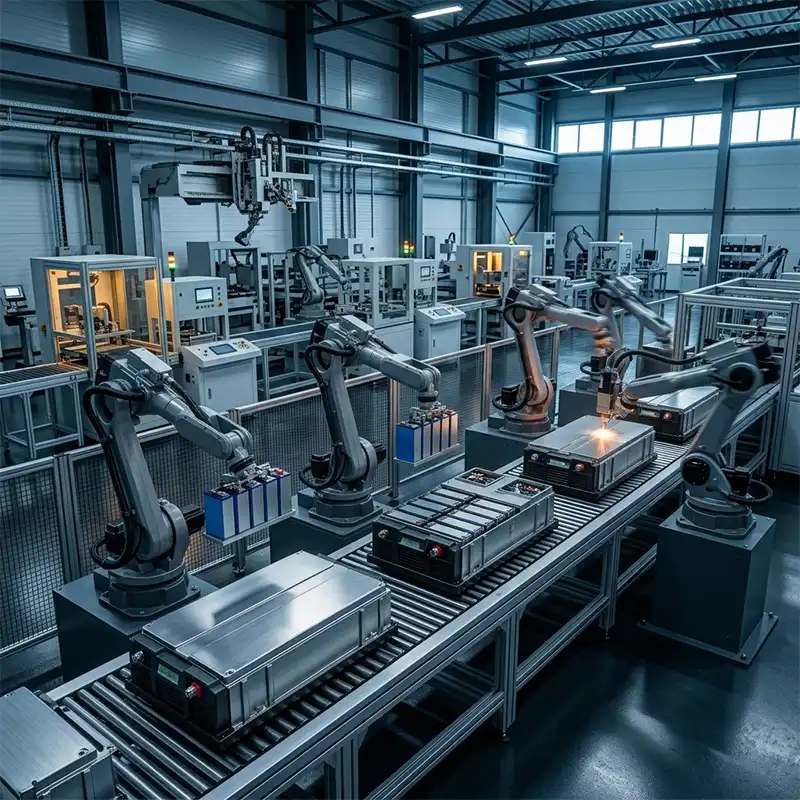
For procurement managers, system integrators, and industrial OEM buyers across Europe, finding verified, high-performance LiFePO4 Battery Manufacturers is essential for powering modern energy storage and electric traction projects. Below is the definitive ranking and analysis of Europe’s leading manufacturers for 2026.
Top 10 LiFePO4 Battery Manufacturers in Europe (2026 Rankings)
1. Morrow Batteries
Company Overview & Market Position: Headquartered in Arendal, Norway, Morrow Batteries is a pioneer in green Scandinavian cell manufacturing. Operating fully on 100% renewable hydroelectric power, Morrow provides ultra-low carbon footprint battery cells to Western European energy integrators.
Key Technologies & Products: Large-format prismatic LiFePO4 cells optimized for deep-cycle durability. Their Eyde 1 facility delivers high-density cell chemistry engineered for heavy-duty stationary and marine applications.
Certifications & EU Compliance: Fully compliant with EU Battery Regulation (Regulation EU 2023/1542) supply chain tracing, UN38.3, CE, and IEC 62619 standards.
Main European Markets & Applications: Serving Nordic and Central European grid integrators, maritime hybrid vessels, and stationary commercial energy storage.
2. BMZ Group
Company Overview & Market Position: Based in Karlstein am Main, Germany, BMZ Group is one of Europe’s largest independent battery pack integrators, maintaining automated manufacturing hubs across Germany and Poland for industrial OEMs.
Key Technologies & Products: Modular industrial battery architectures, proprietary intelligent BMS boards, and standardized 24V–80V motive power packs designed for material handling equipment.
Certifications & EU Compliance: ISO 9001, ISO 14001, ECE R100.03, IEC 62619, CE, UN38.3, and RoHS compliance.
Main European Markets & Applications: Dominant across DACH and Benelux regions, supplying electric forklifts, automated guided vehicles (AGVs), and commercial ESS.
3. Leclanché SA
Company Overview & Market Position: Headquartered in Switzerland with automated cell production facilities in Willstätt, Germany, Leclanché brings over a century of electrochemical innovation to heavy transport and specialized energy storage.
Key Technologies & Products: Liquid-cooled LFP battery modules, heavy-duty marine-grade battery racks, and custom BMS systems engineered for extreme duty cycles.
Certifications & EU Compliance: DNV-GL Marine Certification, ISO 9001, IEC 62619, CE, UN38.3, and ECE R100 compliance.
Main European Markets & Applications: Leading supplier across Northern Europe and the Mediterranean for hybrid ferries, electric passenger ships, locomotives, and mining equipment.
4. Saft Groupe (TotalEnergies)
Company Overview & Market Position: A subsidiary of TotalEnergies headquartered in France, Saft specializes in advanced industrial battery solutions engineered for mission-critical infrastructure across Europe.
Key Technologies & Products: Intensium Max containerized BESS solutions, ruggedized high-voltage LFP battery racks, and active thermal management control systems.
Certifications & EU Compliance: ISO 9001, ISO 14001, UL 1973, IEC 62619, CE, UN38.3, and European defense/railway accreditations.
Main European Markets & Applications: Utility-scale grid support across Western Europe, telecom backup systems, railway infrastructure, and defense projects.
5. VARTA AG
Company Overview & Market Position: A legendary German brand with extensive battery engineering heritage, VARTA manufactures high-end modular home and commercial energy storage systems in Germany.
Key Technologies & Products: VARTA Pulse Neo and Element residential LFP storage units, high-efficiency AC-coupled systems, and integrated cloud energy management platforms.
Certifications & EU Compliance: VDE 2510-50 safety benchmark, ISO 9001, CE, IEC 62619, UN38.3, and RoHS compliant.
Main European Markets & Applications: Strong market leadership in DACH (Germany, Austria, Switzerland) for residential self-consumption and micro-grid storage.
6. Tritek Europe GmbH
Company Overview & Market Position: Based in Germany, Tritek Europe focuses exclusively on designing integrated smart lithium battery packs tailored for Light Electric Vehicles (LEVs) and urban mobility systems.
Key Technologies & Products: Compact 36V, 48V, and 60V LFP packs equipped with CANbus BMS systems, shock-resistant potting, and IP67 waterproof housings.
Certifications & EU Compliance: EN 50604-1 (LEV battery safety standard), CE, UN38.3, RoHS, and ISO 9001.
Main European Markets & Applications: Commercial cargo bikes, e-scooters, last-mile delivery fleets, and light industrial AGVs across Central and Southern Europe.
7. AnengJi Battery (Anengji Energy Co., Ltd.)
Company Overview & Market Position: AnengJi Battery is an engineering-focused OEM/ODM manufacturer specializing in custom LiFePO4 battery pack integration. Built for European equipment builders, AnengJi delivers tailored pack architectures for specialized industrial demands.
Key Technologies & Products: Custom 12V to 72V battery solutions, sub-zero self-heating BMS logic (-20°C operational), active bi-directional cell balancing, and pre-configured CANbus/RS485/Modbus inverter protocols.
Certifications & EU Compliance: ISO 9001, CE, UN38.3 safety reports, IEC 62619 industrial standard, and complete EU carbon footprint documentation.
Main European Markets & Applications: Key supplier across DACH, Benelux, Scandinavia, and Southern Europe, customizing packs for Golf Carts, AGVs, Forklifts, Floor Sweepers, and 2.5kWh–30kWh Residential/C&I Storage.
8. InoBat Auto
Company Overview & Market Position: Located in Slovakia, InoBat is an R&D-driven cell developer utilizing high-throughput AI screening to custom-formulate chemical architectures for industrial automotive clients.
Key Technologies & Products: Customized LFP pouch and prismatic cells, rapid-charging module designs, and flexible pilot-to-gigawatt cell manufacturing lines.
Certifications & EU Compliance: IATF 16949 (Automotive Quality Management), ISO 9001, CE, UN38.3, and EU Battery Passport readiness.
Main European Markets & Applications: Central and Eastern European automotive OEMs, commercial electric bus builders, and specialized off-highway machinery.
9. Forsee Power
Company Overview & Market Position: Headquartered in Paris, France, Forsee Power is a market leader in smart battery systems for heavy electromobility, operating large automated assembly facilities in France and Poland.
Key Technologies & Products: Zen and Flex modular LFP battery systems, active liquid-cooling structural trays, and high-voltage BMS systems built for continuous heavy cycles.
Certifications & EU Compliance: ECE R100.03, ECE R10, ISO 26262 (Functional Safety), CE, UN38.3, and ISO 9001.
Main European Markets & Applications: Supplying European electric city buses, heavy commercial trucks, off-highway construction equipment, and regional passenger trains.
10. CATL (European Gigafactories)
Company Overview & Market Position: As the world’s largest battery cell manufacturer, CATL has established massive European manufacturing bases in Erfurt, Germany, and Debrecen, Hungary, to supply local European integrators.
Key Technologies & Products: Large-scale 280Ah and 314Ah prismatic LFP cells, Cell-to-Pack (CTP) industrial architectures, and EnerOne/EnerC megawatt storage containers.
Certifications & EU Compliance: UL 9540A, IEC 62619, IATF 16949, CE, UN38.3, and full European carbon trace documentation.
Main European Markets & Applications: Serving European automotive OEMs, utility-scale BESS grid developers, and large industrial original equipment manufacturers pan-Europe.
Why European B2B Buyers are Prioritizing LiFePO4 Battery Systems
European industrial sectors require strict safety standards, operational longevity, and verifiable carbon compliance. According to independent benchmark studies by the Fraunhofer Institute for Solar Energy Systems (Fraunhofer ISE), Lithium Iron Phosphate (LiFePO4 / LFP) chemistry has established itself as the premier chemistry for stationary storage and industrial traction, outperforming Nickel Manganese Cobalt (NMC) in long-term Levelized Cost of Storage (LCOS).
1. Superior Thermal Stability & Safety Standards
Safety in LiFePO4 technology comes from its robust olivine crystal structure with strong covalent P-O bonds. Unlike NMC chemistry, LFP does not release oxygen during thermal breakdown, virtually eliminating the risk of catastrophic oxygen-fueled thermal runaway. Industrial safety relies on an advanced Battery Management System (BMS) providing multi-tiered protection: precise over-voltage, under-voltage, short-circuit, over-current, and multi-point temperature monitoring.
2. Unmatched Cycle Life & Total Cost of Ownership (TCO)
While traditional lead-acid batteries degrade after 300 to 500 cycles at 50% Depth of Discharge (DoD), tier-1 LiFePO4 cells routinely achieve 4,000 to 6,000+ continuous cycles at 80% DoD (retaining 80% initial capacity). For high-utilization commercial equipment operating daily shifts, this extended service life lowers total maintenance and downtime costs significantly over a 10-year operational window.
3. Regulatory & Environmental Compliance (EU Battery Regulation)
With the full implementation of the updated EU Battery Regulation (Regulation EU 2023/1542), European supply chains mandate strict transparency, ethical material sourcing, and carbon footprint declarations. LiFePO4 chemistry contains zero conflict minerals such as cobalt or nickel, simplifying compliance with European sustainability metrics and future Battery Passport mandates.
European Market Growth & Industry Forecast
Data from the BloombergNEF (BNEF) H1 2026 Energy Storage Market Outlook reveals that global energy storage additions will expand dramatically, with annual deployments exceeding 158 GW / 459 GWh. BNEF reports confirm that LiFePO4 chemistry commands over 90% of all stationary energy storage additions globally, driven primarily by demand across Europe and China.
Industry Benchmark Data (Source: BNEF & IEA Reports)
- Stationary Dominance: LFP market share in grid-scale and C&I projects reached 91.4% due to superior lifetime safety economics.
- Industrial Traction Shift: Per IEA Global EV & Electrification data, over 75% of new material handling equipment (MHE) and low-speed electric vehicles (LSEVs) deployed in Western Europe have transitioned from lead-acid to LFP.
- EU Local Manufacturing Capacity: Regional European cell and pack production capacity is projected to surpass 150 GWh, supported by EU energy security initiatives.
Key Technical Evaluation Factors for B2B Procurement
Evaluating battery vendors requires strict cross-referencing of technical capabilities against real-world operational environments. Use the following structured metrics to filter potential suppliers.
| Evaluation Dimension | Technical Verification Standard | Commercial Impact for Buyer |
|---|---|---|
| Manufacturing Tier & Verification | Factory audit (ISO 9001), automated cell grading, EOL automated testing. | Eliminates middleman markups; guarantees direct engineering support. |
| BMS Firmware & Communication | CANbus 2.0B, RS485, Modbus RTU, customizable inverter protocol matching. | Prevents system communication locks; enables remote telemetry tracking. |
| Compliance & Certifications | CE, UN38.3, IEC 62619, RoHS, EU Battery Regulation carbon data. | Guarantees legal entry into EU markets; prevents customs seizure. |
| Custom Mechanical / OEM Capability | IP67 rating, custom sheet metal/casing, high vibration resistance (ISO 16750). | Ensures perfect fitment into constrained vehicle or machine chassis. |
| Low-Temperature Performance | Self-heating BMS integration (pre-charging heating pads for sub-zero operation). | Prevents lithium plating and permanent cell degradation during European winters. |
LiFePO4 Battery Integration with Inverters & Industrial Controllers
Importance of BMS-Inverter Closed-Loop Communication
In energy storage installations, “open-loop” operation (relying solely on voltage thresholds) leads to inaccurate SOC estimation and unexpected system shutdowns. Closed-loop communication allows the battery BMS to continuously transmit real-time maximum charge current limits (CCL), discharge current limits (DCL), cell temperature data, and SOC directly to the inverter or motor controller.
Compatible Inverter Protocols & Voltage Matching
Prior to procuring battery packs for European deployment, confirm that your manufacturer’s BMS firmware includes native support for leading European inverter brands, including:
- Victron Energy: VE.Can / CAN-bus closed-loop protocol.
- SMA Solar Technology: High-voltage and low-voltage CANbus standards.
- Deye / Sunsynk: Low-voltage 48V RS485 and CAN protocols.
- Studer Innotec / Schneider Electric: Modbus RTU and custom CAN networks.
Engineering Advisory: Always verify operating voltage windows. Connecting a nominal 48V (51.2V LFP) battery system to an inverter expecting a 400V high-voltage bus will result in hardware failure. Ensure your battery supplier explicitly cross-checks communication protocols before volume production.
Why Partner with AnengJi Battery for Your European Projects?
Selecting the right battery partner means balancing high technical customization with stable, long-term manufacturing output. At AnengJi Battery, we deliver custom-engineered LiFePO4 solutions built specifically to solve complex engineering challenges for equipment manufacturers and energy integrators across Europe.
1. Application-Specific Engineering
We analyze your equipment load profiles, peak discharge surges, spatial dimensions, and operational temperature ranges to build customized, high-reliability battery systems.
2. Comprehensive Voltage Flexibility
Full-spectrum customization spanning 12V, 24V, 36V, 48V, 60V, 64V, and 72V battery configurations engineered to match your specific motor drives or inverter buses.
3. Full OEM/ODM Integration
End-to-end development: from mechanical enclosure design, thermal simulation, custom BMS firmware programming, to private-label branding and certification support.
Frequently Asked Questions (FAQs)
What is the primary technical advantage of LiFePO4 over NMC for stationary ESS?
LiFePO4 provides significantly higher thermal stability, lower thermal runaway risk, superior lifetime cycle numbers (4,000–6,000 cycles vs. 1,500–2,500 for NMC), and contains no toxic cobalt, resulting in lower total cost of ownership (TCO).
Which certifications are mandatory to legally import LiFePO4 battery packs into the EU?
At a minimum, battery packs require CE marking for market compliance and UN38.3 certification for transport safety (air/sea/road). Industrial systems generally require IEC 62619 for safety verification, and products must adhere to the EU Battery Regulation (2023/1542) regarding carbon declarations.
Can AnengJi battery packs be customized for sub-zero European winter operations?
Yes. AnengJi integrates self-heating BMS logic paired with internal silicone heating elements. When low temperatures are detected, incoming charging current is automatically diverted to safely warm the battery core to optimal temperatures before allowing charge current to enter the cells.
How do I verify if a supplier is a real manufacturer versus a trading company?
Request a live video factory audit, review ISO 9001 quality management certificates registered under the company’s name, examine detailed engineering schematic outputs, and verify UN38.3 test reports issued directly to the manufacturer.
Related Article
Related Posts
 https://anengjibattery.com/wp-content/uploads/2026/10/AnengjiBattery-Cell-to-Pack-Energy-Density-Comparison.webp
675
1000
Battery Expert Team
https://anengjibattery.com/wp-content/uploads/2025/06/logo2-300x138.png
Battery Expert Team2026-10-23 06:58:392026-10-23 06:58:41What Does Lithium-Ion Battery Energy Density Really Mean?
https://anengjibattery.com/wp-content/uploads/2026/10/AnengjiBattery-Cell-to-Pack-Energy-Density-Comparison.webp
675
1000
Battery Expert Team
https://anengjibattery.com/wp-content/uploads/2025/06/logo2-300x138.png
Battery Expert Team2026-10-23 06:58:392026-10-23 06:58:41What Does Lithium-Ion Battery Energy Density Really Mean? https://anengjibattery.com/wp-content/uploads/2026/10/AnengjiBattery-Lithium-Battery-Management-in-Daily-Operation.webp
675
1000
Battery Expert Team
https://anengjibattery.com/wp-content/uploads/2025/06/logo2-300x138.png
Battery Expert Team2026-10-22 08:17:332026-10-23 06:58:57How Does a Lithium BMS Improve Battery Longevity?
https://anengjibattery.com/wp-content/uploads/2026/10/AnengjiBattery-Lithium-Battery-Management-in-Daily-Operation.webp
675
1000
Battery Expert Team
https://anengjibattery.com/wp-content/uploads/2025/06/logo2-300x138.png
Battery Expert Team2026-10-22 08:17:332026-10-23 06:58:57How Does a Lithium BMS Improve Battery Longevity? https://anengjibattery.com/wp-content/uploads/2026/10/AnengjiBattery-Industrial-Power-Under-Real-Load.webp
675
1000
Battery Expert Team
https://anengjibattery.com/wp-content/uploads/2025/06/logo2-300x138.png
Battery Expert Team2026-10-22 07:04:542026-10-22 07:05:30How Does a 48V LiFePO4 BMS Protect Industrial Power?
https://anengjibattery.com/wp-content/uploads/2026/10/AnengjiBattery-Industrial-Power-Under-Real-Load.webp
675
1000
Battery Expert Team
https://anengjibattery.com/wp-content/uploads/2025/06/logo2-300x138.png
Battery Expert Team2026-10-22 07:04:542026-10-22 07:05:30How Does a 48V LiFePO4 BMS Protect Industrial Power? https://anengjibattery.com/wp-content/uploads/2026/10/AnengJIBattery-Electric-Forklift-Battery-Buying-Decision.webp
675
1000
Battery Expert Team
https://anengjibattery.com/wp-content/uploads/2025/06/logo2-300x138.png
Battery Expert Team2026-10-21 06:22:222026-10-21 06:22:38Ready to Buy Battery for Electric Forklift? Use This Guide
https://anengjibattery.com/wp-content/uploads/2026/10/AnengJIBattery-Electric-Forklift-Battery-Buying-Decision.webp
675
1000
Battery Expert Team
https://anengjibattery.com/wp-content/uploads/2025/06/logo2-300x138.png
Battery Expert Team2026-10-21 06:22:222026-10-21 06:22:38Ready to Buy Battery for Electric Forklift? Use This Guide


Leave a Reply
Want to join the discussion?Feel free to contribute!