
How Does a Lithium BMS Improve Battery Longevity?
October 23, 2026 / Battery Expert Team / Battery Basics
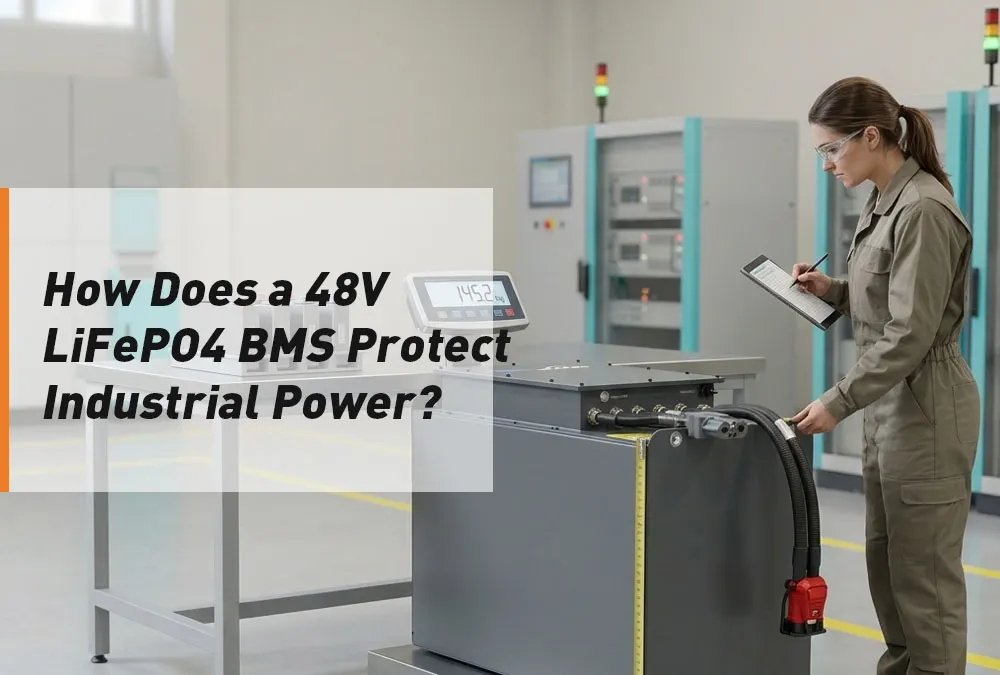
Introduction
A supplier quotes a cell at 250 Wh/kg, yet the finished battery pack arrives far heavier than the buyer expected. The number may be correct, but the comparison is not. Lithium-ion battery energy density describes stored energy relative to mass or volume, and its meaning changes with the measurement boundary: active material, cell, module, complete pack or installed system.
The DKE/VDE Compendium: Li-ion Batteries reports a broad cell-level range of roughly 90–250 Wh/kg and 160–650 Wh/L, depending on chemistry. Those are not universal pack specifications. Once a BMS, contactors, fuse, wiring, enclosure, thermal provisions and mounting hardware are included, the complete battery will normally show a lower figure.
The short answer: ask for both Wh/kg and Wh/L at the complete-pack level, calculated from measured discharge energy under stated conditions and the pack’s complete as-shipped mass and maximum external dimensions. A density number without its unit, system level, test conditions and energy basis is not ready for a purchasing decision.
What Does Lithium-Ion Battery Energy Density Actually Measure?
Energy density answers one of two questions: how much electrical energy is stored for a given mass, or how much is stored in a given volume. Procurement teams often receive only one figure even though the equipment may have both a weight limit and a fixed battery compartment. That is why the unit must appear beside every claim.
Gravimetric energy density: Wh/kg
Gravimetric energy density is energy divided by mass and is usually expressed in watt-hours per kilogram. The more formal term is specific energy. It matters when battery mass affects vehicle payload, handling, structural loading, transport or product weight.
A high Wh/kg figure can look attractive in a mobile project, but the denominator must be explicit. If the calculation includes cells but excludes the enclosure, connectors and high-voltage components required to operate the battery, it does not describe the product the buyer will receive.
Volumetric energy density: Wh/L
Volumetric energy density is energy divided by volume and is expressed in watt-hours per litre. It can be more important than Wh/kg when an OEM has a fixed compartment, when a rack or cabinet has limited floor space, or when service clearance restricts the usable installation envelope. The U.S. Department of Energy defines the same principle in its historical review of EV battery-pack volumetric energy density: more energy within the same volume can extend range without enlarging the pack, or enable a smaller pack for the same stored energy.
Use that DOE data as an example of improvement in a defined EV-pack dataset—not as a specification for every industrial, mobility or stationary battery sold today.
Capacity, energy, energy density and power density are different
| Term | Typical unit | What it tells the buyer | Common purchasing mistake |
|---|---|---|---|
| Capacity | Ah | Electric charge stored at a stated test basis | Comparing Ah across different voltages as if it were energy |
| Energy | Wh or kWh | Total nominal or measured electrical energy | Assuming nameplate energy equals usable delivered energy |
| Specific energy | Wh/kg | Energy relative to mass | Using cell mass for a complete-pack claim |
| Volumetric energy density | Wh/L | Energy relative to external volume | Ignoring protruding connectors, handles or required clearance |
| Power density | W/kg or W/L | How rapidly energy can be delivered | Assuming high energy density guarantees high peak current |
The VDE battery FAQ explains the basic relationship: nominal voltage multiplied by capacity gives energy in watt-hours. It also notes that cathode material affects voltage, capacity, service life, safety and charge/discharge behaviour. This is why an Ah figure alone cannot answer an energy-density or application-fit question.
How Is Lithium-Ion Battery Energy Density Calculated?
Use the nameplate calculation for a first comparison
Nominal energy (Wh) = nominal voltage (V) × rated capacity (Ah)
Gravimetric energy density (Wh/kg) = energy (Wh) ÷ complete mass (kg)
Volumetric energy density (Wh/L) = energy (Wh) ÷ maximum external volume (L)
These formulas are useful for an initial quotation comparison, provided every supplier uses the same boundary. They are not a substitute for a discharge test. Nominal voltage is a representative value, while actual battery voltage changes during discharge. Temperature, current, cutoff voltage, cell balance and BMS limits also influence the energy delivered before the pack stops.
Measured discharge energy gives a stronger purchasing basis
A more defensible numerator is the measured electrical energy delivered over an agreed discharge test. Test equipment obtains it by integrating voltage multiplied by current over time. The report should state temperature, starting condition, discharge current or duty cycle, cutoff criteria and the measurement point.
This resolves a common argument between suppliers that appear to use the same cells. One may quote nominal cell energy divided by cell mass; another may report measured pack output divided by complete pack mass. The numbers are not contradictory—they answer different questions. Procurement should normalize them before comparing price, size or performance.
Worked example: one hypothetical pack, three different numbers
Illustrative calculation only—not an AnengJi product specification. Assume a battery uses cells with 5.12 kWh of total nominal energy. The combined cell mass is 25 kg. After the BMS, busbars, fuse, contactors, enclosure, connectors and mounting structure are added, the complete as-shipped pack is 50 kg and occupies 50 L. A controlled test under the agreed conditions delivers 4.80 kWh before cutoff.
| Claim boundary | Calculation | Result | What it can support |
|---|---|---|---|
| Nominal cell-set specific energy | 5,120 Wh ÷ 25 kg | 204.8 Wh/kg | Cell selection and early architecture work only |
| Nominal complete-pack density | 5,120 Wh ÷ 50 kg or 50 L | 102.4 Wh/kg and 102.4 Wh/L | Comparable packaging and logistics estimate |
| Measured complete-pack density | 4,800 Wh ÷ 50 kg or 50 L | 96 Wh/kg and 96 Wh/L | Acceptance comparison under the stated test conditions |
The 204.8 Wh/kg value is not necessarily false. It is simply unsuitable for calculating the installed product mass. If an enclosure designer used it without asking what was included, the battery bay, payload or shipping plan could be wrong before the first sample arrived.
Why Cell, Module, Pack and System Energy Density Are Different
A cell stores energy. A useful industrial battery also has to control current, interrupt faults, manage temperature, resist vibration or impact, connect to the equipment and remain serviceable. Those functions add mass and volume without adding nominal watt-hours.
The Argonne National Laboratory BatPaC manual explicitly models cell, module, battery pack and complete battery-system levels. That separation reflects a practical engineering reality: a material result cannot be promoted directly into a system result.
| Level | What is normally added | Buyer consequence |
|---|---|---|
| Active material | Collectors, separator, electrolyte and cell casing are not yet fully represented | Useful for chemistry research, not product packaging |
| Cell | Cell housing and terminals | Appropriate for comparing qualified cells on the same test basis |
| Module | Interconnects, compression, frames, sensors and thermal interfaces | Shows packaging efficiency, but not the delivered battery |
| Pack | BMS, fuse, contactors, current sensing, enclosure, connectors and cooling provisions | Use this level for most purchased-battery mass and volume comparisons |
| Installed system | Mounting, guards, cabinet/rack, HVAC, fire provisions, power conversion and service space as applicable | Determines real equipment footprint and integration burden |
An industry detail worth checking: a quotation can put nominal cell watt-hours in the numerator while using a partial pack mass in the denominator. Cables, mating connectors, protective enclosure parts or required thermal hardware may be excluded. Request a line-item definition of the boundary, then recalculate using measured complete-pack energy and complete as-shipped mass and volume.
How Chemistry Changes Lithium-Ion Battery Energy Density
“Lithium-ion” is a family, not one chemistry. Electrode materials influence voltage, capacity, current capability, thermal behaviour and ageing. Cell format, electrode design and pack architecture can also change the finished result, so a chemistry name should guide questions rather than replace model-specific evidence.
| Chemistry family | General density tendency | Why an application may still choose it | Evidence to request |
|---|---|---|---|
| LFP | Typically below high-energy nickel-rich cells at cell level | A project may prioritize thermal margin, current behaviour, service life or system economics | Complete-pack energy, mass, current limits, thermal validation and life-test conditions |
| NMC/NCA | Often selected when cell-level mass or space is tightly constrained | Compact mobile products may value energy per kilogram or litre strongly | Exact cell variant, pack thermal design, validated current window and safety test evidence |
| LTO | Generally lower specific energy | Some projects value power capability, charging behaviour or temperature performance more than compactness | Duty-cycle test, charger limits, thermal conditions and complete system mass |
| LCO | Known for relatively high cell energy in compact electronics | Applicable product constraints differ from industrial traction and stationary systems | Application-specific current, thermal, life and safety validation |
The trap is to select the highest cell Wh/kg before defining the load. If the chosen cell cannot supply a lift, acceleration or inverter-start peak within its validated limits, the designer may add parallel cells, heavier conductors or more cooling. The finished pack can lose the mass or volume advantage that justified the chemistry choice.
Buyers considering LFP can review the available LiFePO4 battery configurations as a starting point, but the selection still needs the complete voltage window, current profile, dimensions, mass, charger, communications and environment. The practical LFP trade-offs should be considered alongside energy density, not after a cell has already been chosen.
Energy Density vs Power Density: Which One Limits the Application?
Energy density relates to how much energy fits into mass or volume. Power density relates to how quickly that energy can be delivered. According to the DKE/VDE compendium, energy-optimised batteries and power-optimised batteries occupy different design positions; high-current operation also creates heat that the cell and thermal system must manage.
| Application condition | Likely dominant question | Decision evidence |
|---|---|---|
| Long runtime with a strict vehicle mass limit | How much usable energy can the complete pack carry per kilogram? | Measured Wh/kg, load profile, reserve and structural limit |
| Repeated short high-current peaks | Can voltage, temperature and BMS limits remain acceptable? | Peak current, duration, repetition, recovery and thermal data |
| Fixed cabinet or vehicle compartment | Will the installed system fit with service and cooling clearances? | Wh/L at pack/system level and a controlled installation drawing |
| Stationary daily cycling | Which architecture delivers the required usable energy, safety, life and service access? | System footprint, operating window, thermal design, duty cycle and lifecycle evidence |
A Ragone plot can visualize the trade-off between specific energy and specific power, but it does not select a battery by itself. The plot must represent the relevant test level and conditions, while the project still needs voltage, current, thermal, life, mechanical and control-system checks.
What Energy Density Means in Real Applications
Forklifts and material-handling equipment
A lighter pack may appear to increase payload or simplify handling, but a forklift battery can also form part of the truck’s approved mass and stability configuration. Replacing a heavy lead-acid battery with a lighter lithium pack therefore requires more than matching voltage and tray dimensions. If the battery is too light, the solution may need approved ballast or another engineered approach; the vehicle manufacturer or qualified integrator should define the permitted configuration.
The recognizable warning sign is a quotation that celebrates weight reduction but does not ask for the required battery mass, continuous and peak lift current, connector, charger or truck communication. Collect those inputs first, then validate the forklift battery integration before treating higher Wh/kg as a benefit.
AGVs, cleaning machines and low-speed electric vehicles
These products frequently have tight compartments, so Wh/L matters. Their operating pattern can also include acceleration peaks, gradients, payload changes, opportunity charging and long idle periods. A pack that fits the bay but reaches a BMS current limit on a ramp does not solve the application. Provide the actual duty cycle and controller limits when reviewing battery options for low-speed vehicles.
Home, commercial and industrial energy storage
For stationary storage, cell Wh/kg may be secondary to cabinet footprint, access, thermal management, protection, power conversion, installation and maintenance. A compact cell can still become a large system once spacing, cooling, electrical clearances and service paths are included. Compare the complete installed architecture when evaluating integrated battery energy storage solutions, not only the battery-cell datasheet.
Regional operating context
Europe: use consistent VDE/DKE terminology and request model-specific documentation for the complete product. Conformity, transport and regulatory requirements must be confirmed for the battery category, application, destination and applicable date; an energy-density number does not establish compliance.
United States: DOE and Argonne data provide useful reference methods and historical context, but product approval still depends on the actual equipment, installation, transport route and governing requirements.
Central Asia and Africa: neither region has one climate or service environment. High ambient temperature, solar heat, dust, vibration, difficult freight handling, charger quality and distance to technical support may make thermal margin, enclosure design and repairability more valuable than maximum cell density. Record site conditions instead of adding a generic regional derating factor.
How to Verify a Supplier’s Energy-Density Claim
A credible RFQ turns a headline into a reproducible result. Ask the same questions of every supplier and reject a density comparison if the answers use different boundaries.
- Which level is being reported? Active material, cell, module, pack or installed system?
- What is the energy numerator? Nominal V × Ah, rated energy, or measured discharge energy?
- What were the test conditions? Temperature, current or duty cycle, starting state, cutoff voltage and rest periods?
- What mass is included? Complete as-shipped battery, including BMS, enclosure, switching, fuse, cables and connectors?
- How was volume measured? Maximum external dimensions, including permanent protrusions required for installation?
- What is excluded? Cooling equipment, external junction box, rack, ballast, mounting or required installation clearance?
- What usable window is approved? Do BMS and application limits reduce the energy available to the equipment?
- Which model-specific evidence applies? Request the report, configuration identifier, revision and serial/batch traceability needed to match the supplied unit.
Rejection rule: do not compare a cell-level headline from one supplier with a measured pack-level value from another. If the supplier cannot define the numerator, denominator and test conditions, mark the result “not comparable” rather than filling the gap with an assumption.
A practical acceptance test
Before testing, agree on the test method, instrumentation, environmental conditions, current profile, voltage limits, stabilization periods and pass tolerance. Use qualified personnel and equipment; do not bypass the BMS, fuse, contactors or thermal protections.
- Record the exact battery configuration and weigh the complete as-shipped pack.
- Measure maximum external dimensions and state whether connectors or required attachments are included.
- Run the agreed controlled discharge and record voltage, current, time and temperature.
- Calculate delivered Wh from the measured data, then divide by the recorded kg and L.
- Compare the result with the contractual basis and tolerance—not with a cell brochure.
- Review voltage spread, thermal behaviour and BMS events. Passing Wh/kg does not prove peak power, life or complete application compatibility.
Low-friction next step: prepare a one-page comparison containing each supplier’s measurement level, nominal and measured energy, complete mass, external volume, test conditions and excluded hardware. This usually reveals whether a “better” number reflects superior packaging or simply a different calculation.
Request a Battery Specification and Evidence Review
Send your required voltage window, usable energy, peak and continuous load, compartment dimensions, mass limit, temperature range, charger data and supplier density claims. The review can identify incompatible comparison boundaries and the model-specific evidence still needed before a sample or quotation decision.
Why Fuel and Battery Energy-Density Tables Can Mislead
Tables that place batteries beside fuels often mix different system boundaries. A fuel’s heating value is not the electrical energy delivered at the output of an engine or generator; conversion efficiency and equipment mass still matter. Combustion also relies on oxygen from outside the listed fuel mass, while a rechargeable battery carries the electrochemical materials needed for discharge.
For a real purchase, compare the complete systems performing the same duty: usable electrical or mechanical output, mass, volume, efficiency, refill or recharge process, lifetime, safety provisions and operating environment. A sensational material-level comparison rarely answers an equipment-level decision.
Frequently Asked Questions
What is a typical energy density for a lithium-ion battery?
The DKE/VDE compendium gives a broad cell-level range of roughly 90–250 Wh/kg and 160–650 Wh/L depending on chemistry. A module, complete pack or installed system will normally be lower because it includes non-energy-storing components. Use a model-specific value and stated test conditions for purchasing.
Is Wh/kg the same as battery energy density?
Wh/kg is gravimetric energy density, also called specific energy. Wh/L is volumetric energy density. Both are energy-density measures, but they answer different design questions, so the unit and measurement level must always be stated.
Why is pack-level energy density lower than cell-level energy density?
The pack adds busbars, wiring, sensors, BMS electronics, contactors, fuses, enclosure, structural support, connectors and thermal provisions. These are necessary for operation and protection but do not add stored energy. An installed system may add further mounting, cooling and power-conversion equipment.
Which lithium-ion chemistry has the highest energy density?
Nickel-rich lithium-ion chemistries are commonly considered when high cell energy per mass or volume is a priority, but chemistry labels cover many variants. The best battery still depends on power, temperature, life, safety validation, cost, availability and the density of the completed pack—not a generic chemistry ranking.
How do I calculate a battery pack’s Wh/kg?
Divide clearly defined pack energy in watt-hours by the complete as-shipped pack mass in kilograms. For early comparison, energy may be nominal voltage multiplied by rated Ah. For acceptance, measured discharge energy under agreed conditions is more defensible. Label which basis was used.
Does higher energy density always mean longer runtime?
No. Higher density means more energy per mass or volume, not necessarily more total usable energy in the installed battery. Runtime also depends on the load profile, efficiency, current limits, temperature, usable state-of-charge window, ageing and cutoff conditions.
Conclusion: Compare the Complete Battery, Not the Headline Cell
The energy density of lithium-ion batteries cannot be reduced to one trustworthy universal number. Every figure needs four labels: unit, system level, test conditions, and whether the energy is nominal, measured or usable. Without those labels, a technically correct cell result can become a misleading pack promise.
For procurement, the most useful comparison is measured complete-pack discharge energy divided by complete as-shipped mass and volume under a common test basis. Then evaluate power, temperature, life, safety, compatibility and service needs around it. That approach prevents a high-density headline from becoming an undersized power system, an overweight product or a battery that simply does not fit the real job.
Related Articles
LiFePO4 Battery Advantages and Disadvantages
Lithium-Ion vs Lead-Acid Forklift Batteries: Which Is Better?

Related Posts
 https://anengjibattery.com/wp-content/uploads/2026/10/AnengjiBattery-Cell-to-Pack-Energy-Density-Comparison.webp
675
1000
Battery Expert Team
https://anengjibattery.com/wp-content/uploads/2025/06/logo2-300x138.png
Battery Expert Team2026-10-23 06:58:392026-10-23 06:58:41What Does Lithium-Ion Battery Energy Density Really Mean?
 https://anengjibattery.com/wp-content/uploads/2026/10/AnengjiBattery-Lithium-Battery-Management-in-Daily-Operation.webp
675
1000
Battery Expert Team
https://anengjibattery.com/wp-content/uploads/2025/06/logo2-300x138.png
Battery Expert Team2026-10-22 08:17:332026-10-23 06:58:57How Does a Lithium BMS Improve Battery Longevity?
 https://anengjibattery.com/wp-content/uploads/2026/10/AnengjiBattery-Industrial-Power-Under-Real-Load.webp
675
1000
Battery Expert Team
https://anengjibattery.com/wp-content/uploads/2025/06/logo2-300x138.png
Battery Expert Team2026-10-22 07:04:542026-10-22 07:05:30How Does a 48V LiFePO4 BMS Protect Industrial Power?
 https://anengjibattery.com/wp-content/uploads/2026/10/AnengJIBattery-Electric-Forklift-Battery-Buying-Decision.webp
675
1000
Battery Expert Team
https://anengjibattery.com/wp-content/uploads/2025/06/logo2-300x138.png
Battery Expert Team2026-10-21 06:22:222026-10-21 06:22:38Ready to Buy Battery for Electric Forklift? Use This Guide



Leave a Reply
Want to join the discussion?Feel free to contribute!