
How to Choose Wholesale LiFePO4 Batteries Suppliers?
August 14, 2026 / Battery Expert Team / Battery Basics
Introduction
When you sit down to negotiate with prospective energy storage battery suppliers, it is painfully easy to fall into the trap of hunting down the lowest unit price on paper. But as anyone who has managed field operations for fleet deployments, commercial forklifts, or large-scale solar installations will tell you, a cheap pack often turns into an absolute nightmare after three months. A sudden BMS failure on a fleet of golf carts or severe cell capacity drift in a warehouse AGV line does not just cost money—it ruins your company’s market reputation. Finding the right partner for wholesale LiFePO4 batteries requires looking past fancy sales pitch decks and evaluating actual factory assembly lines, cell matching standards, firmware stability, and genuine warranty fulfillment.
According to the IEA Global EV Outlook 2026, Lithium Iron Phosphate (LFP) chemistry accounts for over 55% of all global electric transport battery deployments, cementing its role as the backbone of modern electrification. Furthermore, market tracking in BloombergNEF’s 2026 Energy Storage Outlook reveals that global stationary storage deployments reached a staggering 158 GW / 459 GWh in 2026 alone, with LFP capturing over 90% of new installations due to its thermal safety and cycle longevity. Whether you are sourcing bulk lithium batteries for utility carts, floor scrubbers, or off-grid solar storage, understanding how to vet manufacturers directly is the single most important purchasing decision you will make this year.
Why Choosing the Right Wholesale LiFePO4 Battery Supplier Matters
Selecting an inexperienced vendor for high-volume orders creates ripple effects across your entire business ecosystem. Here is why your choice of a wholesale battery supplier directly impacts your bottom line.
Project Reliability Depends on Battery Quality
If your battery pack cuts power mid-shift on a warehouse AGV or shuts down unexpectedly in a resort golf cart climbing a hill, the end customer does not blame the cell factory—they blame you. Equipment uptime, vehicle driving range, and long-term cycle degradation are determined entirely by how strictly the factory matches internal cell resistance (IR) and voltage tolerances prior to pack assembly. Subpar assembly leads to early cell imbalance, triggering premature BMS protection cut-offs and surging your field failure rates.
Total Cost of Ownership Is More Important Than Unit Price
Looking strictly at the per-unit purchase price is a classic buyer mistake. To calculate true financial impact, smart buyers evaluate Total Cost of Ownership (TCO):
TCO = Initial FOB Price + Freight & Customs Duties + Installation Overhead + Maintenance & Replacement Costs + Warranty Claim Losses
A battery pack saved by using cheap secondary cells might shave $80 off your upfront purchase price. However, if 12% of those packs suffer BMS lockouts overseas within 18 months, the international freight, labor replacement, and legal warranty claims will wipe out your margins instantly.
Compliance and Safety Reduce Procurement Risk
Batteries are classified as Class 9 Hazardous Materials during ocean and air transit. If your supplier cannot provide legitimate, verifiable test certificates (such as UN38.3, MSDS, CE, and IEC 62619), your multi-container shipment risks being impounded by customs authorities at port. Furthermore, lacking proper UL standards can invalidate your commercial insurance coverage in North American and European operating environments.
Supply Chain Stability Matters for Wholesale Buyers
A vendor might offer a great sample price, but can they scale production smoothly when you issue a purchase order for three 40-foot HQ containers? As leading energy storage battery suppliers expand their operations globally, verifying raw material contract stability, automated production capacity, and realistic lead times keeps your own customer distribution pipelines running without costly delivery stalls.
Warranty and Technical Support Protect Your Business
What actually happens when a customer reports a dead pack in the field? Do you get a dedicated engineering team assisting with remote CANbus diagnostic logs within 24 hours, or do you receive radio silence from a trading agent? A robust manufacturer warranty includes clear replacement terms, accessible spare parts (like drop-in replacement BMS modules), and direct technical escalation routes.
Understanding Wholesale LiFePO4 Batteries Before You Buy
Before issuing requests for quotations (RFQs), your engineering and procurement teams must align on fundamental battery construction definitions.
What Is a LiFePO4 Battery?
Lithium Iron Phosphate ($\text{LiFePO}_4$, or LFP) is a lithium-ion chemistry renowned for its exceptional thermal and chemical stability. Unlike Nickel Manganese Cobalt (NCM) cells that risk thermal runaway at lower temperatures, LFP cathode structures resist breakdown even up to 500°C. A complete commercial pack consists of matched individual cells connected in series/parallel, an integrated Battery Management System (BMS), a rugged protective enclosure, high-current internal wiring/busbars, and external communication ports.
LiFePO4 Cells vs. Complete Battery Packs
It is vital to distinguish between buying standalone cells and complete packs:
- LiFePO4 Cells: Raw 3.2V prismatic or cylindrical units. These require specialized laser welding equipment, balancing systems, and external BMS integration. They are suitable primarily for high-level pack integrators.
- Complete Battery Packs: Fully finished, drop-in commercial units featuring built-in BMS protection, robust outer casings (metal or ABS), and plug-and-play connectors. Most B2B buyers search for complete, certified packs ready for immediate installation.
Standard LiFePO4 Batteries vs. Custom Battery Packs
Off-the-shelf standard batteries work well for basic marine or backup power applications. However, specialized equipment like low-speed vehicles, tuktuks, industrial sweepers, and custom solar setups require tailored solutions. Customization spans operational voltage, continuous discharge rates, physical casing dimensions, mounting bracket placement, and proprietary CANbus/RS485 firmware protocols.
How to Evaluate a Wholesale LiFePO4 Battery Manufacturer or Supplier
Use these seven technical evaluation pillars when vetting any potential LiFePO4 battery manufacturer or direct LFP battery supplier.
1. Manufacturer or Trading Company?
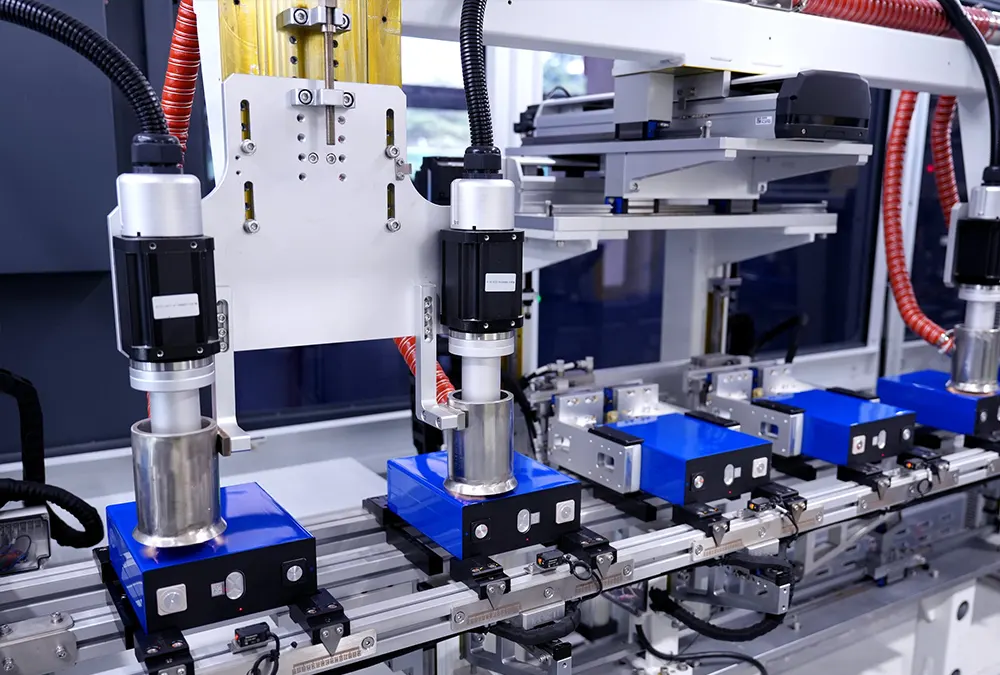
Always verify whether you are dealing directly with an engineering factory or an intermediary reseller. Ask for live video walk-throughs showing automated cell sorting machines, laser welding stations, and aging test rooms. While reputable trading companies can offer value in consolidated sourcing, buying directly from a true manufacturer ensures immediate engineering customization, direct factory pricing, and faster warranty resolutions.
2. Industry Experience and Track Record
Ask how long the vendor has been manufacturing lithium power systems and inspect their portfolio across target markets. Experienced manufacturers understand the subtle mechanical vibration challenges of golf carts, the thermal demands of parking air conditioners, and the deep-cycling requirements of stationary energy storage systems.
3. Certifications and Compliance
Do not accept vague promises like “built to international standards.” Request authentic, clear PDF copies of testing reports. Key certifications include:
| Certification / Standard | Primary Scope & Purpose | Mandatory Target Context |
|---|---|---|
| UN38.3 & MSDS | Transportation safety testing (vibration, thermal shock, short circuit). | Mandatory globally for ocean and air freight shipments. |
| CE / IEC 62619 | Industrial lithium battery safety and electrical compliance. | Essential for European markets and industrial machinery integration. |
| UL 1973 / UL 9540A | Safety standards for stationary energy storage and motive power units. | Crucial for North American commercial and grid-tied installations. |
| ISO 9001 | Factory quality management systems and operational process control. | Ensures consistent batch-to-batch production quality. |
4. Quality Control and Battery Testing
A Tier-1 manufacturing workflow must enforce strict quality controls at every stage: incoming inspection of raw cells, precise automated capacity/internal resistance sorting, optical inspection of laser welds, 100% full-load BMS functional testing, environmental sealing checks, and final full charge/discharge aging tests before packing.
5. Production Capacity and Scalability
Ask prospective vendors about their monthly megawatt-hour (MWh) output, current line capacity utilization, standard order turnaround times, and peak-season scheduling policies. You must confirm that your supplier can scale production volume effortlessly as your market demand grows.
6. OEM and ODM Customization Capability
Evaluate their in-house engineering team. A capable factory offers rapid 3D CAD modeling for custom battery trays, sheet metal tooling adjustment, custom wiring harness routing, private labeling, and custom BMS communication protocol integration to match specific motor controllers or hybrid solar inverters seamlessly.
7. Warranty and After-Sales Support
Examine the fine print of the warranty policy. Is it a transparent, full-replacement warranty or a vague prorated coverage policy? Check technical response time SLAs and confirm the availability of local replacement components like BMS boards, internal relays, and connectors.
Wholesale LiFePO4 Battery Supplier Evaluation Checklist
Use these quick diagnostic tables during supplier auditing and vendor comparison meetings.
Supplier Background Checklist
| Evaluation Item | What to Check | Supplier Verification Status |
|---|---|---|
| Manufacturer Status | Direct owner of physical assembly lines or middle reseller? | [ ] Verified Factory [ ] Trading Company |
| Industry Experience | Years operating specifically in lithium battery engineering. | [ ] 10+ Years [ ] 5-10 Years [ ] < 5 Years |
| Export Markets | Proven experience exporting to North America, EU, or Southeast Asia. | [ ] Extensive [ ] Limited [ ] Domestic Only |
| Engineering Team | In-house CAD mechanical, electrical, and BMS software engineers. | [ ] In-House [ ] Outsourced [ ] None |
Product Quality Checklist
| Evaluation Item | What to Check | Supplier Verification Status |
|---|---|---|
| Cell Grading | 100% brand-new Grade-A cells with factory QR trace codes? | [ ] Confirmed Grade-A [ ] Grade-B / Unverified |
| Cycle Life Rating | Minimum cycle count verified at specific DoD and discharge C-rates. | [ ] 3,500+ @ 80% DoD [ ] Unverified Claims |
| BMS Protection | Integrated smart BMS with thermal, voltage, and current cut-offs. | [ ] Smart BMS included [ ] Basic Hardware BMS |
| Housing Sealing | Proper weather protection for motive or outdoor storage uses. | [ ] IP65 / IP67 Metal [ ] Basic Plastic / Open Tray |
How to Determine the Right Wholesale LiFePO4 Battery Specifications
Matching electrical and physical battery parameters accurately prevents costly field retrofits and equipment downtime.
Choose the Correct Battery Voltage
System operating voltage is determined strictly by your equipment’s controller and motor specifications:
| Voltage Platform | Typical Application Scenarios | Key Buyer Benefit & Technical Advantage |
|---|---|---|
| 12V / 24V | Floor scrubbers, RV house power, small marine trolling, trolling motors. | Direct replacement for multi-battery lead-acid series strings, simplifying installation. |
| 36V / 48V | Standard golf carts, AGVs, light utility vehicles, residential solar storage. | Delivers optimal thermal efficiency and lower current draw for medium-duty commercial motors. |
| 60V / 64V / 72V | Passenger tuktuks, heavy delivery tricycles, high-speed sightseeing buses, forklifts. | Provides high torque output, rapid acceleration capabilities, and maximum heavy-load driving range. |
Determine the Required Battery Capacity
Calculate total usable energy using nominal voltage and amp-hour ratings:
Energy (Wh) = Nominal Voltage (V) × Capacity (Ah)
Example: A 48V 100Ah battery pack yields 4,800 Watt-hours ($4.8\text{ kWh}$) of energy. If your commercial golf cart motor consumes an average of $1.2\text{ kW}$ during operation, the continuous run time is roughly 4 hours on a single charge.
Check Continuous and Peak Discharge Current
Never size a battery pack based solely on amp-hours. Heavy vehicles like loaded utility carts or industrial forklifts experience massive current spikes when accelerating up steep ramps or starting under load. Ensure the continuous current rating of the BMS supports the motor’s power demand, and confirm the peak current limit ($3\text{–}5\text{ seconds}$) accommodates acceleration spikes without tripping safety shut-offs.
Consider Battery Dimensions and Installation
Measure the physical battery tray space accurately. Verify length, width, height, terminal position, handle clearances, and cable exit points. In commercial retrofits, selecting a supplier capable of customizing the metal enclosure to fit existing chassis compartments avoids expensive vehicle modifications.
Evaluate BMS Requirements
The Battery Management System acts as the brain and safety guard of the pack. Ensure your BMS includes overcharge, over-discharge, over-current, short-circuit, and high/low temperature cut-offs. For multi-pack systems or vehicle integration, specify optional CANbus, RS485, or Modbus protocol support to allow real-time State-of-Charge (SOC) tracking on the dashboard screen.
How to Compare Wholesale LiFePO4 Battery Prices
Negotiating fair pricing for a bulk LiFePO4 battery wholesale price contract requires evaluating all component costs.
What Determines the Wholesale Price?
Cell grading (fresh Grade-A vs. factory excess or Grade-B), cathode material raw costs, BMS functionality, internal heavy-gauge copper wiring, metal casing quality, certification fees, order volume (MOQ), and engineering customization all directly influence the final per-pack quote.
Why the Cheapest LiFePO4 Battery May Cost More in the Long Run
Squeezing a vendor down to an unrealistically low price forces them to cut corners. They might swap out smart BMS boards for cheap hardware boards without temperature sensors or use mismatched secondary cells. The result? Unbalanced cells, premature battery death within a year, soaring warranty claims, and ruined customer trust.
Compare Total Cost of Ownership Instead of Unit Price
When comparing vendor quotes, calculate the total cost over the expected product service life:
| Cost Factor | Cheap / Low-Tier Battery Vendor | Premium Direct Factory Partner | Direct Value & Benefit to Buyer |
|---|---|---|---|
| Initial Purchase Price | Lower upfront ($) | Moderate / Fair ($$) | Higher initial investment offset by operational longevity. |
| Expected Cycle Lifespan | 1,000–1,500 cycles (Premature fade) | 3,500–6,000+ full cycles | Delivers 3x to 4x longer operational life in the field. |
| Field Failure & Warranty Rate | High (> 8–10% failure) | Extremely Low (< 0.5% failure) | Drastically reduces expensive return logistics and replacement labor costs. |
How to Evaluate LiFePO4 Battery Performance, Cycle Life and Safety
Understanding battery performance metrics helps you verify manufacturer specification sheets like a seasoned test engineer.
Battery Capacity and Energy
Capacity is stated in Ampere-hours (Ah), representing total current delivered over time, while total energy is measured in Watt-hours (Wh). Always verify capacity ratings at standard $0.2\text{C}$ or $0.5\text{C}$ discharge test rates rather than artificially inflated low-current tests.
Cycle Life and Depth of Discharge (DoD)
When reviewing claims like “6,000 cycles,” always ask three crucial context questions:
- “What was the Depth of Discharge (DoD) used during testing?” (e.g., 80% DoD vs. 100% DoD)
- “At what ambient operating temperature was the test performed?” (Standard is $25^\circ\text{C}$)
- “What is the remaining End-of-Life (EOL) capacity threshold?” (Standard is 80% remaining capacity)
Battery Management System (BMS)
A high-grade smart BMS actively balances individual cell voltages during charge cycles, preventing single-cell overcharging and expanding overall pack life. Advanced BMS units also feature low-temperature charge protection, preventing permanent battery damage caused by charging below $0^\circ\text{C}$.
Thermal Management
Commercial packs operating in hot climate zones or under heavy continuous discharge need proper heat dissipation pathways. Quality pack designs incorporate thermal insulation, internal spacing between cells, heat sinks, and temperature sensor probes embedded inside the cell matrix.
Wholesale LiFePO4 Batteries for Different Applications
Every industrial application presents unique mechanical and electrical demands on battery design.
LiFePO4 Batteries for Golf Carts
Modern golf carts and resort utility vehicles are rapidly upgrading from heavy, maintenance-intensive lead-acid batteries to 48V LiFePO4 battery wholesale packs. LFP packs cut vehicle weight by over 150 lbs, double the driving range per charge, charge in under 3 hours, and require zero water refilling maintenance.
LiFePO4 Batteries for Electric Two-Wheelers and Three-Wheelers
Delivery scooters and commercial tricycles demand high energy density and fast charging cycles. Rugged 48V and 60V lithium modules withstand rough daily urban transit, offering reliable power delivery across thousands of delivery shifts.
LiFePO4 Batteries for Tuktuks and Low-Speed Vehicles (LSVs)
In high-density passenger transport environments, high-voltage 72V LiFePO4 battery wholesale configurations provide the peak current needed for fully loaded hill climbs while resisting high ambient tropical heat.
LiFePO4 Batteries for AGVs and Material Handling Equipment
Automated Guided Vehicles (AGVs) operating in 24/7 smart warehouses require fast opportunity charging during brief idle windows. LFP batteries support high $1\text{C}$ continuous charging rates without thermal stress or memory effect.
LiFePO4 Batteries for Forklifts
Industrial electric forklifts demand heavy-duty 24V, 48V, or 80V power systems built inside reinforced steel enclosures capable of withstanding constant severe vibration and mechanical shocks.
LiFePO4 Batteries for Cleaning Machines
Floor sweepers and scrubbers need steady deep-cycling capabilities. Sealed IP65-rated battery packs protect internal electronics against water spray, chemical cleaners, and dirt ingress.
LiFePO4 Batteries for Sightseeing Vehicles
Open-air resort shuttles require extended multi-hour operating range between charges. High-capacity 48V and 72V packs deliver consistent voltage output, eliminating the slow, sluggish performance typical of fading lead-acid batteries.
LiFePO4 Batteries for Residential Energy Storage
Ranging from compact 5 kWh wall-mounted units to 30 kWh stackable home systems, residential LFP batteries store excess solar energy to provide seamless home backup power and peak-shaving energy savings.
LiFePO4 Battery Wholesale Compliance and Certification Requirements
Navigating global regulatory standards protects your import business from legal delays and border rejections.
Certifications for Different Markets
Certifications depend on target geographical markets and application types:
- North America: UN38.3 (transport), UL 1973 (stationary/motive), UL 9540A (BESS safety), FCC.
- European Union: CE, IEC 62619 (industrial lithium), RoHS compliance, UN38.3.
- Global Marine & Transport: MSDS, UN38.3, Air/Sea Safe Transport Certificates issued by accredited testing bodies (e.g., TÜV, SGS, Intertek).
Battery Transportation Requirements
Lithium iron phosphate batteries must pass stringent UN38.3 testing protocols covering altitude simulation, thermal tests, vibration testing, shock resistance, external short circuit, impact testing, overcharge, and forced discharge. Goods must be packed in approved dangerous goods (DG) packaging with proper hazard labels.
How to Verify a Wholesale LiFePO4 Battery Supplier Before a Bulk Order
Follow this step-by-step verification methodology to de-risk your bulk procurement process.
- Request Detailed Product Datasheets: Demand full technical specification sheets detailing continuous/peak discharge limits, BMS protection thresholds, thermal cutoff limits, and exact mechanical dimensions.
- Order Engineering Evaluation Samples: Never place a full multi-container order without inspecting and testing sample units first.
- Perform Capacity and Discharge Testing: Put sample packs through full capacity discharge tests on automated load testers to verify claimed Ah capacity and thermal behavior under load.
- Verify BMS Functions & Communication: Test over-voltage, low-voltage, and short-circuit cut-offs. Connect CANbus/RS485 ports to your controller to confirm seamless communication.
- Inspect Packaging & Structural Build: Check outer casing paint finish, terminal post hardware quality, shock-absorption padding, and dangerous goods transit packaging.
- Start With a Small Trial Order: Place a initial trial order (e.g., 20–50 units) to evaluate lead time accuracy, shipping logistics, and batch consistency before scaling to full container volumes.
Golden Procurement Rule: Do not make your first bulk order your largest order. Test sample performance, evaluate communication response speed, and verify small batch quality before committing large capital.
Common Mistakes When Buying Wholesale LiFePO4 Batteries
Avoid these eight costly sourcing traps commonly made by international procurement teams:
- Chasing the Absolute Lowest Price: Buying suspiciously cheap packs almost always results in secondary Grade-B cells or missing BMS thermal protection.
- Skipping Sample Testing: Ordering bulk container quantities based solely on PDF marketing brochures without real-world sample testing.
- Ignoring BMS Compatibility: Failing to verify CANbus/RS485 communication protocols with your motor controller or inverter in advance.
- Comparing Cycle Life Without DoD Context: Accepting cycle claims (e.g., “5,000 cycles”) without verifying if it was tested at 80% or 100% DoD.
- Overlooking Physical Enclosure Dimensions: Discovering upon delivery that the custom pack is 10mm too wide to slide into the existing vehicle tray.
- Ignoring Regional Certification Requirements: Importing non-UL or non-CE certified batteries that cannot clear customs or pass local safety inspections.
- Partnering With Resellers Lacking Engineering Support: Working with trading intermediaries who cannot answer technical BMS firmware questions or provide spare parts.
- Placing Massive Orders Without Capacity Audits: Contracting high-volume orders with small workshops that lack the automated capacity to meet delivery deadlines.
Why AnengJi Is a Reliable Wholesale LiFePO4 Battery Partner
When evaluating reliable energy storage battery suppliers and custom OEM pack builders, AnengJi Battery brings deep engineering expertise and proven manufacturing quality to the table.
Nearly 20 Years of Battery Engineering Experience
AnengJi has spent nearly two decades mastering power electronics, smart BMS software design, and high-reliability lithium pack assembly. Rather than operating as a simple assembly workshop, AnengJi acts as a dedicated technical partner for international buyers.
Multi-Application LiFePO4 Battery Solutions
AnengJi engineers specialized, heavy-duty battery solutions tailored across diverse commercial sectors:
- Golf Carts & LSVs: Drop-in 48V and 72V metal-cased solutions for EZGO, Club Car, Yamaha, and custom vehicle frames.
- Tuktuks & Three-Wheelers: High-torque 60V and 72V power packs designed for continuous daily passenger transport.
- Industrial AGVs & Forklifts: High-charge-acceptance 24V/48V/80V packs supporting rapid opportunity charging.
- Municipal Sweepers & Cleaning Machines: IP67 waterproof sealed packs built for daily exposure to water and cleaning agents.
- Residential & C&I Energy Storage: 5kWh to 30kWh modular wall-mounted and stackable solar storage batteries.
12V–72V Flexible Battery Platforms
AnengJi offers comprehensive voltage platforms spanning 12V LiFePO4 battery wholesale, 24V LiFePO4 battery wholesale, 48V LiFePO4 battery wholesale, and 72V LiFePO4 battery wholesale configurations, accommodating both standard replacement builds and fully custom OEM projects.
OEM and ODM Battery Engineering
Need a custom sheet metal casing to fit an unusual chassis tray? Require custom CANbus BMS protocol matching to communicate with your motor controller? AnengJi’s in-house engineering team provides complete 3D mechanical design, custom BMS firmware tuning, and private-label logo integration.
Rigorous Quality Control and Production Testing
Every battery pack built by AnengJi undergoes automated cell voltage and resistance sorting, precision automated laser welding, full-load BMS protection verification, IP67 enclosure sealing checks, and 100% full charge/discharge burn-in aging tests before shipment.
How to Choose the Best Wholesale LiFePO4 Battery for Your Business
Use this decision framework to match your primary business goals with the right battery specification focus:
| Your Primary Business Goal | Key Technical Feature to Prioritize | Recommended Strategic Action |
|---|---|---|
| Longest Field Lifespan | Fresh Grade-A prismatic cells + Smart BMS cell balancing. | Require factory cell QR trace codes and 3,500+ cycle test logs. |
| Custom Equipment Fitment | In-house CAD mechanical & custom enclosure tooling. | Partner with direct custom LiFePO4 batteries wholesale factory. |
| High Acceleration / Heavy Loads | High C-rate continuous and peak discharge BMS limits. | Verify peak discharge currents support motor acceleration spikes. |
| Solar Inverter / Motor Integration | Programmable CANbus / RS485 / Modbus firmware. | Perform early sample communication testing on target controllers. |
Wholesale LiFePO4 Battery Buying Checklist
Summarize your requirements using this standardized procurement summary before requesting factory quotes:
Product & Electrical Requirements
[ ] System Voltage: ______ V (e.g., 12V / 24V / 48V / 72V)
[ ] Capacity: ______ Ah / ______ kWh
[ ] Max Continuous Discharge Current: ______ A | Peak Current: ______ A ($3\text{–}5\text{s}$)
[ ] Casing Dimensions: Max Length ______ mm × Width ______ mm × Height ______ mm
[ ] Ingress Protection: [ ] IP65 [ ] IP67 [ ] Standard Metal / Plastic
Technical & Compliance Requirements
[ ] Cell Type: Fresh Grade-A Prismatic LFP
[ ] BMS Communication: [ ] CANbus [ ] RS485 [ ] Modbus [ ] Bluetooth App
[ ] Certifications Needed: [ ] UN38.3 [ ] MSDS [ ] CE [ ] IEC 62619 [ ] UL 1973
[ ] Customization: [ ] Private Label Logo [ ] Custom Sheet Metal [ ] Custom Wiring Harness
Frequently Asked Questions About Wholesale LiFePO4 Batteries
What Is the MOQ for Wholesale LiFePO4 Batteries?
Minimum Order Quantities (MOQs) vary depending on customization levels. Standard catalog packs often have flexible MOQs (e.g., 5 to 10 units), while fully customized sheet metal OEM packs typically start around 20 to 50 units. Sample orders for engineering evaluation are generally supported without strict MOQ limits.
How Much Do Wholesale LiFePO4 Batteries Cost?
Pricing depends on total energy capacity (kWh), cell grading, BMS features, enclosure materials, and order volume. Based on market tracking from BloombergNEF, raw stationary storage pack pricing averages around $70 to $85 per kWh at cell levels, with complete custom commercial motive packs ranging higher depending on BMS, metal housing, and certification overhead.
What Is the Best LiFePO4 Battery for Wholesale?
The “best” battery depends entirely on your application. For golf carts and low-speed vehicles, heavy-duty metal-cased 48V/72V packs with integrated CANbus smart BMS are ideal. For home energy storage, wall-mounted or stackable 51.2V packs with multi-inverter protocol matching deliver the best market performance.
How Do I Find a Reliable LiFePO4 Battery Manufacturer?
Look for direct factory owners with proven engineering experience, authentic certification test reports (UN38.3, CE, IEC, UL), transparent quality control processes (100% aging tests), and responsive after-sales engineering support.
Can LiFePO4 Batteries Be Customized?
Yes. Leading manufacturers offer comprehensive OEM/ODM customization covering physical metal dimensions, mounting bracket orientation, nominal voltage, Ah capacity, BMS current limits, plug connectors, and CANbus communication protocols.
What Voltage LiFePO4 Battery Do I Need?
System voltage must match your equipment’s motor controller or inverter system. Common standards include 12V/24V for small equipment and scrubbers, 36V/48V for standard golf carts and light utility carts, and 60V/72V for high-speed tuktuks, commercial tricycles, and heavy material handling vehicles.
How Long Do LiFePO4 Batteries Last?
High-quality LiFePO4 battery packs built with fresh Grade-A cells typically deliver 3,500 to over 6,000 full charge/discharge cycles at 80% Depth of Discharge (DoD). In typical commercial applications, this translates to 8 to 15 years of reliable service life.
What Certifications Should a Wholesale LiFePO4 Battery Have?
Every wholesale battery shipment must carry valid UN38.3 and MSDS certificates for safe international transport. Depending on your destination market, CE, IEC 62619, and UL standards (UL 1973 / UL 9540A) are required for legal commercial sales and insurance compliance.
Get a Wholesale LiFePO4 Battery Quote
Ready to upgrade your battery supply chain with high-performance, direct-factory LiFePO4 power solutions? Whether you need drop-in replacement batteries for golf cart fleets, custom power packs for low-speed electric vehicles, or certified solar storage units, our engineering team is here to assist you.
Tell us your target application, operating voltage, capacity requirements, expected order volume, and destination country—our battery engineers will provide a detailed technical recommendation and competitive wholesale quote within 24 hours.
Related Posts
 https://anengjibattery.com/wp-content/uploads/2026/10/AnengjiBattery-Cell-to-Pack-Energy-Density-Comparison.webp
675
1000
Battery Expert Team
https://anengjibattery.com/wp-content/uploads/2025/06/logo2-300x138.png
Battery Expert Team2026-10-23 06:58:392026-10-23 06:58:41What Does Lithium-Ion Battery Energy Density Really Mean?
https://anengjibattery.com/wp-content/uploads/2026/10/AnengjiBattery-Cell-to-Pack-Energy-Density-Comparison.webp
675
1000
Battery Expert Team
https://anengjibattery.com/wp-content/uploads/2025/06/logo2-300x138.png
Battery Expert Team2026-10-23 06:58:392026-10-23 06:58:41What Does Lithium-Ion Battery Energy Density Really Mean? https://anengjibattery.com/wp-content/uploads/2026/10/AnengjiBattery-Lithium-Battery-Management-in-Daily-Operation.webp
675
1000
Battery Expert Team
https://anengjibattery.com/wp-content/uploads/2025/06/logo2-300x138.png
Battery Expert Team2026-10-22 08:17:332026-10-23 06:58:57How Does a Lithium BMS Improve Battery Longevity?
https://anengjibattery.com/wp-content/uploads/2026/10/AnengjiBattery-Lithium-Battery-Management-in-Daily-Operation.webp
675
1000
Battery Expert Team
https://anengjibattery.com/wp-content/uploads/2025/06/logo2-300x138.png
Battery Expert Team2026-10-22 08:17:332026-10-23 06:58:57How Does a Lithium BMS Improve Battery Longevity? https://anengjibattery.com/wp-content/uploads/2026/10/AnengjiBattery-Industrial-Power-Under-Real-Load.webp
675
1000
Battery Expert Team
https://anengjibattery.com/wp-content/uploads/2025/06/logo2-300x138.png
Battery Expert Team2026-10-22 07:04:542026-10-22 07:05:30How Does a 48V LiFePO4 BMS Protect Industrial Power?
https://anengjibattery.com/wp-content/uploads/2026/10/AnengjiBattery-Industrial-Power-Under-Real-Load.webp
675
1000
Battery Expert Team
https://anengjibattery.com/wp-content/uploads/2025/06/logo2-300x138.png
Battery Expert Team2026-10-22 07:04:542026-10-22 07:05:30How Does a 48V LiFePO4 BMS Protect Industrial Power? https://anengjibattery.com/wp-content/uploads/2026/10/AnengJIBattery-Electric-Forklift-Battery-Buying-Decision.webp
675
1000
Battery Expert Team
https://anengjibattery.com/wp-content/uploads/2025/06/logo2-300x138.png
Battery Expert Team2026-10-21 06:22:222026-10-21 06:22:38Ready to Buy Battery for Electric Forklift? Use This Guide
https://anengjibattery.com/wp-content/uploads/2026/10/AnengJIBattery-Electric-Forklift-Battery-Buying-Decision.webp
675
1000
Battery Expert Team
https://anengjibattery.com/wp-content/uploads/2025/06/logo2-300x138.png
Battery Expert Team2026-10-21 06:22:222026-10-21 06:22:38Ready to Buy Battery for Electric Forklift? Use This Guide


Leave a Reply
Want to join the discussion?Feel free to contribute!