
Top 10 LiFePO4 Battery Manufacturers in China (2026 Guide) Buyer’s Guide
August 25, 2026 / Battery Expert Team / Battery Basics
Introduction
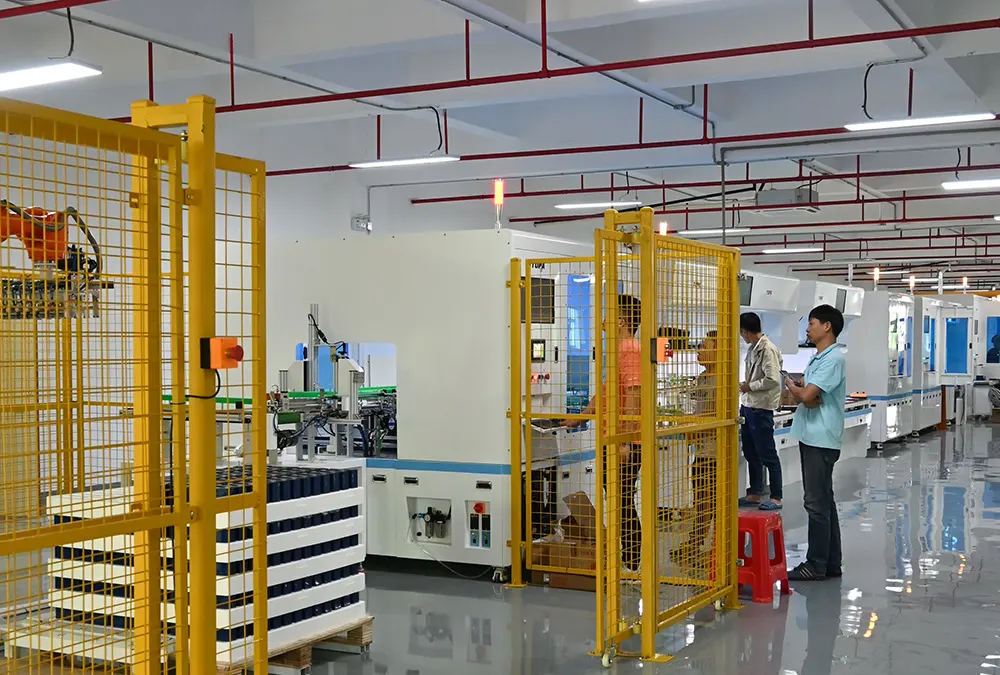
Finding reliable LiFePO4 Battery Manufacturers in China can be overwhelming when hundreds of factories make similar claims about cycle life and capacity. This article highlights 10 notable Chinese LiFePO4 manufacturers to consider for your next sourcing project, skipping the hype to evaluate their real-world capabilities. Rather than relying on a simplistic “biggest size equals #1 spot” ranking, our assessment looks at manufacturing capabilities, cell quality, BMS integration, international certifications, OEM/ODM flexibility, and supply stability. Different factories excel in different areas—a cell titan powering massive electric vehicle assembly lines won’t necessarily fit a custom 48V AGV or golf cart fleet order. The best LiFePO4 manufacturer depends on your application, battery format, order volume, customization requirements and target market.
Quick Comparison: Top 10 LiFePO4 Battery Manufacturers in China
To save time for engineering and procurement teams, the table below provides a quick side-by-side view of top Chinese LiFePO4 manufacturers, highlighting their core strengths and best-fit application scenarios.
| Manufacturer | Main Strength | Main Products | Typical Applications | OEM/ODM Flexibility | Best For | Buyer Advantage |
|---|---|---|---|---|---|---|
| CATL | Massive cell output & energy density | Prismatic LFP cells, Grid ESS | EV, Utility ESS | Limited (Tier-1 Projects) | Gigawatt-scale utility & automotive projects | Highest brand recognition & bankability for large tenders |
| BYD | Vertical integration & Blade tech | Blade LFP cells, Storage packs | EV, Residential/C&I ESS | Project-based | Integrated EV and solar-storage systems | Proven structural space efficiency and thermal safety |
| EVE Energy | Broad cell chemistry & formats | Prismatic & cylindrical LFP cells | ESS, Telecom, Marine | Moderate | Standard cell sourcing & ESS integration | Flexible cell options for mid-to-large system integrators |
| Gotion High-Tech | R&D depth & global joint ventures | LFP cells, Standard modules | Commercial EV, Stationary ESS | Project-based | International e-mobility partnerships | Global compliance backing and stable raw material access |
| CALB | Large-format prismatic cell design | High-capacity LFP cells | Electric buses, Heavy equipment | Limited | Heavy transport & industrial machinery | High continuous discharge rate handling for heavy loads |
| Sunwoda | Advanced electronic assembly & packs | Smart lithium packs, C&I ESS | Consumer electronics, C&I ESS | High | Commercial fleet & smart hardware OEMs | Strong electronic integration and smart monitoring features |
| REPT BATTERO | High energy efficiency cell architecture | Winline ESS cells, LFP modules | Renewable ESS, Special vehicles | Project-based | Grid-side energy storage integrators | Low internal resistance cells reducing HVAC cooling costs |
| Great Power | Diverse battery formats & ESS focus | Small/large LFP cells, Portable power | Residential storage, Light EV | High | Mid-sized energy storage brands | Cost-effective customization options for niche products |
| HiNa Battery | Sodium-ion & LFP hybrid tech R&D | Low-temp cells, Storage cells | Micro-EV, Extreme cold storage | Moderate | Sub-zero temperature applications | Alternative chemistry flexibility for extreme environments |
| AnengJi | Custom low-speed EV & industrial packs | 12V–72V custom LFP battery packs | AGV, Golf Cart, Sweeper, Tuk-Tuk | Very High (Full OEM/ODM) | Equipment OEMs needing tailored packs | Turnkey custom BMS, enclosure design, and low MOQ friction |
How We Selected These Chinese LiFePO4 Battery Manufacturers
Selecting the right partner goes beyond looking at revenue metrics. Industrial buyers often face unexpected hurdles when dealing with raw cell suppliers who lack pack assembly expertise, or assemblers using sub-par Grade-B cells. To bring clarity, our selection process focused on six essential operational dimensions.
Manufacturing Capability
We evaluated active factory floor footprints, automated electrode coating lines, laser welding precision, and daily GWh/MWh throughput stability. A factory must demonstrate consistent production quality whether handling a 10-unit pilot run or a 5,000-unit monthly batch.
LiFePO4 Cell and Battery Quality
Quality checks prioritized internal resistance consistency (mΩ variance across batches), cell grading transparency (strict Grade-A cell verification), chemical purity of lithium iron phosphate cathodes, and aging/testing cycles under controlled thermal stress.
BMS and System Integration
A solid battery pack relies heavily on its Battery Management System (BMS). We looked closely at thermal protection design, passive/active balancing efficiency, short-circuit response times, and communication protocol integration like CANbus, RS485, and Bluetooth monitoring.
Certifications and Compliance
Compliance is essential for global market access. We verified valid test reports including UN38.3 (for transport security), CE, IEC 62619 (industrial lithium safety), UL 1973, and RoHS compliance across product lineups.
OEM/ODM and Customization
Standard battery shapes rarely fit specialized machinery. We examined engineering flexibility across custom voltage platforms (12V to 72V+), sheet metal/IP-rated enclosure fabrication, custom wiring harnesses, and custom software protocol matching.
Supply, Warranty and Technical Support
Finally, we looked at commercial viability: realistic Minimum Order Quantities (MOQs), prototype lead times, clear warranty terms without unreasonable exclusions, and dedicated engineering support for fast troubleshooting.
Manufacturers were evaluated based on manufacturing capability, product suitability and buyer requirements rather than company size or brand recognition alone.
Top 10 LiFePO4 Battery Manufacturers in China
1. CATL (Contemporary Amperex Technology Co., Ltd.)
Founded in 2011, CATL has grown into a global leader in lithium-ion battery manufacturing. Their massive production scale drives global EV adoption and grid energy storage deployments. As a primary LFP battery manufacturer, CATL consistently pushes technological limits with cell-to-pack (CTP) designs, setting industry benchmarks for energy density and automated manufacturing scale.
Main LiFePO4 Products
High-capacity prismatic LFP cells (100Ah, 280Ah, 314Ah), CTP battery blocks, containerized utility ESS units.
Key Strengths
Unmatched manufacturing capacity, extensive R&D budget, exceptional cell consistency, global financial bankability.
Best For
Best for large-scale EV passenger cars, commercial buses, and multi-megawatt utility energy storage projects.
2. BYD (FinDreams Battery)
BYD revolutionized the LFP landscape by introducing the Blade Battery architecture. Operating through its battery division, FinDreams, BYD is a pioneer in lithium iron phosphate technology. Their vertical integration covers raw material processing all the way to finished electric vehicles and residential storage systems, providing complete control over quality and cost structures.
Main LiFePO4 Products
Blade LFP cells, automotive traction battery packs, Battery-Box residential and commercial storage systems.
Key Strengths
Exceptional structural safety (nail penetration testing standards), high space utilization efficiency, complete supply chain control.
Best For
Best for electric vehicle integration and modular residential solar storage setups.
3. EVE Energy
EVE Energy stands out as a versatile China lithium battery manufacturer with strong capabilities in both prismatic and large cylindrical LFP cell formats. EVE supplies major international automotive brands and global telecom infrastructure. Their massive production lines produce high-cycle cells specifically optimized for stationary energy storage systems and marine power applications.
Main LiFePO4 Products
50Ah–304Ah prismatic LFP cells, 46-series cylindrical cells, modular telecom backup battery units.
Key Strengths
Broad cell form-factor choices, long cycle life chemistry (up to 8,000+ cycles under standard conditions), strong global technical support.
Best For
Best for system integrators looking for reliable Grade-A prismatic cells for custom storage packs.
4. Gotion High-Tech
With strategic investments from global auto groups like Volkswagen, Gotion High-Tech has expanded its footprint worldwide. Operating as a leading lithium iron phosphate battery manufacturer, Gotion focuses on high-energy-density LFP formulations, synthetic graphite anodes, and solid-state cell research. Their plants across Asia, Europe, and North America support steady international delivery schedules.
Main LiFePO4 Products
LFP pouch and prismatic cells, standard EV modules, commercial vehicle power systems.
Key Strengths
Strong R&D capabilities, high material-level IP portfolio, strategic overseas factory expansion.
Best For
Best for commercial fleet electrifications and regional manufacturing partnerships.
5. CALB (China Aviation Lithium Battery)
CALB specializes in large-format prismatic lithium cells built for heavy-duty applications. As a prominent LiFePO4 battery supplier, CALB caters heavily to passenger EVs, commercial electric trucks, and marine vessel propulsion. Their manufacturing facilities emphasize high structural integrity and high-rate discharge performance under severe operational loads.
Main LiFePO4 Products
Prismatic LFP battery cells, heavy machinery power packs, subsea and marine energy systems.
Key Strengths
High continuous pulse discharge performance, robust casing design, certified reliability for heavy machinery.
Best For
Best for heavy industrial machinery, electric buses, and high-load marine applications.
6. Sunwoda Electronic Co., Ltd.
Sunwoda leveraged its decades of consumer battery electronics expertise to build a robust power and energy storage division. Unlike pure cell foundries, Sunwoda excels at system design, precision SMT electronics, advanced BMS firmware, and complex pack assembly. They serve as a premium partner for industrial clients who need fully finished, intelligent battery systems.
Main LiFePO4 Products
Commercial & industrial (C&I) ESS cabinets, smart lithium traction battery packs, IoT-connected battery modules.
Key Strengths
In-house BMS design and electronic production, exceptional pack assembly automation, advanced IoT cloud monitoring integration.
Best For
Best for corporate buyers requiring intelligent, cloud-managed commercial battery systems.
7. REPT BATTERO
Backed by stainless steel and nickel giant Tsingshan Industry, REPT BATTERO has rapidly expanded since its founding in 2017. REPT focuses heavily on cell electrode architecture to minimize internal resistance, introducing proprietary “Winline” cell tech designed to boost volumetric energy efficiency and lower thermal losses during heavy cycling.
Main LiFePO4 Products
High-efficiency LFP storage cells (280Ah, 320Ah), heavy-truck power battery modules.
Key Strengths
Direct upstream raw material backing, competitive cost structure, high round-trip efficiency (RTE) cell designs.
Best For
Best for cost-sensitive utility-scale energy storage and long-haul commercial vehicle applications.
8. Great Power Energy & Technology
Great Power brings over 20 years of electrochemical manufacturing history to the table. Operating multiple production hubs across China, Great Power functions as a versatile **LiFePO4 battery factory** producing cylindrical, pouch, and prismatic formats. Their focus spans residential solar storage, outdoor portable power, and light electric mobility.
Main LiFePO4 Products
12V/24V replacement LFP packs, 51.2V home storage modules, small-format cylindrical LFP cells.
Key Strengths
Flexible production lines, broad product portfolio covering small to medium capacities, rich OEM experience.
Best For
Best for brands looking for reliable OEM manufacturing of home solar batteries and light electric vehicles.
9. HiNa Battery Technology
Emerging from Chinese Academy of Sciences research, HiNa Battery is a recognized pioneer in sodium-ion energy technology while running advanced LFP manufacturing lines. Their focus centers on low-temperature cell chemistry resilience, delivering solid performance in sub-zero operational environments where standard LFP batteries struggle with severe capacity loss.
Main LiFePO4 Products
Low-temperature resilient LFP cells, sodium-lithium hybrid battery packs, stationary energy storage modules.
Key Strengths
Pioneering thermal performance chemistry, strong academic electrochemistry backing, low-temperature discharge reliability.
Best For
Best for projects operating in severe cold environments and specialized industrial equipment.
10. AnengJi — Custom LiFePO4 Battery Pack Manufacturer for OEM Applications
While gigawatt cell foundries focus on standardized commodity cells for mega-projects, AnengJi focuses on engineering specialized, high-reliability battery systems for industrial equipment and low-speed electric vehicles. Operating as an expert OEM LiFePO4 battery manufacturer, AnengJi bridges the gap between raw cell producers and original equipment manufacturers (OEMs) who require custom form factors, tailored electrical parameters, and application-specific BMS programming.
Why Work With AnengJi for Custom Battery Packs?
• Voltage Engineering Flexibility: Complete design capabilities across 12V, 24V, 36V, 48V, 60V, 64V, and 72V custom platforms tailored to precise equipment cut-off voltages.
• Application-Specific Systems: Built for high vibration, harsh thermal conditions, and high-duty-cycle industrial environments including AGVs, industrial forklifts, electric golf carts, commercial cleaning sweepers, tourist sight-seeing vehicles, and low-speed EVs.
• Turnkey Engineering Support: Direct 1-on-1 collaboration with battery engineers covering custom metal/ABS casing, IP65/IP67 waterproofing, custom wiring harnesses, integrated thermal heating pads, and proprietary BMS protocol matching (CANopen, SAE J1939, RS485).
Best For
Best for equipment manufacturers and commercial fleet owners looking for customized LiFePO4 battery packs built to exact mechanical and electronic specs, rather than off-the-shelf commodity cells.
China LiFePO4 Manufacturers Compared: Cells, Battery Packs and ESS
A common mistake foreign buyers make is treating all battery factories as identical operations. In reality, the Chinese supply chain divides into four primary manufacturer models. Understanding these distinctions prevents sourcing delays and technical mismatches.
| Manufacturer Type | Main Product | Customization Level | BMS Capabilities | Best Fit For | Buyer Impact |
|---|---|---|---|---|---|
| Cell Manufacturer | Individual LFP cells (Prismatic/Cylindrical) | Low to Medium | External / Third-party | Automotive OEMs, Massive ESS integrators | Requires in-house pack engineering & BMS assembly line setup |
| Battery Pack Manufacturer | Fully assembled battery packs with BMS & casing | High | Core capability (Integrated) | Industrial equipment, Low-speed EVs, AGVs | Plug-and-play installation; zero secondary assembly required |
| ESS Manufacturer | Turnkey storage cabinets, containerized ESS | Medium to High | Advanced EMS/BMS integrated | Residential solar installers, Grid operators | Pre-certified complete system reducing installer field labor |
| OEM/ODM Pack Manufacturer | Tailored battery platforms, private-label packs | Very High (100% Custom) | Custom hardware & protocol development | Machinery OEMs, Niche equipment brands | Optimized spatial fit, custom branding, and low prototype friction |
LiFePO4 Cell Manufacturers
Ideal for high-volume automotive manufacturers and large-scale utility integrators who run their own robotic module assembly lines. Buying raw cells directly requires significant internal electrical and mechanical engineering resources.
LiFePO4 Battery Pack Manufacturers
These suppliers source Grade-A prismatic or cylindrical cells and engineer them into complete, protected systems. Operating as specialized LiFePO4 battery manufacturer for industrial applications, they integrate internal structural bracing, wiring, thermal management, and BMS protections tailored to specific operating conditions.
ESS Battery Manufacturers
Optimized for stationary power applications. Acting as a dedicated LFP battery manufacturer for energy storage, these companies combine cell modules, high-voltage control boxes, and energy management software (EMS) into residential wall batteries or megawatt-hour commercial shipping containers.
OEM/ODM LiFePO4 Battery Manufacturers
Focuses on custom hardware development. Ideal for machinery companies needing private-label battery units designed around unique battery tray dimensions, complex CANbus telemetry requirements, and customized outer enclosures.
What Is the Difference Between a LiFePO4 Cell Manufacturer and Battery Pack Manufacturer?
A frequent point of confusion on B2B forums like Reddit’s r/batteries or r/solar is why cell manufacturers often reject mid-sized custom pack requests. Understanding the operational distinction clarifies where to send your Request for Quotation (RFQ).
| Factor | Cell Manufacturer (e.g., CATL, EVE) | Battery Pack Manufacturer (e.g., AnengJi) | Selection Takeaway |
|---|---|---|---|
| Main Product | Raw electrochemistry cells (3.2V nominal) | Complete finished battery packs (12V–72V+) | Packs offer drop-in replacement convenience |
| BMS Integration | Not included; handled by customer | Fully engineered, integrated, and programmed | Eliminates external BMS sourcing friction |
| Housing & Enclosure | Bare bare-aluminum prismatic or cylindrical casing | Heavy-duty steel, plastic, or IP67 aluminum casing | Ensures mechanical protection against vibration and moisture |
| Customization Flexibility | Fixed cell dimensions and capacity ratings | High flexibility in Ah, dimensions, and shape | Fits existing battery compartments perfectly |
| MOQ Requirements | Extremely high (Container loads or MWh volumes) | Flexible (Batch friendly for OEM projects) | Lowers initial inventory capital expenditure |
If your business has a dedicated automated pack assembly line and needs raw 3.2V 280Ah cells by the megawatt, target a LiFePO4 cell manufacturer. However, if you build golf carts, sweepers, or industrial robots and need a fully sealed 48V 100Ah battery with custom CANbus protocols and internal heating, working directly with a specialized LiFePO4 battery pack manufacturer will save months of development time and avoid costly engineering errors.
Which LiFePO4 Battery Manufacturer Fits Your Application?
Selecting a supplier should align with your specific application demands. A battery engineered for a stationary solar system won’t survive the violent vibrations of a 3-ton industrial forklift. The guide below maps industrial applications to essential battery requirements.
| Application | What to Look For | Typical Battery Focus | Practical Advantage |
|---|---|---|---|
| Residential ESS | Inverter protocol compatibility, high cycle life, UL1973/CE | 48V / 51.2V rack-mount or wall-mount packs | Reduces electricity bills via solar energy time-of-use shifting |
| AGV & AMRs | Fast opportunity charging, compact size, precise SOC telemetry | 24V / 48V high-rate LFP with CANbus | Enables 24/7 continuous warehouse operations with automated charging |
| Electric Forklifts | High continuous power, vibration isolation, heavy counterweight | 24V / 48V / 80V heavy-duty steel cased packs | Eliminates lead-acid battery watering, acid fumes, and long charge delays |
| Golf Carts & Utility Vehicles | Drop-in tray size, high peak surge current, lightweight design | 48V / 72V maintenance-free custom packs | Doubles driving range while shedding 200+ lbs of vehicle weight |
| Cleaning Sweepers | Water resistant enclosure (IP65+), steady voltage discharge | 24V / 36V / 48V deep-cycle lithium packs | Provides consistent vacuum suction throughout full battery run time |
| Tourist & Sight-seeing Vehicles | Extended range per charge, thermal safety, passenger hill-climbing surge | 48V / 72V / 96V high-capacity traction systems | Handles full passenger loads up steep gradients without power drops |
| OEM Specialized Machinery | Fully tailored dimensions, proprietary BMS software, custom wiring | Custom 12V to 72V specialized modules | Maximizes equipment internal layout efficiency and brand uniqueness |
How to Choose the Right LiFePO4 Battery Manufacturer in China
Evaluating a Chinese manufacturer requires a disciplined qualification process. Below are seven practical steps to guide your technical vetting.
1. Define Your Application and Duty Cycle
Before talking with sales reps, document your exact operational profile: continuous discharge current, peak surge current (and duration in seconds), daily operating hours, ambient temperature ranges, and expected charge cycles per day. Providing clear specs helps engineers recommend the right cell configuration right away.
2. Verify Cell Quality and Battery Design
Always ask about the cell brand, chemistry origin, and cell grade inside the battery pack. Reputable pack factories use genuine Grade-A prismatic or cylindrical cells with documented QR codes. Ensure internal connection busbars are thick nickel-plated copper, securely laser-welded rather than spot-welded or bolted on high-current paths.
3. Evaluate the BMS
The BMS is the brain of your battery pack. Ensure it includes multi-tier protections for over-charge, over-discharge, short circuits, high/low temperature cutoffs, and cell balancing. For complex systems, check that the BMS supports CANbus, RS485, or Modbus protocols to communicate smoothly with your motor controller or charger.
4. Check Customization Capability
If you need a non-standard 60V or 72V pack to fit a specific chassis, verify that the manufacturer offers full hardware customization. A qualified partner should handle sheet metal enclosure design, custom wiring harness routing, thermal pad integration, and custom BMS firmware programming in-house.
5. Compare Cycle Life Under Real Test Conditions
Don’t rely solely on marketing claims like “6000 cycles.” Ask for test reports specifying testing parameters: Depth of Discharge (e.g., 80% DoD vs. 100% DoD), charge/discharge C-rate (e.g., 0.5C/1C), testing ambient temperature (e.g., 25°C), and End-of-Life capacity definitions (typically 70% or 80% remaining original capacity).
6. Verify Certifications and Compliance
Target markets mandate strict compliance. Ensure the specific battery pack model—not just the raw cell—has valid UN38.3 transport testing, CE clearance, and relevant safety documentation (e.g., IEC 62619 for industrial use, UL2580 for mobility). Request original test report copies directly from the factory.
7. Evaluate Warranty, Lead Time and Technical Support
Review warranty fine print carefully. Look at explicit terms covering defect replacements, handling of freight costs for warranty claims, available spare parts support, and standard production lead times for both sample evaluation and mass production batches.
What Certifications Do LiFePO4 Batteries Need for International Markets?
Navigating international compliance requires understanding which certifications apply to your region and product type. Shipping or selling non-compliant batteries can lead to customs seizures, heavy fines, or insurance invalidations.
| Certification Standard | What It Regulates | Target Region / Market Scope | Mandatory Requirement |
|---|---|---|---|
| UN 38.3 + MSDS | Lithium battery transport safety (vibration, thermal shock, crush, altitude) | Global (Air, Sea, and Ground logistics) | Yes; mandatory for all international shipping |
| CE Marking | European health, safety, and environmental protection compliance (EMC/LVD) | European Economic Area (EEA) | Yes; required to sell equipment inside Europe |
| IEC 62619 | Safety requirements for secondary lithium cells & batteries in industrial applications | International / Global standard benchmark | Essential for commercial/industrial machinery tenders |
| UL 1973 / UL 2580 | UL 1973 (Stationary storage safety); UL 2580 (EV electric vehicle traction batteries) | North America (USA & Canada) | Highly recommended for North American market entry |
| RoHS / REACH | Restriction of hazardous chemical substances and heavy metal materials | European Union & adopting markets | Mandatory for environmental compliance |
Why Certification Alone Does Not Prove Battery Quality
A valid CE or UN38.3 certificate proves a specific sample passed a set of baseline laboratory safety tests. However, standard testing doesn’t guarantee long-term cell capacity consistency after 2,000 cycles, nor does it ensure the factory’s quality control (QC) will catch assembly defects on mass production runs. Genuine quality validation requires reviewing actual cell datasheets, verifying batch internal resistance logs, evaluating factory burn-in test records, and placing a small pilot order before committing to volume production.
How Much Does a LiFePO4 Battery Cost From a Chinese Manufacturer?
Battery pricing varies widely depending on electrochemistry quality, system features, and underlying raw material costs. Recent industry data provides clear cost context for procurement teams.
Key Industry Benchmark: According to the International Energy Agency (IEA) Global EV Outlook 2026, record-low LFP battery cell prices contributed significantly to total vehicle cost reductions, with complete LFP battery packs landing over 40% cheaper than equivalent high-nickel NMC chemistry packs. Concurrently, BloombergNEF’s 2026 LCOE Report revealed that four-hour stationary energy storage system costs dropped 27% year-over-year down to an average of $78/MWh, driven by manufacturing scale and improved system integration efficiency.
What Determines LiFePO4 Battery Price?
When evaluating manufacturer pricing, several core variables shape the final quotation:
- Cell Grade & Brand: Genuine Grade-A cells from top-tier foundries carry a 15–25% price premium over unbranded or Grade-B inventory cells.
- BMS Hardware Complexity: Basic hardware protection boards cost significantly less than smart BMS units featuring active balancing, isolated CANbus controllers, and dual temperature sensors.
- Enclosure Protection (IP Rating): Standard plastic cases are inexpensive, whereas custom powder-coated steel or die-cast aluminum enclosures rated to IP67 water/dust ingress add manufacturing costs.
- Integrated Heating Systems: Built-in PTC heating pads for sub-zero operation add hardware and control logic costs.
- Order Scale & Testing Certifications: Sample prototype runs require custom engineering labor, whereas high-volume batch production lowers unit overhead.
Why Two 48V 100Ah Batteries Can Have Very Different Prices
Consider two 48V 100Ah (4.8kWh) batteries quoted by different Chinese suppliers. Supplier A quotes $450, while Supplier B quotes $820. On paper, they look like identical capacities. However, under the hood:
| Specification Feature | Low-Cost Option ($450) | Professional Industrial Option ($820) | Value Advantage |
|---|---|---|---|
| Cell Quality | Grade-B or surplus cells; non-matched IR | Brand-new Grade-A prismatic cells; laser-matched | 4,000+ real cycles vs. early cell imbalance failure |
| BMS System | Basic analog BMS; 50A continuous; no communication | Smart CAN/RS485 BMS; 150A continuous; active balance | Supports high motor surge currents and remote diagnostics |
| Enclosure & IP Rating | Thin plastic box; non-sealed (IP20) | Heavy metal case with shock pads; sealed IP67 rating | Survives rain, washdowns, and rough terrain vibration |
| Thermal Protection | No low-temp charge protection | Low-temp cutoff + built-in internal heating pad | Prevents permanent lithium-plating damage in freezing weather |
The low-cost battery might work for light home DIY projects, but installing it in a commercial sweeper or rental golf cart fleet risks premature failure. Paying for industrial-grade construction pays off through higher reliability and longer operational life.
How to Verify a Chinese LiFePO4 Battery Manufacturer Before Ordering
Proper supplier vetting prevents costly sourcing mistakes. Follow these practical verification steps before placing large orders.
Check Factory and Business Information
Verify official business licenses, registered capital details, and physical factory addresses. Request a live video tour of the production floor to confirm active assembly lines, automated cell testing equipment, and burn-in aging racks.
Verify Product Datasheets and Test Reports
Legitimate manufacturers provide comprehensive engineering datasheets detailing continuous/peak discharge rates, charge temperature windows, BMS power consumption, and mechanical dimensions. Ask for complete laboratory test reports rather than high-level product flyers.
Confirm Cell and BMS Information
Ask for explicit cell manufacturer details, cell models, and cell grading proofs. A transparent manufacturer will readily disclose cell origins and BMS controller architecture specs.
Verify Certifications
Cross-check UN38.3, CE, and IEC certificate numbers directly with the issuing test lab’s online database. Ensure the applicant name matches the factory’s registered business name.
Request Samples
Order evaluation samples before committing to production runs. Put samples through real-world testing: verify usable Ah capacity, check BMS high/low temperature cutoffs, test continuous load limits, and evaluate outer case build quality.
Check Warranty Terms
Clarify warranty terms in writing. Ensure policies define how replacement parts are handled, who covers international return freight, and what technical steps are required to validate warranty claims.
10 Red Flags of an Unreliable LiFePO4 Battery Supplier
- 1. Refuses to provide verifiable business registration or physical factory address.
- 2. Cannot supply detailed technical engineering datasheets.
- 3. Remains vague about cell origin, cell grade, or cell manufacturer details.
- 4. Inconsistent specs across product manuals, quotes, and web listings.
- 5. Certificate numbers fail validation on third-party testing lab websites.
- 6. Quoted prices sit unrealistically far below prevailing raw lithium material costs.
- 7. Unwilling to supply engineering evaluation samples prior to bulk ordering.
- 8. Vague warranty clauses missing explicit claim resolution steps.
- 9. Constantly shifting lead times, MOQs, or payment account details.
- 10. Registered business name, manufacturing factory, and receiving bank account entities do not match.
How to Buy LiFePO4 Batteries From a Chinese Manufacturer
If you want to buy LiFePO4 batteries from China efficiently, following a structured procurement roadmap minimizes technical delays and commercial risks.
Step 1 — Send Your Battery Specifications
Send a detailed specification sheet covering nominal voltage, target Ah capacity, continuous/peak discharge amps, maximum dimensions, preferred connector types, IP rating, and communication protocol needs.
Step 2 — Compare Technical Quotations
Compare quotes on technical merit—cell brand, BMS protection features, enclosure materials—rather than unit price alone. Evaluate total cost including customized tooling fees and freight charges.
Step 3 — Order Samples
Order prototype samples to test physical fit and electrical performance on your machinery. Use sample testing to evaluate engineering communication, turnaround times, and packaging quality.
Step 4 — Test the Battery in Your Application
Put prototype batteries through field trials: run complete charge-discharge cycles, perform high-load stress tests, and verify BMS communication integration with your equipment controllers.
Step 5 — Place a Pilot Order
Move forward with a pilot order (e.g., 20–50 units) to validate factory batch consistency, QC documentation, custom branding details, and shipping logistics routines.
Step 6 — Scale to Mass Production
Once pilot units meet performance standards, lock in component specifications, establish regular production lead times, and scale up to scheduled mass production shipments.
Should You Buy LiFePO4 Batteries Directly From China?
Deciding between sourcing directly from a Chinese factory or buying via a local distributor involves trade-offs between pricing control, minimum order commitments, and logistical convenience.
Buying Directly From a Chinese Manufacturer
Pros: Lowest unit costs, direct access to factory engineers, full OEM customization capabilities (custom BMS, private branding, tailored cases), direct control over production schedules.
Cons: Longer transit shipping times, sea freight logistics management, sea transport UN38.3 certification requirements, minimum order quantities (MOQs).
Buying Through a Local Distributor
Pros: Immediate local warehouse inventory, simple local return handling, no international customs clearing hassle, low order minimums.
Cons: Higher markup unit prices (30–60% higher), limited custom option choices, slower access to factory-level engineering changes.
Sourcing Verdict: Industrial equipment manufacturers, fleet operators, and high-volume importers benefit most from direct factory relationships in China. Small operators needing single replacement units or urgent emergency backups will find local distributors more practical.
Why Choose AnengJi for Customized LiFePO4 Battery Solutions?
While mega-factories focus on standardized cell output for passenger electric cars, AnengJi specializes in tailored lithium power solutions for commercial equipment and industrial vehicles. As a trusted LiFePO4 battery supplier China, AnengJi turns custom application requirements into reliable battery platforms.
12V–72V LiFePO4 Battery Solutions
Whether replacing legacy lead-acid setups or engineering new electric mobile equipment, AnengJi builds custom voltage battery platforms across 12V, 24V, 36V, 48V, 60V, 64V, and 72V specifications.
Custom Capacity and Battery Pack Design
Every project has unique spatial and electrical limits. AnengJi tailors total Ah capacity, outer sheet metal or heavy ABS enclosure dimensions, connector terminal layouts, internal heating configurations, and smart BMS monitoring features to your precise specs.
Designed for Industrial and Low-Speed EV Applications
Our battery systems are field-proven across demanding operational environments: automated guided vehicles (AGVs), electric forklifts, golf carts, commercial floor sweepers, tourist sight-seeing buses, and two/three-wheel electric cargo vehicles.
Comprehensive OEM/ODM Support
From private-label silk-screening and custom box packaging to specialized CANbus protocol matching, operating as a dedicated LiFePO4 battery OEM partner means we support your brand’s market identity at every step.
From Sample Validation to Mass Production
We keep engineering simple: send us your equipment specs, evaluate prototype samples, validate field performance, and transition smoothly into scalable mass production with consistent batch quality.
LiFePO4 Battery Manufacturer Buyer Checklist
Use this quick reference checklist during technical vetting calls with potential Chinese battery manufacturers:
[ ] Manufacturer Verification: Verified physical factory location & business registration?
[ ] Cell Transparency: Confirmed cell brand, chemistry, and Grade-A quality level?
[ ] BMS Hardware Specs: Verified continuous amps, peak surge, and balance features?
[ ] Testing Data Clarity: Verified cycle life test conditions (DoD, C-rate, temp)?
[ ] Customization Support: Can the supplier customize dimensions, BMS, and casing?
[ ] Certification Legitimacy: Validated UN38.3, CE, and IEC test reports directly with testing labs?
[ ] Commercial Terms: Clarified exact MOQs, prototype costs, and production lead times?
[ ] Warranty Protections: Reviewed clear written terms covering defect replacements?
[ ] Prototype Testing: Ordered and validated field samples before volume ordering?
[ ] Tech Support Readiness: Confirmed direct 1-on-1 access to engineering support?
Frequently Asked Questions About LiFePO4 Battery Manufacturers in China
What is the difference between a LiFePO4 cell manufacturer and a battery pack manufacturer?
A cell manufacturer produces individual 3.2V electrochemical cells at high volume. A battery pack manufacturer sources cells and integrates them with protective BMS electronics, wiring harnesses, internal thermal controls, and heavy-duty outer casings to deliver complete, ready-to-use battery systems.
How much does a LiFePO4 battery cost from China?
Pricing depends on cell grade, total capacity (kWh), BMS communication features, and case construction. Complete commercial battery systems generally range from $120 to $220 per kWh depending on customization depth and order volume.
What is the MOQ for custom LiFePO4 batteries?
Cell foundries often require container-load commitments. Specialized pack manufacturers like AnengJi offer much more flexible MOQs, often supporting sample testing runs of 1–5 units before scaling to 20–100 unit production batches.
Can Chinese manufacturers provide private-label LiFePO4 batteries?
Yes, established pack factories offer full OEM/ODM services, including private-label outer casing silk-screening, custom metal badges, specialized BMS firmware naming, and custom shipping boxes.
How can I verify whether a LiFePO4 supplier is a real manufacturer?
Request a live video tour of the factory floor, check business registration details for manufacturing scope, verify third-party factory audit reports (ISO9001), and cross-check UN38.3 test report details directly with issuing test labs.
How long does it take to manufacture custom LiFePO4 batteries?
Custom sample evaluation units take around 15 to 25 days depending on tooling needs. Standard batch production runs typically take 25 to 35 days from technical sign-off.
Should I buy LiFePO4 cells or complete battery packs?
Unless you operate an automated battery module packaging facility, buying fully assembled battery packs with integrated BMS protection ensures safety, faster equipment integration, and reliable warranty support.
Conclusion: Choosing the Right LiFePO4 Manufacturer in China
There is no single “best” LiFePO4 battery manufacturer for every project. The right manufacturing partner depends entirely on your project scale, required battery format, and customization depth. Large automotive projects and multi-megawatt grid arrays call for raw cell foundries like CATL or BYD. Conversely, if your business manufactures golf carts, floor sweepers, AGVs, or specialized industrial machinery, working with a custom pack specialist provides the engineering flexibility, responsive support, and tailored battery performance needed to succeed.
Ready to optimize your equipment’s lithium power performance? Contact AnengJi today to review your project specs with our engineering team, request custom sample evaluations, and explore tailored OEM/ODM battery solutions.
Related Article
- How to Choose an LFP Battery Manufacturer: The Complete Qualification Guide
- What Is the LiFePO4 Battery Price? Complete Cost Guide
- How to Choose Wholesale LiFePO4 Batteries Suppliers?
- Lithium vs Lead Acid Golf Cart battery: Which Is Worth Buying?
- LiFePO4 Battery Charger Guide: How to Choose the Right Lithium Charger
Related Posts
 https://anengjibattery.com/wp-content/uploads/2026/10/AnengjiBattery-Cell-to-Pack-Energy-Density-Comparison.webp
675
1000
Battery Expert Team
https://anengjibattery.com/wp-content/uploads/2025/06/logo2-300x138.png
Battery Expert Team2026-10-23 06:58:392026-10-23 06:58:41What Does Lithium-Ion Battery Energy Density Really Mean?
https://anengjibattery.com/wp-content/uploads/2026/10/AnengjiBattery-Cell-to-Pack-Energy-Density-Comparison.webp
675
1000
Battery Expert Team
https://anengjibattery.com/wp-content/uploads/2025/06/logo2-300x138.png
Battery Expert Team2026-10-23 06:58:392026-10-23 06:58:41What Does Lithium-Ion Battery Energy Density Really Mean? https://anengjibattery.com/wp-content/uploads/2026/10/AnengjiBattery-Lithium-Battery-Management-in-Daily-Operation.webp
675
1000
Battery Expert Team
https://anengjibattery.com/wp-content/uploads/2025/06/logo2-300x138.png
Battery Expert Team2026-10-22 08:17:332026-10-23 06:58:57How Does a Lithium BMS Improve Battery Longevity?
https://anengjibattery.com/wp-content/uploads/2026/10/AnengjiBattery-Lithium-Battery-Management-in-Daily-Operation.webp
675
1000
Battery Expert Team
https://anengjibattery.com/wp-content/uploads/2025/06/logo2-300x138.png
Battery Expert Team2026-10-22 08:17:332026-10-23 06:58:57How Does a Lithium BMS Improve Battery Longevity? https://anengjibattery.com/wp-content/uploads/2026/10/AnengjiBattery-Industrial-Power-Under-Real-Load.webp
675
1000
Battery Expert Team
https://anengjibattery.com/wp-content/uploads/2025/06/logo2-300x138.png
Battery Expert Team2026-10-22 07:04:542026-10-22 07:05:30How Does a 48V LiFePO4 BMS Protect Industrial Power?
https://anengjibattery.com/wp-content/uploads/2026/10/AnengjiBattery-Industrial-Power-Under-Real-Load.webp
675
1000
Battery Expert Team
https://anengjibattery.com/wp-content/uploads/2025/06/logo2-300x138.png
Battery Expert Team2026-10-22 07:04:542026-10-22 07:05:30How Does a 48V LiFePO4 BMS Protect Industrial Power? https://anengjibattery.com/wp-content/uploads/2026/10/AnengJIBattery-Electric-Forklift-Battery-Buying-Decision.webp
675
1000
Battery Expert Team
https://anengjibattery.com/wp-content/uploads/2025/06/logo2-300x138.png
Battery Expert Team2026-10-21 06:22:222026-10-21 06:22:38Ready to Buy Battery for Electric Forklift? Use This Guide
https://anengjibattery.com/wp-content/uploads/2026/10/AnengJIBattery-Electric-Forklift-Battery-Buying-Decision.webp
675
1000
Battery Expert Team
https://anengjibattery.com/wp-content/uploads/2025/06/logo2-300x138.png
Battery Expert Team2026-10-21 06:22:222026-10-21 06:22:38Ready to Buy Battery for Electric Forklift? Use This Guide


Leave a Reply
Want to join the discussion?Feel free to contribute!