
Golf Cart Battery Charging Time: The Definitive Guide
August 12, 2026 / Battery Expert Team / Battery Basics
Introduction
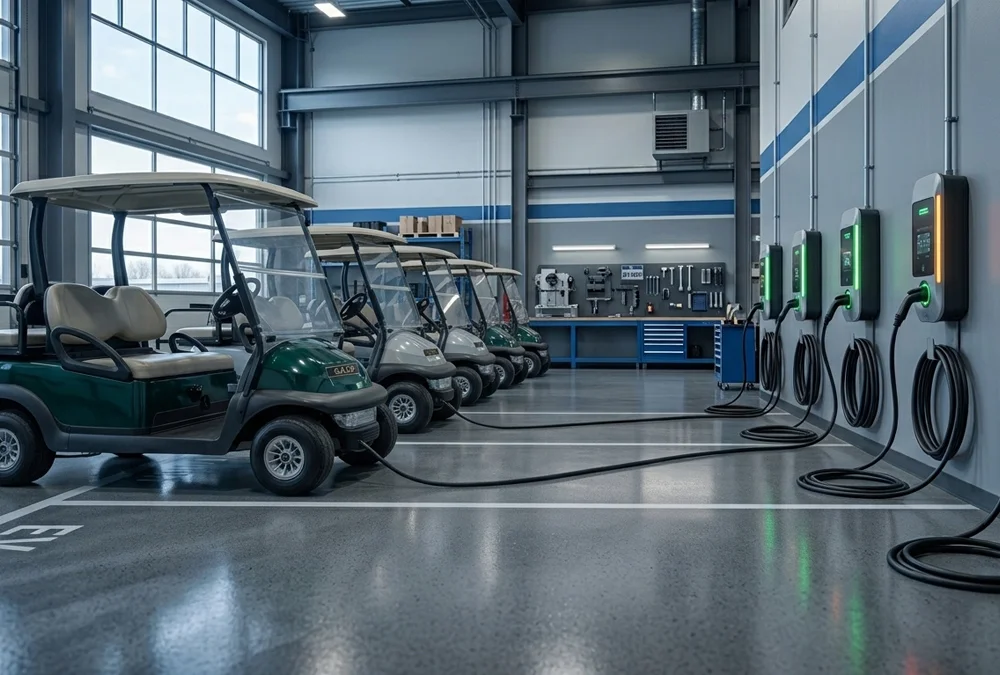
I constantly see resort owners wasting thousands on destroyed battery banks. They buy standard utility vehicles but completely ignore proper Golf Cart Battery Charging practices. A typical lead-acid golf cart battery pack may require around 8–10 hours for a full charge. Meanwhile, many lithium golf cart batteries can charge significantly faster. They often require just 3–5 hours under suitable conditions. Actual charging time depends on battery capacity, state of charge, charger output, battery age, temperature, and BMS limitations. Do not assume your system voltage is the only factor. A 36V or 48V rating alone does not dictate your downtime.
As a buyer, you might feel overwhelmed by conflicting charging advice. Many shop managers wonder if they can use their old garage equipment on new setups. Cutting corners here will quickly ruin your power cells. We need to look at real electrical physics and chemistry to fix these charging issues permanently.
Golf Cart Battery Charging Time: How Long Does a Full Charge Take?
Let us answer the most common question directly. How much time will you spend waiting at the plug? The timeline changes completely based on your battery chemistry and daily setup parameters.
Typical Golf Cart Charging Time by Battery Type
Here is a direct performance breakdown for common setups running in commercial environments today:
| System Voltage | Battery Chemistry Type | Typical Charging Time | Main Influencing Factors | Buyer Benefit & Decision Value |
|---|---|---|---|---|
| 36V Platform | Flooded Lead Acid | 8 – 10 Hours | Starting SOC, pack capacity, charger output | Low entry cost but keeps vehicles stuck in the garage overnight. |
| 48V Platform | Flooded Lead Acid | 8 – 10 Hours | Overall plate health, ambient room temperature | Standard commercial setup but demands high weekly maintenance labor. |
| 36V Platform | Modern Lithium (LiFePO4) | 3 – 5 Hours | Maximum charger output current limits | Cuts vehicle downtime by half, allowing quick afternoon shifts. |
| 48V Platform | Premium LiFePO4 Pack | 3 – 5 Hours | Total Amp-hour capacity, BMS safety limits | Delivers maximum operational efficiency and reliable rapid charging. |
Please note these numbers represent typical reference ranges. They are not fixed guarantees for every single vehicle. Your actual garage results will vary based on hardware age and environmental factors.
Golf Cart Battery Charging Time at Different States of Charge
You must understand that a battery does not charge at a perfectly steady speed. The current setup slows down significantly as the capacity fills up.
- From 20% to 80% SOC: This is the bulk charging stage. The system accepts maximum current and charges very quickly.
- From 40% to 80% SOC: Takes noticeably less time because you are filling a smaller energy deficit.
- From 60% to 100% SOC: Can feel surprisingly slow. The charger must lower its output current to protect the cells.
- From 80% to 100% SOC: This is the final balancing stage. The system uses low current to equalize cell voltages safely.
Replenishing a slightly used pack differs greatly from reviving a dead one. If you drain your cells to zero, the charger requires extra time just to wake up the system safely.
36V and 48V Golf Cart Battery Charging Times Compared
Many owners ask me if a higher system voltage means longer waiting times at the power outlet. Let us compare these two standard platforms directly.
How Long Does a 36V Golf Cart Battery Take to Charge?
Older or smaller personal utility carts typically run on a 36V electrical system. A traditional flooded lead-acid bank on this platform needs 8 to 10 hours to finish charging. If you upgrade to a modern golf cart lithium battery, that timeline drops to around 3 or 4 hours. The total time depends heavily on the output current of your specific golf cart battery charger.
How Long Does a 48V Golf Cart Battery Take to Charge?
Modern commercial fleets and heavy-duty utility carts run almost exclusively on 48V systems. This includes neighborhood electric vehicles and low-speed transport shuttles. When buyers ask how long does it take to charge a 48v golf cart battery, the answer is closely tied to your equipment. A standard 48v golf cart battery charger running a lead-acid bank requires a full 9-hour cycle. Upgrading to a premium lithium golf cart battery cuts that down to 3 to 5 hours using a matched power source.
Why Can 36V and 48V Golf Carts Have Similar Charging Times?
This sounds counterintuitive to many fleet managers. A higher voltage does not automatically mean slower charging. Total stored energy is calculated by multiplying system voltage by Amp-hour capacity. The actual charging speed depends on total energy divided by charger wattage. A 48V system uses higher electrical pressure to deliver power. If you pair it with a properly matched 48 volt golf cart battery charger, it will finish charging just as fast as a smaller 36V pack.
Lithium vs Lead Acid Golf Cart Battery Charging Time
The internal chemical makeup of your cells changes everything. It dictates how efficiently the pack accepts current and how long your cart stays plugged into the wall.
Lead Acid Golf Cart Battery Charging
Traditional lead-acid options use a slow, rigid three-stage charging process. The cycle starts with the Constant Current stage to bulk-fill the cells. Next, it moves into the Absorption stage, where the voltage is held constant while the current slowly drops. Finally, it enters the Float stage to keep the cells topped off safely.
This process is highly inefficient. Nearly 25% of the grid energy drops away as wasted internal heat. During the final stages, the battery chemistry limits how fast it can absorb energy. If you try to speed up this process, the internal electrolyte fluid will boil. This warps the internal lead plates and destroys your overall golf cart battery life.
Lithium Golf Cart Battery Charging
Modern Lithium Iron Phosphate chemistry operates on a much cleaner Constant Current / Constant Voltage profile. A premium lithium golf cart battery skips the long, inefficient absorption and float stages entirely. The cells accept high constant current through 95% of the cycle. This allows the pack to finish the bulk of its charging much faster than old lead alternatives.
The integrated smart BMS closely manages this entire process. It balances individual cell voltages automatically without requiring long, high-voltage equalization charges. This clean process is explained in the Electric Power Physics Guide. It ensures your electricity goes directly into usable driving range rather than turning into wasted garage heat.
Why Do Lithium Golf Cart Batteries Usually Charge Faster?
The main secret lies in their very low internal resistance. Lead-acid options fight against incoming current, creating heavy heat buildup. Lithium cells accept almost all incoming current without pushing back. Their advanced chemistry allows for a much higher maximum golf cart battery charging current. This allows you to use more powerful chargers safely.
The Four Factors That Determine Golf Cart Battery Charging Time
To optimize your garage charging setup, you must understand the four physical variables that control the actual charging clock.
Battery Chemistry
Different cell designs have clear structural limits on how fast they can safely absorb electrical energy:
- Flooded Lead Acid: Requires very slow charging to prevent dangerous hydrogen gas buildup and fluid loss.
- AGM and Gel Cells: Sealed designs that charge slightly faster but still suffer from high internal resistance.
- LiFePO4 (Lithium Iron Phosphate): The modern commercial standard for safe, high-speed power delivery.
- NMC Lithium: Offers high energy density but lacks the excellent thermal safety of LiFePO4 cells.
Battery Capacity
A larger battery capacity acts exactly like a larger fuel tank. If all other variables remain the same, a larger capacity takes longer to fill. Total stored energy equals nominal voltage multiplied by Amp-hour capacity. For example, a 48V 100Ah pack stores 4.8 kWh of energy. A massive 48V 200Ah pack stores 9.6 kWh of energy. Doubling the capacity means you must supply twice the total energy to fill the pack.
Charger Output Current and Power
Your charger’s output capacity acts as the pipe controlling the flow of electricity into the cells. Total charging power equals system voltage multiplied by charger current. Let us look at two common examples on a standard 48V system:
48V × 20A Charger = 960 Watts of charging power
48V × 30A Charger = 1,440 Watts of charging power
A more powerful charger delivers more energy per hour. This directly shortens the time your vehicle stays plugged into the wall.
State of Charge, Battery Age and Temperature
An old battery with high internal resistance always charges slower and runs hotter than a fresh pack. Extreme ambient temperatures also slow down the process. A smart BMS will actively lower the incoming current if the cells get too hot or too cold. This protects the internal components from permanent damage.
How to Calculate Golf Cart Battery Charging Time
You can easily estimate your waiting times using a standard engineering formula instead of guessing.
Simple Golf Cart Charging Time Formula
To calculate the baseline timeline for your garage, use this standard relationship:
Charging Time (Hours) ≈ (Amp-hours to Replace ÷ Charger Current) × Efficiency Factor
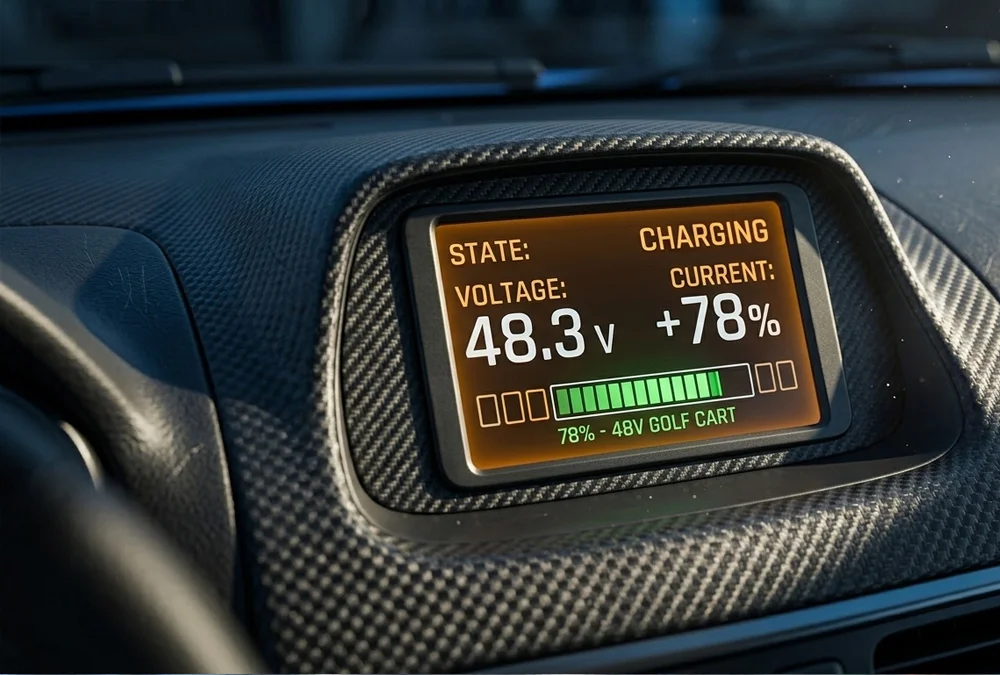
Let us look at a standard 48V 100Ah lithium battery pack drained down to 20% SOC. You need to replace 80 Amp-hours of energy. If you connect a standard 20A lithium golf cart battery charger, the calculation is straightforward:
80 Ah ÷ 20 A = 4 Hours
We add a small efficiency factor to account for the final cell balancing stage. This brings the real-world total to around 4.5 hours.
48V 100Ah Golf Cart Battery Charging Example
Let us look at estimated charging times for different battery capacities using a standard 20A power source:
- 48V 100Ah Lithium Pack: Requires roughly 4 to 5 hours to fill completely from a low state of charge.
- 48V 150Ah Lithium Pack: Requires roughly 6 to 7 hours of continuous charging from empty.
- 48V 200Ah Lithium Pack: Requires roughly 8 to 9 hours to replenish using standard garage chargers.
Why Is My Golf Cart Battery Charging Slowly?
If your vehicle is spending way too much time stuck at the plug, you are likely dealing with an underlying hardware issue.
- Battery Capacity Has Decreased: Severe internal cell degradation forces the pack to accept energy much slower.
- Abnormal Voltage Imbalance: A single weak cell forces the BMS to lower the charging current to protect the pack.
- Charger Output Is Too Low: Using a small residential charger on a massive commercial pack takes a long time.
- Incompatible Charger Hardware: Using the wrong tool prevents the system from entering its fast bulk-charging stage.
- Extreme Ambient Temperatures: Bitter cold or intense heat forces the safety system to slow down the process.
- BMS Current Limits: The internal protective programming actively lowers the incoming power to prevent overheating.
- Loose or Corroded Connections: Bad wiring joints create high electrical resistance, wasting power and slowing down charging.
When you notice charging times getting longer while your daily driving range drops, prioritize checking the health of your battery pack.
Why Do Older Lead Acid Golf Cart Batteries Charge More Slowly?
Older lead-acid options face specific physical problems that cause them to charge slower over time.
Increased Internal Resistance
As lead plates age, their internal electrical resistance rises significantly. This resistance pushes back against the incoming charger current. It turns your paid electricity into wasted garage heat instead of clean chemical energy storage.
Sulfation and Capacity Loss
Leaving a lead battery partially discharged causes hard lead sulfate crystals to coat the internal plates. This process is documented in the Depth of Discharge database. This crystalline coating blocks chemical reactions, lowering your overall capacity and slowing down charging cycles.
Reduced Charging Efficiency
An old, degraded lead-acid bank can see its charging efficiency drop below 60%. This means nearly half the power coming out of the wall turns into heat. This wastes electricity and drives up your monthly utility bills.
One Weak Battery Can Affect the Entire Pack
A standard 48V lead-acid system uses multiple smaller 8V or 12V battery blocks wired together in series. If one block fails, it acts as a bottleneck for the entire vehicle. The charger cannot finish its cycle properly because it struggles to bring the weak block up to the correct voltage.
How Long Should You Leave a Golf Cart Battery Charging?
Leaving your vehicles plugged in incorrectly can damage the cells and create serious safety hazards in your shop.
Should You Charge a Golf Cart Overnight?
Traditional flooded cells can safely sit on a high-quality smart charger overnight. The charger will automatically drop into a low-voltage float mode once the cycle finishes. However, if you use a cheap legacy charger without an automatic shutoff, leaving it connected overnight can boil the fluid and ruin the pack.
Should a Lithium Golf Cart Battery Stay Connected to the Charger?
You must follow the specific design instructions provided by your battery manufacturer. Modern premium lithium packs feature an automatic smart shutoff. The internal BMS completely cuts off incoming power once the cells are balanced. However, you should still unplug the system if you plan to store the vehicle for several months over the winter.
Common Golf Cart Battery Charging Mistakes to Avoid
Avoid these common charging mistakes to keep your fleet running reliably and prevent expensive hardware failures.
Using the Wrong Charger Voltage
Never connect a 36V charger to a 48V battery system. The lower-voltage tool cannot push power into the higher-voltage pack. Conversely, using a 48V charger on a 36V system will quickly overheat and destroy the cells.
Using a Lead Acid Charger for a Lithium Battery
This is a dangerous mistake that can ruin your upgrade. Lead-acid chargers use a high-voltage equalization stage to mix the internal acid fluid. This high voltage will trigger the safety switches on a lithium BMS, shutting down the system instantly.
Charging in Extreme Temperatures
Never try to charge a lithium pack when internal cell temperatures drop below freezing. Forcing current into freezing cells causes permanent lithium plating, which ruins the pack. Always charge your vehicles in a temperature-controlled garage environment.
How to Tell if a Golf Cart Battery Is Fully Charged
Do not guess your remaining power levels. Use these reliable visual indicators to confirm when your pack is completely full.
- Charger Indicator Light: Most smart chargers feature a solid green LED to show the cycle is complete.
- Stable Terminal Voltage: A fully charged 48V lead pack sits at roughly 50.9V. A lithium pack reads around 53.6V.
- Integrated Digital Monitor: Modern smart displays show a precise 100% State of Charge reading.
Voltage alone does not always tell the whole story. A surface charge can trick a standard voltmeter into showing a high reading right after unplugging. Let the pack rest for an hour to get an accurate measurement.
How to Reduce Golf Cart Battery Charging Time Safely
You can shorten your fleet’s charging times without shortening the overall lifespan of your battery packs.
Always use a dedicated 48v golf cart battery charger designed specifically for your cell chemistry. Ensure all terminal connections stay clean, tight, and free of corrosion. Keep your vehicles parked in a well-ventilated, temperature-controlled room while charging. This keeps the internal BMS from slowing down the power flow due to excessive heat.
Golf Cart Battery Charging by Voltage System
Let us look at how different system voltages interact with standard charger ratings in commercial shops.
A standard 36V system uses lower electrical pressure, meaning it requires higher amperage to deliver the same total wattage. Modern 48V and 60V lithium configurations operate with much higher efficiency. They pull less current to deliver peak power, which helps reduce heat buildup inside the wires during fast charging cycles.
When Slow Charging Means It Is Time to Replace the Battery
If your vehicle spends all day stuck at the plug and still cannot finish its normal routes, your battery pack has likely reached the end of its useful life.
| Observed System Symptom | Potential Root Electrical Cause | Recommended Corrective Action | User Benefit & Decision Value |
|---|---|---|---|
| Charging takes twice as long | Severe cell aging, high resistance | Run a full capacity test on the pack | Identifies worn-out cells before they leave a driver stranded on the track. |
| Daily driving range drops quickly | Active material degradation inside cells | Replace the pack with modern lithium chemistry | Instantly restores full shift capacity and cuts ongoing maintenance costs. |
| Voltage drops sharply under load | Weak cell block creating a bottleneck | Check individual cell terminal voltages | Prevents a single bad block from damaging the rest of your system. |
| BMS frequently cuts off power | Severe voltage imbalance across cells | Perform a long balancing charge cycle | Helps realign minor cell variations before they cause a total shutdown. |
How Long Does a Lithium Golf Cart Battery Take to Charge?
Let us look closely at the expected charging times for high-quality LiFePO4 configurations running on standard garage power sources.
- 48V 100Ah Lithium Capacity: Fully replenishes in 4 to 5 hours using a standard 20A smart charger.
- 48V 150Ah Lithium Capacity: Requires roughly 6 to 7 hours to charge completely from a low state of charge.
- 48V 200Ah Lithium Capacity: Takes about 8 to 9 hours to fill up using standard shop equipment.
According to recent industry data from the BloombergNEF Lithium-Ion Battery Survey, manufacturing costs for lithium packs have dropped significantly. This makes switching to a high-speed lithium system more cost-effective than ever for fleet operators looking to cut down on vehicle charging times.
Frequently Asked Questions About Golf Cart Battery Charging
How long does a golf cart battery take to charge?
A standard lead-acid pack requires 8 to 10 hours to charge fully. Upgrading to a modern lithium pack cuts that time down to 3 to 5 hours under normal conditions.
How long does a 48V lithium golf cart battery take to charge?
A premium 48V 100Ah lithium battery pack will fully charge in about 4 to 5 hours when paired with a matching 20A smart charger.
Can I leave my golf cart plugged in overnight?
Yes, if you use a high-quality smart charger with an automatic shutoff feature. Avoid leaving old manual chargers connected overnight, as they can overcharge and ruin the cells.
Can I use a lead-acid charger for a lithium golf cart battery?
No. Lead chargers use a high-voltage stage that will trigger the safety switches on a lithium BMS, shutting down the cycle immediately.
Why is my golf cart battery not fully charging?
This is usually caused by severe cell aging, a faulty wire connection, or an internal cell imbalance that triggers the BMS safety switches early.
Can a larger charger charge a golf cart battery faster?
Yes, a charger with a higher amperage rating delivers more power per hour, which shortens your total charging time. Just make sure the output current matches your battery’s maximum safety limits.
How do I know when my golf cart battery is fully charged?
Look for a solid green indicator light on your smart charger, or check your digital battery monitor for a 100% State of Charge reading.
Choose the Right Lithium Golf Cart Battery and Charger
Sourcing your replacement upgrades directly from an experienced manufacturer ensures your battery systems operate safely and reliably in the field.
AnengJi designs high-performance lithium systems specifically tailored for demanding commercial applications. According to the strict industrial safety requirements of the IEC 62619 Standard, our premium LiFePO4 packs feature an advanced integrated BMS. This smart system monitors individual cell conditions in real time, providing comprehensive protection against overcharging, deep over-discharging, and short circuits. This guarantees safe operation and rapid charging across your entire daily route.
Related Article
Related Posts
 https://anengjibattery.com/wp-content/uploads/2026/10/AnengjiBattery-Cell-to-Pack-Energy-Density-Comparison.webp
675
1000
Battery Expert Team
https://anengjibattery.com/wp-content/uploads/2025/06/logo2-300x138.png
Battery Expert Team2026-10-23 06:58:392026-10-23 06:58:41What Does Lithium-Ion Battery Energy Density Really Mean?
https://anengjibattery.com/wp-content/uploads/2026/10/AnengjiBattery-Cell-to-Pack-Energy-Density-Comparison.webp
675
1000
Battery Expert Team
https://anengjibattery.com/wp-content/uploads/2025/06/logo2-300x138.png
Battery Expert Team2026-10-23 06:58:392026-10-23 06:58:41What Does Lithium-Ion Battery Energy Density Really Mean? https://anengjibattery.com/wp-content/uploads/2026/10/AnengjiBattery-Lithium-Battery-Management-in-Daily-Operation.webp
675
1000
Battery Expert Team
https://anengjibattery.com/wp-content/uploads/2025/06/logo2-300x138.png
Battery Expert Team2026-10-22 08:17:332026-10-23 06:58:57How Does a Lithium BMS Improve Battery Longevity?
https://anengjibattery.com/wp-content/uploads/2026/10/AnengjiBattery-Lithium-Battery-Management-in-Daily-Operation.webp
675
1000
Battery Expert Team
https://anengjibattery.com/wp-content/uploads/2025/06/logo2-300x138.png
Battery Expert Team2026-10-22 08:17:332026-10-23 06:58:57How Does a Lithium BMS Improve Battery Longevity? https://anengjibattery.com/wp-content/uploads/2026/10/AnengjiBattery-Industrial-Power-Under-Real-Load.webp
675
1000
Battery Expert Team
https://anengjibattery.com/wp-content/uploads/2025/06/logo2-300x138.png
Battery Expert Team2026-10-22 07:04:542026-10-22 07:05:30How Does a 48V LiFePO4 BMS Protect Industrial Power?
https://anengjibattery.com/wp-content/uploads/2026/10/AnengjiBattery-Industrial-Power-Under-Real-Load.webp
675
1000
Battery Expert Team
https://anengjibattery.com/wp-content/uploads/2025/06/logo2-300x138.png
Battery Expert Team2026-10-22 07:04:542026-10-22 07:05:30How Does a 48V LiFePO4 BMS Protect Industrial Power? https://anengjibattery.com/wp-content/uploads/2026/10/AnengJIBattery-Electric-Forklift-Battery-Buying-Decision.webp
675
1000
Battery Expert Team
https://anengjibattery.com/wp-content/uploads/2025/06/logo2-300x138.png
Battery Expert Team2026-10-21 06:22:222026-10-21 06:22:38Ready to Buy Battery for Electric Forklift? Use This Guide
https://anengjibattery.com/wp-content/uploads/2026/10/AnengJIBattery-Electric-Forklift-Battery-Buying-Decision.webp
675
1000
Battery Expert Team
https://anengjibattery.com/wp-content/uploads/2025/06/logo2-300x138.png
Battery Expert Team2026-10-21 06:22:222026-10-21 06:22:38Ready to Buy Battery for Electric Forklift? Use This Guide


Leave a Reply
Want to join the discussion?Feel free to contribute!