
How Long Do Lithium 48V Golf Cart Batteries Last?
August 10, 2026 / Battery Expert Team / Battery Basics
Introduction
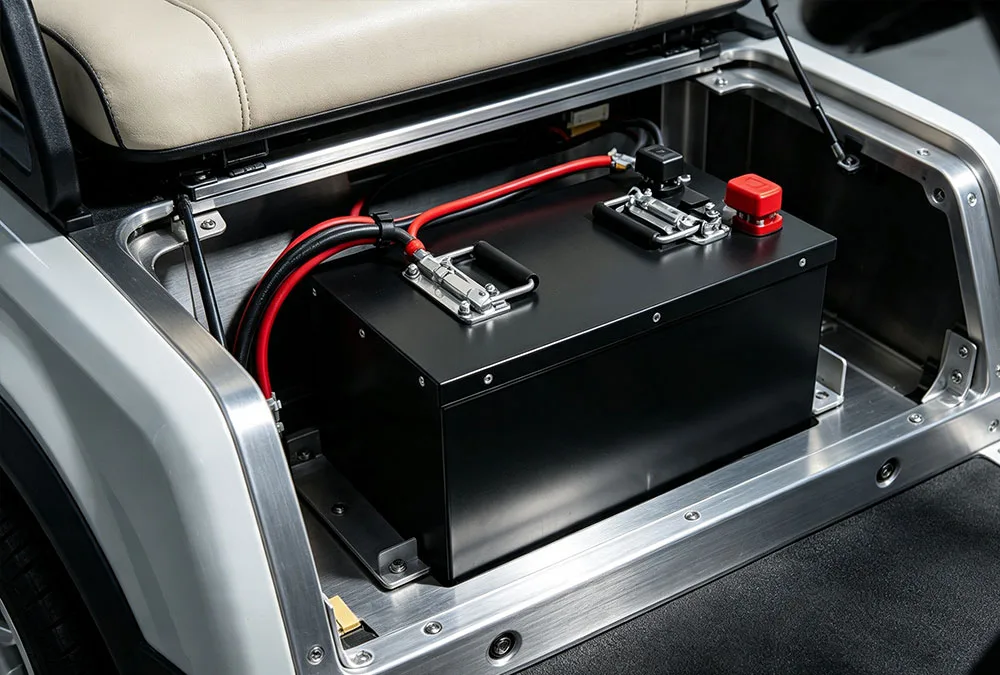
Every week, fleet managers call me frustrated by dying lead-acid battery packs. These traditional batteries leave carts stranded on the ninth hole. Upgrading to modern 48v golf cart batteries completely transforms how your vehicles perform daily. A reliable 48V system cuts vehicle weight instantly. It provides smooth acceleration and dependable output under heavy daily commercial use.
If you have experienced power loss on steep inclines, you know voltage stability matters. Switching to a high-capacity lithium setup eliminates weekly watering duties. It also stops terminal acid corrosion completely. Understanding real-world battery lifespan, charging limits, and discharge ratings helps you choose the right pack.
Why Choose a 48V Golf Cart Battery System?
Electric cart engineering shifted away from lower-voltage architectures years ago. Modern high-efficiency fleet operations require stable energy delivery. A dedicated 48V golf cart battery system delivers the high efficiency needed for multi-passenger trams, utility trucks, and steep courses.
What Makes 48V Batteries Different from 36V Golf Cart Batteries?
Choosing between 36V setups and 48V configurations impacts vehicle speed, torque, and operating temperatures. Older golf carts used 36V banks for short flat runs. Commercial operators now rely almost exclusively on 48V powertrains.
| Performance Metric | Legacy 36V Battery System | Modern 48V Battery System | User Benefit & Decision Value |
|---|---|---|---|
| Torque & Power Output | Moderate torque, slows on hills | High torque, climbs inclines easily | Maintains steady cruising speeds up steep hills without motor strain. |
| Current Draw (Amperes) | Higher amp draw for same output | Lower amp draw, runs cooler | Lower thermal stress extends motor controller operational life. |
| Top Speed Capability | Typically capped at 12–15 mph | Reaches 20–25+ mph easily | Cuts transit time across large resorts, industrial sites, and golf courses. |
| Energy Transfer Efficiency | Standard efficiency, high heat loss | Up to 95% energy efficiency | Delivers lower power bills and extends overall runtime per charge cycle. |
How Does a 48V Battery System Improve Golf Cart Performance?
System voltage follows a fundamental law of physics. Power equals Voltage multiplied by Current ($P = V \times I$). Increasing operating voltage from 36V to 48V reduces the required current draw for identical motor power.
Lower current draw reduces heat buildup inside internal motor windings. It protects your motor controller from thermal shutdown during high-load periods. You gain faster acceleration, stable hill climbs, and higher overall energy efficiency.
How Long Do 48V Golf Cart Batteries Last by Battery Type?
When fleet buyers ask how long do lithium 48v golf cart batteries last, chemical cell design provides the answer. Comparing traditional flooded lead-acid against lithium iron phosphate reveals huge lifespan differences.
Lifespan of Different 48V Golf Cart Battery Technologies
| Battery Chemistry | Cycle Life (80% DoD) | Expected Service Years | User Benefit & Decision Value |
|---|---|---|---|
| Flooded Lead-Acid | 300 to 500 cycles | 2 to 4 years | Low initial purchase cost, but requires frequent water servicing and replacement. |
| AGM / Gel Lead-Acid | 500 to 1,000 cycles | 3 to 5 years | Spill-proof sealed case, but suffers from chemical plate degradation over time. |
| NMC Lithium-Ion | 1,500 to 2,500 cycles | 5 to 8 years | High energy density, but requires strict active thermal monitoring. |
| 48V LiFePO4 Lithium | 3,000 to 5,000+ cycles | 8 to 10+ years | Maximum cycle life, extreme safety, and zero fluid maintenance obligations. |
48V Golf Cart Battery Lifespan Comparison: Lithium vs Lead Acid
So, how long does a 48v lithium golf cart battery last under daily commercial use? A quality 48V LiFePO4 golf cart battery easily lasts 8 to 10 years. Flooded lead-acid options degrade rapidly within 2 to 4 years.
According to the BloombergNEF Lithium-Ion Battery Survey, global production of LiFePO4 cells pushed pack prices to new record lows ($81/kWh average for LFP). LFP technology provides unmatched cycle durability. This makes lithium conversions far more economical over long operating periods.
What Factors Affect the Lifespan of 48V Golf Cart Batteries?
Even the best 48v lithium golf cart battery degrades early if operated improperly. Controlling operational factors keeps your energy storage system running at peak performance.
Charging Habits and Battery Management
Improper charging routines cause premature battery failure across all chemistries. Lead-acid plates sulphate when left partially discharged, while lithium cells require strict voltage regulation.
- Use Dedicated Chargers: Never use legacy lead-acid chargers on lithium modules. High equalization voltage spikes trip internal safety switches.
- Avoid Deep Depletion: Keep individual cell voltages within working ranges instead of driving until cutoff.
- Proper Storage SOC: Store lithium packs at 30% to 50% State of Charge during winter breaks. Do not leave them connected at 100% full charge indefinitely.
Depth of Discharge (DoD) and Battery Cycle Life
Depth of Discharge measures the percentage of battery energy used during a single trip. Discharging lead-acid batteries beyond 50% DoD causes rapid chemical plate degradation.
A quality deep cycle lithium battery handles deep 80% to 100% discharges safely. It delivers almost twice the usable daily range without damaging internal electrode structures.
Temperature, Storage and Environmental Conditions
Ambient temperatures affect chemical reaction speeds inside battery cells. High operating heat accelerates grid corrosion in lead-acid packs. Cold weather temporarily reduces output capacity across all battery types.
Charging lithium cells below freezing (0°C / 32°F) risks permanent lithium plating on cell anodes. Advanced golf cart batteries 48 volt setups include internal heating pads. These warm the cells automatically before allowing charge currents in cold weather.
Battery Pack Design and Cell Quality
Pack assembly standards determine long-term field reliability. Budget battery packs built with surplus Grade-B cells develop voltage imbalances quickly. Industrial-grade packs use Grade-A prismatic cells, laser-welded copper busbars, and smart BMS controllers.
How Far Can a 48V Golf Cart Battery Travel on a Single Charge?
Cart buyers often ask how long do lithium golf cart batteries last on a single charge. Total range depends on battery Amp-hour capacity, vehicle weight, motor draw, and terrain profile.
Factors That Determine Golf Cart Driving Range
Actual driving distance changes based on core operating variables:
- Passenger Load & Payload: Heavy six-passenger lifted carts consume significantly more Watt-hours per mile.
- Course Terrain: Soft turf and steep mountain inclines drain energy faster than flat asphalt paths.
- Driving Speed: Driving continuously at full throttle (25+ mph) draws higher continuous amperage.
48V Golf Cart Battery Range Based on Capacity
| Battery Capacity | Stored Energy (kWh) | Estimated Mileage Range | User Benefit & Decision Value |
|---|---|---|---|
| 48V 50Ah | 2.56 kWh | 20 to 30 miles | Lightweight, economical choice for short neighborhood errands. |
| 48V 100Ah | 5.12 kWh | 45 to 65 miles | The commercial standard for 36-hole golf days and lifted passenger carts. |
| 48V 150Ah–200Ah | 7.68–10.24 kWh | 70 to 100+ miles | Designed for multi-shift resort shuttles, industrial haulers, and AGVs. |
How Battery Performance Changes as the Charge Level Drops
Lead-acid batteries suffer steep voltage drop during discharge. As stored energy empties, terminal voltage drops sharply. Your cart climbs hills slowly near the end of the day.
Lithium iron phosphate maintains a flat discharge voltage curve. Output voltage remains stable near 51.2V through 85% of the charge cycle. Your cart keeps full speed and hill-climbing power until the pack needs charging.
Real User Experiences: What Golf Cart Owners Say About Battery Life
Real-world operator feedback confirms the practical benefits of upgrading. Discussion threads on Reddit (r/golfcarts) show owners experiencing massive performance improvements. Users driving Club Car and EZGO vehicles report 40 to 50 miles per charge after switching to a single 48v 100ah lithium golf cart battery. Legacy lead-acid packs struggled to complete 18 holes on similar routes.
Common Problems Reported with Lead Acid Batteries
Commercial fleet operators frequently report three main frustration points with lead-acid systems:
- Constant Servicing: Checking water levels weekly and cleaning acid corrosion wastes valuable technician hours.
- Excessive Chassis Weight: Six lead-acid batteries weigh nearly 400 pounds. That weight compresses turf and accelerates tire wear.
- Short Working Lifespan: Usable capacity drops significantly after two seasons, forcing frequent replacements.
Why More Users Are Switching to Lithium Golf Cart Batteries
Switching to a modern golf cart lithium battery replacement removes fluid maintenance duties completely. Operators appreciate charging packs in 3 hours instead of 10. They enjoy sustained torque on steep hills and worry-free off-season storage.
Common Misconceptions About Lithium 48V Golf Cart Batteries
Common industry myths prevent some fleet buyers from making the upgrade. Clearing up these misconceptions helps you make informed procurement choices.
Myth 1: Lithium Batteries Are Unsafe
Some buyers confuse industrial lithium batteries with fragile cobalt cells used in consumer electronics. Commercial golf cart systems use Lithium Iron Phosphate (LiFePO4). LiFePO4 chemistry is exceptionally stable, non-combustible, and highly resistant to thermal runaway.
Myth 2: Lithium Batteries Are Too Expensive
Although lithium packs cost more upfront, they outlast lead-acid options by three to four times. Eliminating fluid servicing, reducing power consumption, and avoiding replacements makes lithium cheaper over time.
Myth 3: Lithium Battery Installation Is Difficult
Early custom conversions required fabrication work. Modern drop-in replacement units fit existing battery trays perfectly. They connect directly to stock 48V motor controllers using standard cable leads.
Signs Your 48V Golf Cart Battery Needs Replacement
Identifying early failure symptoms prevents unexpected fleet downtime. Look for these warnings during routine equipment inspections.
Warning Signs of Battery Failure
- Severe Range Collapse: Your cart cannot complete a standard round of golf or basic maintenance shift.
- Speed Sag on Hills: Vehicle speed drops dramatically under light payload demands.
- Excessive Charge Duration: Chargers run continuously for 12 hours or shut off due to high heat.
- Physical Swelling & Leaks: Lead-acid cases bulge, leak acid, or form heavy terminal corrosion.
When Should You Replace a 48V Golf Cart Battery?
Replace lead-acid sets when overall capacity drops below 50% of nominal rating. Operating severely degraded batteries draws excessive amperage, which can damage your motor controller. Inspect lithium units if the BMS triggers low-voltage cutoffs under light loads.
How to Extend the Life of Your 48V Golf Cart Batteries
Following correct maintenance protocols keeps your battery running safely for years.
Maintenance Tips for Lead Acid Batteries
- Inspect distilled water levels every two weeks. Add fluid only after charging completes.
- Neutralize corroded cable terminals using a baking soda and water mixture.
- Run monthly equalization charges to balance individual cell voltages.
Maintenance Tips for Lithium Batteries
- Charge using dedicated CC/CV profiles designed for LiFePO4 chemistry.
- Keep battery tray compartments clean, dry, and free of road debris.
- Store batteries at 30% to 50% State of Charge in climate-controlled spaces during winter.
48V Lead Acid vs 48V Lithium Golf Cart Battery: Total Cost of Ownership
Evaluating long-term financial metrics reveals the clear advantage of switching to lithium.
Initial Cost Comparison
A new set of flooded lead-acid batteries costs around $800 to $1,200. A premium best lithium battery for golf cart retrofit costs between $1,500 and $2,500. However, initial purchase price represents only a fraction of total lifetime cost.
Lifetime Cost Comparison
| Cost Factor (10-Year Timeline) | Lead-Acid Battery System | 48V LiFePO4 Lithium System | User Benefit & Decision Value |
|---|---|---|---|
| Replacement Purchases | 3 to 4 replacement sets ($3,200+) | 1 initial battery pack ($1,800) | Eliminates recurring replacement costs every few operating seasons. |
| Maintenance Labor & Water | Fluid top-offs & cleaning ($500+) | $0 maintenance expense | Saves labor hours for fleet maintenance teams. |
| Power Conversion Loss | 25% to 30% lost as heat | Under 5% energy loss | Lowers electrical utility expenses during daily facility charging. |
| 10-Year Total Estimated Cost | $4,000 to $5,000+ | $1,800 to $2,200 | Cuts total lifetime power and equipment expenses by over 50%. |
48V 100Ah Golf Cart Battery Runtime Calculation
Calculating stored energy helps fleet managers size battery systems accurately.
How Much Energy Does a 48V 100Ah Battery Store?
To calculate total stored energy in a 48V 100Ah golf cart battery, multiply nominal system voltage by capacity:
This 5.12 kWh reserve provides standard golf carts with enough energy to travel 45 to 65 miles per charge under typical operating conditions.
Estimated Runtime Under Different Loads
Actual operating runtime depends on continuous motor current draw:
- Light Cruising Load (30A continuous): 100Ah ÷ 30A ≈ 3.3 hours continuous runtime (approx. 50–60 miles).
- Moderate Fleet Load (50A continuous): 100Ah ÷ 50A = 2.0 hours continuous runtime (approx. 35–45 miles).
- Heavy Commercial Duty (80A continuous): 100Ah ÷ 80A = 1.25 hours continuous runtime (approx. 20–30 miles).
Why AnengJi Is the Right Choice for 48V Golf Cart Battery Upgrade
Sourcing directly from an experienced 48V golf cart battery replacement manufacturer ensures compliance with UN 38.3, IEC 62619, and IEEE standards.
Drop-in Replacement 48V LiFePO4 Golf Cart Battery Solutions
ENERGYSPLENDOR manufactures commercial lithium battery packs designed to fit standard tray dimensions. Our conversion kits include custom mounting brackets, digital SOC meters, and heavy-duty wiring harnesses for fast installation.
Self-Heating Lithium Battery Technology for All-Weather Use
Our winter-ready battery systems feature automatic internal heating circuits. When charging in freezing conditions, incoming power warms internal cells to safe levels before starting the charge cycle. This guarantees reliable performance in cold climates.
Customized 48V Golf Cart Battery Capacity Options
| Model Series | Capacity & Stored Energy | Target Commercial Application | User Benefit & Decision Value |
|---|---|---|---|
| ES-4850 | 48V 50Ah (2.56kWh) | Light 2-passenger carts | Compact, lightweight option for short daily runs. |
| ES-48100 | 48V 100Ah (5.12kWh) | Standard golf & resort fleets | Our core recommendation for 36-hole golf days and lifted passenger carts. |
| ES-48150 | 48V 150Ah (7.68kWh) | Commercial utility vehicles | Extra capacity for heavy payload towing and steep incline routes. |
| ES-48200 | 48V 200Ah (10.24kWh) | Sightseeing trams & AGVs | Maximum energy reserve for multi-shift industrial transportation. |
Conclusion: Are Lithium 48V Golf Cart Batteries Worth It?
Upgrading to a high-capacity 48V LiFePO4 golf cart battery is the single most effective performance upgrade for your fleet. You eliminate acid maintenance, drop unnecessary weight, charge faster, and enjoy reliable power for over ten years.
Although initial purchase cost is higher than lead-acid, long cycle life and zero maintenance deliver a far lower total cost of ownership.
Related Article
Related Posts
 https://anengjibattery.com/wp-content/uploads/2026/10/AnengjiBattery-Cell-to-Pack-Energy-Density-Comparison.webp
675
1000
Battery Expert Team
https://anengjibattery.com/wp-content/uploads/2025/06/logo2-300x138.png
Battery Expert Team2026-10-23 06:58:392026-10-23 06:58:41What Does Lithium-Ion Battery Energy Density Really Mean?
https://anengjibattery.com/wp-content/uploads/2026/10/AnengjiBattery-Cell-to-Pack-Energy-Density-Comparison.webp
675
1000
Battery Expert Team
https://anengjibattery.com/wp-content/uploads/2025/06/logo2-300x138.png
Battery Expert Team2026-10-23 06:58:392026-10-23 06:58:41What Does Lithium-Ion Battery Energy Density Really Mean? https://anengjibattery.com/wp-content/uploads/2026/10/AnengjiBattery-Lithium-Battery-Management-in-Daily-Operation.webp
675
1000
Battery Expert Team
https://anengjibattery.com/wp-content/uploads/2025/06/logo2-300x138.png
Battery Expert Team2026-10-22 08:17:332026-10-23 06:58:57How Does a Lithium BMS Improve Battery Longevity?
https://anengjibattery.com/wp-content/uploads/2026/10/AnengjiBattery-Lithium-Battery-Management-in-Daily-Operation.webp
675
1000
Battery Expert Team
https://anengjibattery.com/wp-content/uploads/2025/06/logo2-300x138.png
Battery Expert Team2026-10-22 08:17:332026-10-23 06:58:57How Does a Lithium BMS Improve Battery Longevity? https://anengjibattery.com/wp-content/uploads/2026/10/AnengjiBattery-Industrial-Power-Under-Real-Load.webp
675
1000
Battery Expert Team
https://anengjibattery.com/wp-content/uploads/2025/06/logo2-300x138.png
Battery Expert Team2026-10-22 07:04:542026-10-22 07:05:30How Does a 48V LiFePO4 BMS Protect Industrial Power?
https://anengjibattery.com/wp-content/uploads/2026/10/AnengjiBattery-Industrial-Power-Under-Real-Load.webp
675
1000
Battery Expert Team
https://anengjibattery.com/wp-content/uploads/2025/06/logo2-300x138.png
Battery Expert Team2026-10-22 07:04:542026-10-22 07:05:30How Does a 48V LiFePO4 BMS Protect Industrial Power? https://anengjibattery.com/wp-content/uploads/2026/10/AnengJIBattery-Electric-Forklift-Battery-Buying-Decision.webp
675
1000
Battery Expert Team
https://anengjibattery.com/wp-content/uploads/2025/06/logo2-300x138.png
Battery Expert Team2026-10-21 06:22:222026-10-21 06:22:38Ready to Buy Battery for Electric Forklift? Use This Guide
https://anengjibattery.com/wp-content/uploads/2026/10/AnengJIBattery-Electric-Forklift-Battery-Buying-Decision.webp
675
1000
Battery Expert Team
https://anengjibattery.com/wp-content/uploads/2025/06/logo2-300x138.png
Battery Expert Team2026-10-21 06:22:222026-10-21 06:22:38Ready to Buy Battery for Electric Forklift? Use This Guide


Leave a Reply
Want to join the discussion?Feel free to contribute!