
How Do Turnkey Solar Solutions Work? Commercial Cost and Execution Guide
June 11, 2026 / Battery Expert Team / energy epc
Introduction
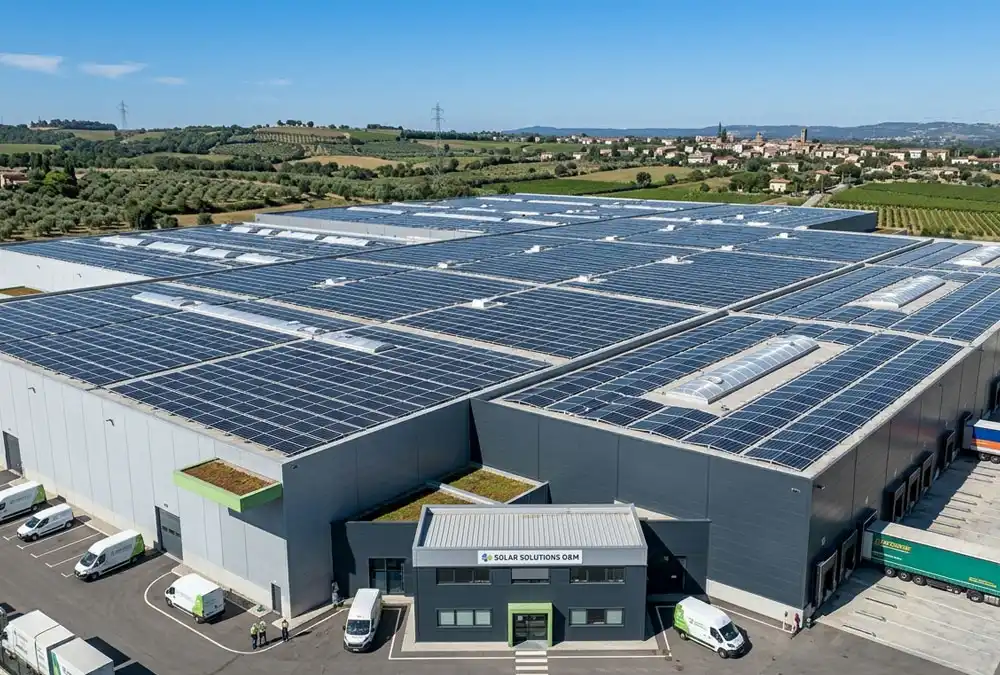
For modern commercial enterprises, industrial facilities, and utility asset managers looking to hedge against volatile grid electricity markets, deploying clean energy infrastructure is no longer an optional sustainability goal—it is a core financial strategy. Navigating the fragmented landscape of hardware sourcing, regional electrical grid codes, environmental permitting, and structural engineering can introduce costly development delays and execution risks. This is why forward-thinking organizations are bypassing traditional multi-contractor approaches and choosing comprehensive Turnkey Solar Solutions to rapidly deploy solar photovoltaic assets. Working with a unified execution partner ensures your commercial or utility asset is engineered to peak performance and delivered on time, minimizing your upfront capital expenditure (CapEx) risk while locking in multi-decade operational yield.
In the contemporary European market, the execution of utility-scale and commercial renewable energy assets has grown highly technical. Projects are moving beyond simple solar panel arrays to incorporate intelligent solar system integration frameworks that blend solar generation with advanced automation. Implementing an optimized Turnkey Solar Solutions strategy means that every single phase of your solar power asset—from initial solar irradiation modeling and medium-voltage grid applications to physical construction and ongoing lifecycle maintenance—is wrapped under a single point of contract responsibility. This holistic operational wrapper gives asset owners guaranteed completion dates, rigid cost control parameters, and predictable levelized cost of energy (LCOE) outcomes.
According to the SolarPower Europe 2025-2029 Global Market Outlook, commercial and utility-scale installations account for more than 70% of new capacity additions across the continent. However, as localized grid networks hit capacity bottlenecks, the industry has shifted dynamically. Successful execution now relies heavily on deploying renewable energy solutions that feature factory-integrated energy management systems and grid-stabilization capabilities. This guide provides an in-depth analysis of pricing benchmarks, structural workflows, return on investment (ROI) matrices, and engineering risk-mitigation strategies needed to successfully navigate a modern commercial or utility energy project.
What Are Turnkey Solar Solutions? (Featured Snippet)
Quick Definition of Turnkey Solar Solutions
Understanding how a streamlined execution framework functions is essential before allocating capital to massive energy infrastructure. The market defines this streamlined process through a single-responsibility delivery mechanism:
Turnkey Solar Solutions refer to an all-inclusive, end-to-end engineering, procurement, and construction (EPC) project delivery model where a single contract partner handles the entire lifecycle of a solar energy project. The provider takes full responsibility for site feasibility analysis, advanced electrical and structural engineering, tier-1 equipment sourcing, civil construction, utility grid interconnection, testing, and final system commissioning, delivering a fully operational, high-yielding solar power plant to the investor or asset owner ready to turn the key.
More commercial entities are moving away from itemized contracting and selecting a unified Turnkey Solar Solutions Provider. This shift is driven by a clear economic factor: traditional contracting leaves the asset owner exposed to expensive interface disputes between separate engineering firms, component logistics providers, and on-site physical installers. A turnkey execution wrap eliminates these structural boundaries, transferring project delivery and component warranty performance risks completely onto the principal EPC contractor.
How Turnkey Solar Solutions Work
The operational framework of a comprehensive turnkey project maps out a seamless pathway from initial site conceptualization to active clean power generation:
- Conceptualization & Analysis: Executing on-site structural scanning and historical electrical load profiling to establish the maximum technical asset capacity.
- Unified Sourcing & Logistics: Leveraging factory-direct purchasing agreements to secure high-efficiency PV panels, industrial smart inverters, and heavy-duty tracking systems without intermediary markups.
- Physical Site Execution: Coordinating all earthworks, structural racking installation, high-voltage cabling, and transformer positioning under strict health and safety parameters.
- Grid Interface Activation: Managing the complete testing protocols required by local transmission system operators (TSOs) to secure immediate, uncurtailed grid connection.
Who Typically Uses Turnkey Solar Solutions?
This streamlined engineering model provides substantial financial and operational benefits across several vertical sectors:
- Commercial Buildings: Corporate offices, institutional facilities, and retail centers looking to reduce peak daytime cooling operational expenses.
- Factories & Industrial Plants: High-demand manufacturing facilities seeking to lower their peak demand charges and secure long-term price predictability.
- Logistics & Warehouses: Utilizing massive, unutilized roof spaces to generate significant self-consumption offsets or export power under corporate PPAs.
Furthermore, large-scale agricultural operations deploy agrivoltaic designs to achieve dual land-use efficiency, while international investment funds and IPPs utilize this framework to deploy multi-megawatt ground-mounted arrays and complex utility-scale turnkey solar solutions with minimal operational overhead.
What Is Included in a Turnkey Solar Solution?
When selecting a project delivery model, procurement directors must evaluate the precise scope of services included. A comprehensive turnkey contract leaves no engineering gaps, answering the fundamental question: “What specific deliverables are managed under this agreement?”
Project Feasibility Study
Before breaking ground, the turnkey provider executes a series of highly specialized site evaluations to eliminate development risks:
- Detailed Site Assessment: Conducting accurate drone-based 3D terrain mapping, shadow analysis, and structural roof load-bearing calculations using advanced laser diagnostics.
- Solar Resource Analysis: Sourcing multi-decade historical satellite meteorological data to model expected annual kilowatt-hour output trends via P50 and P90 yield simulations.
- Energy Consumption Evaluation: Correlating your facility’s 15-minute interval utility meter data with simulated solar generation curves to optimize the system size for maximum self-consumption.
Engineering and System Design
The foundational value of professional solar epc services centers on high-level system engineering. This phase establishes the precise electrical and structural DNA of the asset:
- Electrical Engineering Design: Mapping out multi-string configurations, optimized DC collection networks, low-loss AC combiner layouts, short-circuit calculations, and emergency arc-fault protection mechanisms.
- Structural Engineering Design: Calculating wind-uplift vectors, regional snow-loading thresholds, and selecting heavy-duty ballasted or penetrating mounting racking systems to preserve roof warranties.
- Yield Simulation: Utilizing software to build a digital twin of the solar plant, optimizing inverter loading ratios (ILR) to maximize power output while eliminating clipping losses.
Equipment Procurement
Managing a complex global supply chain requires deep market leverage. Sourcing key infrastructure components through an established procurement framework guarantees tier-1 quality:
- High-Efficiency Solar Panels: Procurement of high-bifaciality N-Type TOPCon or Heterojunction (HJT) PV modules from tier-1 bankable manufacturers.
- Smart Inverters: Selection of high-efficiency string or central inverters equipped with advanced Maximum Power Point Tracking (MPPT) channels and integrated arc-fault protection.
- Racking & Mounting Infrastructure: Sourcing corrosion-resistant galvanized steel or marine-grade aluminum mounting structures engineered for single-axis tracking or optimized fixed tilts.
- Advanced Battery Energy Storage Systems (BESS): Integrating industrial-grade containerized lithium iron phosphate (LFP) energy storage units to facilitate load shifting and peak shaving.
Construction and Installation
Transitioning from a digital blueprint to a physical asset requires precise on-site coordination and skilled labor management:
- Civil Engineering Works: Ground clearing, slope leveling, trenching for underground high-voltage cabling, and pouring specialized concrete equipment pads for inverters and transformers.
- Mechanical Installation: High-speed automated pile driving, structural racking assembly, and precision mounting of solar modules according to torque specifications.
- Electrical Installation: Professional routing of high-voltage DC/AC cabling, connecting combiner boxes, setting up string inverters, and terminating connections at the primary facility switchgear or high-voltage substation.
Grid Connection and Commissioning
Securing the final authorization to energize the asset is often the most complex regulatory hurdle in a project:
- Utility Coordination: Managing the complete administrative application pipeline, protective relay programming adjustments, and telemetric data link setups required by local utility operators.
- Rigorous System Testing: Executing string insulation resistance testing, thermal imaging scanning to detect cell hotspots, and performance ratio (PR) validation according to IEC 62446 standards.
- Final Acceptance & Handover: Obtaining formal grid witness testing approval and commercial operation date (COD) certification, transitioning the energized plant smoothly over to the owner.
Operation and Maintenance (O&M) Services
A comprehensive turnkey package protects the asset long after the construction crews leave the site:
- 24/7 Remote Monitoring: Utilizing cloud-based SCADA platforms to continuously track real-time performance at the individual string level, spotting anomalies before they impact yield.
- Preventive Maintenance: Scheduling periodic physical inspections, torque testing on structural bolts, electrical connection adjustments, and drone-based thermographic flyovers.
- Performance Optimization: Analyzing historical generation data to schedule panel cleanings, upgrade inverter firmware, and optimize battery charge cycles to maximize ongoing asset returns.
Why Turnkey Solar Solutions Are Better Than Traditional Solar Procurement
Evaluating your choice of contract framework has a direct, measurable impact on your capital deployment efficiency. Splitting a project across separate vendors introduces significant operational friction, whereas selecting an integrated solution creates clear structural advantages.
Turnkey Solar vs. Multiple Contractors
The operational and financial differences between a unified project delivery model and traditional itemized multi-contracting are contrasted below:
| Evaluation Factor | Turnkey Solar Solutions Model | Traditional Multi-Contractor Approach |
|---|---|---|
| Project Responsibility | Single Partner: Full legal accountability for engineering, sourcing, and performance. | Multiple Vendors: Fragmented accountability across separate designers, suppliers, and builders. |
| Risk Allocation Level | Low: Delivery, component interface, and regulatory risks are completely borne by the EPC. | High: The asset owner carries the financial risk of interface errors and material delays. |
| Project Completion Timeline | Faster: Parallel workflows and streamlined procurement reduce delivery schedules by up to 30%. | Longer: Subject to sequential scheduling handoffs and vendor mobilization friction. |
| Cost Overrun Control | Excellent: Fixed-price contract parameters lock in cost certainty from day one. | Difficult: High probability of change orders due to design changes or component delivery mismatches. |
| Communication Overhead | Simple: A single dedicated project manager coordinates all internal and external communication. | Complex: The owner must actively manage conflict resolution between separate contractors. |
Key Benefits of a Turnkey Solar Solution
By shifting delivery mechanics to a single, principal contract wrapper, corporate energy users and financial investors unlock four distinct operational advantages:
- One Point of Contact: Eliminates fingerprint-pointing between independent electrical designers and on-site building contractors. Any technical, structural, or regulatory issue is resolved by a single account manager.
- Reduced Risk Profile: Sourcing a turnkey contract transfers the complex financial risks of component delays, weather-related labor extensions, and unexpected permitting adjustments directly to the EPC provider.
- Faster Project Delivery: Turnkey firms execute multiple phases in parallel. Sourcing major equipment components can occur while municipal building permits are being finalized, cutting total development cycles by months.
- Better Performance Accountability: Because the same entity engineers the plant and procures the hardware, they provide a single comprehensive generation warranty wrapper, guaranteeing the power plant meets its modeled output targets.
Turnkey Solar Solutions Process: Step-by-Step Project Delivery
Successfully bringing a multi-megawatt commercial solar or ground-mounted project to life follows a highly structured, seven-stage engineering procurement and construction lifecycle roadmap.
Phase 1 – Site Assessment and Feasibility Analysis
The development lifecycle starts with detailed data collection. Engineering teams deploy advanced drone lidar to generate topographical point clouds, evaluate local geological soil conditions via pile pull-out tests, and extract up to three years of high-resolution 15-minute facility electrical utility bills. This baseline data determines if a project is technically viable before any capital is committed.
Phase 2 – Engineering Design and Planning
With precise physical and electrical site constraints established, engineers build comprehensive blueprints of the solar plant. Designers optimize string configurations, specify exact cable routing trenches to minimize voltage drops, design structural foundation piles to handle extreme local wind loads, and prepare the technical documentation packages required for local TSO grid approval processes.
Phase 3 – Procurement and Manufacturing
Leveraging deep global factory networks, the turnkey partner initiates bulk procurement orders directly with tier-1 equipment manufacturers. High-efficiency bifacial N-type modules, smart string inverters, and tracking systems are sourced simultaneously. Manufacturing schedules are carefully synchronized with localized shipping and staging logistics to eliminate costly on-site delivery delays.
Phase 4 – Construction and Installation
Once components arrive, on-site mobilization begins under strict safety management protocols. Heavy machinery initiates necessary grading and trenching works, followed by automated civil pile driving. Racking systems are assembled rapidly, modules are securely torqued to structural specifications, and high-voltage AC/DC electrical wiring is routed and terminated by certified industrial technicians.
Phase 5 – Testing and Commissioning
Before connecting power to the grid, the entire installation undergoes comprehensive electrical and performance verification testing. Engineers execute string open-circuit voltage tests, insulation resistance checks, and thermal imaging scans of key connections. The asset is then energized alongside utility engineers during official witness testing to ensure full grid-code compliance.
Phase 6 – Project Handover
With the power generation asset running safely and exporting clean electricity, the turnkey provider organizes all technical documentation. The owner receives full as-built electrical schematics, structural engineering certifications, localized municipal permits, factory equipment warranties, and comprehensive system operating manuals, officially transferring asset operations.
Phase 7 – Long-Term O&M Support
The relationship continues long past the commercial operation date (COD). The plant is immediately integrated into a centralized 24/7 remote monitoring SCADA platform. Automated software tracking tracks generation efficiency, handles predictive maintenance alerts, and coordinates scheduled field teams to clean panels and service equipment, protecting the asset’s long-term financial returns.
How Much Do Turnkey Solar Solutions Cost?
For corporate CFOs and investment committees, understanding transparent project cost benchmarks is essential for accurate capital allocation. While every commercial configuration requires customized engineering adjustments, current European markets present clear macroeconomic pricing bands.
Average Cost Configurations Across Key Segments
- Commercial Rooftop Projects (100kW – 500kW): Average pricing ranges from €0.95 to €1.25 per watt. These setups are highly optimized to displace expensive retail commercial electricity tariffs, yielding rapid amortization profiles.
- Industrial Solar Solutions (500kW – 5MW): Typically range between €0.78 to €0.98 per watt. These projects benefit from significant economies of scale, utilizing large warehouse footprints and streamlined industrial electrical routing.
- Utility-Scale Solar Farms (10MW – 50MW+): Highly optimized bulk infrastructure investments ranging from €0.58 to €0.72 per watt. These installations utilize direct factory sourcing and automated construction workflows to drive down the total cost per megawatt.
Main Structural Cost Drivers
The total capital expenditure required to deliver a operational clean energy plant is driven by six distinct variables:
- System Capacity Scale: Larger megawatt installations unlock deeper wholesale volume pricing discounts on key components like panels and inverters.
- Equipment Quality Tiers: Specifying ultra-high-efficiency N-type modules or specialized tracking systems adds a modest equipment premium up front, but yields significantly higher lifetime generation.
- Localized Labor & Civil Work Rates: Regional differences in structural union labor rules, structural roof reinforcements, and complex terrain grading directly affect construction budgets.
- Geographic Location & Access: Remote site logistics, challenging transport routes, and extreme regional wind or snow load demands require more robust structural racking designs.
- Grid Interconnection Complexity: The distance to the nearest utility substation, along with any requirements for dedicated step-up transformers or transmission line extensions, can add substantial infrastructure costs.
- Battery Storage Integration: Co-locating high-capacity battery energy storage systems adds a separate, substantial capital investment, but transforms the asset into a highly valuable, dispatchable energy resource.
What Documents Are Required for a Turnkey Solar Project?
Navigating the administrative compliance landscape is a core service provided under a turnkey model. Sourcing and compiling these regulatory verification files ensures the project remains legally compliant and fully bankable:
- Site Ownership & Land Title Records: Certified deeds, structural roof lease agreements, or long-term land easements verifying the owner’s legal right to install energy infrastructure.
- Utility Bills & Historical Energy Profiles: A minimum of 12 to 24 months of continuous, detailed interval electricity data to validate self-consumption modeling.
- Engineering & Structural Blueprints: Certified structural roof load calculations, detailed wind-tunnel simulation reports, and single-line electrical schematics stamped by a licensed professional engineer.
- Grid Interconnection Applications: Official technical filing packages submitted to the local TSO/DSO to secure authorized parallel generation capacity allocations.
- Permits & Environmental Approvals: Municipal zoning clearings, building permits, and environmental impact assessments required by regional regulatory bodies.
- EPC Agreement & Warranty Contracts: The master turnkey construction contract containing guaranteed performance metrics, delivery timelines, and long-term equipment warranty documents.
How Long Does a Turnkey Solar Project Take to Complete?
Project execution speed is critical for commercial operators eager to start capturing energy savings. While physical construction happens rapidly, the total development lifecycle is heavily influenced by regional permitting and grid connection timelines.
- Commercial Rooftop Projects: Typically require 3 to 5 months from initial feasibility analysis to final energization. Physical building assembly often takes only 2 to 3 weeks, while the remaining time is spent navigating utility grid applications.
- Industrial Solar Installations: Generally require 5 to 9 months to deliver. These extended schedules accommodate longer manufacturing lead times for large-scale medium-voltage switchgear and transformers.
- Utility-Scale Turnkey Solar Solutions: Large-scale ground-mounted projects require 10 to 18+ months, driven primarily by intensive environmental permitting phases, deep geotechnical civil prep, and high-voltage utility substation construction.
Factors That Affect Project Duration
Understanding potential development bottlenecks allows project managers to de-risk delivery schedules:
- Regional Permitting Efficiency: Bureaucratic processing variations within municipal building departments and environmental agencies can introduce unexpected timeline adjustments.
- Equipment Lead Times: Global supply chain demands for high-capacity step-up transformers or specialized high-voltage circuit breakers can extend initial procurement timelines.
- Site & Weather Conditions: Extreme winter weather delays civil ground grading and concrete pouring, while challenging geotechnical profiles can slow structural pile-driving progress.
What Is the Payback Period for Turnkey Solar Solutions?
Average Solar Project Payback Period
The timeline required to completely amortize a capital investment in a clean energy asset depends directly on localized utility power rates and your facility’s self-consumption profile. Across key European commercial segments, average payback periods fall into highly attractive ranges:
- Commercial Operations: 5.0 to 7.5 Years
- Industrial Manufacturing Facilities: 4.5 to 6.5 Years
- Utility-Scale Generation Assets: 7.0 to 9.5 Years
Key Factors Affecting Return on Investment (ROI)
Four primary operational levers dictate the exact speed of your project’s financial amortization:
- Local Utility Electricity Rates: Higher grid retail power rates drastically accelerate payback schedules by increasing the financial value of every kilowatt-hour of solar energy generated and consumed on-site.
- Regional Solar Irradiation Levels: The geographical position of the asset directly determines annual energy yields per kilowatt of installed capacity.
- Government Incentives & Tax Credits: Capital investment grants, corporate tax write-offs, and accelerated depreciation benefits lower the net upfront project cost.
- Self-Consumption Optimization Rate: Maximizing the percentage of solar power consumed directly by your facility’s operations yields significantly higher financial returns than exporting excess power back to the grid at wholesale feed-in rates.
Real ROI Example: 500kW Factory Solar Project
To demonstrate the robust financial profile of a modern commercial solar deployment, consider a typical European manufacturing facility installation executed under a turnkey model:
- Total Turnkey Project Cost: €425,000 (Fully loaded CapEx including engineering, tier-1 hardware, and grid connection).
- Annual Operational Savings: €78,000 per year by displacing expensive peak-tariff grid electricity and optimizing self-consumption.
- Net Amortization Payback Period: 5.4 Years
- 25-Year Cumulative Profit Projection: Over €1.45 Million in net operational savings after accounting for ongoing annual O&M expenses and standard component degradation curves.
Is Your Roof or Land Suitable for Turnkey Solar Installation?
Before initiating a formal engineering request, asset owners can perform a preliminary evaluation of their facility’s physical suitability against standard industrial criteria:
- Optimal Industrial Roof Types: Reinforced concrete roofs offer ideal structural platforms for ballasted systems, while standing-seam trapezoidal metal roofs enable rapid, non-penetrating clamp-on racking installations.
- Ideal Ground-Mounted Site Conditions: Level or gently sloped south-facing terrain with stable soil composition that avoids wetlands, complex bedrock profiles, or protected environmental zones.
- Managing Shading Impact: Minimizing proximity to tall surrounding trees, adjacent building profiles, heavy industrial HVAC equipment, or parapet walls that cause localized string shading and cut generation efficiency.
- Grid Access Requirements: Proximity to a high-capacity utility distribution line or an on-site substation reduces the need for expensive, long-distance underground cabling trenches.
Site Selection Checklist for Turnkey Solat Asset Deployment
✓ Minimum continuous roof or land area of 1,200 square meters for commercial configurations.
✓ Structural engineering capacity to support an added dead-load of 15kg/m² for ballasted solar systems.
✓ Clear, unobstructed access paths for heavy transport vehicles and mobile installation cranes.
✓ On-site main electrical distribution board with sufficient physical space for parallel solar breaker integration.
Government Incentives and Financing Options for Turnkey Solar Solutions
European national governments have implemented a comprehensive array of financial support mechanisms designed to accelerate the deployment of clean energy infrastructure and lower the barriers to corporate CapEx allocation:
- Corporate Tax Credits & Accelerated Depreciation: Programs like the German investment tax allowance and the Dutch Energy Investment Allowance (EIA) enable commercial entities to directly deduct a significant portion of their turnkey solar solutions expenditure from corporate tax liabilities.
- Feed-in Tariffs (FiT): Guaranteed multi-year pricing structures paid by the utility network for excess clean energy exported back to the grid, providing predictable secondary revenue streams.
- Net Metering Programs: Financial billing mechanisms that credit asset owners for the electricity they feed into the grid, offsetting evening consumption from the utility network.
- Green Energy Infrastructure Grants: Direct capital subsidies provided by the European Union or regional development banks specifically targeted at supporting industrial energy decarbonization projects.
For organizations looking to preserve operational cash flow, highly flexible solar financing and leasing options are readily available. Utilizing a structured Power Purchase Agreement (PPA) or an energy services contract enables commercial entities to deploy a comprehensive solar power plant with zero upfront capital investment, purchasing the generated clean power at a predictable discount relative to traditional retail grid tariffs.
Turnkey Solar Warranty and Maintenance Services
The long-term bankability of a commercial energy asset relies on robust, multi-layered product and workmanship guarantees. Sourcing a turnkey project wraps your infrastructure under a highly protective warranty framework:
- Solar Panel Performance Warranties: A 12-to-15-year comprehensive manufacturer product warranty combined with a 25-to-30-year linear power output guarantee, ensuring modules maintain at least 85% of original factory capacity over time.
- Industrial Inverter Warranties: Standard 5-to-10-year factory product warranties, with flexible corporate options to extend coverage to 15 or 20 years to match project lifecycles.
- EPC Workmanship Guarantees: A dedicated 2-to-5-year comprehensive warranty provided directly by the turnkey installer covering all structural racking integrity, physical cabling connections, and weatherproofing seals.
- Battery Storage Infrastructure Warranties: 10-year performance guarantees focused on capacity retention metrics, ensuring integrated cells maintain minimum energy capacity over their operational cycle life.
Common Risks in Turnkey Solar Projects and How to Avoid Them
Every complex engineering project carries inherent technical and operational challenges. Working with an experienced solar installation company under an integrated turnkey framework is the most effective strategy for managing these development risks:
- Design & Structural Risks: Subpar roof load-bearing calculations can cause structural sagging or compromise facility building warranties. Mitigation: Demanding advanced drone-based 3D site modeling and requiring professional engineering structural certifications before hardware assembly.
- Procurement & Logistics Delays: Supply chain bottlenecks for critical high-capacity components can stall field installation teams. Mitigation: Sourcing components from vertically integrated providers with established, factory-direct material networks.
- Grid Interconnection Hurdles: Strict protection relay rules or transformer delays can prevent timely system activation. Mitigation: Initiating formal utility grid applications during the early site conceptualization phase to clear administrative requirements early.
How To Choose the Right Turnkey Solar Solutions Provider
Selecting your primary engineering and execution partner is the most critical decision in your asset deployment lifecycle. The right choice directly shapes both immediate project delivery and decades of ongoing energy production performance.
Key Evaluation Metrics for Procurement Managers
- Proven Field Experience: Evaluate the provider’s history of executing complex commercial rooftop installations and ground-mounted megawatt arrays within your specific industrial sector.
- Technical Engineering Capability: Verify that the contractor maintains an in-house team of certified electrical and structural engineers, rather than outsourcing core system designs to unvetted third parties.
- Vertical Supply Chain Network Leverage: Assess the provider’s procurement partnerships with leading tier-1 component manufacturers, ensuring reliable component allocations and competitive pricing.
Turnkey Solar Provider Selection Checklist
✓ Verified track record of at least 50MW+ of operational utility or heavy industrial solar assets.
✓ In-house electrical engineering capability with specialized grid compliance expertise.
✓ Factory-direct procurement relationships with tier-1 bankable hardware manufacturers.
✓ Fully transparent, itemized open-book contract pricing frameworks with zero hidden fees.
✓ Comprehensive long-term O&M service infrastructure backed by 24/7 remote SCADA monitoring.
✓ Strong balance sheet and corporate financial stability to back multi-year performance wraps.
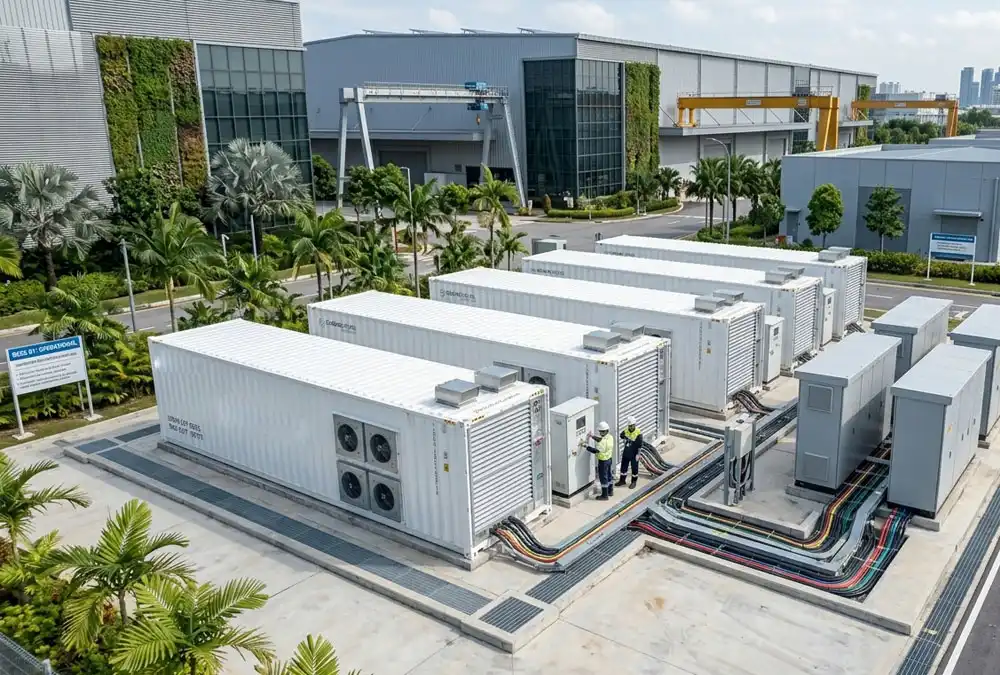
Technical Spotlight: Industrial Battery Storage Integration
To support corporate energy managers and utility grid planners looking to future-proof their systems, this section provides an in-depth engineering review of modern battery choices and technical storage alternatives.
Battery Energy Storage System (BESS) Core Technology
Integrating large-scale energy storage into a commercial solar facility requires selecting the right chemical cell technology. Modern industrial applications rely on two primary lithium-ion variations:
- LFP (Lithium Iron Phosphate) Chemistry: The undisputed standard for commercial and industrial integrated solar energy systems. LFP chemistry features excellent thermal runaway stability, high safety profiles in volatile environments, an expansive cycle life profile (typically 6,000+ full charge/discharge cycles), and avoids controversial cobalt supply chains, making it highly cost-effective and bankable.
- NMC (Nickel Manganese Cobalt) Chemistry: Offers higher volumetric energy density, which can be useful where installation space is severely constrained, but requires more intensive liquid cooling systems and carries a higher cost per kilowatt-hour than LFP.
Recommended Industrial Energy Storage Product Configuration
For large-scale manufacturing operations and distribution centers navigating peak demand pricing, deploying a highly integrated **Containerized All-in-One Liquid Cooled LFP BESS Asset** is highly recommended. This industrial architecture packages high-capacity LFP cells, smart liquid-cooling loops that reduce internal cell degradation, automated aerosol fire suppression systems, and a bidirectional Power Conversion System (PCS) under a single secure enclosure. This integrated platform enables seamless peak-shaving, microgrid resilience, and high-efficiency solar self-consumption optimization.
Alternative Energy Storage Architectures
While chemical lithium batteries are highly effective for daily solar load shifting, specialized industrial requirements may favor alternative technology frameworks:
- Flow Batteries (e.g., Vanadium Redox Flow Systems): Store energy in liquid chemical electrolyte solutions pumped through a central battery stack. They offer a nearly infinite operational cycle life without any structural capacity degradation, making them an excellent choice for long-duration storage needs (8+ hours), though they require a larger physical layout footprint.
- Industrial Supercapacitors: Store energy electrostatically rather than through a chemical reaction. They deliver nearly instantaneous high-power discharge bursts and feature exceptionally long cycle lives, making them ideal for short-term power quality stabilization and transient grid smoothing, though they lack long-term bulk energy storage density.
Why Choose Our Turnkey Solar Solutions?
As a leading vertically integrated energy solutions provider, we decouple engineering execution complexity from hardware sourcing markups, giving our clients clear cost certainty and maximum multi-decade system performance.
Our competitive advantage centers on deep **integrated solar energy systems** capability. We handle the entire engineering, procurement, and construction lifecycle in-house. By utilizing our global supply chain network, we bypass traditional trading middleman markups, sourcing tier-1 high-efficiency TOPCon modules, heavy-duty tracking systems, and liquid-cooled BESS assets directly from factory floors to protect your project budget.
We customize every design to match your specific facility consumption profiles and regional utility grid requirements. Every deployment fully satisfies rigid international quality standards, including IEC and ISO benchmarks, while ensuring complete compliance with stringent national grid codes (such as Germany’s VDE-AR-N 4110 mandates). This thorough engineering compliance guarantees your clean energy asset achieves rapid grid activation, high operational runtime, and optimized long-term financial ROI.
Frequently Asked Questions About Turnkey Solar Solutions (Google PAA)
What is included in a turnkey solar solution?
A comprehensive turnkey solar solution includes every phase of project delivery: initial drone-based feasibility studies, advanced electrical and structural system design, tier-1 hardware procurement, complete civil and electrical on-site construction, utility grid application management, system commissioning, and long-term remote O&M tracking.
How much does a turnkey solar project cost?
In the contemporary European market, large-scale industrial turnkey projects typically range from 固定 €0.78 to €0.98 per watt, while utility-scale deployments benefit from deeper economies of scale, ranging from €0.58 to €0.72 per watt. Final pricing depends on system capacity, regional civil works, and grid connection infrastructure requirements.
How long does installation take?
The physical on-site installation of a commercial rooftop array often takes only 2 to 4 weeks. However, the complete end-to-end project development timeline—including advanced structural engineering, global hardware procurement, municipal building permits, and utility grid interconnection approvals—typically requires 3 to 6 months for commercial installations and 5 to 9 months for major industrial solutions.
Can battery storage be included in a turnkey package?
Yes, absolutely. Leading providers specialize in delivering integrated solar plus storage solutions. Co-locating an industrial containerized lithium iron phosphate (LFP) Battery Energy Storage System (BESS) allows commercial facilities to shift excess solar generation to evening hours, execute automated peak shaving, and secure uninterrupted backup emergency power.
Are turnkey solar solutions worth it for businesses?
Yes. Providing a fixed-price contract wrapper removes construction change-order liabilities and component interface risks. This delivery model ensures rapid deployment timelines and guaranteed energy generation performance metrics, maximizing your levelized cost of energy efficiency and delivering clean financial asset returns.
What warranties are provided with a turnkey project?
Turnkey installations feature a comprehensive, multi-layered warranty package: a 25-to-30-year linear solar panel performance warranty, a 5-to-10-year smart inverter warranty, a 10-year battery capacity warranty, and a dedicated 2-to-5-year comprehensive workmanship guarantee covering all structural and electrical assembly execution.
Can the system be expanded in the future?
Yes. By utilizing modular inverter configurations and pre-engineering the primary AC distribution switchgear during the initial design phase, the system can easily scale to accommodate increased factory production loads or future electric vehicle charging infrastructure additions.
What happens if performance targets are not achieved?
Every system engineered under a turnkey contract features an integrated performance guarantee wrapper. If the centralized remote monitoring SCADA platform detects a generation variance caused by design or installation faults, the EPC provider is contractually responsible for troubleshooting and correcting the issue to restore targeted financial yields.
Get Expert Turnkey Solar Solutions for Your Next Energy Project
Ready to protect your operations from volatile utility electricity markets and optimize your facility’s energy economics? Sourcing an integrated clean energy asset requires professional technical execution. Contact our engineering team today to schedule a detailed on-site technical assessment, receive an open-book project proposal, and explore how combining high-performance solar infrastructure with containerized BESS assets can drive down your operating costs and maximize your long-term infrastructure investment returns.
Conclusion
Transitioning to clean energy infrastructure is a highly effective strategic mechanism for commercial enterprises and utility asset managers seeking long-term operational cost stability and predictable financial yields. Managing this technical deployment can be streamlined by choosing a unified Turnkey Solar Solutions Model, which transfers all complex engineering, component procurement, and grid compliance risks away from the investor and onto a single principal contractor wrapper.
Upfront contract pricing metrics should never be evaluated in isolation from long-term asset performance. Sourcing a lower-tier, itemized contracting structure frequently introduces hidden operational risks, material installation delays, and interface friction that can erode long-term project value. True financial optimization is unlocked by partnering with an experienced provider that combines global direct-to-factory purchasing leverage, in-house technical engineering depth, and proven multi-megawatt execution experience.
For forward-looking organizations navigating the evolving European energy market, the future of power generation relies on smart integration. Deploying a comprehensive energy microgrid that links Solar + BESS + Smart Energy Management Systems represents the gold standard for avoiding grid constraints, mitigating negative pricing risks, and driving maximum long-term financial returns across the entire 25-to-30-year lifecycle of your clean energy asset.
Related Posts
 https://anengjibattery.com/wp-content/uploads/2026/09/Bulk-Lithium-Ion-Battery-Cells-Procurement-Guide-B2B-Sourcing.webp
675
1000
Battery Expert Team
https://anengjibattery.com/wp-content/uploads/2025/06/logo2-300x138.png
Battery Expert Team2026-09-14 09:47:322026-09-14 09:47:48Bulk Lithium-Ion Battery Cells Procurement Guide | B2B Sourcing
https://anengjibattery.com/wp-content/uploads/2026/09/Bulk-Lithium-Ion-Battery-Cells-Procurement-Guide-B2B-Sourcing.webp
675
1000
Battery Expert Team
https://anengjibattery.com/wp-content/uploads/2025/06/logo2-300x138.png
Battery Expert Team2026-09-14 09:47:322026-09-14 09:47:48Bulk Lithium-Ion Battery Cells Procurement Guide | B2B Sourcing https://anengjibattery.com/wp-content/uploads/2026/09/AnengjiBattery-Heavy-Duty-Electric-Cargo-Tricycle-Battery-Installation.webp
675
1000
Battery Expert Team
https://anengjibattery.com/wp-content/uploads/2025/06/logo2-300x138.png
Battery Expert Team2026-09-11 09:47:192026-09-11 09:47:29How Many Ah Does an Electric Tricycle Battery Need? A Complete Selection Guide
https://anengjibattery.com/wp-content/uploads/2026/09/AnengjiBattery-Heavy-Duty-Electric-Cargo-Tricycle-Battery-Installation.webp
675
1000
Battery Expert Team
https://anengjibattery.com/wp-content/uploads/2025/06/logo2-300x138.png
Battery Expert Team2026-09-11 09:47:192026-09-11 09:47:29How Many Ah Does an Electric Tricycle Battery Need? A Complete Selection Guide https://anengjibattery.com/wp-content/uploads/2026/09/anengjiBattery-Electric-Tricycle-Battery-Supplier-vs-Manufacturer-Key-Differences.webp
675
1000
Battery Expert Team
https://anengjibattery.com/wp-content/uploads/2025/06/logo2-300x138.png
Battery Expert Team2026-09-10 02:15:522026-09-10 02:16:09Electric Tricycle Battery Supplier vs Manufacturer: Key Differences
https://anengjibattery.com/wp-content/uploads/2026/09/anengjiBattery-Electric-Tricycle-Battery-Supplier-vs-Manufacturer-Key-Differences.webp
675
1000
Battery Expert Team
https://anengjibattery.com/wp-content/uploads/2025/06/logo2-300x138.png
Battery Expert Team2026-09-10 02:15:522026-09-10 02:16:09Electric Tricycle Battery Supplier vs Manufacturer: Key Differences https://anengjibattery.com/wp-content/uploads/2026/09/How-to-Choose-an-Electric-Tricycle-Battery-Manufacturer-Buyer-Guide.webp
675
1000
Battery Expert Team
https://anengjibattery.com/wp-content/uploads/2025/06/logo2-300x138.png
Battery Expert Team2026-09-08 09:28:302026-09-08 09:28:56How to Choose an Electric Tricycle Battery Manufacturer | Buyer’s Guide
https://anengjibattery.com/wp-content/uploads/2026/09/How-to-Choose-an-Electric-Tricycle-Battery-Manufacturer-Buyer-Guide.webp
675
1000
Battery Expert Team
https://anengjibattery.com/wp-content/uploads/2025/06/logo2-300x138.png
Battery Expert Team2026-09-08 09:28:302026-09-08 09:28:56How to Choose an Electric Tricycle Battery Manufacturer | Buyer’s Guide


Leave a Reply
Want to join the discussion?Feel free to contribute!