
What Is the Solar EPC Cost per MW in Europe? A Complete Pricing Guide
June 10, 2026 / Battery Expert Team / energy epc
Introduction
For investors, developers, and businesses entering the European renewable energy market, understanding the actual Solar EPC Cost per MW is essential. As renewable energy deployment continues to grow across Europe—driven by strict decarbonization mandates and volatile wholesale electricity markets—accurate pricing information helps stakeholders budget effectively, avoid unexpected capital expenditure (CapEx) overruns, and maximize long-term financial returns. Evaluating your upfront Solar EPC Cost ensures your asset remains competitive throughout its 25-to-30-year operational lifecycle.
In Europe, an EPC (Engineering, Procurement, and Construction) contractor is responsible for the complete project lifecycle—from complex engineering design and premium equipment procurement to physical installation, grid connection, commissioning, and final project handover. Selecting the right EPC partner at a competitive, transparent cost ensures high-quality project execution without compromising technical performance or long-term financial viability. This comprehensive guide provides a detailed analysis of contemporary European solar pricing, engineering line-items, asset economics, and cost-mitigation strategies.
According to recent industry data from SolarPower Europe (2025-2026 Outlook), solar power is projected to supply over 13.4% of the European Union’s total electricity mix. However, the market is undergoing a structural shift. The era of purely scaling capacity through low-cost components has transitioned into an era of structural balance, where grid capacity constraints, dynamic power purchase agreements (PPAs), and the integration of battery energy storage systems (BESS) directly dictate the optimization of a comprehensive Solar EPC Cost strategy.
What Is Solar EPC Cost? (Featured Snippet Opportunity)
Definition of Solar EPC Cost
To accurately evaluate renewable energy infrastructure investments, it is critical to break down what the comprehensive contract price represents. The total cost is distributed across five core execution phases:
- Engineering Cost: Covers initial site surveys, geotechnical analyses, structural calculations, detailed electrical layout mapping, string configuration, and comprehensive grid connection compliance engineering.
- Procurement Cost: Represents the capital required to source major components, including photovoltaic (PV) modules, central or string inverters, fixed-tilt or tracking mounting structures, medium-voltage transformers, switchgear, and Balance of System (BOS) DC/AC cabling.
- Construction Cost: Includes all physical civil works, site clearing, pile driving, mechanical installation of racking and modules, electrical trenching, high-voltage substations construction, and labor management.
- Commissioning Cost: Covers rigorous performance-ratio (PR) testing, safety audits, string insulation testing, SCADA telemetry configuration, and formal grid compliance verification required by local Transmission System Operators (TSOs).
- Project Management Cost: Includes logistics coordination, supply chain risk management, legal compliance, health and safety (HSE) supervision, and quality assurance benchmarking throughout the project lifecycle.
What Is Included in a Solar EPC Contract?
Solar EPC Cost refers to the total capital expenditure required to design, procure, construct, commission, and deliver a operational solar power generation asset to an investor or end-user. It typically encompasses advanced engineering design, premium tier-1 equipment procurement, construction labor, grid connection infrastructure, testing, strict project management, and long-term performance warranty obligations under a single, integrated contract wrapper.
Why Solar EPC Cost Matters for Investors
For institutional investors and IPPs, the EPC contract represents the single largest component of a project’s upfront asset cost. Understanding the intricacies of this pricing directly resolves critical stakeholder concerns:
- Project Budget Accuracy: Is the initial allocation sufficient to cover complex regional grid interconnection and civil requirements without triggering unexpected cost overruns?
- EPC Quote Competitiveness: How does an itemized or turnkey proposal compare to current European market benchmarks for specific asset sizes and geographic locations?
- Maximizing Return on Investment (ROI): How do upfront equipment choices (such as high-efficiency N-Type TOPCon vs. HJT modules) optimize the Levelized Cost of Energy (LCOE) and asset longevity relative to the initial CapEx?
Solar EPC Cost per MW in Europe
Average Solar EPC Cost per MW Across Europe
In the current European market, the average Solar EPC Cost per MW varies significantly depending on regional labor rates, supply chain logistics, regulatory compliance barriers, and geographic land conditions. As tracked by the European Solar Procurement Managers’ Index (PV PMI) and spot market data, major pricing adjustments occurred due to a recovery in tier-1 module pricing toward the €0.11/Wp to €0.13/Wp range for high-efficiency components, following historical lows.
- Western Europe (e.g., Germany, France, Netherlands): Features higher structural labor rates and strict regulatory frameworks, resulting in utility-scale costs ranging from €0.65M to €0.85M per MW, while distributed C&I rooftop projects range higher due to complex engineering.
- Northern Europe (e.g., Denmark, Sweden): Driven by complex geotechnical conditions and specialized wind/snow load structural requirements, average utility costs hover around €0.70M to €0.90M per MW.
- Southern Europe (e.g., Spain, Italy): Offers highly competitive installation environments and extensive utility-scale terrain. Costs are highly optimized at €0.55M to €0.72M per MW, although grid congestion matching can add infrastructure premiums.
- Eastern Europe (e.g., Poland, Romania): One of the fastest-growing solar markets, balancing lower localized construction labor costs with higher grid interconnection reinforcement expenditures, averaging €0.60M to €0.78M per MW.
Typical Cost Ranges by Project Size
Economies of scale exert a profound impact on the total Solar EPC Cost per MW. As capacity increases, fixed overhead costs—such as substation engineering, mobilization, and grid telemetry—are distributed over a larger volume of alternating current output.
| Project Size (MW) | Typical EPC Cost Range (per MW) | Primary Cost Drivers |
|---|---|---|
| 1 MW (C&I Rooftop/Ground) | €850,000 – €1,200,000 | Roof structural reinforcing, complex AC integration, specialized safety systems, string inverters. |
| 5 MW (Distributed Generation) | €720,000 – €950,000 | Medium-voltage step-up transformers, site civils, localized grid extension works. |
| 10 MW (Small Utility-Scale) | €620,000 – €780,000 | Bulk component procurement discounts, high-voltage grid substation construction, fixed-tilt racking efficiency. |
| 50 MW+ (Large Utility-Scale) | €530,000 – €680,000 | Direct tier-1 factory sourcing, centralized inverter deployment, single-axis tracker optimization, heavy machine automation. |
Country-Level Solar EPC Cost Differences
National regulatory frameworks, labor mandates, and grid modernization realities split European pricing into clear segments:
- Germany: Operates under the updated Renewable Energy Act (EEG). Grid capacity allocations and direct marketing mechanisms are tightly regulated. High labor costs are mitigated by advanced structural engineering and automated construction practices.
- France: Strictly focuses on low-carbon footprints for modules (CRE certification requirements). Sourcing low-carbon certified hardware introduces a slight component procurement premium into the turnkey solar epc project cost.
- Italy: Grid reforms under the recent Bollette Decree prioritize project technical maturity. Complex permitting and localized “micro-zone” grid applications mean engineering and development compliance represent a higher proportion of the initial budget.
- Spain: The European benchmark for low-cost, high-yield solar. Favorable terrain enables massive deployment of single-axis trackers, driving down the overall utility scale solar epc cost despite growing grid interconnection queue investments.
- Netherlands: Characterized by severe grid congestion and constrained land availability. This shifts market focus intensely toward complex commercial rooftop installations, requiring advanced engineering and localized energy management solutions.
- Poland: Driven by aggressive decarbonization of its industrial sector, Poland offers favorable labor economics, but demands substantial electrical engineering investment to interface with legacy grid infrastructure.
Solar EPC Project Cost Variations by Project Type
The core physical architecture of an installation establishes its foundational solar project cost baseline. Ground-mounted systems require intensive civil works, while rooftop assets demand complex safety and building integration engineering.
Utility-Scale Solar Projects
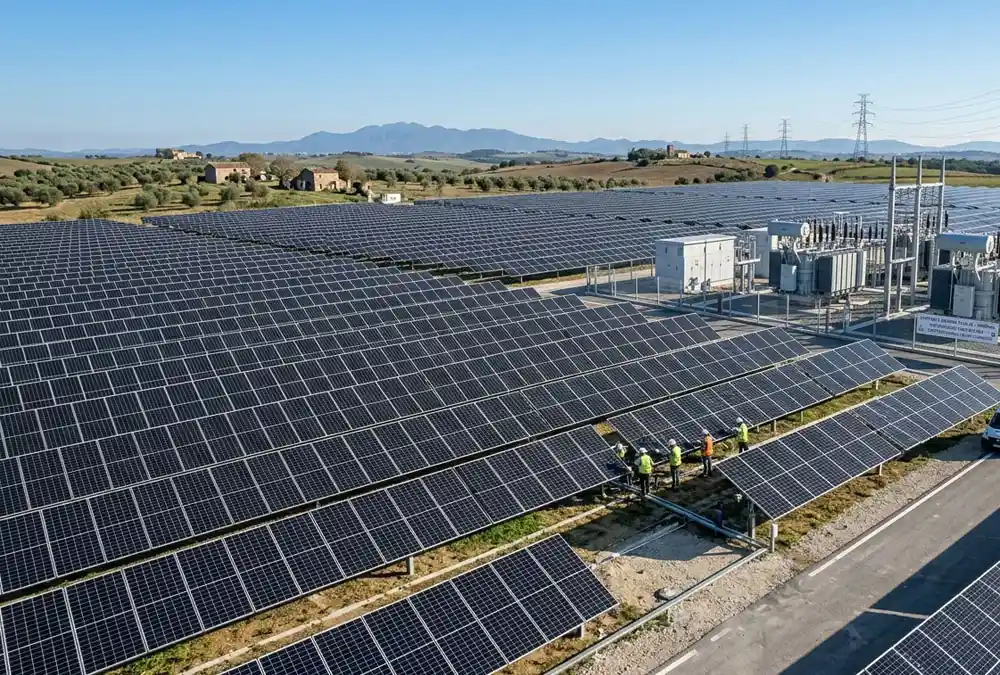
Large-scale ground-mounted arrays represent the most cost-optimized model per megawatt. The utility scale solar epc cost benefits from streamlined procurement, standardized construction blocks, and optimized electrical layouts.
- Cost Structure: Highly weighted toward physical equipment (modules, trackers, and central inverters) and bulk electrical balance of system, while specialized civil management and high-voltage grid substations represent major fixed investments.
- EPC Characteristics: Demands highly specialized heavy machinery, automated pile driving, and rigid adherence to international utility standards (such as IEC 62446 verification).
- Risk Factors: Geotechnical surprises, unexpected environmental mitigation requirements, weather delays, and TSO grid connection timeline extensions.
Why is utility-scale solar EPC cost lower per MW? Higher capacity deployments unlock deep wholesale volume discounts from component manufacturers. Furthermore, field labor is highly optimized via repetitive, production-line style mechanical installation, significantly reducing the localized labor hours spent per watt compared to constrained rooftop environments.
Rooftop Solar Projects
Distributed C&I assets are engineered to align with existing commercial, industrial, or warehouse facility footprints. The total commercial solar epc cost reflects these unique constraints.
- Commercial & Industrial Rooftop: Typically utilizes specialized ballast mounting systems or penetration-free clamping mechanisms to preserve structural warranty integrity. Cable routing must interface with internal industrial distribution switchboards.
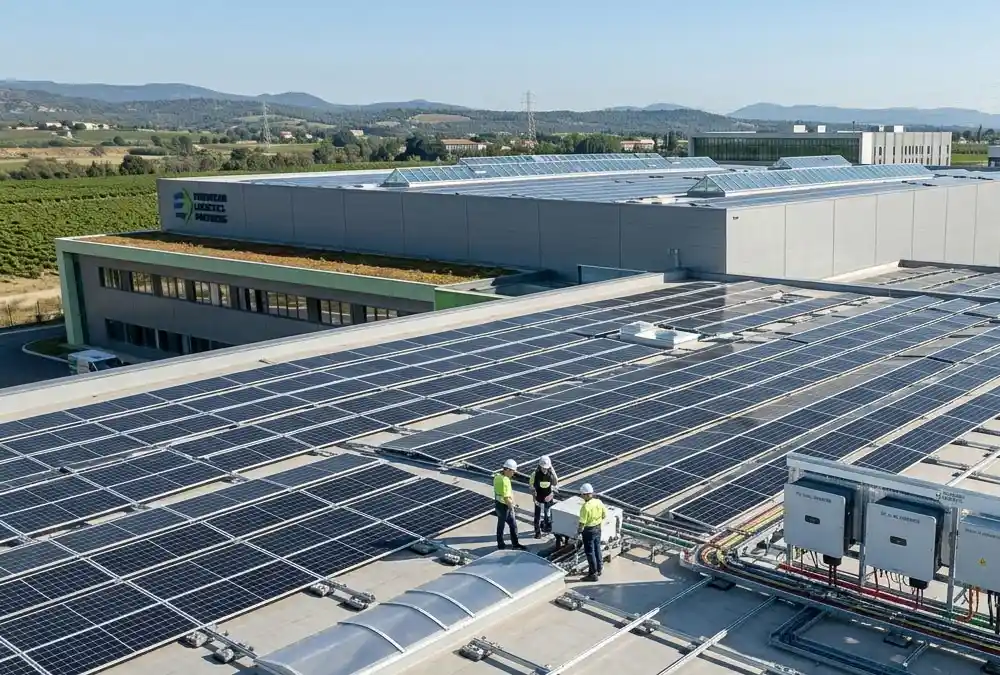
- Warehouse Rooftop: Features large, unobstructed surfaces that enable rapid deployment, but often require extensive upfront structural engineering calculations to ensure snow and wind-load compliance under regional building codes.
Why is rooftop solar usually more expensive per MW? Rooftop projects feature higher structural engineering expenses, non-standardized layout designs, specialized logistical lifting machinery (cranes, specialized rigging), intensive safety infrastructure (fall protection, edge guarding), and a lower total power capacity over which to amortize these fixed mobilization costs.
Hybrid Renewable Projects (Solar/Wind + Energy Storage)
Modern grid operators increasingly demand firm, dispatchable power rather than variable output. This has accelerated the integration of complex Battery Energy Storage Systems (BESS) into utility and large industrial solar assets, establishing a distinct hybrid energy projects framework.
Integrating utility-scale or heavy industrial energy storage introduces an additional layer of capital expenditure, generally referred to as the BESS integration cost. Sourcing a high-capacity, multi-megawatt containerized lithium iron phosphate (LFP) system adds a separate, substantial cost line item to the total solar installations cost. However, this investment changes the asset’s financial profile from a passive generator to an active power-arbitrage and ancillary-services provider.
According to the 2026 IRENA Economics of Firm Solar and Wind Report, integrating automated BESS at a 95% reliability target provides a robust hedge against negative pricing hours in wholesale European power markets (such as the EEX), effectively stabilizing the asset’s long-term energy yield valuations and protecting investor cash flows.
Key Factors Affecting Solar EPC Cost in Europe
The global engineering procurement construction cost is driven by a dynamic matrix of physical, technological, and macroeconomic variables. Granular control over these inputs dictates whether a project achieves its financial benchmarks.
Land Costs and Site Conditions
The physical landscape forms the literal foundation of your solar farm construction cost:
- Terrain Complexity: Sloped or uneven surfaces require extensive civil grading or specialized tracker software (such as backtracking algorithms) to mitigate inter-row shading, increasing engineering and earth-moving costs.
- Land Preparation: Clearing dense vegetation, managing agricultural topsoils, or implementing comprehensive drainage basins to prevent soil erosion adds significant civil engineering overhead.
- Geotechnical Conditions: Hard rock profiles necessitate expensive pre-drilling before pile placement, whereas excessively soft or sandy soils require longer, specialized heavy-steel piles to withstand wind-uplift vectors, directly escalating your structural solar installation cost.
Solar Panel Selection and System Size
In 2026, the European market has decisively shifted to high-performance N-Type monocrystalline architectures. Component selection directly affects the balance between upfront hardware costs and long-term yield efficiency:
- TOPCon (Tunnel Oxide Passivated Contact) Modules: The current industry mainstream benchmark. Sourcing TOPCon panels provides an excellent balance of high cell efficiency (22.5%+), high bifaciality, and competitive cost maturity, making them standard for typical commercial and utility installations.
- HJT (Heterojunction Technology) Modules: Command a premium procurement price but offer an industry-leading temperature coefficient (approximately -0.24%/°C) and a lower annual power degradation curve. Sourcing HJT represents an optimal strategy for high-irradiation, high-temperature European microclimates where long-term power generation performance justifies the elevated initial CapEx.
Inverter Technology
Inverter architecture defines the electrical configuration and long-term operations & maintenance (O&M) strategy of the asset:
- Central Inverters: Deployed in highly consolidated, containerized stations for large utility-scale applications. Sourcing central inverters lowers initial renewable energy project cost per megawatt and simplifies high-voltage grid interfacing, but presents a single point of failure risk requiring specialized onsite technical response.
- String Inverters: Distributed across smaller blocks, making them standard for C&I rooftops and increasingly popular in complex ground mounts. They offer granular Maximum Power Point Tracking (MPPT), optimize yield on uneven terrain, and allow rapid maintenance swap-outs, although they carry a higher initial component cost profile.
Installation and Mounting Structure Types
How modules are mechanically secured dictates the asset’s aerodynamic loading and day-long irradiance capture profile:
- Ground-Mounted Fixed Tilt: The most mechanically simple and cost-effective approach. It requires minimal moving parts, minimizing initial structural costs and keeping long-term O&M budgets highly predictable.
- Single-Axis Trackers: Mechanically rotate modules east-to-west to maximize direct solar beam capture. Deploying single-axis trackers increases initial mechanical procurement and civil engineering costs by approximately 10% to 15%, but unlocks a 15% to 25% increase in total annual energy yield, dramatically improving the project’s long-term financial modeling.
- Carport Solar: Represents a premium architectural installation type. Carport configurations require heavy structural steel framing, elevated clearance engineering, integrated drainage, and localized civil foundations, resulting in a higher solar engineering cost that is offset by utilizing existing parking asset space.
Government Incentives and Subsidies
While European markets are rapidly transitioning toward market-driven revenue models (such as merchant solar and corporate PPAs), localized policy structures remain highly influential. Investment grants, corporate tax incentives, and accelerated depreciation schedules (like the Dutch EIA system) directly lower the net financial burden of your initial solar project budget, shifting project economics in favor of rapid deployment.
Civil, Electrical, and Structural Engineering Requirements
Behind the visible solar panels lies a complex network of industrial infrastructure that represents a vital portion of the total contract value:
- Civil Engineering: Access roads built to sustain heavy transport vehicles, deep perimeter fencing, environmental containment systems for transformer fluids, and secure foundations.
- Electrical Engineering: Sourcing high-capacity DC combiner boxes, deploying multi-kilometer runs of specialized underground AC/DC cabling, protective relaying systems, and automated SCADA control units for remote monitoring.
- Grid Interconnection Engineering: Building dedictated high-voltage step-up substations, overhead transmission line extensions, and grid stabilization hardware (such as STATCOMs or harmonic filters) required to satisfy increasingly stringent utility grid codes.
Supply Chain Reliability and Supplier Quality
Is the cheapest EPC quote really the best option? Securing a rock-bottom initial quote often masks a contractor’s reliance on tier-2/tier-3 unbankable components, subpar electrical workmanship, or a lack of long-term financial warranty backing. A low-quality execution strategy leads to accelerated component degradation, PID (Potential Induced Degradation), cable insulation failures, and extensive operational downtime—ultimately destroying the asset’s financial performance.
Solar EPC Cost Breakdown: Where Does the Money Go? (Featured Snippet Opportunity)
To provide transparency for procurement managers and investment funds, a standard European utility-scale or heavy industrial solar farm epc cost breakdown can be mapped across specific operational line-items. Sourcing major components from vertically integrated global supply chains allows developers to minimize component markup fees and maintain rigid control over structural allocations.
| Cost Category | Typical Share of Total CapEx (%) | Key Included Elements |
|---|---|---|
| Modules (Tier-1 PV) | 35% – 45% | High-efficiency N-type TOPCon/HJT bifacial panels, factory logistics, international shipping. |
| Inverters & Power Electronics | 8% – 12% | High-capacity string or central inverters, smart tracking controllers, SCADA communication units. |
| Mounting & Tracking Structures | 9% – 14% | Galvanized steel steel ground piles, aluminum racking, single-axis drive motors, wind-deflection dampening. |
| Electrical Balance of System (BOS) | 7% – 11% | DC/AC cabling, combiner boxes, grounding copper arrays, conduits, low-voltage switchgear. |
| Civil Works & On-site Construction | 15% – 22% | Site clearance, road building, trenching, pile driving labor, mechanical & electrical installation manpower. |
| Engineering & Permitting Compliance | 4% – 7% | Geotechnical studies, structural analysis, structural and electrical blueprints, local municipal building permits. |
| Grid Connection Substation & Commissioning | 5% – 9% | Medium/High voltage step-up transformers, TSO-mandated safety relays, telemetry systems, grid witness testing. |
Solar EPC Project ROI and Financial Returns
Understanding Solar Project ROI
Evaluating an energy infrastructure investment requires moving beyond initial CapEx to focus on your long-term solar project roi. The return configuration is a direct mathematical derivative of total lifecycle energy yield divided by the fully loaded turnkey solar epc project cost combined with ongoing lifetime operational costs (OpEx).
Factors Influencing Solar ROI
Four primary structural levers determine whether a commercial or utility-scale asset meets its targeted internal rate of return (IRR):
- Energy Yield (P50/P90 Profiles): Calculated using localized historical meteorological data. It is directly shaped by module efficiency, tracker performance, and the minimizing of systemic electrical losses.
- Electricity Prices and Corporate PPAs: Merchant assets are exposed to wholesale price volatility, while assets backed by structured long-term Power Purchase Agreements (PPAs) secure fixed, predictable tariff pricing per megawatt-hour.
- Incentives and Carbon Offsets: Sourcing additional corporate revenues through Green Certificates, Guarantees of Origin (GoOs), or regional carbon credits enhances seasonal cash flows.
- O&M Costs (Operations and Maintenance): Encompasses routine panel cleaning, thermal imaging inspections via drones, inverter servicing, and setting aside financial reserves for inverter replacement near year 12-15 of asset life.
Payback Period Analysis
The time required for an asset to generate sufficient net cash flow to completely amortize its upfront Solar EPC Cost varies clearly by localized application:
- Commercial & Industrial Rooftop: Typically achieves a rapid payback period of 4.5 to 7 years across Europe, heavily accelerated by the high displacement value of offset retail electricity tariffs.
- Industrial Warehouse Rooftop: Leverages massive non-penetrating arrays to achieve payback within 5 to 8 years, especially when paired with localized operational manufacturing shifts.
- Utility-Scale Power Generation: Modeled on institutional lifecycles, typical payback ranges from 7 to 10 years, utilizing competitive long-term institutional corporate PPAs to guarantee steady asset amortization.
How EPC Quality Impacts ROI
Is a lower EPC price always better? No. Sourcing compromised engineering or cut-rate procurement to trim initial CapEx inevitably increases long-term OpEx. Subpar design triggers component failures, accelerated string degradation, and tracking system jams, leading to substantial energy generation losses. Investing in professional engineering up front minimizes your Levelized Cost of Energy (LCOE) and maximizes net asset yields over its operational lifetime.
Solar EPC Cost and ROI Comparison Across Industries
Different industrial sectors maintain unique power-demand profiles, structural load capacities, and financial return expectations, shaping overall solar project economics.
| Industry Sector | Typical Installation Size | Average Payback (Europe) | Core Economic Benefit Focus |
|---|---|---|---|
| Manufacturing Facilities | 1 MW – 5 MW (Rooftop/Ground) | 4.5 – 6 Years | High daytime self-consumption matching, offsetting heavy peak demand charges. |
| Logistics & Warehousing | 2 MW – 10 MW (Large Rooftop) | 5.5 – 7 Years | Monetizing vast unutilized roof assets, supporting corporate ESG scope 1-2 reductions. |
| Commercial Buildings | 500 kW – 2 MW (Rooftop/Carport) | 6.0 – 8 Years | Providing EV charging infrastructure integration, lowering peak facility cooling costs. |
| Agricultural Operations | 1 MW – 5 MW (Agrivoltaics) | 5.0 – 7 Years | Dual-use land efficiency, powering intensive irrigation and cold storage processing. |
| Utility-Scale Power Plants | 20 MW – 100 MW+ (Ground) | 7.5 – 10 Years | Maximizing bulk generation revenue via utility-scale PPAs and grid ancillary markets. |
AnengJi Power’s Perspective on Solar EPC Pricing
As a vertically integrated solution provider, AnengJi Power approaches the management of your total Solar EPC Cost through a clear framework: decoupling technical execution complexity from asset procurement markups to protect institutional capital.
Balancing Competitive Pricing and Long-Term Reliability
AnengJi Power eliminates the historical tradeoff between competitive upfront pricing and technical asset quality. By treating engineering design as a precision optimization roadmap, we focus on driving down a project’s Levelized Cost of Energy (LCOE) through advanced balance of system architecture while incorporating bankable tier-1 equipment.
Global Procurement Network Advantages
Our established direct-to-factory relationships with leading component manufacturers enable us to bypass intermediaries. This massive global sourcing footprint ensures our clients secure tier-1 high-efficiency TOPCon and HJT modules, smart inverters, and heavy-duty tracking systems at optimized bulk-volume pricing structures, insulate your project budget from localized European supply chain premiums.
Local Supplier Partnerships Across Key Markets
While component sourcing operates on a global scale, civil execution remains intensely local. AnengJi Power pairs global procurement leverage with deeply vetted, highly reliable local engineering and construction partnerships across key European markets. This localized approach guarantees efficient site mobilization, rapid navigating of municipal environmental permitting, and seamless grid interconnection approvals with local utility operators.
Transparent Cost Breakdown and Budget Control
We reject hidden costs and unexpected contract variations. AnengJi Power provides fully open-book engineering procurement construction cost transparency, delivering clear line-item visibility across all civil, electrical, mechanical, and logistical scopes. This strict transparency ensures institutional investors maintain ironclad budget control from initial feasibility analysis to commercial operation date (COD).
Compliance with International Standards
Every system engineered and deployed by AnengJi Power satisfies rigid international quality benchmarks and regional utility requirements:
- IEC Standards: Adherence to IEC 61215 for module design validation, IEC 62109 for inverter safety, and IEC 62446 for comprehensive grid-handover documentation.
- ISO Benchmarks: Structural execution fully aligned with ISO 9001 (Quality Management System), ISO 14001 (Environmental Management), and ISO 45001 (Occupational Health & Safety).
- European Grid Compliance: Full conformance to stringent national grid codes (such as Germany’s VDE-AR-N 4110/4120 medium and high-voltage mandates), ensuring rapid, risk-free grid activation.
Turnkey EPC Cost vs Itemized EPC Pricing
Choosing the optimal contractual structure for your turnkey solar epc project cost is a major strategic decision for asset owners and project sponsors.
What Is a Turnkey EPC Contract?
A Turnkey EPC contract places full project execution risk on a single principal contractor. Under this unified model, the EPC firm manages all aspects of engineering, multi-tier procurement, civil construction, permitting, and final utility grid activation under a fixed price, guaranteed completion date structure.
What Is an Itemized EPC Pricing Model?
An Itemized EPC pricing model (or multi-contracting approach) splits the project scope. The asset owner separately sources the solar panels, tracking hardware, and inverters directly from factories, while contracting separately with localized engineering or civil labor providers to execute on-site assembly.
Key Cost Differences Between the Two Models
The choice between turnkey and itemized frameworks shifts risk allocation and financial predictability:
| Evaluation Factor | Turnkey EPC Contract Model | Itemized EPC Pricing Model |
|---|---|---|
| Cost Certainty | High – Fixed contract wrapper insulates owner from unexpected pricing overruns. | Medium to Low – Material delays or localized labor variations cause direct budget creep. |
| Owner Management Involvement | Low – Single point of contact handles comprehensive multi-tier execution management. | High – Requires an experienced, dedicated internal engineering and management team. |
| Risk Exposure & Liability | Minimal – Contractor bears full financial liability for execution delays and performance metrics. | Substantial – Owner carries interface risks between separate component delivery and construction errors. |
| Design & Component Flexibility | Moderate – Standardized engineering blocks optimized for rapid delivery. | High – Complete freedom to customize specific niche hardware integrations. |
Which Model Is Better for Investors?
Should I choose a turnkey EPC contractor or manage suppliers separately? For institutional investment funds, utilities, and commercial businesses focused on locking in predictable financial returns, a Turnkey EPC Contract is generally superior. The fixed-price structure eliminates construction and interface risks, while providing a single comprehensive performance wrap that simplifies asset financing and bankability requirements. Sourcing an itemized structure is typically only viable for highly specialized developers with substantial internal engineering teams capable of absorbing direct operational liabilities.
Solar EPC Tender Costs and Bid Price Trends
Analyzing current European procurement dynamics highlights a distinct evolution in how competitive solar bids are evaluated and awarded.
Turnkey EPC Contract Costs
- Advantages: Provides complete price protection, rapid project speed, predictable financing models, and a single engineering point of contact for long-term component warranties.
- Disadvantages: Carries a modest contractor risk-premium embedded within the total project pricing to account for absorbing unexpected field liabilities.
Itemized EPC Pricing Structure
- Advantages: Offers the potential to eliminate contractor procurement markups by purchasing directly from factories, along with precise component design control.
- Disadvantages: Significant risk of costly field interface delays, logistical bottlenecks, and complex disputes over component damage liability during assembly.
Recent Trends in European Solar EPC Bid Prices
Current European procurement data reveals three distinct shifting trends:
- Stabilizing Module Procurement: Following historic upstream polysilicon price drops, tier-1 panel pricing has stabilized around the €0.12/Wp to €0.13/Wp range for high-efficiency TOPCon bifacial modules, forcing EPC tenders to focus on optimizing balance of system (BOS) efficiency.
- Rising Labor Expenditures: Highly specialized electrical and mechanical labor rates across core European markets have risen steadily, making automated installation equipment and optimized design crucial for managing total costs.
- Compressed EPC Profit Margins: Intensifying competition among tier-1 contractors has compressed baseline margins, shifting focus toward large-scale global procurement scaling to maintain project profitability.
Future Solar EPC Pricing Outlook
Over the next 3 to 5 years, the European utility scale solar pricing environment will be increasingly shaped by grid integration realities. As fixed grid connection rules tighten and transmission capacity limits are reached, standard solar bids will evolve away from simple solar-only layouts toward optimized hybrid assets that feature factory-integrated energy storage systems from day one.
Technical Spotlight: Industrial Battery Storage Integration
To support commercial facility managers and utility operators navigating grid integration challenges, this section provides an engineering overview of contemporary energy storage technologies and alternative technical architectures.
Battery Energy Storage System (BESS) Core Technology
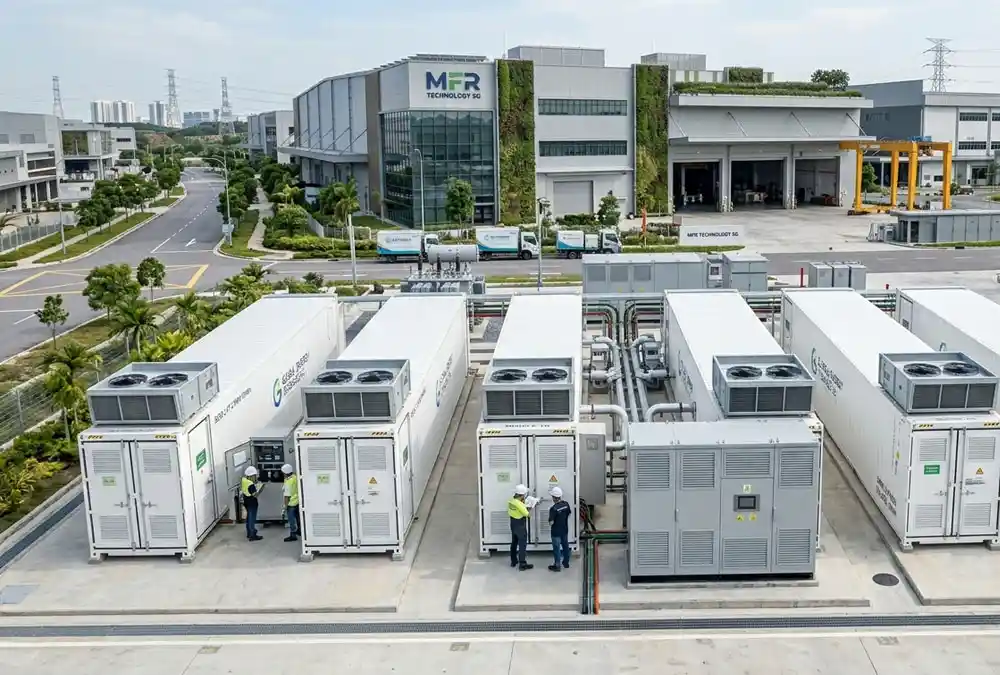
The standard choice for contemporary industrial and utility energy storage is the containerized lithium-ion battery system, primarily utilizing one of two distinct chemical formulations:
- LFP (Lithium Iron Phosphate): The dominant technology for grid-scale and industrial applications. LFP chemistry offers excellent thermal stability, an expansive lifecycle profile (typically 6,000+ charge cycles at 80% Depth of Discharge), and avoids controversial cobalt mining supply chains, making it highly safe and cost-effective.
- NMC (Nickel Manganese Cobalt): Offers higher energy density per unit volume, which is valuable for space-constrained installations, but requires more complex thermal management systems and carries a higher cost profile than LFP.
Recommended Industrial Energy Storage Product Configuration
For large-scale manufacturing sites and distribution warehouses, AnengJi Power recommends deploying a highly consolidated Containerized All-in-One Liquid Cooled LFP BESS Asset. This heavy industrial architecture features integrated multi-megawatt string PCS (Power Conversion Systems), smart liquid cooling to minimize internal cell thermal degradation, automated aerosol-based fire suppression systems, and an advanced Energy Management System (EMS) designed to execute peak-shaving and solar self-consumption optimization.
Alternative Energy Storage Architectures
While chemical battery solutions dominate the current energy landscape, specialized industrial applications may utilize alternative technology architectures depending on specific long-duration requirements:
- Flow Batteries (e.g., Vanadium Redox Flow): Utilizes liquid chemical electrolytes pumped through a central stack to generate electricity. They feature an almost infinite operational lifespan without capacity degradation, making them an excellent alternative for long-duration storage (8+ hours), though they require a larger physical footprint.
- Supercapacitors: Store energy electrostatically rather than chemically. They deliver nearly instantaneous, high-power bursts and feature exceptionally long cycle lives, making them ideal for short-term power quality stabilization and transient grid smoothing, though they lack long-term energy density.
Cost Optimization Strategies with AnengJi Power
Achieving a highly competitive Solar EPC Cost requires moving beyond simple component price compression. True cost optimization is achieved through advanced engineering design and vertical supply chain control.
Customized Engineering Design
AnengJi Power employs advanced 3D solar modeling software to tailor system layouts to precise site constraints. By optimizing string configurations and medium-voltage cable trenching routes, we achieve a substantial reduction in Balance of System (BOS) cabling requirements and minimize material waste, driving down physical installation labor costs.
Custom Component Manufacturing
Our unique manufacturing capability allows us to produce high-performance hardware engineered specifically for complex project requirements:
- Solar Modules: Vertically integrated production of high-efficiency N-Type panels configured for optimal durability and maximum power density.
- Mounting Systems: Heavy-duty galvanized steel fixed-tilt and single-axis tracking racking systems engineered to handle extreme wind and snow load conditions.
- Energy Storage Systems (BESS): Turnkey liquid-cooled LFP battery enclosures built to seamlessly interface with our high-power inverter stations.
Future-Proof Energy Solutions
We design assets to anticipate the evolving regulatory and infrastructure needs of the European energy market:
- Solar + BESS Integration: Pre-engineering electrical balance of system configurations to enable seamless co-located battery storage integration, protecting assets from grid curtailment.
- Smart Energy Management: Deploying predictive AI-driven EMS software that analyzes localized weather data and wholesale market pricing to dynamically shift power output.
- EV Charging Integration: Designing high-power DC fast-charging microgrids that seamlessly interface with industrial solar canopies and facility energy storage assets.
Supply Chain Optimization
By owning core components of the manufacturing and logistics chain, AnengJi Power completely removes middleman markups, insulates project budgets from unpredictable global freight variations, and ensures timely component deliveries that keep on-site construction schedules moving forward efficiently.
Lifecycle Cost Reduction Strategies
Our long-term engineering approach focuses on minimizing the total cost of ownership over the project lifecycle. This includes deploying durable component components, utilizing premium UV-resistant cabling, configuring accessible inverter layouts for easy maintenance, and implementing automated remote SCADA performance alerts to maximize asset runtime and protect long-term investor ROI.
Frequently Asked Questions About Solar EPC Cost (Google PAA Optimization)
What is the average solar EPC cost per MW in Europe?
As of 2026, the average utility-scale Solar EPC Cost per MW in Europe ranges from €0.53M to €0.85M per MW, depending heavily on project capacity, regional labor rates, and localized grid connection infrastructure requirements. Distributed C&I rooftop projects typically command a premium due to complex structural engineering constraints.
What factors influence solar EPC pricing?
Core pricing variables include geographic terrain layout, localized geotechnical profile conditions, tier-1 module selection (such as TOPCon vs. HJT), structural mounting configurations (fixed-tilt vs. single-axis trackers), distance to the utility grid connection point, regional labor compliance costs, and the integration of battery energy storage solutions.
Why do EPC quotes vary between contractors?
Quotes vary based on component bankability tiers, engineering execution depth, included contingency allocations, risk management wrappers, and whether the proposal represents a fixed-price turnkey solar epc project cost or an itemized layout exposed to downstream field variance liabilities.
Is turnkey EPC cheaper than itemized EPC?
Itemized pricing can sometimes show lower initial baseline costs on paper, but a Turnkey EPC contract is generally more cost-effective for investors. The turnkey wrap insulates the project budget from expensive field interface errors, material delivery delays, and construction changes, providing invaluable cost certainty.
How can investors reduce solar EPC costs?
Investors can optimize expenditures by engaging an EPC partner with an integrated global procurement network, standardizing engineering execution blocks, conducting early geotechnical studies to minimize civil surprises, and ensuring clear, upfront alignment with local TSO grid interconnection rules.
Does adding battery storage improve project ROI?
Yes, especially in volatile European energy markets experiencing frequent price fluctuations. Integrating an industrial BESS allows asset owners to avoid low or negative pricing periods, optimize localized self-consumption, and capture premium grid ancillary services revenues, stabilizing long-term project returns.
Conclusion: Partnering for Cost-Effective Solar EPC Project Execution
Managing your total Solar EPC Cost is fundamentally an optimization exercise focused on maximizing long-term asset yields. Upfront capital expenditure metrics should never be evaluated in isolation from lifetime operational performance; selecting the lowest-priced bid often introduces hidden financial risks through sub-standard engineering and unreliable components.
Achieving sustainable profitability requires partnering with an experienced EPC collaborator that balances global volume procurement leverage, deep localized execution expertise, and rock-solid technical compliance. For forward-looking corporate and utility energy developers navigating the evolving European market, implementing integrated Solar + BESS + Smart Energy Infrastructure configurations represents the gold standard for mitigating grid risk, locking in reliable energy yields, and maximizing long-term investment returns.
Related Posts
 https://anengjibattery.com/wp-content/uploads/2026/09/Bulk-Lithium-Ion-Battery-Cells-Procurement-Guide-B2B-Sourcing.webp
675
1000
Battery Expert Team
https://anengjibattery.com/wp-content/uploads/2025/06/logo2-300x138.png
Battery Expert Team2026-09-14 09:47:322026-09-14 09:47:48Bulk Lithium-Ion Battery Cells Procurement Guide | B2B Sourcing
https://anengjibattery.com/wp-content/uploads/2026/09/Bulk-Lithium-Ion-Battery-Cells-Procurement-Guide-B2B-Sourcing.webp
675
1000
Battery Expert Team
https://anengjibattery.com/wp-content/uploads/2025/06/logo2-300x138.png
Battery Expert Team2026-09-14 09:47:322026-09-14 09:47:48Bulk Lithium-Ion Battery Cells Procurement Guide | B2B Sourcing https://anengjibattery.com/wp-content/uploads/2026/09/AnengjiBattery-Heavy-Duty-Electric-Cargo-Tricycle-Battery-Installation.webp
675
1000
Battery Expert Team
https://anengjibattery.com/wp-content/uploads/2025/06/logo2-300x138.png
Battery Expert Team2026-09-11 09:47:192026-09-11 09:47:29How Many Ah Does an Electric Tricycle Battery Need? A Complete Selection Guide
https://anengjibattery.com/wp-content/uploads/2026/09/AnengjiBattery-Heavy-Duty-Electric-Cargo-Tricycle-Battery-Installation.webp
675
1000
Battery Expert Team
https://anengjibattery.com/wp-content/uploads/2025/06/logo2-300x138.png
Battery Expert Team2026-09-11 09:47:192026-09-11 09:47:29How Many Ah Does an Electric Tricycle Battery Need? A Complete Selection Guide https://anengjibattery.com/wp-content/uploads/2026/09/anengjiBattery-Electric-Tricycle-Battery-Supplier-vs-Manufacturer-Key-Differences.webp
675
1000
Battery Expert Team
https://anengjibattery.com/wp-content/uploads/2025/06/logo2-300x138.png
Battery Expert Team2026-09-10 02:15:522026-09-10 02:16:09Electric Tricycle Battery Supplier vs Manufacturer: Key Differences
https://anengjibattery.com/wp-content/uploads/2026/09/anengjiBattery-Electric-Tricycle-Battery-Supplier-vs-Manufacturer-Key-Differences.webp
675
1000
Battery Expert Team
https://anengjibattery.com/wp-content/uploads/2025/06/logo2-300x138.png
Battery Expert Team2026-09-10 02:15:522026-09-10 02:16:09Electric Tricycle Battery Supplier vs Manufacturer: Key Differences https://anengjibattery.com/wp-content/uploads/2026/09/How-to-Choose-an-Electric-Tricycle-Battery-Manufacturer-Buyer-Guide.webp
675
1000
Battery Expert Team
https://anengjibattery.com/wp-content/uploads/2025/06/logo2-300x138.png
Battery Expert Team2026-09-08 09:28:302026-09-08 09:28:56How to Choose an Electric Tricycle Battery Manufacturer | Buyer’s Guide
https://anengjibattery.com/wp-content/uploads/2026/09/How-to-Choose-an-Electric-Tricycle-Battery-Manufacturer-Buyer-Guide.webp
675
1000
Battery Expert Team
https://anengjibattery.com/wp-content/uploads/2025/06/logo2-300x138.png
Battery Expert Team2026-09-08 09:28:302026-09-08 09:28:56How to Choose an Electric Tricycle Battery Manufacturer | Buyer’s Guide


Leave a Reply
Want to join the discussion?Feel free to contribute!