
LiFePO4 Battery Advantages and Disadvantages: A Complete Guide
August 28, 2026 / Battery Expert Team / Battery Basics
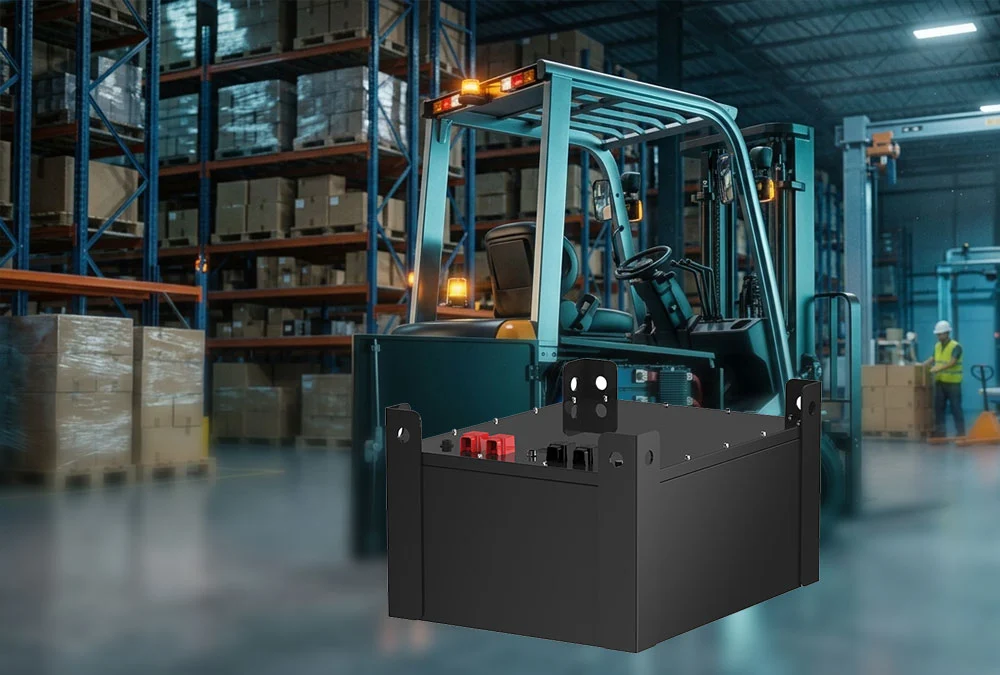
Lithium iron phosphate batteries are widely used because they combine long cycle life, high thermal stability, good efficiency and low maintenance. However, they are not ideal for every application. Lower energy density than some lithium chemistries, higher upfront cost and low-temperature charging limitations are important considerations. Transitioning to LFP systems often raises practical questions about real-world return on investment and cold-weather limitations. This guide compares the advantages, disadvantages, safety, cost, performance and applications of Lithium iron phosphate batteries so you can determine whether LFP is the right chemistry for your application.
LiFePO4 Battery Pros and Cons at a Glance
| Factor | LiFePO4 Performance | Practical Impact | Buyer Value Advantage |
|---|---|---|---|
| Cycle Life | Excellent | Fewer replacements over time | Dramatically cuts labor and downtime replacement costs. |
| Safety | High thermal stability | Lower thermal-risk profile | Prevents catastrophic asset loss in commercial fleets. |
| Maintenance | Low | Less routine maintenance | Zero electrolyte topping or acid corrosion cleanups. |
| Usable Capacity | High | More usable energy per cycle | Runs machinery longer per charge without voltage sag. |
| Efficiency | High | Lower energy losses during charge | Directly reduces grid electricity bills for charging. |
| Energy Density | Moderate | May require more space than NMC | Requires physical space checks prior to retrofitting. |
| Upfront Cost | Higher | Larger initial capital investment | Higher initial outlay balanced by long-term TCO. |
| Low-Temp Charging | Requires protection | Heating/BMS features needed | Needs integrated heaters for sub-zero operation. |
| BMS Requirement | Essential | Requires proper system design | Protects investment automatically against operator abuse. |
Quick Answer: Is LiFePO4 a Good Battery Chemistry?
LFP is generally a strong choice for applications that prioritize safety, long cycle life, frequent cycling and low maintenance. It may be less suitable when maximum energy density, minimum upfront cost or charging performance in very cold conditions is the primary requirement. Buyer concerns over upfront pricing fade once total cost per cycle is calculated over years of heavy operation.
What Are the Main Advantages of Lithium Iron Phosphate Batteries?
Evaluating lithium iron phosphate battery advantages and disadvantages starts with understanding its operational benefits in heavy-duty cycles.
Long Cycle Life Reduces Battery Replacement Frequency
In high-use environments like industrial AGVs or golf cart fleets, longevity dictates value. According to rigorous bench testing standards reported in the US Department of Energy (DOE) Vehicle Technologies Office 2024 Annual Progress Report, commercial-grade LFP cells consistently demonstrate 3,000 to over 6,000 complete charge-discharge cycles before reaching 80% of original capacity. Cycle life must always be evaluated together with DoD, operating temperature, discharge C-rate, and end-of-life (EOL) capacity criteria. Running a pack at 80% DoD extends calendar service life dramatically compared to deep-cycling traditional alternatives. Fleet managers often ask if these numbers hold up under real work conditions; field logs show proper thermal management maintains these high cycle counts.
High Thermal Stability Improves LiFePO4 Battery Safety
Safety remains paramount when deploying multi-kilowatt-hour packs in commercial facilities. The chemical structure of lithium iron phosphate batteries features strong covalent P-O bonds within the crystal lattice. Research published in the Journal of The Electrochemical Society (2025) confirms that LFP cathodes display a thermal runaway breakdown onset temperature near 270°C, compared to approximately 210°C for nickel-rich lithium chemistries. The lower thermal-risk profile prevents exothermic runaway propagation under mechanical puncture. However, while LiFePO4 battery safety is exceptional, no rechargeable lithium battery should be described as completely risk-free without a certified protective enclosure and system design.
High Usable Capacity and Depth of Discharge
Nominal capacity can be misleading. A standard lead-acid battery degrades rapidly if discharged beyond 50% DoD consistently. In contrast, LFP battery packs permit 80% to 90% continuous discharge depth without damaging internal chemical structures. This usable capacity means a 100Ah LFP module delivers nearly double the working energy of a 100Ah lead-acid unit under identical load demands. Operators avoid mid-shift power loss and benefit from stable voltage delivery right down to the cutoff threshold.
High Charging and Discharging Efficiency
Energy loss directly increases utility overhead costs. According to technical data from the National Renewable Energy Laboratory (NREL) Energy Storage Technology Characterization Report, round-trip efficiency for LFP energy storage systems routinely exceeds 92% to 95%. Standard flooded lead-acid batteries lose up to 20% to 25% of input energy as heat and gas during charging cycles. The superior charging efficiency of LFP reduces grid consumption and shortens charging windows for electric utility vehicles.
Low Maintenance Requirements
Eliminating regular service procedures saves significant labor cost over years of operation. An enterprise deploying LiFePO4 battery systems avoids terminal corrosion cleaning, acid spillage neutralization, and regular water top-offs. The integrated smart BMS automatically balances cell voltages and monitors operating conditions, eliminating specialized labor needs.
Low Self-Discharge During Storage
Seasonal fleet vehicles, utility machinery, and standby power reserves frequently sit idle for months. Flooded batteries lose up to 15% of their charge monthly, causing destructive sulfation if unmaintained. LFP modules maintain a self-discharge rate below 2% per month. Equipment starts reliably after winter storage without requiring continuous trickling chargers.
No Significant Memory Effect
Unlike legacy nickel-based packs, LFP chemistry experiences no memory effect. Operators can perform partial state-of-charge (pSoC) charging or opportunity charging during short shift breaks without degrading overall storage capacity or shortening lifetime performance.
Lower Lifetime Cost in Many High-Use Applications
While the initial purchase cost of LFP is higher than legacy lead systems, total lifetime expenditure drops significantly. Higher initial cost is offset by longer service life, lower maintenance overhead, and superior usable capacity across thousands of cycles.
What Are the Disadvantages of LiFePO4 Batteries?
A balanced engineering assessment requires an objective breakdown of LiFePO4 battery advantages and disadvantages in real-world environments.
Lower Energy Density Than Some Lithium-Ion Chemistries
Comparing LiFePO4 battery vs lithium ion battery options like NMC reveals clear physical tradeoffs. Commercial LFP cells generally achieve gravimetric energy densities between 140 Wh/kg and 180 Wh/kg. High-nickel NMC cells frequently exceed 240 Wh/kg. Consequently, LFP packs require more volume and weight to store equivalent watt-hours, making them less ideal for tightly constrained long-range passenger electric cars.
Higher Upfront Cost Than Lead-Acid Batteries
Initial acquisition expenses pose a hurdle for budget-constrained procurement teams. A commercial 48V LFP pack can cost two to three times more than a standard flooded battery set initially. Procurement teams often ask how to justify this to finance; analyzing operational lifespans reveals the capital cost per operational hour is far lower with LFP.
Low-Temperature Charging Requires Protection
Charging lithium cells below 0°C (32°F) can cause metallic lithium plating on the anode, resulting in permanent capacity loss and micro-short risks. A properly configured system restricts charging when internal temperatures drop below freezing. Low-temperature performance is application-dependent and should be evaluated using actual manufacturer specifications; low-temp environments require self-heating BMS modules.
LiFePO4 Requires Different Voltage and Charging Profiles
LFP chemistry features a flat voltage discharge profile centered around a nominal 3.2V per cell. Common multi-cell pack configurations yield distinct nominal voltages:
- 12.8V (4 cells in series)
- 25.6V (8 cells in series)
- 38.4V (12 cells in series)
- 51.2V (16 cells in series)
- 64.0V (20 cells in series)
- 76.8V (24 cells in series)
Because of these precise voltage thresholds, LFP cannot simply use an arbitrary lead-acid charger or standard lithium-ion charging profile without damaging internal components.
Proper BMS and System Integration Are Essential
A robust management circuit is non-negotiable for LFP operations. The system requires constant cell-level oversight to perform core safety functions:
- Overcharge protection
- Over-discharge protection
- Overcurrent and short-circuit protection
- Temperature monitoring
- Active/passive cell balancing
Poor Battery Design Can Reduce the Benefits of LiFePO4
Using premium LFP cells does not guarantee system reliability. Subpar cell matching, undersized BMS components, improper chargers, inadequate thermal management, or thin wiring can cause premature failure. Good chemistry does not compensate for poor battery engineering.
LiFePO4 vs Lead-Acid vs NMC: How Do They Compare?
Choosing the correct power source requires comparing popular market chemistries across core technical parameters.
| Factor | LiFePO4 (LFP) | Lead-Acid (AGM/Flooded) | NMC (Nickel Manganese Cobalt) | Strategic Buyer Selection Advantage |
|---|---|---|---|---|
| Energy Density | Moderate (140-180 Wh/kg) | Low (30-50 Wh/kg) | High (200-260 Wh/kg) | LFP strikes the ideal balance of safety and size for industrial mobile assets. |
| Cycle Life | Long (3000-6000+ cycles) | Shorter (300-700 cycles) | Long (1500-3000 cycles) | LFP delivers up to 10x the operational service cycles of lead-acid. |
| Usable DoD | High (80%-90%) | Lower (50%) | High (80%-90%) | Maximizes usable run-time per single charging cycle. |
| Thermal Stability | High (Onset ~270°C) | Moderate risk profile | Lower than LFP (Onset ~210°C) | LFP eliminates thermal run-away liabilities in high-heat industrial zones. |
| Maintenance | Low (BMS automated) | Higher for flooded types | Low (BMS automated) | Frees technical staff from weekly battery fluid refills and manual checks. |
| Charging Speed | Fast-capable (0.5C-1C) | Slow (8-10 hours) | Fast-capable (1C+) | Supports rapid opportunity charging during standard worker shift breaks. |
| Upfront Cost | Moderate-High | Low initial purchase | High | LFP balances affordable initial pricing with industry-leading lifetime value. |
Actual performance varies by cell quality, battery design, operating conditions and manufacturer specifications.
LiFePO4 vs Lead-Acid: Which Battery Is Better?
Evaluating is LiFePO4 better than lead acid requires analyzing specific performance metrics that impact daily fleet operations.
Initial Cost
Lead-acid batteries win on initial purchase price. If immediate capital availability is the only constraint, lead-acid remains appealing for short-term projects.
Cycle Life and Replacement Frequency
Lead-acid packs require replacement every 1.5 to 3 years under heavy daily use. LFP modules routinely operate 7 to 10 years without significant capacity drops, turning initial capital expense into long-term savings.
Usable Capacity
Because LFP safely supports 80%-90% DoD versus lead-acid’s 50% limit, an operator requires fewer total amp-hours of installed LFP capacity to achieve equal working run-times.
Charging Time and Efficiency
Lead-acid units require 8 to 10 hours for a complete charge, including a lengthy absorption stage. LFP packs easily take full charge currents up to 1C rate, reaching 100% capacity in 1 to 2 hours.
Maintenance Requirements
LFP eliminates acid washdowns, water checks, and equalizer charges, drastically reducing physical maintenance costs over years of ownership.
Weight and Space
LFP packs weight up to 60% less than equivalent lead-acid setups, reducing structural wear on industrial vehicles like golf carts and floor scrubbers.
Total Cost of Ownership
For frequent daily cycling, LiFePO4 vs lead acid evaluations show LFP provides far greater long-term economic value. For low-frequency applications where upfront capital dominates, lead-acid may remain practical.
How Much Does a LiFePO4 Battery Really Cost Over Its Lifetime?
Determining is LiFePO4 battery worth it requires financial modeling that looks past sticker prices.
Initial Battery Cost vs Lifetime Cost
A $1,500 LFP module outlasts three consecutive $600 lead-acid battery replacements ($1,800 total), excluding saved labor cost for retrofits and reduced energy billing.
Compare Cost Per Usable kWh
Calculate usable energy delivers true cost perspective:
Cost per Usable kWh = Initial Battery Cost ($) ÷ Usable Energy (kWh)
Compare Cost Per Usable Cycle
Using the LFP Total Lifecycle Cost Model™ simplifies long-term financial calculations:
This is a simplified comparison model and does not include electricity tariffs, maintenance labor, or financing interest.
LiFePO4 Battery Safety: What Actually Determines Safety?
Chemistry alone does not guarantee job-site safety; real-world safety depends on proper pack integration.
Cell Quality and Consistency
Grade-A cells with uniform internal impedance reduce heat generation during high-current discharge cycles.
BMS Protection
Hardware-level BMS protection isolates cells instantly during short-circuit or voltage spikes before internal damage occurs.
Charger Compatibility
Dedicated LFP chargers prevent dangerous overvoltage conditions during the constant-current, constant-voltage (CC/CV) stage.
Thermal Management
Proper cell spacing, aluminum heatsinks, and thermal pads prevent localized heat buildup during operation.
Wiring, Fuse and Overcurrent Protection
Sizing internal copper busbars and fuses appropriately prevents electrical arcing under high surge loads.
Enclosure and Installation
IP65 or IP67 rated enclosures protect delicate electrical circuits against dust, water ingress, and vibration damage.
Common Misconceptions About LiFePO4 Batteries
“LiFePO4 Batteries Cannot Catch Fire”
While LFP has high thermal stability, severe electrical abuse, high heat exposure, or extreme mechanical damage can still compromise cell seals and cause fires.
“6000 Cycles Means 6000 Cycles Under Any Condition”
Cycle lifespan depends directly on DoD, operating temperature, charge rate, and end-of-life parameters. Continuous high-temperature storage reduces total cycle count.
“48V LiFePO4 Means Exactly 48V”
A standard 16-cell LFP pack operates at a nominal voltage of 51.2V (16 × 3.2V), resting between 53.2V fully charged and 48V near empty.
“Any 48V Charger Can Charge a LiFePO4 Battery”
Standard lead-acid chargers use equalization modes that output excessive voltage, which damages LFP cell balancing circuits.
“LiFePO4 Is Always Better Than Lead-Acid”
Selecting LFP depends on budget, usage frequency, environment, and space limitations; lead-acid can still fit rare standby needs.
Where Are LiFePO4 Batteries Best Used?
| Application | Why LFP Fits | Key Selection Factor | End-User Operating Benefit |
|---|---|---|---|
| Solar ESS | Frequent daily cycling capability | DoD + cycle life performance | Provides decade-long daily solar power storage without capacity drop. |
| Golf Cart | Lightweight with consistent voltage output | Matching voltage & dimension fits | Increases cart speed, reduces turf compression, doubles drive range. |
| AGV & AGV Logistics | Fast opportunity charging capabilities | C-rate rating & BMS smart telemetry | Enables 24/7 continuous facility uptime via short shift charges. |
| Forklift & Handling | Sustained high continuous current output | Peak discharge amps & thermal safety | Maintains full lifting power through the end of a shift. |
| Cleaning Machine | Zero maintenance and sealed design | Usable runtime & reduced weight | Eliminates acid spills on freshly cleaned commercial floors. |
| Tourist Vehicle | Long daily operating hours | Ah capacity & acceleration performance | Carries full passenger loads up steep inclines reliably. |
| 2/3-Wheel EV & Tuk-Tuk | High energy density versus lead-acid | Peak current & physical envelope | Provides urban commercial drivers higher daily earning capacity. |
| Backup Power | Extremely low shelf self-discharge rate | Standby reliability & BMS uptime | Ensures emergency power availability during unexpected grid failures. |
LiFePO4 for Residential and Commercial Energy Storage
LFP chemistry handles daily solar cycling demands easily. High round-trip efficiency ensures maximum self-generated solar energy is stored and reused without thermal degradation.
LiFePO4 for Golf Carts and Tourist Vehicles
Upgrading golf carts to LFP removes hundreds of pounds of dead weight, improving acceleration while extending range per charge beyond traditional lead-acid capacities.
LiFePO4 for AGVs, Forklifts and Cleaning Machines
Industrial fleets use opportunity charging during 15-minute breaks to keep warehouse AGVs and scrubbers running through multi-shift operations without changing packs.
LiFePO4 for 2-Wheel and 3-Wheel Electric Vehicles
Commercial tuk-tuks and cargo delivery trikes benefit from robust vibration resistance and sustained voltage delivery under high motor start loads.
How to Choose the Right LiFePO4 Battery for Your Application
Deploying energy storage effectively requires systematic validation using the LFP Application-Fit Model™.
1. Voltage
Match your equipment’s operating requirements: 12V, 24V, 36V, 48V, 60V, 64V, or 76V system configurations.
2. Capacity
Convert Ah requirements to kWh energy consumption using energy formulas: Energy (Wh) = Nominal Voltage (V) × Capacity (Ah).
3. Current Requirement
Check continuous discharge current ratings alongside peak motor startup current specs to prevent premature BMS tripping under load.
4. Operating Environment
Assess ambient temperature ranges, humidity levels, dust exposure, and water exposure to select correct IP enclosure ratings.
5. Charger, BMS and Communication Compatibility
Ensure seamless protocol integration across hardware components: verify CANbus, RS485, or Modbus protocols between battery, controller, and inverter displays.
When Should You Choose LiFePO4—and When Should You Consider Another Battery?
| Your Core Operational Priority | Recommended Technology Direction | Operational Rationale & ROI Focus |
|---|---|---|
| Frequent daily deep cycling | LiFePO4 | Delivers maximum cycle life with minimal capacity degradation over time. |
| Long service life requirement (7-10+ yrs) | LiFePO4 | Spreads capital expenditure over decade-long operation. |
| Zero maintenance operational target | LiFePO4 | Completely eliminates liquid refilling and terminal anti-corrosion tasks. |
| Maximum thermal safety and stability | LiFePO4 | Prevents thermal runaway risks in hot commercial environments. |
| Very low initial upfront capital budget | Lead-Acid (Short-Term) | Viable only if initial acquisition cash flows supersede long-term TCO benefits. |
| Extremely high volumetric energy density | NMC / High-Nickel Lithium | Best suited for passenger EVs where space restricts battery physical size. |
| Sub-zero charging ambient temperatures | LiFePO4 with Internal Heaters | Requires embedded thermal heating pads to allow zero-degree charging safety. |
LiFePO4 Battery Certifications and Testing
Ensuring compliance requires adherence to strict global transport and electrical standards. Industrial grade Lithium iron phosphate batteries must pass rigorous laboratory protocols before global deployment:
- UN38.3: Verifies transport safety under altitude, thermal, vibration, shock, external short circuit, impact, and overcharge tests.
- IEC Standards: Tests cell and pack safety performance under IEC 62619 for industrial applications.
- UL Standards: Validates electrical safety compliance under UL 1973 for stationary and motive applications.
- CE Compliance: Confirms electromagnetic compatibility and safety compliance for European commercial markets.
For a detailed technical explanation of compliance requirements, see our LiFePO4 Battery Certifications Guide.
Why Battery Manufacturer Quality Matters
The core chemical advantages of LFP form only the foundation of a reliable product; real-world success depends heavily on system-level manufacturing standards.
Cell Quality
Premium Grade-A prismatic cells ensure low internal resistance and uniform capacity matching, preventing cell imbalance over years of service.
BMS Engineering
Precision BMS designs prevent nuisance tripping while providing accurate State-of-Charge (SoC) reporting via integrated digital communication interfaces.
Manufacturing and QC
Automated laser welding, thermal insulation layer insertion, and rigorous vibration testing prevent mechanical failures in harsh environments.
Custom Voltage and Capacity
Professional suppliers configure custom dimensions and voltages to replace legacy lead-acid footprints without vehicle modification.
Testing and Traceability
Complete serial number tracking and batch testing ensure clear quality documentation across every production run.
Technical Support and Warranty
Transparent factory warranties backed by engineering support minimize operational risk for enterprise buyers.
LiFePO4 Battery Solutions for Commercial Applications
Custom engineering allows lithium iron phosphate batteries to fit diverse operational demands safely.
| Nominal Voltage | Capacity Options | Energy Output | Primary Target Application | System Buyer Advantage |
|---|---|---|---|---|
| 12.8V | 50Ah – 200Ah | 0.64 kWh – 2.56 kWh | Small utility equipment & marine | Direct drop-in replacement for standard 12V lead-acid batteries. |
| 25.6V | 100Ah – 300Ah | 2.56 kWh – 7.68 kWh | AGVs & commercial floor scrubbers | Supports fast opportunity charging during short operator breaks. |
| 38.4V | 100Ah – 200Ah | 3.84 kWh – 7.68 kWh | Industrial material handling equipment | Delivers sustained voltage stability under peak lift loads. |
| 51.2V | 100Ah – 400Ah | 5.12 kWh – 20.48 kWh | Golf carts, tourist vehicles & solar ESS | Provides extended daily driving range and multi-thousand cycle life. |
| 64.0V | 100Ah – 200Ah | 6.40 kWh – 12.80 kWh | Electric transport & delivery vehicles | Reduces total fleet operational weight to increase payload capacity. |
| 76.8V | 100Ah – 300Ah | 7.68 kWh – 23.04 kWh | High-voltage mobility & industrial platforms | Maximizes drive-system efficiency for heavy commercial use. |
Frequently Asked Questions About LiFePO4 Batteries
What are the main advantages of LiFePO4 batteries?
The main benefits of lithium iron phosphate batteries include high thermal stability, long cycle life (3,000 to 6,000+ cycles), high usable DoD, zero maintenance requirements, high charging efficiency, and lower total cost of ownership over time.
What are the disadvantages of LiFePO4 batteries?
Disadvantages include lower volumetric energy density compared to NMC chemistry, higher initial upfront purchase price than lead-acid, low-temperature charging limitations below 0°C, and the need for a dedicated BMS circuit.
Are LiFePO4 batteries safer than other lithium batteries?
Yes, LFP chemistry features strong covalent P-O bonds that give it superior thermal stability, with a thermal runaway threshold around 270°C, making it far resistant to overheating than nickel-based lithium chemistries.
How long do LiFePO4 batteries last?
In typical commercial applications operating at 80% depth of discharge under reasonable temperatures, quality LFP batteries last 7 to 10+ years, providing up to 10 times the operating life of traditional flooded lead-acid units.
Can LiFePO4 batteries be charged in cold weather?
LFP batteries should not be charged below 0°C (32°F) without internal thermal heating pads or BMS low-temperature cutoffs to prevent dangerous lithium plating on the anode.
Do LiFePO4 batteries need a BMS?
Yes, an integrated BMS is essential to control cell voltage limits, manage thermal parameters, prevent short circuits, and provide active balancing across individual cells within the pack.
Is LiFePO4 better than lead-acid?
LFP is significantly better than lead-acid for high-use, daily-cycled applications due to its higher efficiency, longer cycle life, lighter weight, and zero maintenance requirements, despite higher upfront costs.
What voltage LiFePO4 battery do I need?
Match your equipment motor specifications: 12.8V for basic starter/auxiliary units, 25.6V or 38.4V for floor scrubbers and AGVs, and 51.2V to 76.8V for golf carts, commercial EVs, and industrial mobility systems.
Conclusion: Is LiFePO4 the Right Battery for You?
Evaluating Lithium iron phosphate batteries reveals that while LFP is not the perfect chemistry for every single application, its combination of high thermal stability, long cycle life, high usable capacity, rapid charge efficiency, and zero maintenance makes it particularly attractive for energy storage, industrial machinery, and electric mobility systems. The higher initial investment yields significant operational cost savings over years of heavy daily use.
Related Posts
 https://anengjibattery.com/wp-content/uploads/2026/10/AnengjiBattery-Cell-to-Pack-Energy-Density-Comparison.webp
675
1000
Battery Expert Team
https://anengjibattery.com/wp-content/uploads/2025/06/logo2-300x138.png
Battery Expert Team2026-10-23 06:58:392026-10-23 06:58:41What Does Lithium-Ion Battery Energy Density Really Mean?
https://anengjibattery.com/wp-content/uploads/2026/10/AnengjiBattery-Cell-to-Pack-Energy-Density-Comparison.webp
675
1000
Battery Expert Team
https://anengjibattery.com/wp-content/uploads/2025/06/logo2-300x138.png
Battery Expert Team2026-10-23 06:58:392026-10-23 06:58:41What Does Lithium-Ion Battery Energy Density Really Mean? https://anengjibattery.com/wp-content/uploads/2026/10/AnengjiBattery-Lithium-Battery-Management-in-Daily-Operation.webp
675
1000
Battery Expert Team
https://anengjibattery.com/wp-content/uploads/2025/06/logo2-300x138.png
Battery Expert Team2026-10-22 08:17:332026-10-23 06:58:57How Does a Lithium BMS Improve Battery Longevity?
https://anengjibattery.com/wp-content/uploads/2026/10/AnengjiBattery-Lithium-Battery-Management-in-Daily-Operation.webp
675
1000
Battery Expert Team
https://anengjibattery.com/wp-content/uploads/2025/06/logo2-300x138.png
Battery Expert Team2026-10-22 08:17:332026-10-23 06:58:57How Does a Lithium BMS Improve Battery Longevity? https://anengjibattery.com/wp-content/uploads/2026/10/AnengjiBattery-Industrial-Power-Under-Real-Load.webp
675
1000
Battery Expert Team
https://anengjibattery.com/wp-content/uploads/2025/06/logo2-300x138.png
Battery Expert Team2026-10-22 07:04:542026-10-22 07:05:30How Does a 48V LiFePO4 BMS Protect Industrial Power?
https://anengjibattery.com/wp-content/uploads/2026/10/AnengjiBattery-Industrial-Power-Under-Real-Load.webp
675
1000
Battery Expert Team
https://anengjibattery.com/wp-content/uploads/2025/06/logo2-300x138.png
Battery Expert Team2026-10-22 07:04:542026-10-22 07:05:30How Does a 48V LiFePO4 BMS Protect Industrial Power? https://anengjibattery.com/wp-content/uploads/2026/10/AnengJIBattery-Electric-Forklift-Battery-Buying-Decision.webp
675
1000
Battery Expert Team
https://anengjibattery.com/wp-content/uploads/2025/06/logo2-300x138.png
Battery Expert Team2026-10-21 06:22:222026-10-21 06:22:38Ready to Buy Battery for Electric Forklift? Use This Guide
https://anengjibattery.com/wp-content/uploads/2026/10/AnengJIBattery-Electric-Forklift-Battery-Buying-Decision.webp
675
1000
Battery Expert Team
https://anengjibattery.com/wp-content/uploads/2025/06/logo2-300x138.png
Battery Expert Team2026-10-21 06:22:222026-10-21 06:22:38Ready to Buy Battery for Electric Forklift? Use This Guide


Leave a Reply
Want to join the discussion?Feel free to contribute!