
48V LiFePO4 Power Battery: Performance, BMS & Buying Guide
August 31, 2026 / Battery Expert Team / Battery Basics
Introduction
Industrial equipment, commercial fleets, and off-grid solar energy systems all face the same core challenge: power reliability under heavy daily cycling. Choosing a lifepo4 power battery 48v setup has become standard practice across material handling and stationary storage because lower voltage architectures like 12V or 24V incur high line losses when scaled up. Meanwhile, high-voltage setups require complex isolation and costly safety components. Operating at 48V (or nominally 51.2V) creates an ideal balance between electrical efficiency, system safety, and component cost.
Market adoption of 48V LFP power batteries is surging. Industrial operators require zero-maintenance energy storage, while fleet managers look to eliminate lead-acid downtime. This guide breaks down the core performance mechanics, actual operating voltage ranges, BMS protections, and practical selection criteria for your applications.
Quick Answer: Is a 48V LiFePO4 Battery a Good Choice?
Yes—for high-use commercial applications and daily solar cycling, a 48V LFP system offers an excellent long-term ROI. Key operational benefits include:
- High Operational Safety: Extremely high thermal runaway threshold compared to nickel-based lithium chemistries.
- Extended Cycle Life: Provides 3,500 to 6,000+ deep cycles before hitting 80% end-of-life capacity.
- High Usable Capacity: Delivers continuous 80%–90% Depth of Discharge without rapid voltage sag.
- Minimal Maintenance: No water topping, zero terminal corrosion cleaning, and automated balancing via internal BMS.
When 48V LiFePO4 Is the Better Choice
A 48V LFP pack excels when operating costs are calculated over thousands of cycles rather than initial purchase price. It is ideal for daily solar ESS cycling, commercial golf carts, warehouse AGVs, automatic floor scrubbers, industrial material handling equipment, stationary backup power, and urban 2/3-wheel electric delivery vehicles.
When Another Battery Chemistry May Be More Suitable
LFP may not fit your project if upfront capital is strictly limited and usage is rare (making legacy lead-acid viable), if physical volume is extremely constrained (where high-density NMC fits better), or if continuous high-rate charging must occur in sub-zero ambient temperatures without thermal heating systems.
48V LiFePO4 Battery at a Glance
| Specification | Typical 48V LiFePO4 System | Why It Matters | Operational Benefit for Buyers |
|---|---|---|---|
| Chemistry | Lithium Iron Phosphate (LiFePO4) | Intrinsic safety & thermal stability | Eliminates catastrophic fire risks in commercial facilities. |
| Nominal Voltage | 51.2V (Common 16S configuration) | System & inverter compatibility | Reduces cable gauge requirements and resistive heat loss. |
| Capacity Options | 50Ah to 200Ah+ modules | Determines system energy storage (kWh) | Allows flexible scaling from small machinery to massive ESS banks. |
| Usable DoD | 80% to 90% recommended | Directly affects usable energy reserve | Delivers up to double the operational runtime of AGM/Flooded packs. |
| Cycle Life | 3,500 – 6,000+ cycles (@80% DoD) | Dictates battery replacement interval | Dramatically lowers cost per cycle and battery replacement labor. |
| Integrated BMS | Hardware/Software smart protection | Voltage, current, & thermal protection | Prevents cell damage caused by operator errors or electrical surges. |
| Communication | CANbus, RS485, Modbus protocol | Real-time inverter & controller telemetry | Simplifies closed-loop integration with solar inverters and AGV mainframes. |
Why LiFePO4 Is Well Suited to 48V Power Applications
Combining a 48V electrical architecture with LFP chemistry offers distinct technical advantages over lead-acid or high-voltage lithium formats.
Long Cycle Life for Frequent Daily Cycling
In daily commercial service, cycle stability dictates overall equipment yield. Field testing data published in the US Department of Energy (DOE) Vehicle Technologies Office 2024 Annual Progress Report highlights that commercial LFP cells consistently maintain over 80% capacity retention past 3,500 full cycles under standard ambient conditions. This longevity allows equipment to run multi-shift operations for years without pack replacement.
High Usable Energy and Stable Power Output
A battery’s nominal capacity rating does not equal its usable capacity in real-world environments. Lead-acid batteries suffer severe voltage sag under load, forcing early shutoff at 50% discharge. A 48V LiFePO4 power battery maintains a flat discharge curve, delivering consistent voltage down to 80%-90% DoD. Your electric vehicles retain full torque and lifting power right up until recharge.
High Charging and Discharging Efficiency
Energy efficiency directly impacts electric utility costs. Research from the National Renewable Energy Laboratory (NREL) Energy Storage Technology Characterization Report confirms round-trip efficiency for LFP battery energy storage systems exceeds 92% to 95%. Lead-acid setups waste up to 25% of input energy as heat, increasing grid electricity draw during charging cycles.
Lower Maintenance Than Traditional Lead-Acid Batteries
Managing lead-acid battery banks demands constant maintenance, including distilled water top-offs, acid spill cleanup, and terminal corrosion scrubbing. Switching to a sealed 48V lithium iron phosphate battery eliminates these tasks completely, protecting facility floors and reducing ongoing maintenance labor costs.
Long-Term Value Rather Than Lowest Upfront Price
Many procurement managers balk at the higher initial price tag of lithium batteries. However, because one LFP pack outlasts 3 to 5 lead-acid replacements while consuming less grid power, the total cost per delivered kWh drops substantially over the equipment’s lifespan.
48V vs 51.2V LiFePO4 Battery: What Is the Difference?
A common point of confusion among buyers is seeing “48V” and “51.2V” labels used interchangeably on product specification sheets.
Why Is a 48V LiFePO4 Battery Rated at 51.2V?
Single LiFePO4 cells feature a nominal voltage of 3.2V. When engineering a commercial 48V LiFePO4 battery pack, manufacturers connect 16 cells in series (16S configuration). Simple math reveals the actual system nominal voltage: 16 cells × 3.2V = 51.2V. Some legacy low-cost packs use a 15S setup (15 × 3.2V = 48.0V), but 16S (51.2V) is the modern industry standard for off-grid inverters and motive applications.
48V Lead-Acid vs 51.2V LiFePO4 Voltage
Legacy 48V lead-acid systems string four 12V blocks in series (4 × 12V = 48V nominal). However, 51.2V LFP systems integrate seamlessly into these setups because their active operating voltage profiles overlap perfectly across charge and discharge cycles.
What Is the Voltage Range of a 48V LiFePO4 Battery?
Understanding working voltage bounds helps prevent premature system shutdowns:
- Full Charge Voltage (100% SoC): ~56.8V to 57.6V (3.55V–3.60V per cell)
- Nominal Voltage (~50% SoC): 51.2V (3.20V per cell)
- Discharge Cutoff Voltage (0% SoC): ~44.8V to 48.0V (2.80V–3.00V per cell)
Can a 51.2V LiFePO4 Battery Replace a 48V Battery?
Yes, in 99% of cases. However, you should always check that your motor controller or solar inverter tolerates a continuous charging voltage up to 57.6V before retrofitting.
How Does a 48V LiFePO4 Battery Perform?
Evaluating real-world pack performance requires checking technical parameters beyond basic amp-hour labels. Use our 48V Performance Scorecard™ to evaluate battery quality during procurement:
| Performance Factor | What to Check | Why It Matters | Buyer Value Advantage |
|---|---|---|---|
| Cycle Life vs EOL | DoD + operating temp + EOL threshold | Defines actual operating lifespan | Prevents unexpected early battery replacement costs. |
| C-Rate Capability | Continuous vs continuous peak current | Determines heavy load startup power | Prevents BMS cutoffs when forklifts haul steep inclines. |
| Round-Trip Efficiency | Energy lost during charge/discharge | Reduces waste grid power consumption | Lowers monthly commercial electricity bills. |
| Voltage Sag Profile | Voltage stability under load spikes | Maintains equipment speed/torque | Ensures machines operate at 100% speed through end-of-shift. |
| Thermal Range | Operating ambient limits & heating pads | Determines climate resilience | Allows safe operation in cold storage rooms or outdoor ESS. |
Cycle Life Is Not the Same as Calendar Life
A battery rated for 6,000 cycles won’t automatically last 15 years if stored at high ambient temperatures. Calendar life depends on ambient temperature, state-of-charge exposure, cell internal degradation, and charging profiles over time.
How DoD Affects Usable Energy and Battery Life
Discharging a battery to 100% DoD repeatedly stresses internal cathode structures, shortening operational lifespan. Operating a 48V LiFePO4 battery capacity bank at 80% DoD doubles cycle life compared to deep 100% cycling, maximizing long-term battery value.
48V LiFePO4 Battery BMS: The System’s Safety and Control Layer
A premium lithium battery requires a robust management board. The 48V lithium battery BMS serves as an automated protection circuit, preventing cell damage and extending operational lifespan.
What Does a LiFePO4 BMS Do?
The BMS monitors cell voltages, total pack currents, ambient temperatures, and cell balance levels in real time. If operating parameters exceed safe limits, internal solid-state MOSFETs or contactors trip immediately to isolate the battery.
Overcharge and Over-Discharge Protection
Overcharging an LFP cell forces excess lithium ions into the anode, accelerating capacity fade. Over-discharging causes copper current collector dissolution. The BMS stops current flow at defined voltage limits (typically 3.65V high, 2.5V low per cell) to prevent permanent chemical breakdown.
Overcurrent and Short-Circuit Protection
Equipment motor stalls cause sudden current spikes. The BMS enforces multi-tier overcurrent cutoffs, tripping in milliseconds during short-circuit events to protect wiring and electronics from fire hazards.
Temperature Monitoring and Low-Temperature Charging Protection
Charging lithium cells below 0°C (32°F) causes permanent metallic lithium plating on the anode, creating internal short circuit risks. A smart BMS cuts off charging current at freezing temperatures or engages integrated heating pads before accepting incoming charge.
Cell Balancing and Voltage Monitoring
Minor manufacturing variances cause individual cell capacities to drift over time. Passive or active BMS balancing bleed off excess voltage from high cells during charging, ensuring all 16 cells stay balanced.
CAN, RS485 and Other Communication Functions
Industrial applications demand integration. Advanced BMS units feature CANbus or RS485 communication protocols, sending real-time state-of-charge, voltage, and diagnostic data directly to off-grid solar inverters, AGV controllers, or central fleet monitoring dashboards.
48V LiFePO4 Battery and Inverter Compatibility
Connecting a high-capacity pack to a solar inverter requires verifying voltage matching and digital communication protocols.
What Should You Check Before Connecting a 48V Battery to an Inverter?
- Inverter DC Input Range: Ensure the inverter accepts continuous operating voltages up to 58.4V.
- Charging Current Settings: Confirm the inverter’s maximum charger output does not exceed the battery’s maximum recommended charging C-rate.
- BMS Protocol Match: Check whether closed-loop CAN/RS485 communication protocols match (e.g., Pylontech, Victron, SMA, Voltronic protocols).
Why Voltage Compatibility Is More Important Than the “48V” Label
“48V” is a nominal system descriptor. If your inverter cut-off is set for lead-acid profiles (e.g., stopping at 42V), it will over-discharge an LFP battery pack. Customizing inverter voltage cutoffs to LFP parameters prevents premature pack damage.
Can Multiple 48V LiFePO4 Batteries Be Connected in Parallel?
Yes. Connecting multiple packs in parallel scales amp-hour capacity while maintaining the nominal 51.2V architecture. When paralleling, ensure all packs share identical cable lengths, matched internal resistance, and interconnected BMS communication channels to balance charging currents across packs.
How to Choose the Right 48V LiFePO4 Battery Capacity
How to Calculate 48V Battery Energy
Calculating total stored energy in watt-hours (Wh) or kilowatt-hours (kWh) uses a straightforward formula:
Example: 51.2V × 100Ah = 5,120 Wh (5.12 kWh usable storage)
48V 50Ah vs 100Ah vs 200Ah
| Battery Specification | Nominal Energy | Typical Application Logic | Buyer Benefit |
|---|---|---|---|
| 48V 50Ah LiFePO4 | ~2.56 kWh | Light electric sweepers, small backup systems | Compact footprint and lower upfront investment. |
| 48V 100Ah LiFePO4 | ~5.12 kWh | Standard golf carts, AGVs, home solar ESS | Industry-standard sizing for drop-in retrofits. |
| 48V 200Ah LiFePO4 | ~10.24 kWh | Heavy material handling, off-grid storage | Provides extended runtimes for multi-shift operations. |
How Much Runtime Can a 48V Battery Provide?
Estimate equipment runtime using total usable energy and average operating load:
What Changes Real-World Battery Runtime?
Field runtime varies based on continuous draw loads, vehicle weight, terrain inclines, ambient temperatures, and driver acceleration habits.
48V LiFePO4 vs Lead-Acid: Which Is More Cost-Effective?
Comparing battery chemistries requires looking past initial procurement costs to calculate lifetime return on investment.
Initial Battery Cost
A quality 48V LFP pack costs 2 to 2.5 times more upfront than an equivalent lead-acid array. However, judging value solely on initial purchase price is a common procurement misstep.
Cost per Usable kWh
Because lead-acid capacity is limited to 50% DoD to prevent damage, you must purchase twice the rated lead-acid capacity to match the usable output of an LFP system.
Cost per Usable Cycle
Evaluating total lifecycle cost reveals clear economic advantages:
Over 4,000 continuous cycles, LFP delivers a cost-per-cycle up to 70% lower than lead-acid options.
Total Cost of Ownership
A total cost of ownership (TCO) evaluation factors in initial purchase price, routine maintenance labor, charging efficiency losses, replacement intervals, and equipment downtime costs. LFP systems win on overall TCO across high-use commercial applications.
When Lead-Acid May Still Make Sense
Lead-acid remains viable for low-frequency standby equipment cycled once a month, or where initial capital budgets override long-term operating costs.
Which Applications Benefit Most From a 48V LiFePO4 Power Battery?
Use our 48V Application Fit Matrix™ to align your equipment requirements with LFP battery configurations:
| Application | Why 48V LFP Fits | Key Specification | Operational Benefit |
|---|---|---|---|
| Golf Carts & Utility Vehicles | Light weight, sustained acceleration | 51.2V 100Ah / High peak current | Saves up to 300 lbs, doubling drive range and acceleration. |
| AGVs & Warehouse Automation | Opportunity fast-charging during shifts | 1C Charge rate / CANbus communication | Enables 24/7 continuous warehouse operations. |
| Commercial Cleaning Machines | Sealed leak-proof design, long runtimes | 51.2V 100Ah–150Ah / IP65 enclosure | Eliminates acid spills on freshly cleaned commercial floors. |
| Solar Energy Storage (ESS) | Daily deep cycling resilience | 95% Round-trip efficiency / RS485 protocol | Provides reliable off-grid power for over 10 years. |
| 2/3-Wheel Electric Mobility | Vibration resistance & high torque stability | Compact metallic shell / 50Ah–100Ah | Increases daily mileage and uptime for urban delivery fleets. |
48V LiFePO4 for Golf Carts
Upgrading a golf cart from lead-acid to LFP eliminates vehicle weight, reduces turf compression, and maintains top speeds up steep inclines without voltage drop-off.
48V LiFePO4 for AGVs and Material Handling
Automated guided vehicles benefit from LFP’s opportunity charging capability. AGVs can charge during 15-minute shift breaks, eliminating battery swap operations.
48V LiFePO4 for Cleaning and Tourist Vehicles
Floor scrubbers and resort shuttles run continuous daily schedules. Sealed LFP batteries prevent hazardous acid spills on commercial property.
48V LiFePO4 for Energy Storage and Backup Power
Residential and commercial solar energy storage systems demand daily deep cycling. High round-trip efficiency ensures maximum solar self-consumption.
48V LiFePO4 for 2-Wheel and 3-Wheel Electric Vehicles
Commercial cargo rickshaws and delivery trikes demand high current draw under heavy loads. LFP packs deliver reliable torque in a compact enclosure.
Is a 48V LiFePO4 Battery Safe?
Safety is paramount in commercial equipment deployments. Peer-reviewed findings in the Journal of The Electrochemical Society show LFP cathodes exhibit thermal runaway breakdown onset temperatures around 270°C, compared to ~210°C for nickel-rich lithium cells.
Why LiFePO4 Has High Thermal Stability
The P-O covalent bonds within the lithium iron phosphate crystal lattice resist oxygen release under thermal stress, making the chemistry resistant to thermal runaway propagation under physical impact or short-circuit conditions.
Why Cell Quality Matters
Battery safety starts at the cell level. Grade-A prismatic cells feature uniform internal resistance and tight capacity matching, preventing localized overheating under high current loads.
Why BMS and Charger Design Matter
A well-engineered BMS acts as a fail-safe circuit, isolating the battery during overvoltage or overcurrent conditions before cell damage occurs.
Why Battery Enclosure and Wiring Matter
Rugged sheet-metal enclosures rated for IP65 water/dust resistance shield internal components from severe vibration, moisture, and road debris.
Low-Temperature Charging Protection
To maintain battery safety, the BMS must block charging at temperatures below 0°C (32°F) or activate internal heating pads prior to charging.
Engineering Note: While LiFePO4 exhibits high thermal stability, no lithium battery should be categorized as risk-free. Real-world safety relies on cell quality, BMS integration, charger compatibility, structural enclosure, and manufacturing standards.
How to Choose a Reliable 48V LiFePO4 Battery Manufacturer
Selecting an OEM battery supplier requires vetting engineering and manufacturing standards using our 48V LFP Manufacturer 6-Point Check™:
1. Verify Cell Chemistry and Cell Quality
Ensure the supplier uses Grade-A prismatic LiFePO4 cells with full batch traceability records, rather than recycled or grade-B cells.
2. Evaluate BMS and System Integration
Confirm the BMS matches your load profile, featuring sufficient continuous amp capacity, thermal sensors, balancing circuits, and protocol support.
3. Check Testing and Certifications
Verify global transport and safety compliance certifications based on your target market requirements, including UN38.3 transport safety, IEC 62619 for industrial storage, CE compliance, and UL standards where applicable.
4. Compare Warranty Based on Actual Conditions
Review warranty terms carefully. Look for clear coverage based on operational cycle counts, DoD limits, operating temperature ranges, and guaranteed capacity retention thresholds.
5. Check OEM/ODM Capability
Confirm whether the factory can customize dimensions, sheet metal casings, terminal positions, BMS programming, and system voltages (12V, 24V, 36V, 48V, 60V, 72V) to fit your equipment footprints.
6. Verify Production and After-Sales Capability
Review factory capacity, quality control procedures, production lead times, spare parts availability, and technical support responsiveness before placing volume orders.
48V LiFePO4 Battery Selection Checklist
Use this quick checklist to review technical specifications before requesting custom battery quotes:
| Checkpoint | Verification Question | Target Parameter |
|---|---|---|
| Voltage Matching | Is system cutoff and charging compatible? | 51.2V Nominal (44.8V–57.6V Range) |
| Capacity & Energy | How much usable energy (kWh) is required? | 50Ah (2.56kWh) to 200Ah (10.24kWh) |
| Current Demands | What are continuous and peak surge currents? | Check BMS continuous & surge ratings |
| BMS Protocol | Is closed-loop telemetry communication required? | CANbus, RS485, Modbus matching |
| Physical Fit | Will the battery fit the existing battery tray? | Verify L × W × H dimensions & IP rating |
48V LiFePO4 Battery: What Should You Ask Before Ordering?
7 Questions to Ask Your Battery Supplier
- Are the cells inside new Grade-A prismatic cells with factory test reports?
- What is the rated cycle life at 80% DoD under 25°C operating conditions?
- What is the continuous and peak discharge current capacity of the BMS?
- Does the BMS include low-temperature charging protection or heating elements?
- Which inverter/controller communication protocols are supported out of the box?
- What safety and transport test certifications (UN38.3, IEC, CE, UL) are provided?
- What specific terms and capacity retention metrics govern the factory warranty?
Planning a Commercial 48V Battery Retrofit?
Download our complete procurement guide and technical checklist to review specs with your technical team.
48V LiFePO4 Battery Solutions for OEM and Commercial Applications
Standard 48V LiFePO4 Battery Configurations
Commercial battery packs are engineered to standard industrial dimensions, offering seamless retrofits for legacy battery bays across diverse applications:
- 51.2V 50Ah (2.56kWh): Built for light utility sweepers, commercial mowers, and small solar ESS units.
- 51.2V 100Ah (5.12kWh): Drop-in sizing for standard 48V golf carts, AGVs, and home solar storage cabinets.
- 51.2V 200Ah (10.24kWh): Industrial heavy-duty pack for warehouse forklifts and commercial ESS arrays.
Custom 48V LiFePO4 Battery Design
Off-the-shelf batteries don’t always fit specialized commercial machinery. OEM engineering allows custom customization across multiple specs:
- Custom physical dimensions to fit complex vehicle chassis enclosures.
- BMS tuning for high continuous discharge current demands.
- CANbus, RS485, or Modbus protocol integration matching proprietary vehicle controllers.
- Heavy-duty IP67 stainless steel or powder-coated iron enclosures for severe shock and vibration.
48V Battery Replacement and OEM Support
Replacing legacy lead-acid fleet batteries requires custom voltage alignment and charger matching. Factory OEM support provides full integration support, transforming legacy equipment into high-efficiency electric systems.
Why Choose AnengJi for 48V LiFePO4 Battery Solutions?
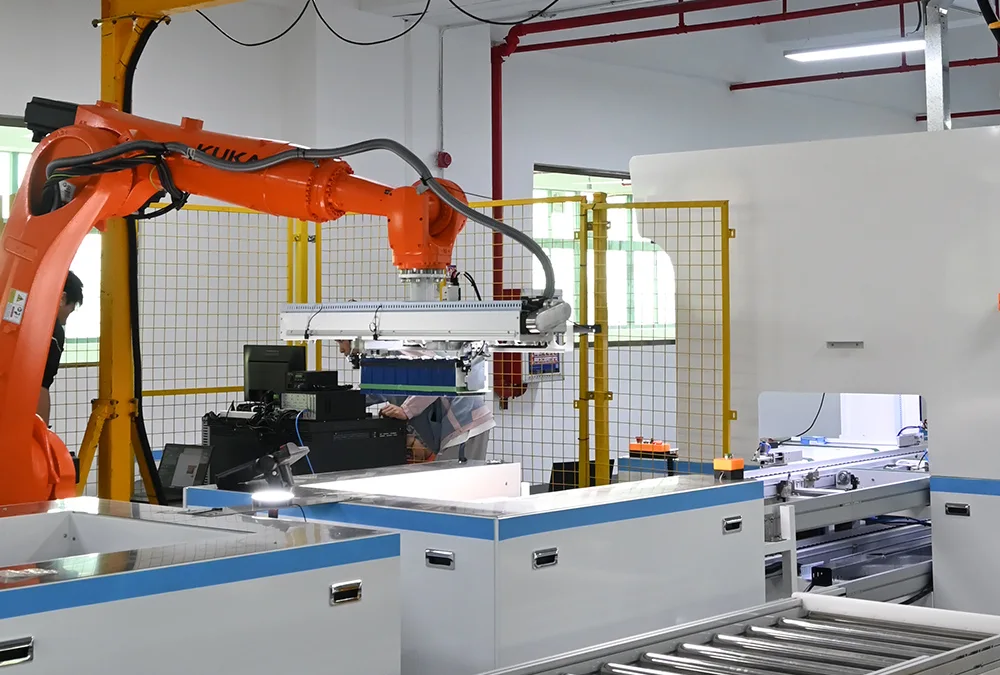
AnengJi manufactures commercial-grade lithium battery solutions across multiple voltage platforms (12V, 24V, 36V, 48V, 60V, 72V). By combining advanced cell sorting, custom BMS engineering, and automated laser welding, we build battery packs that operate reliably in demanding commercial environments.
From 48V Standard Batteries to Custom Battery Packs
Whether you require standard 51.2V 100Ah drop-in batteries for golf cart fleets or custom high-current packs for automated warehouse AGVs, our team delivers custom designs tailored to your operational requirements.
From Prototype to Volume Production
We support commercial customers through every stage of development, from initial engineering sample prototypes to mass production, with strict quality control testing across every production batch.
Get a 48V LiFePO4 Battery Recommendation for Your Application
Submit your project requirements to get a custom engineering recommendation and commercial proposal for your project.
Request a 48V LiFePO4 Battery Quote
To help our engineers select or design the best battery pack for your application, please provide your project details below:
1. Target Application: (e.g., Golf Cart, AGV, Solar ESS, Cleaning Machine)
2. Required Voltage & Capacity: (e.g., 51.2V 100Ah, 200Ah)
3. Continuous & Peak Load Current: (e.g., 100A continuous / 300A peak)
4. Physical Dimension Limits: (L × W × H in mm)
5. Estimated Order Quantity: (Prototypes or Volume production)
Frequently Asked Questions About 48V LiFePO4 Batteries
Is a 48V LiFePO4 battery actually 51.2V?
Yes. A standard 16-cell LiFePO4 battery pack operates at a nominal voltage of 51.2V (16 cells × 3.2V per cell). It is commonly called a “48V battery” because it drops into applications originally designed for 48V lead-acid systems.
Can I replace a 48V lead-acid battery with LiFePO4?
Yes. LiFePO4 provides a direct performance upgrade for 48V lead-acid setups. However, you must ensure your battery charger uses a LiFePO4 charging profile and confirm motor controller voltage limits.
How long does a 48V LiFePO4 battery last?
Under standard commercial cycling conditions at 80% depth of discharge, high-quality LiFePO4 batteries deliver 3,500 to 6,000+ full cycles, representing 8 to 10+ years of operation.
How much energy does a 48V 100Ah battery store?
A nominal 51.2V 100Ah battery stores approximately 5.12 kilowatt-hours (kWh) of total electrical energy (51.2V × 100Ah = 5,120Wh).
Can a 48V LiFePO4 battery work with a solar inverter?
Yes. Most commercial 48V off-grid and hybrid inverters support 51.2V LFP batteries. Connecting via CANbus or RS485 protocols enables closed-loop communication between the BMS and inverter.
Can multiple 48V LiFePO4 batteries be connected in parallel?
Yes. Parallel connections scale amp-hour capacity while maintaining a nominal 51.2V architecture. Always ensure parallel packs feature identical cable lengths and compatible BMS units.
Can LiFePO4 batteries be charged in cold weather?
LFP batteries should not be charged below 0°C (32°F) without thermal management. Smart BMS units cut off incoming charge below freezing or engage integrated heating pads to warm cells up before accepting charge.
How do I choose the right 48V battery capacity?
Calculate your total daily energy consumption (kWh) or average motor wattage draw, then select an amp-hour rating that supplies your target runtime at an 80% Depth of Discharge.
Conclusion: Is a 48V LiFePO4 Power Battery Right for You?
Upgrading equipment to a lifepo4 power battery 48v setup provides long-term operational advantages across energy storage, material handling, and electric mobility systems. The combination of high thermal safety, extended cycle life, low maintenance overhead, and flat voltage discharge profiles delivers superior economic value compared to legacy battery chemistries.
Ready to upgrade your fleet or energy storage system?
Related Posts
 https://anengjibattery.com/wp-content/uploads/2026/10/AnengjiBattery-Cell-to-Pack-Energy-Density-Comparison.webp
675
1000
Battery Expert Team
https://anengjibattery.com/wp-content/uploads/2025/06/logo2-300x138.png
Battery Expert Team2026-10-23 06:58:392026-10-23 06:58:41What Does Lithium-Ion Battery Energy Density Really Mean?
https://anengjibattery.com/wp-content/uploads/2026/10/AnengjiBattery-Cell-to-Pack-Energy-Density-Comparison.webp
675
1000
Battery Expert Team
https://anengjibattery.com/wp-content/uploads/2025/06/logo2-300x138.png
Battery Expert Team2026-10-23 06:58:392026-10-23 06:58:41What Does Lithium-Ion Battery Energy Density Really Mean? https://anengjibattery.com/wp-content/uploads/2026/10/AnengjiBattery-Lithium-Battery-Management-in-Daily-Operation.webp
675
1000
Battery Expert Team
https://anengjibattery.com/wp-content/uploads/2025/06/logo2-300x138.png
Battery Expert Team2026-10-22 08:17:332026-10-23 06:58:57How Does a Lithium BMS Improve Battery Longevity?
https://anengjibattery.com/wp-content/uploads/2026/10/AnengjiBattery-Lithium-Battery-Management-in-Daily-Operation.webp
675
1000
Battery Expert Team
https://anengjibattery.com/wp-content/uploads/2025/06/logo2-300x138.png
Battery Expert Team2026-10-22 08:17:332026-10-23 06:58:57How Does a Lithium BMS Improve Battery Longevity? https://anengjibattery.com/wp-content/uploads/2026/10/AnengjiBattery-Industrial-Power-Under-Real-Load.webp
675
1000
Battery Expert Team
https://anengjibattery.com/wp-content/uploads/2025/06/logo2-300x138.png
Battery Expert Team2026-10-22 07:04:542026-10-22 07:05:30How Does a 48V LiFePO4 BMS Protect Industrial Power?
https://anengjibattery.com/wp-content/uploads/2026/10/AnengjiBattery-Industrial-Power-Under-Real-Load.webp
675
1000
Battery Expert Team
https://anengjibattery.com/wp-content/uploads/2025/06/logo2-300x138.png
Battery Expert Team2026-10-22 07:04:542026-10-22 07:05:30How Does a 48V LiFePO4 BMS Protect Industrial Power? https://anengjibattery.com/wp-content/uploads/2026/10/AnengJIBattery-Electric-Forklift-Battery-Buying-Decision.webp
675
1000
Battery Expert Team
https://anengjibattery.com/wp-content/uploads/2025/06/logo2-300x138.png
Battery Expert Team2026-10-21 06:22:222026-10-21 06:22:38Ready to Buy Battery for Electric Forklift? Use This Guide
https://anengjibattery.com/wp-content/uploads/2026/10/AnengJIBattery-Electric-Forklift-Battery-Buying-Decision.webp
675
1000
Battery Expert Team
https://anengjibattery.com/wp-content/uploads/2025/06/logo2-300x138.png
Battery Expert Team2026-10-21 06:22:222026-10-21 06:22:38Ready to Buy Battery for Electric Forklift? Use This Guide


Leave a Reply
Want to join the discussion?Feel free to contribute!