
How to Choose an Electric Tricycle Battery Manufacturer | Buyer’s Guide
September 8, 2026 / Battery Expert Team / Battery Basics
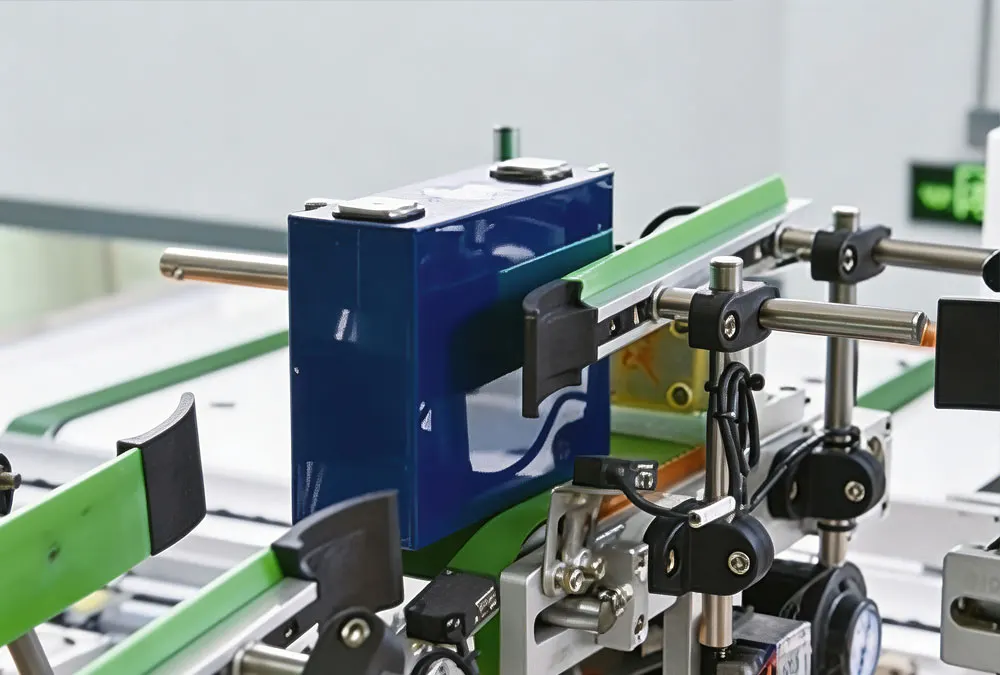
Picking the wrong partner among global electric tricycle battery manufacturers isn’t just a minor purchasing headache. It can trash your whole brand reputation in a few months. When you are buying lithium power systems for e-trikes, passenger tuk-tuks, or heavy cargo haulers, picking a factory isn’t about chasing the absolute lowest quotation. You have to look deep under the hood. Serious buyers evaluate actual cell chemistries, real BMS engineering, physical pack construction, factory testing setups, and long-term supply stability.
This guide breaks down exactly how to evaluate, verify, and select an electric tricycle battery manufacturer before you commit to large production orders.
Quick Manufacturer Evaluation Map
| What to Check | Why It Matters | Buyer Benefit & Impact |
|---|---|---|
| Cell Quality & Grading | Determines pack consistency and actual operational service life. | Prevents premature capacity fade and cuts warranty claims by up to 80%. |
| BMS Engineering | Controls protection parameters, thermal safety, and overall performance. | Protects hardware against short circuits and extreme load burnout. |
| PACK Construction | Affects physical safety, anti-vibration resistance, and waterproof reliability. | Ensures zero mechanical failures under rough, unpaved road conditions. |
| Testing Capability | Verifies actual continuous discharge currents and true rated capacity. | Eliminates power delivery disputes and guarantees advertised vehicle range. |
| OEM/ODM Customization | Offers flexibility for custom dimensions, communication protocols, and brackets. | Speeds up new vehicle integration without needing costly vehicle redesigns. |
| International Certifications | Supports compliance with target-market safety and shipping regulations. | Ensures smooth customs clearance and fully legal market entry. |
| Sample Validation | Reduces financial and technical risks before executing bulk orders. | Proves real-world vehicle matching before committing capital. |
What Can an Electric Tricycle Battery Manufacturer Provide?
When you reach out to professional electric tricycle battery manufacturers, you are looking for an integrated engineering partner, not a simple reseller. A true manufacturing facility provides complete energy delivery solutions customized for specific vehicle payloads, terrain demands, and operational duty cycles.
48V, 60V, 64V, and 72V Electric Tricycle Batteries
Voltage platforms directly dictate a vehicle’s torque delivery, hill-climbing capability, and top speed. Reliable electric tricycle battery manufacturers offer standard and custom voltage configurations matched to specific motor controllers.
| Voltage System | Typical Application | Motor Power Range | Buyer Benefit & Technical Advantage |
|---|---|---|---|
| 48V Systems | Light passenger rickshaws & short-range utility trikes | 500W – 1000W | Lower system cost, standardized components, easy retrofit for legacy lead-acid fleets. |
| 60V / 64V Systems | Standard urban cargo & express delivery tricycles | 1000W – 2000W | Balanced energy consumption and climbing torque, extending operational uptime per charge. |
| 72V Systems | Heavy-duty cargo trikes & high-speed passenger tuk-tuks | 2000W – 5000W+ | Maximum torque for steep inclines, lower amp draw at speed, reduced thermal stress on wiring. |
LiFePO4 and Other Lithium Battery Chemistries
Not all lithium cells behave the same under daily heavy-duty commercial cycling. Modern electric tricycle battery manufacturers evaluate chemistry trade-offs based on operating environments:
- Lithium Iron Phosphate (LiFePO4): The undisputed industry standard for commercial electric tricycles. It delivers 3,000 to 5,000 full charge cycles, exceptional thermal stability up to 60°C, and maximum chemical safety against thermal runaway.
- Nickel Manganese Cobalt (NMC): Higher energy density (Wh/kg) makes it lighter and more compact. However, it offers a lower cycle life (1,000–1,500 cycles) and requires much tighter thermal management controls.
- Sodium-ion (Na-Ion): An emerging alternative chemistry with excellent low-temperature performance (-20°C retention) and lower raw material costs, making it ideal for budget-conscious cold-climate markets.
Different Battery Capacities and Energy Levels
Battery capacity measured in Ampere-hours (Ah) multiplied by system voltage gives total energy in Watt-hours (Wh). Commercial e-trikes typically run between 30Ah to 150Ah configurations. According to the Global EV Outlook Report by the International Energy Agency (IEA), commercial electric three-wheelers in high-density urban areas average daily mileage demands requiring energy capacities between 2.5 kWh and 7.2 kWh to maintain unbroken daily delivery shifts.
Battery Packs for Passenger, Cargo, and Delivery Tricycles
Application drives engineering design. Passenger tricycles require flat, under-seat battery footprints to maximize legroom. Freight cargo tricycles need reinforced steel enclosures that withstand continuous vibration and heavy loads up to 1,000 kg. Fast-paced delivery tricycles need quick-swap modular battery packs with heavy-duty connectors.
Standard Battery Packs vs. Custom Battery Packs
Standard off-the-shelf battery packs use fixed dimensions and generic connectors, reducing initial development time. Custom battery packs, on the other hand, let OEM manufacturers design custom enclosures, bracket mounts, smart CANbus/RS485 communication setups, and specific discharge curves matched precisely to custom motor controllers.
Electric Tricycle Battery Manufacturer vs. Supplier: What’s the Difference?
Many buyers searching for electric tricycle battery manufacturers accidentally sign contracts with trading companies or middleman suppliers. Understanding this distinction saves your business from unexpected delays, unexplained price hikes, and poor technical support.
What Is a Battery Manufacturer?
A real battery manufacturer owns physical assembly lines, automatic laser welding machinery, aging test bays, cell-matching equipment, and an in-house R&D engineering team. They build the battery pack from bare cells, BMS hardware, and sheet metal or ABS enclosures.
What Is a Battery Supplier or Trading Company?
A supplier or trading company buys finished battery packs from real factories and resells them with a markup. They do not own production machinery, cannot alter BMS firmware, and must rely on external factories to answer any technical questions or handle warranty claims.
Why the Difference Matters for OEM Projects
When you run an OEM vehicle project, motor profiles change, dimensional constraints shift, and custom communication protocols become necessary. A trading company acts as a communication bottleneck, leading to costly errors. Working directly with real electric tricycle battery manufacturers gives you direct access to hardware engineers who can adapt BMS logic, redesign busbars, and solve field issues in real time.
The 5-Point Factory Verification Test
Before sending a deposit, ask the vendor to complete these 5 verification steps:
- Factory Business License & Address Audit: Verify that the company’s registered business scope explicitly includes “battery pack manufacturing and assembly” rather than just “wholesale trading.”
- Live Video Walkthrough of Equipment: Request a live call showing active automated cell sorters, laser welding stations, and aging test cabinets in operation.
- Direct Engineering Team Review: Ask to speak directly with the BMS software or hardware engineer responsible for your project layout.
- In-House Testing Laboratory Inspection: Confirm they have actual vibration test benches, thermal chambers, and high-current discharge load testers on site.
- Traceable Batch Production Samples: Verify that sample packs carry laser-etched serial numbers linking back to cell batch grading logs.
Not Sure What Battery Specification Your Tricycle Needs?
Send us your motor power, controller voltage, required driving range, and battery compartment dimensions for an engineering evaluation.
What Technical Capabilities Should an Electric Tricycle Battery Manufacturer Have?
Engineering expertise sets top-tier electric tricycle battery manufacturers apart from low-quality assembly shops. Building a safe battery pack requires rigorous control across five core manufacturing stages.
Battery Cell Selection and Matching
A battery pack is only as strong as its weakest cell. Top-tier electric tricycle battery manufacturers use automated sorting machines to grade Grade-A cells within strict tolerances:
- Capacity variance: ≤ ±0.5%
- Internal resistance (AC IR) variance: ≤ ±0.3 mΩ
- Voltage delta: ≤ ±2 mV
According to testing protocols in the IEEE 1625 Standard for Rechargeable Batteries for Portable Computing, tight cell matching prevents active cell drift during deep discharge cycles, stopping premature capacity drop across the whole pack.
Battery PACK Design and Assembly
Physical pack construction dictates how well a battery withstands severe road shock. High-quality designs use cell holders made of fire-retardant ABS/PC materials (UL94-V0 rated) to prevent short circuits caused by vibration. Copper-nickel composite busbars lower internal resistance, while IP65 or IP67 sheet metal enclosures keep out water, dust, and road debris.
Spot Welding vs. Laser Welding
Welding quality directly impacts pack longevity and electrical safety:
| Welding Method | Technical Process | Mechanical Strength | Buyer Benefit & Suitability |
|---|---|---|---|
| Manual Resistance Spot Welding | Pressure-based electrical pulse through thin nickel strips. | Moderate weld joint strength; higher human error potential. | Lower cost for small batches; best suited for light-duty low-current applications. |
| Automated CNC Laser Welding | High-energy laser beam creating deep-penetration copper joints. | Exceptional strength; virtually zero joint resistance or risk of cracking. | Handles high continuous current without thermal buildup; eliminates failure from road vibration. |
BMS Design and Programming
The Battery Management System (BMS) acts as the brain of your energy pack. Advanced electric tricycle battery manufacturers design custom hardware and write tailored firmware to manage:
- Overcharge and over-discharge voltage thresholds.
- Multi-stage overcurrent protection during steep hill climbs.
- Short-circuit cutoff in under 200 microseconds.
- NTC thermistor temperature sensing with high-temp charge inhibition.
- Active balancing to equalize cell voltages across cycles.
- Accurate State of Charge (SOC) tracking for reliable dashboard meters.
Battery Engineering and Electrical Matching
A battery never operates in isolation. It works inside an interconnected drive ecosystem:
Capable manufacturers review your motor power curves, controller current limits, and charger profiles to ensure smooth power delivery without triggering false BMS shutoffs during acceleration peaks.
Prototype Development and Design Validation
Leading manufacturers follow structured B2B production milestones: Engineering CAD Drafting → 3D Prototyping → Sample Testing → Pilot Batch Assembly → Scaled Mass Production.
How to Evaluate Electric Tricycle Battery Quality
High-grade battery manufacturing leaves a clear paper trail of evidence. Here is how you can systematically verify pack quality.
The Battery Quality Evidence Chain
Insist on full quality documentation at every stage of assembly:
Incoming Cell Inspection → Automated Capacity Grading → BMS Function Calibration → Automated Laser Weld Inspection → Full Cycle Aging Test → Final Quality Control (FQC) Sign-off
Battery Cell Quality and Consistency
Request cell manufacturer datasheets and batch testing logs. Reputable factories use cells from tier-1 brands (like CATL, EVE, BYD, or Ganfeng) or premium-grade original A-level cells with verifiable QR codes.
Rated Capacity vs. Actual Capacity
Cheap suppliers often inflate nominal capacity numbers on paper. A 60Ah battery pack should deliver a full 60Ah under a standardized 0.5C discharge rate test. Always request automated discharge test graphs before approving production.
Continuous and Peak Discharge Current
A cargo e-trike hauling 800 kg uphill draws heavy burst currents. If a battery is rated for 50A continuous draw but experiences a 150A peak spike, the BMS must support that burst for at least 10 to 30 seconds without tripping heat protection limits or dropping system voltage.
Battery Aging and End-of-Line Testing
Professional electric tricycle battery manufacturers subject 100% of finished battery packs to full charge-discharge aging cycles before packing. This end-of-line test exposes early component defects, bad welds, or malfunctioning BMS sensors before packs ship to customers.
What Certifications and Documents Should an Electric Tricycle Battery Manufacturer Provide?
Without proper regulatory approvals and shipping paperwork, your battery shipment can be held at customs or rejected by transport carriers. Compliance rules depend on your target market and battery design.
UN38.3 and Battery Transportation Requirements
UN38.3 certification is mandatory for shipping lithium batteries internationally by air or sea. According to the United Nations Manual of Tests and Criteria (Section 38.3), battery packs must pass eight rigorous safety tests:
MSDS and Safety Documentation
A complete Material Safety Data Sheet (MSDS) detailing chemical hazards, fire suppression steps, and transport classifications (Class 9 Dangerous Goods) is required for air freight booking and ocean carrier approval.
CE and Market-Specific Requirements
European distribution requires CE marking, EN IEC 61000-6-1/3 EMC compatibility certifications, and RoHS hazardous substance compliance. North American markets often prefer UL2271 certification for batteries used in light electric vehicles.
What Can You Customize With an Electric Tricycle Battery Manufacturer?
Customization transforms a generic power pack into a tailored energy solution that integrates cleanly into your vehicle frame.
| Custom Area | Technical Parameters Available | Buyer Advantage |
|---|---|---|
| Voltage & Capacity | Custom configurations from 36V to 96V; 20Ah to 200Ah+ energy capacity. | Matches your exact speed, torque, and mileage goals. |
| Dimensions & Casing | Custom metal enclosures, rubber shock mounts, specialized bracket hole layouts. | Fits tight frame footprints without wasting battery space. |
| Connectors & Wiring | Anderson plugs, Chogori waterproof connectors, Rema industrial connectors. | Ensures simple plug-and-play assembly on your production line. |
| Communication Protocols | CANbus 2.0B, RS485, Bluetooth app monitoring, IoT GPS telemetry integration. | Enables real-time fleet management and remote diagnostic reporting. |
| Branding & OEM Packaging | Custom silk-screened logos, serialized brand labels, customized user guides. | Strengthens brand equity and professional market presence. |
How to Match a Battery With an Electric Tricycle
Selecting a battery without reviewing the rest of the vehicle powertrain often leads to premature BMS cutoffs or sluggish acceleration.
The 6-Point Vehicle Compatibility Model
- Voltage Level Matching: Match pack nominal voltage directly to the motor controller specification (e.g., 60V battery to 60V controller).
- Continuous Discharge Matching: Ensure the battery BMS continuous discharge rating matches or exceeds the controller’s maximum continuous input current.
- Peak Current Burst Duration: Confirm the BMS peak overcurrent delay accommodates maximum motor stall torque during hill starts.
- Charger Profile Matching: Use specialized LiFePO4 chargers set to CC/CV (Constant Current/Constant Voltage) curves to avoid overcharging cells.
- Mechanical & Thermal Fit: Allow 5–10 mm clearance around the battery box for thermal dissipation and rubber anti-vibration padding.
- Signal Communication Compatibility: Match CAN/RS485 baud rates and pinouts so the vehicle dashboard displays accurate SOC and error codes.
Why Do Electric Tricycle Battery Prices Vary Between Manufacturers?
When comparing quotes from various electric tricycle battery manufacturers, price spreads of 20% to 40% are common. Looking past the headline price tag reveals clear quality differences:
- Cell Grade & Origin: Genuine Grade-A new cells cost 25% to 35% more than B-grade or recycled/second-life cells, but deliver double the cycle life.
- BMS Component Quality: Premium smart BMS boards with MOSFET thermal management, low internal resistance, and active balancing cost significantly more than basic analog protection boards.
- Construction Materials: Automated laser-welded copper busbars inside IP67 steel boxes carry higher material costs than spot-welded thin nickel strips in shrink-wrapped PVC sleeves.
- Testing & Compliance Costs: Carrying complete UN38.3, MSDS, and CE certifications requires continuous laboratory testing fees.
Why Should You Test a Battery Sample Before Bulk Ordering?
Placing a full container order without testing prototype samples introduces massive commercial risk. Real-world validation lets you verify performance before committing capital:
1. Capacity Verification
Run a complete load test to confirm actual discharge Amp-hours match nominal datasheet ratings.
2. Thermal Performance
Monitor temperature rise across busbars and cells under maximum continuous current draw.
3. On-Vehicle Road Tests
Install the sample pack into an e-trike frame to test real-world hill climbing, shock resistance, and charger behavior.
What Should You Ask an Electric Tricycle Battery Manufacturer Before Ordering?
Use this RFQ (Request for Quotation) checklist during supplier discussions to evaluate commercial capabilities:
- What is your minimum order quantity (MOQ) for custom battery builds?
- What is the lead time for prototype samples versus mass production orders?
- What warranty terms do you offer, and how are replacement claims handled?
- Do you provide cell traceability data logs for every production batch?
- Can you customize BMS communication settings to match our vehicle’s dashboard?
The 7-Point Electric Tricycle Battery Manufacturer Evaluation Model
Use this original scoring framework to objectively grade prospective electric tricycle battery manufacturers:
| Evaluation Area | Key Verification Question | Score (0 = No, 1 = Basic, 2 = Proven) |
|---|---|---|
| 1. Engineering Depth | Do they have an in-house engineering team that designs custom BMS and 3D enclosures? | 0 / 1 / 2 |
| 2. Cell Quality Control | Do they source new Grade-A cells with batch testing and sorting logs? | 0 / 1 / 2 |
| 3. Assembly Technology | Do they utilize automated laser welding equipment and fire-retardant cell holders? | 0 / 1 / 2 |
| 4. Testing Equipment | Do they run 100% full-cycle automated aging tests on finished packs on-site? | 0 / 1 / 2 |
| 5. Compliance Paperwork | Do they hold real UN38.3, MSDS, and relevant CE safety test reports? | 0 / 1 / 2 |
| 6. Customization Capabilities | Can they customize voltage, dimensions, wire harnesses, and communication protocols? | 0 / 1 / 2 |
| 7. Factory Transparency | Will they allow factory audits, live video calls, and direct engineer access? | 0 / 1 / 2 |
Scoring Interpretation:
- 11 – 14 Points: Qualified OEM Manufacturer. Excellent candidate for long-term supply partnerships.
- 7 – 10 Points: Basic Assembly Shop. Requires tighter quality control supervision and sample validation.
- Below 7 Points: High Risk. Request full technical evidence before placing any orders.
Choosing a Battery Manufacturer for Different Electric Tricycle Applications
Different electric tricycle applications require specialized battery engineering priorities:
Passenger Electric Tricycles
Passenger tuk-tuks require compact, low-profile battery packs that fit cleanly under passenger seating. Priorities include high thermal safety, silent passive cooling, and consistent voltage delivery to ensure smooth passenger comfort.
Electric Cargo Tricycles
Cargo tricycles carrying heavy loads demand high continuous power draw and reinforced mechanical casings. When selecting an electric cargo tricycle battery manufacturer, check that their BMS supports high current output without shutting down on steep hills.
Delivery Tricycles
Fast-paced urban delivery fleets require fast-charging capabilities (1C to 2C charge rates) or swappable modular battery pack enclosures designed for thousands of quick disconnect cycles.
Have Your Battery Specifications Ready?
Send us your required voltage, Amp-hours, dimensions, connectors, and target order quantity for a factory-direct price quotation.
Electric Tricycle Battery Manufacturer Buying Checklist
Keep this quick checklist handy when reviewing technical datasheets and supplier proposals:
Technical & Electrical Setup
- ☐ Nominal Voltage (48V, 60V, 64V, or 72V) verified against controller.
- ☐ Total Capacity (Ah) and Energy (Wh) match required driving range.
- ☐ Continuous and peak discharge currents handle maximum motor torque.
Mechanical & Environmental Protection
- ☐ Battery pack dimensions fit inside vehicle chassis compartment.
- ☐ Enclosure carries an IP65 or IP67 waterproof ingress rating.
- ☐ Heavy-duty, vibration-dampened anti-shock mounting brackets included.
BMS & Safety Compliance
- ☐ Smart BMS includes overcharge, over-discharge, thermal, and short-circuit protections.
- ☐ Communication protocols (CANbus/RS485) match vehicle display meter.
- ☐ Valid UN38.3, MSDS, and CE test certifications provided.
Electric Tricycle Battery Manufacturer FAQ
What is the main difference between a battery manufacturer and a supplier?
A real manufacturer owns assembly facilities, automated welding tools, and testing labs to build packs directly. Resellers buy finished packs from third-party factories, making custom modifications difficult and adding markup costs.
Can manufacturers customize 48V, 60V, 64V, and 72V battery systems?
Yes. Experienced electric tricycle battery manufacturers engineer custom voltage levels, Amp-hour capacities, metal casing shapes, wire lengths, and BMS settings to fit your exact vehicle design.
Can an electric tricycle battery manufacturer provide OEM services?
Yes. OEM services include custom battery casings, private brand labeling, custom wire looms, tailored communication protocols, and unique outer packaging built to your specifications.
How do I verify a battery factory’s true technical capabilities?
Request a live video tour of their cell-sorting machines, laser welding lines, and automated aging test racks. You should also request recent UN38.3 test reports and speak directly with their engineering team.
Should I test a battery sample before placing a bulk order?
Always. Testing prototype samples lets you verify actual battery capacity, real-world discharge rates, charger compatibility, and physical fit inside your tricycle frame before committing capital.
How do I compare quotations from different battery manufacturers?
Compare actual component details, not just nominal voltage and price. Look closely at cell grade (A vs. B), BMS feature sets, welding techniques (laser vs. spot), casing IP ratings, and shipping test documentation.
Looking for a Reliable Electric Tricycle Battery Manufacturer?
We build high-performance LiFePO4 battery solutions for 48V, 60V, 64V, and 72V electric tricycles, passenger rickshaws, and heavy cargo haulers. Get Grade-A cells, smart BMS protection, custom metal cases, and full OEM support backed by complete UN38.3 and MSDS shipping certifications.
Related Posts
 https://anengjibattery.com/wp-content/uploads/2026/10/AnengjiBattery-Cell-to-Pack-Energy-Density-Comparison.webp
675
1000
Battery Expert Team
https://anengjibattery.com/wp-content/uploads/2025/06/logo2-300x138.png
Battery Expert Team2026-10-23 06:58:392026-10-23 06:58:41What Does Lithium-Ion Battery Energy Density Really Mean?
https://anengjibattery.com/wp-content/uploads/2026/10/AnengjiBattery-Cell-to-Pack-Energy-Density-Comparison.webp
675
1000
Battery Expert Team
https://anengjibattery.com/wp-content/uploads/2025/06/logo2-300x138.png
Battery Expert Team2026-10-23 06:58:392026-10-23 06:58:41What Does Lithium-Ion Battery Energy Density Really Mean? https://anengjibattery.com/wp-content/uploads/2026/10/AnengjiBattery-Lithium-Battery-Management-in-Daily-Operation.webp
675
1000
Battery Expert Team
https://anengjibattery.com/wp-content/uploads/2025/06/logo2-300x138.png
Battery Expert Team2026-10-22 08:17:332026-10-23 06:58:57How Does a Lithium BMS Improve Battery Longevity?
https://anengjibattery.com/wp-content/uploads/2026/10/AnengjiBattery-Lithium-Battery-Management-in-Daily-Operation.webp
675
1000
Battery Expert Team
https://anengjibattery.com/wp-content/uploads/2025/06/logo2-300x138.png
Battery Expert Team2026-10-22 08:17:332026-10-23 06:58:57How Does a Lithium BMS Improve Battery Longevity? https://anengjibattery.com/wp-content/uploads/2026/10/AnengjiBattery-Industrial-Power-Under-Real-Load.webp
675
1000
Battery Expert Team
https://anengjibattery.com/wp-content/uploads/2025/06/logo2-300x138.png
Battery Expert Team2026-10-22 07:04:542026-10-22 07:05:30How Does a 48V LiFePO4 BMS Protect Industrial Power?
https://anengjibattery.com/wp-content/uploads/2026/10/AnengjiBattery-Industrial-Power-Under-Real-Load.webp
675
1000
Battery Expert Team
https://anengjibattery.com/wp-content/uploads/2025/06/logo2-300x138.png
Battery Expert Team2026-10-22 07:04:542026-10-22 07:05:30How Does a 48V LiFePO4 BMS Protect Industrial Power? https://anengjibattery.com/wp-content/uploads/2026/10/AnengJIBattery-Electric-Forklift-Battery-Buying-Decision.webp
675
1000
Battery Expert Team
https://anengjibattery.com/wp-content/uploads/2025/06/logo2-300x138.png
Battery Expert Team2026-10-21 06:22:222026-10-21 06:22:38Ready to Buy Battery for Electric Forklift? Use This Guide
https://anengjibattery.com/wp-content/uploads/2026/10/AnengJIBattery-Electric-Forklift-Battery-Buying-Decision.webp
675
1000
Battery Expert Team
https://anengjibattery.com/wp-content/uploads/2025/06/logo2-300x138.png
Battery Expert Team2026-10-21 06:22:222026-10-21 06:22:38Ready to Buy Battery for Electric Forklift? Use This Guide


Leave a Reply
Want to join the discussion?Feel free to contribute!