
How to Choose the Right Forklift Battery: A Practical Selection Guide
September 20, 2026 / Battery Expert Team / Battery Basics
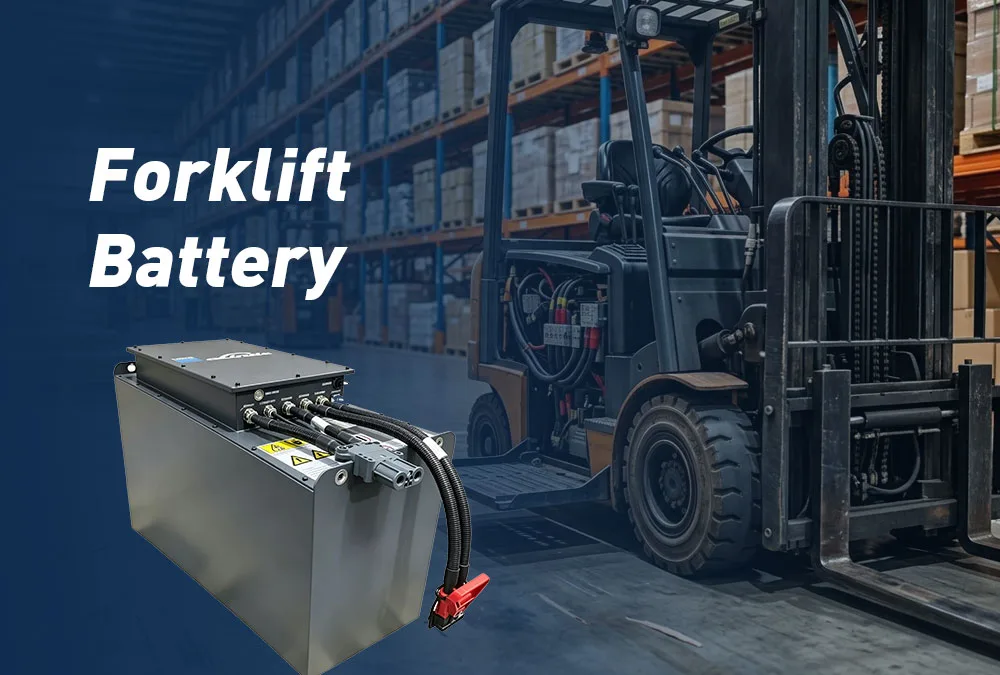
Quick Answer: Choosing the right forklift battery comes down to matching truck voltage (24V–80V), fitting exact compartment dimensions, and meeting the frame’s minimum ballast weight. For single-shift ops with high downtime, traditional lead-acid keeps upfront costs low. But for high-utilization or multi-shift warehouses, switching to a high-density lithium-ion (LiFePO4) pack like a 51.2V 277Ah or 76.8V 412Ah system cuts long-term energy loss, enables 1-hour fast opportunity charging, and drops total cost of ownership by avoiding mid-shift battery swaps.
What Is the Right Forklift Battery for Your Operation?
Every warehouse runs on its own rhythm. Toyota Material Handling’s latest energy deployment guidelines emphasize that charging strategy should stem from actual utilization, energy draw, and break intervals rather than nameplate Ah numbers alone.
| Your Operating Condition | What to Prioritize | Impact on Operational Value |
|---|---|---|
| Single-shift operation | Battery capacity + conventional charging | Lowers initial capital outlay while allowing full 8-hour overnight recharge cycles. |
| Two-shift operation | Capacity + opportunity charging | Eliminates extra battery rooms by topping up during lunch breaks. |
| Three-shift / high utilization | Energy availability + fast charging | Removes hazardous battery swaps, keeping trucks active 24/7. |
| Cold storage (-20°C to 0°C) | Low-temperature charging / thermal management | Prevents voltage drops and freezing damage inside freezer vaults. |
| Heavy loads / continuous lifting | Discharge capability + capacity | Sustains hydraulic pump power without thermal throttling during peak lift. |
| Lead-acid replacement | Voltage + weight + charger + compatibility | Upgrades truck efficiency without altering counterweight or chassis dynamics. |
| Custom / OEM forklift build | Compartment dimensions + BMS + CAN bus | Ensures seamless dashboard comms and optimized spatial fit. |
What Should You Know Before Choosing a Forklift Battery?
It’s frustrating when a newly bought unit doesn’t slide into the tray or trips the controller. Before ordering, ground your search in physical and electrical facts.
Start With Your Forklift Model and Existing Battery Specification
Never guess ratings based on generic online datasheets. Grab a flashlight, inspect the current setup, and log these seven details:
- Forklift model & series: Identifies motor controllers and space limits.
- Existing battery voltage: Confirm system nominal ratings (e.g., 24V, 36V, 48V, 80V).
- Existing Ah rating: Establishes baseline shift energy requirements.
- Battery compartment dimensions: Measure length, width, and height in millimeters.
- Battery ballast weight: Check minimum weight specs on the truck plate.
- Charger specifications: Match output profile, connector type, and AC supply line.
- Connector & cable length: Note SB175, SB350, or REMA plugs and lead orientation.
Unsure about your exact battery specs?
Define Your Load, Working Hours, and Duty Cycle
Rated capacity tells only part of the story. A warehouse lifting 2.5-ton paper rolls constantly exhausts power faster than a warehouse moving pallets of insulation. Track rated load, average lifted load, peak draw, hydraulic pump usage frequency, travel speeds, and actual key-on working hours per day. High-intensity runs pull higher continuous amp draws, generating heat that drains usable amp-hours faster.
Determine Your Shift Pattern and Charging Opportunities
Are your operators running single-shift days, or double and triple shifts? Can you plug in during 15-minute coffee breaks, lunch hours, and shift handovers? Knowing your downtime windows shows whether slow overnight charges work or if you need fast-charging packs to eliminate extra battery changing equipment.
What Types of Forklift Batteries Can You Choose From?
Selecting industrial energy systems requires matching chemistry to operational demands. Here is how the three main options compare on the shop floor.
Lead-Acid Forklift Batteries
Flooded wet-cell units remain a lower-cost option upfront. However, they follow the rigid “8-8-8 rule”: 8 hours of work, 8 hours of charge, and 8 hours of cooldown. They need regular distilled water top-offs, weekly equalizing charges, and dedicated ventilated charging rooms to handle off-gassed hydrogen. Spilled acid can corrode chassis compartments if neglected.
Gel Forklift Batteries
Gel batteries immobilize electrolyte in a silica paste, sealing the casing to eliminate water maintenance and acid spills. They work well in clean environments like pharmaceutical or food processing sites. Their main trade-off is lower peak discharge currents and slower charging profiles, making them sensitive to fast-charge thermal overload.
Lithium-Ion and LiFePO4 Forklift Batteries
Lithium Iron Phosphate (LiFePO4) chemistry has transformed warehouse logistics. According to a 2026 industrial energy report, LiFePO4 packs deliver 95% to 98% round-trip energy efficiency compared to 80% for lead-acid. They support fast opportunity charging without memory effects, eliminate weekly maintenance, and use an integrated Battery Management System (BMS) to handle cell balancing, temperature control, and CAN bus integration. Crown Equipment’s V-Force system data shows integrated lithium units accept high charge rates during standard break times, letting one pack run across multi-shift operations without battery swaps.
How Do You Choose Between Lithium-Ion and Lead-Acid Forklift Batteries?
Buyer’s remorse often stems from focusing solely on the purchase order price tag while ignoring total cost of ownership (TCO).
Key Differences in Charging, Maintenance, and Daily Operation
Lead-acid units lose efficiency as they drain, causing hydraulic lifts to slow down near shift end. LiFePO4 packs maintain stable voltage until fully depleted. Lithium charges in 1 to 2 hours with no cooldown phase, whereas lead-acid needs 8 hours plus 8 hours of rest. Lead-acid also requires regular watering, equalize charges, and spill cleanups—tasks that lithium eliminates entirely.
Buyer Note: “Will lithium mess up my truck’s balance?” Because lead-acid is heavy, counterbalanced forklifts rely on battery ballast weight. Upgrading to lighter lithium requires built-in steel weights to meet OEM specs and prevent tipping hazards.
Which Battery Fits Your Shift Structure?
For single-shift facilities running under 1,000 hours annually, lead-acid remains a practical budget option if staff handle maintenance reliably. For multi-shift operations, lithium usually pays off. Instead of buying 2 to 3 lead-acid packs per truck plus swapping cranes, one lithium battery runs around the clock with quick break-time charges.
Forklift Battery Operating Fit Table™
| Factor | Lead-Acid | Lithium-Ion (LiFePO4) | Operational Advantage for Buyers |
|---|---|---|---|
| Upfront Cost | Lower initial price | 1.5x–2.5x higher | Lead-acid preserves upfront capital for low-utilization sites. |
| Maintenance | Water topping, equalization | Zero routine maintenance | Lithium saves labor hours and prevents acid damage expenses. |
| Opportunity Charging | Not recommended (causes heat) | Fully supported (1–2 hr full) | Lithium maximizes uptime by charging during regular breaks. |
| Battery Swapping | Required for multi-shift | Eliminated in 95% of sites | Lithium reduces safety risks and frees up floor storage space. |
| Cycle Life (80% DOD) | 1,000–1,500 cycles | 3,500–5,000+ cycles | Lithium lasts up to 10 years, outliving 2–3 lead-acid pack cycles. |
How to Choose the Right Forklift Battery Voltage
When analyzing how to choose the right forklift battery, matching nominal system voltage is non-negotiable. Mismatches can burn out motor controllers or cause thermal shutoffs.
Check the Forklift’s Original Battery Voltage First
Voltage is dictated by the truck’s drive motor and controller specs, not by desired runtime. Installing a 36V battery in a 24V system will destroy the electronics. Conversely, dropping a 24V pack into a 48V chassis leaves the machine underpowered and inoperable.
Common Forklift Battery Voltage Options
- 24V forklift battery: Fits end-riders, walkie stackers, and electric pallet jacks.
- 36V forklift battery: Standard for Class II reach trucks and narrow-aisle units.
- 48V forklift battery: Common in 3-wheel and 4-wheel sit-down counterbalanced trucks.
- 72V / 80V forklift battery: Designed for heavy industrial trucks, yard stackers, and high-capacity equipment.
What Happens If You Use the Wrong Voltage?
CAT Lift Trucks technical manuals highlight that 48V electric models link precise Ah ranges with strict ballast weights. Deviating from these specs risks over-volting the MOSFETs in motor controllers, triggering BMS low-voltage shutoffs under load, or throwing error codes on dashboard CAN displays.
How to Calculate the Right Forklift Battery Capacity
Calculating amp-hour requirements requires looking beyond basic plate ratings. Real-world continuous duty requires factoring in usable DoD depth.
Start With Energy or Amp-Hour Consumption
Use this formula to calculate required nominal Ah:
For lead-acid packs, the usable factor is 0.80 (to avoid damaging discharge levels). For LiFePO4 packs, you can safely use 0.90 to 0.95. Alternatively, calculate total energy draw in watt-hours:
Why Rated Ah Does Not Equal Actual Runtime
Peukert’s Law shows that fast lead-acid discharges reduce usable capacity. Discharging a lead-acid battery in 3 hours yields less usable energy than discharging it over 20 hours. LiFePO4 chemistry resists this effect, delivering stable voltage and usable amp-hours even during heavy hydraulic lifts.
Industrial Field Examples: Standardized Lithium Packs
Standard lithium pack sizes streamline fleet retrofits. A 51.2V 277Ah pack works well for medium-duty 48V sit-down models. High-turnover logistics hubs often upgrade to a 51.2V 412Ah system for longer runtimes. For heavy 72V/80V trucks, high-output options like 76.8V 280Ah or heavy-duty 76.8V 412Ah modules provide sustained power for intense lifting schedules.
How to Match Forklift Battery Capacity to Your Shift Pattern
Single-Shift Operations
If trucks run 5 to 7 hours daily with overnight downtime, standard capacity lead-acid or baseline lithium packs (like 24V or 48V mid-range Ah) handle the job smoothly without extra fast-charging infrastructure.
Two-Shift Operations
Running 16 hours daily requires choosing between two swapped lead-acid batteries or a single lithium pack charged during break windows. A 20-minute lithium top-up during morning, lunch, and afternoon breaks keeps the truck powered through both shifts without swapping batteries.
Three-Shift Operations
Around-the-clock operations require high energy availability. Lithium packs connected to high-output chargers deliver consistent power. Pairing high-capacity packs like a 51.2V 412Ah or 76.8V 412Ah with 0.5C–1C chargers keeps trucks running across all three shifts through short opportunity charges during shift handovers.
How Forklift Battery Charging Requirements Affect Your Choice
Conventional Charging vs. Opportunity Charging
Conventional charging restores power slowly over 8 hours to manage heat buildup. Opportunity charging taps into downtime—15 minutes during break, 30 minutes at lunch—to keep state-of-charge high. Lithium batteries excel at opportunity charging, absorbing high currents safely without cell breakdown.
Does a Lithium Forklift Battery Need a Different Charger?
Yes. Older lead-acid chargers lack the CC/CV (Constant Current / Constant Voltage) control and CAN bus communication protocols required for lithium. Connecting a lithium pack to an uncalibrated charger risks triggering BMS high-voltage shutoffs or undercharging the cells. Toyota’s technical guides emphasize using intelligent chargers equipped with Dynamic Power Limitation (DPL) to manage peak utility demand while enabling fast charging.
Why Forklift Battery Weight and Dimensions Matter
Physical compatibility involves more than just fitting inside the tray—it directly affects truck stability and safety.
Match the Forklift’s Battery Weight Requirements
On sit-down counterbalanced trucks, the battery acts as a counterweight. Installing a light pack without added ballast moves the center of gravity forward, creating severe tipping hazards when lifting full loads. Always check the forklift nameplate for minimum required battery weight.
Check Battery Dimensions and Compartment Fit
Measure the battery compartment’s length, width, and height down to the millimeter. Factor in cable exit points, lifting eyes, and tray handles to ensure the hood closes securely without pinching wires or blocking safety latches.
Forklift Battery Runtime Estimation Table
Actual runtime varies with load weight, floor slope, lift height, and driver behavior. The figures below provide baseline energy references.
Forklift Energy Capacity & Application Matrix™
| System Setup | Example Capacity | Nominal Energy (kWh) | Typical Equipment Direction | Operational Benefit |
|---|---|---|---|---|
| 24V System | 24V 400Ah | 9.6 kWh | Walkie stackers, end-riders | Sustains steady power for horizontal pallet transport. |
| 36V System | 36V 500Ah | 18.0 kWh | Narrow-aisle reach trucks | Powers high vertical lifts through tight racking aisles. |
| 48V System (Mid) | 51.2V 277Ah | 14.18 kWh | Class I sit-down 3-wheelers | Lightweight modular drop-in for standard indoor loading. |
| 48V System (High) | 51.2V 412Ah | 21.09 kWh | 4-wheel counterbalanced 2.5T | Delivers full-shift energy under heavy dock loading schedules. |
| 80V System (Mid) | 76.8V 280Ah | 21.50 kWh | Heavy industrial trucks 3.5T+ | Maintains fast lift speeds without drawing high motor currents. |
| 80V System (Heavy) | 76.8V 412Ah | 31.64 kWh | High-capacity outdoor/yard trucks | Sustains continuous heavy usage across multiple shifts. |
Note: Calculate runtime via: Runtime (hours) ≈ Total Usable Energy (Wh) ÷ Average Power Draw (W).
Forklift Battery Total Cost of Ownership: What Should You Compare?
Looking solely at invoice prices hides true operational expenses. Evaluating fleet power requires calculating the full lifecycle cost breakdown.
Forklift Battery TCO Model™ Formula:
TCO = Upfront Purchase + Energy Consumption + Maintenance Labor + Replacement Cycles + Swapping Downtime + Facility Infrastructure Costs
- Initial purchase cost: Lead-acid costs less up front; LiFePO4 carries a higher initial price tag.
- Energy cost: Lithium’s 95%+ charging efficiency cuts utility bills compared to lead-acid’s 80% profile.
- Maintenance labor: Eliminating watering, equalizing, and spill cleanups saves significant labor hours per truck annually.
- Battery replacement frequency: Lithium outlasts 2 to 3 lead-acid battery replacements over a 10-year span.
- Downtime labor: Avoiding mid-shift battery swaps restores 15 to 30 minutes of operator productivity every shift.
- Infrastructure footprint: Lithium frees up valuable floor space by eliminating dedicated battery changing rooms and eye-wash stations.
How to Extend Forklift Battery Life and Reduce Operating Costs
Proper battery management protects your investment and extends service life, regardless of chemistry.
- Avoid deep discharges: Stop operating when lead-acid reaches 20% SOC; for lithium, prevent BMS low-voltage cutoffs.
- Follow charging schedules: Complete full charge and cooldown cycles for lead-acid; use break-time opportunity charging for lithium.
- Maintain water levels: Top up lead-acid cells with distilled water only after charging to prevent acid overflow.
- Track BMS diagnostics: Monitor state-of-charge, fault codes, and cell temperature trends using smart BMS displays.
Can You Replace a Lead-Acid Forklift Battery With Lithium?
Upgrading older trucks to lithium is straightforward if you check five key factors first:
- Voltage alignment: Ensure nominal voltages match original truck specifications.
- Charger compatibility: Upgrade to a lithium-compatible CC/CV high-frequency charger.
- Chassis ballast weight: Verify the battery box includes steel ballast plates to meet minimum weight specs.
- Physical tray fit: Measure compartment dimensions to confirm precise tray fit.
- BMS and CAN bus handshake: Confirm dashboard display compatibility or use an external BMS status screen.
Why LiFePO4 Is an Alternative to Traditional Lead-Acid Forklift Batteries
Lithium Iron Phosphate (LiFePO4) stands out as the safest lithium chemistry for material handling. Unlike NMC options, LiFePO4 offers superior thermal stability, resisting thermal runaway even under accidental punctures or high operating temperatures. It provides high cycle life, supports fast opportunity charging, and operates cleanly without acid fumes or gas emissions.
Forklift Battery Certification and Compatibility
Ensure compliance by checking safety and transport certifications before purchasing:
- UL 2580 / UL 1583: Validates electrical and safety compliance for industrial batteries.
- UN 38.3: Certifies lithium packs for safe transport and shipping.
- CE / IEC 62619: Confirms battery safety for industrial European and international deployments.
How to Choose the Right Forklift Battery for Different Applications
- Warehouses & 3PL logistics: Focus on fast opportunity charging to keep trucks moving through fast-paced operations.
- Cold storage & food processing: Select lithium packs with built-in thermal heating elements to charge safely inside freezer vaults down to -20°C.
- Manufacturing facilities: Prioritize zero maintenance and clean operation to prevent acid vapor contamination around sensitive production lines.
Forklift Battery Buying Checklist
Forklift Battery 12-Point Selection Checklist™
[ ] 2. Calculated required amp-hours (Ah) based on actual duty cycles
[ ] 3. Measured exact battery compartment dimensions (L × W × H mm)
[ ] 4. Verified truck minimum ballast weight requirement
[ ] 5. Assessed shift patterns (1, 2, or 3 shifts per day)
[ ] 6. Evaluated opportunity charging break windows
[ ] 7. Checked charger AC power supply and connector types (e.g., SB350)
[ ] 8. Confirmed ambient operating temperature range (cold storage requirements)
[ ] 9. Selected optimal battery chemistry (Lead-Acid vs. LiFePO4)
[ ] 10. Checked CAN bus protocol handshake compatibility with truck display
[ ] 11. Verified safety certifications (UL, UN 38.3, CE)
[ ] 12. Calculated Total Cost of Ownership (TCO) across projected service lifespan
When Should You Choose a Custom Forklift Battery?
Standard off-the-shelf battery trays don’t fit every application. Custom solutions make sense when retrofitting rare imported trucks, outfitting specialized OEM equipment, or building custom counterweights for heavy attachments.
Need a Custom LiFePO4 Forklift Battery?
Skip the guesswork. Our application engineers can build drop-in industrial LiFePO4 solutions tailored to your exact forklift chassis, weight limits, and shift requirements.
Forklift Battery Selection FAQ
How do I choose the right forklift battery?
Start by matching your forklift’s required voltage, measuring compartment dimensions, checking minimum battery ballast weight, and choosing between lead-acid or lithium based on your daily shift structure and charging windows.
What voltage forklift battery do I need?
Your truck’s motor and electrical controller determine system voltage. Common setups include 24V for pallet jacks, 36V for reach trucks, 48V for standard sit-down forklifts, and 80V for heavy industrial trucks.
How do I calculate forklift battery capacity?
Multiply average motor current draw (amps) by target operating hours, then divide by usable depth of discharge (0.80 for lead-acid, 0.90 for lithium) to find required nominal Ah.
Is lithium better than lead-acid for forklifts?
Lithium delivers higher energy efficiency, supports fast opportunity charging, eliminates daily watering maintenance, and lasts 3 to 4 times longer. However, lead-acid remains a lower upfront cost option for single-shift, low-hour operations.
Can I replace a lead-acid forklift battery with LiFePO4?
Yes. You must match system voltage, install a compatible lithium charger, ensure the battery box includes ballast steel to meet minimum weight requirements, and verify tray dimensions.
Do I need a new charger for a lithium forklift battery?
Yes. Lithium batteries require intelligent CC/CV high-frequency chargers that communicate directly with the BMS to manage charging safely and prevent cell damage.
Does forklift battery weight matter?
Yes. On sit-down counterbalanced forklifts, battery weight serves as a counterweight to prevent tip-overs during heavy lifts. Replacement packs must meet the minimum weight listed on the truck nameplate.
How long does a forklift battery last?
Lead-acid batteries typically last 1,000 to 1,500 cycles (about 3 to 5 years), while high-quality LiFePO4 packs achieve 3,500 to 5,000+ cycles (around 8 to 10+ years).
What forklift battery is suitable for multi-shift operations?
Lithium-ion (LiFePO4) batteries are ideal for multi-shift applications. They accept fast opportunity charging during break times, allowing a single battery to power continuous shifts without mid-day swaps.
Related Posts
 https://anengjibattery.com/wp-content/uploads/2026/09/anengjiBattery-How-to-Choose-the-Right-Forklift-Battery-A-Practical-Selection-Guide.webp
675
1000
Battery Expert Team
https://anengjibattery.com/wp-content/uploads/2025/06/logo2-300x138.png
Battery Expert Team2026-09-20 07:31:262026-09-20 07:31:41How to Choose the Right Forklift Battery: A Practical Selection Guide
https://anengjibattery.com/wp-content/uploads/2026/09/anengjiBattery-How-to-Choose-the-Right-Forklift-Battery-A-Practical-Selection-Guide.webp
675
1000
Battery Expert Team
https://anengjibattery.com/wp-content/uploads/2025/06/logo2-300x138.png
Battery Expert Team2026-09-20 07:31:262026-09-20 07:31:41How to Choose the Right Forklift Battery: A Practical Selection Guide https://anengjibattery.com/wp-content/uploads/2026/09/AnengJIBattery-Best-LiFePO4-Battery-How-to-Choose-the-Right-One.webp
675
1000
Battery Expert Team
https://anengjibattery.com/wp-content/uploads/2025/06/logo2-300x138.png
Battery Expert Team2026-09-17 08:52:142026-09-18 09:19:29How to Choose the Best LiFePO4 Battery
https://anengjibattery.com/wp-content/uploads/2026/09/AnengJIBattery-Best-LiFePO4-Battery-How-to-Choose-the-Right-One.webp
675
1000
Battery Expert Team
https://anengjibattery.com/wp-content/uploads/2025/06/logo2-300x138.png
Battery Expert Team2026-09-17 08:52:142026-09-18 09:19:29How to Choose the Best LiFePO4 Battery https://anengjibattery.com/wp-content/uploads/2026/09/anengjiBattery-lifepo4-battery-cell-packaging-wholesale.webp
675
1000
Battery Expert Team
https://anengjibattery.com/wp-content/uploads/2025/06/logo2-300x138.png
Battery Expert Team2026-09-16 09:52:342026-09-18 09:20:12LiFePO4 Battery Wholesale Guide: Best Suppliers in Spain
https://anengjibattery.com/wp-content/uploads/2026/09/anengjiBattery-lifepo4-battery-cell-packaging-wholesale.webp
675
1000
Battery Expert Team
https://anengjibattery.com/wp-content/uploads/2025/06/logo2-300x138.png
Battery Expert Team2026-09-16 09:52:342026-09-18 09:20:12LiFePO4 Battery Wholesale Guide: Best Suppliers in Spain https://anengjibattery.com/wp-content/uploads/2026/09/anengjibattery-Top-Lithium-Ion-Battery-Producers-for-Spain-Market-Growth.webp
675
1000
Battery Expert Team
https://anengjibattery.com/wp-content/uploads/2025/06/logo2-300x138.png
Battery Expert Team2026-09-16 01:13:392026-09-16 01:14:05Top Lithium Ion Battery Producers for Spain’s Market Growth
https://anengjibattery.com/wp-content/uploads/2026/09/anengjibattery-Top-Lithium-Ion-Battery-Producers-for-Spain-Market-Growth.webp
675
1000
Battery Expert Team
https://anengjibattery.com/wp-content/uploads/2025/06/logo2-300x138.png
Battery Expert Team2026-09-16 01:13:392026-09-16 01:14:05Top Lithium Ion Battery Producers for Spain’s Market Growth


Leave a Reply
Want to join the discussion?Feel free to contribute!