
48V Lithium Ion Battery Guide: Industrial Fleet Optimization
July 16, 2026 / Battery Expert Team / Battery Basics
Introduction
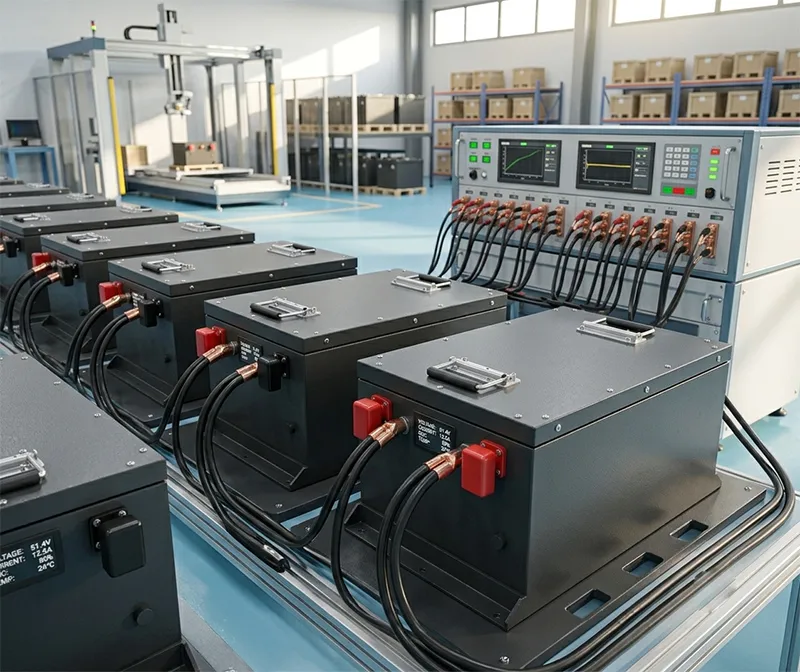
Upgrading your industrial fleet power can feel incredibly frustrating. You look at old lead-acid setups and deal with constant power drop-offs. If you want a real fix, switching to a high-performance 48v lithium ion battery is the single most effective move you can make. This transition eliminates heavy maintenance and voltage sag under load. However, navigating different cell chemistries, BMS configurations, and manufacturer claims gets confusing quickly. This engineering guide breaks down the core physics, actual costs, and safety integration factors. We will help you select the exact power system your heavy equipment requires.
Buyer’s Reality Check: “Why do some vendors say 48V while others specify 51.2V?”
They are describing the exact same system class. A standard 16S LFP chemistry build has a nominal cell voltage of 3.2V. Multiply 16 cells by 3.2V and you get exactly 51.2V. It is simply a more accurate engineering term for a standard commercial 48-volt setup.
What Is a 48V Lithium Ion Battery? | Understanding Lithium Iron Phosphate Battery Technology
What Is a 48V Lithium Ion Battery?
A 48v lithium ion battery is an advanced energy pack. It delivers stable power for medium-duty industrial machines. Standard options include Nickel Manganese Cobalt (NMC) and Lithium Iron Phosphate (LFP). For industrial applications, LFP has become the dominant technology choice.
Many buyers assume “lithium-ion” refers to a single, specific chemistry. In reality, it describes any chemistry using moving lithium ions. Choosing a 48V lithium ion battery vs LiFePO4 battery comes down to this classification. LiFePO4 is simply a safer, more rugged sub-type of the broader lithium-ion family. It replaces volatile cobalt cathodes with stable iron phosphate.
[48V Lithium Battery Structure Diagram]
Steel Outer Enclosure
└── Integrated Battery Management System (BMS)
└── Solid Copper Busbars (Cell Connections)
└── 16S LiFePO4 Cells (Series Configuration)
Internal Structure of a 48V LiFePO4 Battery
A reliable Lithium Iron Phosphate Battery (LiFePO4) contains several critical sub-systems. First, sixteen individual 3.2V cells are connected in series. Heavy-duty copper busbars secure these connections to prevent high-resistance hot spots. A heavy-duty physical fuse provides reliable short-circuit protection.
An intelligent control board acts as the central brain. Solid-state communication modules handle external CAN bus or RS485 data sharing. This allows you to monitor vital parameters in real time. Everything is housed inside a dustproof, vibration-resistant steel enclosure.
How Does a 48V Lithium Ion Battery Work?
During discharge, lithium ions travel from the anode to the cathode. This movement releases free electrons to power your heavy equipment. When charging, an external charger forces those ions back to the anode.
An integrated Battery Management System (BMS) closely monitors this ion flow. It balances cell voltages to prevent overcharging. The BMS also limits high-current discharges. This ensures every individual cell inside the pack operates within safe margins.
Why Choose a 48V Lithium Ion Battery? | High Energy Density Battery and Deep Cycle Performance
Higher Energy Efficiency
Traditional lead-acid batteries waste energy through internal heat. This drops their round-trip efficiency down to about 75%. Modern LFP technology achieves a 95% efficiency rating. This means almost all your charging power turns into usable run time. It lowers your utility bills and speeds up fleet charging.
Longer Cycle Life
Let’s look at the actual life cycle data. The differences are massive. Traditional lead-acid batteries require frequent, expensive replacements. A quality LFP pack functions as a true high cycle life battery that outlasts your machinery chassis.
| Battery Technology | Standard Cycle Life (80% DoD) | Weekly Maintenance Required | Value and Usability Advantage |
|---|---|---|---|
| Commercial LiFePO4 | 4,000 – 8,000+ | None (Zero maintenance) | Saves thousands in labor. Eliminates mid-contract battery replacements. |
| Standard AGM / Gel | 500 – 1,200 | None (Sealed) | Saves on watering, but wears out quickly under heavy daily usage. |
| Flooded Lead-Acid | 300 – 800 | High (Distilled water refills) | Low up-front cost, but creates acid-leak risks and high labor costs. |
Strategic Benefit: Switching to LFP eliminates battery watering labor entirely. It prevents floor acid damage and extends equipment life to over ten years.
Lightweight and Compact Design
LFP functions as a highly efficient high energy density battery. It packs twice the power of lead-acid into a much smaller footprint. It weighs up to 70% less. This reduction in vehicle weight cuts wear and tear on motors, brakes, and suspensions.
Environmentally Friendly and Maintenance-Free
Lead-acid batteries require regular acid top-offs and emit toxic gas during charging. Modern LFP batteries are completely sealed. They contain no toxic heavy metals like lead or cadmium. This simplifies warehouse safety and helps you meet modern environmental standards.
48V Lithium Ion Battery vs Other Battery Types | Rechargeable Lithium Battery Comparison
LiFePO4 vs Lead Acid Battery
Lead-acid batteries suffer from voltage sag under heavy loads. This slows down your vehicles as the battery drains. A quality LFP deep cycle lithium battery maintains stable voltage until it is fully discharged. Your fleet maintains consistent speed and power throughout the entire shift.
| Performance Metric | Lead-Acid Battery | LiFePO4 Battery | Operational Advantage for Users |
|---|---|---|---|
| Usable Capacity Range | 50% Depth of Discharge | 90%+ Depth of Discharge | Get double the run time from a battery of the same rated size. |
| Average Charge Time | 8 to 10 Hours | 1 to 2 Hours (Fast Charge) | Supports rapid opportunity charging during scheduled employee breaks. |
| Energy Efficiency | 70% – 75% | 95%+ | Lowers power consumption and reduces heat inside your facility. |
LiFePO4 vs NMC Lithium Battery
NMC batteries pack high energy density, making them popular for passenger EVs. However, they are highly sensitive to impact and overheating. LFP chemistry offers far superior thermal stability. It resists fire even during extreme punctures or electrical shorts. This makes LFP the safest choice for busy warehouses and industrial environments.
Which Battery Chemistry Is Best for Commercial Applications?
For commercial fleets, LFP is the clear winner. Industry market reports from 2025 and 2026 highlight a major shift. Fleet managers are replacing old lead-acid and NMC packs with LFP. The combination of safety, long cycle life, and low total cost of ownership makes it the ideal choice for heavy-use applications.
How Safe Is a 48V Lithium Ion Battery? | Battery Management System (BMS) Protection
Why LiFePO4 Is One of the Safest Lithium Battery Technologies
LFP chemistry uses strong oxygen-phosphorus covalent bonds. This atomic structure resists thermal runaway up to 600°C. Other lithium formulations can break down at just 220°C. This high safety margin prevents fires and explosions in harsh, high-temperature work environments.
How the Battery Management System Protects Your Battery
Every quality 48V lithium ion battery with BMS includes robust electronic safeguards. This system operates as an active safety layer:
- Overcharge Prevention: Cuts off input current if charger voltage spikes.
- Over-Discharge Defense: Disconnects the load to prevent cell damage at low voltage.
- Short-Circuit Protection: Trips instantly during high-current short circuits.
- Thermal Safety: Shuts down charging if internal temperatures exceed safety limits.
- Cell Balancing: Levels individual cell voltages to maintain capacity and extend life.
Best Practices for Safe Charging and Daily Operation
Always use a dedicated CC/CV charger matched to your battery’s voltage specifications. Avoid charging cells in freezing temperatures unless your pack has an integrated heating system. These simple steps protect cell chemistry and prevent capacity loss over time.
How Long Does a 48V Lithium Ion Battery Last? | High Cycle Life Battery Explained
Expected Cycle Life
Operating depth directly impacts battery life. If you run your battery down to 80% Depth of Discharge (DoD) daily, you can expect over 5,000 cycles. Even under heavy daily use, the battery will deliver reliable power for more than a decade before capacity drops to 80% of its original rating.
Runtime Per Charge
You can calculate your estimated run time using this standard engineering formula:
Runtime (Hours) = [Capacity (Ah) × Voltage (V) × Efficiency (0.95)] ÷ Load Power (W)
Let’s calculate actual runtimes for a standard 48V Lithium Battery Pack rated at 100Ah (5,120Wh total energy):
| Equipment Load Power | Typical Application Example | Calculated Run Time (48V 100Ah Pack) |
|---|---|---|
| 500 Watts | Lightweight automated logistics robot (AMR) | ~9.7 Hours of continuous operation |
| 1,000 Watts | Industrial floor scrubber or cleaning machine | ~4.8 Hours of active cleaning time |
| 2,000 Watts | Four-seater golf cart driving up steep slopes | ~2.4 Hours of continuous full-power drive |
Applications of 48V Lithium Ion Batteries | Golf Carts, AGVs, RVs, Marine and Solar Storage
Golf Cart and Neighborhood Electric Vehicles
Traditional lead-acid batteries cause golf carts to lose speed on steep hills. Upgrading to a premium 48V golf cart battery ensures consistent acceleration. The lightweight battery design reduces turf compaction and improves vehicle handling.
AGV, AMR and Industrial Equipment
Modern warehouse robots cannot afford slow charging times. LFP batteries support rapid opportunity charging during employee breaks. This keeps your automated guided vehicles running 24/7 without needing battery swaps mid-shift.
RV and Marine Power Systems
A high-capacity rechargeable lithium battery makes off-grid living simple. It delivers enough sustained power to run heavy loads like air conditioners and microwave ovens. This eliminates the need for noisy generators, keeping your campsite or boat quiet.
Solar Energy Storage Systems
Solar setups require deep daily cycling. A 48V solar battery is ideal for storing home energy. It handles continuous daily charge and discharge cycles for over ten years without capacity fade. This maximizes your solar investment.
How to Choose the Right 48V Lithium Ion Battery | Battery Capacity and System Selection Guide
Choosing the Right Capacity
Selecting the correct capacity is critical for performance and cost. Use this reference table to match your equipment requirements:
| Pack Capacity | Typical Application Use Case | User Benefit & Design Advantage |
|---|---|---|
| 48V 50Ah | Light AGVs, warehouse robots | Lightweight build allows faster acceleration and higher speed. |
| 48V 100Ah | Standard golf carts, electric tuk-tuks | Perfect drop-in replacement size for standard lead-acid battery trays. |
| 48V 150Ah | Commercial floor scrubbers, sweepers | Ensures complete multi-shift operation without mid-day recharges. |
| 48V 200Ah+ | Off-grid solar, luxury RVs, marine yachts | Provides extended off-grid energy storage to run heavy appliances. |
Communication and Smart Features
Modern industrial vehicles need clear communication protocols. Choose a battery pack that supports CAN bus or RS485 connections. This allows your vehicle controllers to read real-time state of charge (SoC) and temperature data directly from the display dashboard.
Why Choose an OEM 48V Lithium Ion Battery Manufacturer?
Custom Battery Pack Design
As an established OEM lithium battery manufacturer, we build battery packs tailored to your specific application. We design custom metal enclosures to fit your vehicle’s unique dimensions. We also integrate built-in heating systems for cold-storage warehouse operations.
Manufacturing, Testing and Quality Control
Our factory tests every cell for capacity and internal resistance before assembly. Our quality control process includes full thermal imaging and vibration testing. This rigorous testing ensures reliable performance in demanding, high-vibration industrial environments.
Frequently Asked Questions About 48V Lithium Ion Batteries
What is the difference between a lithium-ion battery and a LiFePO4 battery?
LiFePO4 is a safer, longer-lasting chemistry within the lithium-ion family. It replaces volatile cobalt with stable iron phosphate.
Is a 48V lithium ion battery better than a lead-acid battery?
Yes. LFP batteries charge faster, last up to ten times longer, and maintain consistent speed without voltage sag.
How many years will a 48V lithium battery last?
With daily use, a high-quality LFP battery will last over ten years. This lifespan easily outlasts multiple lead-acid replacements.
Can I use a 48V lithium battery for solar storage?
Yes. LFP chemistry is ideal for solar storage. It supports deep daily cycles for more than a decade without capacity loss.
Can multiple 48V batteries be connected together?
Yes. You can connect them in parallel to increase runtime. Always use batteries of the same model, age, and voltage.
How should I maintain a 48V lithium battery?
These batteries are maintenance-free. Simply keep the terminals clean, avoid extreme heat, and use a compatible charger.
Get Custom 48V Lithium Ion Battery Solutions for Your Business
Stop risking your business with unpredictable, high-maintenance batteries. Our engineering team designs custom, high-durability 48V power systems tailored to your fleet or storage needs. Contact us today for a free design consultation.
Related Posts
 https://anengjibattery.com/wp-content/uploads/2026/09/AnengJIBattery-Best-LiFePO4-Battery-How-to-Choose-the-Right-One.webp
675
1000
Battery Expert Team
https://anengjibattery.com/wp-content/uploads/2025/06/logo2-300x138.png
Battery Expert Team2026-09-17 08:52:142026-09-17 08:52:31How to Choose the Best LiFePO4 Battery
https://anengjibattery.com/wp-content/uploads/2026/09/AnengJIBattery-Best-LiFePO4-Battery-How-to-Choose-the-Right-One.webp
675
1000
Battery Expert Team
https://anengjibattery.com/wp-content/uploads/2025/06/logo2-300x138.png
Battery Expert Team2026-09-17 08:52:142026-09-17 08:52:31How to Choose the Best LiFePO4 Battery https://anengjibattery.com/wp-content/uploads/2026/09/anengjiBattery-lifepo4-battery-cell-packaging-wholesale.webp
675
1000
Battery Expert Team
https://anengjibattery.com/wp-content/uploads/2025/06/logo2-300x138.png
Battery Expert Team2026-09-16 09:52:342026-09-16 09:52:57LiFePO4 Battery Wholesale Guide: Best Suppliers in Spain
https://anengjibattery.com/wp-content/uploads/2026/09/anengjiBattery-lifepo4-battery-cell-packaging-wholesale.webp
675
1000
Battery Expert Team
https://anengjibattery.com/wp-content/uploads/2025/06/logo2-300x138.png
Battery Expert Team2026-09-16 09:52:342026-09-16 09:52:57LiFePO4 Battery Wholesale Guide: Best Suppliers in Spain https://anengjibattery.com/wp-content/uploads/2026/09/anengjibattery-Top-Lithium-Ion-Battery-Producers-for-Spain-Market-Growth.webp
675
1000
Battery Expert Team
https://anengjibattery.com/wp-content/uploads/2025/06/logo2-300x138.png
Battery Expert Team2026-09-16 01:13:392026-09-16 01:14:05Top Lithium Ion Battery Producers for Spain’s Market Growth
https://anengjibattery.com/wp-content/uploads/2026/09/anengjibattery-Top-Lithium-Ion-Battery-Producers-for-Spain-Market-Growth.webp
675
1000
Battery Expert Team
https://anengjibattery.com/wp-content/uploads/2025/06/logo2-300x138.png
Battery Expert Team2026-09-16 01:13:392026-09-16 01:14:05Top Lithium Ion Battery Producers for Spain’s Market Growth https://anengjibattery.com/wp-content/uploads/2026/09/Bulk-Lithium-Ion-Battery-Cells-Procurement-Guide-B2B-Sourcing.webp
675
1000
Battery Expert Team
https://anengjibattery.com/wp-content/uploads/2025/06/logo2-300x138.png
Battery Expert Team2026-09-14 09:47:322026-09-14 09:47:48Bulk Lithium-Ion Battery Cells Procurement Guide | B2B Sourcing
https://anengjibattery.com/wp-content/uploads/2026/09/Bulk-Lithium-Ion-Battery-Cells-Procurement-Guide-B2B-Sourcing.webp
675
1000
Battery Expert Team
https://anengjibattery.com/wp-content/uploads/2025/06/logo2-300x138.png
Battery Expert Team2026-09-14 09:47:322026-09-14 09:47:48Bulk Lithium-Ion Battery Cells Procurement Guide | B2B Sourcing


Leave a Reply
Want to join the discussion?Feel free to contribute!