
48V vs 60V vs 72V Electric Tricycle Battery: Which Should You Choose?
September 2, 2026 / Battery Expert Team / Battery Basics
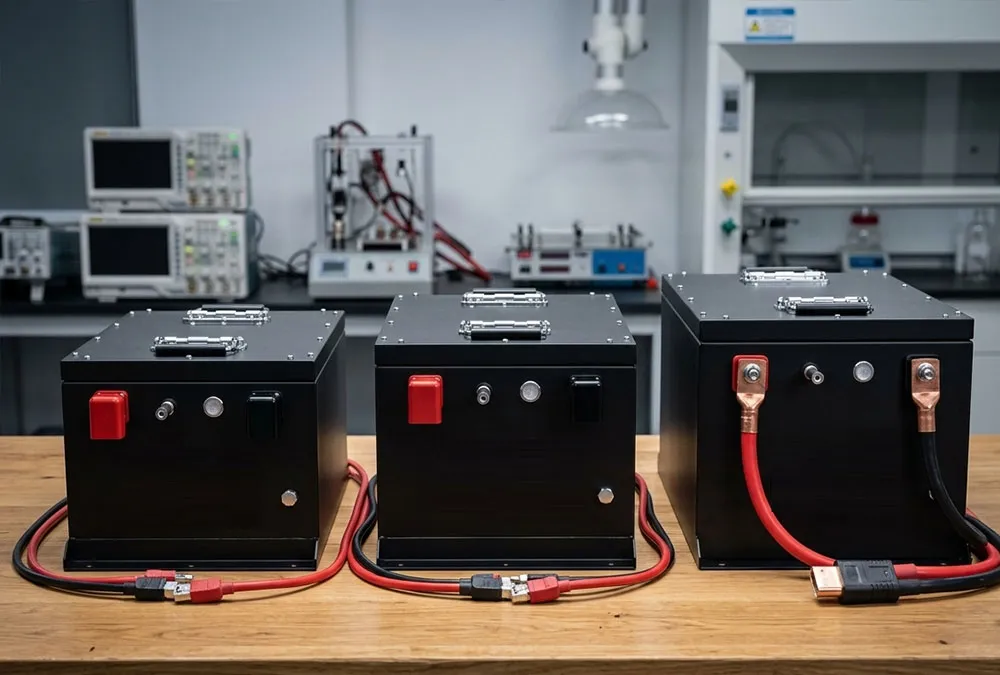
Navigating the market for a reliable electric tricycle battery can quickly get confusing when you are confronted with wildly varying supplier quotes and technical specs. Whether you are assembling new passenger auto-rickshaws, upgrading a commercial cargo fleet, or replacing aging lead-acid units, matching motor power draw, pack voltage, and cell chemistry to real-world payload demands without overpaying or compromising safety remains a core challenge. Selecting an efficient electric tricycle lithium battery goes far beyond checking a basic Ah rating on paper. High-frequency charging cycles, heavy passenger loads, and steep inclines put massive stress on internal cell interconnects and management hardware. Operating a fleet successfully means understanding how a dedicated LiFePO4 battery for electric tricycle applications handles structural casing design, cell grading, and active safety protection before placing a bulk procurement order.
Quick Answer: Which Electric Tricycle Battery Voltage Should You Choose?
If you are looking for a fast decision matrix before diving into deep technical calculations, use our streamlined technical evaluation guide below.
| If your priority is… | Start by considering | Core System Benefit | Buyer Advantage |
|---|---|---|---|
| Lower system cost / lower-power use | 48V System | Lowest component entry cost for urban transport | Minimizes initial capital expenditure for light passenger routes. |
| Balanced power and efficiency | 60V System | Optimal balance of current draw and vehicle speed | Reduces motor thermal stress while keeping battery weight manageable. |
| Higher system power / demanding loads | 72V System | Maximum torque delivery with reduced amperage losses | Handles steep hill climbs and heavy payloads without tripping protection switches. |
| Longer operational range | Compare Wh, not voltage alone | True energy storage metric (Wh = V × Ah) | Prevents overspending on high-voltage setups with inadequate overall capacity. |
| Battery replacement | Match original system voltage first | Direct drop-in mechanical & electrical compatibility | Eliminates expensive controller upgrades or harness modifications. |
| LiFePO4 upgrade | Match voltage, capacity, BMS and charger | 5x cycle life extension with dedicated management | Lowers 5-year total cost of ownership (TCO) by up to 60%. |
The right electric tricycle battery is determined by the complete system—not voltage alone.
48V vs 60V vs 72V Electric Tricycle Battery Comparison
Selecting system voltage is your first major engineering hurdle when configuring an electric three wheeler battery system. Let’s break down how these common platforms perform in real-world commercial environments.
48V Electric Tricycle Battery
48V systems are commonly used in lower-power applications. A 48V electric tricycle battery works reliably for light-duty passenger auto-rickshaws, flat-terrain passenger routes, and standard delivery setups operating motors between 800W and 1200W. Choosing a 48V tricycle battery or an electric tricycle battery 48V 60V 72V modular variant keeps initial system component costs low, though high current draw under heavy payloads can lead to thermal losses if cable gauges are under-engineered.
60V Electric Tricycle Battery
A 60V electric tricycle battery represents the middle-voltage option widely adopted across Asia and Latin America for medium-duty commercial transport. Powered by motors ranging from 1500W to 2500W, a 60V tricycle battery strikes a solid balance between current draw and overall vehicle speed. For commercial cargo trikes handling 300kg to 500kg payloads, this voltage platform keeps electrical heat controllable while providing adequate acceleration for city traffic.
72V Electric Tricycle Battery
When heavy-duty cargo transport or steep incline climbs enter the picture, a 72V electric tricycle battery becomes mandatory. Modern 72V tricycle battery architectures support high-power systems (3000W to 5000W+) while operating at lower current levels for the same given power output. However, remember this critical engineering rule: a 72V battery is not automatically better than a 48V or 60V battery simply because of its higher number. System efficiency depends on matching motor ratings, controller current windows, and battery internal resistance.
48V vs 60V vs 72V: Side-by-Side Comparison
| Factor | 48V Battery | 60V Battery | 72V Battery | User Advantage & Selection Impact |
|---|---|---|---|---|
| Typical System Use | Lower-power urban transport | Mid-range cargo & passenger | Higher-power heavy cargo | Allows precise matching of battery hardware to actual daily route demands. |
| Current at Same Power | Higher amperage draw | Medium amperage draw | Lower amperage draw | Lower current in 72V reduces cable heat losses, extending wire harness lifespan. |
| Potential System Power | Typically up to 1.5kW | Typically 1.5kW to 3kW | Typically 3kW to 6kW+ | Higher voltage unlocks higher top speeds and uphill climbing torque. |
| Vehicle Operational Range | Depends strictly on Wh | Depends strictly on Wh | Depends strictly on Wh | Prevents buyers from buying high-voltage packs expecting range without checking total Wh. |
| Controller Compatibility | Must be 48V rated | Must be 60V rated | Must be 72V rated | Ensures electronics are protected against over-voltage damage during operation. |
| Best Choice For… | Light local commuters | Standard commercial delivery | Heavy cargo & hill routes | Guarantees optimal return on investment tailored to precise duty cycles. |
What Does 48V, 60V and 72V Actually Mean?
I often talk to fleet buyers who assume that a battery printed with “48V” stays at exactly 48 volts from full charge to empty. That is simply not how electrochemistry works in field conditions.
Nominal Voltage vs Actual Battery Voltage
A battery’s nominal voltage and measured voltage are not necessarily the same. Nominal voltage acts as a marketing and classification standard. However, actual operational electric tricycle battery voltage fluctuates dynamically based on state-of-charge (SOC), load current, and internal chemistry state:
- Full-charge voltage: The maximum voltage level reached right off the charger.
- Nominal voltage: The baseline average working voltage during standard discharge.
- Discharge cut-off voltage: The lower safety threshold where the BMS cuts power to protect cells.
Why a “48V” LiFePO4 Battery May Show More Than 48V
When retrofitting vehicles with a modern LiFePO4 electric tricycle battery, cell string counts alter nominal figures. A typical 48V-class LiFePO4 battery constructed with 16 individual 3.2V cells in series actually has a nominal voltage of 51.2V, resting at 58.4V fully charged. Conversely, older lead-acid packs use four 12V blocks in series (48.0V nominal). Understanding this variance keeps your maintenance crews from misinterpreting digital display telemetry.
Always Check the Battery Datasheet and Controller Voltage Range
Before deploying any tricycle battery pack, inspect the motor controller’s allowable input window. According to technical standards published in the BloombergNEF Lithium-Ion Battery Supply Chain Ranking 2025, China accounts for over 75% of global cell manufacturing, yielding highly customized BMS parameters. Connecting a pack whose peak charge voltage exceeds your controller’s maximum MOSFET threshold will instantly burn out drive electronics.
How Voltage, Current and Motor Power Work Together
To build or procure the best battery for electric tricycle fleets, you must understand how electrical power moves through your drivetrain.
Voltage × Current = Electrical Power
The fundamental relationship governing electric vehicle performance is straightforward:
Motor Rated Power vs Peak Power
Do not confuse continuous electric tricycle motor power with instantaneous peak demand. A motor rated at 2,000W continuous may demand upwards of 4,500W during initial acceleration from a standstill or when tackling steep cargo inclines. Your battery pack must handle these surge events cleanly without dropping output voltage below the controller shutdown threshold.
Controller Continuous and Peak Current
The controller acts as the throttle gate. If your controller limits output to 60A continuous and 120A peak, your battery’s management system must comfortably match or exceed those current delivery thresholds to maintain safe operation.
Battery Continuous and Peak Discharge Current
Here is a critical truth: Battery Ah is not enough to determine whether a battery can power a motor.
Let’s evaluate a realistic field example. Suppose a supplier offers a 72V 30Ah pack with a total stored energy capacity of:
If the integrated BMS limits the continuous battery discharge current to just 30A, the maximum continuous power output available to the vehicle is:
If you install this pack on a 5kW heavy cargo tricycle, the vehicle will instantly trip its overload protection the moment the driver steps on the throttle under load. A 72V 30Ah battery is not automatically suitable for a high-power motor simply because it has a higher voltage.
How Much Discharge Current Does an Electric Tricycle Battery Need?
Matching continuous and peak discharge current protects both internal cell integrity and downstream vehicle electronics.
Continuous Discharge Current vs Peak Discharge Current
Continuous current represents the maximum steady amperage the battery delivers without exceeding safe thermal thresholds (typically under 55°C). Peak current defines brief 5-to-10-second pulses permitted for initial acceleration and gradient climbing.
Match Battery Current With Motor and Controller
To establish required pack discharge ratings, use this standard engineering equation:
Consider powering a 5kW (5,000W) peak system across two different voltage configurations:
- On a 48V platform: 5,000W ÷ 48V ≈ 104A discharge current
- On a 72V platform: 5,000W ÷ 72V ≈ 69A discharge current
At the same power level, a higher-voltage system generally requires less current. Lower current drastically reduces heat buildup inside copper busbars, extending cell life.
How Much Capacity Does an Electric Tricycle Battery Need?
Ah vs Wh: What’s the Difference?
Battery amp hours (Ah) measure electric charge volume—the size of your fuel tank. However, total battery energy capacity is measured in Watt-hours (Wh). Comparing electric tricycle battery capacity across different voltages by looking only at Ah leads to completely wrong buying decisions.
How to Calculate Battery Energy
Calculate total energy storage capability using this simple formula:
A 60V 50Ah pack stores 3,000Wh (3.0 kWh), whereas a 72V 40Ah pack stores 2,880Wh (2.88 kWh). Despite having fewer Ah, the 60V battery actually holds more usable energy.
Electric Tricycle Battery Size Calculator Logic
Sizing Framework Step-by-Step:
- Determine Daily Distance (km): Total required route length between charges.
- Estimate Energy Consumption (Wh/km): Typically 35–50 Wh/km for light passenger trikes; 60–80 Wh/km for heavy cargo.
- Calculate Required Wh: Distance (km) × Consumption (Wh/km) × 1.25 (Safety Reserve Margin).
- Determine Recommended Ah: Required Wh ÷ System Voltage (V).
Example: Sizing a 60V Electric Tricycle Battery
Let’s size a pack for a commercial delivery tricycle operating on a 60V platform needing to cover 40 km per day.
- Estimated consumption: 50 Wh/km
- Baseline energy needed: 40 km × 50 Wh/km = 2,000 Wh
- Adding 20% buffer for cell protection: 2,000 Wh ÷ 0.80 = 2,500 Wh
- Capacity required: 2,500 Wh ÷ 60V = 41.6 Ah
A 60V 40–45Ah battery would be a reasonable starting point, subject to actual vehicle specifications and usable battery capacity. Note: This is an illustrative calculation framework, not a universal recommendation for all vehicle frames.
Can You Upgrade an Electric Tricycle From 48V to 60V or 72V?
A frequently asked question on logistics forums and Reddit r/ebikes is whether fleet mechanics can simply drop a 72V pack into a vehicle factory-built for 48V to boost top speed.
Engineering Warning: Do not connect a higher-voltage battery to a lower-voltage system unless every voltage-sensitive component has been confirmed compatible with the new voltage.
Upgrading system voltage requires systematic component verification across the entire electrical architecture:
| Component | What to Check | Potential Risk of Mismatch | User Advantage of Proper Match |
|---|---|---|---|
| Motor | Operating voltage range & thermal limits | Overheating winding insulation | Unlocks higher RPM and speed without burning out motor coils. |
| Controller | Maximum input voltage (MOSFET rating) | Immediate electronic component failure | Prevents costly controller blowouts during high-speed regeneration. |
| Charger | Output charge profile & cutoff voltage | Severe undercharging or BMS shutdown | Ensures 100% full capacity delivery safely every charging cycle. |
| DC-DC Converter | Input voltage range for 12V accessories | Blown headlights, horn, and turn signals | Keeps auxiliary safety lighting functioning reliably. |
How to Calculate Electric Tricycle Battery Range
Achieving a realistic electric tricycle battery range projection avoids unexpected roadside vehicle stalls.
Estimated Range Formula
Suppose you install a 51.2V 50Ah (2,560Wh) LiFePO4 pack on an urban auto-rickshaw consuming roughly 40Wh/km:
How Load, Speed and Terrain Affect Range
Real-world range will vary with vehicle configuration and operating conditions. Driving at 45 km/h increases aerodynamic drag significantly over 25 km/h driving, cutting overall distance by up to 30%. Likewise, cold ambient temperatures below 0°C temporarily reduce available electrolyte mobility inside cells, decreasing effective output capacity.
Why Two 72V Electric Tricycle Batteries Are Not the Same
Two battery packs with identical “72V 50Ah” labels on the outside box can perform completely differently in the field. B2B procurement managers must look past surface-level branding to evaluate internal specifications:
- Different Cell Grade & Quality: Brand-new Grade-A prismatic cells deliver 3,500+ cycles, while recycled or B-grade cells fail within 6 months.
- Different Continuous Discharge Currents: One pack may utilize a budget 40A BMS, while another incorporates a heavy-duty 100A commercial MOSFET board.
- Different Usable Capacity: High-grade lithium packs safely discharge 90% DOD, whereas low-quality packs suffer voltage sag past 60% DOD.
How to Choose the Right Charger for an Electric Tricycle Battery
Pairing your pack with an improper electric tricycle battery charger is the fastest way to destroy internal cells and void manufacturer warranties.
LiFePO4 Charger vs Lead-Acid Charger
Never connect a lithium pack to an old lead-acid charger. Lead-acid charging algorithms employ pulse high-voltage desulfation modes that trip lithium BMS overvoltage protection units or cause permanent dielectric breakdown within lithium cell separators. Always use a dedicated CC/CV (Constant Current / Constant Voltage) charger built specifically for LiFePO4 voltage curves.
Charging Time Formula
Charging a 60V 50Ah pack using a 10A commercial charger requires roughly 5 hours (50Ah ÷ 10A).
LiFePO4 vs Lead-Acid for Electric Tricycles
While lead-acid options historically dominated light electric three-wheelers due to low initial purchase price, commercial fleets are rapidly executing electric tricycle battery replacement projects to adopt LiFePO4 technology.
| Factor | LiFePO4 Lithium Pack | Lead-Acid (AGM/Flooded) | Commercial Buyer Benefit |
|---|---|---|---|
| Weight & Density | Lightweight (~1/3 of lead-acid) | Very heavy & bulky | Increases vehicle cargo payload capacity while reducing tire wear. |
| Usable Capacity | 80% to 90% DOD without damage | 50% recommended DOD | Delivers nearly double the usable driving range per charge cycle. |
| Cycle Lifespan | 3,500 to 6,000+ cycles | 300 to 500 cycles | Eliminates frequent annual battery replacements entirely. |
| Maintenance Required | Zero maintenance (BMS self-monitored) | Frequent fluid checks & terminal cleanup | Cuts workshop labor costs and vehicle operational downtime. |
| Total Cost of Ownership | Significantly lower over 5 years | High ongoing maintenance & replacement cost | Maximizes net revenue per vehicle for fleet operations. |
The better battery depends on purchase cost, daily usage, payload, range requirements and expected service life. However, for commercial transport logging over 30 km daily, LiFePO4 pays for itself within 10 to 12 months.
What BMS Does an Electric Tricycle Battery Need?
The Battery Management System acts as the electronic brain protecting an electric cargo tricycle battery or electric rickshaw battery pack from harsh physical environments. High-grade systems incorporate robust safety cutoffs:
- Overcharge & Over-Discharge Protection: Cuts current if cell voltage strays past safe upper (3.65V) or lower (2.50V) thresholds.
- Continuous & Peak Overcurrent Cutoff: Isolates battery terminals within microseconds during electrical shorts.
- Cell Balancing: Passive or active balancing equalizes charge across cell strings during charging.
- Thermal Monitoring: NTC sensors disable charging below 0°C or discharging above 60°C.
- Communication Protocols (CANbus, RS485, Bluetooth): Allows real-time telemetry output directly to vehicle dashboards or mobile apps.
Will the Battery Fit Your Electric Tricycle?
Before approving bulk production contracts with a tricycle lithium battery manufacturer, verify mechanical fitment parameters:
- Compartment Dimensions: Measure length, width, and height clearance including handles and terminal posts.
- Mounting Position & Vibration Dampening: Ensure internal cell retention brackets prevent wear on unpaved roads.
- Connector Types: Cross-check plug specs (e.g., Anderson SB50/SB175 or waterproof aviation plugs).
- Enclosure Protection: Mandate IP65 or IP67 heavy-duty metal cases for rain and dust exposure.
Electric Tricycle Battery Sizing Examples
Review these parametric real-world configurations used by international OEMs:
Example 1: 48V 40Ah Electric Tricycle Battery
Spec: 48V (51.2V nominal) 40Ah (2.04 kWh) | BMS: 40A Continuous / 80A Peak
Application: Light-duty urban passenger transport over flat terrain covering 40–50 km per charge.
Example 2: 60V 60Ah Electric Tricycle Battery
Spec: 60V (64.0V nominal) 60Ah (3.84 kWh) | BMS: 60A Continuous / 120A Peak
Application: Commercial urban express delivery trike carrying 400kg payload over 70–80 km daily routes.
Example 3: 72V 100Ah Electric Tricycle Battery
Spec: 72V (76.8V nominal) 100Ah (7.68 kWh) | BMS: 120A Continuous / 250A Peak
Application: Heavy cargo agricultural transport handling 1,000kg loads and steep hill climbs over 90+ km.
These examples are illustrative. Actual battery selection should be based on the vehicle’s motor, controller, energy consumption, load and operating requirements.
Custom Electric Tricycle Battery Solutions
For vehicle OEMs requiring proprietary pack designs, working with an experienced manufacturer for a custom electric tricycle battery unlocks tailored performance:
- Custom dimensions tailored to odd-shaped chassis spaces
- Integrated CANbus / RS485 communication protocols matching vehicle ECUs
- Tailored wiring harness lengths and heavy-duty terminal connections
- OEM / ODM private-label branding and sheet metal enclosure customization
How to Choose an Electric Tricycle Battery Manufacturer
Evaluating an industrial battery factory requires looking past basic marketing materials. According to testing standards set under EN IEC 62619 for industrial lithium batteries, true quality centers on process controls:
- Cell Traceability: Verify the supplier uses brand-new Grade-A cells with QR code tracking from major manufacturers (e.g., EVE, CATL).
- Automated Laser Welding: Ensure internal cell interconnects use fiber laser welding rather than manual spot welding.
- End-of-Line (EOL) Testing: Demand 100% automated charge/discharge test reports for every production batch.
- Production Consistency: Confirm the supplier can consistently produce the exact same battery specification across 500, 1,000, or 5,000 units.
Electric Tricycle Battery Certifications and Documentation
Importing lithium batteries legally and safely requires verifying official documentation:
- Transportation Compliance: Freight forwarders strictly require an active UN38.3 Test Summary Report and MSDS for ocean or air shipping.
- North American Market Access: Verification against UL 2271 standards for light electric vehicle safety.
- European Compliance: CE, RoHS, and industrial battery safety standard compliance documentation.
Electric Tricycle Battery 15-Point Buying Checklist™
Use this checklist prior to approving final production orders:
- [ ] 1. Nominal system voltage matched to vehicle motor & controller
- [ ] 2. Battery capacity in Amp-hours (Ah) verified for daily mileage
- [ ] 3. Total energy storage capacity calculated in Watt-hours (Wh)
- [ ] 4. Continuous discharge current rating exceeds motor continuous draw
- [ ] 5. Peak discharge current rating covers steep acceleration surges
- [ ] 6. Controller voltage range compatibility confirmed
- [ ] 7. Dedicated LiFePO4 CC/CV charger matched to voltage profile
- [ ] 8. Battery compartment physical dimensions & weight cross-checked
- [ ] 9. BMS protection parameters (overcharge/temperature) fully documented
- [ ] 10. Connector plug type and wiring harness length verified
- [ ] 11. IP65 / IP67 enclosure waterproofing specification confirmed
- [ ] 12. Grade-A cell QR code trace sheets requested from supplier
- [ ] 13. Active UN38.3 and MSDS shipping test reports on file
- [ ] 14. Pre-production sample units ordered for local field testing
- [ ] 15. Formal warranty policy and replacement parts process documented
Electric Tricycle Battery FAQ
Is 48V or 60V better for an electric tricycle?
Neither is inherently “better”—it depends on vehicle application. 48V works best for lightweight passenger transport on flat ground, while 60V offers balanced speed and torque for standard commercial cargo delivery.
Is 72V better than 60V?
A 72V system allows higher power output at lower current draw, which reduces heating in wiring. However, a 72V battery is not better unless your motor and controller are specifically designed for 72V operation.
Does higher voltage mean longer range?
No. Total driving range is determined by total energy capacity in Watt-hours (Wh = V × Ah) and vehicle efficiency, not by voltage alone.
Can I put a 72V battery on a 48V tricycle?
No. Connecting a 72V pack directly to a 48V controller will burn out drive electronics instantly unless the controller, motor, lights, and DC-DC converter are upgraded.
How long does an electric tricycle battery last?
A quality Grade-A LiFePO4 battery lasts 3,500 to 6,000 cycles (typically 5 to 8 years of daily use), whereas traditional lead-acid batteries last only 300 to 500 cycles (1 to 2 years).
Get the Right Electric Tricycle Battery for Your Vehicle
Get a Specification Recommendation
Submit your motor wattage, daily range target, and compartment dimensions to receive a tailored engineering proposal.
Request a Custom B2B Quote
Planning OEM vehicle production or bulk fleet procurement? Request competitive factory-direct wholesale pricing today.
Related Posts
 https://anengjibattery.com/wp-content/uploads/2026/10/AnengjiBattery-Cell-to-Pack-Energy-Density-Comparison.webp
675
1000
Battery Expert Team
https://anengjibattery.com/wp-content/uploads/2025/06/logo2-300x138.png
Battery Expert Team2026-10-23 06:58:392026-10-23 06:58:41What Does Lithium-Ion Battery Energy Density Really Mean?
https://anengjibattery.com/wp-content/uploads/2026/10/AnengjiBattery-Cell-to-Pack-Energy-Density-Comparison.webp
675
1000
Battery Expert Team
https://anengjibattery.com/wp-content/uploads/2025/06/logo2-300x138.png
Battery Expert Team2026-10-23 06:58:392026-10-23 06:58:41What Does Lithium-Ion Battery Energy Density Really Mean? https://anengjibattery.com/wp-content/uploads/2026/10/AnengjiBattery-Lithium-Battery-Management-in-Daily-Operation.webp
675
1000
Battery Expert Team
https://anengjibattery.com/wp-content/uploads/2025/06/logo2-300x138.png
Battery Expert Team2026-10-22 08:17:332026-10-23 06:58:57How Does a Lithium BMS Improve Battery Longevity?
https://anengjibattery.com/wp-content/uploads/2026/10/AnengjiBattery-Lithium-Battery-Management-in-Daily-Operation.webp
675
1000
Battery Expert Team
https://anengjibattery.com/wp-content/uploads/2025/06/logo2-300x138.png
Battery Expert Team2026-10-22 08:17:332026-10-23 06:58:57How Does a Lithium BMS Improve Battery Longevity? https://anengjibattery.com/wp-content/uploads/2026/10/AnengjiBattery-Industrial-Power-Under-Real-Load.webp
675
1000
Battery Expert Team
https://anengjibattery.com/wp-content/uploads/2025/06/logo2-300x138.png
Battery Expert Team2026-10-22 07:04:542026-10-22 07:05:30How Does a 48V LiFePO4 BMS Protect Industrial Power?
https://anengjibattery.com/wp-content/uploads/2026/10/AnengjiBattery-Industrial-Power-Under-Real-Load.webp
675
1000
Battery Expert Team
https://anengjibattery.com/wp-content/uploads/2025/06/logo2-300x138.png
Battery Expert Team2026-10-22 07:04:542026-10-22 07:05:30How Does a 48V LiFePO4 BMS Protect Industrial Power? https://anengjibattery.com/wp-content/uploads/2026/10/AnengJIBattery-Electric-Forklift-Battery-Buying-Decision.webp
675
1000
Battery Expert Team
https://anengjibattery.com/wp-content/uploads/2025/06/logo2-300x138.png
Battery Expert Team2026-10-21 06:22:222026-10-21 06:22:38Ready to Buy Battery for Electric Forklift? Use This Guide
https://anengjibattery.com/wp-content/uploads/2026/10/AnengJIBattery-Electric-Forklift-Battery-Buying-Decision.webp
675
1000
Battery Expert Team
https://anengjibattery.com/wp-content/uploads/2025/06/logo2-300x138.png
Battery Expert Team2026-10-21 06:22:222026-10-21 06:22:38Ready to Buy Battery for Electric Forklift? Use This Guide


Leave a Reply
Want to join the discussion?Feel free to contribute!