
AGM vs Deep Cycle Battery: Which Is Right for You?
August 5, 2026 / Battery Expert Team / Battery Basics
Introduction
Choosing power sources for off-grid equipment often causes expensive mistakes. B2B buyers frequently ask whether an agm vs deep cycle battery comparison makes sense in real engineering projects. Let us clarify the confusion immediately. AGM describes an internal battery construction technique. Deep cycle describes a severe mechanical discharge duty cycle. You can buy an AGM battery engineered specifically for deep cycling. However, placing standard engine-starting AGM units into continuous off-grid duty quickly destroys them. Understanding these subtle chemical differences keeps your commercial equipment running and stops unnecessary battery replacements.
Fleet operators spend millions replacing batteries killed prematurely by improper sizing. Commercial users often buy based on initial purchase prices rather than evaluating electrochemical discharge curves. Whether you manage electric golf carts, AGV tuggers, marine vessels, or solar arrays, picking wrong chemistries cuts operating profits. This comprehensive guide breaks down the physical engineering, chemical degradation mechanisms, and real-world performance metrics you need to select the optimal power source.
Understanding AGM Battery Technology and Deep Cycle Battery Basics
To select proper power storage, we must look inside the battery case. Marketing terms frequently obscure actual cell engineering. Understanding AGM battery technology along with a precise deep cycle battery definition clarifies confusing supplier datasheets. It also helps fleet buyers navigate various commercial lead acid battery types with confidence.
What Is an AGM Battery?
Answering what is an AGM battery requires examining VRLA (Valve-Regulated Lead-Acid) architecture. First engineered for military aircraft in the late 1970s, AGM stands for Absorbent Glass Mat. Liquid sulfuric acid electrolyte is not left free-floating inside plastic cell walls. Instead, micro-glass fiber mats absorb and immobilize all liquid acid completely through capillary action.
Core structural elements inside an AGM battery include:
- Positive Plates: Lead dioxide grids engineered to facilitate chemical reduction during discharge cycles.
- Negative Plates: High-purity sponge lead plates designed for active material oxidation.
- Absorbent Glass Mat Separators: Ultra-fine boron-silicate glass mats holding acid tightly against plates.
- Bound Electrolyte: High-purity sulfuric acid solution suspended entirely within mat pores.
- One-Way Pressure Valves: EPDM rubber valves regulating internal gas pressures safely under 2 to 5 PSI.
How Does an AGM Battery Work?
Standard flooded lead-acid batteries vent hydrogen and oxygen gases into surrounding air during normal charging. That water loss forces technicians to top off cells with distilled water regularly. AGM batteries prevent water loss by utilizing an internal closed-loop oxygen recombination process.
Oxygen generated at positive plates during charging diffuses through microscopic void channels in glass mats directly to negative plates. There, oxygen reacts with sponge lead and sulfuric acid to reform water inside the sealed cell. This oxygen cycle eliminates fluid maintenance, prevents acid leaks, and allows mounting batteries in flexible orientations without liquid spilling out.
What Is a Deep Cycle Battery?
When clients ask what is a deep cycle battery, we explain operational design goals. Engine starter batteries use thin, porous sponge plates to dump 500 amps for three seconds. In contrast, deep cycle cells deliver steady, continuous electrical current over eight to twelve hours continuously. They survive thousands of repeated discharges down to 50% or 80% Depth of Discharge (DoD).
Deep cycle longevity requires heavy internal construction. Engineers use thick, solid lead alloy grids coated with high-density active material pastes. Common commercial deep cycle options include:
- Flooded Deep Cycle (FLA): Traditional open-cap batteries requiring weekly watering and equalization charges.
- AGM Deep Cycle: Sealed VRLA batteries reinforced with high-density plates for heavy cycling.
- Gel Deep Cycle: VRLA batteries using silica-gelled acid for ultra-slow, deep energy extraction.
- LiFePO4 Deep Cycle: Advanced lithium iron phosphate cells offering extreme cycle life and zero maintenance.
Buyer Anxiety Addressed: “Why did my new AGM batteries fail after six months in my solar cabin?”
Most budget AGM batteries sold online are dual-purpose or emergency UPS units built with thin, expanded-mesh plates. When subjected to daily 70% solar discharges, active material sheds off grids rapidly, causing short circuits. Always demand certified deep-cycle construction data sheets from suppliers before buying AGM units for solar energy systems.
AGM vs Deep Cycle Battery: Understanding the Real Differences
Conducting an honest AGM battery comparison requires evaluating underlying physics rather than relying on surface labels. True deep cycle battery performance hinges on plate grid thickness, antimony-calcium lead chemistry, and separator compression pressures. Analyzing a detailed battery cycle life comparison highlights stark functional contrasts under demanding industrial operations.
AGM Battery vs Deep Cycle Battery Comparison Table
The technical matrix below outlines performance specs across primary commercial battery options, along with real user benefits:
| Engineering Factor | Standard AGM Battery | Deep Cycle Lead-Acid | LiFePO4 Deep Cycle | Direct User Advantage & Benefit |
|---|---|---|---|---|
| Internal Design | Thin plates, bound acid mat | Thick solid plates, free/gel acid | Solid state prismatic cells | LiFePO4 eliminates acid spills, terminal corrosion, and dangerous off-gassing risks completely. |
| Recommended DoD | 50% Max Depth | 50% Max Depth | 80% to 100% Depth | Higher usable depth lets you run equipment longer without carrying extra battery weight around. |
| Cycle Life (50% DoD) | 400 – 600 Cycles | 700 – 1,200 Cycles | 3,500 – 6,000+ Cycles | Extended cycle life reduces replacement frequency, cutting ongoing labor costs significantly over time. |
| Charge Rate (Acceptance) | 0.2C Rate (Moderate) | 0.1C Rate (Very Slow) | 0.5C to 1C Rate (Ultra-Fast) | Rapid charging gets equipment back in operation quickly, minimizing revenue-killing downtime. |
| Coulombic Efficiency | 78% – 82% Efficiency | 70% – 78% Efficiency | 96% – 98% Efficiency | Superior efficiency captures nearly all solar energy, reducing generator fuel consumption during recharges. |
| Peukert’s Constant (k) | 1.12 – 1.18 (Moderate Loss) | 1.20 – 1.30 (High Loss) | 1.02 – 1.05 (Negligible Loss) | Minimal capacity loss under heavy current draws ensures full rated power when pulling heavy trailers up hills. |
AGM Battery vs Deep Cycle Battery: Which One Provides Better Performance?
Judging performance requires evaluating electrical loads. Standard AGM batteries excel at low temperatures and high discharge surges. Because acid remains sandwiched against plates, internal resistance stays extremely low (~2 to 4 milliohms). That low resistance enables rapid cold-cranking amps for heavy diesel equipment.
However, for sustained deep cycling, dedicated deep cycle chemistries perform far better. Peukert’s Law proves lead-acid batteries lose effective capacity when current draws increase. Under high discharge loads, a lead-acid battery rated at 100Ah yields only 60Ah of actual usable energy. Lithium deep cycle batteries maintain low internal resistance across discharge cycles, delivering 98% of rated energy regardless of motor loads.
AGM vs Deep Cycle Battery Lifespan, Charging, and Maintenance Comparison
Accurately estimating operating expense over five to ten years requires comparing real-world battery lifespan metrics alongside proper charging cycle protocols and mandatory battery maintenance tasks.
Battery Cycle Life and Depth of Discharge Comparison
Depth of Discharge (DoD) directly governs lead-acid battery life expectancy. Test reports published by the Battery Council International (BCI) confirm lead-acid degradation accelerates rapidly when discharged beyond 50% DoD. Sulfation crystals harden on positive plates, permanently blocking electrochemical reactions.
| Battery Chemistry | Expected Life at 30% DoD | Expected Life at 50% DoD | Expected Life at 80% DoD | Real-World Fleet Impact |
|---|---|---|---|---|
| Flooded Lead-Acid | 1,200 Cycles | 600 Cycles | 250 Cycles | Requires oversized battery banks to avoid short life spans. |
| Standard AGM | 1,400 Cycles | 550 Cycles | 280 Cycles | Deep discharges degrade capacity quickly, forcing early pack replacements. |
| Deep Cycle Gel | 1,800 Cycles | 900 Cycles | 450 Cycles | Handles deep discharge well, but slow charging prolongs fleet downtime. |
| LiFePO4 Deep Cycle | 8,000+ Cycles | 6,000+ Cycles | 3,500+ Cycles | Delivers predictable daily deep cycling for 10+ years without issue. |
Charging Requirements and Battery Compatibility
Improper charging settings ruin more AGM batteries than physical wear ever does. AGM batteries demand precise three-stage (CC/CV/Float) voltage regulation. Charging AGM cells with flooded lead-acid profiles causes overcharging, gas generation exceeding pressure valve limits, dried-out glass mats, and thermal runaway.
Critical charging thresholds buyers must configure include:
- Absorption Voltage Settings: AGM requires 14.4V to 14.7V maximum at 25°C. Exceeding 14.8V vents sealed cells permanently.
- Float Voltage Maintenance: Keep float charging strictly between 13.5V and 13.8V to avoid boiling bound electrolyte.
- Temperature Compensation: Chargers must scale voltage down (-4mV/°C/cell) in warm operational climates.
- BMS Integration Requirements: Upgrading to lithium deep cycle batteries requires an integrated Battery Management System to balance individual cells automatically.
AGM Battery vs Deep Cycle Battery: Which Battery Is Best for Different Applications?
Selecting power solutions requires matching internal chemistry to operational demands. Conducting an RV battery comparison, configuring a commercial solar storage battery array, or specifying a heavy-duty marine battery requires evaluating specialized performance metrics.
Best Battery Choice for RV and Camper Applications
For RV owners staying primarily at campsites with shore power hookups, standard AGM dual-purpose batteries perform well. They support accessory loads and crank generators easily. However, evaluating an AGM vs deep cycle battery for solar system setups used in off-grid boondocking reveals clear limitations in standard AGM designs.
| RV Operating Profile | Recommended Battery Technology | Key Operational Advantage |
|---|---|---|
| Weekend RV Resort Camping | AGM Deep Cycle Battery | Lower upfront cost, spill-proof safety, zero maintenance. |
| Full-Time Off-Grid Boondocking | LiFePO4 Lithium Deep Cycle | Shed 200+ lbs, fast charging from solar/alternators, 100% usable power depth. |
Best Battery Choice for Solar Energy Storage Systems
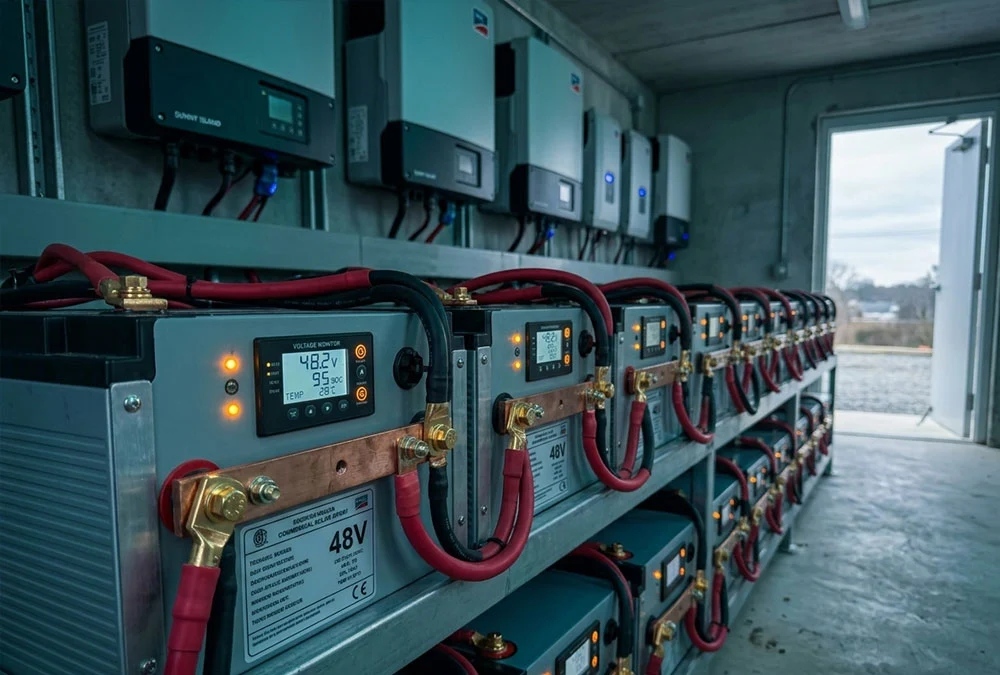
Solar installations subject battery banks to relentless daily charge cycles. Solar panels generate peak solar energy for four to six hours around midday. Battery arrays must accept high incoming current quickly before sunset.
An AGM vs lithium deep cycle battery comparison shows significant operational differences here. AGM internal resistance rises sharply once state-of-charge reaches 80%. That slows charge acceptance during peak solar hours, wasting available energy. LiFePO4 cells accept maximum solar current up to 99% state-of-charge, storing solar energy efficiently.
Best Battery Choice for Golf Carts and Low-Speed Vehicles
Golf carts, AGVs, resort shuttles, and industrial floor scrubbers demand high motor torque under heavy payloads. Historically, fleet operators used flooded lead-acid batteries, accepting messy weekly watering and frame corrosion.
Evaluating an AGM vs LiFePO4 battery for golf cart fleets shows clear advantages when upgrading to lithium:
- Weight Reduction: Swapping heavy lead-acid sets for a single 48V lithium module drops 300+ lbs, extending tire and brake life.
- Consistent Motor Voltage: Lithium maintains full speed while climbing steep hills, whereas lead-acid voltage sags under load.
- Opportunity Charging: Lithium accepts rapid 30-minute midday top-up charges during lunch breaks without heat buildup.
Best Battery Choice for Marine and Boat Applications
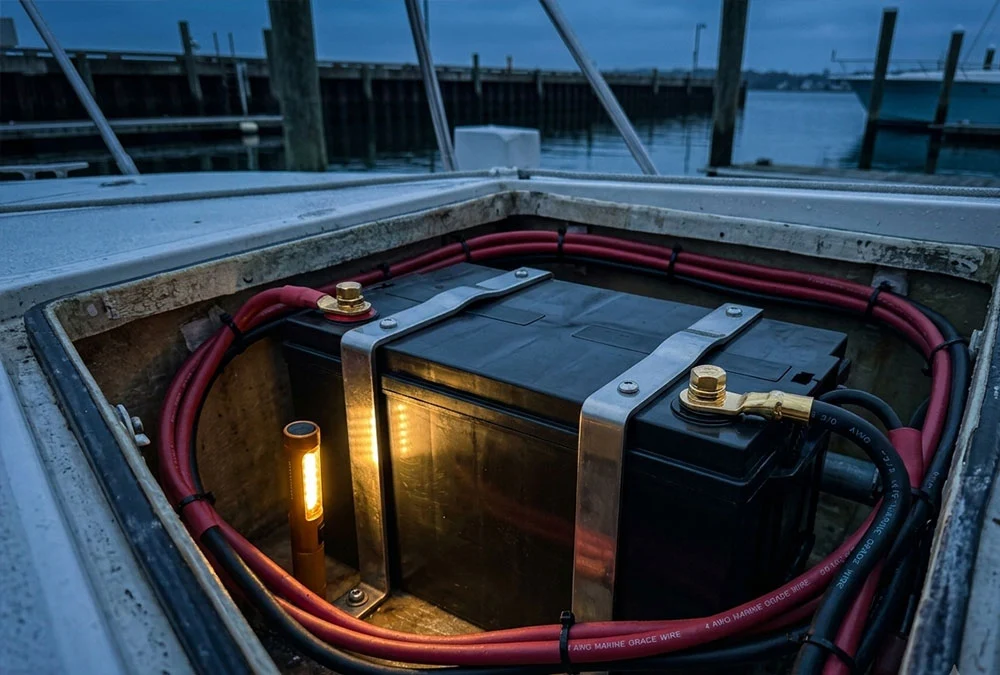
Boating requires ultimate power reliability. A dead battery miles offshore creates dangerous situations fast. Marine applications demand exceptional vibration resistance to handle pounding wave impacts, alongside sealed casings to prevent corrosive salt air intrusion.
Dual-bank configurations work best on boats: keep a dedicated AGM starter battery for engine ignition, paired with a high-capacity LiFePO4 deep cycle house bank to run trolling motors, radar electronics, lights, and refrigeration quietly all day.
AGM Battery Advantages and Disadvantages You Should Know
Analyzing AGM battery advantages and disadvantages helps procurement managers set realistic expectations before committing capital to fleet upgrades.
Advantages of AGM Batteries
- Sealed Spill-Proof Construction: Bound electrolyte cannot spill out, simplifying transport logistics and indoor mounting.
- Zero Fluid Maintenance: Never requires distilled water additions or cleaning acid crust off terminal posts.
- Vibration Resistance: Compressed glass mat packs withstand continuous mechanical shock and vibration easily.
- Low Self-Discharge Rate: Loses only 1% to 3% capacity monthly in storage, making it ideal for seasonal equipment backups.
Limitations of AGM Batteries
- Heavy Weight Profile: Solid lead plates add heavy dead weight to mobile equipment and vehicles.
- Overcharge Sensitivity: Requires strict voltage regulation; incorrect charging profiles permanently degrade capacity.
- Restricted Discharge Depth: Regularly discharging past 50% DoD cuts total battery life expectancy in half.
- Higher Lifetime Expense: Requires full replacement packs every two to three years under heavy daily cycling demands.
Deep Cycle Battery Advantages and Disadvantages for Long-Term Use
Advantages of Deep Cycle Batteries
- Built for Heavy Duty Cycles: Engineered with thick active plates designed to handle deep discharges day after day.
- Sustained Power Voltage: Delivers steady output voltage throughout long discharge cycles, protecting electric motors.
- Versatile Chemical Options: Available across accessible entry-level flooded lead-acid options up to premium industrial LiFePO4 cells.
Disadvantages of Deep Cycle Batteries
- Lower Peak Starter Amps: Dedicated deep-cycle designs deliver lower cold cranking amps (CCA) than specialized engine starters.
- Flooded Types Need Maintenance: Traditional versions require regular watering, equalizing charges, and forced ventilation.
- Higher Initial Lithium Cost: Premium lithium deep cycle models require higher initial purchase capital despite lower lifetime costs.
How to Choose Between AGM and Deep Cycle Battery: Buyer Checklist
For procurement directors evaluating an AGM battery replacement for deep cycle applications, use this structured purchasing checklist before placing volume orders.
Check Your Application Requirements First
- Is duty cycling standby or continuous? Emergency back-up systems favor AGM, whereas material handling equipment demands deep cycle lithium.
- What are your real physical weight limits? Payload-sensitive vehicles need lightweight, high-density batteries.
- What operating temperatures will equipment face? Cold environments (-20°C) limit standard lithium charging without heating elements, making AGM a viable fallback.
Evaluate Battery Specifications Before Purchasing
B2B Sourcing Pro-Tip: Demand Certified Cycle Curves
Always demand IEC 60896 or UL 1973 certified factory cycle testing curves from suppliers. Verify that rated cycle life reflects testing performed at 25°C under realistic discharge currents rather than ideal laboratory float conditions.
- Verify True Capacity Ratings (Ah): Confirm whether capacity ratings reflect 20-hour (C20) or 5-hour (C5) discharge rates.
- Review Charger Setting Compatibility: Ensure existing vehicle chargers support required AGM or LiFePO4 charge profiles.
- Verify Commercial Warranty Clauses: Confirm whether product warranties cover deep-cycle commercial use or restrict coverage to standby backup duty.
- Assess Vendor Support Capabilities: Check whether suppliers provide engineering support, custom wiring looms, and rapid stock replacement.
AGM vs LiFePO4 Deep Cycle Battery: Is Lithium a Better Upgrade?
Modern fleet operators are replacing lead-acid battery packs. While AGM solved fluid maintenance sloshing, it did not eliminate lead’s weight and cycle life constraints. When searching for the best deep cycle battery for RV and marine applications, LiFePO4 technology stands out as a superior commercial investment.
Why Many Users Are Replacing AGM Batteries with LiFePO4
Upgrading from AGM to lithium iron phosphate delivers immediate operational benefits:
- Extreme Service Life: LiFePO4 yields 3,500 to 6,000 deep cycles compared to 500 cycles from quality AGM units.
- Double Usable Power Capacity: Safely utilize 100% of lithium capacity without damage, whereas AGM drops past 50% DoD.
- Fast Opportunity Charging: Fully recharge lithium batteries in 1 to 2 hours, compared to 8 to 10 hours for lead-acid.
- 70% Weight Savings: A 12V 100Ah AGM battery weighs roughly 65 lbs; an equivalent 12V 100Ah LiFePO4 unit weighs just 24 lbs.
AGM vs LiFePO4 Battery Cost Analysis
To evaluate true financial value, calculate Total Cost of Ownership (TCO) across equipment lifecycles using this standard formula:
Total Lifetime Cost Formula:
TCO = Initial Purchase Price + (Replacement Packs × Labor Costs) + Charging Efficiency Losses
Consider a commercial 48V utility fleet running over an eight-year operational window:
| 8-Year Financial Metric | Commercial AGM Battery Pack | LiFePO4 Lithium Solution | Economic Benefit & Savings |
|---|---|---|---|
| Initial Purchase Cost | $1,200 | $2,400 | AGM costs less upfront initially. |
| Replacements Over 8 Years | 2 Replacements ($2,400) | 0 Replacements ($0) | Lithium lasts the entire 8-year operational lifecycle. |
| Maintenance Labor Costs | $400 (Terminal care/checks) | $0 (Zero maintenance) | Eliminates servicing labor across your equipment fleet. |
| Grid Charging Energy Losses | $500 (Lower efficiency) | $150 (96% efficiency) | Reduces electricity consumption during charging cycles. |
| Total 8-Year Operating TCO | $4,500 | $2,550 | Saves $1,950 per vehicle over eight years! |
Final Decision: AGM or Deep Cycle Battery, Which One Is Right for You?
Making the right procurement decision requires matching chemical capabilities directly to operational demands and capital budgets:
| Primary Operational Requirement | Recommended Battery Technology | Why It Fits Your Application Best |
|---|---|---|
| Low Initial Budget / Occasional Standby Use | Standard AGM Battery | Delivers spill-proof standby backup power at a lower initial purchase cost. |
| Moderate Duty Cycling / Heavy Vibration | AGM Deep Cycle Battery | Handles rough physical shock safely without requiring liquid maintenance. |
| Daily Deep Cycling / Solar Energy Storage | LiFePO4 Deep Cycle Battery | Delivers maximum usable power capacity, fast charging, and thousands of cycles. |
| Commercial Fleets (AGVs, Carts, Shuttles) | LiFePO4 Deep Cycle Battery | Slashes total cost of ownership, eliminates downtime, and extends daily vehicle range. |
Upgrade Your Commercial Power Systems with Certified Deep Cycle Technology
Looking for high-performance AGM or custom LiFePO4 deep cycle battery packs tailored to your specific application requirements? Our engineering team helps OEMs, fleet managers, and distributors design efficient power solutions engineered for heavy commercial service.
Related Posts
 https://anengjibattery.com/wp-content/uploads/2026/09/anengjiBattery-How-to-Choose-the-Right-Forklift-Battery-A-Practical-Selection-Guide.webp
675
1000
Battery Expert Team
https://anengjibattery.com/wp-content/uploads/2025/06/logo2-300x138.png
Battery Expert Team2026-09-20 07:31:262026-09-20 07:31:41How to Choose the Right Forklift Battery: A Practical Selection Guide
https://anengjibattery.com/wp-content/uploads/2026/09/anengjiBattery-How-to-Choose-the-Right-Forklift-Battery-A-Practical-Selection-Guide.webp
675
1000
Battery Expert Team
https://anengjibattery.com/wp-content/uploads/2025/06/logo2-300x138.png
Battery Expert Team2026-09-20 07:31:262026-09-20 07:31:41How to Choose the Right Forklift Battery: A Practical Selection Guide https://anengjibattery.com/wp-content/uploads/2026/09/AnengJIBattery-Best-LiFePO4-Battery-How-to-Choose-the-Right-One.webp
675
1000
Battery Expert Team
https://anengjibattery.com/wp-content/uploads/2025/06/logo2-300x138.png
Battery Expert Team2026-09-17 08:52:142026-09-18 09:19:29How to Choose the Best LiFePO4 Battery
https://anengjibattery.com/wp-content/uploads/2026/09/AnengJIBattery-Best-LiFePO4-Battery-How-to-Choose-the-Right-One.webp
675
1000
Battery Expert Team
https://anengjibattery.com/wp-content/uploads/2025/06/logo2-300x138.png
Battery Expert Team2026-09-17 08:52:142026-09-18 09:19:29How to Choose the Best LiFePO4 Battery https://anengjibattery.com/wp-content/uploads/2026/09/anengjiBattery-lifepo4-battery-cell-packaging-wholesale.webp
675
1000
Battery Expert Team
https://anengjibattery.com/wp-content/uploads/2025/06/logo2-300x138.png
Battery Expert Team2026-09-16 09:52:342026-09-18 09:20:12LiFePO4 Battery Wholesale Guide: Best Suppliers in Spain
https://anengjibattery.com/wp-content/uploads/2026/09/anengjiBattery-lifepo4-battery-cell-packaging-wholesale.webp
675
1000
Battery Expert Team
https://anengjibattery.com/wp-content/uploads/2025/06/logo2-300x138.png
Battery Expert Team2026-09-16 09:52:342026-09-18 09:20:12LiFePO4 Battery Wholesale Guide: Best Suppliers in Spain https://anengjibattery.com/wp-content/uploads/2026/09/anengjibattery-Top-Lithium-Ion-Battery-Producers-for-Spain-Market-Growth.webp
675
1000
Battery Expert Team
https://anengjibattery.com/wp-content/uploads/2025/06/logo2-300x138.png
Battery Expert Team2026-09-16 01:13:392026-09-16 01:14:05Top Lithium Ion Battery Producers for Spain’s Market Growth
https://anengjibattery.com/wp-content/uploads/2026/09/anengjibattery-Top-Lithium-Ion-Battery-Producers-for-Spain-Market-Growth.webp
675
1000
Battery Expert Team
https://anengjibattery.com/wp-content/uploads/2025/06/logo2-300x138.png
Battery Expert Team2026-09-16 01:13:392026-09-16 01:14:05Top Lithium Ion Battery Producers for Spain’s Market Growth


Leave a Reply
Want to join the discussion?Feel free to contribute!