
Is LiFePO4 Battery Safe for Home Use? | Safety Guide
August 19, 2026 / Battery Expert Team / Battery Basics
Are LiFePO4 batteries safe for home use? To give you a straight answer: lifepo4 battery safety makes this chemistry widely regarded as one of the most thermally stable choices available for residential applications today, but safety in your house depends on far more than chemistry alone. You cannot rely strictly on the cell chemistry to protect your home. True power reliability comes down to full system architecture, active management, and structural protections working together continuously.
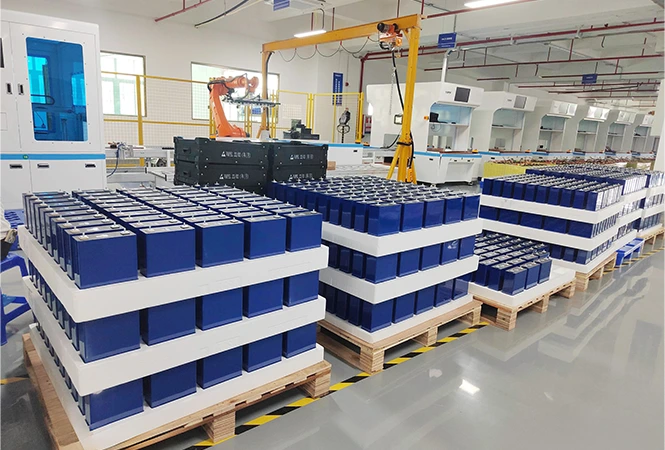
The sudden surge in residential energy storage systems worldwide is driven by shifting grid economics, extreme weather power outages, and expanding rooftop solar adoptionAccording to the IEA’s Global EV Outlook 2026, LFP batteries accounted for more than 55% of global EV battery deployment in 2025, reflecting the growing adoption of LFP chemistry because of its cost advantages, durability, and thermal stability., largely due to their proven operational stability and lower unit costs. However, as home installations grow, homeowner concerns around fire risks and chemical hazards have intensified. The short answer is that lifepo4 battery safety is built upon fundamental physical properties, but total safety relies on a complete chain of safeguards. In this guide, we dive deep into thermal stability, battery protection, BMS integration, thermal management, regulatory certifications, correct installation procedures, and manufacturer quality control to show you how modern home battery storage operates safely.
Why Is LiFePO4 Battery Chemistry Considered Safer for Home Energy Storage?
What Is LiFePO4 Battery Chemistry?
Lithium Iron Phosphate (LiFePO4, or LFP) is a sub-family of lithium-ion technology that replaces volatile nickel or cobalt cathode materials with iron and phosphate (LiFePO4). This specific molecular arrangement provides exceptional structural durability during continuous charge and discharge cycles, drastically reducing the chemical degradation typically seen in high-density lithium alternatives.
Why Lithium Iron Phosphate Has High Thermal Stability
The chemical foundation of lithium iron phosphate battery safety rests inside its molecular matrix. The covalent P-O bonds within the phosphate crystal framework are significantly stronger than the metal-oxide bonds found in nickel-based cells. Consequently, LiFePO4 thermal stability remains intact at elevated temperatures where other chemistries break down.
Does LiFePO4 Release Oxygen When Overheated?
In standard lithium nickel manganese cobalt (NMC) or lithium cobalt oxide (LCO) cells, structural thermal breakdown releases free oxygen gas (O2) into the cell casing. Free oxygen rapidly feeds internal fires, transforming thermal stress into intense combustion. LiFePO4 cathode materials hold onto their oxygen atoms tightly due to strong phosphorus-oxygen covalent bonds, preventing structural oxygen release even when temperatures rise past typical operational limits.
What Makes LiFePO4 Different From Other Lithium-Ion Chemistries?
Laboratory studies have shown that LiFePO4 cathode materials exhibit substantially higher thermal stability than several nickel- and cobalt-based cathode chemistries. Sandia National Laboratories found that LFP cathodes remained stable above 500°C under the tested conditions, while whole-cell thermal behavior depends on the complete cell design, state of charge, anode, electrolyte, and operating conditions.
LiFePO4 Battery Safety vs NMC Lithium-Ion and Lead-Acid Batteries
LiFePO4 vs NMC Battery Safety
When evaluating LiFePO4 vs lithium ion safety, specifically against high-density NMC cells, the trade-off is energy density versus physical stability. NMC offers higher energy per kilogram, which suits electric passenger cars. However, inside a home, spatial weight is secondary to risk mitigation. Lower self-heating rates mean an LFP pack gives residential protection systems ample reaction time before heat can cascade across adjacent cells.
LiFePO4 vs Lead-Acid Battery Safety
Comparing LiFePO4 vs lead acid safety highlights very different operational hazards. Flooded lead-acid batteries can generate hydrogen during charging and therefore require appropriate ventilation. Valve-regulated lead-acid batteries reduce routine gas emissions but still require proper installation and charging controls.
Thermal Stability and Fire Risk
LFP generally exhibits lower thermal runaway severity and propagation tendency than many nickel-rich lithium-ion chemistries, although severe abuse can still result in fire, venting, or hazardous gas release. residential fire suppression gear to manage.
Safety Comparison Table
| Safety Factor | LiFePO4 (LFP) | NMC Lithium-Ion | Lead-Acid | Buyer Advantage & Practical Value |
|---|---|---|---|---|
| Thermal runaway temperature | High (~270°C to 500°C) | Moderate (~150°C to 210°C) | N/A (Hydrogen gas risk) | High heat tolerance prevents sudden house fires in hot climates or utility garages. |
| Thermal runaway susceptibility | Very Low | Higher | Low (Sulfation/Hydrogen risk) | Lowers property insurance risk and eliminates complex residential fire barrier expenses. |
| Deep-cycle capability | Excellent (80%-90% DoD) | Good (80% DoD) | Poor (50% max DoD) | Unlocks up to 80% more usable daily power without accelerating structural battery degradation. |
| Maintenance requirements | None (Zero fluid checks) | None | High (Water refills, clean terminals) | Eliminates hands-on maintenance hazards, chemical contact, and recurring labor fees. |
| Cycle life durability | 4,000 – 6,000+ cycles | 1,000 – 2,000 cycles | 500 – 1,200 cycles | Delivers 10+ years of daily solar storage, driving down long-term replacement costs. |
How Do LiFePO4 Battery Safety Features Prevent Common Failures?
Overcharge Protection
Pushing voltage beyond a cell’s upper limit causes severe metallic lithium plating on the anode, creating microscopic internal spikes. Automated hardware disconnects instantly break charging circuits if cell voltage exceeds 3.65V, preventing dangerous overcharging.
Over-Discharge Protection
Discharging below 2.0V causes copper current collectors to dissolve into the liquid electrolyte. When recharged, that dissolved copper forms conductive bridges that can short out the cell. Integrated electronic gates cut loads long before reaching critical voltage floors.
Overcurrent Protection
Spikes in electrical current heat internal wiring and damage terminal connectors. Multi-stage current-limiting circuitry isolates the pack within milliseconds during heavy load surges.
Short-Circuit Protection
Accidental external wire bridges trigger instant magnetic or solid-state cut-offs, preventing instantaneous thermal spikes across internal battery buses.
High-Temperature Protection
If high ambient warmth or heavy electrical output causes internal heat to build up, thermistor arrays flag the system to throttle charging speeds or trip open contactor relays, controlling any risk of LiFePO4 battery overheating.
Low-Temperature Charging Protection
Charging LiFePO4 cells below the manufacturer’s specified minimum charging temperature can increase the risk of lithium plating, especially under higher charging currents.
Cell Balancing
Over time, slight manufacturing variances cause cell voltages to drift apart. Active and passive cell balancing circuits redistribute excess charge during float phases, ensuring no single cell is overstressed or driven past its safe limits.
Remote Battery Monitoring
Modern battery storage architectures pass real-time diagnostics up to secure cloud dashboards via CAN bus, RS485, or Wi-Fi links. System installers receive automatic alerts about minor voltage anomalies long before they escalate into hardware failures.
How Do Thermal Management and Battery Enclosures Improve LiFePO4 Battery Safety?
Why Battery Temperature Matters
Cell degradation speeds up exponentially at internal temperatures above 45°C (113°F), while charging below 0°C (32°F) introduces permanent lithium plating risks. Effective LiFePO4 battery charging safety relies heavily on keeping core temperatures within stable operating windows.
Intelligent Temperature Control
Smart temperature management systems combine software algorithms with hardware sensors to monitor thermal loads dynamically, dialing back charge rates during hot afternoons or turning on internal heating film before winter charging begins.
Passive vs Active Thermal Management
Passive thermal systems rely on aluminum heatsinks and natural airflow gaps, making them ideal for standard residential energy loads. Active liquid cooling or forced-air circulation systems are used in higher-output commercial platforms, keeping internal temperature variations under 3°C across dense cell layouts.
IP-Rated Battery Enclosures
IP65/IP67 enclosures provide defined protection against dust and water ingress. For coastal or high-salt environments, enclosure materials, coatings, cable glands, and corrosion resistance should also be evaluated separately.
Mechanical Protection Against Impact and Damage
Heavy gauge steel casings shield internal cell assemblies from accidental impacts in garage setups, like collisions with parking cars, falling tools, or household equipment.
Fire Detection and Suppression for Larger Battery Systems
Larger home energy storage systems feature localized aerosol fire suppression pods, integrated gas detection modules, and pressure-relief valves designed to safely vent off-gas outward rather than allowing pressure to build up inside the enclosure.
Is LiFePO4 Battery Safe for Indoor Home Energy Storage?
Why LiFePO4 Is Suitable for Residential Energy Storage
Asking is LiFePO4 battery safe for home use inside living areas, basements, or utility rooms is a standard question for homeowners. Thanks to its solid thermal stability and non-gassing construction under normal working conditions, LFP is ideal for residential energy installations when paired with certified protection hardware.
Indoor Installation vs Outdoor Installation
Indoor setups protect batteries from cold winter drops and summer sun, but require adequate wall clearance and structural mounting. Outdoor setups need robust IP65-rated weatherproof housings with integrated internal heating pads to handle winter weather without tripping low-temperature lockouts.
Temperature and Ventilation Requirements
Although LFP cells do not off-gas toxic vapors during standard use, dedicated equipment spaces should maintain air movement to manage heat buildup from grid-tied inverters and high-power battery chargers.
Installation Clearance and Battery Location
Maintain the clearances specified by the battery manufacturer and applicable local electrical and fire codes.
Why Proper Installation Matters as Much as Battery Chemistry
Even the safest lithium iron phosphate battery safety setup can be compromised by undersized copper cables, loose terminal torques, or poorly configured charge controllers. Mechanical and electrical installations must meet modern residential electrical standards.
When a Professional Installer Should Be Used
Certified installers ensure wire gauges, isolation switches, ground fault interrupters, and inverter communication parameters are configured correctly, protecting your home against hidden installation hazards.
How Long Does a Safe LiFePO4 Battery Last?
LiFePO4 Cycle Life Explained
A complete battery cycle is defined as discharging 100% of nominal energy capacity and recharging back to full. Quality LFP cells deliver 4,000 to over 6,000 complete cycles before losing 20% of their original rated storage capacity.
How Depth of Discharge Affects Battery Life
Draining a battery completely (100% DoD) wears down the internal electrode structure faster than shallower cycles. Cycling your pack between 80% DoD and 20% DoD can extend total usable cycle life past 8,000 individual charge cycles.
How Charging Habits Affect Battery Health
Charging continuously at high C-rates generates excess heat and increases mechanical stress on cell electrodes. Setting lower regular charge currents (0.2C to 0.5C) keeps temperature spikes low and extends cell service life.
Common LiFePO4 Battery Safety Myths You Should Know
Myth 1: LiFePO4 Batteries Can Never Catch Fire
Reality: While LFP chemistry boasts high thermal resistance, severe external short circuits, direct lightning strikes, or intense external building fires can still damage damaged casings. Proper system protection, fusing, and enclosure design remain essential.
Myth 2: LiFePO4 Batteries Are Too Heavy
Reality: LFP cells are heavier than equivalent energy-density NMC options, but they are still roughly 60% lighter than lead-acid banks of equivalent usable power capacity.
Myth 3: LiFePO4 Batteries Are Not Environmentally Friendly
Reality: LFP cells eliminate toxic heavy metals like cobalt and nickel, reducing environmental mining impacts and streamlining downstream recycling processes.
Myth 4: A Good BMS Makes Every Battery Safe
Reality: A BMS cannot offset poor quality B-grade cells, improper terminal torque assembly, or weak internal wiring. Complete system safety requires high-grade component sourcing across every layer of manufacturing.
How to Verify the Safety of a LiFePO4 Battery Before Buying
Check the Cell Chemistry and Cell Manufacturer
Always confirm whether the manufacturer uses tier-1 brand new Grade A prismatic cells with traceable factory QR codes rather than refurbished, unrated cells.
Verify BMS Protection Functions
Look for explicit product specs confirming independent low-temperature charge cutoff gates, cell-level over-voltage isolation, active balancing, and dual temperature sensor probes.
Check Thermal Management
Verify how the internal pack transfers heat away from core cells. Heavy aluminum busbars, thermal silicone pads, and internal air gaps are essential for handling high currents safely.
Review Battery Safety Testing
Ask the manufacturer for formal third-party lab safety test reports, confirming the battery pack has passed nail penetration, crush, short circuit, and overcharge evaluations.
Verify Applicable Certifications
Check whether safety claims are backed up by formal international testing standards like UL 1973, UL 9540, or IEC 62619, rather than relying strictly on unverified marketing material.
Check Manufacturing Quality Control
Evaluate whether the production facility follows ISO 9001 standards, automated laser welding processes, and end-of-line capacity sorting procedures.
Review Warranty Conditions
Read warranty terms carefully. Ensure coverage guarantees continuous throughput energy (MWh) metrics over time, rather than limiting claims with restrictive operating fine print.
Ask About Failure Handling and After-Sales Support
Choose suppliers that offer real engineering support, accessible replacement components, and fast-turnaround field assistance.
LiFePO4 Battery Safety Certifications: What Should Buyers Check?
Understanding safety marks helps you locate the safest LiFePO4 battery for home energy storage on the market today. Regulatory testing verifies that a system can isolate thermal hazards before they cause property damage.
UL 1973
Evaluates stationary energy storage battery packs, testing electrical, mechanical, and environmental abuse resistance to confirm structural housing integrity.
UL 9540
Tests the complete system safety of combined battery packs, power conversion equipment (PCS), and home energy software controllers operating together.
UL 9540A
According to UL Solutions Compliance Standards, UL 9540A evaluates thermal runaway fire propagation inside energy storage systems. It tests whether thermal failure in a single cell will cascade across adjacent cells or ignite surrounding walls, serving as the benchmark standard for indoor residential installations.
IEC 62619
IEC 62619 specifies safety requirements and tests for secondary lithium cells and batteries used in industrial applications, including stationary energy storage systems.
UN38.3
Mandatory international transport testing that ensures battery packs withstand shock, vibration, altitude pressure drops, and thermal stress during shipping.
CE and RoHS
Confirms health, safety, and environmental protection compliance across European markets, verifying the absence of hazardous substances in components.
Why Certification Must Match the Application
A single certified component does not make an entire system safe. A UL 1973 cell certification does not replace a complete UL 9540 system approval. Always match the certification scope to your exact application.
| Target Application | Certification / Standard to Investigate | Buyer Value & Compliance Advantage |
|---|---|---|
| Residential Home ESS | UL 9540 / UL 9540A / NFPA 855 | Passes residential building code checks and keeps local home insurance coverage intact. |
| Stationary Battery Pack | UL 1973 / IEC 62619 | Verifies internal hardware durability and guarantees reliable performance under continuous electrical stress. |
| Industrial / Mobility Equipment | IEC 62619 / CE | Meets global safety standards for commercial operations and industrial applications. |
| Logistics & Transport | UN38.3 | Simplifies international air/sea freight logistics and avoids customs delays. |
The LiFePO4 Battery Safety Checklist for Home Buyers
10 Questions to Ask Your Battery Manufacturer
- What brand and grade of LiFePO4 cells are used inside the pack?
- Are the cells Grade A, brand new, with verifiable original QR codes?
- How is cell consistency and capacity sorting controlled during production?
- What specific hardware protection features are built into the BMS?
- Does the BMS feature multi-point thermal monitoring thermistors?
- Is low-temperature charging protection built in with hardware cutoffs?
- What complete system certifications (UL 9540, UL 1973, IEC 62619) apply to the finished pack?
- What thermal runaway propagation tests (such as UL 9540A) have been completed?
- What specific cycle-count and energy-throughput limits are covered under the warranty?
- What direct technical support is available during and after system installation?
How to Choose a Safe LiFePO4 Battery Manufacturer
Look Beyond the Battery Chemistry
A safe cell chemistry is only the starting point. Evaluate how well the manufacturer integrates internal wiring, protective enclosures, BMS hardware, and thermal management into a unified build.
Evaluate Cell Quality and Manufacturing Experience
Working with an experienced LiFePO4 battery manufacturer safety standards team ensures every cell undergoes strict capacity sorting and internal resistance testing before pack assembly.
Evaluate BMS Engineering Capability
Superior manufacturers custom-engineer their own BMS platforms in-house, optimizing parameter settings for high-demand residential applications.
Check Production Quality Control
Review whether the assembly line uses automated laser welding equipment, rigorous vibration testing, and complete charge-discharge cycling tests before packs are shipped.
Verify Testing and Certifications
Demand verifiable certification paperwork from accredited test labs (UL, TÜV, Intertek) to confirm your equipment meets international safety regulations.
Evaluate Customization Capability
Experienced manufacturing partners offer tailored engineering options, adjusting dimensions, communication protocols, voltage platforms, and discharge rates to match specific OEM requirements.
Check Production Capacity and Supply Stability
A reliable supply partner maintains consistent cell inventories and steady production lines, avoiding sudden component swaps during multi-stage rollouts.
Review Warranty and After-Sales Service
Strong warranty terms demonstrate a manufacturer’s confidence in their product, supported by responsive technical teams and readily available replacement components.
Is LiFePO4 the Right Battery for Your Home?
Choose LiFePO4 If You Prioritize Safety and Long Service Life
If you want a dependable energy storage bank that delivers over 10 years of daily solar cycling, high thermal stability, and zero routine fluid maintenance, LFP is the clear industry benchmark for residential power.
Why the Complete System Matters More Than Chemistry Alone
Remember that cell chemistry is only your first line of defense. True operational safety requires Grade A matched cells, smart BMS protection, robust mechanical enclosures, and certified professional installation working as a unified system.
The 5-Question LFP Safety Decision Model
1. What is the application? (Stationary home ESS vs high-speed mobile EV)
2. What environment will it operate in? (Indoor temperature-controlled vs outdoor extreme cold/heat)
3. What protection does the BMS provide? (Hardware-level low-temp cutoff and individual cell balancing)
4. What certifications are required? (UL 9540A for indoor home permits vs UN38.3 for transport)
5. Can the manufacturer prove its safety claims? (Verifiable factory test reports and Grade A cell traceability)
Get a Safe LiFePO4 Battery Solution for Your Application
Low-Barrier Recommendation Request
Not sure whether LiFePO4 is suitable for your specific application? Send us your required voltage, target capacity, and load details, and our application engineers will recommend an optimal, safe battery system configuration.
Related Posts
 https://anengjibattery.com/wp-content/uploads/2026/10/AnengjiBattery-Cell-to-Pack-Energy-Density-Comparison.webp
675
1000
Battery Expert Team
https://anengjibattery.com/wp-content/uploads/2025/06/logo2-300x138.png
Battery Expert Team2026-10-23 06:58:392026-10-23 06:58:41What Does Lithium-Ion Battery Energy Density Really Mean?
https://anengjibattery.com/wp-content/uploads/2026/10/AnengjiBattery-Cell-to-Pack-Energy-Density-Comparison.webp
675
1000
Battery Expert Team
https://anengjibattery.com/wp-content/uploads/2025/06/logo2-300x138.png
Battery Expert Team2026-10-23 06:58:392026-10-23 06:58:41What Does Lithium-Ion Battery Energy Density Really Mean? https://anengjibattery.com/wp-content/uploads/2026/10/AnengjiBattery-Lithium-Battery-Management-in-Daily-Operation.webp
675
1000
Battery Expert Team
https://anengjibattery.com/wp-content/uploads/2025/06/logo2-300x138.png
Battery Expert Team2026-10-22 08:17:332026-10-23 06:58:57How Does a Lithium BMS Improve Battery Longevity?
https://anengjibattery.com/wp-content/uploads/2026/10/AnengjiBattery-Lithium-Battery-Management-in-Daily-Operation.webp
675
1000
Battery Expert Team
https://anengjibattery.com/wp-content/uploads/2025/06/logo2-300x138.png
Battery Expert Team2026-10-22 08:17:332026-10-23 06:58:57How Does a Lithium BMS Improve Battery Longevity? https://anengjibattery.com/wp-content/uploads/2026/10/AnengjiBattery-Industrial-Power-Under-Real-Load.webp
675
1000
Battery Expert Team
https://anengjibattery.com/wp-content/uploads/2025/06/logo2-300x138.png
Battery Expert Team2026-10-22 07:04:542026-10-22 07:05:30How Does a 48V LiFePO4 BMS Protect Industrial Power?
https://anengjibattery.com/wp-content/uploads/2026/10/AnengjiBattery-Industrial-Power-Under-Real-Load.webp
675
1000
Battery Expert Team
https://anengjibattery.com/wp-content/uploads/2025/06/logo2-300x138.png
Battery Expert Team2026-10-22 07:04:542026-10-22 07:05:30How Does a 48V LiFePO4 BMS Protect Industrial Power? https://anengjibattery.com/wp-content/uploads/2026/10/AnengJIBattery-Electric-Forklift-Battery-Buying-Decision.webp
675
1000
Battery Expert Team
https://anengjibattery.com/wp-content/uploads/2025/06/logo2-300x138.png
Battery Expert Team2026-10-21 06:22:222026-10-21 06:22:38Ready to Buy Battery for Electric Forklift? Use This Guide
https://anengjibattery.com/wp-content/uploads/2026/10/AnengJIBattery-Electric-Forklift-Battery-Buying-Decision.webp
675
1000
Battery Expert Team
https://anengjibattery.com/wp-content/uploads/2025/06/logo2-300x138.png
Battery Expert Team2026-10-21 06:22:222026-10-21 06:22:38Ready to Buy Battery for Electric Forklift? Use This Guide


Leave a Reply
Want to join the discussion?Feel free to contribute!