
LFP Batteries vs Lithium-Ion: Which Is Better for Fleets?
July 16, 2026 / Battery Expert Team / Battery Basics
Introduction
Choosing industrial energy setups often feels like walking through a technical minefield. You look at sales pitches for lfp batteries vs lithium ion setups and wonder what actually works. Fleet managers frequently face early battery death or thermal scares in cheap cells. Let’s stop guessing right now. The right battery chemistry directly controls your field uptime and capital expenses. This guide delivers pure, unhyped engineering facts to help you decide. We will look at actual duty cycles, cost numbers, and safety physics.
Buyer’s Reality Check: “I heard LFP is not actually a lithium battery. Is that true?”
That is completely false. LFP is just a specific branch of the lithium-ion family tree. It swaps out volatile cobalt for stable iron phosphate. You still get modern lithium performance, just with way less fire risk.
What Are LFP Batteries and Lithium-Ion Batteries? | Understanding Battery Chemistry Differences
What Is an LFP (LiFePO4) Battery?
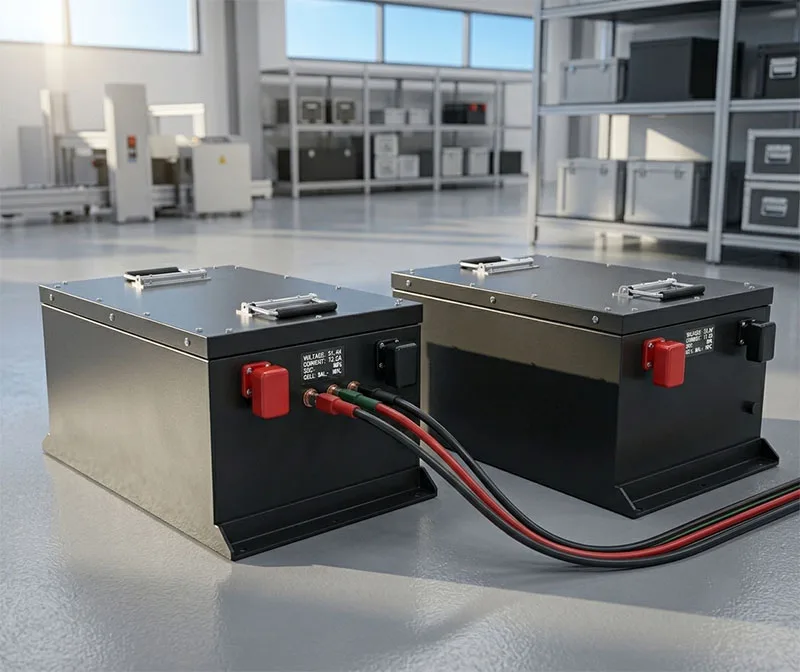
An LFP battery utilizes a distinct lithium iron phosphate battery internal structure. The chemical formula is LiFePO4. The cathode uses iron and phosphate rather than cobalt or nickel. LFP relies on the same basic intercalation mechanism as other lithium cells. Lithium ions move back and forth between electrodes during cycles.
The crystal structure of iron phosphate resembles a sturdy olivine lattice. This three-dimensional arrangement bounds oxygen atoms tightly. Because of this strong atomic structure, the cell stays incredibly stable. It resists structural degradation even under continuous high current demands.
[Battery Chemistry Family Diagram]
Lithium-Ion Battery Family (Generic Term)
├── LFP (LiFePO4 – Iron Phosphate / Ultra Safe)
├── NMC (Nickel Manganese Cobalt / High Density)
├── NCA (Nickel Cobalt Aluminum / EV Long Range)
└── LCO (Lithium Cobalt Oxide / Cell Phones)
What Does “Lithium-Ion Battery” Really Mean?
People often use the term lithium-ion battery to describe only one type of cell. In reality, it is a broad umbrella name. Think of it like the word “engine.” Under this umbrella, you find various distinct chemical builds. The differences come down to the cathode materials.
A standard NMC lithium battery uses nickel, manganese, and cobalt. LCO powers your compact smartphones. LFP provides the heavy-duty muscle for industrial vehicles. They all move lithium ions, but their operational limits are completely different.
Key Differences Between LFP and Other Lithium-Ion Chemistries
The main trade-off comes down to energy density versus longevity. LFP packs thicker chemical structures. This means they deliver slightly lower energy density than NMC cells. However, LFP easily wins on safety and lifecycle costs. They perform beautifully without expensive, volatile raw materials.
LFP Batteries vs Lithium-Ion: Lifespan and Cycle Life Comparison | High Cycle Life Battery
Which Battery Lasts Longer?
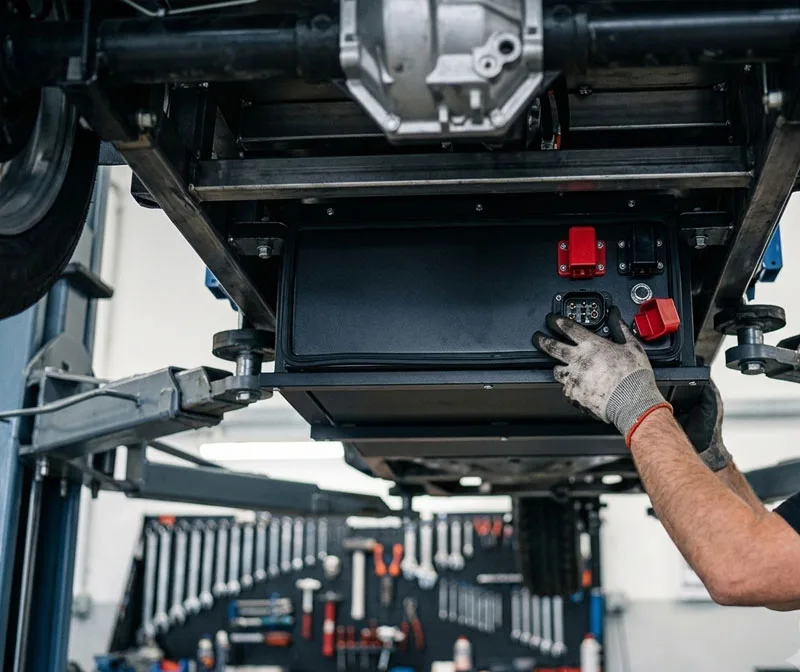
For commercial fleet operators, lifespan determines profit margins. You cannot afford to replace batteries every two years. An LFP pack functions as a true high cycle life battery configuration. Let’s look at the hard data regarding standard battery cycle life across common chemistries.
| Battery Chemistry | Typical Cycle Life (to 80% Capacity) | Est. Service Years (Daily Duty) | User Benefit & Financial Advantage |
|---|---|---|---|
| LFP (LiFePO4) | 4,000 – 8,000+ | 10 to 15 Years | Outlasts your equipment chassis. Eliminates mid-life replacement labor. |
| NMC / NCA | 1,000 – 2,500 | 3 to 5 Years | Good for lightweight designs, but requires multiple replacement purchases. |
| Traditional Lead-Acid | 300 – 500 | 1 to 2 Years | Cheap initial purchase, but wastes money through constant downtime. |
Factors That Affect Battery Lifespan
Real-world battery degradation happens because of poor operational habits. Deep discharges down to 0% damage NMC packs quickly. High ambient warehouse heat degrades lead-acid plates within months. LFP handles deep discharges up to 90% without losing structural integrity. It functions as a robust deep cycle lithium battery that simplifies daily shift operations.
Which Battery Offers Better Long-Term Value?
Look past the initial invoice price tag. Cheap batteries cost more over their lifetime due to maintenance. LFP eliminates weekly watering schedules. It runs for thousands of shifts without a hitch. This translates directly into a rock-bottom total cost of ownership.
Energy Density Comparison | LFP Batteries vs Lithium-Ion for Range and Power
What Is Energy Density?
Energy density tells you how much electricity a pack stores per kilogram ($Wh/kg$). It determines your physical sizing constraints. High energy density means you get a lighter battery pack. Low density means you need a larger metal box to hold the same capacity.
Why NMC Has Higher Energy Density
NMC chemistry uses compact nickel crystal structures. This allows it to hit up to $250 Wh/kg$. Passenger electric vehicles rely heavily on this formulation. It allows sleek cars to achieve long highway ranges. If you are building a sports car, you need NMC.
Why LFP Is Better for Stationary and Commercial Applications
Industrial gear like forklifts and AGVs do not care about minimal weight saving. In fact, forklifts often need heavy counterweights to lift pallets safely. LFP delivers up to $160 Wh/kg$. This provides plenty of power without bulky layouts. For stationary energy storage battery setups, safety and long life always trump ultra-light weight.
Safety Comparison | Why LFP Batteries Offer Better Thermal Stability
Thermal Stability: LFP vs Other Lithium-Ion Batteries
Let’s discuss thermal runaway, the ultimate safety concern. When a battery overheats, it can catch fire. The chemical breakdown temperature determines your safety margins. LFP offers superior thermal stability battery characteristics. It does not break down until it hits 600°C. Compare that to NMC, which can experience runaway at just 220°C.
| Safety Factor | NMC Chemistry | LFP Chemistry | User Benefit & Safety Advantage |
|---|---|---|---|
| Runaway Point | 220°C (Low threshold) | 600°C (Extremely high) | Prevents fire during extreme summer operations or cooling failures. |
| Puncture Reaction | Smoke and violent flame | Slight heat, no open flame | Protects operators during warehouse forklift puncture accidents. |
Why LFP Is Preferred for Commercial Equipment
Industrial insurance policies are getting stricter. Storing hundreds of NMC-powered AGVs inside a closed facility creates liability risks. Industry technical reviews from 2025 highlight a clear trend: commercial buyers are making LFP their primary choice. It delivers excellent lithium battery safety. This keeps your warehouse operations safe and compliant.
Cost Comparison | Initial Investment vs Total Cost of Ownership (TCO)
Purchase Cost Comparison
NMC packs contain expensive cobalt and nickel. Their prices swing wildly based on mining markets. LFP relies on abundant iron and copper. This keeps pricing highly predictable. The raw material economics make LFP a more stable long-term choice for bulk buyers.
Which Battery Delivers Better ROI?
Let’s calculate the real numbers for a 50-vehicle fleet. Purchasing cheap lead-acid units saves money on day one. But you will buy multiple replacements over ten years. You also pay for regular maintenance labor. LFP avoids these extra expenses completely. The investment pays for itself within two years.
Environmental Impact | Sustainability of LFP Batteries vs Lithium-Ion
Raw Materials and Resource Availability
Cobalt mining faces severe ethical challenges and environmental criticism. Choosing LFP means you completely bypass these compliance risks. Iron and phosphate are simple to harvest. They create a cleaner, more ethical corporate supply chain.
Recycling and Environmental Benefits
LFP packs contain zero toxic heavy metals. This makes them much cheaper to recycle at end-of-life. Because they last twice as long as NMC, they reduce electronic waste. They help your business hit its sustainability and ESG targets easily.
Which Battery Chemistry Is Best for Different Applications?
Golf Carts and Low-Speed Electric Vehicles
Are you tired of sluggish hill climbing performance? Using LFP batteries vs lithium ion for golf carts solves this issue permanently. LFP maintains stable voltage during high-current acceleration. Your carts get snappy torque even when the pack is down to 20% capacity.
AGVs and Industrial Equipment
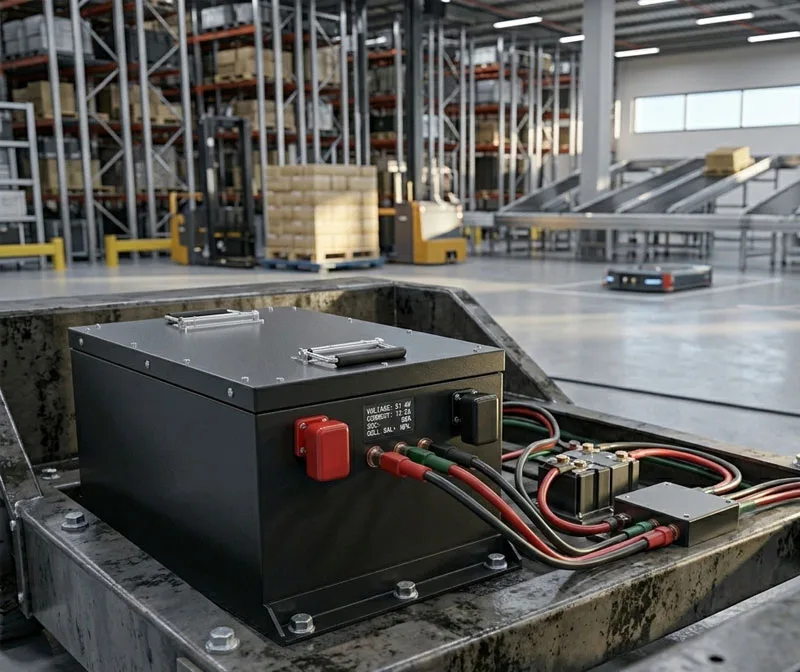
24/7 robotic warehouses cannot tolerate slow charging. LFP handles fast opportunity charging safely during employee breaks. It doesn’t overheat or degrade. This keeps your automated guided vehicles moving non-stop across shifts.
Solar Energy Storage Systems
When evaluating which is better LFP or lithium-ion battery for solar storage, check the lifecycle requirements. Solar systems charge and discharge daily. NMC wears out after just 5 years of daily use. LFP runs smoothly for over 15 years. This makes it the clear choice for solar setups.
How to Choose Between LFP and Other Lithium-Ion Batteries
First, check your physical space limitations. If you have plenty of room, LFP is always the superior choice. Next, evaluate your safety standards. For high-occupancy buildings, avoid volatile options completely. Finally, check your manufacturer credentials. Ensure they offer robust hardware integration.
Why Choose an OEM LFP Battery Manufacturer?
Custom Battery Pack Design
As an experienced OEM LFP battery manufacturer, we understand that standard layouts often fall short. We build custom-shaped metal boxes to fit your chassis perfectly. We add integrated heating pads for cold northern winters. We build robust IP67 water protection for cleaning equipment.
Quality Control and Engineering Support
We test every cell for capacity and internal resistance before assembly. Our engineers help integrate smart CAN bus or Bluetooth monitoring protocols into your machinery dashboards. This makes fleet management fast and simple.
Frequently Asked Questions About LFP Batteries vs Lithium-Ion
Is an LFP battery a lithium-ion battery?
Yes. It is a highly stable type within the broader lithium-ion family tree. It uses iron phosphate as the cathode material.
Which battery lasts longer?
LFP lasts significantly longer. It delivers up to 6000 cycles. Standard NMC packs typically drop capacity after 2000 cycles.
Which battery is safer?
LFP wins easily on safety. When evaluating an LFP batteries vs lithium ion safety comparison, look at the thermal runaway points. LFP resists fire up to 600°C.
Why are more EV manufacturers adopting LFP batteries?
It lowers production costs. It avoids supply chain issues with cobalt and ensures excellent vehicle fire safety.
Which battery is better for solar energy storage?
LFP is much better. It supports daily full discharges for over ten years without needing a replacement.
Is LFP worth the investment?
Yes. The zero-maintenance design and long lifespan save you thousands in operating costs over time.
Get Custom LFP Battery Solutions for Your Business
Stop risking your business with unpredictable, unsafe battery setups. Let our technical engineering team design a robust, high-durability power system customized for your commercial fleets or solar grids. Reach out today for a free technical consultation.
Related Posts
 https://anengjibattery.com/wp-content/uploads/2026/09/AnengJIBattery-Best-LiFePO4-Battery-How-to-Choose-the-Right-One.webp
675
1000
Battery Expert Team
https://anengjibattery.com/wp-content/uploads/2025/06/logo2-300x138.png
Battery Expert Team2026-09-17 08:52:142026-09-17 08:52:31How to Choose the Best LiFePO4 Battery
https://anengjibattery.com/wp-content/uploads/2026/09/AnengJIBattery-Best-LiFePO4-Battery-How-to-Choose-the-Right-One.webp
675
1000
Battery Expert Team
https://anengjibattery.com/wp-content/uploads/2025/06/logo2-300x138.png
Battery Expert Team2026-09-17 08:52:142026-09-17 08:52:31How to Choose the Best LiFePO4 Battery https://anengjibattery.com/wp-content/uploads/2026/09/anengjiBattery-lifepo4-battery-cell-packaging-wholesale.webp
675
1000
Battery Expert Team
https://anengjibattery.com/wp-content/uploads/2025/06/logo2-300x138.png
Battery Expert Team2026-09-16 09:52:342026-09-16 09:52:57LiFePO4 Battery Wholesale Guide: Best Suppliers in Spain
https://anengjibattery.com/wp-content/uploads/2026/09/anengjiBattery-lifepo4-battery-cell-packaging-wholesale.webp
675
1000
Battery Expert Team
https://anengjibattery.com/wp-content/uploads/2025/06/logo2-300x138.png
Battery Expert Team2026-09-16 09:52:342026-09-16 09:52:57LiFePO4 Battery Wholesale Guide: Best Suppliers in Spain https://anengjibattery.com/wp-content/uploads/2026/09/anengjibattery-Top-Lithium-Ion-Battery-Producers-for-Spain-Market-Growth.webp
675
1000
Battery Expert Team
https://anengjibattery.com/wp-content/uploads/2025/06/logo2-300x138.png
Battery Expert Team2026-09-16 01:13:392026-09-16 01:14:05Top Lithium Ion Battery Producers for Spain’s Market Growth
https://anengjibattery.com/wp-content/uploads/2026/09/anengjibattery-Top-Lithium-Ion-Battery-Producers-for-Spain-Market-Growth.webp
675
1000
Battery Expert Team
https://anengjibattery.com/wp-content/uploads/2025/06/logo2-300x138.png
Battery Expert Team2026-09-16 01:13:392026-09-16 01:14:05Top Lithium Ion Battery Producers for Spain’s Market Growth https://anengjibattery.com/wp-content/uploads/2026/09/Bulk-Lithium-Ion-Battery-Cells-Procurement-Guide-B2B-Sourcing.webp
675
1000
Battery Expert Team
https://anengjibattery.com/wp-content/uploads/2025/06/logo2-300x138.png
Battery Expert Team2026-09-14 09:47:322026-09-14 09:47:48Bulk Lithium-Ion Battery Cells Procurement Guide | B2B Sourcing
https://anengjibattery.com/wp-content/uploads/2026/09/Bulk-Lithium-Ion-Battery-Cells-Procurement-Guide-B2B-Sourcing.webp
675
1000
Battery Expert Team
https://anengjibattery.com/wp-content/uploads/2025/06/logo2-300x138.png
Battery Expert Team2026-09-14 09:47:322026-09-14 09:47:48Bulk Lithium-Ion Battery Cells Procurement Guide | B2B Sourcing


Leave a Reply
Want to join the discussion?Feel free to contribute!