
48V Battery System vs 12V: The Ultimate Upgrade Guide for 2026
July 15, 2026 / Battery Expert Team / Battery Basics
Introduction
Every fleet manager dreads unexpected power dropouts. Upgrading your equipment configuration to a 48V Battery System solves these bottlenecks immediately. You might feel overwhelmed by conflicting technical advice. Is the cost of switching really worth it? Let’s cut through the noise together. Low voltage limits your equipment capacity. It wastes energy through heat. High-current loads drag down your productivity. This guide exposes why higher voltage is the ultimate solution. We will look at real engineering facts. No fluff, just practical power strategies.
Buyer’s Reality Check: “Will changing my voltage fry my existing motors?”
No. You must upgrade the controller and motor together. Running 48V into a 12V motor destroys it instantly. But a complete upgrade pays for itself. It slashes your energy bills within months.
What Is a 48V Battery System? | Understanding 48V Lithium Battery System Basics
What Is a 48V Battery System?
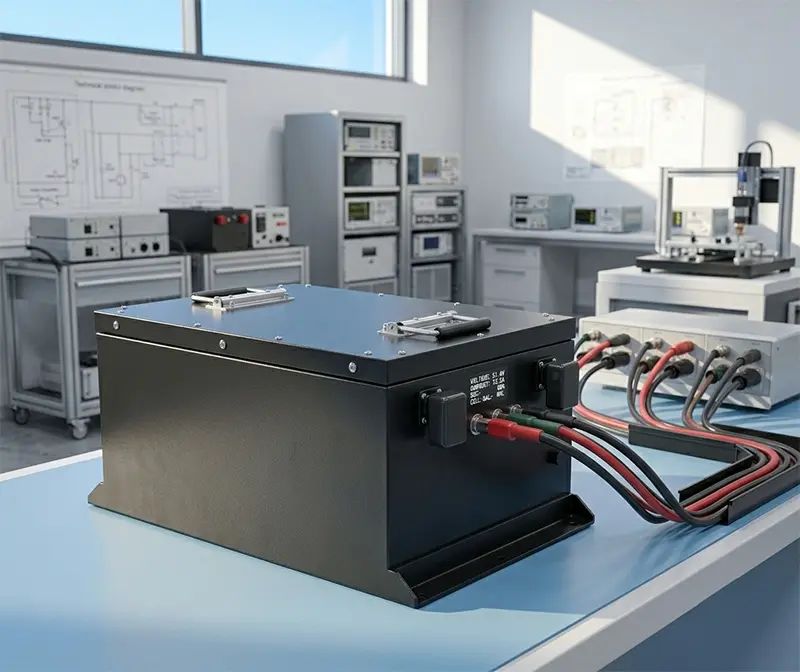
A 48V lithium battery system is a modern power architecture. It is designed for heavy duty cycles. Nominally, it delivers 48 volts. However, lithium iron phosphate (LiFePO4) chemistry changes the math. A standard LFP pack uses 16 cells in series. This is often called a 16S configuration. Each cell has a nominal voltage of 3.2V. Therefore, the actual working voltage is 51.2V.
Why does this nominal difference matter? It gives you a stable voltage plateau. Lead-acid alternatives drop voltage quickly. LFP keeps pushing full power until it is nearly empty. For your industrial fleet, adopting a standardized 48V Battery System provides robust power. It maintains high torque through the entire shift.
[System Architecture Visual Map]
Battery Pack (16S LiFePO4 / 51.2V)
│
▼
Integrated BMS (Safety & Balance)
│
▼
System Controller / Inverter
│
▼
Electric Motor (Golf Cart / AGV / Solar Grid)
Main Components of a 48V Battery System
A high-performance setup relies on synchronized components. It is not just cells in a box. Here are the core parts:
- Battery Pack: High-density lithium cells welded with copper busbars.
- BMS: The brain. It monitors temperature, voltage, and state of charge.
- Lithium Battery Charger: Matches the LFP curve perfectly to avoid plating.
- DC/DC Converter: Steps down 48V to 12V battery for accessory lights.
- System Controller: Manages current limits during high acceleration.
- Fuses & Contactors: Mechanical safety cutoffs for short-circuit events.
Understanding Voltage, Current and Power | Why 48V Battery Systems Improve Efficiency
What Are Volts, Amps and Watts?
Let’s break down the basic physics of electricity. Voltage is electrical pressure. Current represents the flow volume of electrons. Power is the total work done. The relationship is governed by a simple rule:
Watts measure actual performance. To get more work done, you have two choices. You can increase the current. Or you can raise the voltage. Raising current requires massive cables. It creates huge thermal stress.
Why Lower Current Means Higher Efficiency
When you increase voltage, you slash the current. Let’s look at a 2400W industrial machine.
| System Voltage | Target Power | Current (Amps) | Required Copper Gauge | User Benefit & Advantage |
|---|---|---|---|---|
| 12V Setup | 2400 Watts | 200 Amps | 2/0 AWG (Thick) | High weight, expensive thick copper, and fast power drain. |
| 48V Setup | 2400 Watts | 50 Amps | 8 AWG (Thin) | Saves 75% copper weight, lower install cost, runs much cooler. |
Why Less Current Reduces Heat Loss
Heat loss in a wire is not linear. It is calculated by squaring the current. This is Joule’s first law.
Look at that square symbol closely. Cutting current by four reduces heat loss by sixteen times. A 12V system runs hot. It melts connectors. It causes sudden voltage drops. A 48V power supply system runs cool and efficient. Your terminal connections stay pristine.
48V Battery System vs 12V System | Efficiency, Performance and Energy Loss Comparison
Performance Comparison Between 12V and 48V Systems
When analyzing a 48V battery system vs 12V system, the performance gap becomes obvious. Low-voltage setups are highly vulnerable to voltage sag. When you hit the pedal, the battery voltage dips. The motor loses power. Under heavy loads, efficiency drops.
A high voltage battery system handles surges easily. It delivers consistent torque. It allows faster acceleration.
| Feature | 12V Architecture | 48V Architecture | User Benefit & Advantage |
|---|---|---|---|
| Line Loss | Extremely High | 93.7% Lower | Saves battery capacity. Longer running hours per charge cycle. |
| Cable Weight | Very Heavy | Lightweight | Reduces vehicle curb weight. Increases structural payload capacity. |
| Motor Torque | Sluggish under load | Instant, consistent | Climbs steep hills with heavy payloads without stalling. |
| Charging Speed | Slow (high current bottleneck) | Fast | Reduces downtime. Fits tight warehouse shift changes. |
Why Modern Electric Vehicles Prefer 48V Systems
Automotive and industrial designs are shifting rapidly. According to global industrial reports from 2025, over 65% of new material handling equipment has moved away from low-voltage systems. The reason is simple. Accessories like power steering, electric cabin heating, and heavy hydraulic actuators demand immense power. A 12V system cannot supply this without massive current. Moving to a 48V system allows seamless integration. It keeps control electronics completely stable during heavy mechanical lifts.
Is Upgrading from 12V to 48V Worth It?
You might ask: “Should I scrap my working 12V hardware?” If your operation is small, maybe not. But for commercial applications, yes. Keeping 12V leads to constant cable replacements. It causes early battery degradation. Upgrading lowers your overall maintenance costs. It improves your fleet efficiency immediately.
Applications of 48V Battery Systems | Golf Carts, AGVs, RVs, Marine and Solar Storage
Golf Cart and Low-Speed Electric Vehicles
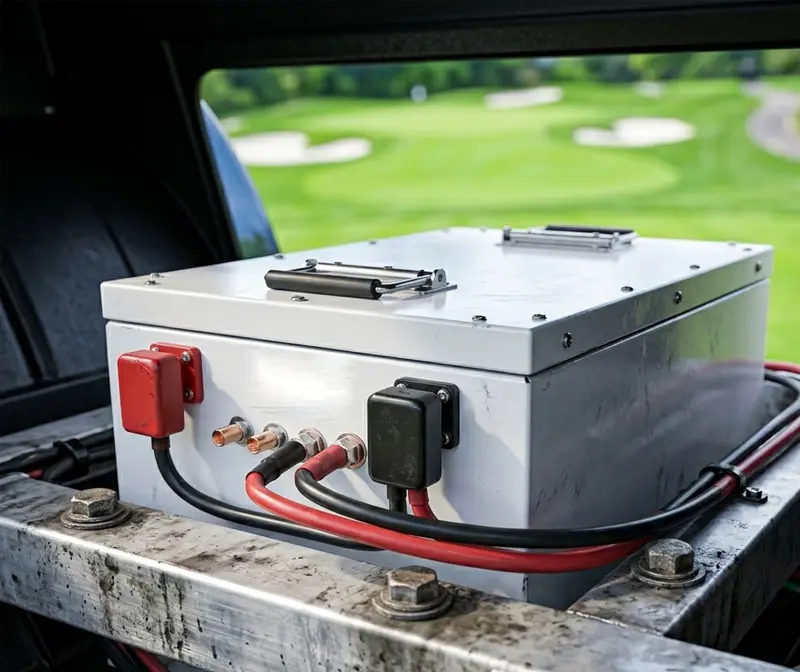
Traditional golf carts used six 8V lead-acid batteries. They were incredibly heavy. They required constant water refilling. A 48V battery system for golf cart fleets replaces this hassle. It cuts hundreds of pounds off the vehicle weight. It ensures uphill climbs are effortless.
AGV, Forklifts and Industrial Equipment
In a 24/7 automated warehouse, downtime is expensive. Automated Guided Vehicles (AGVs) must charge fast. They must run continuously. A deep cycle battery system provides the durability they need. It supports fast opportunity charging. Forklifts get sustained lifting speeds even during long shifts.
Marine and RV Off-Grid Systems
Modern RV owners want to run heavy appliances. They want to run air conditioners, microwaves, and espresso machines off-grid. Old 12V alternators struggle with these loads. A high-voltage system runs these high-wattage electronics smoothly. You do not need loud generators.
Solar Energy Storage Systems
Residential solar is growing fast. In 2026, the global demand for home energy storage battery system setups reached new heights. A 48V battery system for solar energy storage connects directly to modern hybrid inverters. It reduces inverter conversion losses. It keeps your emergency backup power ready.
Battery Safety Considerations | Battery Management System and Safe Operation
Why BMS Is Critical in a 48V Battery System
Safety is paramount. A high voltage battery pack stores immense energy. Without control, a short circuit can be catastrophic. That is why a Battery Management System (BMS) is absolutely vital. A secure 48V Battery System requires active management. It monitors individual cell voltages. It keeps cells balanced. If it detects a fault, it cuts the circuit instantly.
Safe Charging Practices
Never use a lead-acid charger for lithium. LFP batteries require a specific constant current/constant voltage profile. Always charge within recommended temperature limits. Never charge below freezing temperatures. Doing so causes permanent lithium plating. It degrades your capacity.
Common Safety Mistakes to Avoid
Many operators bypass the BMS to save pennies. This is a massive mistake. Others mix old cells with new ones. This causes severe imbalance. It ruins the entire pack quickly. Avoid wet storage conditions. Keep your connections dry and clean.
Battery Storage Best Practices | How to Extend the Service Life of a 48V Battery System
Ideal Storage Temperature and State of Charge
Do not store your batteries empty. Do not store them fully charged either. The sweet spot for long-term storage is between 40% and 60% state of charge. Keep the storage room cool. Aim for temperatures between 15°C and 25°C. Extreme heat degrades lithium fast.
Long-Term Storage Maintenance
Lithium cells self-discharge slowly. Over months, they can drop to 0%. This triggers the BMS under-voltage lockout. Once locked, the battery is hard to wake up. Recharge your stored battery packs every three to six months. This preserves cell health.
Factors That Shorten Battery Life
What kills LFP cells? Repeated high-temperature operations. Frequent deep discharging below 10% SOC. High-current charging without proper balancing. Control these factors, and your pack will last over ten years.
Cost Benefits of a 48V Battery System | Lower Operating Costs and Better ROI
Initial Investment vs Lifetime Cost
Let’s talk numbers. Yes, a 48V battery pack costs more upfront than lead-acid. But lead-acid only lasts about 500 cycles. A quality LiFePO4 pack delivers over 4000 cycles. You would buy eight lead-acid packs to match one lithium pack. That is where you win on total cost of ownership.
Maintenance Cost Comparison
Lead-acid batteries need distilled water. They require periodic equalization charges. They vent acid vapors that corrode your metal battery trays. LFP is completely maintenance-free. There is no acid to refill. No corroded terminals to clean. You save thousands on labor.
| Battery Type | Cycle Life (80% DoD) | Daily Maintenance Needed | Replacement Frequency | User Benefit & Advantage |
|---|---|---|---|---|
| Lead-Acid | 300 – 500 cycles | Yes (Water topping) | Every 1.5 – 2 years | Cheap to buy first, but eats labor time and requires early replacement. |
| 48V LiFePO4 | 3500 – 6000 cycles | Zero | Every 8 – 10 years | Lowest lifetime cost, zero labor expense, extreme reliability. |
Return on Investment for Commercial Fleets
For commercial cleaning machines and AGVs, uptime is money. Fast charging allows multi-shift operations. You do not need spare battery packs lying around. Your fleet operates at peak efficiency. This pays back the initial transition costs within the first year of operation.
Scalability of a 48V Battery System | Modular Expansion for Future Energy Needs
Parallel Expansion
What if your power needs grow? LFP chemistry makes scaling easy. You can connect multiple 48V battery modules in parallel. This increases your capacity. It does not raise system voltage. A modular energy storage battery system grows alongside your business.
Battery System Integration
Integrating lithium packs requires communication compatibility. Ensure your BMS supports CAN or RS485 protocols. This allows the pack to talk to your inverter. It coordinates charge rates dynamically. It protects cells during high load demands.
Future-Proof Energy Solutions
The energy world is changing. According to the IEA Global EV Outlook 2026, LFP batteries now account for over 55% of global deployment. Buying into a 48V architecture is future-proofing. It aligns your business with global supply chain standards. It makes finding replacement parts simple.
How to Choose the Right 48V Battery System for Your Equipment
Match Voltage to Equipment Requirements
Check your motor controller specifications first. Ensure it can handle the maximum charge voltage of LFP. A standard 48V LFP pack charges up to 58.4V. Your electronics must be rated for this ceiling.
Choose the Right Battery Capacity
Capacity is measured in Amp-hours (Ah). To calculate what you need, multiply your run hours by the average current draw. If your AGV draws 20A and runs for 5 hours, you need at least a 100Ah pack. Keep a 20% safety margin.
Consider Communication Protocols
Do you need remote monitoring? Modern industrial packs feature Bluetooth apps. They integrate CAN bus connections. This lets you see cellular health in real-time. It makes troubleshooting incredibly fast.
Check Certifications and Compliance
Never buy cheap, uncertified battery packs. Look for UN38.3 certification for safe transport. Check for IEC62619 for industrial safety. If you export, CE and UL1973 certifications are non-negotiable. This protects your business from liability.
Why Choose a Professional OEM 48V Battery System Supplier?
Custom Battery Pack Design
As a reliable OEM 48V battery system manufacturer, we understand your unique operational pain points. Off-the-shelf options rarely fit custom vehicle bays perfectly. We design custom metal enclosures. We add heating sheets for cold climates. We build custom wiring harnesses.
Manufacturing and Quality Control
Every battery pack undergoes rigorous testing. We perform capacity grading. We run vibration tests. We cycle every pack before shipping. This ensures you receive flawless hardware.
Engineering Support for Manufacturers
We don’t just sell batteries; we provide engineering partnerships. We help design your complete 48V power system. Our team integrates communication protocols with your vehicle controllers. We ensure your production line runs smoothly.
Frequently Asked Questions About 48V Battery Systems
Is a 48V battery system more efficient than a 12V system?
Yes. It operates with lower current. This slashes heat generation. It cuts power transmission loss through cables by over 93%.
Can I replace my 12V battery system with a 48V system?
Yes, but you must replace your motor, controller, and charger. Do not connect 48V directly to 12V electronics.
How long does a 48V battery system last?
A high-quality complete 48V lithium battery system with BMS lasts between 3500 and 6000 cycles. That is about ten years.
Can multiple 48V battery systems be connected together?
Yes. You can connect them in parallel. This scales your overall capacity. It keeps system voltage at 48V.
Is a 48V system safe?
Yes. 48V is generally touch-safe under dry conditions. It is below the 60V DC high-voltage safety threshold.
How do I maintain a 48V battery system?
Keep connections clean and dry. Avoid long-term storage at 0% SOC. Store in moderate temperatures. The BMS handles the rest.
Get Custom 48V Battery System Solutions for Your Business
Ready to take your business efficiency to the next level? Stop dealing with weak, overheated low-voltage setups. Let us design a highly integrated, reliable power solution tailored specifically for your golf carts, AGVs, or off-grid solar equipment. Contact our technical team today for a free design consultation.
Related Posts
 https://anengjibattery.com/wp-content/uploads/2026/09/AnengJIBattery-Best-LiFePO4-Battery-How-to-Choose-the-Right-One.webp
675
1000
Battery Expert Team
https://anengjibattery.com/wp-content/uploads/2025/06/logo2-300x138.png
Battery Expert Team2026-09-17 08:52:142026-09-17 08:52:31How to Choose the Best LiFePO4 Battery
https://anengjibattery.com/wp-content/uploads/2026/09/AnengJIBattery-Best-LiFePO4-Battery-How-to-Choose-the-Right-One.webp
675
1000
Battery Expert Team
https://anengjibattery.com/wp-content/uploads/2025/06/logo2-300x138.png
Battery Expert Team2026-09-17 08:52:142026-09-17 08:52:31How to Choose the Best LiFePO4 Battery https://anengjibattery.com/wp-content/uploads/2026/09/anengjiBattery-lifepo4-battery-cell-packaging-wholesale.webp
675
1000
Battery Expert Team
https://anengjibattery.com/wp-content/uploads/2025/06/logo2-300x138.png
Battery Expert Team2026-09-16 09:52:342026-09-16 09:52:57LiFePO4 Battery Wholesale Guide: Best Suppliers in Spain
https://anengjibattery.com/wp-content/uploads/2026/09/anengjiBattery-lifepo4-battery-cell-packaging-wholesale.webp
675
1000
Battery Expert Team
https://anengjibattery.com/wp-content/uploads/2025/06/logo2-300x138.png
Battery Expert Team2026-09-16 09:52:342026-09-16 09:52:57LiFePO4 Battery Wholesale Guide: Best Suppliers in Spain https://anengjibattery.com/wp-content/uploads/2026/09/anengjibattery-Top-Lithium-Ion-Battery-Producers-for-Spain-Market-Growth.webp
675
1000
Battery Expert Team
https://anengjibattery.com/wp-content/uploads/2025/06/logo2-300x138.png
Battery Expert Team2026-09-16 01:13:392026-09-16 01:14:05Top Lithium Ion Battery Producers for Spain’s Market Growth
https://anengjibattery.com/wp-content/uploads/2026/09/anengjibattery-Top-Lithium-Ion-Battery-Producers-for-Spain-Market-Growth.webp
675
1000
Battery Expert Team
https://anengjibattery.com/wp-content/uploads/2025/06/logo2-300x138.png
Battery Expert Team2026-09-16 01:13:392026-09-16 01:14:05Top Lithium Ion Battery Producers for Spain’s Market Growth https://anengjibattery.com/wp-content/uploads/2026/09/Bulk-Lithium-Ion-Battery-Cells-Procurement-Guide-B2B-Sourcing.webp
675
1000
Battery Expert Team
https://anengjibattery.com/wp-content/uploads/2025/06/logo2-300x138.png
Battery Expert Team2026-09-14 09:47:322026-09-14 09:47:48Bulk Lithium-Ion Battery Cells Procurement Guide | B2B Sourcing
https://anengjibattery.com/wp-content/uploads/2026/09/Bulk-Lithium-Ion-Battery-Cells-Procurement-Guide-B2B-Sourcing.webp
675
1000
Battery Expert Team
https://anengjibattery.com/wp-content/uploads/2025/06/logo2-300x138.png
Battery Expert Team2026-09-14 09:47:322026-09-14 09:47:48Bulk Lithium-Ion Battery Cells Procurement Guide | B2B Sourcing


Leave a Reply
Want to join the discussion?Feel free to contribute!