
What Is the 100kWh Solar Battery Storage System Cost in Europe?
May 25, 2026 / Battery Expert Team / battery energy storage
💡 Technical Review Authority:
Prepared by Senior Energy Storage Project Engineers & Commercial Infrastructure Specialists. Verified for 2025/2026 European Grid Compliance Standards.
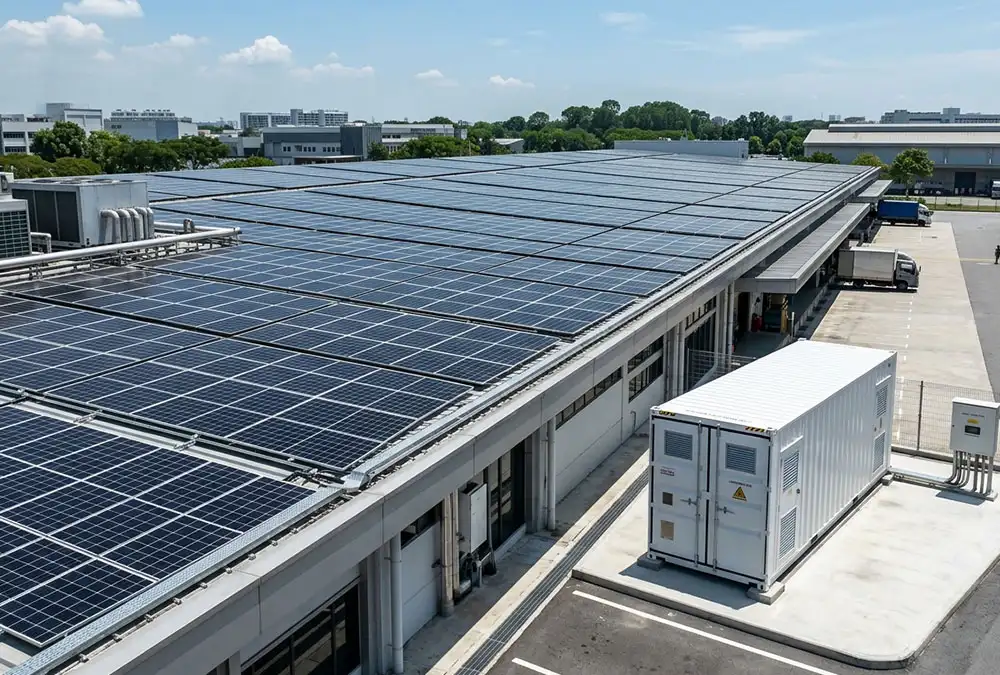
Are you considering installing a 100kWh solar battery storage system cost in Europe for your factory, commercial building, farm, logistics park, or EV charging station, but find yourself concerned about excessive upfront capital expenditures, vague return on investment (ROI) timelines, or how to navigate the complex landscape of European compliance? As European electricity markets face unprecedented volatility and grid distribution tariffs continue to climb, forward-thinking enterprises are rapidly turning to a commercial battery energy storage system (BESS) to shield themselves from soaring operational expenses, establish true energy independence, and fortify grid resilience.
Investing in a commercial energy storage solution is no longer just a sustainability metric—it is a critical fiscal strategy. However, navigating procurement requires answering several complex questions: How much does a comprehensive 100kWh solar battery storage system cost in Europe across different regional jurisdictions? What technical variables separate an industrial-grade asset from a low-tier setup? How do advanced software frameworks influence your payback period, and what real-world performance metrics should you demand from an Engineering, Procurement, and Construction (EPC) partner? This exhaustive architectural and economic guide breaks down everything a commercial operator must evaluate before signing a procurement contract.
What Is a 100kWh Solar Battery Storage System?
Understanding Commercial Solar Plus Storage Systems
A commercial solar plus storage system is an integrated hardware and software architecture designed to capture solar-generated electricity, store it within an electrochemical array, and intelligently dispatch it when grid power is expensive, unstable, or unavailable. At its core, a 100kWh solar battery storage system cost in Europe represents the total financial and technical commitment for an infrastructure asset capable of delivering or absorbing 100 kilowatt-hours of electrical energy.
To correctly evaluate these systems, industrial operators must clearly distinguish between power and energy capacity:
- Power Capacity (kW): Dictated by the Power Conversion System (PCS) or inverter. A 100kW inverter governs how fast energy can be injected into or drawn from the grid at any single moment.
- Energy Capacity (kWh): Dictated by the battery chemistry cell volume. A 100kWh battery capacity dictates the total volume of energy stored, determining how long that power can be sustained. For instance, a system paired with a 50kW PCS can discharge continuously for approximately 2 hours, whereas pairing it with a 100kW PCS allows for a highly intensive 1-hour discharge cycle, which is ideal for extreme peak shaving energy storage applications.
In the contemporary European C&I energy storage system market, these setups bridge the gap between volatile local generation (such as rooftop photovoltaic arrays) and rigid industrial demand profiles, transforming unpredictable green electrons into a dispatchable, high-value corporate asset.
Main Components of a 100kWh Battery Energy Storage System
A reliable commercial energy storage solution is far more than an oversized bank of batteries. It is a highly engineered, interconnected multi-layered technology stack. A failure or bottleneck in any single component compromises the lifetime value of the entire asset.
- LiFePO4 Battery Storage System: Modern commercial installations almost exclusively utilize Lithium Iron Phosphate (LiFePO4) chemistry. Known for superior thermal stability, non-explosive failure modes, and extensive cycle life, these cells form the mechanical backbone of industrial battery storage.
- Power Conversion System (PCS): The bidirectional inverter that transitions power between DC (battery) and AC (grid/building). The efficiency of the PCS directly governs the round-trip efficiency (RTE) of the system.
- Battery Management System (BMS): A multi-tiered electronic control system that monitors cell-level voltage, temperature, and state of charge (SoC). It prevents overcharging, over-discharging, and cell imbalance, acting as the primary defense against thermal runaway.
- Energy Management System (EMS): The intelligent “brain” of the facility. The energy management system EMS executes algorithmic controls based on real-time electricity pricing, weather forecasts, and building load profiles to perform autonomous peak shaving and load shifting.
- HVAC & Advanced Fire Suppression: Industrial enclosures incorporate liquid-cooling loops or HVAC climate units alongside specialized aerosol or Novec 1230 fire suppression agents to satisfy stringent European safety codes.
- Cloud Monitoring Platform: Provides asset managers with granular data streams tracking health metrics, degradation rates, and historical revenue capture.
What Factors Affect 100kWh Solar Battery Storage System Cost in Europe?
Evaluating a 100kWh solar battery storage system cost in Europe requires inspecting an array of physical, regulatory, and geographical variables. No two commercial sites share identical load curves or interconnection environments, meaning hardware configuration and soft costs swing significantly based on deployment parameters.
Solar Panel Type and Quality
For complete “solar plus storage” turn-key setups, the primary generation component plays a heavy role in upfront costs. Specifying Tier 1 solar panels (as ranked by BloombergNEF) guarantees that the manufacturing entity possesses the financial stability to back its 25-to-30-year performance warranties. Monocrystalline modules utilizing n-type TOPCon or HJT (Heterojunction Technology) are favored in Europe due to their superior conversion efficiencies (frequently exceeding 22.5%) and excellent low-light performance. While choosing generic or unranked modules might reduce immediate capital requirements by 15%, their faster degradation and lower energy yield over time fundamentally suppress your ultimate ROI.
Battery Storage System Type and Capacity
While historical architectures relied on lead-acid options due to low entry expenses, modern European grid environments demand lithium battery energy storage. Lead-acid cells suffer from low Depth of Discharge (DoD) limitations (typically capped at 50%) and short operational lifespans (1,500 cycles). Conversely, a premium LiFePO4 battery storage system safely accommodates a 90% to 95% DoD and delivers between 6,000 and 8,000 cycles before nominal capacity degrades to 80%. Furthermore, opting for pre-engineered, modular configurations enables seamless scalability. For example, selecting an enclosure designed for future expansion allows an enterprise to scale from 100kWh to 200kWh without purchasing a completely new PCS or replacing core EMS infrastructure.
Inverter Type and Power Capacity
The configuration of your inverter alters both system performance and price. Selecting a grid-tied battery storage inverter means the system functions exclusively in parallel with the local utility network. However, adding microgrid capabilities or emergency backup functions requires a heavy-duty hybrid solar storage system inverter capable of executing an automatic “islanded” transition during grid blackouts. The power capacity of the inverter must match the operational objectives of the site: a commercial solar battery storage system 100kW setup requires robust three-phase synchronization to handle heavy industrial motors, inductive loads, and fast-charging EV hardware without triggering harmonic distortion or voltage drops.
Installation Costs Across Europe
The European Union cannot be treated as a monolithic economic entity regarding physical labor and engineering deployment. Installing a 100kWh system in Germany or Denmark incurs substantially higher labor charges and grid compliance costs than an identical deployment in Spain, Poland, or Italy.
Beyond manual labor, physical installation requires comprehensive site preparation, including pouring reinforced concrete pads for outdoor containerized enclosures, laying specialized subterranean cabling, upgrading building distribution panels, and installing mandatory external AC circuit breakers. Furthermore, securing local grid interconnection permissions and structural engineering sign-offs can add months to project timelines, introducing administrative overhead unique to each municipality.
Government Subsidies and Incentives in Europe
National and regional incentives dramatically deflate net capital expenditures across Europe. For example, under Germany’s KfW program frameworks and individual state initiatives (like the “Progres.nrw” in North Rhine-Westphalia), C&I energy storage system installations can qualify for low-interest loans and direct capital grants. In Italy, specialized tax credits soften the financial impact of corporate renewable transitions. Many countries also allow accelerated asset depreciation or offer exemptions from local grid utilization fees when battery storage for commercial buildings is actively utilized for peak shaving energy storage, making localization strategies essential for accurate budget planning.
🛠️ Engineering Spotlight: Commercial Product Recommendation
Model Class: Containerized All-in-One Outdoor C&I BESS (100kW PCS / 100kWh-200kWh LiFePO4 Liquid-Cooled Enclosure)
Target Sectors: Factory peak load flattening, high-throughput EV buffer hubs, and automated microgrids.
Justification: Liquid-cooled systems maintain cell temperature consistency under standard variance guidelines, ensuring up to 20% longer degradation resistance than basic air-cooled hardware options in high-cycle scenarios.
Average 100kWh Solar Battery Storage System Cost in Europe
To assist procurement teams with strategic financial planning, the following data sets compile market pricing for standalone commercial battery storage systems within the European market. These estimates are derived from contemporary 2025/2026 industrial energy indexes, European EPC transaction averages, and manufacturer data sheets.
Average Commercial Battery Storage Price Range (Excluding Solar Panels)
| System Classification | Estimated Cost Range (EUR) | Core Technological Attributes Included |
|---|---|---|
| Basic / Tier 2 System | €35,000 – €50,000 | Standard air-cooled LiFePO4 battery array, basic BMS, standard grid-tied inverter, minimal local data monitoring. |
| Mid-Range / Standard System | €50,000 – €75,000 | Advanced air-cooled or standard liquid-cooled cells, multi-tier BMS, hybrid bidirectional PCS, integrated local EMS. |
| Premium Smart Integrated System | €75,000 – €110,000 | High-cycle liquid-cooled LiFePO4 cells, Tier 1 multi-protocol EMS, advanced fire suppression, full grid compliance certification. |
What Is Included in the Total Turn-Key Project Cost?
When evaluating commercial quotes, decision-makers must look past the raw equipment price. A true turn-key deployment encompasses multiple distinct budgetary line items:
- Hardware Core Module (60-65%): The physical LiFePO4 cells, rack assemblies, BMS, and the PCS housing.
- Intelligent Software & Control Stack (8-10%): The EMS license, cloud-based performance portals, and automated market trading interfaces.
- Engineering, Site Prep & Installation (15-20%): Foundations, heavy civil works, AC grid connection, and electrical protection systems.
- Permitting, Grid Compliance Testing & Commissioning (7-10%): Certified engineering witness testing, anti-islanding validation, and local utility sign-offs.
Technical Insights: Formulas, Calculations, and DIY Feasibility
Essential Commercial Storage Calculations
To evaluate whether a 100kWh capacity fits your operational reality, plant engineers rely on standard mathematical modeling to project runtime and financial performance.
1. Available Continuous Runtime Calculation
Continuous Runtime (Hours) = [Battery Capacity (kWh) x Depth of Discharge (DoD) x System Round-Trip Efficiency (RTE)] / Average Connected Load (kW)
Example Case: If your average continuous facility load is 25kW, paired with a 100kWh system configured to a 90% DoD (0.90) and operating at a typical 88% RTE (0.88):
Calculation: [100 x 0.90 x 0.88] / 25 = 79.2 / 25 = 3.17 Hours of continuous backup.
2. Annual Financial Savings via Peak Shaving
Annual Demand Charge Savings (EUR) = [Reduction in Peak Power Demand (kW) x Monthly Peak Demand Tariff (EUR/kW/Month)] x 12 Months
Example Case: If an industrial facility in Germany shaves its peak grid consumption by 30kW each month, where the local utility charges an €18 peak fee per kW/month:
Calculation: [30 x 18] x 12 = 540 x 12 = €6,480 saved annually in demand penalties.
The “DIY” Question: Can an Enterprise Self-Assemble a 100kWh Battery System?
On prominent industrial energy and engineering forums, procurement managers and site electricians frequently ask variations of this question: “We have skilled electrical technicians on staff; can we save capital by purchasing raw LiFePO4 cells and self-assembling our own 100kWh battery array?”
From an industrial engineering and risk mitigation perspective, the definitive answer is no. While DIY configurations are viable for low-voltage residential applications or recreational vehicles, building a commercial-grade high-voltage system presents severe operational and legal challenges:
- Extreme Voltage Risks: Commercial 100kWh storage architectures operate at DC link voltages ranging from 400V to well over 800V. Working with high-voltage DC string architectures requires highly specialized training; minor errors can trigger catastrophic arc-flash incidents.
- Loss of Insurance & Liability Coverage: Major European corporate insurers (such as Allianz or AXA) will immediately void property and casualty policies if fire or damage trace back to non-certified, self-assembled power equipment.
- Grid Compliance and Interconnection Denials: To legally tie an energy asset to a European distribution network, the entire system must hold strict certifications (including CE markings, IEC 62619, IEC 62477, and local grid codes like VDE-AR-N 4110 or 4105). Utilities will refuse to interconnect any system lacking laboratory-certified type-test reports.
Industrial Alternatives: Evaluating Battery Chemistries
While lithium iron phosphate dominates the modern market, a professional procurement process requires reviewing alternative technologies to confirm your asset choice matches your long-term requirements.
- • Lithium Iron Phosphate (LiFePO4)
An advanced lithium-ion variant featuring a crystalline olivine structure that offers superb thermal and chemical stability. Ideal for peak shaving and intensive cycling setups. Offers 88-92% round-trip efficiency and 6,000+ full cycles, though it has moderate volumetric density compared to EV automotive batteries. - • Sodium-Ion (Na-Ion)
An emerging battery architecture that replaces rare lithium ions with widely available sodium ions sourced from common salt compounds. Excels in extreme cold-weather operations and features a secure raw materials chain, but delivers lower overall energy density and lacks long-term historical degradation data sets. - • Vanadium Redox Flow Batteries (VRFB)
Utilizes massive liquid electrolyte tanks containing vanadium ions to store energy. Suffer zero chemical degradation over 20+ years of operational usage and possess completely non-flammable physics properties, but require complex fluid mechanical pumping mechanics and carry massive initial deployment costs.
Best Applications for 100kWh Solar Battery Storage Systems in Europe
Commercial Buildings & Office Parks
Modern office towers face highly predictable load shapes—sharp demand spikes during morning startup hours followed by sustained HVAC draws throughout the afternoon. Integrating a battery storage for commercial buildings allows facility managers to store low-cost solar electricity or cheap midnight grid power, discharging it during peak office hours to avoid expensive commercial tariffs.
Factories and Industrial Facilities
Manufacturing plants operate heavy, inductive machinery that creates severe, short-duration load spikes. By utilizing an industrial battery storage configuration driven by intelligent software, the system executes real-time peak shaving. The moment factory power draw crosses a predetermined threshold, the BESS instantly discharges to handle the excess load, shielding the plant from ruinous utility demand penalties.
EV Charging Stations
As European logistical fleets transition to electric models and highway hubs add high-power DC fast chargers, local utility grids are frequently overwhelmed. Integrating a 100kW battery energy storage system for EV charging stations provides crucial power buffering. The battery charges slowly from the grid or local solar arrays during low-occupancy periods, then delivers high-amperage bursts to vehicles during fast-charging sessions, removing the need for expensive utility substation upgrades.
Agricultural Operations and Large Farms
Farms possess vast roof structures perfect for massive solar deployment, but their energy consumption is intensely seasonal and cyclical (e.g., intensive crop drying, automated milking loops, or cold-storage refrigeration). Implementing an industrial solar battery storage solution with EMS allows rural operators to establish near-total energy autonomy, securing reliable power back up and shielding fragile agricultural products from sudden rural grid blackouts.
How to Maximize ROI from a Commercial Battery Energy Storage System
- Deploying the EMS for Strategic Peak Shaving: As detailed in our calculation section, peak demand charges often account for up to 30% to 40% of an industrial power bill in nations like Italy and Germany. Programming your EMS to run predictive peak shaving models ensures that your facility’s billable peak draw is artificially flattened. This automated peak reduction delivers reliable, year-round savings regardless of seasonal solar production.
- Optimizing Self-Consumption Metrics: Selling excess solar electricity back to the grid via standard European feed-in tariffs typically yields low returns (often under €0.06 to €0.08 per kWh). Conversely, purchasing retail grid electricity during peak periods can easily cost €0.25 to €0.40+ per kWh. By storing every single excess solar electron within your own BESS and discharging it internally later, you replace expensive grid purchases, maximizing the economic value of your rooftop solar investment.
- Capitalizing on Dynamic Arbitrage and Time-of-Use Tariffs: With the widespread adoption of smart meters and hourly spot-pricing frameworks across Europe (such as the EPEX SPOT exchange), electricity prices fluctuate wildly throughout the day. A smart industrial solar battery storage solution with EMS monitors these price vectors in real time. It automatically charges the battery array when regional power prices crater (or drop into negative pricing zones due to excess North Sea wind generation) and shifts consumption to the battery during peak pricing hours, creating a highly lucrative revenue stream from energy arbitrage.
How to Choose the Right Solar Battery Installer in Europe
The long-term performance of your investment depends heavily on the competence of your deployment partner. Use this systematic criteria during the Request for Proposal (RFP) process to screen candidates:
1. Verify Stringent Certifications and Grid Compliance
Never work with an installer unable to provide certified factory documentation. Ensure the entire technology stack carries valid European testing standards: Battery Safety (IEC 62619, UN38.3, UL 9540A) and Inverter Grid Compliance (CE markings, IEC 62477-1, and region-specific grid parameters like G99 in the UK or local VDE codes in Germany).
2. Evaluate Core Engineering Competence
Ask prospective EPC installers detailed technical questions: How does their software handle multi-protocol communications (Modbus TCP, CANbus)? Do they offer seamless integrations with existing building management systems (BMS)? Request verified case studies detailing past commercial operations.
3. Review Warranty Structure and Long-Term O&M Support
A robust warranty is your primary defense against premature asset degradation. Insist on a comprehensive Performance Warranty that guarantees the battery system will retain at least 70% of its initial nominal capacity after 10 years of continuous operation, backed by local Operations and Maintenance (O&M) service level agreements.
📌 Featured Snippet – Quick Answers About 100kWh Solar Battery Storage Systems
How much does a 100kWh solar battery storage system cost in Europe?
In Europe, a commercial 100kWh solar battery storage system typically costs between €50,000 and €110,000 for turn-key hardware and integration. This investment scale shifts based on the power capacity of the paired PCS inverter, whether you select advanced liquid-cooled or standard air-cooled enclosures, the depth of EMS integration, and regional installation labor rates.
Is a 100kWh battery storage system suitable for commercial use?
Yes. A 100kWh capacity system is an ideal, high-efficiency configuration for small-to-medium factories, commercial office complexes, large agricultural facilities, and fleet vehicle charging stations looking to mitigate peak demand fees and optimize solar self-consumption.
What affects the ROI of a commercial solar battery storage system?
The primary drivers of your investment return include your local utility’s peak demand tariff rates, the scale of your daytime building loads, the efficiency of your automated EMS software, regional capital subsidies, and the local delta between daytime peak and nighttime off-peak electricity pricing.
Conclusion
As Europe accelerates its energy transition, investing in a commercial 100kWh solar battery storage system cost in Europe represents a highly effective mechanism for enterprises to take control of their energy costs, secure robust operational backup, and insulate themselves from volatile wholesale power markets. By prioritizing premium LiFePO4 chemistry, specifying intelligent EMS control software, and aligning with an experienced engineering partner, your business can transform energy management from a rigid operational expense into a predictable, revenue-generating corporate asset.
Quick Summary of Key Information
| Operational Question | Concise Engineering Fact |
|---|---|
| What is a 100kWh solar battery storage system? | A highly scalable commercial energy storage solution designed to capture renewable generation, manage industrial loads, and deliver grid services. |
| Average cost range in Europe? | Typically ranges from €50,000 to €110,000 for premium, fully integrated commercial enclosures. |
| What are the primary cost factors? | Inverter power sizing, battery cell thermal management (liquid vs. air cooling), engineering site preparation, and local grid interconnection compliance. |
| What is the typical ROI period? | Generally between 3 to 6 years, depending on regional grid tariffs, peak demand penalties, and available national subsidies. |
| What is the preferred battery chemistry? | Premium Lithium Iron Phosphate (LiFePO4) is the industry standard due to its high thermal safety envelope and long cycle life. |
| What are the best applications? | Manufacturing plants, commercial buildings, agricultural hubs, and specialized high-power EV charging facilities. |
| How do you maximize investment returns? | Deploy an automated EMS to run predictive peak shaving, optimize internal solar self-consumption, and execute dynamic time-of-use energy arbitrage. |
“`
Related Posts
 https://anengjibattery.com/wp-content/uploads/2026/10/AnengjiBattery-Cell-to-Pack-Energy-Density-Comparison.webp
675
1000
Battery Expert Team
https://anengjibattery.com/wp-content/uploads/2025/06/logo2-300x138.png
Battery Expert Team2026-10-23 06:58:392026-10-23 06:58:41What Does Lithium-Ion Battery Energy Density Really Mean?
https://anengjibattery.com/wp-content/uploads/2026/10/AnengjiBattery-Cell-to-Pack-Energy-Density-Comparison.webp
675
1000
Battery Expert Team
https://anengjibattery.com/wp-content/uploads/2025/06/logo2-300x138.png
Battery Expert Team2026-10-23 06:58:392026-10-23 06:58:41What Does Lithium-Ion Battery Energy Density Really Mean? https://anengjibattery.com/wp-content/uploads/2026/10/AnengjiBattery-Lithium-Battery-Management-in-Daily-Operation.webp
675
1000
Battery Expert Team
https://anengjibattery.com/wp-content/uploads/2025/06/logo2-300x138.png
Battery Expert Team2026-10-22 08:17:332026-10-23 06:58:57How Does a Lithium BMS Improve Battery Longevity?
https://anengjibattery.com/wp-content/uploads/2026/10/AnengjiBattery-Lithium-Battery-Management-in-Daily-Operation.webp
675
1000
Battery Expert Team
https://anengjibattery.com/wp-content/uploads/2025/06/logo2-300x138.png
Battery Expert Team2026-10-22 08:17:332026-10-23 06:58:57How Does a Lithium BMS Improve Battery Longevity? https://anengjibattery.com/wp-content/uploads/2026/10/AnengjiBattery-Industrial-Power-Under-Real-Load.webp
675
1000
Battery Expert Team
https://anengjibattery.com/wp-content/uploads/2025/06/logo2-300x138.png
Battery Expert Team2026-10-22 07:04:542026-10-22 07:05:30How Does a 48V LiFePO4 BMS Protect Industrial Power?
https://anengjibattery.com/wp-content/uploads/2026/10/AnengjiBattery-Industrial-Power-Under-Real-Load.webp
675
1000
Battery Expert Team
https://anengjibattery.com/wp-content/uploads/2025/06/logo2-300x138.png
Battery Expert Team2026-10-22 07:04:542026-10-22 07:05:30How Does a 48V LiFePO4 BMS Protect Industrial Power? https://anengjibattery.com/wp-content/uploads/2026/10/AnengJIBattery-Electric-Forklift-Battery-Buying-Decision.webp
675
1000
Battery Expert Team
https://anengjibattery.com/wp-content/uploads/2025/06/logo2-300x138.png
Battery Expert Team2026-10-21 06:22:222026-10-21 06:22:38Ready to Buy Battery for Electric Forklift? Use This Guide
https://anengjibattery.com/wp-content/uploads/2026/10/AnengJIBattery-Electric-Forklift-Battery-Buying-Decision.webp
675
1000
Battery Expert Team
https://anengjibattery.com/wp-content/uploads/2025/06/logo2-300x138.png
Battery Expert Team2026-10-21 06:22:222026-10-21 06:22:38Ready to Buy Battery for Electric Forklift? Use This Guide


Leave a Reply
Want to join the discussion?Feel free to contribute!