What Is C&I Solar? A Complete Strategic Guide for Businesses
June 17, 2026 / Battery Expert Team / energy epc
Introduction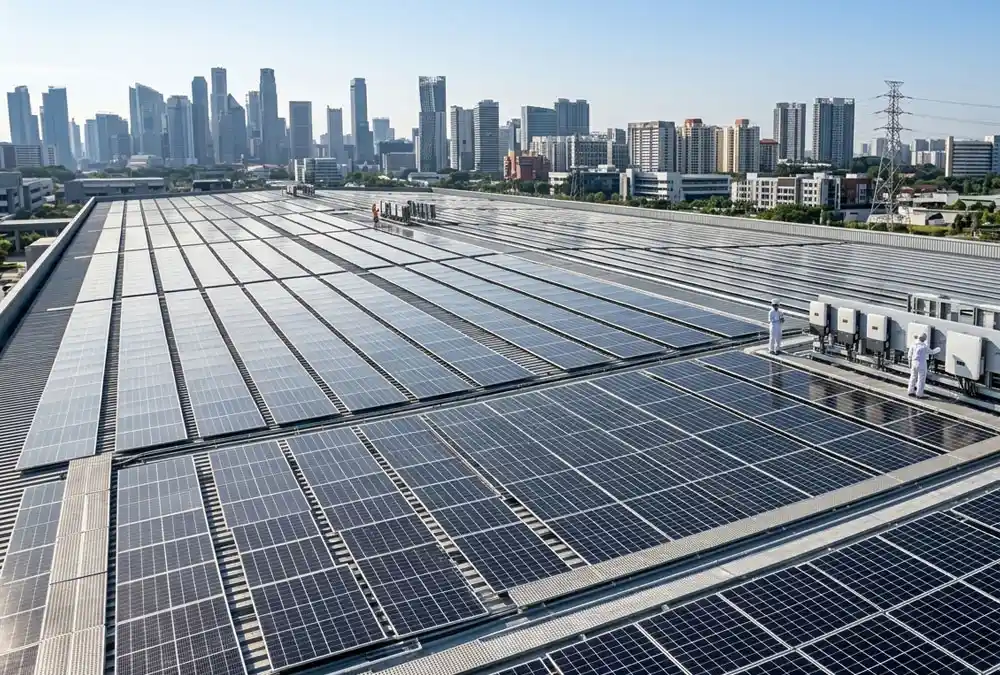
Managing utility bills has become a bruising battle for modern facility managers. Deploying C&I Solar is no longer just a checkbox for corporate sustainability; it is a brutal financial necessity to protect shrinking net margins. When electricity prices spike unexpectedly, unmitigated grid reliance feels like writing an open check to utilities. This guide breaks down exactly how commercial and industrial solar installations work, what they cost in today’s shifting market, and how a properly engineered asset fixes volatile operational overhead once and for all.
What Is C&I Solar?
Definition of Commercial and Industrial Solar
C&I Solar (Commercial and Industrial Solar) refers to solar energy systems designed for businesses, factories, warehouses, office buildings, shopping centers, industrial parks, and other commercial facilities. These systems help reduce electricity costs, improve energy independence, support sustainability goals, and provide long-term financial returns.
How C&I Solar Systems Work
The mechanics are straightforward but require precision engineering. Photovoltaic (PV) panels capture sunlight and convert it into Direct Current (DC) electricity. This DC power flows directly into industrial-grade inverters. The inverters transform it into Alternating Current (AC) electricity, matching your building’s electrical grid frequency. From there, the power feeds into your main distribution board. Your facility consumes this solar energy in real time, automatically reducing the amount of power drawn from the utility grid.
Typical Applications of C&I Solar
- Manufacturing Facilities: High baseload operations benefit heavily from daytime solar generation curves.
- Warehouses: Massive, flat roof footprints offer perfect real estate for high-density panel layouts.
- Shopping Centers: Daytime cooling loads match peak solar production hours perfectly.
- Hotels: Continuous water heating and HVAC demands create excellent self-consumption ratios.
- Office Buildings: Solar reduces expensive daytime peak demand charges from corporate campuses.
- Industrial Parks: Shared microgrid setups allow cross-facility power optimization.
Commercial Solar vs Industrial Solar
The difference lies entirely in scale and load profiles. Commercial systems typically range from 100 kW to 500 kW, serving retail or office locations with standard daytime business hours. Industrial installations easily scale from 1 MW to over 5 MW. These heavier projects deal with manufacturing facilities running three shifts, automated production lines, and massive voltage fluctuations that require specialized heavy-duty switchgear.
Why Why C&I Solar Is Becoming Essential for Modern Businesses
Relying on the old utility model is a dangerous gamble in today’s economy. Forward-thinking executives are prioritizing renewable energy for businesses to stabilize their bottom lines.
Rising Electricity Costs and Energy Security Concerns
Grid power is getting older, dirtier, and significantly more expensive. Extreme weather and fuel supply shocks pass directly to industrial consumers through retail rate hikes. If your facility cannot predict power costs next quarter, you cannot price your products accurately.
Corporate Sustainability and ESG Commitments
Global supply chains now filter partners by their carbon footprint. Major brands require their components vendors to prove green manufacturing metrics. Solar is the most visible, auditable way to hit these strict ESG targets.
Increasing Demand for Energy Independence
A weak local grid can ruin a production batch via minor voltage sags. Generating your own power on-site shields your sensitive equipment from external infrastructure failures.
Government Policies Supporting Solar Adoption
According to the International Energy Agency (IEA) 2026 renewable outlook, policy frameworks are shifting heavily toward decentralized generation. Accelerated depreciation rules and clean energy mandates make local solar generation a highly subsidized financial play.
Why Businesses Are Transitioning to Renewable Energy
It comes down to risk management. Fossil fuel markets are highly volatile. Buying a solar system turns a variable operational expense into a fixed, predictable capital asset.
Benefits of C&I Solar for Commercial and Industrial Facilities
Every square foot of an unutilized factory roof is a wasted revenue stream. Solar changes that math entirely.
Cost Savings Through Reduced Electricity Bills
How much can my business save? The short answer is: typically 30% to 70% of your daytime power bill. For an active manufacturing plant, this translates into tens of thousands of dollars saved every single month.
Environmental Benefits and Carbon Reduction
An average 1 MW system offsets over 800 metric tons of CO2 annually. That is equivalent to planting thousands of mature trees every year your system operates.
Reducing Pressure on the Utility Grid
By producing power locally during peak afternoon hours, your business helps prevent local grid strain and rolling blackouts in your industrial zone.
Maximizing the Value of Unused Roof and Land Space
Roofs, parking lots, and buffer zones are empty liabilities. Solar structures turn them into active power plants without sacrificing valuable production floor space.
Financial Benefits Beyond Energy Savings
- Increased Asset Value: Real estate with modern solar infrastructure commands higher valuation.
- Stable Energy Costs: Lock in your daytime power price for the next 25 years.
- Improved Cash Flow: Immediate utility bill drops instantly free up working capital.
Tax Credits and Government Incentives
Tax mechanisms like the Investment Tax Credit (ITC) allow businesses to deduct a massive percentage of solar installation costs directly from their federal tax liabilities.
Demonstrating a Commitment to Sustainability
Authentic green credentials attract premium customers. It shows your enterprise builds for the future, boosting local community brand equity.
Strengthening Corporate ESG Performance
Institutional investors score portfolios using hard carbon metrics. Solar delivers verifiable data points for annual corporate compliance reports.
Commercial Solar Energy Systems for Business Applications
Selecting the right asset architecture requires evaluating how your specific property handles daily business operations.
Rooftop Solar for Commercial Buildings
Most corporate roofs utilize lightweight TPO or membrane structures. We deploy specialized ballasted racking systems here. These secure the panels using weights rather than piercing the roof membrane, keeping your structural building warranties completely intact.
Solar Solutions for Retail Centers and Shopping Malls
Malls feature highly variable loads due to food courts and changing foot traffic. Advanced net-metering setups ensure any excess power generated during slow retail mornings is credited back to the facility by the utility provider.
Solar Systems for Hotels and Hospitality Facilities
Hotels can combine traditional PV panels with solar carports over guest parking lots. This setup shades vehicles while feeding the heavy, continuous central chiller loads of the main building.
Solar for Office Buildings and Corporate Campuses
Mid-rise corporate offices can utilize architectural solar carports and rooftop lounges. This turns clean energy infrastructure into a highly visible statement of corporate values for clients and employees alike.
Financial Models and Financing Options
You do not need millions in cash to get started. Modern market instruments offer flexible paths:
- Cash Purchase: Gives the highest lifetime ROI and full ownership of all tax benefits.
- Solar Leasing: Pay a fixed monthly fee to use the equipment with zero upfront capital required.
- Power Purchase Agreements (PPAs): A third-party developer builds the asset on your roof, and you simply buy the generated electricity from them at a guaranteed rate lower than the utility price.
Industrial Solar Power Solutions for Manufacturing Facilities
Industrial applications operate under brutal conditions. Dusty environments, heavy machinery vibration, and massive motor startups require rugged engineering layouts.
Reducing Industrial Energy Costs
Heavy machinery draws immense power. By offsetting the bulk of this daytime baseload with solar, factories can dramatically lower their blending electricity tariff rates.
Supporting Energy Self-Sufficiency
A self-reliant facility can maintain core operations even during regional grid updates or fuel supply shocks, protecting critical production timelines.
Reducing Operational Overhead
Lowering fixed manufacturing costs gives you a structural pricing advantage over competitors who are still vulnerable to local grid inflation.
Supporting Facility Expansion
Adding a new production line often triggers expensive utility transformer upgrades. On-site solar can meet that extra load demand without relying on local grid capacity expansions.
Enhancing Production Stability
Solar generation works smoothly alongside local facility transformers, smoothing out minor brownouts that would otherwise cause sensitive digital machinery to trip.
Preventing Downtime Through Solar Plus Storage
How can industrial facilities ensure uninterrupted production? The answer requires deploying robust solar plus storage solutions. When a grid failure occurs, an intelligent battery asset isolates your factory within milliseconds, keeping critical production lines running smoothly without dropping a single batch.
What Challenges Are Limiting the Growth of the C&I Solar Market?
We believe in absolute transparency. Deploying clean energy assets is highly rewarding, but the process has real-world bottlenecks.
High Initial Investment Costs
Megawatt-scale equipment requires significant upfront capital. Without clear financing structures, this initial cost can stall procurement approvals.
Financing and Capital Constraints
Traditional banks sometimes struggle to underwrite complex industrial energy performance contracts, making specialized clean energy funds necessary.
Grid Connection Limitations
A major bottleneck in 2026 is utility capacity. Submitting a interconnection application can take months if your local substation is already congested with solar power feed-ins.
Regulatory and Permitting Challenges
Local zoning laws, structural fire codes, and multi-layered municipal approvals can stretch engineering development timelines significantly.
Roof Structural Constraints
Older factories may have rusted purlins or weak structural framing. These buildings require structural reinforcement before they can safely hold the weight of large scale panel installations.
Energy Storage Integration Challenges
Adding batteries requires advanced software synchronization. If your existing facility switchgear is outdated, integration can require extensive electrical upgrades.
Lack of Technical Expertise
Designing a system that balances dynamic factory motor loads requires deep engineering skill. Poorly designed systems can trigger harmonic distortions or localized power trips.
Can C&I Solar Be Combined with Other Energy Technologies?
Standalone solar is good; an integrated hybrid energy ecosystem is revolutionary.
Solar Plus Battery Energy Storage Systems (BESS)
Pairing panels with battery energy storage systems transforms an intermittent resource into an active, controllable asset. Key operational tactics include:
- Peak Shaving: Discharging batteries during maximum factory load events to avoid expensive utility peak rates.
- Demand Charge Reduction: Clipping sudden power spikes so utilities do not penalize your monthly billing profile.
- Backup Power: Keeping automation controllers live during complete grid blackouts.
Solar and Energy Management Systems (EMS)
An intelligent energy management systems serves as the brain of the facility. It tracks weather patterns, grid pricing, and production schedules to decide exactly when to store, consume, or sell power.
Solar and EV Charging Infrastructure
Integrating commercial EV fleets with solar ensures your delivery vans or employee cars are charged using clean, zero-cost roof power rather than expensive grid electricity.
Solar and Microgrid Solutions
A true microgrid links solar, storage, and local loads into an independent islanded network. It can disconnect from the main grid entirely and run autonomously for days.
Solar and Backup Generator Integration
Advanced controller integration allows solar arrays to operate smoothly alongside traditional diesel generators, saving up to 40% on diesel fuel costs during extended grid outtages.
Why Solar Plus Storage Is Becoming the New Standard
BloombergNEF’s landmark report, Energy Storage Enters the 100-Gigawatt Era, shows global battery storage installations jumped massive fold recently. As grids suffer from heavy solar curtailment and zero-price daytime hours, having a battery is no longer optional. It is the only way to protect your clean energy asset value.
How Much Does a C&I Solar Installation Cost?
Project pricing depends heavily on scale, site logistics, and your local utility interconnection rules.
Typical Commercial Solar Installation Costs
Smaller commercial projects (100 kW to 300 kW) typically average between $1.20 to $1.60 per watt fully installed, depending on roof access and racking type.
Typical Industrial Solar Installation Costs
Large utility-adjacent industrial systems (1 MW+) benefit from economies of scale. These systems usually range from $0.90 to $1.20 per watt, excluding any extra battery systems.
Factors That Affect Project Costs
- System Size: Larger component procurement orders significantly lower your cost per watt.
- Equipment Quality: Tier-1 Bloomberg-rated panels and premium inverters carry higher upfront costs but ensure a 25-year lifespan.
- Installation Complexity: High roofs, steep pitches, or extensive trenching add real-world labor hours.
- Location: Local labor rates, permitting speeds, and structural wind-load requirements change pricing baseline.
- Grid Requirements: Utilities may demand expensive protection relays before granting permission to connect.
- Battery Storage Integration: Adding an industrial containerized battery will add notable cost but unlocks extra revenue streams.
Cost Comparison by Project Size
The following baseline estimates show typical 2026 global averages for standard turn-key c&i solar projects:
| Project Size | Typical Application | Avg. Cost Range (USD) | Key Technical Focus |
|---|---|---|---|
| 100 kW | Small Commercial / Retail | $120,000 – $160,000 | Net-metering, ballasted roof mounts |
| 500 kW | Logistics Warehouses | $550,000 – $700,000 | Lightweight racking, fire-path zoning |
| 1 MW | Manufacturing Plants | $950,000 – $1,200,000 | Medium-voltage switchgear, load matching |
| 5 MW+ | Heavy Industrial Parks | $4,500,000+ | Substation integration, SCADA controls |
What Is the Payback Period for C&I Solar Projects?
An optimized solar plant is a high-yield financial tool. Let’s look at the actual numbers driving investment returns.
Average Payback Period for Commercial Solar
With standard commercial retail electricity rates, most corporate assets clear their initial cost within 4 to 6 years.
Average Payback Period for Industrial Solar
Industrial facilities operating around the clock often hit payback within 3 to 5 years, especially when leveraging accelerated tax depreciation assets.
Key Factors Affecting ROI
Your return profile is driven by three variables: local sun metrics (solar irradiance), your facility self-consumption ratio, and the difference between your solar cost and utility electricity retail pricing.
Real-World C&I Solar Savings Example
Consider a standard 1 MW manufacturing plant installation running a turn-key c&i solar solutions package:
- Annual Energy Savings: $165,000 saved on utility bills.
- Project ROI: 18.5% annual return.
- Internal Rate of Return (IRR): 22% over 20 years.
- Lifetime Savings: Over $3.5 Million across a 25-year panel warrantied lifecycle.
How Battery Storage Improves Financial Returns
A battery prevents you from selling excess solar back to the utility for pennies. Storing that power and using it to shave your evening peak loads optimizes your total lifetime savings curve.
💡 Recommended Industrial Storage Product Portfolio
To maximize these returns under heavy factory conditions, we recommend deploying a Containerized All-in-One Liquid-Cooled LFP BESS Asset (typically configured in 200kWh modular building blocks or 2MWh full containers).
Essential Technology Deep Dive:
- LFP (Lithium Iron Phosphate) Battery Technology: Unlike standard cobalt-based batteries, LFP chemistry is the industrial gold standard. It offers unmatched thermal stability (it will not trigger catastrophic fires even under damage) and a massive 6000+ cycle lifespan. In simple terms: It can be fully charged and discharged every day for over 15 years before dropping in performance.
- Liquid-Cooled Alternative vs. Air Cooling: Standard air cooling uses basic fans, causing internal hot spots that degrade battery cells unevenly. Liquid cooling circulates dedicated coolant fluid directly around the cells. Why this matters: It maintains internal temperatures within a strict 2°C variance, extending asset life by 20% and preventing thermal runaway in hot climates.
What Maintenance Does a C&I Solar System Require?
Solar assets have no moving parts, but “low maintenance” does not mean “no maintenance.” Professional commercial and industrial solar EPC partners should always provide a structured service plan.
Preventive Maintenance Requirements
Annual electrical testing prevents minor faults from becoming expensive equipment failures. We use thermal drone imaging to spot hidden cell damage instantly.
Solar Panel Cleaning and Inspection
Dust, soot, and bird droppings form a film over cells. Regular washing is crucial; heavy dirt accumulation can drop your power output by up to 15% within months.
Inverter Maintenance
Inverters handle high voltage and heat. Their cooling fans, internal seals, and capacitors require a thorough check and clean at least twice a year.
Monitoring and Performance Analysis
Modern cloud software tracks system health down to the individual panel string level, alerting engineers the moment an output variance is detected.
Battery Storage Maintenance
Industrial batteries require regular coolant level top-offs, dielectric fluid checks, and annual calibration of the internal battery management system cells.
Long-Term Warranty and Service Agreements
Always secure a comprehensive Operations and Maintenance (O&M) contract that guarantees minimum system uptime metrics, protecting your project bankability long-term.
Current Scale of the Global C&I Solar Market
The global energy landscape is undergoing a massive structural shift toward decentralized commercial generation.
Global Installed Capacity Trends
According to BloombergNEF’s 2026 global energy market analysis, annual distributed solar deployment crossed historic records. Corporate buying represents the fastest-growing sector in modern power generation.
Regional Adoption of Commercial and Industrial Solar
- Europe: High grid prices and strict carbon penalties are forcing rapid factory transformations across Germany and Italy.
- Southeast Asia: Massive manufacturing hubs in Vietnam and Thailand are deploying solar to satisfy international export supply chain audits.
- Middle East: Heavy industrial parks are embracing high-irradiance solar infrastructure to preserve local oil for export.
- Latin America: Mining and agricultural logistics plants are deploying regional microgrids to address weak local infrastructure.
Industries Driving Market Demand
Automotive manufacturing, heavy logistics centers, cold-storage warehouses, and energy-dense data centers are leading the procurement charge.
Investment Trends in C&I Solar
Institutional infrastructure funds are pouring billions into corporate solar portfolios, recognizing these assets as highly stable, long-term yield generators.
Growth Potential of the C&I Solar Market
The multi-decade expansion of industrial clean energy is accelerating due to intersecting technology waves.
Electrification of Industry
As factories replace gas boilers with electric alternatives and build out delivery fleets, their factory power demand sky-rockets. Solar is the only way to scale generation capacity cost-effectively.
Expansion of Solar Plus Storage Solutions
The combination of plunging battery costs and increasing grid volatility means the attach rate for industrial battery installations is projected to triple by 2030.
Corporate Net-Zero Commitments
With strict international climate deadlines looming closer, deploying large-scale solar arrays remains the fastest path to meaningful corporate carbon reduction.
Digital Energy Management and EMS Adoption
Artificial intelligence software is optimizing how facilities use energy, allowing automated trading with local utility grids for extra cash flow.
Growth of EV Charging Infrastructure
Integrating workplace car chargers with rooftop solar allows businesses to capture highly valuable daytime charging revenue from employees and visitors.
Why C&I Solar Will Remain a High-Growth Energy Segment
The economics are locked in. As long as utility rates rise and clean energy hardware remains highly competitive, localized solar generation will remain a premium corporate investment.
How to Design a C&I Solar System Based on Your Business Needs
A standard cookie-cutter layout will not maximize your returns. You need a design matched perfectly to your daily facility operations.
Assessing Energy Consumption Patterns
We download your 15-minute interval utility data for the past 12 months. This maps your exact power consumption peaks, ensuring we do not build an over-sized array that wastes capital.
Evaluating Available Roof and Land Space
Our engineers check roof age, framing material, shadowing from nearby structures, and total weight limits to determine the ideal panel density configuration.
Determining Whether Battery Storage Is Needed
If your local utility charges extreme peak rates between 4 PM and 8 PM, or if your local grid suffers from frequent micro-outages, integrating a battery asset is essential.
Selecting the Appropriate System Size
The optimal system size balances your maximum daytime consumption baseline with local net-metering limits, ensuring maximum internal financial returns.
Planning for Future Expansion
Always ensure your initial electrical switchgear, main busbars, and inverter bays have extra layout space. This saves massive capital when you scale your plant later.
Why Choose a Professional C&I Solar EPC Partner?
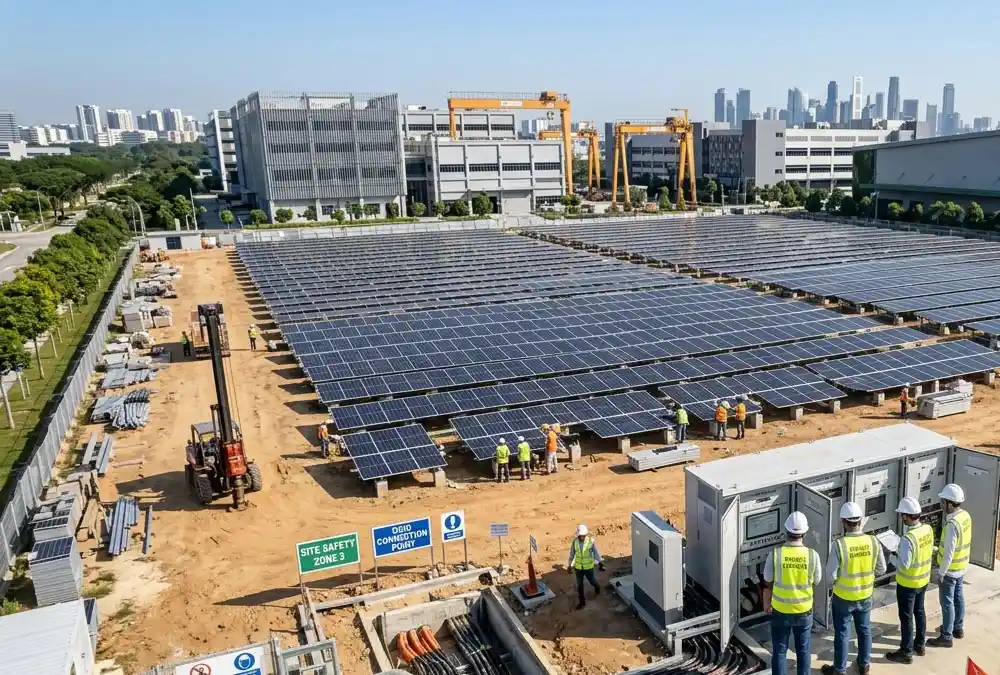
Building a multi-megawatt power plant on an active factory roof is a high-stakes engineering challenge. Partnering with an experienced, turn-key engineering firm is critical.
End-to-End Solar EPC Services
A professional firm manages the complete project lifecycle: detailed structural engineering, tier-1 component procurement, safe construction, utility interconnection negotiation, and long-term asset management.
Solar Plus BESS Integration Expertise
Synchronizing variable solar generation with sensitive factory machinery and massive battery containers requires deep field experience. Expert engineering prevents dangerous system integration failures.
Compliance with Local Regulations
Experienced teams handle complex fire safety codes, local building permits, and complex utility protection rules smoothly, avoiding costly project delays.
Long-Term O&M Support
Your energy transition is a 25-year commitment. Having a dedicated partner providing regular maintenance ensures your power plant operates at maximum efficiency for decades.
Performance Guarantees and Project Bankability
Premium developers provide ironclad production guarantees. This makes your solar project highly bankable, allowing you to secure competitive institutional financing rates easily.
Frequently Asked Questions About C&I Solar
What does C&I Solar mean?
It stands for Commercial and Industrial Solar. It represents solar and energy storage systems custom-engineered for business premises, factories, warehouses, and institutional facilities rather than standard residential homes.
Is C&I Solar suitable for small businesses?
Yes. Any business with a stable daytime electricity bill and access to an unshaded roof or parking lot can deploy solar to lock in long-term operational cost reduction.
How much does a C&I solar system cost?
Depending on scale, systems typically range from $1.20 per watt for mid-sized commercial projects down to under $0.90 per watt for massive industrial installations over 1 MW.
How long does it take to recover the investment?
The average payback period ranges between 3 to 6 years, depending on your local electricity rates, available tax incentives, and solar resource metrics.
Should I add battery storage to my solar project?
You should consider storage if your facility faces high demand charges, runs critical night shifts, or if your local utility restricts solar power exports back to the grid.
How much maintenance does a C&I solar system require?
It requires basic preventive maintenance: professional panel washing 1-2 times a year, annual thermal drone scans, and bi-annual electrical inverter inspections.
Can C&I solar systems support EV charging stations?
Yes. Integrating solar with EV chargers allows you to power your company fleet or employee vehicles using zero-cost electricity generated directly from your roof.
Conclusion: Why C&I Solar Is a Strategic Investment for Modern Businesses
Key Takeaways
- C&I Solar cuts fixed utility bills dramatically, protecting corporate cash flow from volatile energy inflation.
- Integrating solar with battery storage enhances operational resilience, preventing expensive manufacturing downtime during grid updates.
- Businesses can leverage major tax credits and green building certifications to accelerate payback and strengthen corporate ESG profiles.
- As global electrification scales and power grids face increasing strain, investing in on-site renewable assets remains one of the smartest, highest-yielding strategic plays for modern enterprises.
Related Posts
 https://anengjibattery.com/wp-content/uploads/2026/09/AnengJIBattery-Best-LiFePO4-Battery-How-to-Choose-the-Right-One.webp
675
1000
Battery Expert Team
https://anengjibattery.com/wp-content/uploads/2025/06/logo2-300x138.png
Battery Expert Team2026-09-17 08:52:142026-09-18 09:19:29How to Choose the Best LiFePO4 Battery
https://anengjibattery.com/wp-content/uploads/2026/09/AnengJIBattery-Best-LiFePO4-Battery-How-to-Choose-the-Right-One.webp
675
1000
Battery Expert Team
https://anengjibattery.com/wp-content/uploads/2025/06/logo2-300x138.png
Battery Expert Team2026-09-17 08:52:142026-09-18 09:19:29How to Choose the Best LiFePO4 Battery https://anengjibattery.com/wp-content/uploads/2026/09/anengjiBattery-lifepo4-battery-cell-packaging-wholesale.webp
675
1000
Battery Expert Team
https://anengjibattery.com/wp-content/uploads/2025/06/logo2-300x138.png
Battery Expert Team2026-09-16 09:52:342026-09-18 09:20:12LiFePO4 Battery Wholesale Guide: Best Suppliers in Spain
https://anengjibattery.com/wp-content/uploads/2026/09/anengjiBattery-lifepo4-battery-cell-packaging-wholesale.webp
675
1000
Battery Expert Team
https://anengjibattery.com/wp-content/uploads/2025/06/logo2-300x138.png
Battery Expert Team2026-09-16 09:52:342026-09-18 09:20:12LiFePO4 Battery Wholesale Guide: Best Suppliers in Spain https://anengjibattery.com/wp-content/uploads/2026/09/anengjibattery-Top-Lithium-Ion-Battery-Producers-for-Spain-Market-Growth.webp
675
1000
Battery Expert Team
https://anengjibattery.com/wp-content/uploads/2025/06/logo2-300x138.png
Battery Expert Team2026-09-16 01:13:392026-09-16 01:14:05Top Lithium Ion Battery Producers for Spain’s Market Growth
https://anengjibattery.com/wp-content/uploads/2026/09/anengjibattery-Top-Lithium-Ion-Battery-Producers-for-Spain-Market-Growth.webp
675
1000
Battery Expert Team
https://anengjibattery.com/wp-content/uploads/2025/06/logo2-300x138.png
Battery Expert Team2026-09-16 01:13:392026-09-16 01:14:05Top Lithium Ion Battery Producers for Spain’s Market Growth https://anengjibattery.com/wp-content/uploads/2026/09/Bulk-Lithium-Ion-Battery-Cells-Procurement-Guide-B2B-Sourcing.webp
675
1000
Battery Expert Team
https://anengjibattery.com/wp-content/uploads/2025/06/logo2-300x138.png
Battery Expert Team2026-09-14 09:47:322026-09-14 09:47:48Bulk Lithium-Ion Battery Cells Procurement Guide | B2B Sourcing
https://anengjibattery.com/wp-content/uploads/2026/09/Bulk-Lithium-Ion-Battery-Cells-Procurement-Guide-B2B-Sourcing.webp
675
1000
Battery Expert Team
https://anengjibattery.com/wp-content/uploads/2025/06/logo2-300x138.png
Battery Expert Team2026-09-14 09:47:322026-09-14 09:47:48Bulk Lithium-Ion Battery Cells Procurement Guide | B2B Sourcing


Leave a Reply
Want to join the discussion?Feel free to contribute!