
What Are the Real Benefits of Solar Battery Storage for Commercial Sites?
July 2, 2026 / Battery Expert Team / battery energy storage
Introduction
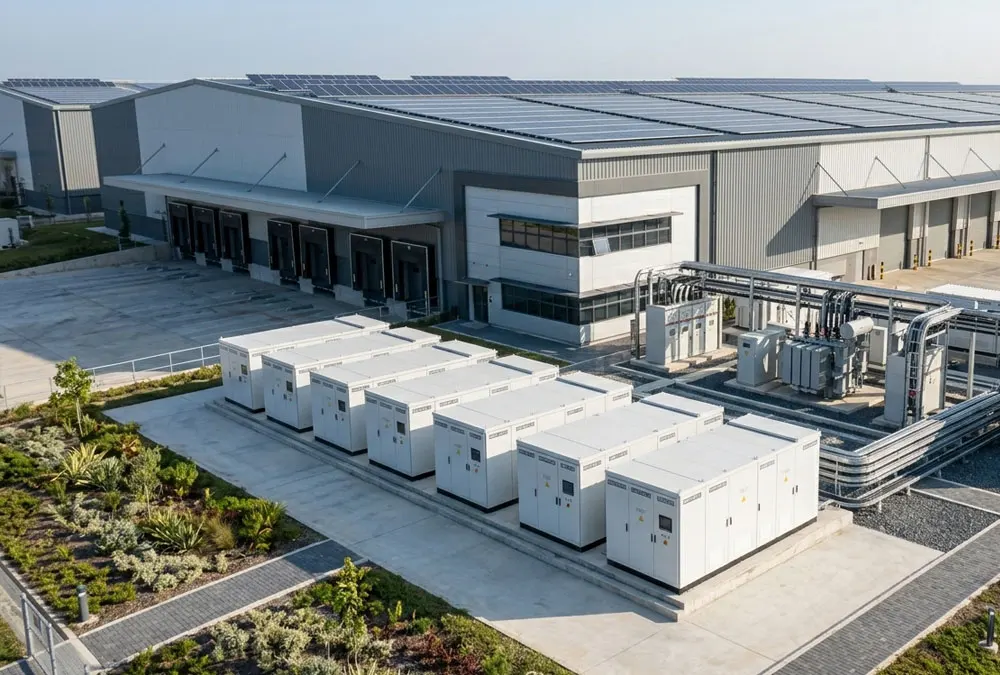
Volatile grid markets are forcing energy managers to rethink their infrastructure strategy. Standard solar arrays produce massive volumes of clean electricity during midday, but generation vanishes exactly when peak utility rates spike in the evening. Recent data from the international energy agency shows global grid prices climbing over twenty percent in key zones, creating serious budget operational strain. Sourcing standalone solar is no longer enough to insulate facilities from these sudden structural cost increases. Integrating a reliable asset lets you balance production mismatches, stabilize local distribution networks, and unlock the true financial benefits of solar battery storage.
This guide breaks down how high-capacity storage changes local power economics, simplifies infrastructure risk, and delivers quantifiable bottom-line returns for modern installations.
Benefits of Solar Battery Storage: Quick Overview
What Is Solar Battery Storage?
A solar battery setup combines modular chemical storage blocks with digital monitoring frameworks and smart inverters. It captures excess daytime generation instead of pushing that energy back out to external networks for minimal credits. This stored power stays clean and available for use whenever utility pricing climbs or regional grids fail completely.
What Are the Main Benefits?
- Lower electricity bills: Draw down stored power during expensive utility peak rate windows.
- Backup power: Protect operations from unexpected external infrastructure blackouts.
- Higher solar self-consumption: Use more of your own clean power on-site instead of relying on the utility grid.
- Energy independence: Lower your facility’s long-term reliance on erratic utility companies.
- Carbon reduction: Cut down on structural scope-2 manufacturing greenhouse emissions.
- Better ROI: Shorten the financial payback period of your entire asset deployment.
Who Benefits Most from Solar Battery Storage?
Homeowners facing frequent distribution outages or complex time-of-use tariffs see immediate utility bill relief. Commercial real estate assets, heavy manufacturing plants, localized microgrids, and utility-scale solar developers also benefit significantly. For commercial facilities, storage serves as an effective tool to hedge against expensive demand charges and maintain continuous production floor operations.
Why Solar Battery Storage Is Becoming Essential for Renewable Energy
Challenges of Solar Power Without Battery Storage
Standalone solar arrays face inherent limitations due to the natural intermission of weather patterns. Peak production occurs during noon hours, creating an asset mismatch for facilities whose heaviest energy use happens during early mornings or late evening shifts. This imbalance often forces operators to sell excess power back to the grid for minimal financial returns, while buying power back at peak utility rates later in the day.
How Battery Energy Storage Solves These Challenges
Integrating a dedicated battery energy storage system allows you to bridge the gap between production and consumption. The setup captures excess daytime power and stores it for automated dispatch when local generation drops or plant consumption surges. This continuous balancing mechanism stabilizes local voltages, helps avoid grid injection limits, and transforms intermittent solar arrays into a dependable baseload power asset.
Benefits of Solar Battery Storage for Lower Electricity Costs
Increase Solar Self-Consumption
Without an integrated battery, typical facilities struggle to clear a thirty percent solar self-consumption rate. The remaining clean generation is often exported to utility networks for diminishing net-metering credits. Adding a storage asset allows you to keep up to eighty percent of your generation on-site, using your own clean electricity to run operations during high-rate evening hours.
Reduce Grid Electricity Purchases
Maximizing local storage capacity minimizes the need to buy expensive power from external utility networks. Rather than relying on the grid during high-tariff periods, your building management platform draws down stored power, helping insulate your monthly operational budget from volatile market price increases.
Peak Shaving and Load Shifting
Utilities charge high premiums during daily periods of peak regional demand. Smart peak shaving configurations track these real-time grid spikes automatically. When the system detects a tariff increase, it switches the facility over to battery power, keeping your grid consumption flat and avoiding expensive peak rate penalties.
Lower Demand Charges for Businesses
For industrial operations, fixed demand charges based on the single highest fifteen-minute usage spike can account for up to half of the monthly utility bill. Storage systems monitor these consumption peaks continuously. When large machinery startups threaten to create a new demand spike, the battery steps in to supply the necessary current, keeping your measured grid demand low.
Example Financial Calculation:
Consider a manufacturing plant with a 300 kW solar array that experiences a recurring 200 kW usage spike for two hours every afternoon. Without storage, the facility pays a high demand charge of $20 per kW, resulting in a fixed monthly fee of $4,000.
By installing a 261 kWh industrial battery system, the facility can offset that 100 kW spike by discharging stored power during peak hours. This reduces the measured grid demand spike from 200 kW down to 100 kW, lowering the monthly charge to $2,000 and saving the business $24,000 annually in demand charges alone.
Benefits of Solar Battery Storage for Energy Independence
Reduce Dependence on Utility Companies
Relying entirely on centralized utility networks exposes your facility to aging regional infrastructure, political grid lockouts, and sudden policy shifts. Moving toward true energy independence means generating, storing, and managing your own power asset on-site, giving you greater control over your long-term energy strategy.
Protect Against Rising Electricity Prices
Centralized utility grids face ongoing pressure from rising fuel costs and expensive transmission line upgrades, costs that are regularly passed down to end consumers. Deploying a high-performance battery system locks in your long-term levelized cost of storage, protecting your operational budget from future retail electricity rate increases.
Greater Energy Security
For operations located in regions with fragile energy infrastructure, reliable on-site storage provides essential operational security. The combination of solar-plus-storage ensures your facility maintains power, even during regional fuel shortages or grid instabilities that affect nearby competitors.
Benefits of Solar Battery Storage During Power Outages
Reliable Backup Power
When the main utility grid fails, standalone solar systems are designed to shut down automatically to prevent unsafe back-feeding into external lines. An integrated battery system solves this by using intelligent automatic transfer switches to isolate your facility, creating a secure local microgrid that delivers a dependable backup power supply.
Protect Critical Equipment
Sudden voltage drops can damage sensitive electronics and corrupt active data logs. High-speed storage system inverters detect grid failures within milliseconds, switching to battery power fast enough to prevent reboots on critical network routers, servers, and processing equipment.
Ensure Business Continuity
Extended power outages can lead to expensive disruptions for commercial and industrial operations:
- Residential: Keeps residential essentials running, including main water pumps, refrigeration systems, home medical equipment, and basic property security networks.
- Commercial: Prevents business disruptions by maintaining power to central data rooms, emergency ventilation systems, payment terminals, and building safety lighting.
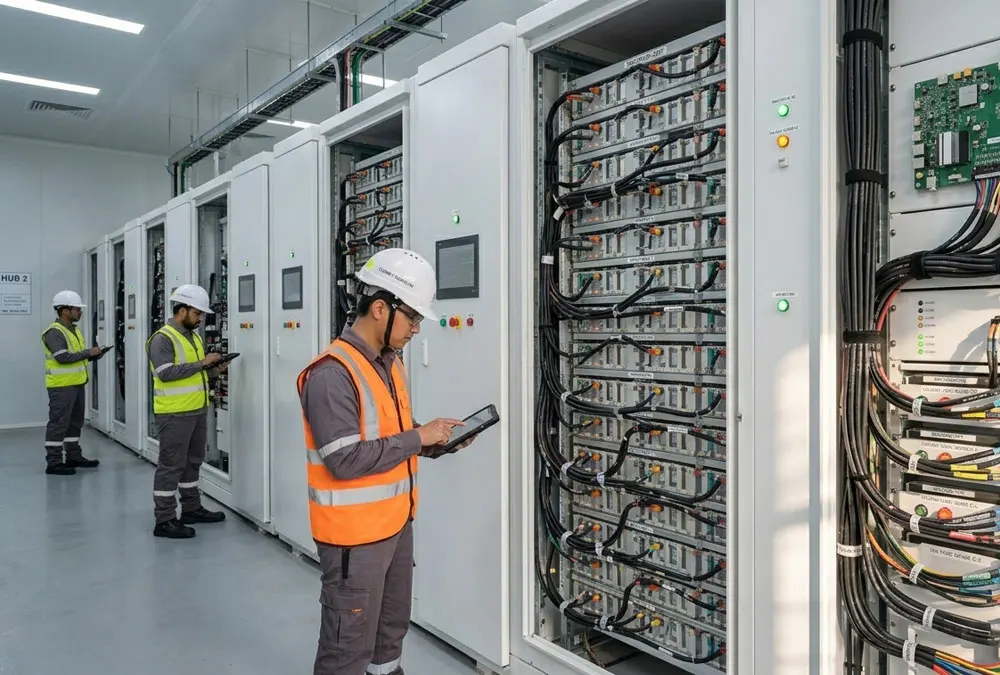
- Industrial: Protects complex automated assembly lines, PLC controllers, and high-temperature machinery from sudden stops that can cause ruined material batches or equipment damage.
Benefits of Solar Battery Storage for Businesses and Industrial Facilities
Lower Operating Costs
Deploying targeted commercial solar battery storage benefits your business by lowering daily energy expenses. Minimizing peak utility charges and maximizing your solar use helps reduce predictable overhead costs, improving your facility’s overall operating margins.
Improve Power Quality
Heavy machinery can introduce voltage sags and harmonic distortion into your facility’s internal electrical network. Modern storage systems use advanced power electronics to balance these local fluctuations, delivering clean, stable voltage that can help extend the life of your factory equipment.
Reduce Downtime
In highly automated manufacturing facilities, even a brief momentary power interruption can stop production lines, requiring lengthy reset procedures. Battery systems help avoid these costly production interruptions, keeping your assembly operations running smoothly through minor grid disturbances.
Meet ESG Goals
International enterprise buyers and institutional funds increasingly prefer suppliers with verified sustainable practices. Installing an industrial storage system lowers your reliance on fossil-fuel peaking plants, providing a clear way to reduce your carbon footprint and meet corporate ESG targets.
Support Factory Expansion
Adding new manufacturing lines often requires expensive substation upgrades from local utility providers. Installing an on-site battery allows you to use smart peak-shaving strategies to manage the expanded electrical load within your existing grid allocation, avoiding costly utility upgrade fees.
Environmental Benefits of Solar Battery Storage
Reduce Carbon Emissions
Standalone solar arrays often generate excess power during the day when the regional grid is already supplied by clean sources. By storing that excess clean energy and discharging it during evening hours, your system helps reduce the need for fossil-fuel peaking plants, lowering overall grid carbon emissions.
Increase Renewable Energy Utilization
Heavy regional solar adoption can create transmission bottlenecks, forcing grid operators to curtail clean generation. On-site renewable energy storage captures this excess power before it is lost, ensuring every kilowatt generated by your panels is used effectively.
Support Net-Zero Targets
Moving toward true net-zero operations requires replacing fossil-fuel backups with clean alternatives. Battery systems offer a reliable replacement for traditional diesel generators, eliminating local exhaust emissions and providing clean backup power for your facility.
How Solar Battery Storage Improves Return on Investment
| Regional Market Context | Typical Commercial Payback Period | Primary Financial Value Driver | Operational Advantage for the User |
|---|---|---|---|
| European Union | 4 to 6 Years | High Time-of-Use Rate Differentials | Protects against highly volatile energy market spikes |
| Australia | 5 to 7 Years | Low Export Tariffs & High Retail Rates | Maximizes on-site use to avoid low net-metering credits |
| United States | 5 to 8 Years | Federal Tax Credits (ITC) & Demand Charges | Lowers upfront capital costs while cutting high peak demand fees |
Participating in regional grid balancing services can unlock additional revenue streams for your storage asset. By configuring your system to respond to utility frequency regulation events, you can earn credits that help shorten your project’s financial payback period.
Who Should Invest in Solar Battery Storage?
Property owners facing high utility rates or frequent power interruptions see immediate benefits from on-site storage. Commercial buildings like hotels, office towers, and distribution centers can use storage to manage operating costs and protect tenant services. For heavy manufacturing facilities, storage provides vital protection against production line stoppages caused by power issues. Clean energy contractors can also win more business by offering comprehensive solar-plus-storage solutions to their clients.
How to Choose the Right Solar Battery Storage System
Battery Chemistry
Lithium Iron Phosphate (LiFePO4) has become the preferred standard for industrial storage installations. Unlike older Nickel Manganese Cobalt (NMC) formulations, LiFePO4 chemistry resists thermal runaway, providing excellent safety and reliable performance even under heavy daily cycling.
Capacity Selection Guide for Industrial Facilities
Matching system capacity to your facility’s operational load is key to maximizing performance. Review these standard configurations:
| System Energy Capacity | Target Application Scenario | Operational Advantage for the User |
|---|---|---|
| 100 kWh Cabinet | Small commercial shops, farms, and light fabrication lines | Provides compact, cost-effective peak shaving for low-clearance spaces |
| 261 kWh System | Medium manufacturing plants, large supermarkets, and office centers | Delivers longer discharge windows to manage prolonged peak demand periods |
| 418 kWh Modular Block | Heavy industrial facilities, cold storage warehouses, and data hubs | Supplies high surge currents to handle large, intensive machinery startups |
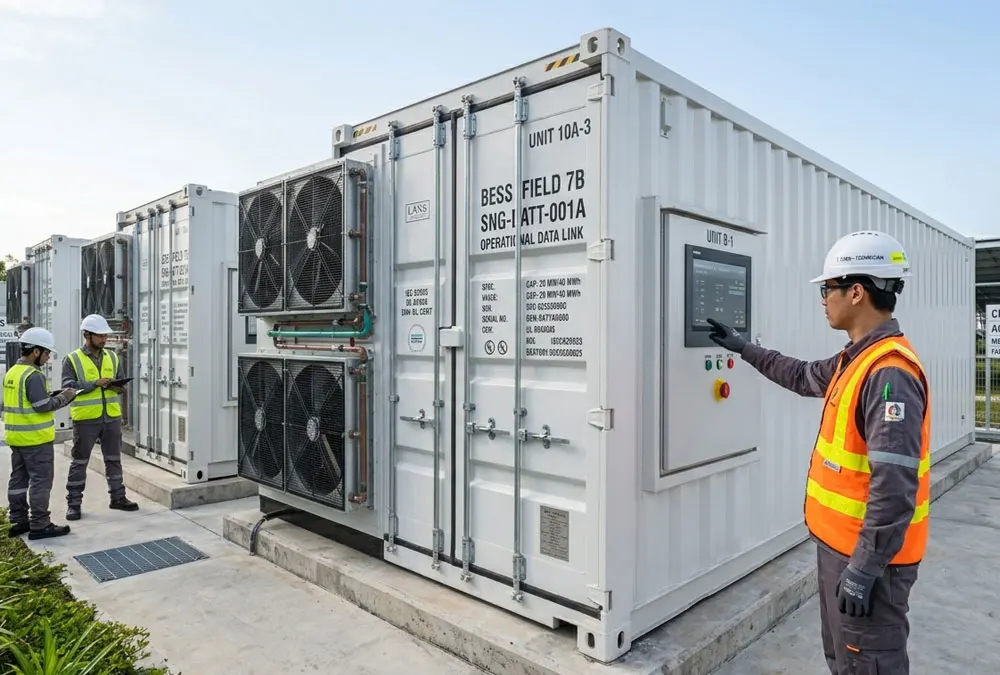
| 1 MWh+ Container | Large industrial parks, utility installations, and localized microgrids | Provides complete facility backup and full integration for megawatt-scale solar sites |
Smart Energy Management
An effective storage installation relies on three integrated control systems. The BMS monitors cell health and safety, the PCS handles efficient power conversion, and the master EMS coordinates system dispatch based on utility rates and building loads.
Common Misconceptions About Solar Battery Storage
“Batteries Are Too Expensive”
Focusing solely on upfront hardware costs ignores the long-term savings from reduced peak charges and protection against power outages. When evaluating total cost of ownership, a high-quality system can deliver net savings over its operating lifespan.
“Batteries Require Frequent Maintenance”
Older lead-acid batteries required regular watering and manual voltage balancing. Modern liquid-cooled LiFePO4 systems are virtually maintenance-free, using smart automated monitoring software to manage internal balance and system safety.
“Batteries Only Work During Blackouts”
While backup power is a key benefit, storage systems deliver value every day. The system actively works to reduce your electricity bills by managing peak-shaving and shifting loads, even when the utility grid is running normally.
Frequently Asked Questions About the Benefits of Solar Battery Storage
Is solar battery storage worth the investment?
Yes. For facilities dealing with high demand charges or unreliable grid infrastructure, an energy storage system offers a reliable way to lower electricity costs and protect operations from power outages.
How much money can I save?
Savings depend on your facility’s local utility rate structure and daily consumption patterns. Operations facing high peak demand charges often see significant reductions in their monthly electricity bills.
How long do batteries last?
High-quality LiFePO4 storage systems are engineered to complete over 6,000 full operational cycles, providing 10 to 15 years of reliable daily service before capacity drops below original design baselines.
Can batteries work without solar panels?
Yes. The system can be configured to charge from the utility grid during inexpensive off-peak hours and discharge during peak high-rate periods, helping lower your energy costs even without solar panels.
Which battery technology is best?
Lithium Iron Phosphate (LiFePO4) is the industry standard for stationary industrial storage, offering excellent thermal stability, long cycle life, and reliable performance under daily use.
Why Choose AnengJi Power for Solar Battery Storage Solutions
AnengJi Power delivers fully integrated hardware and software architectures tailored to your facility’s specific energy needs. Our systems utilize high-performance LiFePO4 cell technology to ensure maximum safety and long operational life under demanding conditions.
Our experienced engineering team provides complete support across your project’s lifecycle, from initial system sizing and design to final on-site commissioning. With a proven global project footprint, we deliver reliable equipment and responsive technical support to keep your storage asset operating efficiently.
Conclusion: Unlock the Full Benefits of Solar Battery Storage
Key Takeaways
- Evaluating a storage investment requires looking past upfront hardware costs to analyze how managing peak charges can lower your total cost of ownership.
- Modern industrial systems provide more than simple backup power; they deliver smart energy management that improves power quality and protects assembly lines from voltage issues.
- Focus your technical evaluation on reliable LiFePO4 chemistry, integrated thermal management, and full compliance with international safety testing standards.
- As global utility rates continue to rise, combining solar-plus-storage provides a proven way to stabilize your long-term energy budget and improve facility resilience.
Related Posts
 https://anengjibattery.com/wp-content/uploads/2026/10/AnengjiBattery-Lithium-Battery-Management-in-Daily-Operation.webp
675
1000
Battery Expert Team
https://anengjibattery.com/wp-content/uploads/2025/06/logo2-300x138.png
Battery Expert Team2026-10-22 08:17:332026-10-22 08:17:44How Does a Lithium BMS Improve Battery Longevity?
https://anengjibattery.com/wp-content/uploads/2026/10/AnengjiBattery-Lithium-Battery-Management-in-Daily-Operation.webp
675
1000
Battery Expert Team
https://anengjibattery.com/wp-content/uploads/2025/06/logo2-300x138.png
Battery Expert Team2026-10-22 08:17:332026-10-22 08:17:44How Does a Lithium BMS Improve Battery Longevity? https://anengjibattery.com/wp-content/uploads/2026/10/AnengjiBattery-Industrial-Power-Under-Real-Load.webp
675
1000
Battery Expert Team
https://anengjibattery.com/wp-content/uploads/2025/06/logo2-300x138.png
Battery Expert Team2026-10-22 07:04:542026-10-22 07:05:30How Does a 48V LiFePO4 BMS Protect Industrial Power?
https://anengjibattery.com/wp-content/uploads/2026/10/AnengjiBattery-Industrial-Power-Under-Real-Load.webp
675
1000
Battery Expert Team
https://anengjibattery.com/wp-content/uploads/2025/06/logo2-300x138.png
Battery Expert Team2026-10-22 07:04:542026-10-22 07:05:30How Does a 48V LiFePO4 BMS Protect Industrial Power? https://anengjibattery.com/wp-content/uploads/2026/10/AnengJIBattery-Electric-Forklift-Battery-Buying-Decision.webp
675
1000
Battery Expert Team
https://anengjibattery.com/wp-content/uploads/2025/06/logo2-300x138.png
Battery Expert Team2026-10-21 06:22:222026-10-21 06:22:38Ready to Buy Battery for Electric Forklift? Use This Guide
https://anengjibattery.com/wp-content/uploads/2026/10/AnengJIBattery-Electric-Forklift-Battery-Buying-Decision.webp
675
1000
Battery Expert Team
https://anengjibattery.com/wp-content/uploads/2025/06/logo2-300x138.png
Battery Expert Team2026-10-21 06:22:222026-10-21 06:22:38Ready to Buy Battery for Electric Forklift? Use This Guide https://anengjibattery.com/wp-content/uploads/2026/10/AnengJIBattery-Diagnosing-Electric-Forklift-Runtime-Loss.webp
675
1000
Battery Expert Team
https://anengjibattery.com/wp-content/uploads/2025/06/logo2-300x138.png
Battery Expert Team2026-10-20 07:16:552026-10-20 09:59:05Electric Forklift Battery Life: How Can You Extend It?
https://anengjibattery.com/wp-content/uploads/2026/10/AnengJIBattery-Diagnosing-Electric-Forklift-Runtime-Loss.webp
675
1000
Battery Expert Team
https://anengjibattery.com/wp-content/uploads/2025/06/logo2-300x138.png
Battery Expert Team2026-10-20 07:16:552026-10-20 09:59:05Electric Forklift Battery Life: How Can You Extend It?


Leave a Reply
Want to join the discussion?Feel free to contribute!