
Bulk Lithium-Ion Battery Cells Procurement Guide | B2B Sourcing
September 14, 2026 / Battery Expert Team / Battery Basics
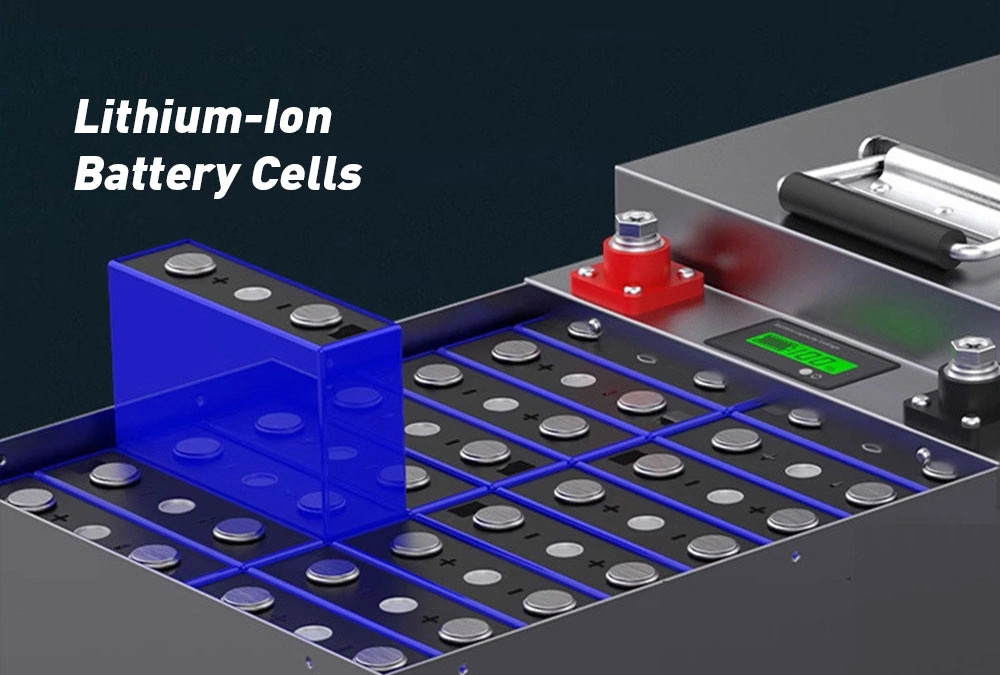
Introduction
Direct factory sourcing remains the most cost-effective path when you plan to buy Lithium-Ion Battery Cells in high volume, yet navigating minimum order quantities (MOQs), authenticating batch consistency, and managing logistics often creates unexpected friction for B2B buyers. Sourcing high-grade Lithium-Ion Battery Cells requires looking far past initial price tags per unit, focusing instead on verified batch-to-batch consistency, automotive-grade grading standards, and traceable factory lot numbers. Whether you are assembling custom battery packs for low-speed electric vehicles or scaling industrial energy storage systems, finding a trustworthy supplier of Lithium-Ion Battery Cells determines your project’s overall safety, lifecycle profitability, and long-term supply stability. According to BloombergNEF’s 2025 Energy Storage Systems Cost Survey, average global lithium-ion pack prices dropped to a record low of $108 per kWh, creating a highly competitive market where securing top-tier automotive Grade-A Lithium-Ion Battery Cells at wholesale rates directly impacts your bottom line. In this guide, we break down exact sourcing channels, EV-grade quality verification steps, testing protocols, and contract checklists to help you procure premium Lithium-Ion Battery Cells without risking downtime or field failures.
Where Can You Buy Lithium-Ion Battery Cells in Bulk?
Selecting the optimal procurement channel dictates your unit pricing, production lead times, and engineering support depth. Below is a structured comparison of primary channels available to commercial buyers searching for a lithium-ion battery cell supplier.
| Procurement Channel | Best For | Main Advantage | Main Risk | Buyer Value Advantage |
|---|---|---|---|---|
| Direct Cell Manufacturer | Large-volume / OEM projects | Deep supply chain, lowest unit cost | Strict MOQs, long qualification cycles | Guarantees original factory warranties, direct engineering change notices, and fresh production dates. |
| Authorized Distributor | Brand-specific cell procurement | Full supply chain traceability | Higher per-unit margins | Eliminates counterfeit risks for tier-1 branded cells while allowing moderate batch sizes. |
| Specialized Cell Wholesaler | Small-to-medium batches, prototypes | Flexible order volumes, quick delivery | Source verification required | Enables rapid prototyping and pilot builds without tying up capital in high factory MOQs. |
| B2B Marketplace | Initial supplier discovery | Wide variety of suppliers in one location | Significant quality & authenticity variance | Provides rapid market pricing baselines and access to a wide pool of custom pack integrators. |
| Battery Pack Manufacturer | Complete turn-key equipment integration | Integrated cell + BMS engineering | Not cost-effective if buying raw cells only | Offloads thermal, mechanical, and safety design risks to experienced power pack specialists. |
Which Lithium-Ion Battery Cell Supplier Is Right for Your Order?
Selecting a partner isn’t about finding the largest factory on earth—it’s about alignment. The best source depends directly on your order volume, technical application, target cell format, quality verification requirements, and internal engineering support capacity.
Buying Directly From a Lithium-Ion Battery Cell Manufacturer
Working directly with a tier-1 battery cell manufacturer is the ultimate path for high-volume OEMs, electric vehicle programs, and utility-scale energy storage projects. Direct factory access gives you complete production traceability, strict lot control, and full technical documentation (including UN38.3, UL1973, and IEC62619 test reports). However, a direct manufacturer relationship comes with rigid requirements: minimum order quantities often exceed 100,000 units or full container loads, and lead times range from 8 to 16 weeks. It is a common misconception that buying directly from a factory automatically yields the lowest total cost; for smaller orders, administrative overhead, customs clearance, and rigid factory MOQs can easily make direct purchasing far more expensive than using local distribution.
Buying From an Authorized Lithium-Ion Battery Cell Distributor
If your design requires specific, name-brand 18650 lithium-ion cells or 21700 lithium-ion cells, an authorized distributor provides an ideal bridge. Distributors maintain local warehouse stock, offering faster delivery and lower MOQs while guaranteeing original supply chain authorization. When sourcing through distributors, verifying their formal distribution authorization certificate matters significantly more than the distributor’s firm size. This path ensures you avoid rewrapped or B-grade cells while maintaining clear lot traceability.
Buying From a Specialized Lithium-Ion Battery Cell Wholesaler
Specialized independent wholesalers cater to pilot manufacturing runs, custom prototype builds, and mid-tier commercial fleets. If you need a lithium-ion battery cells wholesale supplier that can combine different formats—such as mixing automotive Grade-A prismatic lithium-ion cells for stationary storage and high-rate pouch lithium-ion cells for industrial AGVs—wholesalers offer unmatched inventory flexibility. The primary trade-off involves risk management: wholesalers often deal in mixed production batches or aged inventory. Independent laboratory testing is essential when purchasing through this channel to confirm cell freshness and internal resistance matching.
Buying Lithium-Ion Battery Cells Through a B2B Procurement Platform
Global B2B platforms serve as valuable market discovery tools, allowing buyers to submit multiple requests for quotation (RFQs) and benchmark pricing across dozens of vendors. However, procurement teams must remember a critical reality: A B2B platform is a sourcing channel, not proof of cell authenticity or manufacturing capability. Platform verification badges indicate business registration, not electrochemical quality control. Always conduct independent third-party audits before releasing major purchase payments on these networks.
How Many Lithium-Ion Battery Cells Do You Need to Buy?
To establish realistic unit pricing and commercial expectations, buyers must categorize their volume using our structured operational framework.
The Lithium-Ion Cell Volume Ladder™
A operational classification tool used by procurement managers to align volume requirements with realistic factory pricing tiers, lead times, and quality assurance protocols.
Prototype and Sample Orders (1 to 500 Cells)
Sample procurement focuses entirely on engineering verification rather than unit pricing. At this stage, engineering teams conduct single-cell electrical testing, verify physical dimensions, test discharge behaviors under load, and validate mechanical fit within custom enclosures. Key parameters to record include open-circuit voltage (OCV), initial AC/DC internal resistance, rated capacity at room temperature, and exact cell weight. Expect to pay premium unit rates and shipping surcharges for hazardous material sample transport.
Small and Medium-Batch Production (500 to 10,000 Cells)
Medium-batch procurement supports product validation, commercial pilot builds, and specialized equipment manufacturing. When you buy lithium-ion battery cells in bulk at this level, your primary objective shifts to production lot control. Ensure all cells within a shipment come from the same production date code and manufacturing batch to prevent severe cell imbalance during pack assembly.
Large-Volume Battery Cell Procurement (10,000+ Cells)
Large-scale purchasing requires formal supply contracts, rolling 12-month forecasts, and defined quality level agreements. At this volume, buyers work directly with a bulk lithium-ion battery cells supplier to lock in dedicated production lines, custom cell binning (tight capacity and resistance grouping), and structured shipping schedules. According to the International Energy Agency’s (IEA) Global EV Outlook 2026, global battery cell manufacturing expanded rapidly through 2025, with China accounting for over 80% of worldwide cell production capacity, underscoring the necessity of secure cross-border logistics strategies for large-volume buyers.
Why MOQ Is Not the Only Factor When Comparing Suppliers
Relying solely on unit pricing ($/cell) or low MOQs leads to hidden financial losses. Experienced battery system engineers use a comprehensive economic model:
Real Procurement Cost = Cell Purchase Price + Freight Logistics + In-House Quality Testing + Reject & Scrap Risk + Line Downtime Risk
A vendor selling cells at a 10% discount becomes significantly more expensive if their lot scrap rate hits 3%, or if inconsistent internal resistance forces extra hours of cell sorting and manual binning before pack assembly.
What Lithium-Ion Battery Cell Specifications Should You Define Before Requesting a Quote?
Sending a generic request like “please quote 48V battery cells” results in inaccurate estimates. You must supply precise technical specifications upfront to receive actionable quotes.
Choose the Battery Cell Chemistry
Selecting the right core chemistry determines overall energy density, thermal safety, and cycle longevity:
- LiFePO4 (Lithium Iron Phosphate / LFP): Delivers exceptional cycle life (3,000 to 6,000+ cycles), superior thermal stability, and low cost per cycle. Essential for stationary energy storage systems, golf carts, sight-seeing buses, and industrial AGVs. According to IEA reports, LFP battery pack costs averaged over 40% lower than NMC alternatives in 2025, solidifying LFP’s dominance in cost-sensitive heavy-cycle applications.
- NMC (Nickel Manganese Cobalt Oxide): Offers high energy density battery cells with lighter total pack weights, ideal for high-performance electric passenger vehicles, compact two-wheelers, and portable medical gear where physical space is extremely constrained.
Choose Automotive Grade-A vs. Commercial/B-Grade Cells
Understanding factory cell grading is vital for equipment safety and longevity. Tier-1 cell manufacturers classify cells based on rigorous production standards:
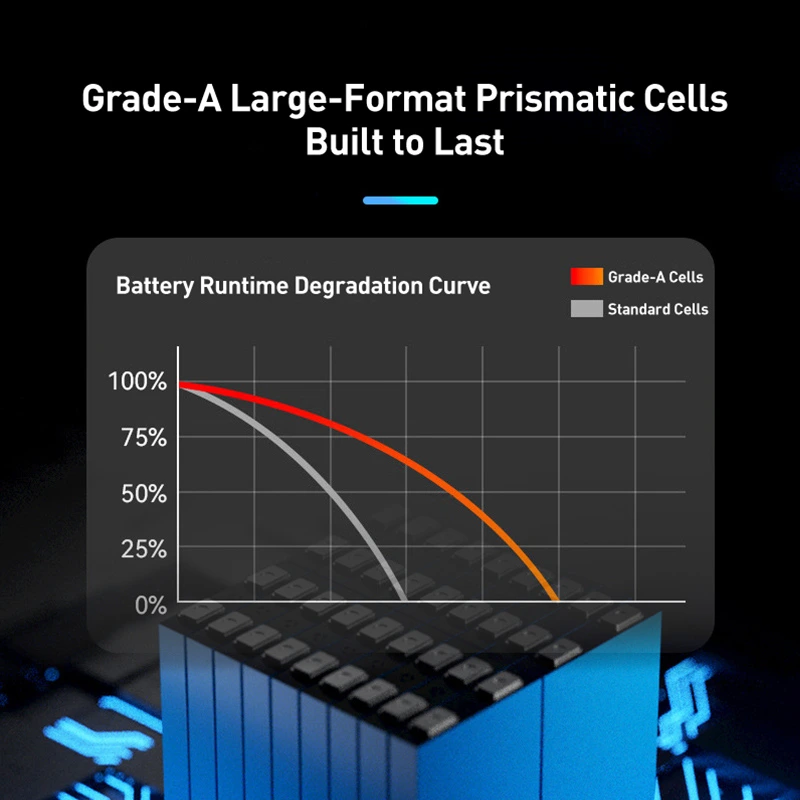
- Automotive Grade-A (车规级 A 品): Cells that pass 100% of stringent automotive standards (such as IATF 16949 certification testing). They feature tight capacity tolerances (≤ 1%), exceptionally low internal resistance variance, zero cosmetic defects, full traceability, and long cycle lives (often 4,000 to 6,000+ cycles for LFP). Essential for electric vehicles, AGVs, and high-reliability commercial equipment.
- Consumer / Industrial Grade-A: High-quality cells that pass standard industrial specs but have slightly wider tolerance bands than automotive standards. Excellent for stationary energy storage and light power tools.
- Grade-B / Surplus Cells: Cells that failed strict EV-level quality gates due to minor capacity underperformance, slightly higher AC resistance, or cosmetic imperfections. While cheap, Grade-B cells exhibit rapid capacity fade, poor batch consistency, and high risk of premature pack failure.
Choose the Battery Cell Format
Match physical form factors to your mechanical enclosure constraints:
- Cylindrical Cells: Formats like standard 18650 battery cells and larger 21700 battery cells offer automated production maturity, excellent structural integrity, and superior heat dissipation around individual cell walls.
- Prismatic Cells: Large-capacity aluminum-cased prismatic lithium-ion cells (e.g., 50Ah to 300Ah) drastically reduce the total number of inter-cell connections, making them the industry standard for commercial energy storage systems and heavy material handling vehicles.
- Pouch Cells: Flexible, lightweight pouch lithium-ion cells maximize space efficiency, though they require mechanical clamping to withstand internal swelling over prolonged cycling.
Define Cell Capacity and Energy Requirements
Specify both nominal rating parameters clearly. State rated battery cell capacity in Ampere-hours (Ah) or milliampere-hours (mAh), total watt-hours (Wh), nominal voltage, and allowable cut-off voltage limits. Never rely on marketing labels alone; define energy parameters based on actual system operating temperatures.
Define Continuous and Peak Discharge Requirements
As power system engineers, we frequently remind clients: A high-capacity cell is not automatically a high-power cell. Selecting a 300Ah energy-dense cell with a max discharge rate of 0.5C will instantly fail if installed in a high-torque electric cargo tricycle or industrial towing vehicle requiring 3C continuous discharge surges. You must explicitly state:
- Continuous operating discharge current (Amperes)
- Peak pulse discharge current and duration (e.g., 150A for 10 seconds)
- Maximum continuous charging current
Define Size, Weight, and Mechanical Requirements
Detail exact mechanical boundary conditions including height, diameter or thickness tolerances, terminal styles (threaded studs, flat top for spot welding, or weldable copper tabs), and maximum allowable pack weight budget.
How to Verify Automotive Grade-A Lithium-Ion Battery Cell Quality Before Bulk Purchase
Industry forums like Reddit’s r/batteries frequently highlight buyer frustration regarding fake capacity ratings, rewrapped Grade-B cells passed off as EV-grade, and severe internal resistance mismatches from unverified overseas suppliers. Implementing stringent verification checks before issuing final payment safeguards your investment.
How to Verify Automotive Grade-A Authenticity and Cell Model
Cross-check factory matrix DataMatrix QR codes, laser-etched serial numbers, and outer sleeve insulation. Legitimate tier-1 manufacturers etch crisp, permanent matrix codes directly onto the metal casing underneath the outer PVC sleeve. For genuine Automotive Grade-A cells, the QR code encodes factory plant location, production line number, exact manufacture date, and initial electrical testing bin. If a code appears scuffed, re-printed, or missing, the cell is likely a rewrapped factory reject or downgraded Grade-B unit.
How to Check Cell Capacity
Always perform full C-rate discharge capacity tests using standard IEC standards. Test cells by charging at 0.5C to specified cut-off under constant current/constant voltage (CC/CV), resting for 30 minutes, and discharging at 0.5C down to minimum cut-off voltage at 25°C. Unverified vendors frequently label peak theoretical capacity rather than guaranteed operational capacity under load.
How to Measure Internal Resistance
Internal resistance directly dictates cell heat generation, voltage sag under load, and usable output efficiency. Measure AC internal resistance at 1kHz for quick screening, followed by DC internal resistance (DCIR) pulse testing. True Automotive Grade-A cells maintain extremely low DCIR tolerances across production lots, whereas Grade-B units display wide resistance fluctuations that generate dangerous hot spots in high-current packs.
How to Check Cell Consistency
Individual cell excellence means nothing if batch uniformity is poor. When building multi-cell packs, high variation forces premature BMS cut-offs and drastically shortens system service life.
Cell Consistency Score™ Evaluation Criteria
Calculate overall lot health across five vital metrics before approving assembly:
- Capacity Variance: Must remain within ≤ 1.0% delta across lot samples for Automotive Grade-A cells.
- DC Internal Resistance Delta: Must remain within ≤ 3% variation.
- Open Circuit Voltage (OCV): Must display ≤ 3mV variance upon unboxing fresh shipments.
- Production Lot Matching: 100% of cells must originate from identical factory date codes and production lines.
- Physical Tolerances: Weight variance under 0.3%; zero casing or insulation deformities.
How to Identify Suspicious, Rewrapped, or Grade-B Cells
Be vigilant for red flags: prices significantly below prevailing market indices, mismatched date codes across a single shipment box, torn top-insulator rings, sanded or re-lasered QR codes, or suppliers claiming unrealistic energy densities. Real-world supply chain audits reveal that ultra-low-cost offers often conceal reclaimed Grade-B or surplus cells that degrade rapidly under real duty cycles.
What Should You Test in a Lithium-Ion Battery Cell Sample Order?
Executing systematic incoming sample verification protects your production line from catastrophic field recalls. Utilize our standard acceptance matrix during sample sign-off.
Lithium-Ion Cell Sample Acceptance Matrix™
| Test Item | What It Verifies | Why It Matters | Practical Buyer Benefit |
|---|---|---|---|
| Open-Circuit Voltage (OCV) | Initial electrical status & shelf state | Detects internal micro-short circuits early | Prevents installing self-discharging cells into complete pack assemblies. |
| Dimensions & Weight Check | Physical consistency & enclosure fit | Prevents mechanical binding during automated building | Guarantees smooth module integration without structural tooling modifications. |
| Capacity Test @ Specified Rate | Actual usable energy under operational C-rate | Confirms cell delivers advertised Amp-hours | Ensures end-user vehicle or equipment meets marketed run-time claims. |
| DC Internal Resistance Test | Real-world power delivery & heat output | Predicts high-current voltage drop limits | Reduces thermal stress and avoids unexpected BMS high-temperature cut-offs. |
| Continuous Load & Temp Rise | Thermal dissipation stability under load | Prevents localized thermal runaway scenarios | Protects overall system safety, reducing costly product liability risks. |
| Self-Discharge & Storage Test | Diaphragm integrity after 28-day shelf test | Identifies chemical contamination or separator defects | Ensures stock retains charge during international transit and storage. |
How to Compare Lithium-Ion Battery Cell Suppliers Beyond Price
Evaluating a long-term supply partner requires looking past upfront purchase invoices. Experienced buyers measure total lifecycle economics and supplier operational reliability.
Compare Cell Price and Usable Energy ($/Wh)
Stop evaluating purchases on simple $/cell metrics. Always calculate cost per usable Watt-hour: Total Cell Cost / (Nominal Voltage x Actual Usable Ah at 0.5C). A cheaper cell that delivers only 85% usable capacity under dynamic load is far more expensive than a premium cell delivering 100% rated capacity.
Compare Cell Grade (Automotive Grade-A vs Grade-B) and Production Date
Always verify whether quotes represent genuine Automotive Grade-A prime cells or downgraded Grade-B factory surplus. Demand official factory grading documentation and confirmation of manufacturing dates: lithium cells stored inactive for over 6 months without proper maintenance charging suffer capacity degradation and elevated internal resistance.
Compare Battery Cell Traceability
A reliable lithium-ion battery cells supplier China or global distributor must provide clear lot traceability documents. You should be able to trace any individual cell back to its origin factory production run, raw material lot, and factory outgoing test logs.
Compare Supplier Quality Control and Testing
Request proof of ongoing factory Quality Control (QC) processes. Ask: Does the supplier execute 100% automated OCV/IR sorting? Do they provide batch inspection reports including capacity distribution bell curves for every shipped pallet?
Compare Long-Term Supply Stability
Verify that your prospective partner can sustain continuous supply over multi-year production cycles without unauthorized bill-of-materials (BOM) changes. Sudden cell casing modifications or internal chemical adjustments can render your custom pack housing and BMS firmware obsolete overnight.
How to Choose a Lithium-Ion Battery Cell Supplier for Long-Term Production
Securing a smooth supply chain over multi-year equipment cycles requires establishing clear commercial agreements early. When evaluating long-term partners, confirm these operational capabilities:
- Model Continuity: Can the vendor guarantee identical cell model availability for a minimum 3-to-5 year production window?
- Batch Consistency Control: How does the supplier segregate and ship production lots to ensure multi-cell packs receive perfectly matched units?
- Engineering Change Notification (ECN): Does the supplier provide mandatory 90-day ECN notices prior to modifying any internal chemical formulation or casing design?
- RMA & Defect Handling: What is the formal credit or replacement process if incoming batch testing reveals defect rates exceeding agreed Acceptable Quality Limit (AQL) levels?
- Forecast Flexibility: Can the supplier hold safety stock buffer inventory locally to absorb sudden demand spikes in your assembly schedule?
What Should a Bulk Lithium-Ion Battery Cell Supply Agreement Include?
Protect your commercial interests by integrating our foundational checklist directly into your master purchase contracts.
8-Point Bulk Cell Supply Control Checklist™
- Approved Grade & Model: Guarantee Automotive Grade-A specification with exact chemical code and part number; zero substitutions allowed.
- Approved Manufacturing Facility: Lock production to specific verified factory plant sites.
- Forecast & Schedule Commitments: Define binding lead times and rolling 12-month projections.
- Minimum Order Commitment (MOQ): Define clear volume-tier pricing triggers.
- Lot & Date-Code Limits: Guarantee cells ship within 60 days of manufacturing, sourced from max 2 date codes per shipment.
- Mandatory ECN Process: Require 90-day advance written notice for any design or process changes.
- Non-Conforming Product Protocol: Define specific AQL thresholds, return material procedures, and supplier cost liabilities.
- Warranty & Replacement Terms: Establish clear performance criteria, cycle-life definitions, and defect credit mechanisms.
Should You Buy Lithium-Ion Battery Cells or a Complete Battery Pack?
One of the most critical decisions for equipment manufacturers is deciding whether to source loose individual cells or partner with an integrated supplier for turn-key custom battery packs.
When Buying Loose Battery Cells Makes Sense
Sourcing loose individual cells is ideal if you operate established in-house pack assembly lines, employ specialized battery design engineers, maintain certified spot-welding and laser-welding equipment, and possess internal testing facilities for UN38.3 transport certification.
When a Custom Lithium-Ion Battery Pack Is a Better Option
If your core expertise lies in manufacturing equipment—such as commercial electric golf carts, automated guided vehicles (AGVs), electric tricycles, industrial floor cleaners, parking air conditioners, or mobile material handling vehicles—sourcing complete, engineered battery packs is substantially safer and more economical. Partnering with a custom pack builder offloads complex BMS programming, thermal management, structural vibration design, and expensive safety testing procedures entirely.
What AnengJi Can Customize for Battery Pack Projects
At AnengJi Energy, we bridge the gap between high-grade cell manufacturing and specialized vehicle/equipment engineering. We utilize 100% Automotive Grade-A (车规级 A 品) cells to provide complete custom power solutions tailored to your operational environment:
- Optimized Cell Selection: Matching top-tier Automotive Grade-A LiFePO4 battery cells or high-rate NMC battery cells specifically to your duty cycle.
- Custom Voltage & Capacity Architecture: Designing custom system configurations (e.g., 24V, 36V, 48V, 72V, 96V+) built for your exact physical space constraints.
- Intelligent BMS Integration: Customizing smart Battery Management Systems featuring precise state-of-charge (SOC) algorithms, thermal cut-offs, and communication options (CANbus, RS485, Bluetooth).
- Rugged Heavy-Duty Enclosures: Engineering high-vibration IP65/IP67 sheet metal or aluminum enclosures designed to withstand harsh industrial environments.
What Information Should You Send for a Custom Lithium-Ion Battery Pack?
When requesting a custom battery design quote, providing thorough operational details helps our engineering team respond with precise technical solutions rapidly:
- Electrical Parameters: System nominal voltage, target capacity (Ah/kWh), continuous load current, peak pulse current (Amps/duration), and charger input preferences.
- Mechanical Space Constraints: Maximum allowable pack dimensions (Length x Width x Height), total weight limits, mounting bracket orientation, and preferred heavy-duty connector types.
- Operating Conditions: Ambient temperature range (e.g., cold-storage AGVs vs. hot outdoor sight-seeing buses), daily operating hours, duty cycles, and ingress protection (IP rating) needs.
- Communication & Systems Protocols: Required protocol integration (CAN 2.0B, J1939, RS485) to communicate directly with your equipment controller or dashboard display.
- Regulatory Certifications: Target regional market approvals (CE, UL, UN38.3, IEC).
How AnengJi Supports Prototype, Pilot and Bulk Battery Projects
We work alongside your engineering teams through every phase of product development to guarantee maximum field performance:
- Prototype & Sample Phase: Fast-track Automotive Grade-A cell selection, rapid 3D CAD modeling, custom BMS firmware adaptation, and functional prototype testing.
- Medium-Batch Pilot Runs: Strict lot sorting, repeatable robotic welding validation, full environmental chamber testing, and final packaging approval.
- Large-Volume Programs: Long-term volume price locks, dedicated production assembly lines, structured safety stock buffers, and complete logistics management.
How to Start a Lithium-Ion Battery Cell Procurement Project
Ready to move your energy project forward? Choose the path that best matches your immediate requirements:
Option A: Cell Direct Request
Know your exact cell requirements? Send us the manufacturer model, cell grade, target quantity, and delivery destination for an immediate bulk quote.
Option B: Technical Sourcing
Need engineering support? Provide your target voltage, discharge current, space limitations, and application details for expert cell selection.
Option C: Custom Pack Integration
Building equipment? Send your vehicle or device specifications. Our engineers will design a fully integrated custom battery pack system.
Lithium-Ion Battery Cell Procurement FAQ
Where can I buy lithium-ion battery cells in bulk?
You can purchase cells directly from cell manufacturers, authorized franchised distributors, specialized cell wholesalers, or certified battery pack integration companies depending on your total volume and engineering requirements.
What is the difference between Automotive Grade-A (车规级 A 品) and Grade-B cells?
Automotive Grade-A cells pass strict automotive quality standards (e.g., IATF 16949) with tight capacity tolerances (≤1%), ultra-consistent internal resistance, zero cosmetic defects, and full factory QR code traceability. Grade-B cells are factory downgrades or failed-inspection units that display wider performance variances, faster capacity degradation, and higher failure risks.
Is it better to buy lithium-ion cells directly from a manufacturer?
Direct factory buying offers the lowest unit cost for high volumes (100,000+ units), but comes with strict MOQs, longer lead times, and complex customs logistics. For small-to-medium orders, working with authorized distributors or specialized pack integrators is faster and more cost-effective.
How can I verify genuine lithium-ion battery cells?
Inspect factory laser-etched Matrix QR codes underneath outer insulation sleeves, verify weight and dimension consistency, conduct 0.5C discharge capacity tests, and measure AC/DC internal resistance against official factory data sheets.
How can I test lithium-ion battery cell capacity before bulk ordering?
Order a sample lot (10-50 cells), charge to maximum rated voltage using standard CC/CV protocols, rest for 30 minutes, and perform controlled discharge testing at 0.5C in a temperature-controlled environment (25°C) to record total delivered Amp-hours down to minimum cut-off voltage.
What is the difference between a battery cell manufacturer and distributor?
Cell manufacturers produce raw cells and focus on high-volume production lines. Distributors hold stock across multiple cell models, offer local warehousing, accept smaller order quantities, and provide faster delivery terms.
What MOQ should I expect when buying lithium-ion battery cells?
Direct manufacturers typically require 10,000 to 100,000+ cells depending on cell format. Independent wholesalers and distributors can supply minimum quantities from single pallet loads (500 to 2,000 cells) down to small engineering sample packs.
Should I buy 18650, 21700, prismatic, or pouch cells?
Use cylindrical cells (18650/21700) for flexible mechanical layouts and proven thermal dissipation. Choose prismatic cells for heavy industrial vehicles and energy storage systems to minimize inter-cell welding connections. Opt for pouch cells when space weight constraints are critical.
How do I compare lithium-ion battery cell prices?
Never rely on simple unit pricing ($/cell). Calculate total cost per usable Watt-hour ($/Wh) including cell grading (Grade-A vs Grade-B), shipping logistics, internal resistance testing, scrap rejection risks, and long-term cycle life stability.
What information should I request from a battery cell supplier?
Request official cell datasheets, factory lot date codes, cell grade certification (Automotive Grade-A proof), MSDS, UN38.3 transport testing reports, UL/IEC compliance certificates, production capacity timelines, and warranty/RMA terms.
Should I buy loose cells or a complete custom battery pack?
Buy loose cells if you operate established in-house automated pack assembly lines. Choose complete engineered custom battery packs if you manufacture equipment (AGVs, golf carts, utility vehicles) to offload BMS programming, thermal management, structural safety design, and certification risks.
Related Posts
 https://anengjibattery.com/wp-content/uploads/2026/09/Bulk-Lithium-Ion-Battery-Cells-Procurement-Guide-B2B-Sourcing.webp
675
1000
Battery Expert Team
https://anengjibattery.com/wp-content/uploads/2025/06/logo2-300x138.png
Battery Expert Team2026-09-14 09:47:322026-09-14 09:47:48Bulk Lithium-Ion Battery Cells Procurement Guide | B2B Sourcing
https://anengjibattery.com/wp-content/uploads/2026/09/Bulk-Lithium-Ion-Battery-Cells-Procurement-Guide-B2B-Sourcing.webp
675
1000
Battery Expert Team
https://anengjibattery.com/wp-content/uploads/2025/06/logo2-300x138.png
Battery Expert Team2026-09-14 09:47:322026-09-14 09:47:48Bulk Lithium-Ion Battery Cells Procurement Guide | B2B Sourcing https://anengjibattery.com/wp-content/uploads/2026/09/AnengjiBattery-Heavy-Duty-Electric-Cargo-Tricycle-Battery-Installation.webp
675
1000
Battery Expert Team
https://anengjibattery.com/wp-content/uploads/2025/06/logo2-300x138.png
Battery Expert Team2026-09-11 09:47:192026-09-11 09:47:29How Many Ah Does an Electric Tricycle Battery Need? A Complete Selection Guide
https://anengjibattery.com/wp-content/uploads/2026/09/AnengjiBattery-Heavy-Duty-Electric-Cargo-Tricycle-Battery-Installation.webp
675
1000
Battery Expert Team
https://anengjibattery.com/wp-content/uploads/2025/06/logo2-300x138.png
Battery Expert Team2026-09-11 09:47:192026-09-11 09:47:29How Many Ah Does an Electric Tricycle Battery Need? A Complete Selection Guide https://anengjibattery.com/wp-content/uploads/2026/09/anengjiBattery-Electric-Tricycle-Battery-Supplier-vs-Manufacturer-Key-Differences.webp
675
1000
Battery Expert Team
https://anengjibattery.com/wp-content/uploads/2025/06/logo2-300x138.png
Battery Expert Team2026-09-10 02:15:522026-09-10 02:16:09Electric Tricycle Battery Supplier vs Manufacturer: Key Differences
https://anengjibattery.com/wp-content/uploads/2026/09/anengjiBattery-Electric-Tricycle-Battery-Supplier-vs-Manufacturer-Key-Differences.webp
675
1000
Battery Expert Team
https://anengjibattery.com/wp-content/uploads/2025/06/logo2-300x138.png
Battery Expert Team2026-09-10 02:15:522026-09-10 02:16:09Electric Tricycle Battery Supplier vs Manufacturer: Key Differences https://anengjibattery.com/wp-content/uploads/2026/09/How-to-Choose-an-Electric-Tricycle-Battery-Manufacturer-Buyer-Guide.webp
675
1000
Battery Expert Team
https://anengjibattery.com/wp-content/uploads/2025/06/logo2-300x138.png
Battery Expert Team2026-09-08 09:28:302026-09-08 09:28:56How to Choose an Electric Tricycle Battery Manufacturer | Buyer’s Guide
https://anengjibattery.com/wp-content/uploads/2026/09/How-to-Choose-an-Electric-Tricycle-Battery-Manufacturer-Buyer-Guide.webp
675
1000
Battery Expert Team
https://anengjibattery.com/wp-content/uploads/2025/06/logo2-300x138.png
Battery Expert Team2026-09-08 09:28:302026-09-08 09:28:56How to Choose an Electric Tricycle Battery Manufacturer | Buyer’s Guide


Leave a Reply
Want to join the discussion?Feel free to contribute!