
Top Lithium Ion Battery Producers for Spain’s Market Growth
September 17, 2026 / Battery Expert Team / Battery Basics
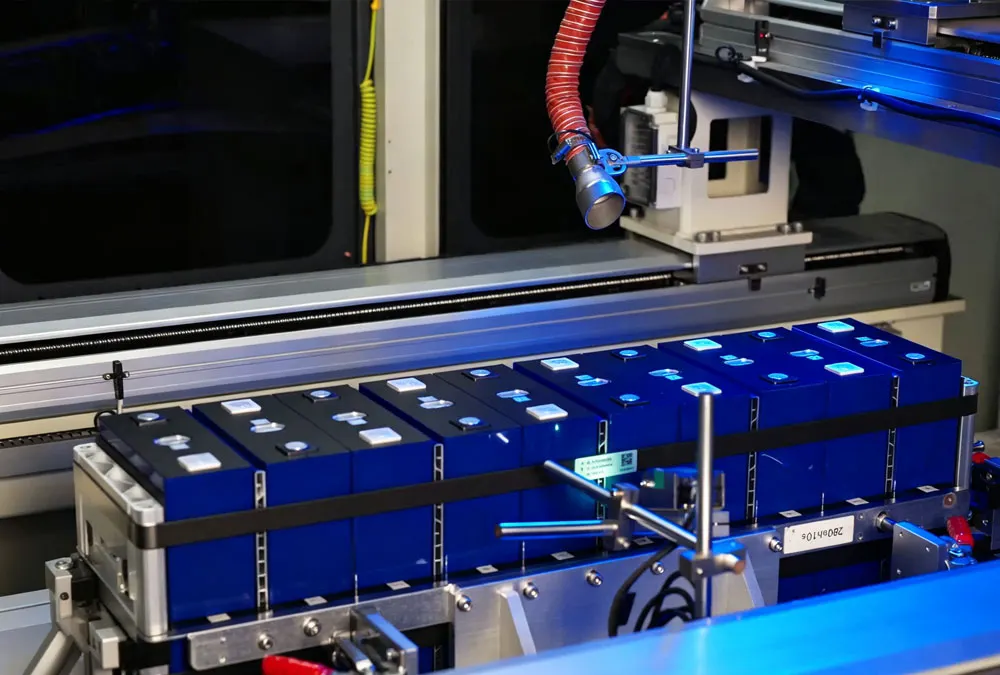
Introduction
Sourcing the best LiFePO4 battery for commercial fleets, utility vehicles, or off-grid power systems is rarely as straightforward as picking the pack with the flashiest marketing label. After testing thousands of lithium iron phosphate battery assemblies in real-world field conditions—ranging from high-draw electric tricycles navigating steep inclines to heavy-duty AGVs running 24/7 in automated warehouses—I’ve seen firsthand how a pack that looks stellar on paper can abruptly cut out under high peak loads or degrade within 18 months due to poor cell matching. Buyers often ask me to point them to a single “top-rated” option. However, the reality of industrial energy storage is that the best LiFePO4 battery isn’t a one-size-fits-all product; it is a precisely engineered pack where cell chemistry, BMS discharge limits, and thermal tolerances align directly with your system’s real-world operational stress.
Quick Answer
The best LiFePO4 battery should match your application in voltage, capacity, discharge current, cell quality, BMS protection, operating temperature, physical dimensions, warranty and safety requirements.
To avoid costly operational downtime, engineering teams and procurement officers need a clear evaluation framework. Rather than relying on unverified claims, we use the BEST-LFP Selection Model—a multi-point verification process designed to evaluate Cell Quality (B), Electrical Matching (E), Safety & BMS (S), Thermal Resilience (T), Logistics Compliance (L), Factory Proof (F), and Price-to-Performance Value (P).
What Makes the Best LiFePO4 Battery?
Evaluating a lithium iron phosphate battery requires looking beyond the outer plastic or metal casing. A pack is only as reliable as its weakest internal component. The overall performance, thermal safety, and lifespan depend on the cell chemistry, internal cell architecture, and the management electronics controlling energy flow.
Battery Cell Quality Comes First
The core of any pack is its LiFePO4 battery cells. Cell chemistry dictates intrinsic safety, but physical manufacturing quality determines long-term cycle life. Vendors frequently use terms like “Grade A” or “automotive-grade” without providing verifiable documentation. In reality, cell consistency—matching voltage, nominal capacity, and internal resistance across a single production batch—is what prevents premature pack failure. When a single cell within a series string has slightly higher internal resistance, it heats up faster during 1C discharge, hits cutoff voltage prematurely, and limits the usable capacity of the entire pack.
| Supplier Claim | What Buyers Should Ask | User Benefit & Value Realized |
|---|---|---|
| Grade A Cells | What is the specific cell model, factory batch, and supplier testing log? | Ensures full rated capacity and uniform cell aging, reducing sudden fleet breakdowns. |
| Automotive-Grade | What testing basis (e.g., UN 38.3, IEC 62619) supports this classification? | Delivers higher vibration resistance and structural integrity for rough off-road utility vehicles. |
| High Consistency | Can you provide delta-voltage (ΔV ≤ 5mV) and internal resistance (ΔIR ≤ 0.5mΩ) sorting data? | Prevents premature BMS cutoffs, maximizing total energy output during extended shifts. |
| Long Cycle Life | Under what DoD, charge/discharge C-rate, and ambient temperature was this tested? | Protects your capital expenditure by ensuring the pack survives 3,000+ real-world daily cycles. |
| 100Ah Capacity | Was capacity verified at 0.2C or 1C discharge rate under standard conditions? | Guarantees actual, usable amp-hours so your equipment completes its full planned workday without mid-shift charging. |
BMS Quality Determines How the Battery Is Managed
What the BMS can monitor and control matters more than simply having a BMS. A low-grade circuit board might offer basic overcharge and short-circuit protection, but an industrial-grade LiFePO4 BMS actively regulates thermal limits, balances cell voltages, calculates precise state of charge (SOC), and handles high surge loads. In heavy mobility equipment, regenerative braking can generate sudden back-EMF voltage spikes. A robust BMS absorbs or routes these surges safely, whereas a cheap protection board will trip unexpectedly, leaving an operator stranded on an incline.
Community discussions on platforms like Reddit frequently highlight real-world frustrations with poorly calibrated BMS units. Users often report issues where passive balancing circuits fail to correct cell drift over time, or where aggressive overcurrent cutoffs trigger during normal motor startup. Key protection mechanisms every commercial BMS must feature include:
- Multi-Point Temperature Sensors: Monitoring both cell terminals and MOSFET switching banks to prevent thermal runaway.
- Cell Balancing (Active or High-Current Passive): Maintaining individual cell voltage parity during the final 10% of the LiFePO4 battery charging phase.
- Communication Protocols (CANbus / RS485): Allowing the battery to share real-time SOC, voltage, and diagnostic data directly with industrial motor controllers or system displays.
Cycle Life Is Meaningless Without Test Conditions
A core rule of energy storage engineering: Never compare cycle-life numbers without comparing the test conditions. A manufacturer claiming 6,000 cycles may have run their tests at a gentle 0.2C charge/discharge rate, in a temperature-controlled 25°C laboratory, cycling only between 30% and 70% depth of discharge (DoD). Put that same pack into a golf cart experiencing 1.5C discharge bursts in 38°C summer heat at 90% DoD, and cycle life will drop significantly.
| Datasheet Claim | Verification Question | Buyer Advantage & Practical Outcome |
|---|---|---|
| 3,000 Cycles | Is this measured at 80% or 100% Depth of Discharge (DoD)? | Allows accurate calculation of daily operating costs over a realistic 5-to-8-year lifecycle. |
| 5,000 Cycles | What was the ambient testing temperature during cycling tests? | Prevents unexpected capacity degradation when operating equipment outdoors during summer months. |
| 6,000+ Cycles | What specific C-rate (charge and discharge current) was used? | Validates whether the battery can handle fast-charging regimes without voiding its performance spec. |
| 80% End-of-Life Retention | Was the test protocol based on continuous or intermittent cycling? | Ensures equipment maintains sufficient usable range even after years of daily commercial operation. |
How to Choose the Right LiFePO4 Battery Capacity and Voltage
Moving from cell-level evaluation to pack selection requires precise electrical system sizing. Selecting the wrong nominal voltage or undersizing capacity leads to thermal stress, reduced motor efficiency, or immediate BMS shutoffs under load.
Choose the Correct LiFePO4 Battery Voltage
Matching system voltage is critical when retrofitting equipment or designing new platforms. Modern lithium iron phosphate battery architecture scales across multiple voltage configurations to support various power requirements.
| System Voltage | Typical Application Examples | Selection & Operational Benefit |
|---|---|---|
| 12V LiFePO4 battery | Auxiliary electronics, small marine systems, off-grid lighting | Direct drop-in replacement for standard 12V lead-acid batteries, providing stable voltage output throughout discharge. |
| 24V LiFePO4 battery | AGVs, automated floor scrubbers, mobility lifts | Cuts wiring current in half compared to 12V, reducing $I^2R$ heat losses in continuous-duty warehouse equipment. |
| 36V LiFePO4 battery | Selected light mobility platforms, specialized material handling | Optimizes weight-to-power ratios for specialized legacy drive systems without requiring motor retrofits. |
| 48V LiFePO4 battery | Fleet golf carts, commercial AGVs, industrial tuggers | Industry-standard sweet spot balancing safety touch voltages (<60V DC) with efficient high-torque motor driving. |
| 60V LiFePO4 battery | Heavy-duty cargo e-tricycles, urban delivery vehicles | Provides higher top speeds and sustained gradient climbing capabilities for commercial last-mile freight. |
| 64V LiFePO4 battery | Specific light electric vehicle (LEV) and municipal utility platforms | Matches specific OEM controller profiles to unlock higher drive efficiency under moderate payload conditions. |
| 72V LiFePO4 battery | High-speed passenger shuttles, heavy-duty utility trucks | Maximizes acceleration and peak power throughput while keeping operational amperage low across high-wattage drive motors. |
Calculate Battery Capacity in Ah and Wh
When comparing energy storage, Amp-hours (Ah) only tell part of the story. Watt-hours (Wh) reflect true total energy capacity across different system voltages. Use the fundamental formula:
For instance, a 48V 100Ah battery yields $48\text{V} \times 100\text{Ah} = 4,800\text{Wh}$ ($4.8\text{kWh}$) of nominal energy. Comparing this to a 72V 70Ah pack ($72\text{V} \times 70\text{Ah} = 5,040\text{Wh}$ or $5.04\text{kWh}$) shows that while the 72V pack has fewer Amp-hours, it actually stores more usable energy. Evaluating energy in Watt-hours allows for apples-to-apples performance comparisons across various drive systems.
Match Battery Capacity to Runtime and Daily Usage
Determining required LiFePO4 battery capacity requires calculating average load power, daily operating hours, terrain profile, and safety reserves. According to real-world deployment data published in the 2025 Global Industrial Lithium Battery Application Report, commercial vehicles operating in cold weather (<0°C) or on steep gradients experience an effective 15% to 22% increase in energy consumption per mile. Always factor in a minimum 20% reserve capacity buffer to prevent driving the battery down to its absolute low-voltage cutoff, which helps protect pack health and long-term lifespan.
Match LiFePO4 Battery Discharge Performance to the Application
Battery selection often fails not on energy capacity (Ah), but on current delivery capability. A battery can have plenty of capacity, but if its internal busbars or BMS limits can’t support the motor’s peak surge current, the system will shut down under heavy load.
Continuous Discharge Current vs Peak Discharge Current
Understanding the difference between continuous and peak ratings is essential for drive system stability:
- Continuous Discharge Current: The maximum amperage the battery pack can deliver sustained indefinitely without exceeding safe temperature limits or tripping the BMS.
- Peak Discharge Current: The burst amperage the battery can supply for brief intervals (typically 5 to 30 seconds). This handles initial motor startup, high-load acceleration, and climbing steep ramps.
Why Motor Power Alone Does Not Determine Battery Size
A common mistake is sizing a battery based solely on the nominal rating of the motor. For example, a 5kW motor running on a 48V system draws approximately 104A continuous ($5,000\text{W} / 48\text{V} \approx 104.16\text{A}$). However, during hard acceleration under heavy load, the motor controller may pull 2.5 to 3 times its rated current—spiking up to 300A for several seconds. If the battery BMS has a hard peak limit of 200A, it will trip instantly, shutting off system power. Always size battery discharge specs to match or exceed the peak output limits of the motor controller.
Avoid Choosing a Battery Based on Ah Alone
A 100Ah battery with insufficient discharge capability may perform worse than a smaller battery with an appropriate high-current design. If a 100Ah battery is built using low-C-rate energy cells paired with a budget 50A BMS, it will fail in heavy-duty utility applications. Conversely, a 75Ah pack built with high-rate discharge cells and a 150A continuous BMS will reliably power heavy machinery without thermal stress or unexpected shutdowns.
How to Verify LiFePO4 Battery Quality Before Buying
To ensure battery quality before issuing a purchase order, procurement teams need a systematic verification process. Relying solely on sales brochures leaves your fleet vulnerable to B-grade cells or recycled components.
How to Verify Grade A, Grade B and Automotive-Grade Cell Claims
Unscrupulous suppliers often buy factory-rejected or secondary-grade cells, re-wrap them in fresh PVC sleeving, and sell them as “Grade A.” True Grade A cells come with verifiable QR codes laser-etched onto the top terminal plate, linking directly to factory test reports. Require your LiFePO4 battery supplier to provide a complete Cell Verification Checklist prior to production:
Cell Verification Checklist for Buyers:
- Cell Brand & Model: Request exact cell datasheets from Tier-1 manufacturers.
- Laser-Etched QR Code Traceability: Ensure codes are intact and match manufacturer batch records.
- Batch Sorting Reports: Confirm voltage variance ($\Delta\text{V} \le 5\text{mV}$) and internal resistance variance ($\Delta\text{IR} \le 0.5\text{m}\Omega$) across the entire pack assembly.
- Factory Capacity Testing Logs: Verify 0.5C or 1C discharge curves for the specific batch supplied.
Ask for Battery Test Data Instead of Marketing Claims
A trustworthy supplier will back up every product claim with verifiable test documentation. Use this Claim → Specification → Evidence Framework to validate battery quality before placing an order:
| Marketing Claim | Technical Specification | Required Documentary Evidence |
|---|---|---|
| Long Cycle Life | ≥ 3,500 cycles at 80% DoD @ 25°C | Third-party cycle testing report (e.g., IEC 62619 section 7.3 certification). |
| Grade A Cells | Brand-new cells direct from manufacturer | Traceable QR code batch report and original manufacturer CVC data. |
| Smart BMS Protection | Hardware & software dual-layer cutoffs | BMS firmware specification sheet detailing fault registers and trip delays. |
| True 100Ah Capacity | 100Ah minimum usable capacity at 0.5C rate | 100% automated factory discharge test log for each individual pack serial number. |
| Bluetooth Monitoring | Real-time cell voltage and error monitoring | Live software demonstration or SDK integration documentation. |
Why a Reliable LiFePO4 Battery Brand Matters
Sourcing industrial batteries is a long-term operational commitment. A low-cost vendor who vanishes when warranty claims arise or fails to stock replacement parts can quickly turn an initial cost savings into a major financial liability.
What Makes a LiFePO4 Battery Brand Reliable?
An established LiFePO4 battery manufacturer maintains end-to-end quality control across cell sourcing, BMS design, module assembly, and thermal testing. Key indicators of a reliable partner include in-house engineering capabilities, specialized OEM/ODM options, comprehensive product liability insurance, and accessible technical support teams equipped to troubleshoot protocol integration issues on site.
How to Verify a LiFePO4 Battery Manufacturer
Before entering into a supply contract, audit the manufacturer’s operational capabilities:
- Quality Systems Audit: Confirm ISO 9001, ISO 14001, and IATF 16949 (automotive quality management) factory certifications.
- In-House Testing Infrastructure: Verify the presence of environmental thermal chambers, vibration test benches, and automated battery aging racks.
- Application Track Record: Look for documented field deployments in similar heavy-use commercial applications.
Brand Reputation vs Product Evidence
A well-known brand can reduce purchasing uncertainty, but buyers should still verify the specifications of the exact battery model. Even leading suppliers offer different product lines tailored to distinct price points and performance profiles. Always base procurement decisions on verified, model-specific test data rather than general brand recognition alone.
LiFePO4 Battery Warranty: What Should Buyers Check?
A warranty document is only as strong as its underlying terms and conditions. Many buyers fall into the trap of assuming a “5-Year Warranty” offers comprehensive coverage, only to discover fine print that exempts commercial duty cycles or leaves the customer paying high international shipping fees for replacement units.
What Does a LiFePO4 Battery Warranty Actually Cover?
Carefully review warranty policies to distinguish between simple defect guarantees and performance retention coverage. A robust industrial warranty explicitly defines minimum capacity retention (e.g., guaranteed 70% or 80% remaining capacity at the end of the warranty term) alongside full BMS and internal connection hardware coverage.
Does a 5-Year Warranty Mean the Battery Will Last 5 Years?
Not necessarily. A warranty sets a legal framework for defect compensation, not a physical guarantee of operational lifespan. If a pack is operated outside its rated temperature parameters or subjected to unapproved fast-charging profiles, the manufacturer can void coverage. Conversely, a well-engineered pack operated within its design limits will often outlast its warranty period by several years.
What Should a Battery Warranty Policy Include?
| Warranty Checklist Item | Standard Market Term | Buyer Protection Standard |
|---|---|---|
| Warranty Period | 1–3 Years Limited | 3–5+ Years Commercial Coverage |
| Capacity Retention Target | Not specified / vague | Explicitly guaranteed ≥70% or 80% SOH (State of Health) |
| BMS & Electronics Coverage | 1 Year max | Full coverage co-terminus with the battery pack duration |
| Shipping Responsibility | Customer pays all freight | Supplier covers replacement shipping within first 12–24 months |
| Claim Execution Process | Requires returning physical pack overseas | Remote BMS log diagnosis with local spare parts/module dispatch |
Can LiFePO4 Batteries Be Safely Transported?
International shipping regulations for lithium batteries are strictly enforced. Attempting to ship commercial lithium iron phosphate battery packs without proper certifications can result in customs seizures, heavy fines, or delayed project schedules.
What Lithium Battery Transport Documents Should Suppliers Provide?
Under international dangerous goods regulations (ICAO/IATA for air, IMDG for ocean, ADR for road), lithium iron phosphate batteries are classified as Class 9 Dangerous Goods (UN 3480 for standalone batteries, UN 3481 when packed with or contained in equipment). According to the United Nations Manual of Tests and Criteria (Section 38.3), all lithium battery types must successfully pass rigorous thermal, altitude, vibration, shock, external short-circuit, and impact testing before shipment. Your supplier must provide an official UN 38.3 Test Summary along with a current Safety Data Sheet (SDS/MSDS).
How Proper Packaging Reduces Battery Transport Risk
Commercial battery packaging must meet stringent UN-certified dangerous goods specifications. Individual terminals must be insulated to prevent accidental short-circuiting during transit. Packs must be enclosed in heavy-duty, shock-absorbent non-conductive inner packaging and secured within UN-approved cardboard boxes or reinforced wooden crates certified for international freight.
What Buyers Should Confirm Before International Shipment
| Shipping Readiness Item | Confirm Before Shipment | Compliance & Operational Benefit |
|---|---|---|
| UN 38.3 Test Summary | Yes (Signed & Verifiable) | Prevents customs impoundment and verifies international transport safety. |
| SDS / MSDS Report | Yes (Updated to current year standards) | Provides freight forwarders with essential emergency response guidelines. |
| UN Packaging Specification | Yes (UN-rated 4G/4GV boxes or crates) | Protects internal battery modules against shock, vibration, and drop impacts during transport. |
| Dangerous Goods Hazard Marking | Yes (Class 9 & UN 3480/3481 Labels) | Ensures full compliance with carrier acceptance policies, avoiding freight delays. |
| State of Charge (SoC) Level | Confirm ≤ 30% SoC for air or specialized freight | Complies with mandatory international aviation safety regulations for lithium batteries. |
Choose the Right LiFePO4 Battery for Your Application
Every commercial application presents distinct electrical, mechanical, and operational challenges. Tailoring battery selection to specific duty cycles ensures maximum ROI and system longevity.
Best LiFePO4 Battery for Golf Cart
Upgrading fleet golf carts from legacy lead-acid batteries to a dedicated best LiFePO4 battery for golf cart platform reduces total vehicle weight by over 130 kg. This weight reduction drastically cuts wear on mechanical suspensions and increases hill-climbing torque. Standard setups utilize a 48V configuration with a continuous discharge BMS rated for at least 150A to handle acceleration on steep fairway gradients. Ensure the pack features an integrated charger communication protocol to prevent overcharging.
Best LiFePO4 Battery for AGV and Material Handling
Automated Guided Vehicles (AGVs) operating in modern logistics hubs require specialized power solutions. A custom best LiFePO4 battery for AGV system must support high-frequency opportunity fast-charging (1C to 2C rate) during short station stops without thermal degradation. Under the IEC 62619:2022 safety standard for industrial lithium batteries, packs used in automated industrial machinery must demonstrate robust protection against propagation during thermal events and support CANbus integration for real-time fleet management.
Best LiFePO4 Battery for Electric Tricycle
Selecting the best LiFePO4 battery for electric tricycle applications requires matching voltage (typically 60V or 72V) to severe commercial duty cycles. Urban cargo delivery tricycles frequently carry heavy payloads, placing sustained stress on the drive system. Battery enclosures must feature high IP-rated weatherproofing (IP67) and shock-mounted internal cell holders to withstand constant road vibration.
Best LiFePO4 Battery for Cleaning and Utility Vehicles
Industrial floor scrubbers and municipal utility vehicles require constant, unfluctuating power across long operational shifts. A 24V or 48V lithium iron phosphate battery system provides a flat voltage discharge curve, ensuring vacuum suction and brush motor torque remain constant from 100% down to 5% state of charge. This eliminates the operational slowdowns common with lead-acid batteries as their voltage drops under load.
Best LiFePO4 Battery for Electric Vehicles, RV, and Solar Storage
Expanding into broader mobility and stationary storage fields requires adjusting protection priorities. Finding the best LiFePO4 battery for electric vehicles demands focus on peak discharge current and CANbus integration. Conversely, evaluating the best LiFePO4 battery for RV or the best LiFePO4 battery for solar storage shifts focus toward high cycle life, deep DoD capability, low self-discharge rates, and seamless compatibility with off-grid solar inverters.
How to Choose the Best LiFePO4 Battery for Hot and Cold Environments
Temperature extremes directly affect battery electrochemistry. Operating in extreme heat accelerates capacity fade, while freezing conditions disrupt lithium ion movement, creating serious operational risks if not properly managed.
LiFePO4 Battery Performance in High Temperatures
LiFePO4 chemistry is inherently more thermally stable than NCM or NCA chemistries, with a thermal runaway threshold exceeding 270°C. However, sustained operation in ambient temperatures above 45°C accelerates solid-electrolyte interphase (SEI) growth on the anode, shortening overall service life. High-temperature environments require battery enclosures with integrated cooling channels, thermal barrier insulation, and a BMS calibrated to trigger high-temperature cutoffs before internal cell temperatures exceed 60°C.
Can LiFePO4 Batteries Be Charged Below 0°C?
The short answer is: No, not without internal heating mechanisms. Charging a lithium iron phosphate battery at sub-zero temperatures (<0°C) causes permanent damage. The intercalated graphite anode cannot absorb lithium ions quickly enough at low temperatures, forcing metallic lithium to plate onto the anode surface. This lithium plating causes irreversible capacity loss and can form microscopic dendrites that pierce the separator, causing internal short circuits.
When Should You Choose a Heated LiFePO4 Battery?
Equipment operated in cold-storage warehouses or outdoor winter conditions requires packs with integrated self-heating systems. When a charge current is detected at sub-zero temperatures, the intelligent BMS redirects power to internal PTC heating elements, warming the core cell stack to +5°C before opening the charging circuit. This automated safety protocol preserves cell health and ensures reliable charging in cold weather.
Bluetooth Monitoring: Is It Really Worth It?
Smart connectivity has become a popular option on modern battery packs. However, evaluating its practical value depends on whether it solves real maintenance and operational challenges for your fleet.
What Can Bluetooth BMS Monitoring Show?
An integrated Bluetooth module wirelessly transmits diagnostic data directly to a mobile application or field technician’s tablet. Key visible metrics include:
- Real-time State of Charge (SOC%) and estimated remaining runtime.
- Individual cell voltages to quickly check series string balance.
- Real-time temperature sensor readings across internal cell modules.
- Detailed BMS diagnostic registers logging past overcurrent or low-voltage protection events.
Who Actually Needs Bluetooth Monitoring?
Bluetooth connectivity is highly valuable for commercial fleet managers, field service teams, and golf cart rental operations. It allows technicians to instantly diagnose battery issues without opening battery compartments or manually probing wiring terminals with a multimeter, dramatically reducing maintenance labor costs.
Bluetooth Monitoring vs CAN/RS485 Communication
While Bluetooth is ideal for field service diagnostics, it is not a replacement for hardwired industrial communications. Complex machinery like automated AGVs or high-speed electric shuttles require wired CANbus (e.g., CANopen, SAE J1939) or RS485 interfaces. Wired connections feed real-time battery status straight into the vehicle ECU, allowing dynamic motor power adjustments based on exact battery state.
LiFePO4 Battery Safety: What Should Users Know?
Although LiFePO4 is inherently the safest lithium chemistry available, proper installation, system charging, and maintenance practices are essential for preventing electrical fires and equipment damage.
Follow the Correct LiFePO4 Charging Requirements
Lithium iron phosphate batteries require a dedicated Constant Current / Constant Voltage (CC/CV) charging profile. During the Constant Current stage, the charger supplies maximum rated current while voltage gradually rises. Once the pack reaches its target voltage (typically 3.65V per cell), the charger switches to Constant Voltage mode, tapering current off until full charge is achieved.
Use a Charger That Matches the Battery
Never use a legacy lead-acid charger on a LiFePO4 pack! Lead-acid chargers often feature equalization modes that deliver high voltage spikes (>15.5V on a 12V system) intended to desulfate lead plates. This excessive voltage damages internal LiFePO4 BMS components and triggers immediate overvoltage trip faults.
Do Not Ignore BMS Protection and Battery Fusing
While the internal BMS provides primary electronic short-circuit protection, always install an external Class T or MRBF high-interrupt fuse inline with the positive battery terminal. In the event of a catastrophic dead short across the main wiring harness, a fast-acting physical fuse breaks the short-circuit current immediately, protecting BMS MOSFETs from welding shut under short-circuit stress.
Store and Maintain LiFePO4 Batteries Correctly
For long-term seasonal storage (such as golf cart fleets over winter), store batteries at roughly 50% State of Charge in a cool, dry location ($10\text{°C}$ to $25\text{°C}$). Disconnect main terminal connections to eliminate trickle drain from vehicle accessory circuits. Top off the battery every 6 months to offset natural cell self-discharge.
The BEST-LFP Battery Selection Checklist
Use this master evaluation framework to simplify technical assessments during battery procurement:
| Checkpoint | Buyer Verification Question | Strategic Buyer Advantage |
|---|---|---|
| Cell Quality | What cell model, grade, and batch test logs are provided? | Eliminates premature pack failure caused by mismatched or low-grade cells. |
| Voltage Match | Does nominal pack voltage align precisely with vehicle/system architecture? | Ensures full compatibility with motor controller input ranges. |
| Usable Capacity | Is rated capacity verified in total Wh under actual working discharge rates? | Guarantees full shift runtime without emergency mid-day recharges. |
| Current Limits | Can the BMS support peak acceleration currents without tripping? | Prevents vehicle stalling when climbing inclines or hauling maximum payloads. |
| BMS Features | Does the BMS include multi-point temp sensors, balancing, and CANbus/RS485? | Provides robust pack protection and allows seamless system diagnostics. |
| Cycle Life Basis | Are cycle counts backed by specific test conditions (DoD, C-rate, Temp)? | Enables accurate TCO calculations and realistic long-term capital planning. |
| Thermal Range | Does the pack include low-temp charge cutoffs or integrated heating? | Prevents severe lithium plating damage during winter operations. |
| Safety Certification | Does the pack hold verified UN 38.3, IEC 62619, or UL certifications? | Ensures legal compliance, simple site insurance approval, and operator safety. |
| Logistics Papers | Are official MSDS and UN 38.3 test summaries readily available? | Avoids costly customs holds and dangerous goods freight rejections. |
What Questions Should You Ask a LiFePO4 Battery Supplier?
Use these targeted questions during technical sales calls to quickly evaluate potential custom LiFePO4 battery manufacturers:
Technical Questions
- What is the exact continuous and peak discharge current limit of the installed BMS?
- What communication protocols (CANopen, J1939, RS485) are natively supported?
- What is the IP rating of the outer enclosure, and how are internal cells shock-isolated?
Quality Questions
- Are cell laser-etched QR codes intact, and can you supply factory grading reports?
- What automated testing steps does every pack undergo before leaving the facility?
Commercial & After-Sales Questions
- What is your Minimum Order Quantity (MOQ) for custom dimensions or customized BMS programming?
- How are warranty claims handled, and what is the dispatch protocol for replacement BMS parts?
How to Get the Best LiFePO4 Battery for Your Project
Choosing the right battery shouldn’t involve guessing games or risky trials. Following a structured project matching workflow helps ensure your equipment gets an optimized power solution tailored to its operational needs.
Send Your Battery Requirements
To start a technical assessment, gather your project’s basic operational parameters:
Required Project Specification Inputs:
- Target Application: (e.g., Fleet Golf Cart, AGV, Electric Tricycle, Utility Vehicle)
- System Voltage & Usable Capacity: (e.g., 48V 100Ah, 72V 150Ah)
- Motor & Controller Specs: (Continuous kW rating, Peak Current Draw in Amps)
- Physical Compartment Limits: (Length × Width × Height in mm)
- Operating Environment: (Ambient temperature ranges, exposure to moisture/vibration)
Get a Recommended Battery Configuration
Once your requirements are submitted, application engineers review the electrical load profiles to recommend an optimized pack configuration—balancing cell selection, BMS settings, enclosure design, and communication protocols.
Request a Customized LiFePO4 Battery Quote
After finalizing technical specifications, your team receives a detailed technical proposal and commercial RFQ quote. This includes cell traceability documentation, delivery lead times, warranty terms, and international UN 38.3 shipping compliance paperwork.
Frequently Asked Questions About the Best LiFePO4 Battery
What is the best LiFePO4 battery?
The best LiFePO4 battery is the one that correctly matches your system’s voltage, continuous/peak current demands, physical dimensional constraints, operating temperature environment, and safety certification requirements. There is no single universal “best” battery for all applications.
What makes a LiFePO4 battery high quality?
High-quality batteries feature verified Grade A cell consistency, laser-etched batch traceability, an industrial-grade BMS with multi-point thermal monitoring, robust physical shock isolation, and complete UN 38.3 / IEC 62619 safety documentation.
Are Grade A LiFePO4 cells better?
Yes. True Grade A cells meet full manufacturer specifications for capacity, internal resistance, and voltage stability. They provide significantly longer cycle life, superior safety, and balanced cell aging compared to lower-tier or recycled Grade B cells.
Are automotive-grade LiFePO4 cells worth choosing?
Automotive-grade cells offer higher structural integrity, stricter quality control tolerance, and better thermal stability. They are well worth choosing for heavy-duty commercial vehicles, golf cart fleets, and high-vibration utility applications.
How many cycles should a good LiFePO4 battery have?
A quality industrial pack should deliver 3,000 to 5,000+ complete charge/discharge cycles at 80% Depth of Discharge (DoD) under standard 25°C room temperature conditions before capacity drops to 80% of its original rating.
Is Bluetooth BMS necessary?
It isn’t strictly necessary for system operation, but it is highly recommended for commercial fleets. Wireless Bluetooth diagnostics allow field technicians to instantly verify individual cell voltages and BMS health without opening protective battery compartments.
Can LiFePO4 batteries be charged in cold weather?
Standard packs should never be charged below 0°C to avoid permanent lithium plating damage. For sub-zero operations, always choose a pack equipped with an intelligent BMS and integrated self-heating elements.
How do I verify LiFePO4 battery capacity?
Verify capacity using a calibrated battery load tester running a full discharge test from 100% to 0% SOC at a constant 0.5C or 1C discharge rate, measuring total energy delivered in Amp-hours and Watt-hours.
How do I choose between 48V, 60V and 72V?
Match the battery voltage directly to your motor controller specs. Use 48V for standard golf carts and AGVs, 60V for commercial delivery tricycles, and 72V for high-speed shuttles or heavy-duty utility vehicles requiring maximum torque.
What documents are needed to ship LiFePO4 batteries internationally?
International shipments require an official UN 38.3 Test Summary report, a current Safety Data Sheet (SDS/MSDS), and UN-certified dangerous goods packaging compliance documentation.
Conclusion: The Best LiFePO4 Battery Is the Right Battery for the Application
Selecting the best LiFePO4 battery ultimately comes down to matching engineering realities with real-world duty cycles. Success isn’t about finding a single magic pack on a retail website; it’s about following a clear engineering workflow:
The best battery is selected by evidence—proving that the pack is safe, reliable, correctly rated for your load, and backed by verifiable technical documentation. Aligning your procurement strategy with these engineering principles ensures optimal fleet performance, zero unexpected downtime, and maximum long-term return on investment.
Ready to Power Your Equipment with the Right Battery?
Contact our engineering team today to review your project specifications, request a custom pack evaluation, or download full UN 38.3 test documentation.
Related Posts
 https://anengjibattery.com/wp-content/uploads/2026/09/AnengJIBattery-Best-LiFePO4-Battery-How-to-Choose-the-Right-One.webp
675
1000
Battery Expert Team
https://anengjibattery.com/wp-content/uploads/2025/06/logo2-300x138.png
Battery Expert Team2026-09-17 08:52:142026-09-17 08:52:31How to Choose the Best LiFePO4 Battery
https://anengjibattery.com/wp-content/uploads/2026/09/AnengJIBattery-Best-LiFePO4-Battery-How-to-Choose-the-Right-One.webp
675
1000
Battery Expert Team
https://anengjibattery.com/wp-content/uploads/2025/06/logo2-300x138.png
Battery Expert Team2026-09-17 08:52:142026-09-17 08:52:31How to Choose the Best LiFePO4 Battery https://anengjibattery.com/wp-content/uploads/2026/09/anengjiBattery-lifepo4-battery-cell-packaging-wholesale.webp
675
1000
Battery Expert Team
https://anengjibattery.com/wp-content/uploads/2025/06/logo2-300x138.png
Battery Expert Team2026-09-16 09:52:342026-09-16 09:52:57LiFePO4 Battery Wholesale Guide: Best Suppliers in Spain
https://anengjibattery.com/wp-content/uploads/2026/09/anengjiBattery-lifepo4-battery-cell-packaging-wholesale.webp
675
1000
Battery Expert Team
https://anengjibattery.com/wp-content/uploads/2025/06/logo2-300x138.png
Battery Expert Team2026-09-16 09:52:342026-09-16 09:52:57LiFePO4 Battery Wholesale Guide: Best Suppliers in Spain https://anengjibattery.com/wp-content/uploads/2026/09/anengjibattery-Top-Lithium-Ion-Battery-Producers-for-Spain-Market-Growth.webp
675
1000
Battery Expert Team
https://anengjibattery.com/wp-content/uploads/2025/06/logo2-300x138.png
Battery Expert Team2026-09-16 01:13:392026-09-16 01:14:05Top Lithium Ion Battery Producers for Spain’s Market Growth
https://anengjibattery.com/wp-content/uploads/2026/09/anengjibattery-Top-Lithium-Ion-Battery-Producers-for-Spain-Market-Growth.webp
675
1000
Battery Expert Team
https://anengjibattery.com/wp-content/uploads/2025/06/logo2-300x138.png
Battery Expert Team2026-09-16 01:13:392026-09-16 01:14:05Top Lithium Ion Battery Producers for Spain’s Market Growth https://anengjibattery.com/wp-content/uploads/2026/09/Bulk-Lithium-Ion-Battery-Cells-Procurement-Guide-B2B-Sourcing.webp
675
1000
Battery Expert Team
https://anengjibattery.com/wp-content/uploads/2025/06/logo2-300x138.png
Battery Expert Team2026-09-14 09:47:322026-09-14 09:47:48Bulk Lithium-Ion Battery Cells Procurement Guide | B2B Sourcing
https://anengjibattery.com/wp-content/uploads/2026/09/Bulk-Lithium-Ion-Battery-Cells-Procurement-Guide-B2B-Sourcing.webp
675
1000
Battery Expert Team
https://anengjibattery.com/wp-content/uploads/2025/06/logo2-300x138.png
Battery Expert Team2026-09-14 09:47:322026-09-14 09:47:48Bulk Lithium-Ion Battery Cells Procurement Guide | B2B Sourcing


Leave a Reply
Want to join the discussion?Feel free to contribute!