
48V LiFePO4 Battery Guide: Benefits, Lifespan & Charging
July 15, 2026 / Battery Expert Team / Battery Basics
Introduction
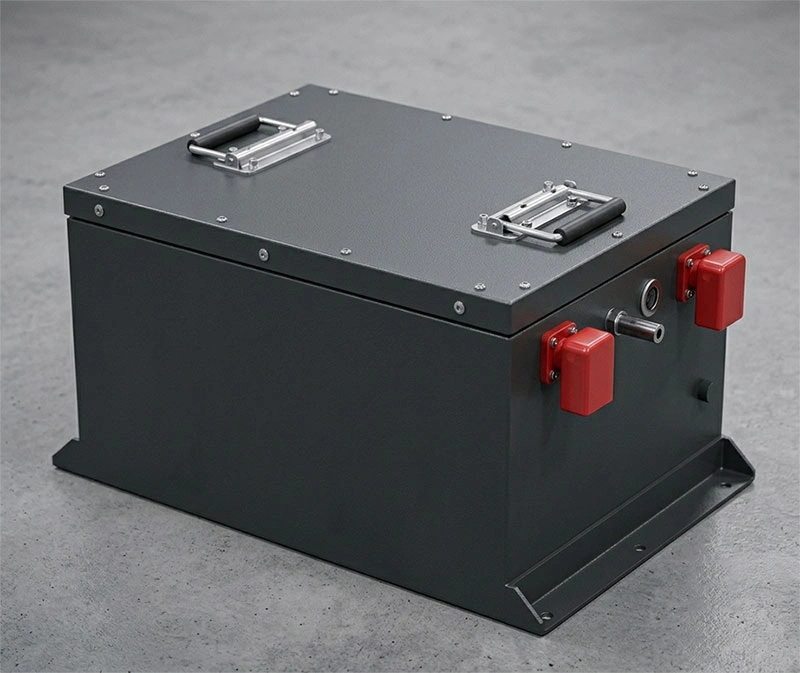
Let’s cut through the marketing noise: upgrading your industrial equipment or energy system isn’t just about picking any random power source. If you are still relying on heavy, sluggish lead-acid packs, you are leaving massive efficiency on the table. Today, a high-performance 48v lifepo4 battery setup has become the absolute benchmark for heavy-duty operations. I see many fleet managers hesitate, worried that advanced lithium solutions might mismatch their existing setups. But here is the hard truth: continuing with outdated voltage systems means coping with persistent power drops and high thermal losses.
When you shift to a rugged 48v lifepo4 battery system, you immediately reduce system current, lower your heat signatures, and unlock serious runtime. This comprehensive field guide will break down cell mechanics, charging protocols, and real deployment math across aggressive commercial environments.
What Is a 48V LiFePO4 Battery? | Understanding Lithium Iron Phosphate Battery Technology
Voltage isn’t just a baseline metric stamped on a casing; it fundamentally dictates how efficiently your machines convert raw energy into functional torque or backup power. To build a robust system, you must look directly at the underlying cell arrangement.
What Makes a 48V LiFePO4 Battery Different?
At its core, a 48v lifepo4 battery relies on stable lithium iron phosphate chemistry. This chemical structure won’t suffer from thermal runaway under typical heavy use. A single raw cell delivers a nominal rating of 3.2V. To achieve the push required by industrial machinery, manufacturers connect precisely 16 cells in a strict series configuration (known as a 16S configuration).
Basic math reveals the reality: 16 cells multiplied by 3.2V gives a true nominal output of 51.2V. Do not let the traditional 48V label fool you. This advanced 48V lithium battery pack operates at a higher, much flatter voltage curve than old lead-acid alternatives. Inside the heavy-duty enclosure, a specialized circuit board balances every cell group. This essential monitoring system prevents individual cell groups from over-charging or dropping too low during intense work shifts.
How Does a 48V LiFePO4 Battery Work?
During the discharge cycle, lithium ions travel smoothly from the carbon anode back to the iron phosphate cathode through a porous polymer separator. Because the internal resistance of these cells is incredibly low, energy flows out with minimal resistance.
A high-quality internal protection circuit continuously measures voltage, current, and temperature at multiple points. If a sudden short circuit occurs or temperatures spike on a hot warehouse floor, the protection circuit isolates the pack instantly. This automatic safeguard keeps your facility running smoothly, without the constant manual monitoring required by older, high-maintenance power configurations.
Key Benefits of 48V LiFePO4 Battery Systems | High Cycle Life Battery & Deep Cycle Performance
Replacing your daily energy system is a significant operational decision. Let’s analyze exactly how changing your core battery chemistry impacts your long-term bottom line.
Longer Cycle Life Than Lead-Acid Batteries
Traditional lead-acid batteries degrade rapidly if you drain them past half their capacity. They break down inside, forcing you to buy costly replacements far too soon. A premium lithium iron phosphate battery handles deep discharges effortlessly. It serves as a true deep cycle lithium battery, built to handle rugged daily cycling without losing its capacity.
| Battery Chemistry Type | Average Cycle Life (80% DoD) | Maintenance Requirements | Real Advantage For Your Operation |
|---|---|---|---|
| Standard Flooded Lead-Acid | 300 – 800 Cycles | High (Frequent Water Topping) | Low upfront cost but demands constant manual maintenance labor. |
| Absorbent Glass Mat (AGM) | 500 – 1,000 Cycles | Low (Sealed Casing) | No fluid top-offs, but degrades rapidly under deep discharges. |
| Industrial Gel Batteries | 700 – 1,200 Cycles | Low (Sealed Casing) | Handles temperature fluctuations, but charges very slowly. |
| Premium LiFePO4 (16S) | 4,000 – 8,000+ Cycles | Zero Maintenance Required | 10x Lifespan: Eliminates frequent replacement costs completely. |
Higher Energy Efficiency and Lower Operating Costs
Traditional batteries waste considerable energy as heat during heavy use. Choosing a high cycle life battery structure yields excellent round-trip efficiency, often exceeding 96%. This means your utility bills translate directly into productive equipment runtime, rather than bleeding away as wasted thermal energy.
According to comprehensive industrial energy reports from 2025, switching commercial facilities to 48V lithium platforms slashes long-term operating costs by up to 40%. You save money by eliminating constant battery watering, reducing floor space requirements, and avoiding midday downtime.
Lightweight Design with Higher Energy Density
Lead-acid setups add massive, unnecessary deadweight to your commercial vehicles. A 48V lithium iron phosphate pack delivers identical usable energy at roughly one-third the total weight. This significant weight reduction minimizes structural wear on vehicle axles, reduces tire degradation, and improves overall equipment handling.
How to Safely Charge a 48V LiFePO4 Battery | Lithium Battery Charging System Guide
To protect your power investment, you must follow correct charging rules. Using incorrect machinery chargers can cause permanent cell damage.
Use a Compatible 48V LiFePO4 Battery Charger
A premium lithium battery charging system uses a precise two-stage profile: Constant Current and Constant Voltage (CC/CV). Never use an old lead-acid charger. Lead-acid chargers use aggressive equalization stages that push voltages too high, which can trigger the protective circuit to shut down the pack. A proper lithium profile brings cells up to 3.65V per cell safely, holding that ceiling until the current drops off naturally.
Prepare a Safe Charging Environment
Lithium cells are highly resilient, but charging below freezing causes permanent lithium plating inside the cell. Always charge your packs in a clean, dry, well-ventilated bay where temperatures stay above 0°C (32°F). If your warehouse operates cold storage areas, ensure your packs feature integrated automatic heating pads to warm the cells before charging begins.
Follow the Correct Charging Procedure
Follow these five simple steps to protect your connection points from arcing and minimize strain on the internal electronics:
- Ensure the equipment power switch is turned completely off.
- Connect the industrial DC charging plug firmly to the vehicle port.
- Plug the charger input cable into your main AC wall socket.
- Allow the charger to complete its cycle until it shuts off automatically.
- Disconnect the AC power source before pulling the vehicle plug.
Common Charging Mistakes to Avoid
Avoid these common operational pitfalls: never use high-amp chargers without verifying system compatibility first, avoid leaving fully charged packs plugged into active chargers during weeks of factory shutdowns, and never force charge a physically damaged or heavily dented battery casing.
Buyer’s Perspective Note: Buyers frequently worry about whether upgrading to lithium requires replacing all their existing charging cables. Most professional manufacturers design drop-in replacement packs that plug directly into standard industrial charging ports, saving you from costly rewiring projects.
How Long Does a 48V LiFePO4 Battery Last? | Cycle Life, Runtime and Service Life Explained
Let’s look at the real-world metrics that define battery longevity: cycle count, daily equipment runtime, and overall calendar life.
Cycle Life: How Many Charge Cycles Can You Expect?
If your maintenance team manages depth of discharge (DoD) properly, a high cycle life battery pack will deliver incredible service life. Discharging cells to 80% capacity daily typically yields over 4,000 complete cycles before maximum storage falls to 80% of its original rating. If you shallow-cycle the packs down to 50% DoD, they can easily exceed 7,000 cycles before showing noticeable aging.
Runtime Per Charge: How Long Can a 48V Battery Power Your Equipment?
Calculating equipment operating limits doesn’t require complex guesswork. You can calculate your approximate runtime using this reliable formula:
Let’s look at a standard 48v 100ah lifepo4 battery with bms integration running at a conservative 95% electrical efficiency. The total usable energy equals 5,120 Watt-hours. Here is exactly how that capacity translates into real runtime under different motor loads:
| Continuous Motor Load | Calculated Operating Runtime | Real Advantage For Your Operation |
|---|---|---|
| 500 Watts (Light Utility Equipment) | ≈ 9.7 Hours of continuous use | Covers an entire standard warehouse work shift on a single charge. |
| 1,000 Watts (Standard Commercial Scrubber) | ≈ 4.8 Hours of continuous use | Provides reliable performance for large commercial cleaning routes. |
| 2,000 Watts (High-Torque Utility Cart) | ≈ 2.4 Hours of continuous use | Handles steep warehouse ramps and heavy cargo loads easily. |
Shelf Life and Calendar Life
Unlike traditional alternatives that self-discharge rapidly when left idle, lithium iron phosphate chemistry holds its charge remarkably well. The self-discharge rate is minimal, sitting around 2% per month. For long-term storage, charge the packs to around 50% State of Charge (SoC) and keep them in a cool space.
Factors That Affect Battery Lifespan
Four major operating conditions dictate overall longevity: internal temperature tracking, depth of discharge habits, peak charging current limits, and the quality of the internal balancing electronics. Keeping your batteries within recommended temperature ranges ensures maximum calendar life.
48V LiFePO4 Battery Applications | Golf Carts, AGVs, RVs, Marine & Solar Storage
The industrial sector is rapidly shifting away from lower voltage options toward integrated 48V architectures. Let’s look at how this transition changes performance in real commercial applications.
Golf Cart and Neighborhood Electric Vehicles (NEVs)
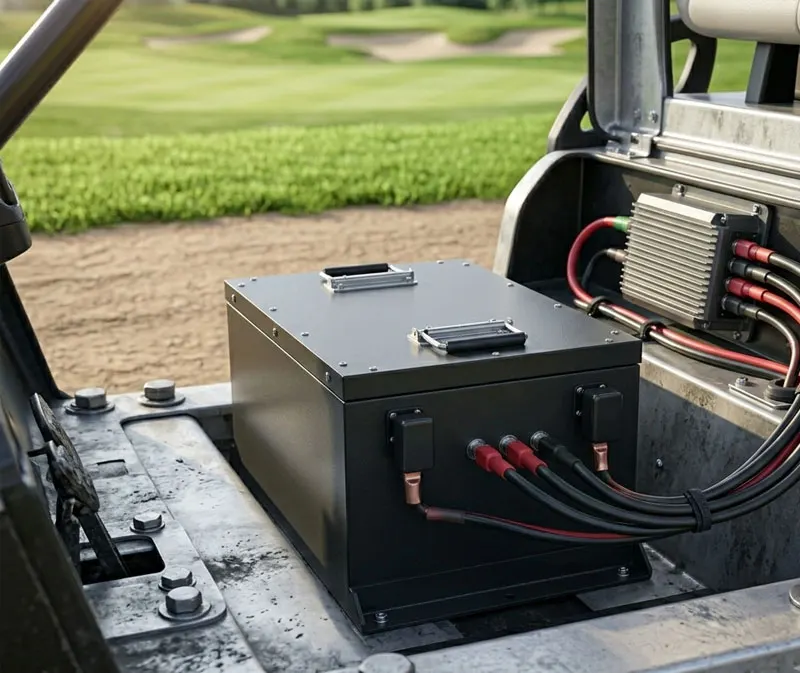
Upgrading your fleet with a high-performance 48v lifepo4 battery for golf cart use completely changes vehicle dynamics. Old lead batteries cause noticeable voltage drops when climbing steep hills, causing the cart to slow down. Lithium packs maintain flat voltage delivery through the entire discharge cycle. Your drivers get consistent acceleration, better torque, and extended operating ranges per charge.
AGV, AMR and Industrial Vehicles
Modern logistics facilities require continuous uptime. Deploying the best 48v lifepo4 battery for agv and industrial vehicles allows you to implement rapid opportunity charging during brief worker breaks. These advanced cells handle high-current fast charging without overheating, keeping your automated machinery working smoothly across multi-shift schedules.
Marine and RV Off-Grid Power Systems
Running heavy luxury appliances like off-grid air conditioners, microwaves, and induction cooktops requires massive energy throughput. A robust 48V system allows you to pull high wattage through much thinner wiring. This design choice slashes onboard weight and simplifies your layout, making it an excellent upgrade for long-distance marine vessels and large custom expedition RVs.
Solar Energy Storage Systems
For home and commercial backup power, using a high-capacity 48v lifepo4 battery for solar energy storage has become the industry standard. This configuration integrates seamlessly with high-efficiency hybrid inverters, minimizing conversion losses and providing a reliable electrical backbone for your facility.
Cleaning Machines, Sightseeing Vehicles and Electric Tricycles
Commercial floor scrubbers and electric transit shuttle buses benefit enormously from the flat discharge curve of lithium iron phosphate chemistry. Water pumps and traction drive motors run at maximum rated efficiency right until the battery is nearly empty, eliminating the frustrating performance drops common with older battery technologies.
Choosing the Right 48V LiFePO4 Battery Capacity | From 48V 65Ah to 270Ah
One capacity rating does not fit every industrial scenario. You need to match your amp-hour (Ah) rating to your specific machine loads.
Capacity Overview: 48V 65Ah to 270Ah
Here is a direct field lookup table showing how different amp-hour configurations fit specific industrial machinery demands:
| Pack Capacity | Target Industrial Fleet Equipment | Real Advantage For Your Operation |
|---|---|---|
| 48V 65Ah | Lightweight warehouse AMRs & small automated guided carts. | Ultra-Compact: Fits tight equipment chassis easily. |
| 48V 100Ah | Standard golf cart fleets, utility vehicles, and mobile platforms. | Drop-In Upgrade: Perfect size match for old battery bays. |
| 48V 150Ah | Industrial floor scrubbers and commercial warehouse walkies. | Extended Shifts: Minimizes midday battery swaps. |
| 48V 200Ah | Heavy-duty off-grid RV power grids and residential solar banks. | High Storage: Runs large building loads all night long. |
| 48V 270Ah | Heavy material handling machinery and large warehouse tuggers. | Maximum Power: Built for continuous high-torque draw. |
How to Calculate the Right Battery Capacity
To calculate your target capacity, check your motor nameplate for its continuous current rating (in Amps) and multiply it by your desired runtime (in Hours). Add a safety margin of 20% to prevent drawing down your cells completely to zero on every run. This simple calculation keeps your industrial vehicles operating reliably all day long.
Can 48V LiFePO4 Battery Systems Be Expanded? | Battery Scalability and Parallel Connection
Operational needs often grow over time. Fortunately, modern lithium systems offer excellent scalability, allowing you to expand your system capacity as your business demands increase.
Parallel Expansion
To increase your total runtime while keeping the voltage exactly the same, connect additional identical packs in parallel. When wiring packs in parallel, ensure all busbars and connection cables match in length and diameter. Equal cable length ensures the electrical load distributes evenly across all internal cells, preventing one pack from working harder than another.
Modular Battery Systems for Commercial Projects
For major energy storage installations or heavy industrial machinery, modular racking configurations are ideal. These scalable systems allow you to link multiple independent battery modules together, controlled by an intelligent master-slave control architecture. This commercial setup allows you to scale up system storage capacity to hundreds of kilowatt-hours safely and efficiently.
How to Choose the Best 48V LiFePO4 Battery for Your Application
When selecting a new power configuration, protect your investment by verifying these four technical specifications:
Consider Your Equipment Voltage
Always verify the peak voltage threshold of your industrial motor controller before connecting a new pack. A fully charged 16S lithium battery reaches 58.4V at peak charging. Make sure your vehicle electronics can handle this voltage level safely to prevent component damage.
Match Capacity with Daily Energy Demand
Review your actual equipment usage logs. Do not purchase an oversized battery pack that adds unnecessary weight if your machines can easily use fast opportunity charging during scheduled shift breaks.
Choose a Reliable BMS
Ensure your new battery system features an integrated 48v 100ah lifepo4 battery with bms balancing circuit. Never purchase discount cells that lack individual cell temperature tracking and over-current protection. A reliable protection circuit is your primary line of defense against unexpected field failures.
Certifications and Safety Standards
Only buy battery packs that carry full international safety certifications, including CE, UN38.3, IEC62619, and UL1973 compliance. These independent laboratory approvals guarantee that the cell architecture can withstand intense field vibrations, heavy impacts, and extreme operating temperatures safely.
Why Choose a Professional OEM 48V LiFePO4 Battery Manufacturer?
Standard retail battery packs work fine for simple residential projects, but heavy-duty commercial equipment fleets usually require custom-tailored power configurations.
Custom Battery Pack Design
Partnering directly with an experienced OEM 48v lifepo4 battery manufacturer allows you to customize the pack to your exact operating requirements:
- Tailored Enclosures: Design custom-shaped, shockproof steel cases that drop directly into irregular machinery battery bays.
- Smart Communications: Integrate CANbus, Modbus, or Bluetooth interfaces to monitor battery health data directly from your vehicle dashboard.
- Environmental Protection: Add internal heating systems and heavy-duty seals to achieve a true IP67 waterproof rating for harsh outdoor use.
Quality Control and Manufacturing Capability
A qualified OEM lithium battery manufacturer maintains strict testing standards. Every single cell goes through rigorous capacity grading and long-term aging tests before assembly. This comprehensive manufacturing control eliminates weak cells, ensuring your final battery packs deliver balanced performance for years to come.
Technical Support for Equipment Manufacturers
Working directly with an industrial manufacturer provides your engineering team with complete schematic documentation, solid safety certifications, and expert technical support. This close collaboration streamlines your product development timeline and ensures your equipment operates at peak efficiency.
Frequently Asked Questions About 48V LiFePO4 Batteries
Is a 48V LiFePO4 battery better than lead-acid?
Yes, absolutely. A premium lithium iron phosphate battery delivers up to ten times the usable cycle life, weighs significantly less, requires zero routine water maintenance, and operates at much higher energy efficiency. While lithium costs more upfront, its long lifespan makes it far more cost-effective over time.
Can I charge a 48V lithium battery with a lead-acid charger?
No, do not do this. Lead-acid chargers utilize high-voltage equalization stages that can damage lithium cells and trigger the internal BMS to disconnect. Always use a charger featuring a dedicated lithium CC/CV charging profile to protect your cells and ensure safe operation.
How long will a 48V 100Ah battery last?
A standard 48V 100Ah pack provides 5,120 Watt-hours of usable energy. If your warehouse machinery draws a continuous load of 1,000 Watts, the pack will deliver roughly 4.8 hours of continuous operation before needing a charge.
How many years does a LiFePO4 battery last?
In typical commercial operations, a high-quality lithium pack easily delivers between 10 and 15 years of daily service, outlasting traditional industrial lead-acid alternatives by a wide margin.
Can I connect multiple 48V batteries together?
Yes, you can connect multiple identical 48V packs in parallel to increase your system’s runtime. However, always consult your manufacturer’s technical specifications before connecting packs in series, as excessive voltage can overload standard internal protection circuits.
How should I store a 48V LiFePO4 battery?
For seasonal storage, charge the battery pack to roughly 50% State of Charge (SoC). Disconnect the pack from all active machinery loads and store it in a cool, clean, dry environment between 10°C and 30°C to prevent capacity loss.
Get Custom 48V LiFePO4 Battery Solutions for Your Business
Selecting the perfect voltage and capacity configuration is the foundation of a reliable industrial power system. Whether you operate a fleet of commercial utility carts or manage automated warehouse robotics, our experienced engineering team is ready to design the ideal custom battery pack for your operations.
Related Posts
 https://anengjibattery.com/wp-content/uploads/2026/09/AnengJIBattery-Best-LiFePO4-Battery-How-to-Choose-the-Right-One.webp
675
1000
Battery Expert Team
https://anengjibattery.com/wp-content/uploads/2025/06/logo2-300x138.png
Battery Expert Team2026-09-17 08:52:142026-09-17 08:52:31How to Choose the Best LiFePO4 Battery
https://anengjibattery.com/wp-content/uploads/2026/09/AnengJIBattery-Best-LiFePO4-Battery-How-to-Choose-the-Right-One.webp
675
1000
Battery Expert Team
https://anengjibattery.com/wp-content/uploads/2025/06/logo2-300x138.png
Battery Expert Team2026-09-17 08:52:142026-09-17 08:52:31How to Choose the Best LiFePO4 Battery https://anengjibattery.com/wp-content/uploads/2026/09/anengjiBattery-lifepo4-battery-cell-packaging-wholesale.webp
675
1000
Battery Expert Team
https://anengjibattery.com/wp-content/uploads/2025/06/logo2-300x138.png
Battery Expert Team2026-09-16 09:52:342026-09-16 09:52:57LiFePO4 Battery Wholesale Guide: Best Suppliers in Spain
https://anengjibattery.com/wp-content/uploads/2026/09/anengjiBattery-lifepo4-battery-cell-packaging-wholesale.webp
675
1000
Battery Expert Team
https://anengjibattery.com/wp-content/uploads/2025/06/logo2-300x138.png
Battery Expert Team2026-09-16 09:52:342026-09-16 09:52:57LiFePO4 Battery Wholesale Guide: Best Suppliers in Spain https://anengjibattery.com/wp-content/uploads/2026/09/anengjibattery-Top-Lithium-Ion-Battery-Producers-for-Spain-Market-Growth.webp
675
1000
Battery Expert Team
https://anengjibattery.com/wp-content/uploads/2025/06/logo2-300x138.png
Battery Expert Team2026-09-16 01:13:392026-09-16 01:14:05Top Lithium Ion Battery Producers for Spain’s Market Growth
https://anengjibattery.com/wp-content/uploads/2026/09/anengjibattery-Top-Lithium-Ion-Battery-Producers-for-Spain-Market-Growth.webp
675
1000
Battery Expert Team
https://anengjibattery.com/wp-content/uploads/2025/06/logo2-300x138.png
Battery Expert Team2026-09-16 01:13:392026-09-16 01:14:05Top Lithium Ion Battery Producers for Spain’s Market Growth https://anengjibattery.com/wp-content/uploads/2026/09/Bulk-Lithium-Ion-Battery-Cells-Procurement-Guide-B2B-Sourcing.webp
675
1000
Battery Expert Team
https://anengjibattery.com/wp-content/uploads/2025/06/logo2-300x138.png
Battery Expert Team2026-09-14 09:47:322026-09-14 09:47:48Bulk Lithium-Ion Battery Cells Procurement Guide | B2B Sourcing
https://anengjibattery.com/wp-content/uploads/2026/09/Bulk-Lithium-Ion-Battery-Cells-Procurement-Guide-B2B-Sourcing.webp
675
1000
Battery Expert Team
https://anengjibattery.com/wp-content/uploads/2025/06/logo2-300x138.png
Battery Expert Team2026-09-14 09:47:322026-09-14 09:47:48Bulk Lithium-Ion Battery Cells Procurement Guide | B2B Sourcing


Leave a Reply
Want to join the discussion?Feel free to contribute!