
Solar Storage Batteries for Sale: 2026 Price & Buying Guide
June 30, 2026 / Battery Expert Team / battery energy storage
Introduction
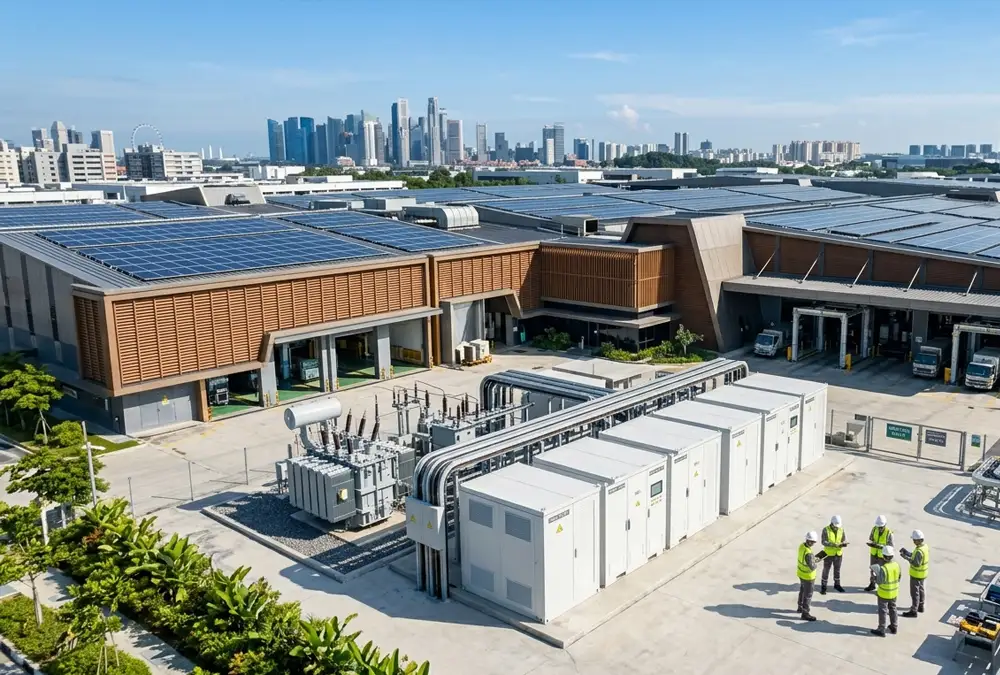
The global energy landscape is shifting rapidly. Grid volatility is forcing a massive shift toward localized power. Recent data from the 2025 European Market Outlook for Secondary Storage shows an unprecedented 42% surge in behind-the-meter installations. Across Europe, Southeast Asia, and the Middle East, businesses face soaring demand charges. Meanwhile, homeowners struggle with complex time-of-use tariffs. Simply putting up solar panels is no longer enough. To capture real value, you need to store your power. Finding quality solar storage batteries for sale has become a necessity for keeping modern facilities running. Buyers must look past standard marketing fluff and focus heavily on chemical profiles, true cycle counts, and real thermal management metrics.
Solar Storage Batteries for Sale: Quick Buying Guide (Featured Snippet)
What Are Solar Storage Batteries?
Solar storage batteries are specialized electrochemical devices that capture and store excess electricity generated by solar photovoltaic systems. By holding this power for later use, these systems enable homeowners, commercial businesses, and industrial factories to optimize daily electricity costs, provide vital backup power during grid blackouts, and reduce overall reliance on local utility providers.
Who Should Buy Solar Storage Batteries?
- Homeowners: Protecting properties from unexpected grid blackouts while optimizing daily self-consumption.
- Commercial Buildings: Shaving expensive peak demand charges during high-occupancy business hours.
- Factories: Safeguarding sensitive automated production machinery from costly voltage sags.
- Solar EPC Contractors: Delivering fully compliant, high-performing turnkey projects to corporate clients.
- Renewable Energy Developers: Building reliable microgrid systems that maintain long-term financial returns.
What Should You Consider Before Buying?
Never base your equipment choice entirely on initial purchase cost. You must carefully verify total nominal capacity alongside usable capacity ratings. Check whether the system matches your current infrastructure, whether it is a low-voltage stack or a high voltage battery storage unit. Review verified cycle life at specific depths of discharge. Finally, ensure the hardware holds international safety listings from a reputable supplier.
What Are Solar Storage Batteries?
Let’s demystify what these physical assets actually do inside a modern electrical network.
How Solar Storage Batteries Work
The core process is straightforward. Photovoltaic modules convert sunlight into DC power. When generation outpaces facility demand, a bidirectional inverter directs this excess current into the battery cells. This process changes the active chemical structure within the battery to hold the energy. When factory loads spike or the sun goes down, the system reverses this process, feeding clean AC power back to your main panel.
Main Components of a Solar Battery Storage System
- Battery Cells: Individual chemical blocks that hold raw electrical energy.
- BMS (Battery Management System): The internal control circuit that monitors cell status.
- PCS (Power Conversion System): Bi-directional power electronics that manage AC/DC conversion.
- EMS (Energy Management System): The master software that optimizes daily dispatch strategies.
- Inverter: Converts variable DC generation into stable, usable grid-frequency AC.
- Monitoring Platform: Provides your engineering team with complete, real-time performance tracking.
Difference Between Battery Cells and Complete Energy Storage Systems
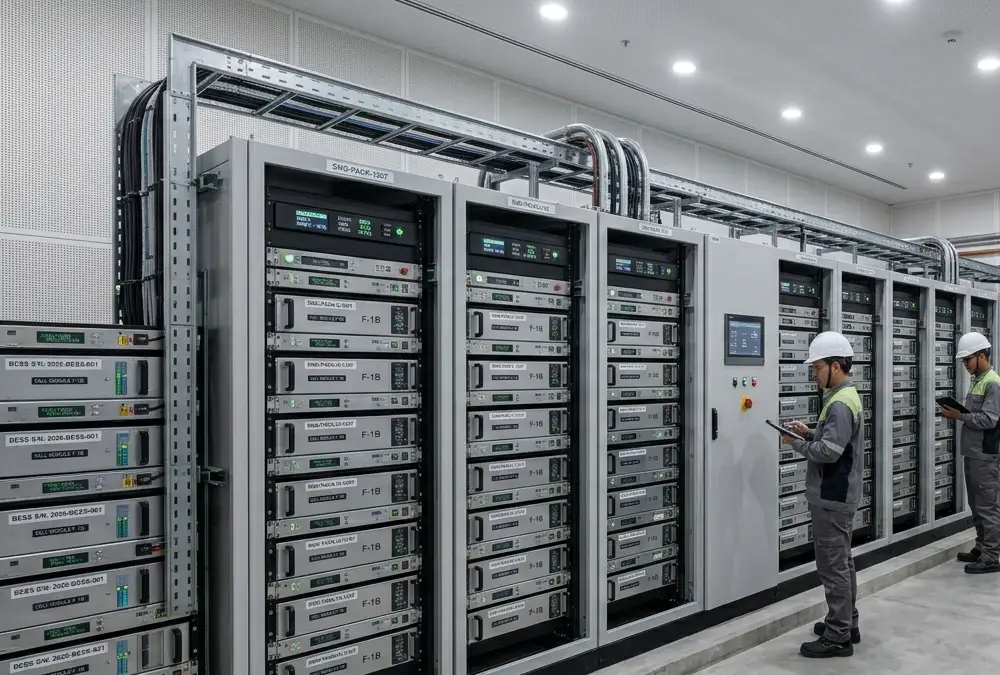
Buying bare battery cells requires you to source your own external cooling, fuse protection, and master control links. A complete battery energy storage solution arrives as a fully integrated, pre-wired enclosure. It includes automated fire suppression, built-in HVAC systems, and plug-and-play control panels. For demanding industrial applications, buying an integrated setup is essential for ensuring long-term site safety.
Types of Solar Storage Batteries for Sale
The market features several competing cell technologies. Selecting the right one impacts your project footprint and safety plan.
Lithium Iron Phosphate (LiFePO4) Batteries
For modern commercial installations, a premium LiFePO4 battery storage configuration is the clear choice. This chemistry completely avoids volatile cobalt, removing the threat of catastrophic thermal runaway. These units handle over 6,000 deep discharge cycles before dropping to 80% capacity. They provide a reliable, long-term foundation for active peak-shaving applications.
Lithium-Ion (NMC) Batteries
Nickel Manganese Cobalt chemistries deliver high energy density, packing considerable capacity into a very small footprint. This makes them highly popular for space-constrained electric vehicles. However, their lower thermal runaway thresholds require heavy, expensive cooling networks for stationary use. Their shorter operational life makes them less practical for heavy daily cycling.
Lead-Acid Batteries
Traditional lead-acid options offer a very low upfront cost but carry severe technical limitations. They suffer from a shallow 50% maximum depth of discharge limit and rarely last beyond 1,500 cycles. They also require ongoing fluid top-offs and dedicated ventilation to manage off-gassing. This makes them unsuited for intensive manufacturing workflows.
Flow Batteries
Flow setups store their active energy inside independent liquid electrolyte tanks. This unique design lets you scale your storage duration simply by adding larger fluid volume. They suffer from lower round-trip efficiencies and require regular pump maintenance. Their large physical footprint makes them practical only for specialized utility-scale projects.
Which Battery Technology Is Best?
| Battery Type | Expected Lifespan | Thermal Safety | Maintenance Needs | Best Application |
|---|---|---|---|---|
| LiFePO4 (LFP) | 6,000+ Cycles (12-15 Years) | Excellent (Highly Stable) | None (Solid-State) | Commercial, Industrial & Home |
| Lithium-Ion (NMC) | 3,000 Cycles (5-8 Years) | Moderate (Requires HVAC) | Low | EVs & Compact Storage Units |
| Lead-Acid | 1,200 Cycles (3-5 Years) | Good (Heavy Gassing) | High (Fluid Checks) | Off-Grid Backup & Telecom |
| Flow Batteries | 10,000+ Cycles (20+ Years) | Excellent (Non-Flammable) | High (Pumps/Tanks) | Long-Duration Grid Assets |
Solar Storage Batteries for Sale by Application
Different environments present unique load profiles and space constraints.
Residential Solar Battery Storage
Homeowners usually source a single-phase home solar battery cabinet, typically sized between 5 kWh and 20 kWh. These compact systems look like standard appliances and mount cleanly on garage walls. They focus on shifting daytime solar power to evening cooking and cooling hours.
Commercial Battery Storage
Retail offices, schools, and health centers use commercial battery storage cabinets to target high time-of-use pricing windows. Sized from 30 kWh to 200 kWh, these high-voltage systems link directly with large rooftop solar arrays. They help lower operational expenses without requiring massive plant footprints.
Industrial Battery Energy Storage Systems
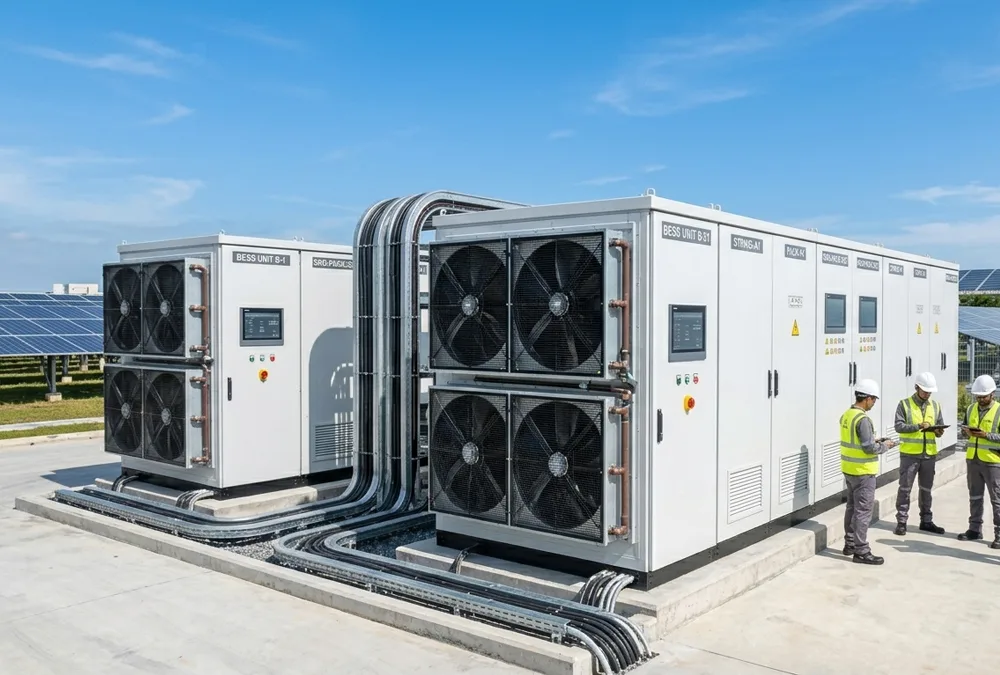
Heavy production environments require containerized multi-megawatt configurations to manage extreme machinery startup loads. These rugged industrial battery storage assets sit outdoors on reinforced concrete pads. They run advanced liquid-cooling loops to maintain stable temperatures under heavy, continuous operation.
Utility-Scale Battery Storage
Front-of-the-meter installations connect directly to regional transmission networks to provide large-scale frequency response and grid stability. These massive projects combine dozens of custom multi-megawatt power shipping containers. They allow local utility operators to manage large-scale renewable generation smoothly.
Off-Grid Solar Battery Systems
Remote agricultural processing stations and mining sites rely on independent energy networks for their daily power needs. These installations pair high-capacity battery banks with local solar and diesel backup systems. They provide a stable, self-contained power source that eliminates the high cost of grid expansion projects.
Choosing the Right Solar Storage Battery Capacity
Accurate system sizing is essential for securing a strong return on your investment.
Small Residential Systems
Standard homes with moderate baseload needs typically deploy a 5 kWh or 10 kWh battery block. This capacity provides sufficient power to run essential appliances, lighting, and home electronics through regular evening hours. It helps maximize your daily self-consumption without adding unnecessary equipment costs.
Commercial Buildings
Medium commercial offices usually require between 50 kWh and 100 kWh of storage capacity to offset peak daytime usage. This capacity allows the facility to run large HVAC systems and lighting arrays using stored clean power. This targeted deployment helps protect businesses from volatile afternoon utility pricing.
Manufacturing Facilities
High-volume manufacturing facilities often require 200 kWh to 500 kWh systems to manage intense machinery loads. This capacity provides the high current necessary to support automated assembly tools and heavy motor startups. Proper sizing ensures consistent power quality across your entire facility.
Industrial Parks
Large manufacturing hubs require large-scale, multi-megawatt installations to balance fluctuating energy needs across multiple buildings. These central configurations help prevent local grid capacity overloads during peak production shifts. Spreading these engineering costs helps optimize your total project economics.
Solar Farms
Large-scale generation projects deploy massive 10 MWh+ utility-scale storage systems to manage clean energy output smoothly. This capacity lets operators store excess midday power, saving it to export during high-value evening pricing windows. This approach helps maximize wholesale revenue for your project.
Typical Capacity Guide
A residential property running standard lighting and simple appliances functions perfectly with a modular 5 kWh to 10 kWh wall unit. Medium commercial warehouses require a dedicated 100 kWh outdoor cabinet to handle daily forklift charging and active HVAC use. Heavy automated production lines require a containerized 1 MWh+ asset to manage intense machinery startups.
Key Features to Compare Before Buying Solar Storage Batteries
Ensure you review these critical hardware metrics when analyzing supplier bids.
Battery Capacity
Always verify the differences between total raw capacity and usable capacity within product specifications. Usable capacity represents the actual, real-world energy volume your system can deliver without causing accelerated cell damage. Reliable suppliers display this distinction clearly to ensure accurate system sizing.
Voltage Platform
Low-voltage 48V configurations are common for home use but are inefficient for large industrial installations. Modern commercial layouts utilize a high voltage battery storage platform that operates above 700V. This configuration reduces current losses, simplifies wiring needs, and provides superior efficiency for heavy machinery.
Cycle Life
Cycle life measures how many charge and discharge loops a cell can handle before its total capacity drops below standard limits. High-quality systems deliver between 6,000 and 8,000 cycles under real-world operating conditions. Investing in durable cells ensures your project delivers long-term financial returns.
Depth of Discharge (DoD)
Depth of Discharge defines the maximum percentage of battery capacity you can routinely use without causing premature cell degradation. Modern LFP cells support an exceptional 90% to 95% depth of discharge rating. This allows you to utilize almost the entire capacity of your asset during daily operations.
Round-Trip Efficiency
Round-trip efficiency measures the percentage of energy you successfully recover after accounting for normal conversion and storage losses. Premium configurations achieve an AC-to-AC efficiency rating of over 88%. Avoiding inefficient systems prevents valuable solar generation from being lost as wasted heat.
IP Protection Rating
Outdoor installations require an IP55 or IP66-rated enclosure to shield sensitive electronics from dust, moisture, and driving rain. Deploying lower-tier hardware without proper weatherproofing can lead to premature circuit failures and ongoing maintenance issues. Rugged protection ensures reliable operation in harsh environments.
Cooling Technology
Basic air cooling relies on standard fans that can struggle to manage cell temperatures evenly under heavy use. Advanced liquid cooling routes specialized fluid plates directly against the battery modules to maintain uniform temperatures. Liquid cooling extends cell life and reduces ongoing operational costs.
Expandability
Select flexible modular designs that let you install extra battery packs easily if your factory grows later. Buying a rigid system forces you to replace expensive equipment when your operational power needs expand. Modular configurations ensure your energy infrastructure remains flexible and future-proof.
Smart EMS Integration
Your master control software must connect smoothly with existing building management setups and industrial SCADA platforms. Open communication links allow your engineering team to monitor system performance and track operational metrics easily. This connectivity supports efficient tracking across your facility.
Warranty
A secure warranty should guarantee minimum capacity retention over a full 10-year period under daily cycling. Avoid suppliers that offer vague verbal assurances instead of official, legally binding performance documentation. Secure warranty terms protect your long-term capital investment.
Why Do Solar Storage Battery Prices Vary?
Understanding the technical choices behind vendor pricing helps you make an informed decision for your project.
Battery Chemistry
Selecting stable, cobalt-free LiFePO4 cells involves a higher initial cost than choosing older lead-acid alternatives. However, this investment delivers superior thermal safety and double the operational cycle life. High-grade chemistry provides a safer, more stable long-term foundation for your business.
Brand Reputation
Tier-1 manufacturers charge premium rates because they back their hardware with deep financial reserves and extensive field tracking data. Choosing unverified, off-brand suppliers might save you capital upfront but often leaves you stranded with high failure rates. Buying verified equipment protects your operations.
Cell Manufacturer
The origin of your electrochemical cells plays a major role in your total project pricing. Premium, automotive-grade Tier-1 cells provide exceptional consistency and long-term reliability. Lower-tier cells are cheaper upfront but often suffer from structural imbalances and shorter operational lifespans.
BMS Quality
High-end balance systems utilize advanced microprocessors to monitor voltages and track temperatures down to individual cell connections. Cheap control circuits use basic components that can fail to spot localized cell stress before it causes issues. Quality control hardware is essential for ensuring site safety.
Cooling System
Advanced liquid-cooling configurations require a larger initial investment for specialized pumps and fluid routing plates. Basic air-cooling systems are cheaper to manufacture but can lead to uneven cell aging under heavy daily use. Liquid cooling optimizes cell lifespan and lowers long-term operational costs.
Certifications
Passing rigorous, independent safety certifications requires extensive manufacturing design work and physical testing. Unverified systems lack these third-party safety credentials and carry a lower purchase price. However, skipped certifications can lead to serious permitting failures and insurance exclusions.
Warranty Period
Longer, comprehensive performance guarantees require manufacturers to maintain larger financial backup reserves to cover potential claims. Cheap systems often feature short 3-year warranties that leave you exposed to unexpected replacement costs. A solid 10-year warranty ensures ongoing operational support.
Manufacturing Standards
Advanced, fully automated production lines ensure precise cell assembly and tight quality tolerances across every batch. Lower manufacturing standards increase the risk of internal cell defects and uneven capacity loss over time. Investing in automated quality standards protects your long-term returns.
Certifications Every Solar Storage Battery Should Have
Never compromise on safety to save on upfront costs. Ensure your equipment holds these essential credentials.
Operating high-energy battery assets requires strict compliance with international safety frameworks. The system must carry third-party verification from a recognized testing laboratory. Key certifications include UL9540 for complete system integration safety, and UL9540A to evaluate thermal runaway fire behavior under extreme failure conditions. Your hardware must also meet CE mandates, IEC62619 standards for industrial lithium safety, and IEC62477 criteria for power electronics. Finally, ensure the cells hold UN38.3 transport listings and complete MSDS data sheets. Verifying these credentials protects your staff, your facility, and your insurance coverage.
Benefits of Choosing High-Quality Solar Storage Batteries
Investing in reliable hardware delivers immediate operational advantages directly to your facility floor.
Lower Electricity Bills
The system reduces your monthly utility bills by running your facility on cheap, self-generated solar energy during high-tariff periods. It minimizes your reliance on expensive grid power, keeping your monthly operational overhead low. This simple adjustment improves your factory’s bottom-line margins.
Higher Solar Self-Consumption
Standard solar installations often waste clean power because peak generation hours rarely align with intensive manufacturing shifts. Adding industrial battery cabinets lets you store every kilowatt of solar energy for later use. This loop ensures you extract maximum economic utility from your rooftop solar panels.
Backup Power During Grid Failures
The system provides a reliable backup source that responds within milliseconds to keep critical machinery operating smoothly during blackouts. This rapid transition avoids expensive material waste, equipment damage, and long production delays. It ensures your client delivery timelines remain secure.
Peak Shaving
Utilities charge steep capacity fees based on your single highest 15-minute consumption spike each month. The intelligent EMS spots these surges instantly, discharging stored power to flatten your load profile. This automated capping strategy protects your budget from expensive operational penalties.
Load Shifting
Move your bulk power consumption away from expensive afternoon tariff windows to low-cost night periods automatically. The system stores cheap electricity when rates are low, releasing it when utility prices climb. This strategy capitalizes on daily tariff differences to deliver ongoing savings.
Carbon Emission Reduction
Replacing carbon-heavy grid electricity with clean, stored solar energy reduces your factory’s documented environmental impact. This verifiable carbon reduction helps your business comply with tightening national environmental regulations. It also strengthens your brand’s standing with sustainability-focused corporate clients.
Higher ROI
Eliminating solar curtailment during weekends or low-production holidays improves your long-term financial returns. Instead of losing this valuable generation, you store it to support heavy Monday morning manufacturing lines. This capability significantly improves the return on your solar assets.
How to Choose a Reliable Solar Battery Manufacturer
Follow this checklist when evaluating potential B2B hardware partners.
Manufacturing Experience
Partner with established manufacturers that demonstrate a deep understanding of complex, medium-voltage industrial electrical systems. They should possess a verified track record of managing difficult inductive loads and automated grid integration. This experience ensures your system operates reliably under real factory conditions.
Production Capacity
Ensure your supplier operates automated gigafactory production lines capable of delivering large project orders on time. A manufacturer with constrained output can cause major project delays and supply chain headaches. Scaled production capacity indicates a stable, well-capitalized business partner.
OEM & ODM Services
Review whether the manufacturer offers customized structural layouts and tailored engineering integration services for unique factory constraints. A supplier capable of altering container profiles or matching specific voltage platforms is highly valuable. Flexible design options simplify complex on-site installations.
Global Certifications
Verify that the factory holds valid, third-party safety credentials from international certification bodies. Avoid vendors that offer vague testing assurances instead of official certification documents. Proper safety compliance protects your personnel and your manufacturing infrastructure.
Project References
Request verified case studies and technical performance data from active, large-scale industrial installations managed by the supplier. Speaking with existing commercial clients helps verify real-world hardware reliability and software performance. Active field data is the best proof of capability.
Technical Support
Confirm that the manufacturer maintains dedicated, regional engineering teams capable of providing fast on-site field service when needed. Relying on remote help centers can lead to long troubleshooting delays and extended system downtime. Local technical support is essential for maintaining optimal asset runtime.
Warranty Policy
A comprehensive performance warranty should guarantee minimum cell capacity retention over a full 10-year period under daily cycling. Ensure the manufacturer backs their claims with a transparent, legally binding cell replacement agreement. Secure warranty terms protect your long-term capital investment.
After-Sales Service
Your supplier should provide ongoing firmware updates, routine cooling system checks, and clear preventative maintenance plans over the life of the asset. Working with a proactive service partner helps optimize system performance and prevents minor issues from causing downtime. Reliable service extends your equipment life.
Why Businesses Choose LiFePO4 Solar Storage Batteries
Analyzing total cost of ownership demonstrates why LFP chemistry leads the commercial sector.
Longer Service Life
Premium Lithium Iron Phosphate cells handle heavy daily cycling smoothly, maintaining dependable capacity over a 15-year operational lifespan. This longevity ensures your system continues to deliver utility savings long after the initial equipment costs are recovered. Long asset life maximizes your total project value.
Higher Safety
The stable chemical bond within LFP molecules resists breakdown under intense heat or electrical stress, removing the threat of thermal runaway. This built-in safety profile simplifies local permitting and building integration reviews. Choosing stable chemistry protects your staff and your manufacturing facilities.
Lower Maintenance Costs
Solid-state lithium configurations eliminate the regular fluid top-offs and cell balancing checks required by older lead-acid systems. Modern automated management software tracks cell health continuously, reducing the need for hands-on maintenance work. Lower service needs keep your long-term operating costs efficient.
Better Temperature Performance
LFP modules maintain high round-trip efficiency across a wide range of operational climates and ambient temperatures. This resilience minimizes the need for continuous, aggressive climate control use inside outdoor enclosures. Reliable temperature performance reduces internal energy consumption.
Lower Total Cost of Ownership
While LFP hardware requires a larger initial investment, its long cycle life delivers the lowest cost per treated kilowatt-hour over time. Fewer equipment replacements and minimal maintenance expenses make it the most economical choice for commercial facilities. Focus on long-term value to secure the best returns.
Solar Storage Batteries for Sale: Frequently Asked Questions
What is the best solar storage battery?
For commercial and industrial installations, Lithium Iron Phosphate (LiFePO4) is the industry standard. It delivers the ideal combination of high thermal safety, long cycle life, and excellent round-trip efficiency under heavy daily use.
How long do solar batteries last?
Premium industrial LFP configurations managed by active liquid cooling deliver an operational lifespan of 12 to 15 years. This longevity assumes the system operates under standard factory parameters and recommended depth-of-discharge limits.
How much capacity do I need?
Your ideal capacity depends on your unique historical load profile and the size of your largest monthly peak demand spikes. An experienced application engineer can analyze your utility data to recommend the optimal configuration for your site.
Can batteries be expanded later?
Yes, provided you select a modular system architecture designed for scalable growth. Modular configurations allow you to connect extra battery cabinets in parallel to expand your storage capacity as your business power needs grow.
Are LiFePO4 batteries worth it?
Yes. The superior thermal safety profile, deep discharge capabilities, and long cycle life easily justify the higher initial equipment cost. They deliver a significantly lower total cost of ownership compared to older lead-acid options.
How long is the warranty?
Reputable commercial suppliers provide a comprehensive 10-year performance warranty that guarantees minimum capacity retention levels. Always review the specific technical terms to ensure your daily cycle patterns are fully covered.
Can solar batteries work without the grid?
Yes, if the system includes high-speed isolating switches and specialized off-grid forming inverters. This setup allows your facility to separate from a failed grid and run independently as a secure, self-contained microgrid.
Which battery is best for commercial projects?
High-voltage LiFePO4 battery cabinets equipped with integrated liquid cooling and smart EMS software deliver the best results. This combination provides the power quality and responsiveness needed to manage commercial loads efficiently.
Why Choose AnengJi Power as Your Solar Storage Battery Supplier?
Comprehensive Energy Storage Solutions
AnengJi Power designs and manufactures an advanced line of clean energy storage assets tailored for residential, commercial, and heavy industrial applications. Whether you are looking for residential battery packs, commercial battery cabinets, or containerized industrial BESS solutions, AnengJi Power provides reliable, scalable, and certified solar storage batteries tailored to your energy needs.
Advanced LiFePO4 Technology
Our equipment utilizes premium, automotive-grade Lithium Iron Phosphate cells paired with precise liquid cooling loops. This engineering combination maintains cell temperature variations within a strict margin, optimizing operational lifespan and lowering internal power consumption. Our hardware is built to perform reliably under demanding conditions.
Certified Manufacturing
Every system we build undergoes rigorous quality testing and holds full third-party safety listings from international testing laboratories. Our compliance documentation simplifies local permitting processes and building integration reviews for your project. We maintain strict manufacturing standards to ensure absolute site safety.
OEM & ODM Services
Our experienced engineering team provides comprehensive customization services to help resolve complex on-site space and electrical constraints. We can alter enclosure profiles, match unique voltage platforms, and design custom software layouts for your facility. Flexible engineering support simplifies your deployment process.
Global Project Experience
AnengJi Power systems are deployed across major commercial sites, industrial zones, and remote microgrids worldwide. This extensive field experience ensures our team understands how to resolve complex grid connection rules and pass strict utility inspections. We bring proven project capability to your installation.
Professional Technical Support
We maintain dedicated, regional technical service teams to ensure rapid on-site field support and smooth troubleshooting. Our engineers work alongside your staff through early planning, final commissioning, and long-term preventative maintenance. Reliable technical support maximizes system runtime over the life of your asset.
Reliable Warranty and After-Sales Service
We back our equipment with a legally binding 10-year capacity retention warranty and provide continuous firmware updates over the lifespan of the system. Our proactive service plans help protect your capital investment and ensure optimal performance. Partnering with us provides long-term operational security for your business.
Conclusion: Find the Right Solar Storage Batteries for Sale
Key Takeaways
- When selecting solar storage batteries, do not compare price alone; conduct a comprehensive evaluation of safety profiles, true cycle life, international certifications, systemic compatibility, and long-term after-sales support.
- LiFePO4 chemistry has firmly established itself as the mainstream technology for residential, commercial, and heavy industrial energy storage projects.
- Commercial and industrial projects must prioritize fully integrated system-level designs (BESS) rather than simply sourcing standalone battery cells.
- Partnering with an experienced manufacturer ensures superior system reliability, a significantly lower total cost of ownership (TCO), and more stable returns on investment (ROI).
- Prior to procurement, the optimal capacity and system configuration must be meticulously selected based on your actual load profiles, future expansion requirements, and specific application scenarios.
Aligning your production framework with smart storage technology is a proven way to insulate your business from rising energy costs. For most power-intensive manufacturing facilities, an integrated solar and battery system provides a reliable path to lower utility bills and improved operational resilience. To see how a customized energy installation can optimize your facility’s operational budget, reach out to our engineering application team today.
Related Posts
 https://anengjibattery.com/wp-content/uploads/2026/10/AnengjiBattery-Cell-to-Pack-Energy-Density-Comparison.webp
675
1000
Battery Expert Team
https://anengjibattery.com/wp-content/uploads/2025/06/logo2-300x138.png
Battery Expert Team2026-10-23 06:58:392026-10-23 06:58:41What Does Lithium-Ion Battery Energy Density Really Mean?
https://anengjibattery.com/wp-content/uploads/2026/10/AnengjiBattery-Cell-to-Pack-Energy-Density-Comparison.webp
675
1000
Battery Expert Team
https://anengjibattery.com/wp-content/uploads/2025/06/logo2-300x138.png
Battery Expert Team2026-10-23 06:58:392026-10-23 06:58:41What Does Lithium-Ion Battery Energy Density Really Mean? https://anengjibattery.com/wp-content/uploads/2026/10/AnengjiBattery-Lithium-Battery-Management-in-Daily-Operation.webp
675
1000
Battery Expert Team
https://anengjibattery.com/wp-content/uploads/2025/06/logo2-300x138.png
Battery Expert Team2026-10-22 08:17:332026-10-23 06:58:57How Does a Lithium BMS Improve Battery Longevity?
https://anengjibattery.com/wp-content/uploads/2026/10/AnengjiBattery-Lithium-Battery-Management-in-Daily-Operation.webp
675
1000
Battery Expert Team
https://anengjibattery.com/wp-content/uploads/2025/06/logo2-300x138.png
Battery Expert Team2026-10-22 08:17:332026-10-23 06:58:57How Does a Lithium BMS Improve Battery Longevity? https://anengjibattery.com/wp-content/uploads/2026/10/AnengjiBattery-Industrial-Power-Under-Real-Load.webp
675
1000
Battery Expert Team
https://anengjibattery.com/wp-content/uploads/2025/06/logo2-300x138.png
Battery Expert Team2026-10-22 07:04:542026-10-22 07:05:30How Does a 48V LiFePO4 BMS Protect Industrial Power?
https://anengjibattery.com/wp-content/uploads/2026/10/AnengjiBattery-Industrial-Power-Under-Real-Load.webp
675
1000
Battery Expert Team
https://anengjibattery.com/wp-content/uploads/2025/06/logo2-300x138.png
Battery Expert Team2026-10-22 07:04:542026-10-22 07:05:30How Does a 48V LiFePO4 BMS Protect Industrial Power? https://anengjibattery.com/wp-content/uploads/2026/10/AnengJIBattery-Electric-Forklift-Battery-Buying-Decision.webp
675
1000
Battery Expert Team
https://anengjibattery.com/wp-content/uploads/2025/06/logo2-300x138.png
Battery Expert Team2026-10-21 06:22:222026-10-21 06:22:38Ready to Buy Battery for Electric Forklift? Use This Guide
https://anengjibattery.com/wp-content/uploads/2026/10/AnengJIBattery-Electric-Forklift-Battery-Buying-Decision.webp
675
1000
Battery Expert Team
https://anengjibattery.com/wp-content/uploads/2025/06/logo2-300x138.png
Battery Expert Team2026-10-21 06:22:222026-10-21 06:22:38Ready to Buy Battery for Electric Forklift? Use This Guide


Leave a Reply
Want to join the discussion?Feel free to contribute!