What Is Commercial and Industrial Solar? A Complete Guide to C&I Systems
June 16, 2026 / Battery Expert Team / energy epc
Introduction
Every quarter, corporate boardrooms face the same painful operational metric: unpredictable utility bills. It is a harsh operational reality that unchecked power bills actively erode hard-earned net margins. Adopting commercial and industrial solar installations provides a heavy-duty hedge against volatile energy rates. Forward-thinking financial directors no longer view clean power as a simple corporate social responsibility badge. Instead, they recognize it as a core cost-containment strategy. Deploying a structured solar infrastructure asset transforms a variable utility liability into a predictable asset. Let us dive deep into how these advanced power systems change corporate bottom lines.
What Is Commercial and Industrial Solar?
Definition of Commercial and Industrial Solar
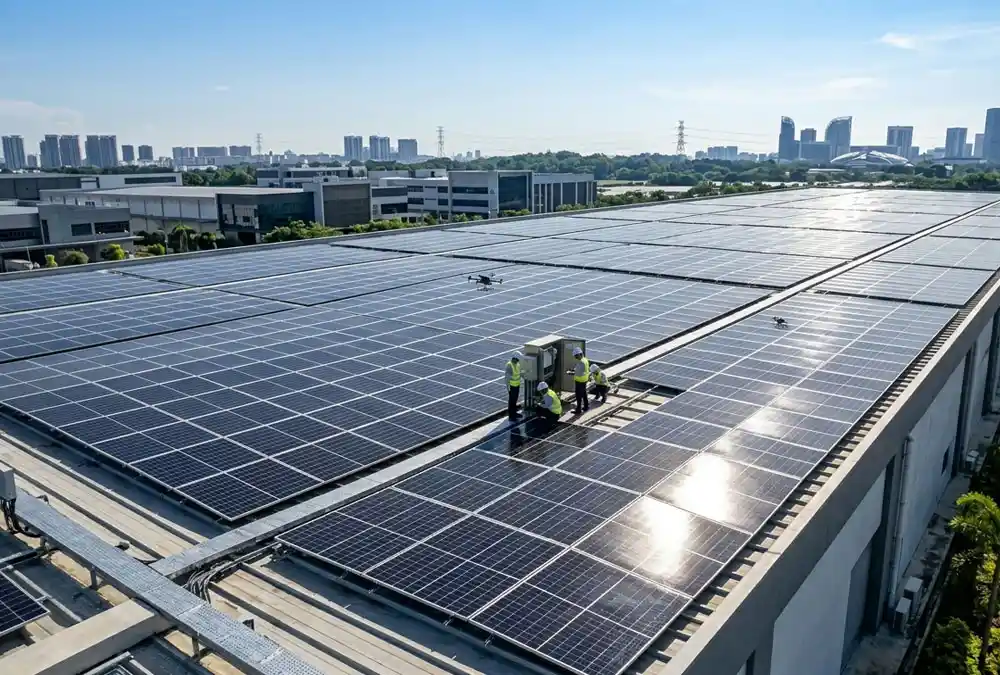
Commercial and Industrial Solar (C&I Solar) refers to solar energy systems designed specifically for businesses, factories, warehouses, office buildings, shopping centers, and industrial facilities. These systems help organizations reduce electricity costs, improve energy independence, and meet sustainability goals while generating clean renewable energy.
The term
what is c&i solar
covers installations that bridge the gap between small residential arrays and massive utility generation fields. These medium to large-scale infrastructure assets match the high-voltage load profiles of modern facilities. These systems run directly on-site to power daily corporate operations.
How Commercial and Industrial Solar Systems Work
Photovoltaic setups capture incoming solar radiation and convert that light into raw direct current electricity. This direct current flows into high-capacity industrial inverters, which convert it into stable alternating current power. This synchronized alternating current feeds into the facility’s main distribution switchboard to run plant hardware. Excess generated energy can charge local battery enclosures or flow back out into the public grid grid network.
Commercial Solar vs Industrial Solar: What’s the Difference?
While often grouped together, commercial installations differ significantly from heavy industrial applications. The variation lies in load complexity and structural engineering requirements.
| Factor | Commercial Solar | Industrial Solar |
|---|---|---|
| Typical Size | Small-Medium (100 kW to 500 kW) | Medium-Large (500 kW to 5 MW+) |
| Energy Consumption | Moderate (Office hours peaks) | High (24/7 continuous baseload) |
| Installation Type | Rooftop / Carports | Rooftop + Ground Mount / Microgrids |
| ROI Focus | Cost Savings / Tax Mitigation | Production Stability / Demand Reduction |
Why Commercial and Industrial Solar Is Becoming Essential for Modern Businesses
Transitioning to on-site power generation is no longer an optional green public relations initiative. Shifting market dynamics are forcing companies to rethink how they purchase utility energy.
Rising Energy Costs Are Impacting Business Profitability
Volatile global fossil fuel prices cause retail electricity rates to swing unpredictably. For thin-margin operations like cold storage or manufacturing, sudden utility price hikes can erase annual profit projections. Utilizing commercial solar energy systems locks in predictable, low-cost operational expenses for decades.
Corporate Sustainability Goals and ESG Requirements
Modern institutional investors look closely at Environmental, Social, and Governance (ESG) performance metrics. Multinationals require their supply chain vendors to actively reduce their carbon footprint. Deploying solar power for business premises helps companies secure long-term vendor contracts with global brands.
Growing Demand for Energy Independence
Aging utility grids expose modern businesses to frequent brownouts and unexpected power drops. Relying entirely on a single public utility line introduces unnecessary operational risk. Generating clean electricity on-site allows facilities to manage their own energy reliability.
Government Incentives Accelerating Solar Adoption
Financial incentives lower the barrier to entry for commercial clean energy projects. Programs like the federal Investment Tax Credit (ITC) let businesses deduct up to 30% or more of system costs directly from their tax liability. Modified Accelerated Cost-Recovery System (MACRS) depreciation rules also allow companies to write off equipment costs quickly.
Why Businesses Are Moving Toward Solar Plus Storage Solutions
Generating power during peak daylight hours addresses only part of a facility’s energy footprint. Integrating solar plus storage solutions allows plants to save midday solar energy for use during high-rate evening hours. This combination helps protect operations from grid instability and costly peak demand charges.
What Is a Solar Energy System and Why Is It Important for C&I Applications?
Key Components of a Commercial and Industrial Solar System
An industrial energy installation is a complex system built from highly durable, integrated components:
- Industrial Solar Panels: High-efficiency N-type TOPCon or Heterojunction (HJT) photovoltaic modules convert light into direct current power. These professional panels feature low degradation rates to ensure reliable long-term energy yields.
- Solar Inverters: Heavy-duty multi-MPPT string or centralized inverters convert direct current into grid-compliant alternating current. These smart units manage power quality and monitor system insulation performance.
- Mounting Structures: Engineered racking systems secure modules to rooftops, carports, or ground mounts. These corrosion-resistant arrays are designed to withstand high wind loads and local seismic conditions.
- Monitoring Systems: Cloud-based platforms track real-time energy production and consumption data. Automated alerts help operations teams identify underperforming strings quickly to maintain peak efficiency.
- Battery Energy Storage Systems (BESS): High-capacity energy storage containers hold excess power for later use. These units use advanced battery cells to manage peak loads and provide backup power.
- Energy Management Systems (EMS): Advanced control software coordinates power generation, battery storage, and building loads. The EMS optimizes energy usage in real time based on local utility rates.
How Solar Power Is Generated and Used On-Site
Photovoltaic modules generate electricity whenever sunlight hits the roof or ground array. The onsite system prioritizes using this clean solar power to run facility equipment before drawing from the utility. This direct self-consumption reduces the amount of expensive power needed from the public grid.
How Solar Integrates with Existing Power Infrastructure
Modern solar installations connect smoothly with existing facility switchgear. Tie-in breakers link the solar inverters to the main distribution panel via net-metering switchgear. This integration allows the building to switch seamlessly between solar, battery, and utility power without interrupting operations.
Commercial Solar Energy Systems: Benefits for Businesses and Commercial Facilities
Deploying specialized commercial and industrial solar solutions delivers immediate financial benefits to retail, office, and logistics facilities.
Lower Monthly Electricity Bills
Replacing expensive grid electricity with clean on-site solar power drops operational utility costs immediately. These savings improve corporate cash flow right from the first day of system activation.
Reduce Operational Expenses
Energy stands as a major line-item cost for commercial property operators. Lowering this overhead utility expense stabilizes property operating costs over the long term.
Improve Business Profit Margins
Fixed utility costs make it easier for executive teams to forecast future operational budgets. Lowering monthly energy expenses helps businesses improve their net margins and boost competitiveness.
Access Tax Credits and Financial Incentives
Taking advantage of tax incentives like the Investment Tax Credit (ITC) helps offset upfront installation costs. Combining federal tax benefits with local utility rebates can lower net project costs by up to 50%.
Enhance Green Building Certifications
On-site clean energy helps commercial assets earn points toward recognized environmental building certifications:
- LEED: Direct credits for renewable energy production help properties achieve Gold or Platinum certification.
- BREEAM: Improves asset scores for energy efficiency and lower operational carbon emissions.
- Green Mark: Meets strict local sustainability targets for building energy performance.
Improve Corporate Sustainability and ESG Performance
Installing visible rooftop solar panels clearly demonstrates a company’s commitment to clean energy. This tangible progress appeals directly to modern, environmentally conscious investors and consumers.
Fast Return on Investment
High retail power rates and strong tax incentives help speed up capital recovery timelines. Many commercial projects recoup their initial investment within four to six years.
Solar Energy as a Tool for Energy Independence
Generating your own power helps insulate your business from regional grid issues and rising utility prices. This independence keeps operational costs stable even during broader energy market disruptions.
Positive Environmental Impact of Renewable Energy
A standard 500 kW commercial installation removes hundreds of tons of carbon emissions from the atmosphere annually. This transition directly supports global decarbonization goals.
Industrial Solar Power Solutions: Benefits for Manufacturing and Industrial Operations
Energy Self-Sufficiency for Industrial Facilities
Heavy manufacturing plants use significant amounts of power for motors, heating, and machinery. Deploying tailored
industrial solar power solutions
provides a reliable source of clean energy right where it is consumed. This self-generation reduces reliance on fragile public distribution grids.
Reduce High Industrial Electricity Costs
Industrial operations often face steep demand charges based on their highest peak energy use. On-site solar helps flatten these usage peaks, lowering monthly utility demand fees significantly.
Lower Indirect Operating Expenses
High utility bills increase the overall manufacturing cost per unit of product. Lowering energy expenses helps factories optimize their operational costs and stay competitive.
Support Facility Expansion Without Increasing Utility Costs
Adding new production lines often requires expensive utility transformer upgrades. On-site solar helps offset this added load, letting facilities expand without needing more grid capacity.
Improve Energy Security for Critical Operations
Continuous production processes require highly reliable power to prevent product loss. Combining solar arrays with dedicated battery storage provides an independent power source to protect key machinery.
Minimize Production Downtime Risks
Sudden voltage drops can stall assembly lines and cause expensive manufacturing downtime. Integrated solar and battery assets stabilize facility power quality, preventing brief voltage sags.
Support Long-Term Industrial Growth
Securing fixed-cost solar power protects long-term industrial operations from future energy price spikes. This stability makes it easier to plan multi-year facility expansions safely.
Solar Plus Storage for Continuous Production
User Pain Point: How can factories maintain stable operations during grid instability?
Solution: Integrating solar with industrial battery storage creates a resilient hybrid microgrid. If the public grid drops, the system switches to island mode instantly to keep critical production equipment running smoothly.
Commercial and Industrial Solar Installation: From Design to Commissioning
Executing a successful commercial and industrial solar installation requires following a disciplined, step-by-step engineering process.
Site Assessment and Feasibility Study
Engineers begin by inspecting structural roof integrity, checking local shading factors, and reviewing historical utility bills. This initial assessment ensures the facility can support a solar array safely.
Engineering and System Design
Designers create precise electrical schematics, plan structural racking layouts, and select ideal component models. This phase focuses on optimizing energy yields while meeting local building codes.
Equipment Procurement
Procurement teams source high-quality tier-1 solar panels, smart inverters, and durable electrical switchgear. Buying through established channels ensures all hardware carries full factory warranties.
Installation and Construction
Experienced field crews install mechanical roof mounts, secure solar modules, and wire electrical combiner boxes. All work is scheduled carefully to minimize disruption to daily business operations.
Grid Connection and Commissioning
Technicians perform safety inspections, test insulation resistance, and calibrate protection relays. Once local utility inspectors approve the system, it is safely energized and connected to the grid.
Long-Term Operations and Maintenance
Asset managers set up online monitoring systems to track ongoing energy generation. Scheduled maintenance helps ensure the solar installation operates at peak efficiency throughout its lifespan.
Commercial and Industrial Solar Installation Combined with Other Energy Technologies
Solar Plus Battery Energy Storage Systems (BESS)
Combining solar arrays with modern battery storage unlocks valuable operational capabilities for industrial sites:
- Peak Shaving: Batteries discharge stored power during peak usage times to lower expensive utility demand charges.
- Demand Charge Reduction: The system automatically manages facility power draws to avoid hitting high utility tariff brackets.
- Backup Power: Critical building systems keep running smoothly during public utility blackouts.
Solar and EV Charging Infrastructure
Adding workplace electric vehicle chargers increases a facility’s power demands. Running these chargers with on-site solar power keeps fleet operating costs low and avoids extra grid upgrades.
Solar and Diesel Generator Hybrid Systems
Remote industrial plants often use diesel generators for primary power. Integrating solar arrays allows the facility to reduce generator use, saving fuel and lowering equipment wear.
Solar and Microgrid Applications
Linking solar, storage, and local building loads creates an independent microgrid network. This setup allows facilities to run completely separate from the public utility grid when needed.
Solar Integrated with Energy Management Systems (EMS)
A smart EMS coordinates all local generation sources, storage units, and building equipment. The software optimizes energy flows automatically to secure the lowest overall operating costs.
How Much Does a Commercial and Industrial Solar Installation Cost?
Typical Commercial Solar Project Costs
Mid-sized commercial systems between 100 kW and 500 kW typically range from $130,000 to $550,000 upfront. Final pricing depends on roof type, site conditions, and specific equipment choices.
Typical Industrial Solar Project Costs
Large-scale industrial installations above 1 MW require investments of $1,000,000 or more. These larger projects benefit from significant economies of scale, lowering the total cost per watt.
Main Factors Affecting Project Costs
- System Size: Larger engineering projects yield lower per-unit material costs.
- Installation Type: Standard flat-roof mounts are generally less expensive than specialized carport structures.
- Equipment Selection: Choosing premium tier-1 components increases initial costs but improves long-term energy yields.
- Labor Costs: Local labor rates, permitting fees, and engineering complexities impact construction budgets.
- Location: Regional structural codes and local grid connection rules affect overall project costs.
- Storage Integration: Adding industrial battery storage containers increases the initial capital investment.
Cost Comparison by Project Size
| System Size | Typical Application | Est. Price Range (USD) |
|---|---|---|
| 100 kW | Small Commercial Buildings / Retail Outlets | $120,000 – $160,000 |
| 500 kW | Medium Warehouses / Distribution Centers | $500,000 – $650,000 |
| 1 MW | Large Manufacturing Facilities | $950,000 – $1,300,000 |
| 5 MW+ | Heavy Industrial Parks / Large Logistics Hubs | $4,500,000+ |
Hidden Costs Businesses Should Consider
Asset owners should budget for potential secondary expenses like structural roof reinforcements or utility engineering studies. Allocating funds for proper safety fencing and specialized transformer upgrades prevents unexpected budget issues during construction.
What Is the ROI and Payback Period of Commercial and Industrial Solar?
Average Payback Period for Commercial Solar
Most commercial property arrays recoup their initial installation costs within four to six years. Once paid off, the system generates free clean electricity for the remainder of its operational lifespan.
Average Payback Period for Industrial Solar
Large industrial installations often achieve full capital payback within five to seven years. These projects maximize financial returns by maintaining high direct self-consumption rates on site.
Factors Affecting Return on Investment
The financial return of a solar asset depends on regional utility power rates, local solar exposure, and available tax incentives. System design quality and ongoing self-consumption levels also shape long-term ROI metrics.
Real Cost Savings Example
C&I Solar Project Case Study:
- Facility Type: Plastics Manufacturing Plant
- System Size: 1 MW Rooftop Solar Array
- Annual Energy Savings: $165,000 reduction in utility costs
- Net Payback Period: 5.2 Years (after factoring in 30% federal tax credits)
How Battery Storage Improves Solar ROI
Adding battery storage allows facilities to avoid high peak demand tariffs from the utility. Saving low-cost solar power for use during expensive peak hours helps maximize monthly utility savings.
Commercial and Industrial Solar Maintenance and Long-Term Performance
Preventive Maintenance Requirements
Scheduled maintenance help protect your solar investment and ensure steady energy production over time. Regular technical checks prevent minor issues from turning into costly system repairs.
Solar Panel Cleaning and Inspection
Dust, dirt, and bird droppings can block sunlight and lower solar panel efficiency. Regular cleanings and thermal drone inspections help keep modules working at peak performance.
Inverter Maintenance
Technicians check internal cooling fans, clean air filters, and tighten electrical connections regularly. Monitoring inverter health helps prevent unexpected system downtime.
Monitoring and Performance Optimization
Data platforms track daily energy generation and flag underperforming parts of the array. This real-time visibility lets teams address efficiency drops quickly.
Battery Storage Maintenance
Maintenance crews check battery liquid cooling systems and monitor cell capacities regularly. Proper care ensures the storage system performs reliably over its full operational life.
Warranty Coverage and Service Agreements
Premium solar panels carry 25-year performance warranties, while inverters typically include 10 to 15 years of coverage. Signing an Operations and Maintenance (O&M) contract secures professional care for the entire asset lifecycle.
Why Commercial and Industrial Solar Projects Are Critical for Business Growth
Investing in commercial and industrial solar projects provides a strong foundation for long-term corporate growth and financial stability.
Supporting Sustainable Business Expansion
On-site clean energy helps facilities add new equipment or shifts without driving up utility expenses. This self-generated power makes expanding operations more affordable.
Reducing Exposure to Rising Energy Prices
Locking in predictable electricity costs protects your business from future utility rate hikes. This cost certainty simplifies multi-year financial forecasting.
Increasing Facility Competitiveness
Lowering fixed energy overhead helps manufacturers reduce production costs per unit. These operational savings make your business more competitive in the market.
Enhancing Corporate Brand Value
A clear commitment to renewable energy improves corporate reputation among clients and partners. Operating sustainably helps build long-term brand value.
Meeting Investor and Stakeholder Expectations
Deploying solar power assets satisfies institutional investor demands for real carbon reduction. Clear progress on sustainability metrics strengthens investor relationships.
Achieving Long-Term Energy Resilience
Combining solar arrays with battery storage protects operations from regional grid problems. This independent power setup ensures business continuity during utility disruptions.
Custom Commercial and Industrial Solar Solutions Based on Your Business Needs
Every commercial facility features unique energy needs that require a tailored engineering strategy.
Solutions for Office Buildings
Rooftop solar arrays combined with solar carports provide clean power for lighting and air conditioning. These systems help lower daily operational costs for building managers.
Solutions for Shopping Centers
Retail malls have large, flat roofs that are perfect for solar installations. Generating clean power on-site helps offset heavy HVAC energy use during busy daylight hours.
Solutions for Warehouses
Logistics facilities offer massive roof spaces for large solar panel layouts. These installations turn empty rooftops into revenue-generating energy assets.
Solutions for Manufacturing Plants
High-capacity solar arrays linked with battery storage provide steady power for industrial machinery. This setup lowers expensive peak demand charges and protects production lines.
Solutions for Industrial Parks
Shared solar microgrids distribute clean power across multiple tenant facilities. This centralized energy approach improves power reliability across the entire industrial park.
Solutions for Utility and Infrastructure Operators
Large-scale solar installations provide reliable clean power for water treatment plants and transportation hubs. This self-generation reduces the energy burden on public infrastructure networks.
Technical Spotlight: Commercial Battery Storage & Alternative Technologies
Selecting the right energy storage technology is essential for balancing facility loads and ensuring backup power during grid outages.
Battery Technologies for Energy Storage Systems
Industrial energy storage installations rely on specific cell chemistries to manage power distribution safely:
- LFP (Lithium Iron Phosphate): This chemistry is widely preferred for commercial and industrial applications. LFP cells offer excellent thermal stability, minimizing fire risks even under heavy operational loads. They provide a long service life, typically delivering over 6,000 full charge cycles before noticeable capacity loss.
- NMC (Nickel Manganese Cobalt): This technology offers high energy density, making it a strong choice for sites with limited space. However, NMC chemistry requires intensive liquid cooling systems and carries higher upfront costs than LFP setups.
Recommended Industrial Energy Storage Product
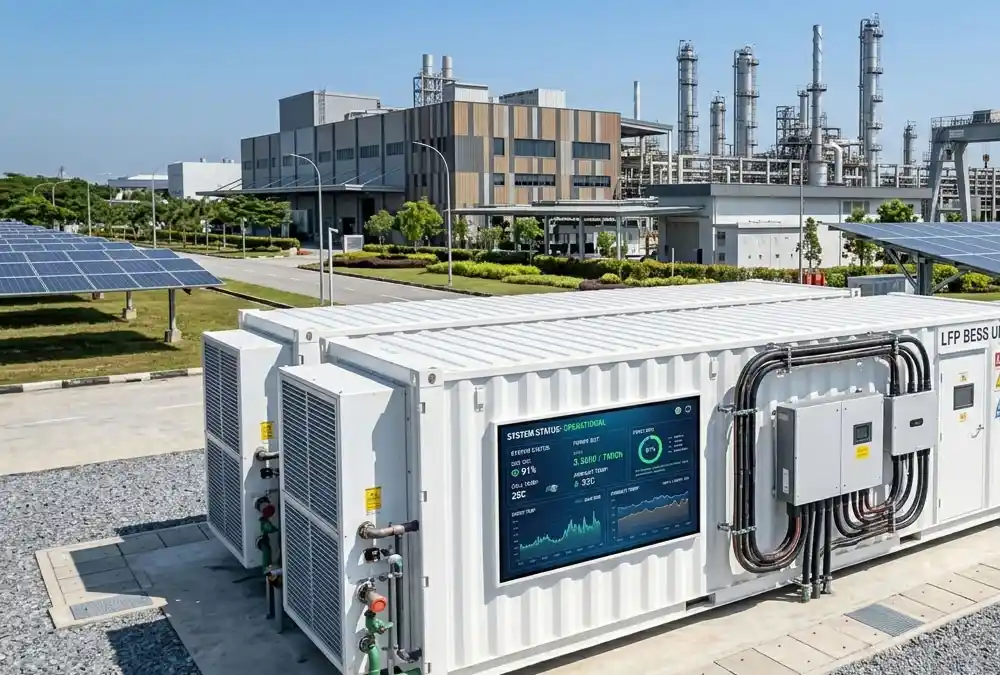
For standard manufacturing plants and commercial facilities, we recommend a **Containerized All-in-One Liquid Cooled LFP BESS Asset**. This integrated industrial system packages high-capacity LFP cells, automated liquid cooling loops, and an intelligent bidirectional Power Conversion System (PCS) inside a weatherproof outdoor enclosure. The liquid cooling system maintains stable internal temperatures, extending cell life and maximizing financial returns.
Alternative Energy Storage Solutions
Certain facility layouts with unique operational demands may benefit from alternative storage technologies:
- Flow Batteries (Vanadium Redox): These systems store energy in large liquid electrolyte tanks pumped through a central cell stack. They offer almost unlimited cycle life without degradation, making them ideal for long-duration energy storage.
- Industrial Supercapacitors: These units store energy electrostatically for rapid power discharge. They excel at smoothing out brief voltage sags and stabilizing local machinery power quality, though they lack the capacity needed for long-term energy storage.
How to Choose the Right Commercial and Industrial Solar Partner
Securing reliable long-term performance requires choosing an experienced
commercial and industrial solar EPC
partner.
Evaluate EPC Experience
Review the contractor’s track record with large-scale commercial power systems. Choosing an experienced builder helps prevent common engineering and construction mistakes.
Assess Engineering Capabilities
Ensure the provider employs qualified electrical and structural engineers. Strong in-house engineering is essential for designing systems that integrate smoothly with your existing facility infrastructure.
Review Previous Project References
Ask for case studies and speak with past commercial clients about their experiences. Verifying historical system performance confirms the installer delivers reliable results.
Verify Solar and BESS Integration Expertise
Managing the interaction between solar panels and battery containers requires specialized engineering skills. Your contractor must know how to program control software to maximize energy savings.
Compare O&M Service Capabilities
Choose a partner that offers comprehensive long-term operations and maintenance service contracts. Proactive field support ensures your solar asset continues to operate at peak efficiency.
Understand Warranty and Performance Guarantees
Carefully review the contractor’s system performance warranties. Clear guarantee terms ensure the builder stands behind their installation work and equipment selections.
Frequently Asked Questions About Commercial and Industrial Solar
What is the difference between commercial and industrial solar?
Commercial solar serves retail, office, and logistics sites with standard daytime power needs. Industrial solar manages much larger, high-voltage loads for 24/7 manufacturing operations and heavy plant machinery.
How much can a business save with solar?
Many businesses cut their monthly utility electricity costs by 40% to 70%. Total savings depend on available roof space, local utility rates, and direct self-consumption levels.
Is battery storage necessary for commercial solar?
Batteries are not required, but they are highly recommended for facilities facing steep peak demand charges. Integrating storage allows you to save daytime solar power for use during expensive evening hours.
How long does installation take?
On-site construction typically takes between four and twelve weeks, depending on system size. The entire process, including engineering design and utility connection approvals, usually spans three to六 months.
What maintenance is required?
Systems require regular panel cleanings, electrical testing, and annual inverter inspections. Active online monitoring helps operations teams catch and resolve efficiency issues quickly.
Are government incentives available?
Yes, federal programs like the Investment Tax Credit (ITC) cover 30% or more of total installation costs. Accelerated MACRS depreciation rules also allow businesses to write off equipment expenses quickly.
How long is the payback period?
Most commercial and industrial installations fully recover their initial capital costs within four to seven years. Available tax credits and local utility rebates help speed up this payback timeline.
Conclusion: Why Commercial and Industrial Solar Is a Smart Investment for Modern Businesses
Key Takeaways
- Commercial and Industrial Solar helps businesses reduce energy costs and improve profitability.
- Solar plus storage solutions enhance energy independence and operational reliability.
- Properly designed C&I systems deliver attractive ROI and long-term sustainability benefits.
- Customized solar solutions aligned with business needs maximize performance and financial returns.
Transitioning to on-site solar power is a proven way to stabilize long-term facility operating costs. Partnering with a skilled
commercial and industrial solar companies
professional ensures your system delivers reliable clean energy for decades. Taking control of your power supply protects your business from volatile utility rates and supports future growth.
Related Posts
 https://anengjibattery.com/wp-content/uploads/2026/09/AnengJIBattery-Best-LiFePO4-Battery-How-to-Choose-the-Right-One.webp
675
1000
Battery Expert Team
https://anengjibattery.com/wp-content/uploads/2025/06/logo2-300x138.png
Battery Expert Team2026-09-17 08:52:142026-09-18 09:19:29How to Choose the Best LiFePO4 Battery
https://anengjibattery.com/wp-content/uploads/2026/09/AnengJIBattery-Best-LiFePO4-Battery-How-to-Choose-the-Right-One.webp
675
1000
Battery Expert Team
https://anengjibattery.com/wp-content/uploads/2025/06/logo2-300x138.png
Battery Expert Team2026-09-17 08:52:142026-09-18 09:19:29How to Choose the Best LiFePO4 Battery https://anengjibattery.com/wp-content/uploads/2026/09/anengjiBattery-lifepo4-battery-cell-packaging-wholesale.webp
675
1000
Battery Expert Team
https://anengjibattery.com/wp-content/uploads/2025/06/logo2-300x138.png
Battery Expert Team2026-09-16 09:52:342026-09-18 09:20:12LiFePO4 Battery Wholesale Guide: Best Suppliers in Spain
https://anengjibattery.com/wp-content/uploads/2026/09/anengjiBattery-lifepo4-battery-cell-packaging-wholesale.webp
675
1000
Battery Expert Team
https://anengjibattery.com/wp-content/uploads/2025/06/logo2-300x138.png
Battery Expert Team2026-09-16 09:52:342026-09-18 09:20:12LiFePO4 Battery Wholesale Guide: Best Suppliers in Spain https://anengjibattery.com/wp-content/uploads/2026/09/anengjibattery-Top-Lithium-Ion-Battery-Producers-for-Spain-Market-Growth.webp
675
1000
Battery Expert Team
https://anengjibattery.com/wp-content/uploads/2025/06/logo2-300x138.png
Battery Expert Team2026-09-16 01:13:392026-09-16 01:14:05Top Lithium Ion Battery Producers for Spain’s Market Growth
https://anengjibattery.com/wp-content/uploads/2026/09/anengjibattery-Top-Lithium-Ion-Battery-Producers-for-Spain-Market-Growth.webp
675
1000
Battery Expert Team
https://anengjibattery.com/wp-content/uploads/2025/06/logo2-300x138.png
Battery Expert Team2026-09-16 01:13:392026-09-16 01:14:05Top Lithium Ion Battery Producers for Spain’s Market Growth https://anengjibattery.com/wp-content/uploads/2026/09/Bulk-Lithium-Ion-Battery-Cells-Procurement-Guide-B2B-Sourcing.webp
675
1000
Battery Expert Team
https://anengjibattery.com/wp-content/uploads/2025/06/logo2-300x138.png
Battery Expert Team2026-09-14 09:47:322026-09-14 09:47:48Bulk Lithium-Ion Battery Cells Procurement Guide | B2B Sourcing
https://anengjibattery.com/wp-content/uploads/2026/09/Bulk-Lithium-Ion-Battery-Cells-Procurement-Guide-B2B-Sourcing.webp
675
1000
Battery Expert Team
https://anengjibattery.com/wp-content/uploads/2025/06/logo2-300x138.png
Battery Expert Team2026-09-14 09:47:322026-09-14 09:47:48Bulk Lithium-Ion Battery Cells Procurement Guide | B2B Sourcing


Leave a Reply
Want to join the discussion?Feel free to contribute!