
What Is a Container Energy Storage System for Commercial and Industrial Use?
May 28, 2026 / Battery Expert Team / battery energy storage
Introduction
The rapid growth of renewable energy sources, such as solar and wind, combined with an exponential rise in global electrical demand, has turned grid modernization into an urgent operational priority. To manage the intermittent nature of green power and reduce high demand charges, companies and utilities require highly efficient infrastructure. This shifting ecosystem has created an immense demand for scalable energy storage systems capable of balancing peak loads and securing backup power. Consequently, the container energy storage system has emerged as the premier, industry-accepted option for commercial, industrial, and utility-scale projects worldwide. These systems provide a pre-engineered alternative to legacy installations, transforming how industrial facilities manage power stability and sustainable energy distribution.
Essential Procurement Questions Answered in This Guide:
- What exactly constitutes a modern container energy storage system?
- How does a containerized BESS interface with industrial power grids?
- Are containerized setups safe from thermal runway risks?
- How do operators accurately calculate their project’s ESS capacity?
- What makes this modular solution superior to traditional on-site battery rooms?
This comprehensive technical guide provides an exhaustive review of containerized power architectures, core sub-assemblies, installation protocols, and economic benefits. By exploring these engineering realities, project developers and EPC contractors can optimize their hardware selection and ensure long-term grid compliance.
What Is a Container Energy Storage System?
Understanding the fundamental engineering behind this configuration requires analyzing how individual chemical cells and power routing electronics are packaged into an independent, weatherproof structure.
Definition of Containerized Battery Energy Storage System (BESS)
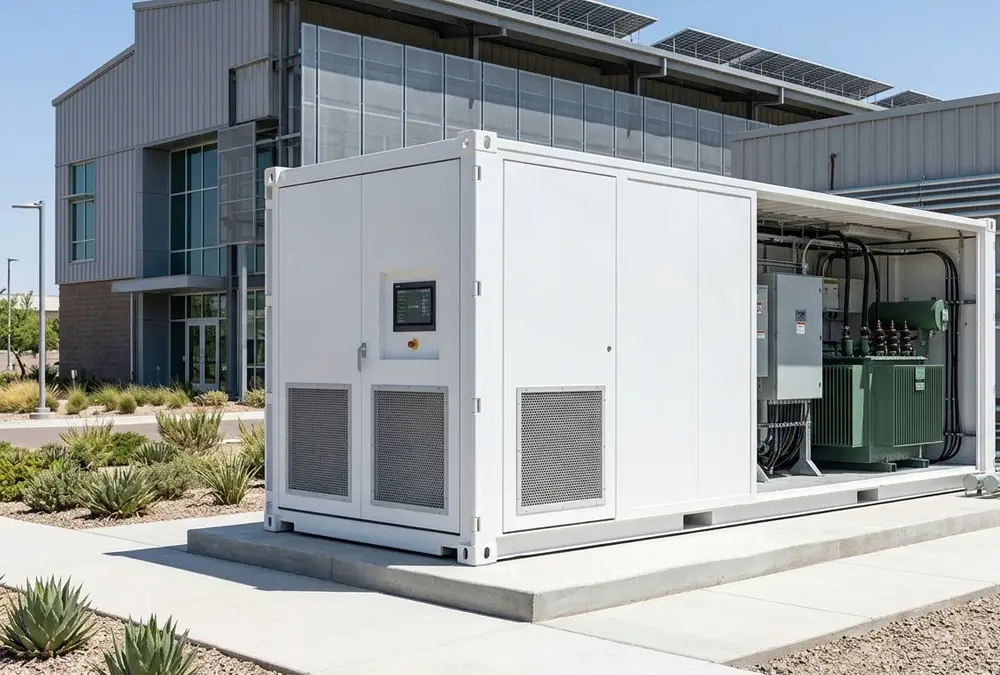
A container energy storage system is a fully integrated, standardized, container-based energy storage solution designed for outdoor installation and rugged environmental deployment. Instead of assembling separate battery racks, safety systems, and power electronics inside a permanent building, manufacturers use a pre-engineered modular design. This means the complete Battery Energy Storage System (BESS) is built, wired, and tested within a standard shipping container enclosure before it ever leaves the factory floor. This specialized containerized ESS approach provides a robust turn-key product that functions as an independent, high-capacity power plant upon delivery.
Main Structure of a Container Energy Storage System
A reliable container BESS requires several complex sub-systems working together within its steel frame. This integrated layout includes:
- Battery Racks: High-density structures that safely hold the individual battery modules and electrical wiring links.
- Power Conversion System (PCS): The bi-directional inverter assembly that routes power between the DC battery bank and the AC grid.
- Battery Management System (BMS): A multi-tiered safety control system that monitors individual battery cell voltages and temperatures.
- Energy Management System (EMS): The software brain that manages intelligent power dispatching and monitors real-time market data.
- HVAC Cooling: Advanced industrial environmental controls, utilizing air or a high-efficiency liquid cooling ESS to maintain steady internal operating temperatures.
- Fire Suppression System: Multi-stage safety hardware incorporating smoke detectors, thermal sensors, and localized aerosol fire extinguishing systems.
Why Container Energy Storage Systems Are Becoming Popular
The global shift toward a containerized energy storage solution is driven by clear economic and operational advantages. First, they provide incredibly fast deployment; because the internal wiring is completed at the factory, on-site installation requires little more than preparing a concrete foundation and making the final AC grid connections. Second, their modular design offers exceptional scalability, allowing operators to expand their energy storage footprint by connecting multiple container units in parallel. Additionally, because these systems are built in controlled factory environments, they feature lower overall infrastructure costs and high outdoor installation flexibility, allowing them to withstand extreme weather without needing expensive permanent buildings.
How Does a Container Energy Storage System Work?
The operational workflow of a battery storage container system can be broken down into three core phases: energy collection, conversion, and safety-monitored distribution.
Energy Charging and Storage Process
The operational cycle begins when the container energy storage system absorbs electricity from connected solar arrays, wind farms, or the local utility grid during low-cost, off-peak hours. This incoming AC power travels directly to the system’s power conversion pathways. The electronics convert the alternating current into high-voltage direct current (DC), which is carefully routed into the battery cells. The BMS controls the charging rate to ensure every module fills safely and evenly, storing the power as stable chemical energy inside the heavy-duty enclosure.
Energy Conversion and Power Dispatch
When the local facility experiences a major demand spike, or when electricity rates surge during peak hours, the EMS triggers the discharge cycle. The stored DC power leaves the battery modules and enters the bi-directional energy storage PCS and BMS network. The PCS instantly converts the DC power back into grid-synchronized AC electricity. This clean, voltage-regulated power passes through integrated switchgear directly into the facility’s main distribution panel or out to the local utility grid, protecting hardware and lowering peak demand charges.
Intelligent Monitoring and Safety Protection
Throughout these charging and discharging cycles, the internal software layers run continuous safety checks. The BMS monitors cell voltages and temperatures thousands of times per second, while the EMS optimizes the power dispatch based on real-time building loads. Simultaneously, the system’s thermal management infrastructure tracks internal temperatures. If a cooling pump or HVAC unit detects a minor temperature variance, it instantly adjusts fluid or air circulation to keep the battery cells within their ideal thermal zone, effectively preventing thermal runaway before an issue can develop.
Core Components of a Containerized BESS and Operational Workflow
To evaluate a high-capacity industrial energy storage system, procurement teams must understand the technical specifications of its primary sub-assemblies.
Lithium Battery System: Modern container systems rely almost exclusively on Lithium Iron Phosphate (LFP) cell chemistry. LFP technology offers significant safety advantages over older lithium-ion alternatives because it has a much higher thermal runaway threshold and does not release oxygen if an internal fault occurs. Additionally, LFP batteries deliver an exceptional lifecycle of over 6,000 charge cycles and high energy density, ensuring the core battery modules perform reliably for over a decade of continuous daily cycling.
Power Conversion System (PCS): The PCS is the heavy-duty electrical link in a container energy storage system with PCS and BMS integration. It manages bi-directional power conversion with millisecond response times, while also handling active grid synchronization and power quality management. This allows the system to filter voltage sags, correct power factors, and protect sensitive industrial machinery from electrical noise on the local utility grid.
Battery Management System (BMS): Operating on a multi-tier control architecture, the master BMS maintains total control over system balancing. It handles real-time voltage balancing across thousands of interconnected cells, tracks temperature profiles, and runs advanced fault diagnosis. If a single module shows an unusual voltage variance, the BMS isolates that specific rack instantly, keeping the rest of the container fully operational.
Energy Management System (EMS): The EMS functions as the primary software brain for site optimization. It runs complex calculations for peak shaving, automated demand charge reduction, and solar self-consumption. It features comprehensive remote monitoring interfaces that allow engineering teams to track system health, adjust discharge schedules, and run remote diagnostics from anywhere in the world.
Fire Protection and Thermal Management System: Safety in a modern lithium battery storage container requires an integrated, multi-layered defense system. The container is equipped with early-warning optical smoke detectors and specialized gas sensors that can spot off-gassing long before an actual temperature spike occurs. If a fire hazard is confirmed, the system activates automated aerosol fire suppression systems to flood the isolated compartment. This fire defense is supported by automated HVAC cooling or specialized liquid cooling plates that maintain ideal internal temperatures, protecting the system from thermal stress and fire risks.
Advantages of Container Energy Storage Systems
Reviewing the practical benefits of containerized structures shows why they are quickly replacing traditional brick-and-mortar battery storage setups.
Faster Deployment and Installation
Because these systems are pre-assembled and fully tested at the factory, they drastically cut down project development timelines. On-site installation requires minimal civil engineering work—just a level concrete foundation, basic grounding, and the final AC power cables. This efficient process allows project managers to complete testing and commission the site weeks faster than traditional building designs.
Modular Expansion and Flexible Scalability
A major benefit of a modular container BESS is its ability to adapt as a facility’s power needs grow. If an industrial plant expands its production capacity or installs a larger solar battery storage container array, it does not need to redesign its entire power infrastructure. Instead, operators can simply install additional containers in parallel, seamlessly expanding their total energy capacity.
Improved Energy Efficiency and Space Utilization
By using dense cell arrangements and integrated liquid-cooling pathways, modern containers provide exceptional power capacity within a very compact footprint. This high space utilization frees up valuable land for core industrial operations or extra parking, while the precise climate controls minimize the energy used by auxiliary cooling systems.
Enhanced Safety and Reliability
Housing large battery arrays inside a dedicated, heavy-duty steel container inherently improves facility safety. The robust structural walls provide a reliable physical barrier that contains any internal electrical or thermal faults. This multi-layer safety design ensures that even during a severe hardware failure, the main facility, personnel, and adjacent assets remain fully protected.
Lower Operational and Maintenance Costs
Because these systems feature intelligent self-diagnostic software and rugged outdoor enclosures, they require very little hands-on maintenance. The automated cooling loops extend the overall lifespan of the battery cells, while remote monitoring systems allow off-site technicians to handle optimization, resulting in a significantly lower total cost of ownership over the project’s lifecycle.
Key Applications of Container Energy Storage Systems in Modern Power Grids
The versatility of a containerized energy storage solution allows it to solve unique operational challenges across many different sectors of the electrical grid.
Commercial and Industrial Energy Storage: For large manufacturing plants and commercial facilities, an outdoor battery energy storage cabinet is an exceptional tool for reducing energy bills. It uses smart peak shaving to supply stored power during expensive peak hours, shielding the business from high demand charges while also providing reliable backup power during unexpected blackouts.
Utility-Scale Battery Energy Storage: On the utility grid, a high-capacity utility scale container battery storage solution provides essential grid stabilization services. These massive installations react to grid fluctuations in milliseconds, handling frequency regulation, absorbing excess power during periods of overproduction, and balancing the grid to prevent blackouts.
Solar Plus Storage Systems: Connecting a modular container system to a commercial solar array creates a highly reliable renewable energy storage system. Instead of forcing operators to export solar power to the grid for low credits, the container stores that green energy during the day and dispatches it at night, maximizing energy self-consumption.
EV Charging Station Energy Storage: As ultra-fast EV charging stations roll out globally, they can put immense stress on local distribution grids. Integrating a containerized battery energy storage system for commercial use next to high-power chargers creates an effective energy buffer. The system charges slowly from the grid during low-load periods and discharges rapidly when an EV plugs in, preventing severe voltage drops across the local network.
Microgrid and Remote Power Applications: For isolated mining operations, remote agricultural projects, or island communities, traditional grid power is often unavailable or highly unreliable. In these settings, a rugged container system serves as the central power hub, combining solar arrays, wind turbines, and backup diesel generators into a stable, self-contained microgrid.
Container Energy Storage System vs Traditional Energy Storage Solutions
To help procurement teams evaluate their choices, this data comparison table outlines the operational differences between modern containerized systems and legacy on-site battery rooms.
| Evaluation Vector | Containerized BESS Solution | Traditional On-Site Battery Room |
|---|---|---|
| Deployment Speed | Very Fast: 2 to 4 days for on-site positioning and final grid commissioning. | Slow: 3 to 6 months of active brick-and-mortar building and complex on-site wiring. |
| Safety Framework | Integrated factory fire suppression, specialized gas sensing, and multi-layer structural containment walls. | Requires custom, expensive fire protection installation and complex structural adjustments to meet building codes. |
| Space Efficiency | High: Compact, high-density cell structures designed for minimal land footprints. | Low: Requires a large building footprint with extensive clearance zones for maintenance access. |
| Scalability Options | Excellent: Modular design allows operators to scale up easily by adding containers in parallel. | Poor: Limited by the physical size of the building, requiring costly construction expansions to grow. |
| Civil Works Cost | Minimal costs, requiring only a level concrete slab foundation and basic utility conduits. | Very high costs, involving architectural design, structural engineering, and permanent building permits. |
Different Types of Containerized Energy Storage Applications
Because grid integration needs vary wildly by project, manufacturers organize container configurations into clear, application-specific types:
- Renewable Energy Storage: Optimized for high-throughput daily cycling, these systems smoothly manage the variable power output from large commercial solar and wind installations.
- Industrial Backup Power: Configured for high reliability and ultra-fast discharge times, these systems instantly protect critical factory assembly lines from voltage drops and blackouts.
- Grid Stabilization Projects: Designed specifically for utility operators, these high-voltage setups provide critical frequency regulation and sub-second power injections to keep the local grid stable.
- Data Center Energy Storage: Engineered to provide absolute power continuous uptime, these high-density containers replace old lead-acid UPS setups to protect critical servers.
- EV Infrastructure and Charging Hubs: Built with high-power buffer capacities, these systems support high-speed EV chargers without triggering expensive grid upgrades or high peak demand fees.
How to Implement a Containerized BESS Project
Deploying a large-scale container system requires following a structured engineering timeline to ensure total site safety and full grid compliance.
The development process starts with a comprehensive energy demand analysis, where engineers review the facility’s historical utility bills and peak load charts to calculate the ideal battery size. Next, during the site evaluation phase, technicians inspect soil stability, verify local environmental conditions, and check the utility company’s interconnection rules. Once these parameters are confirmed, engineers finalize the system design, selecting the right container sizes, internal cooling options, and integrated switchgear components.
After the pre-assembled container arrives on site, cranes carefully lift the structure onto its concrete foundation pad. Technicians then install the final AC power lines, connect the communication cables, and perform comprehensive safety checks before commissioning the system. This complete process is fully supported by experienced engineering, procurement, and construction (EPC) teams who provide turn-key installation and long-term remote maintenance support, guaranteeing optimal project performance from day one.
How to Choose the Right Container Energy Storage System Capacity
Selecting the correct capacity for your container energy storage system is critical to achieving a strong return on investment and meeting your facility’s operational goals.
100kWh–215kWh ESS for Small Commercial Applications
These smaller, compact enclosures are an excellent choice for light industrial facilities, retail stores, and small EV charging hubs. They provide an efficient, space-saving tool for automated peak shaving, basic demand charge reduction, and reliable emergency backup power during localized utility outages.
372kWh–500kWh ESS for Medium Commercial Projects
Designed for mid-sized manufacturing plants, large commercial office complexes, and integrated solar projects, these mid-capacity configurations handle deeper daily cycling. They allow businesses to store significant amounts of solar energy during the day and discharge it during high-rate evening hours to optimize energy savings.
1MWh–5MWh Containerized BESS for Utility-Scale Projects
Built for large-scale energy networks, procurement managers frequently partner with a tier-one 1MWh container energy storage system manufacturer to deploy these massive, high-capacity systems. Housed in standard 20-foot or 40-foot shipping containers, these systems provide the high capacity required for utility grid stabilization, large renewable energy plants, and heavy industrial operations.
Modular Expansion and Customized ESS Design
Because every industrial facility has unique energy challenges, a one-size-fits-all approach does not work. Modern container systems are built on flexible, modular architectures that support multi-container parallel deployments. This allows operators to easily scale up their energy storage footprint as their power demands grow, with engineering teams standing ready to design customized capacity configurations tailored to specific site requirements.
Looking for a reliable manufacturing partner? anengji Power supports customized containerized BESS solutions tailored for everything from mid-sized commercial facilities to large utility-scale applications.
Why Choose anengji Power Container Energy Storage Systems?
Partnering with anengji Power for your energy infrastructure gives you access to industry-leading design engineering, top-tier build quality, and comprehensive safety performance.
Advanced Safety Protection Design: Our containers feature multi-layered safety systems, including early-warning optical smoke detectors, advanced safety sensors, and integrated aerosol fire suppression systems. This robust safety design stops internal thermal risks early, protecting your assets and ensuring full compliance with local municipal fire regulations.
High Energy Efficiency and Intelligent EMS Control: Every system we build integrates high-efficiency thermal management with an intelligent EMS control platform. Our software uses advanced algorithms to track building loads and local utility rates, automatically optimization your power cycles to deliver maximum energy savings.
Optimized Space Utilization and Compact Design: By utilizing high-density LFP cell arrangements and internal liquid-cooling paths, our engineering teams pack exceptional power capacity into a very compact footprint, saving valuable land space at your facility.
Durable Outdoor Container Structure: Built to withstand harsh outdoor deployments, our enclosures feature high IP-rated weather protection, advanced corrosion resistance coatings, and extreme weather adaptability, ensuring reliable performance in environments ranging from freezing cold to intense desert heat.
Flexible Modular Expansion Capability: Our systems are designed with long-term growth in mind. The modular electrical architecture allows you to easily scale up your system by connecting extra containers in parallel, protecting your initial investment as your business expands.
Lower Total Cost of Ownership (TCO): By combining low-maintenance hardware with automated cooling loops that extend the lifespan of the battery cells, anengji Power platforms minimize ongoing upkeep costs and lower your energy bills, delivering an exceptional return on investment over a long operational lifespan.
Frequently Asked Questions About Container Energy Storage Systems
What is a container energy storage system?
It is an independent, modular battery storage solution that integrates high-capacity battery racks, bi-directional power conversion (PCS), climate control, and safety systems into a standardized outdoor shipping container enclosure.
How does a containerized BESS work?
The system stores low-cost electricity from solar arrays or the utility grid as DC power. When facility demand spikes or power costs rise, the system instantly converts that stored power back into grid-synchronized AC electricity to power the site.
Are container energy storage systems safe?
Yes, modern industrial systems include comprehensive safety designs, featuring high-stability LFP chemistry, multi-tier BMS tracking, automated climate controls, and integrated fire suppression systems to manage thermal risks.
What battery technology is commonly used?
Lithium Iron Phosphate (LFP) is the industry-standard chemistry because it delivers an exceptional lifespan of over 6,000 cycles, high thermal stability, and superior safety compared to legacy lithium chemistries.
How long does a container ESS last?
When managed by advanced cooling systems and smart BMS software, high-quality LFP containers operate reliably for 10 to 15 years under daily cycling conditions before the cells show normal capacity degradation.
What size containerized ESS do I need?
The ideal size depends on your facility’s peak electricity loads, solar production capacity, and backup power goals. Engineering teams calculate this by analyzing your historical utility billing data.
Can containerized BESS be expanded later?
Yes, the modular design allows you to easily scale up your system capacity by installing additional container units in parallel, making it simple to expand as your energy needs grow.
What certifications should a container ESS have?
To pass local building and interconnection inspections, systems should carry recognized safety listings from accredited testing laboratories, such as UL 1973 for the battery modules and UL 9540 for the complete integrated system.
Key Takeaways
| Core Procurement Question | Quick Answer & Operational Reality |
|---|---|
| What is a container energy storage system? | A modular battery storage solution fully integrated inside a standardized, weatherproof outdoor container. |
| What are the main ESS components? | The core battery system, bi-directional PCS inverters, multi-tier BMS, smart EMS software, climate HVAC, and safety fire protection. |
| Why is containerized BESS popular? | It offers rapid on-site deployment, flexible modular scalability, improved safety containment, and lower overall site costs. |
| Is container ESS safe? | Yes, modern platforms combine LFP cell chemistry with advanced thermal management and multi-layer fire suppression. |
| Can ESS capacity be expanded? | Yes, the modular electrical design supports parallel container installations, allowing for easy capacity expansion later. |
| What applications use containerized ESS? | They are widely used in commercial facilities, industrial factories, utility grid support, solar farms, and fast EV charging hubs. |
Conclusion
A modern container energy storage system represents a vital component of today’s clean energy infrastructure. Its pre-engineered modular design, flexible scalability, and advanced software optimization make it an exceptional solution for protecting commercial facilities, heavy industrial plants, and utility power networks. By moving away from old, expensive on-site battery room construction, companies can complete installation significantly faster, maximize their available space, improve thermal safety, and reduce ongoing maintenance costs.
As corporate sustainability goals, renewable energy adoption, and fast EV charging demands continue to grow, containerized infrastructure will play an increasingly vital role in maintaining grid stability and reducing power costs. Investing in a high-quality, certified container platform ensures your facility gains a secure, high-performance asset that delivers clean, reliable electricity and strong operational cost savings for years to come.
Ready to Optimize Your Facility’s Energy Infrastructure?
Protect your business from high peak demand charges and secure reliable backup power. Contact our application engineering team today to explore customized containerized BESS designs and find the perfect modular storage solution for your project.
“`
Related Posts
 https://anengjibattery.com/wp-content/uploads/2026/10/AnengJIBattery-Top-10-Forklift-Battery-Manufacturers-for-Cold-Storage.webp
675
1000
Battery Expert Team
https://anengjibattery.com/wp-content/uploads/2025/06/logo2-300x138.png
Battery Expert Team2026-10-26 09:12:412026-10-26 09:13:00Top 10 Forklift Battery Manufacturers for Cold Storage
https://anengjibattery.com/wp-content/uploads/2026/10/AnengJIBattery-Top-10-Forklift-Battery-Manufacturers-for-Cold-Storage.webp
675
1000
Battery Expert Team
https://anengjibattery.com/wp-content/uploads/2025/06/logo2-300x138.png
Battery Expert Team2026-10-26 09:12:412026-10-26 09:13:00Top 10 Forklift Battery Manufacturers for Cold Storage https://anengjibattery.com/wp-content/uploads/2026/10/AnengjiBattery-Cell-to-Pack-Energy-Density-Comparison.webp
675
1000
Battery Expert Team
https://anengjibattery.com/wp-content/uploads/2025/06/logo2-300x138.png
Battery Expert Team2026-10-23 06:58:392026-10-23 06:58:41What Does Lithium-Ion Battery Energy Density Really Mean?
https://anengjibattery.com/wp-content/uploads/2026/10/AnengjiBattery-Cell-to-Pack-Energy-Density-Comparison.webp
675
1000
Battery Expert Team
https://anengjibattery.com/wp-content/uploads/2025/06/logo2-300x138.png
Battery Expert Team2026-10-23 06:58:392026-10-23 06:58:41What Does Lithium-Ion Battery Energy Density Really Mean? https://anengjibattery.com/wp-content/uploads/2026/10/AnengjiBattery-Lithium-Battery-Management-in-Daily-Operation.webp
675
1000
Battery Expert Team
https://anengjibattery.com/wp-content/uploads/2025/06/logo2-300x138.png
Battery Expert Team2026-10-22 08:17:332026-10-23 06:58:57How Does a Lithium BMS Improve Battery Longevity?
https://anengjibattery.com/wp-content/uploads/2026/10/AnengjiBattery-Lithium-Battery-Management-in-Daily-Operation.webp
675
1000
Battery Expert Team
https://anengjibattery.com/wp-content/uploads/2025/06/logo2-300x138.png
Battery Expert Team2026-10-22 08:17:332026-10-23 06:58:57How Does a Lithium BMS Improve Battery Longevity? https://anengjibattery.com/wp-content/uploads/2026/10/AnengjiBattery-Industrial-Power-Under-Real-Load.webp
675
1000
Battery Expert Team
https://anengjibattery.com/wp-content/uploads/2025/06/logo2-300x138.png
Battery Expert Team2026-10-22 07:04:542026-10-22 07:05:30How Does a 48V LiFePO4 BMS Protect Industrial Power?
https://anengjibattery.com/wp-content/uploads/2026/10/AnengjiBattery-Industrial-Power-Under-Real-Load.webp
675
1000
Battery Expert Team
https://anengjibattery.com/wp-content/uploads/2025/06/logo2-300x138.png
Battery Expert Team2026-10-22 07:04:542026-10-22 07:05:30How Does a 48V LiFePO4 BMS Protect Industrial Power?


Leave a Reply
Want to join the discussion?Feel free to contribute!