
12V vs 48V LiFePO4 Batteries: Which is Best for Your Equipment?
July 14, 2026 / Battery Expert Team / Battery Basics
Introduction
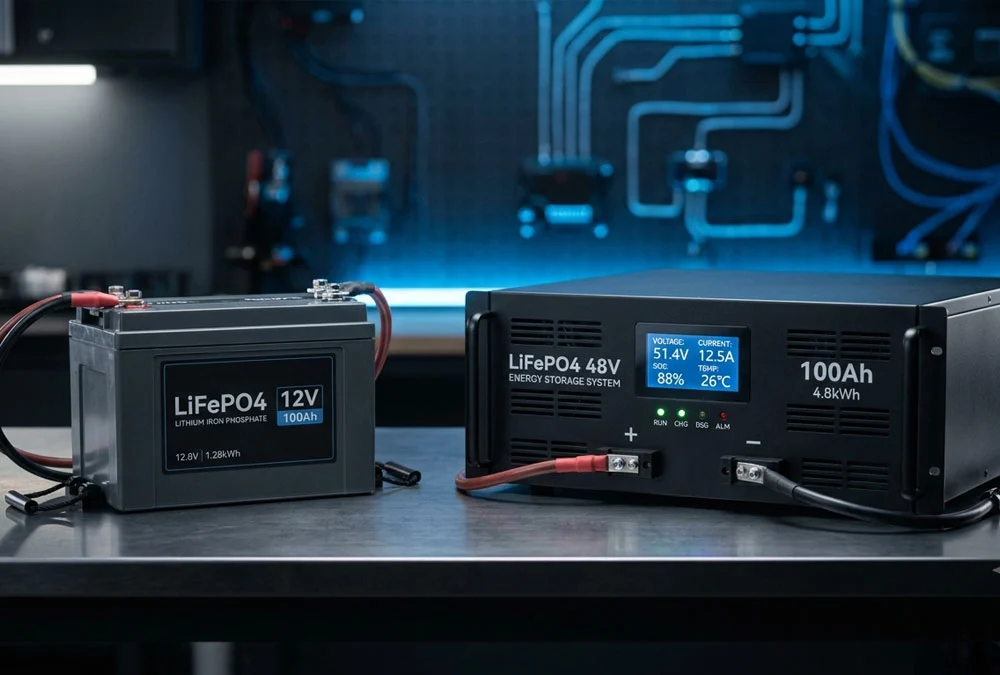
When designing a modern battery system, selecting the right voltage configuration remains a critical decision that directly dictates your system efficiency, cabling costs, and overall operational longevity. The ultimate choice typically boils down to a classic head-to-head match: 12V vs 48V LiFePO4 batteries. Many users naturally ask, which option truly fits my equipment, and why are industrial platforms rapidly shifting toward high-voltage configurations? As a field engineer who has spent decades diagnosing electrical systems, I often see buyers overpay for heavy copper cabling or struggle with unnecessary heat buildup simply because they chose the wrong battery setup. Selecting between a 12V vs 48V LiFePO4 battery is not just about matching numbers; it is about finding the sweet spot where thermal management, current reduction, and system power output align perfectly.
What Are 12V and 48V LiFePO4 Batteries? Understanding Lithium Battery Voltage Configuration
To understand how these power systems function, we must first dissect what happens inside the casing. Standard lead-acid units rely on chemical plates that degrade rapidly under heavy discharges, but a lithium iron phosphate battery uses incredibly stable chemistry to deliver consistent, long-term power.
Basic Structure of LiFePO4 Battery Cells and Voltage Systems
Every lithium iron phosphate pack relies on a fundamental building block: the individual LiFePO4 cell. A single cell possesses a nominal voltage of 3.2V. To build a highly reliable system, manufacturers use specific connection schemes:
- Series Connection: Linking cells positive-to-negative to increase the overall voltage.
- Parallel Connection: Linking cells positive-to-positive to increase the total capacity (Amp-hours).
By arranging these cells in series, manufacturers create various battery configurations:
- 12V Battery (12.8V nominal): Formed by connecting 4 cells in series (4S).
- 24V Battery (25.6V nominal): Formed by connecting 8 cells in series (8S).
- 36V Battery (38.4V nominal): Formed by connecting 12 cells in series (12S).
- 48V Battery (51.2V nominal): Formed by connecting 16 cells in series (16S).
How Battery Voltage Affects Current, Power Output and System Efficiency
Here is a fundamental law of electrical engineering that we cannot escape: Power equals Voltage multiplied by Current (P = V × I). If your motor or inverter demands 2,000 Watts of continuous power, a 12V system must pull roughly 156 Amps of current.
If you run that exact same 2,000-Watt load on a 48V setup, the system current drops drastically to just 41 Amps. This simple reduction in current delivers massive advantages in power efficiency. According to Joule’s Law, power loss in a cable is calculated as Ploss = I2 × R. Because the current (I) is squared, cutting your current by a factor of four reduces your heat losses by an astonishing 16 times! You immediately get cooler operation, highly reduced thermal stress, and a much safer operating environment.
12V vs 48V LiFePO4 Batteries: Key Differences in Performance, Efficiency and Cost
When advising procurement teams, I always suggest looking past the purchase price alone. Let us compare how these two voltage options perform in the real world.
| Specification Parameter | 12V LiFePO4 System | 48V LiFePO4 System | Key Value & Buyer Advantage |
|---|---|---|---|
| Nominal Voltage | 12.8V | 51.2V | Determines system compatibility and overall architecture. |
| System Current (at 2kW load) | ~156 Amps (Very High) | ~41 Amps (Low) | Lower heat generation: Prolongs active cell and BMS lifespan. |
| System Efficiency | Moderate (~88-92%) | Excellent (>97-98%) | Energy savings: Reduces wasted heat, giving you longer runtimes per charge. |
| Required Cable Gauge | Thick (2/0 AWG or heavier) | Thin (6 to 8 AWG) | Major cost cut: Thinner copper wires are cheaper and easier to bend. |
| Installation Complexity | Simple / DIY-friendly | Requires basic professional care | Ideal for straightforward drop-in lead-acid replacements. |
| Scalability | Poor (Parallel losses) | Excellent (Up to 15+ packs) | Future-proof: Lets you expand capacity later without balancing headaches. |
Energy Efficiency Comparison Between 12V and 48V Lithium Battery Systems
I often see operations managers struggle with rapid energy drain in large-scale warehouses. This issue is rarely due to poor quality lithium cell performance; rather, it comes down to 12V lithium battery vs 48V lithium battery efficiency. When drawing heavy loads at low voltages, energy loss in cables and connections rises sharply.
According to the Global Battery Alliance 2025 Outlook, transitioning commercial fleets and automated storage platforms to a 48V architecture reduces system transmission losses by up to 90%. By choosing 48V, you minimize heat generation and lower your overall operating costs over years of active service.
Cost Comparison: Initial Investment vs Long-Term Operating Cost
“Isn’t a 48V LiFePO4 battery setup significantly more expensive?” This is the most common question I get from buyers.
While it is true that a 48V battery pack or a high-voltage compatible inverter requires a slightly higher upfront investment, looking only at the initial price of the battery is a mistake. When installing a 12V setup for heavy loads, you must pay for thick, heavy-gauge copper wiring, massive fuses, and high-current busbars. If you connect four 12V batteries in series to build a 48V bank, you run into balancing issues and require multiple individual BMS units. In contrast, a single dedicated 48V system uses small, inexpensive cables and one highly efficient BMS. Over a typical 10-year operating cycle, the 48V setup pays for itself by reducing energy losses and requiring fewer component replacements.
Advantages and Applications of 12V LiFePO4 Batteries
Despite the rapid rise of 48V systems, the classic 12V configuration remains highly relevant for a wide range of everyday setups.
Benefits of 12V LiFePO4 Battery Systems
The primary strength of a 12V deep cycle lithium battery lies in its straightforward design and ease of installation. Because 12V has been the automotive and marine standard for decades, finding compatible chargers, lights, and inverters is incredibly simple. It serves as an easy, direct-replacement solution that does not require redesigning your entire electrical layout.
Common Applications of 12V Lithium Batteries
Where does a 12V system perform best?
- RV and Marine Applications: Standard 12V vs 48V lithium battery for RV and marine applications comparisons show that smaller travel trailers and boats with light electrical loads (such as LED lights, water pumps, and small cooling fans) perform perfectly on a 12V setup.
- Small Electric Vehicles: Many older golf cart auxiliary systems, mobility scooters, and simple utility vehicles run smoothly on lightweight 12V packs.
- Off-Grid Solar Energy Storage: Small-scale cabins, garden sheds, and remote telemetry stations that only power a few lights and small devices benefit from the lower upfront cost of a 12V solar storage lithium battery.
Why 48V LiFePO4 Batteries Are Preferred for High Power Applications
When dealing with heavy loads and demanding commercial applications, stepping up to a 48V battery system advantages your operation in several key ways.
Benefits of 48V Lithium Battery Systems
Why are industrial systems rapidly upgrading to 48V?
- Outstanding Thermal Performance: Less current passing through the system means your electronics and battery cells run much cooler, significantly extending the lithium battery cycle life comparison ratings.
- Easier System Expansion: Scaling a 48V system is much simpler. You can connect multiple battery cabinets in parallel with minimal balancing issues, avoiding the electrical bottlenecks common in lower-voltage setups.
- Reduced Copper Costs: Using thinner wiring makes your installation cleaner, lighter, and far less expensive.
48V LiFePO4 Battery Applications
Here are the key industries where a 48V system has become the gold standard:
- Golf Carts: Comparing a 12V vs 48V LiFePO4 battery for golf carts shows that 48V systems deliver significantly higher torque, better hill-climbing acceleration, and a much longer driving range.
- AGVs and AMRs: Automated Guided Vehicles and Autonomous Mobile Robots in modern warehouses require continuous operation, rapid charging, and zero maintenance. High-efficiency 48V systems deliver the steady power these advanced industrial platforms demand.
- Solar Energy Storage Systems: Most modern residential and commercial off-grid setups utilize a 12V or 48V LiFePO4 battery for solar energy storage. For systems larger than 3kW, a 48V configuration is almost always preferred due to its excellent compatibility with high-power hybrid inverters.
- Commercial Cleaning Machines: Industrial floor scrubbers and sweepers run far longer on 48V, cutting down-time and increasing daily cleaning productivity.
12V vs 48V LiFePO4 Batteries for Different Equipment Selection
Let us look at specific applications to help you choose the right setup for your equipment.
Which Battery Voltage Is Best for Golf Cart Applications?
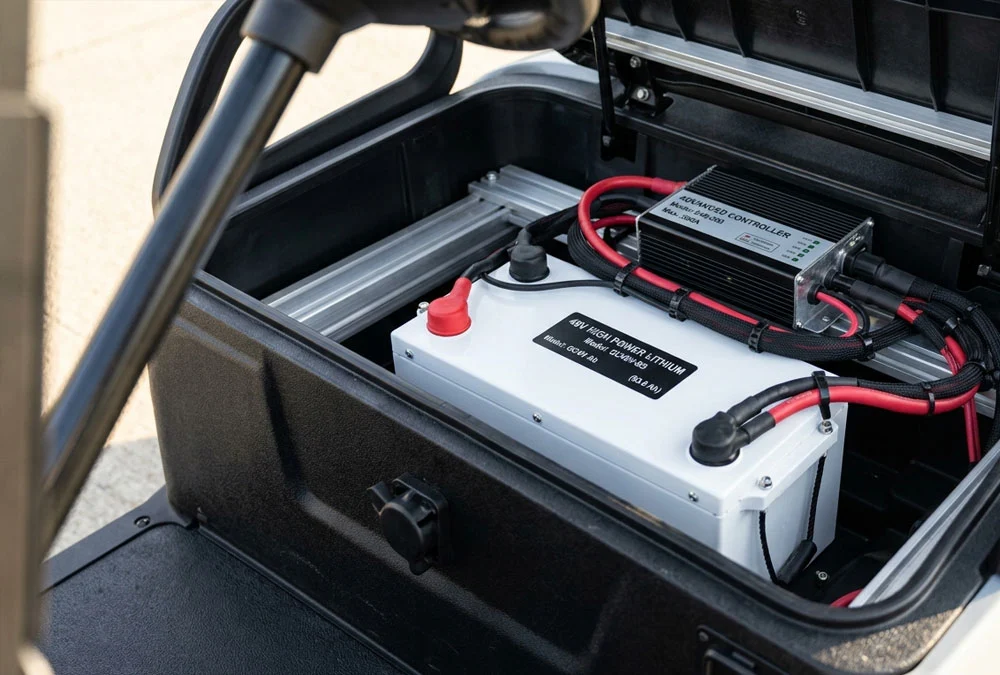
If you are upgrading an electric golf cart, choosing a 48V LiFePO4 battery is almost always the best move. Standard electric golf cart motors typically require high current during acceleration and hill climbing. Running a 12V setup in series often leads to voltage sag and poor performance, whereas a dedicated 48V lithium battery delivers steady torque, consistent speeds, and a much better driving range.
Which Battery Voltage Is Better for AGV and Industrial Vehicles?
For heavy-duty material handling, 48V systems are the clear winner. AGVs and forklifts operate under demanding warehouse schedules and carry heavy loads. A 48V system allows for faster charging times and produces less heat during long shifts, keeping your warehouse operations running smoothly and efficiently.
Choosing Battery Voltage for Solar Storage Systems
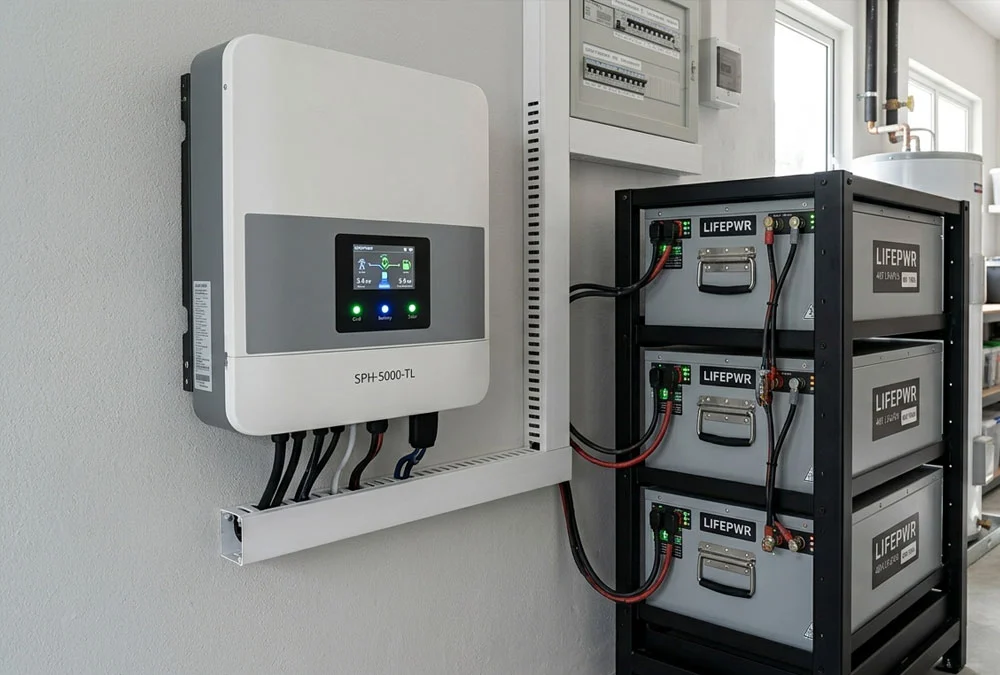
For small, simple off-grid solar cabins under 2,000 Watts, a 12V lithium system is easy to set up and highly cost-effective. However, for full-sized residential systems or commercial setups, a 48V solar storage lithium battery is the industry standard. Most high-efficiency solar inverters are built specifically for 48V inputs, ensuring higher efficiency and making it easy to expand your system in the future.
How to Choose Between a 12V and 48V LiFePO4 Battery System?
To determine the best voltage for your project, consider these three key engineering factors:
Consider Your Equipment Voltage Requirements
Always check the technical specifications of your existing motor, controller, and inverter first. If your equipment operates on a fixed 12V input, upgrading your battery system to 48V requires purchasing a costly DC-to-DC converter or replacing your motor entirely. Matching your equipment’s native voltage is usually the simplest and most practical path.
Consider Power Demand and Operating Time
As a general engineering rule of thumb, use this simple power threshold to guide your design:
- Loads under 1,500 Watts: A 12V system is perfectly adequate and keeps your initial costs low.
- Loads between 1,500 and 3,000 Watts: Consider a 24V or 48V system to keep cable sizes manageable.
- Loads over 3,000 Watts: A 48V system is essential to prevent unsafe heat levels and high power losses.
Consider Battery Management System (BMS) and Safety Requirements
Every quality lithium battery relies on a smart Battery Management System to operate safely. A robust LiFePO4 battery BMS protection system continuously monitors cell voltages, balances individual cells, and prevents dangerous overcharging, deep discharging, and overheating. Choosing a high-quality BMS ensures your lithium pack remains safe, stable, and highly reliable for years to come.
Why Choose Custom LiFePO4 Battery Solutions Instead of Standard Batteries?
Standard, off-the-shelf lithium batteries are great for simple DIY tasks, but commercial projects and complex industrial fleets often require a custom-built solution.
OEM LiFePO4 Battery Design for Different Applications
Working with an experienced manufacturing partner allows you to design custom battery systems tailored to your exact physical and electrical requirements:
- Custom Physical Dimensions: Design battery packs to fit perfectly into unique, space-constrained AGV compartments or golf cart chassis.
- Tailored BMS Protocols: Integrate custom communication protocols (such as CAN bus, RS485, or Modbus) to connect seamlessly with your vehicle’s onboard computer.
- Rugged Protective Casing: Choose heavy-duty steel, aluminum, or IP67-rated waterproof enclosures to withstand harsh, high-vibration industrial environments.
Professional Battery Engineering Support for Your Projects
Partnering with a dedicated battery manufacturer gives you access to professional thermal modeling, advanced safety testing, and streamlined quality control processes. This ensures your custom battery systems comply with international safety standards while delivering outstanding performance and reliability.
Frequently Asked Questions About 12V vs 48V LiFePO4 Batteries
Is a 48V LiFePO4 Battery Better Than a 12V Battery?
Neither voltage is universally “better” on its own—it all depends on your specific application. A 48V system is much more efficient for high-power demands (over 1,500W), such as industrial AGVs, residential solar systems, and modern golf carts. However, a 12V system is often the most practical and cost-effective option for low-power devices, boats, and RVs with existing 12V wiring.
Can I Replace Multiple 12V Batteries With One 48V Battery?
Yes, you can! Replacing a series-connected bank of four 12V batteries with a single 48V battery pack is highly recommended. It eliminates cell-balancing issues between separate casings, simplifies your wiring, and utilizes a single high-performance BMS to manage all the cells together safely. Just ensure your motor, controller, and charger are fully compatible with 48V inputs.
How Long Does a LiFePO4 Battery Last?
Under normal operating conditions, a high-quality LiFePO4 battery typically lasts between 3,000 and 6,000 complete charge cycles before its capacity drops to 80% of its original rating. If you use the battery daily, this translates to 10 to 15 years of reliable service—far outlasting traditional lead-acid options.
Are 48V LiFePO4 Batteries Safer Than Lead Acid Batteries?
Yes, they are significantly safer. Lithium iron phosphate chemistry is exceptionally stable and highly resistant to thermal runaway. In addition, standard lead-acid batteries can release toxic gases and require active ventilation and regular maintenance. A sealed LiFePO4 battery requires zero maintenance, produces no emissions, and can be safely installed in enclosed spaces.
Get the Right 12V or 48V LiFePO4 Battery Solution for Your Project
Finding the right voltage configuration is the first step toward building a highly efficient and reliable power system. Whether you are upgrading a commercial golf cart fleet, designing industrial AGVs, or building a robust off-grid solar storage system, our engineering team is here to help you select, design, and manufacture the perfect LiFePO4 battery solution for your business.
Related Posts
 https://anengjibattery.com/wp-content/uploads/2026/09/AnengJIBattery-Best-LiFePO4-Battery-How-to-Choose-the-Right-One.webp
675
1000
Battery Expert Team
https://anengjibattery.com/wp-content/uploads/2025/06/logo2-300x138.png
Battery Expert Team2026-09-17 08:52:142026-09-17 08:52:31How to Choose the Best LiFePO4 Battery
https://anengjibattery.com/wp-content/uploads/2026/09/AnengJIBattery-Best-LiFePO4-Battery-How-to-Choose-the-Right-One.webp
675
1000
Battery Expert Team
https://anengjibattery.com/wp-content/uploads/2025/06/logo2-300x138.png
Battery Expert Team2026-09-17 08:52:142026-09-17 08:52:31How to Choose the Best LiFePO4 Battery https://anengjibattery.com/wp-content/uploads/2026/09/anengjiBattery-lifepo4-battery-cell-packaging-wholesale.webp
675
1000
Battery Expert Team
https://anengjibattery.com/wp-content/uploads/2025/06/logo2-300x138.png
Battery Expert Team2026-09-16 09:52:342026-09-16 09:52:57LiFePO4 Battery Wholesale Guide: Best Suppliers in Spain
https://anengjibattery.com/wp-content/uploads/2026/09/anengjiBattery-lifepo4-battery-cell-packaging-wholesale.webp
675
1000
Battery Expert Team
https://anengjibattery.com/wp-content/uploads/2025/06/logo2-300x138.png
Battery Expert Team2026-09-16 09:52:342026-09-16 09:52:57LiFePO4 Battery Wholesale Guide: Best Suppliers in Spain https://anengjibattery.com/wp-content/uploads/2026/09/anengjibattery-Top-Lithium-Ion-Battery-Producers-for-Spain-Market-Growth.webp
675
1000
Battery Expert Team
https://anengjibattery.com/wp-content/uploads/2025/06/logo2-300x138.png
Battery Expert Team2026-09-16 01:13:392026-09-16 01:14:05Top Lithium Ion Battery Producers for Spain’s Market Growth
https://anengjibattery.com/wp-content/uploads/2026/09/anengjibattery-Top-Lithium-Ion-Battery-Producers-for-Spain-Market-Growth.webp
675
1000
Battery Expert Team
https://anengjibattery.com/wp-content/uploads/2025/06/logo2-300x138.png
Battery Expert Team2026-09-16 01:13:392026-09-16 01:14:05Top Lithium Ion Battery Producers for Spain’s Market Growth https://anengjibattery.com/wp-content/uploads/2026/09/Bulk-Lithium-Ion-Battery-Cells-Procurement-Guide-B2B-Sourcing.webp
675
1000
Battery Expert Team
https://anengjibattery.com/wp-content/uploads/2025/06/logo2-300x138.png
Battery Expert Team2026-09-14 09:47:322026-09-14 09:47:48Bulk Lithium-Ion Battery Cells Procurement Guide | B2B Sourcing
https://anengjibattery.com/wp-content/uploads/2026/09/Bulk-Lithium-Ion-Battery-Cells-Procurement-Guide-B2B-Sourcing.webp
675
1000
Battery Expert Team
https://anengjibattery.com/wp-content/uploads/2025/06/logo2-300x138.png
Battery Expert Team2026-09-14 09:47:322026-09-14 09:47:48Bulk Lithium-Ion Battery Cells Procurement Guide | B2B Sourcing


Leave a Reply
Want to join the discussion?Feel free to contribute!