
Containerized BESS for Solar Farms: Why Utility Projects Go Modular
July 13, 2026 / Battery Expert Team / battery energy storage
Introduction
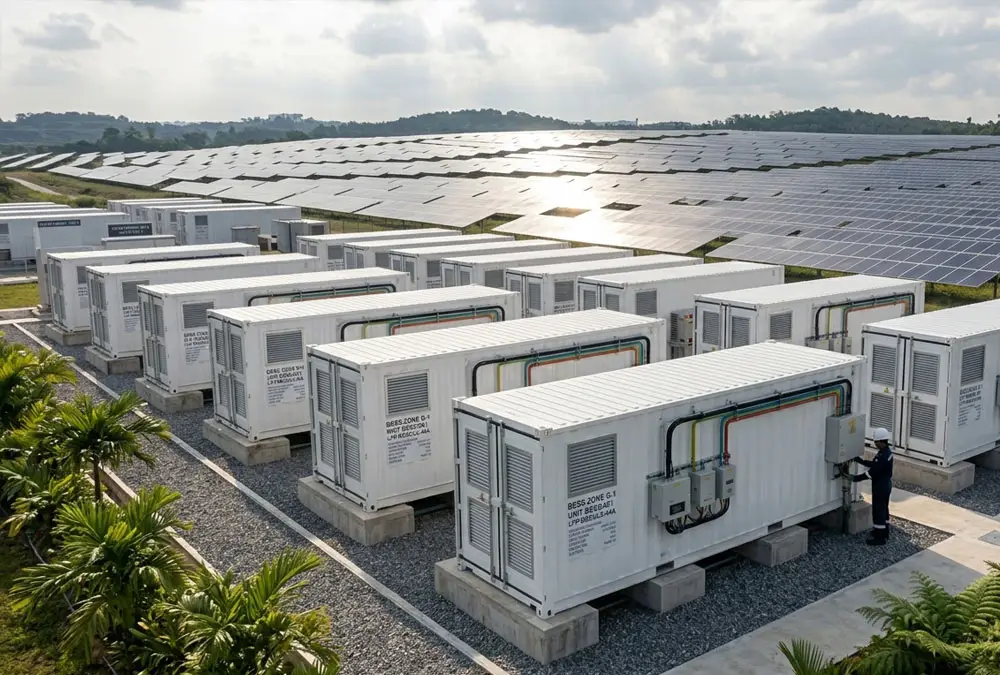
The global renewable sector is shifting fast. Running a standalone solar field is becoming an operational liability. Grid operators now demand predictable power injections. This shift makes deploying a Containerized BESS for Solar Farms a baseline requirement. Heavy solar curtailment cuts deeply into modern project revenue. Meanwhile, volatile wholesale power pricing hurts unprotected plant developers. Traditional infrastructure cannot handle these rapid clean energy spikes smoothly. A modular storage asset bridges this gap perfectly. It converts volatile daytime generation into highly stable, reliable capacity. This guide breaks down exactly how to size and deploy these container systems successfully.
Why Are More Solar Farms Choosing Containerized Battery Energy Storage Systems?
Modern utility-scale projects deploy containerized storage configurations to solve immediate grid issues. These setups offer clear advantages over old brick-and-mortar battery rooms:
- Rapid Deployment: Factory-assembled enclosures arrive on site ready to connect immediately.
- Modular Scaling: Developers add more power blocks easily when plant demands grow.
- Higher Utilization: Systems store clipped midday solar energy to prevent generation waste.
- Lower Construction Costs: Pre-built shells significantly reduce local civil engineering work.
- Enhanced Grid Stability: Fast-acting inverters provide essential frequency response support.
Why Solar Farms Need Battery Energy Storage More Than Ever
The days of simply dumping raw power onto the transmission network are over. Modern regional utility distribution grids are reaching their physical limits. This saturation forces clean power plants to adapt or face financial losses.
Reducing Solar Curtailment
When midday solar production peaks, local grid networks often face severe congestion. Utility operators respond by ordering solar plants to reduce their output immediately. This forced curtailment means losing cheap, clean electricity that could have been sold. Integrating targeted solar farm battery storage solutions fixes this issue completely. The system captures that excess energy instead of letting it go to waste.
Delivering Power After Sunset
Peak electricity demand typically occurs during early evening hours when families return home. Unfortunately, this coincides exactly with the time solar production drops down to zero. A large scale battery storage system shifts your generation window forward. It stores cheap afternoon power and releases it when market prices hit their peak.
Meeting Utility Grid Requirements
Grid compliance codes are becoming far more stringent across global markets. Operators now demand that renewable plants provide active frequency regulation and voltage support. Traditional solar arrays cannot deliver these sub-second grid balancing services on their own. Adding smart battery systems allows clean energy plants to meet these tough interconnection rules easily.
Increasing Renewable Energy Utilization
Maximizing your total plant throughput requires smart, real-time energy dispatch strategies. Storing local electricity allows you to buffer sudden cloud cover drops instantly. This steady output profile makes your facility look much more like a reliable baseload power plant.
Improving Solar Farm Revenue Streams
Modern developers do not rely on simple power purchase agreements anymore. Instead, they stack multiple revenue lines to maximize returns. These include active peak shaving, energy arbitrage, and participating in ancillary services markets. This operational flexibility helps protect your clean energy asset against long-term market volatility.
What Is a Containerized Battery Energy Storage System?
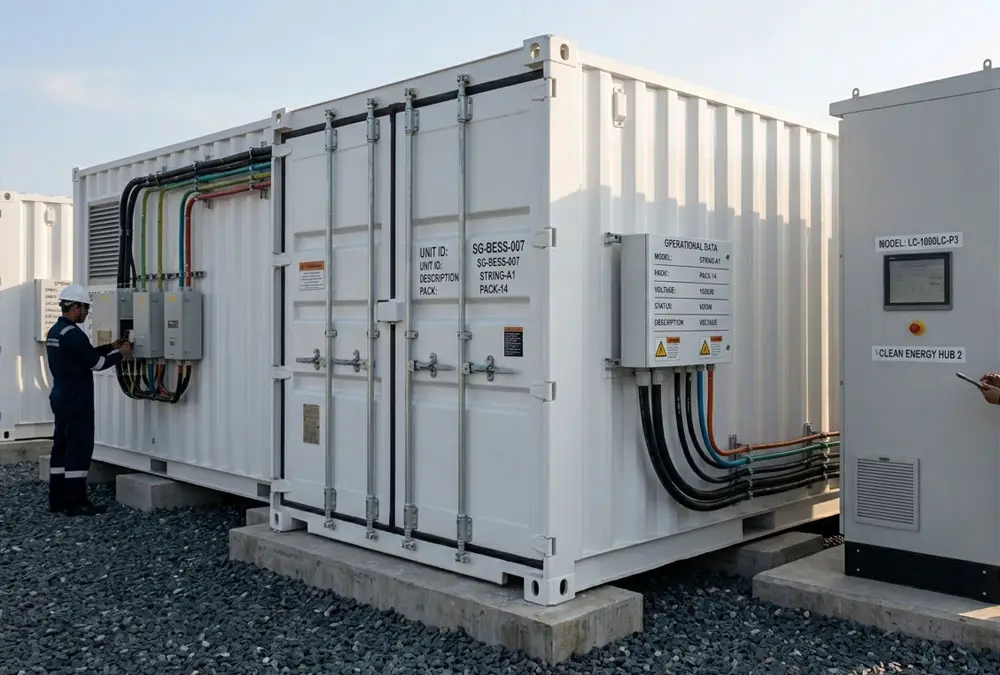
Think of this hardware as a self-contained power substation enclosed inside a rugged steel freight shell. It houses everything needed to store, protect, and convert high-voltage electricity safely.
How a Containerized BESS Works
The asset connects directly to your site’s central medium-voltage AC busbar system. During peak generation, the bidirectional inverter pulls AC power and converts it to DC. This DC current flows straight into the dense internal battery cell matrices. When the grid requires power, the entire chemical process reverses instantly.
Key Components Inside a Containerized BESS
A reliable container battery storage for solar power plants integrates several critical sub-systems:
- Battery Modules: Dense racks of cells that hold the actual electrical charge.
- Power Conversion System (PCS): The bidirectional inverter handling AC-to-DC conversion.
- Energy Management System (EMS): Software controlling real-time power dispatch schedules.
- HVAC/Liquid Cooling: Direct-to-cell cooling plates that maintain safe operating temperatures.
- Fire Suppression: Automated gas systems that stop thermal runaway risks immediately.
BMS vs BESS: Understanding the Difference
Many new procurement managers frequently mix up these two acronyms. The Battery Management System (BMS) is the internal circuit board layer. It monitors individual cell voltages and local rack temperatures. The Containerized Battery Energy Storage System (BESS) refers to the complete, integrated asset. It includes the structural shell, the cooling systems, the internal BMS, and the external PCS inverters.
Why Containerized BESS Is Becoming the Preferred Choice for Solar Farms
Building traditional permanent structures to house battery racks is quickly becoming obsolete. The industry is moving decisively toward flexible, pre-engineered modular outdoor configurations.
Modular Design Simplifies Project Expansion
Energy needs change over time as local utility grids evolve. A modular container layout allows you to scale your system sizing smoothly. If your facility requires more storage capacity in 2028, you can simply drop another container block onto an adjacent concrete pad. This approach avoids the need for expensive structural renovations or complex building modifications.
Faster Installation and Commissioning
Traditional construction projects often face long delays due to bad weather or local labor shortages. Container systems avoid these issues because they are completely assembled inside controlled factories. Each unit undergoes full testing before shipping out to your project location. Once on site, field crews simply bolt the enclosure down and connect the main cables.
Reduced Civil Engineering Costs
Constructing a permanent building requires extensive soil testing, deep foundations, and complex framing. A containerized asset needs only a simple, flat reinforced concrete slab. This streamlined approach saves thousands of dollars in early site preparation costs. It also significantly shortens your overall civil engineering timeline.
Major Benefits of Containerized BESS for Utility-Scale Solar Projects
Deploying a utility scale containerized BESS completely changes the financial model of a commercial solar development. It shifts the asset from a passive generator to an active market participant.
Increase Solar Self-Consumption
Many remote regions feature weak local distribution lines that limit daytime energy injection. Storing power locally allows you to capture every single kilowatt-hour your panels produce. You can then discharge that stored energy during off-peak times without overloading the grid. This approach ensures you maximize the value of your physical solar infrastructure.
Enable Energy Arbitrage
According to recent 2025-2026 clean energy market data, wholesale power price spreads are widening globally. Arbitrage strategies rely on buying or storing power when prices hit zero or turn negative. You then sell that electricity back to the network during high-priced evening peaks. This simple trading mechanism creates a highly predictable, recurring revenue stream.
Utility Solution Matching: AnengJi 1MWh / 5MWh Containers
For large-scale solar integration, our flagship 1MWh and 5MWh container systems deliver immense energy density. These turnkey setups use advanced liquid cooling to maintain optimal cell health during heavy daily arbitrage cycles.
Increase Long-Term Project ROI
Financial investors look closely at long-term internal rate of return metrics. Adding smart storage options significantly shortens your capital payback timeline. It prevents generation waste, opens up new revenue options, and protects your plant against changing utility rules. This financial security makes your entire development far more attractive to international banking institutions.
Challenges Facing Solar Farm Battery Storage Projects
We believe in being completely honest about real-world project development challenges. Deploying large-scale energy infrastructure always involves navigating complex engineering and regulatory hurdles.
The upfront capital cost for cells and inverters remains a significant investment. Navigating the utility interconnection queue can also take several months of detailed engineering studies. Furthermore, meeting strict local fire safety codes requires certified safety equipment and careful layout planning. Working with an experienced integration partner helps you clear these regulatory hurdles without facing unexpected project delays.
Containerized BESS vs Traditional Battery Buildings
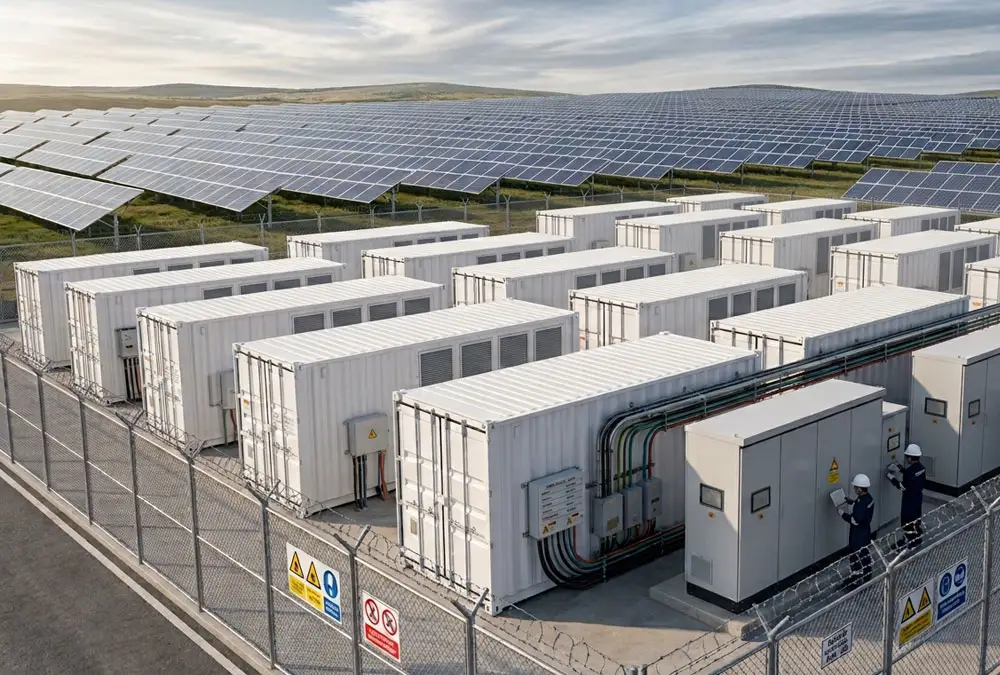
Choosing the right structural design significantly impacts your long-term operational budget. This breakdown compares pre-engineered containers against old-school brick-and-mortar structures:
| Comparison Metric | Containerized BESS | Traditional Building | User & Procurement Benefit |
|---|---|---|---|
| Construction Time | 2 – 4 Weeks on site | 6 – 9 Months minimum | Saves months of field labor, letting you generate revenue much sooner. |
| Upfront Civil Costs | Low (Simple concrete pad) | High (Deep foundation work) | Reduces site preparation expenses, keeping your initial budget lean. |
| Scalability Options | Excellent (Modular stacking) | Poor (Fixed wall limits) | Allows you to expand your system size easily as grid demands change. |
| Factory Integration | 100% Pre-tested | Field-assembled wiring | Eliminates unexpected wiring errors and connection issues on site. |
Buyer’s Reality Check: The Thermal Management Trap
Many procurement teams focus entirely on finding the lowest equipment price per kilowatt-hour.
They completely overlook the long-term cost of running inefficient HVAC air cooling systems.
Cheap air-cooled setups often create dangerous internal hot spots, which shortens cell life.
Opting for advanced liquid cooling protects your cells and lowers your ongoing auxiliary power bills.
Always calculate your total operating costs over fifteen years before signing a hardware contract.
How to Choose the Right Containerized BESS for Your Solar Farm
Selecting the right equipment requires matching your specific location constraints with your financial goals. Avoid generic layouts that don’t fit your actual daily load profiles.
Selecting Battery Capacity and Inverter Power
You must carefully balance your total energy storage capacity (kWh) with your inverter power rating (kW). If you need to shave quick power spikes, prioritize high-power inverters with responsive C-rates. For extended evening energy delivery, focus on adding dense battery cell blocks with longer discharge runtimes.
Liquid Cooling vs Air Cooling
Traditional air conditioning setups work fine for small, low-voltage commercial backup applications. However, large utility-scale installations generate significant heat during heavy daily cycles. Liquid-cooling systems pump specialized cooling fluid directly through internal module plates. This advanced approach maintains uniform cell temperatures, preventing premature capacity loss over time.
AC Coupling vs DC Coupling
DC-coupled layouts connect your battery cells directly to the solar arrays before the main inverter stage. This approach minimizes energy conversion losses, making it ideal for brand-new project developments. AC-coupled configurations connect the storage system directly to the main AC busbar. This independent setup is perfect for retrofitting existing operational solar farms with minimal wiring changes.
C&I Product Options: AnengJi 261kWh / 418kWh Cabinets
If your project falls between small commercial needs and large utility fields, these intermediate solutions are ideal. Our 261kWh and 418kWh liquid-cooled units offer excellent modularity for targeted industrial energy storage projects.
Future Trends in Containerized Battery Energy Storage
The energy sector is evolving rapidly as we look toward the next decade of grid management. The integration of advanced artificial intelligence software into modern EMS platforms is changing how assets operate. These smart systems analyze historical weather data and market pricing trends to optimize dispatch schedules automatically. We are also seeing the expansion of virtual power plants that link multiple distributed container units together. This allows smaller developers to combine their capacity and bid into lucrative regional grid stabilization markets.
Frequently Asked Questions About Containerized BESS for Solar Farms
Why do solar farms need battery storage?
Batteries store excess power during peak generation times to prevent energy waste from curtailment. They also allow plants to deliver clean electricity during high-priced evening hours when the sun isn’t shining.
How long does a containerized BESS last?
High-grade configurations built with premium LFP cells are engineered to operate reliably for fifteen years. Maintaining stable internal temperatures through proper cooling is essential to hitting this service life.
How much battery storage does a solar farm need?
The ideal capacity depends entirely on your specific grid connection rules and financial strategy. Most modern projects install storage capacity equal to twenty to fifty percent of the total solar array rating.
Can containerized BESS be expanded later?
Yes. The modular design allows engineers to add more container blocks in parallel as your project needs grow, provided your initial switchgear layout was planned to handle the extra load.
Is liquid cooling better for utility-scale BESS?
Yes. Liquid cooling maintains uniform internal temperatures across dense cell clusters far better than old air systems. This precise thermal control prevents hot spots and extends your total cell service life.
How does battery storage improve solar farm ROI?
It eliminates expensive curtailment losses, opens up new revenue options like grid frequency response, and lets you sell power during peak tariff windows.
Why Choose AnengJI for Containerized BESS Projects?
AnengJI delivers premium, expert-led hardware solutions tailored for demanding utility-scale developments worldwide. Our comprehensive container line combines dense cell chemistry with smart, automated energy management software. We manage your entire project lifecycle, providing custom site layout engineering, grid simulation modeling, and complete on-site commissioning support. Our pre-tested modular layouts ensure full compliance with strict international safety codes. This comprehensive approach helps you minimize field installation timelines and maximize your long-term project returns.
Conclusion: Containerized BESS Is Reshaping the Future of Solar Farms
Successful renewable project development requires moving beyond simple power generation. Deploying a well-engineered Containerized BESS for Solar Farms turns a variable energy source into a highly valuable, dispatchable asset. Balancing your capacity limits, choosing efficient cooling systems, and planning for future expansion ensures excellent project returns. Partnering with an experienced system integration provider helps secure reliable field performance and maximum financial returns over the life of your asset.
Related Posts
 https://anengjibattery.com/wp-content/uploads/2026/09/AnengJIBattery-Best-LiFePO4-Battery-How-to-Choose-the-Right-One.webp
675
1000
Battery Expert Team
https://anengjibattery.com/wp-content/uploads/2025/06/logo2-300x138.png
Battery Expert Team2026-09-17 08:52:142026-09-17 08:52:31How to Choose the Best LiFePO4 Battery
https://anengjibattery.com/wp-content/uploads/2026/09/AnengJIBattery-Best-LiFePO4-Battery-How-to-Choose-the-Right-One.webp
675
1000
Battery Expert Team
https://anengjibattery.com/wp-content/uploads/2025/06/logo2-300x138.png
Battery Expert Team2026-09-17 08:52:142026-09-17 08:52:31How to Choose the Best LiFePO4 Battery https://anengjibattery.com/wp-content/uploads/2026/09/anengjiBattery-lifepo4-battery-cell-packaging-wholesale.webp
675
1000
Battery Expert Team
https://anengjibattery.com/wp-content/uploads/2025/06/logo2-300x138.png
Battery Expert Team2026-09-16 09:52:342026-09-16 09:52:57LiFePO4 Battery Wholesale Guide: Best Suppliers in Spain
https://anengjibattery.com/wp-content/uploads/2026/09/anengjiBattery-lifepo4-battery-cell-packaging-wholesale.webp
675
1000
Battery Expert Team
https://anengjibattery.com/wp-content/uploads/2025/06/logo2-300x138.png
Battery Expert Team2026-09-16 09:52:342026-09-16 09:52:57LiFePO4 Battery Wholesale Guide: Best Suppliers in Spain https://anengjibattery.com/wp-content/uploads/2026/09/anengjibattery-Top-Lithium-Ion-Battery-Producers-for-Spain-Market-Growth.webp
675
1000
Battery Expert Team
https://anengjibattery.com/wp-content/uploads/2025/06/logo2-300x138.png
Battery Expert Team2026-09-16 01:13:392026-09-16 01:14:05Top Lithium Ion Battery Producers for Spain’s Market Growth
https://anengjibattery.com/wp-content/uploads/2026/09/anengjibattery-Top-Lithium-Ion-Battery-Producers-for-Spain-Market-Growth.webp
675
1000
Battery Expert Team
https://anengjibattery.com/wp-content/uploads/2025/06/logo2-300x138.png
Battery Expert Team2026-09-16 01:13:392026-09-16 01:14:05Top Lithium Ion Battery Producers for Spain’s Market Growth https://anengjibattery.com/wp-content/uploads/2026/09/Bulk-Lithium-Ion-Battery-Cells-Procurement-Guide-B2B-Sourcing.webp
675
1000
Battery Expert Team
https://anengjibattery.com/wp-content/uploads/2025/06/logo2-300x138.png
Battery Expert Team2026-09-14 09:47:322026-09-14 09:47:48Bulk Lithium-Ion Battery Cells Procurement Guide | B2B Sourcing
https://anengjibattery.com/wp-content/uploads/2026/09/Bulk-Lithium-Ion-Battery-Cells-Procurement-Guide-B2B-Sourcing.webp
675
1000
Battery Expert Team
https://anengjibattery.com/wp-content/uploads/2025/06/logo2-300x138.png
Battery Expert Team2026-09-14 09:47:322026-09-14 09:47:48Bulk Lithium-Ion Battery Cells Procurement Guide | B2B Sourcing

Leave a Reply
Want to join the discussion?Feel free to contribute!