
Lithium-Ion Forklift Battery vs Lead-Acid: Can You Convert?
October 16, 2026 / Battery Expert Team / Battery Basics
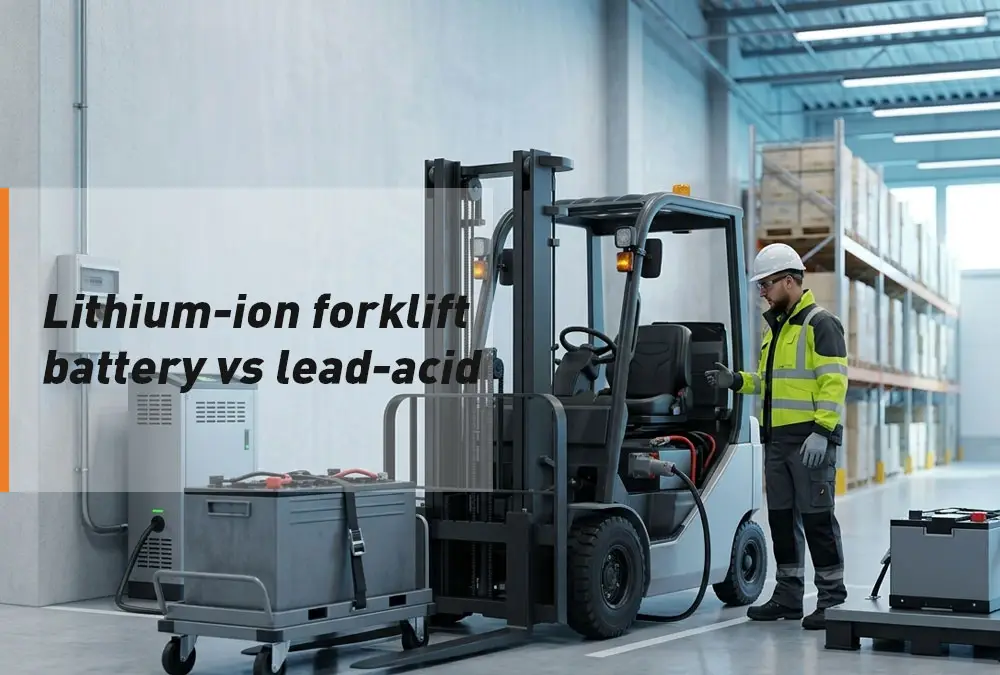
Introduction
Yes, many lead-acid forklifts can be converted to lithium-ion—but it is not a battery-only replacement. The truck, battery, charger, permitted battery weight, connector, BMS, state-of-charge display and duty cycle must work as one system. A conversion is complete only after that system passes documented tests under realistic loads.
That distinction matters when comparing a lithium-ion forklift battery vs lead-acid battery. A pack may match the advertised voltage and fit the tray, yet still stop during a loaded lift, show the wrong remaining charge, reject regenerative current or make the truck too light for its approved configuration.
Data note: the product examples in this guide use specifications supplied by the user. Calculated energy values are nominal engineering calculations, not measured runtime or compatibility guarantees. Model-specific documents and human technical review are required before publication and supply.
Why a Forklift Can Power On and Still Be a Failed Lithium Conversion
Imagine that a replacement pack has the expected nominal voltage, the connector mates and the truck moves across the workshop. Procurement sees a successful installation. The real failure does not appear until the operator lifts a heavy load, drives up a ramp or works near low state of charge. The BMS opens its contactor, the truck stops, and the dashboard still claims that energy remains.
The symptom is downtime, but several causes are possible: the battery may not support the required peak current; the controller and BMS may have conflicting voltage limits; the original battery discharge indicator may not understand the lithium voltage curve; or a communication/interlock signal may be missing. Replacing the battery again without collecting voltage, current, SOC and fault-log evidence only repeats the uncertainty.
The solution is to treat conversion as an interface-control project. Before ordering, define what must match between the truck, battery, charger and operator. During commissioning, test those interfaces under the same conditions that expose the problem: loaded lift, simultaneous travel and lift, ramp use, regenerative braking, low SOC and recharge.
Should This Forklift Be Converted—or Should You Keep Lead-Acid?
Do not begin with a battery catalogue. Begin with the truck’s remaining service life, its mechanical condition and the operational problem you are trying to solve. A busy multi-shift truck with measurable charging bottlenecks presents a different business case from an old truck that operates occasionally and has no current charger.
| What the buyer sees | What it could mean | Evidence to collect | Decision |
|---|---|---|---|
| Battery changes, watering and charging disrupt an otherwise healthy truck. | The vehicle may be a strong conversion candidate. | Duty-cycle energy, charging windows, maintenance history and truck condition. | Proceed to a compatibility study. |
| A low-use older truck needs a replacement battery, and a cheap lithium pack is available. | Battery price may hide charger, integration, ballast, commissioning and support costs. | Remaining vehicle life, repair needs, complete installed cost and service availability. | Compare conversion with a correct lead-acid replacement or vehicle replacement. |
| The truck model, controller limits or permitted battery mass cannot be confirmed. | The project lacks the information needed to approve safe operation. | Truck data plate, manual, OEM/integrator response and compartment information. | Do not order until the gap is resolved. |
Lithium Ion vs Lead Acid Forklift Batteries: What Must Change in the Truck System?
A generic chemistry comparison usually discusses maintenance, charging speed and cost. A conversion buyer needs a more practical answer: what does each difference force us to redesign, replace or test?
- Voltage behavior: the controller and the lithium BMS must agree on maximum charge voltage, minimum operating voltage and low-SOC behavior.
- Current delivery: Ah does not show whether the pack, BMS, contactor, fuse, connector and cables can support hydraulic-pump starts or ramp work.
- Charging: a lead-acid charger may use finish, equalization or maintenance behavior that has not been approved for the lithium pack.
- Weight: a lighter battery can change the vehicle configuration even when it fits the compartment.
- State of charge: the existing battery discharge indicator may display a convincing but incorrect value.
- Fault handling: a lithium BMS adds event logs, contactors, alarms and sometimes communications that need a service route.
This is why the best lithium-ion forklift battery replacement for lead-acid is not a universal model. It is the configuration that fits the verified electrical, mechanical, charging and support boundaries of a particular truck and site.
For the broader decision between the two chemistries, read Lithium-Ion vs Lead-Acid Forklift Batteries: Which Is Better? This conversion guide continues with the vehicle and charging interfaces that must be resolved after the chemistry decision.
What the Supplied Forklift Battery Data Reveals—and What Is Still Missing
The following examples use product data supplied for this project. They make the conversion problem more concrete, but they are not a statement that any configuration fits every truck in the named vehicle category.
| Reference application | Voltage / capacity | Calculated nominal energy | Continuous charge / discharge at 25°C | Dimensions (L×W×H) | Listed mass | Listed connector |
|---|---|---|---|---|---|---|
| 2-ton counterbalanced truck (E20 label) | 51.2V, 277Ah or 412Ah | 14.2kWh or 21.1kWh | 200A / 200A | 1030×500×507mm | 210kg | REMA160 discharge; REMA320 charge |
| Linde-specific configuration (KGCB label) | 76.8V, 412Ah | 31.6kWh | 200A / 200A | 980×688×700mm | 210kg | Not shown in supplied sheet |
| Reach truck | 51.2V, 277Ah or 412Ah | 14.2kWh or 21.1kWh | 200A / 200A | 1216×355×744mm | 1200kg | REMA160 discharge; REMA320 charge |
| Fuel-to-electric conversion configuration | 76.8V, 280Ah | 21.5kWh | 200A / 200A | 730×600×340mm | 210kg | Not shown in supplied sheet |
All four supplied sheets list a discharge temperature of −20°C to 60°C and a charge temperature of 0°C to 55°C. These are user-provided operating ranges, not evidence of heating performance, cold-storage runtime or approval for every environment. The actual BMS temperature limits, sensor placement and any low-temperature charging controls still need model-specific confirmation.
The data already answers four useful questions
- Voltage classes are not interchangeable. A 51.2V configuration and a 76.8V configuration require different truck and charger compatibility work.
- Ah alone hides a large energy difference. The supplied examples range from approximately 14.2kWh to 31.6kWh of nominal energy.
- The same 200A figure does not mean the same power. At nominal voltage, 200A corresponds to approximately 10.2kW for 51.2V and 15.4kW for 76.8V. These are calculated DC values, not motor-output ratings.
- Mass is application-critical. A listed 210kg pack and a listed 1200kg pack cannot be treated as equivalent simply because both may use 51.2V cells.
The data does not yet answer the questions that often cause field failures
The sheets do not show peak discharge current, peak duration, regenerative-current limit, full operating-voltage window, BMS protocol, contactor/pre-charge logic, IP rating, vibration validation, actual usable-energy policy or model-specific approval. Those are not optional details. If the truck demands more than 200A during a loaded lift, the supplier must show how long the battery can support that event—or the buyer cannot predict whether the truck will trip.
Match Three Things Separately: Voltage, Energy and Current
A frequent purchasing mistake is to treat these as one decision. They answer different questions:
- Voltage window: can the battery and controller operate together from full charge to low SOC?
- Energy in kWh: can the truck complete the required work between dependable charging opportunities?
- Current in A: can the pack support the most demanding event without protection trips or unacceptable heating?
Do not use a fixed lead-acid-to-lithium Ah ratio
A lower-Ah lithium battery can sometimes replace a higher-Ah lead-acid battery, but “use 70% of the old Ah” is not a reliable rule. If the truck misses its last loading window, the buyer does not care that the theoretical conversion ratio looked reasonable.
Use measured work instead:
Required usable energy = measured energy between reliable charges × documented design reserve
Required nominal energy = required usable energy ÷ validated usable-energy fraction
Required Ah = required nominal energy (kWh) × 1,000 ÷ nominal voltage
Then test the result against peak current, permitted battery mass, low-temperature conditions, ageing reserve and the possibility that a planned charging break is missed. This prevents an undersized pack from looking acceptable on paper.
For the complete capacity method, use the calculations and duty-cycle questions in How Many Ah Does an Electric Forklift Battery Need? before comparing 277Ah, 280Ah or 412Ah configurations.
A Battery That Fits the Tray Can Still Be Too Light for the Forklift
The supplied data makes this risk visible. One 51.2V reference configuration lists 210kg for a counterbalanced-truck label, while another 51.2V reach-truck configuration lists 1200kg. That difference cannot be treated as packaging alone. The actual truck’s data plate and manufacturer information must establish the permitted battery mass, dimensions, centre-of-gravity conditions and securing method.
The buyer’s symptom is often deceptively positive: “the lithium battery is easier to handle and fits with room to spare.” The consequence may be an unapproved vehicle configuration or altered stability. The evidence is not a photograph of the battery in the tray; it is the truck’s permitted battery-weight range, compartment drawing and an approved restraint/ballast solution.
For US workplaces, the Occupational Safety and Health Administration’s powered industrial truck standard states that modifications affecting capacity or safe operation require prior written manufacturer approval and that additional counterweighting requires manufacturer approval. These are US requirements; European and other projects need the applicable local approval path.
Decision rule: if approved mass, centre of gravity and restraint cannot be demonstrated for the exact truck, stop the conversion—even if the voltage, Ah and enclosure size appear correct.
Solve the Charger, SOC Display and Service Problem Before the Battery Arrives
“The connector fits” is not charger approval
The supplied 51.2V sheets list REMA160 for discharge and REMA320 for charging, but connector type is only one part of the interface. A lead-acid charger may have an unsuitable voltage profile, finish/equalization stage or termination method. If it is reused without written model-level validation, the buyer risks BMS trips, incomplete charging or an unusable charger after the battery has already been delivered.
Specify the charger output, BMS communication, temperature limits, connector coding and fault response together. On the facility side, verify input voltage, phase, frequency, protection and simultaneous fleet demand. A charger designed for the battery can still be wrong for the destination warehouse’s power supply.
A believable SOC number can still be wrong
The original lead-acid battery discharge indicator may interpret voltage in a way that does not suit the lithium pack. The operator sees 30% remaining, schedules one more task and then receives a BMS warning or shutdown. The remedy is not to tell operators to “watch the gauge more closely.” Compare the truck display with BMS SOC across a representative discharge, including low SOC, and configure a validated mapping or separate display when needed.
A product without accessible diagnostics can create long downtime
Before purchase, ask who can read logs, interpret fault codes and change approved settings. Define firmware responsibility, remote support, local spares and the handoff between the truck service company, battery supplier and charger supplier. Otherwise a minor interlock fault can move between three support teams while the forklift remains idle.
A Safer Lead-Acid-to-Lithium Forklift Conversion Process
The following process is designed for procurement and project control. Installation and electrical testing must be performed by qualified personnel; it is not a DIY instruction to work on energized equipment or bypass protection.
1. Build the conversion data pack
Collect the truck and battery data plates, controller information, compartment dimensions, permitted battery mass, connector/polarity, actual work pattern, temperature, current profile, charger and site-power data. Photographing the labels is useful, but measured work and verified manuals are what allow a supplier to close the engineering gaps.
2. Create one interface-control sheet
Place every truck–battery–charger interface in one document: voltage limits, continuous/peak/regenerative current, physical envelope, mass, restraint, connector, cable direction, pre-charge, CAN or hardwired signals, BDI/SOC, charging profile, environmental limits and approval owner. Mark each item as confirmed, unresolved or no-go.
3. Approve the complete configuration before shipment
Approve the battery, charger, connection plan, mass solution, communications and commissioning criteria as one package. Request model-specific drawings and documents. The official scope of IEC 62619:2022 includes industrial secondary lithium batteries used in motive applications such as forklift trucks, but a standard’s scope does not prove that a supplied model is certified or that the converted vehicle is approved.
4. Prepare the truck and charging area
Qualified personnel should isolate the truck, remove the old battery with suitable handling equipment and inspect the compartment for corrosion, structural damage, worn restraints and cable-abrasion points. The UK Health and Safety Executive guidance on using electric storage batteries safely emphasizes trained staff, suitable charging areas, safe handling and insulated tools. Apply the actual destination’s legal requirements as well.
5. Commission under progressively harder conditions
Begin with polarity, restraint, pre-charge, contactors, communications, alarms and interlocks. Continue with unloaded travel and lift, then controlled load, ramp and regenerative tests. Finish with low-SOC behavior, opportunity charging and a representative operating period. Do not jump from “it powers on” to normal production.
Use Acceptance Criteria That Both the Buyer and Supplier Can See
Acceptance criteria prevent a familiar commercial dispute: the supplier says the battery operates, while the buyer says the truck cannot complete the shift. Agree on the test condition, measurement and pass rule before shipment.
| Test | Buyer concern | Evidence to record | Pass decision |
|---|---|---|---|
| Loaded lift and simultaneous travel/lift | Will the BMS trip when the truck does real work? | Current, voltage, duration, temperature and event log. | No unexplained trip; values remain within approved component limits. |
| Low-SOC operation | Will the operator receive useful warning before shutdown? | Truck display, BMS SOC, alarms, derating and stop behavior. | Display and warning strategy match the agreed operating process. |
| Representative work window | Can the truck complete planned work without disrupting loading? | Energy consumed, reserve, missed-break scenario and operator observations. | Agreed reserve remains after the defined operating window. |
| Charge and restart | Will the charger, BMS and truck recover correctly every time? | Charger log, BMS log, SOC change, temperature and fault recovery. | Charging terminates and restart occurs without unresolved alarms. |
What Changes Between Europe, the United States and Other Markets?
Europe: identify the destination country and the organization responsible for the modified machine and documentation. Confirm the truck manufacturer’s conditions, workplace/electrical responsibilities and applicable battery obligations. The EU Battery Regulation is an official framework for batteries and waste batteries, but the precise duty depends on battery category, date and economic-operator role. It does not by itself approve a forklift conversion.
United States: address OSHA requirements relevant to modifications affecting safe operation, data plates, counterweight and charging practices. Also check applicable state, local fire and electrical requirements for the actual facility.
Central Asia, Africa and other destinations: verify each country instead of applying one regional assumption. Add site realities to the RFQ: input voltage and frequency, generator or weak-grid operation, heat, cold, dust, long transport routes, local spares, diagnostic connectivity and service training.
For transport documentation, the US Pipeline and Hazardous Materials Safety Administration’s lithium battery guidance explains the availability requirement for UN 38.3 test summaries for battery designs offered for transport. A UN 38.3 summary supports transport compliance; it is not proof of truck compatibility or complete-system approval.
What to Send a Supplier for an Accurate Conversion Proposal
A useful quotation should begin with evidence. Send:
- Truck make, model, serial number and controller
- Existing battery data plate and measured condition
- Compartment dimensions and permitted battery mass
- Connector, cable direction and polarity
- Representative energy-use record
- Continuous, peak and regenerative current data
- Temperature and environmental conditions
- CAN, hardwired signals and BDI requirements
- Existing charger and site input power
- Required approval and destination documents
- Acceptance tests and pass criteria
- Warranty, diagnostics, service and spare-parts expectations
Frequently Asked Questions
Can any lead-acid forklift be converted to lithium-ion?
No. The exact truck must pass electrical, current, energy, mass/stability, mechanical, charging, communications and approval checks. Missing truck data or an unresolved battery-weight requirement can stop the project.
Can I use the existing lead-acid charger?
Only when the exact charger and battery models, settings, termination logic, communication and connector are documented as compatible. A matching connector does not prove charging compatibility.
Can a lower-Ah lithium pack replace a higher-Ah lead-acid battery?
Sometimes, but not through a fixed percentage. Calculate from measured energy use and charging windows, then validate reserve, peak current, temperature and permitted battery mass.
Is 200A continuous discharge enough for a forklift?
The supplied examples list 200A at 25°C, but that figure alone cannot answer the question. Compare it with measured continuous demand, peak current, peak duration and regenerative current for the exact truck and work cycle.
Why might the original SOC display be inaccurate?
A lead-acid BDI may estimate charge from a voltage pattern that differs from the lithium system. Test the dashboard reading against BMS SOC through the operating window, especially near low SOC.
What documents should be requested from the supplier?
Request model-specific limits, drawings, interfaces, configuration, installation/operation instructions, applicable test and compliance evidence, transport documents, commissioning support, warranty terms, diagnostic access and the service route. Verify that each document covers the supplied model.
The Right Conversion Solves the Original Problem Instead of Moving It
A lead-acid-to-lithium conversion should reduce operational friction, not exchange watering and battery changes for BMS trips, inaccurate SOC, an incompatible charger or an unresolved stability issue. The purchasing sequence matters: establish whether the truck is worth converting, collect real duty-cycle and vehicle data, choose a complete configuration, and define acceptance tests before shipment.
The supplied 51.2V and 76.8V product examples provide a useful starting point for energy, current, enclosure and mass discussions. They become a reliable proposal only after the missing peak-current, voltage-window, BMS, truck-approval and charging information is connected to a specific vehicle. That is the difference between buying a battery and engineering a conversion that the warehouse can depend on.
Related Posts
 https://anengjibattery.com/wp-content/uploads/2026/10/anengjiBattery-Forklift-Battery-Conversion-Assessment.webp
675
1000
Battery Expert Team
https://anengjibattery.com/wp-content/uploads/2025/06/logo2-300x138.png
Battery Expert Team2026-10-16 09:25:382026-10-16 09:26:06Lithium-Ion Forklift Battery vs Lead-Acid: Can You Convert?
https://anengjibattery.com/wp-content/uploads/2026/10/anengjiBattery-Forklift-Battery-Conversion-Assessment.webp
675
1000
Battery Expert Team
https://anengjibattery.com/wp-content/uploads/2025/06/logo2-300x138.png
Battery Expert Team2026-10-16 09:25:382026-10-16 09:26:06Lithium-Ion Forklift Battery vs Lead-Acid: Can You Convert? https://anengjibattery.com/wp-content/uploads/2026/10/AnengjiBattery-Electric-Forklift-Battery-Capacity-Guide.webp
675
1000
Battery Expert Team
https://anengjibattery.com/wp-content/uploads/2025/06/logo2-300x138.png
Battery Expert Team2026-10-16 02:15:092026-10-16 02:15:26How Many Ah Does an Electric Forklift Battery Need? A Duty-Cycle Sizing Guide
https://anengjibattery.com/wp-content/uploads/2026/10/AnengjiBattery-Electric-Forklift-Battery-Capacity-Guide.webp
675
1000
Battery Expert Team
https://anengjibattery.com/wp-content/uploads/2025/06/logo2-300x138.png
Battery Expert Team2026-10-16 02:15:092026-10-16 02:15:26How Many Ah Does an Electric Forklift Battery Need? A Duty-Cycle Sizing Guide https://anengjibattery.com/wp-content/uploads/2026/10/anengjiBattery-The-Hidden-Cost-of-Forklift-Downtime.webp
675
1000
Battery Expert Team
https://anengjibattery.com/wp-content/uploads/2025/06/logo2-300x138.png
Battery Expert Team2026-10-14 09:55:572026-10-14 09:56:04How Much Does a Forklift Battery Cost? Four Numbers Buyers Should Compare
https://anengjibattery.com/wp-content/uploads/2026/10/anengjiBattery-The-Hidden-Cost-of-Forklift-Downtime.webp
675
1000
Battery Expert Team
https://anengjibattery.com/wp-content/uploads/2025/06/logo2-300x138.png
Battery Expert Team2026-10-14 09:55:572026-10-14 09:56:04How Much Does a Forklift Battery Cost? Four Numbers Buyers Should Compare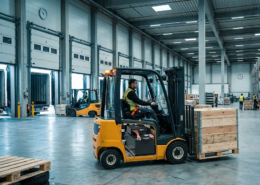 https://anengjibattery.com/wp-content/uploads/2026/10/AnengjiBattery-48V-Forklift-Battery-in-Warehouse-Operation.webp
675
1000
Battery Expert Team
https://anengjibattery.com/wp-content/uploads/2025/06/logo2-300x138.png
Battery Expert Team2026-10-13 08:16:552026-10-14 09:57:31How Long Does a 48V Forklift Battery Last?
https://anengjibattery.com/wp-content/uploads/2026/10/AnengjiBattery-48V-Forklift-Battery-in-Warehouse-Operation.webp
675
1000
Battery Expert Team
https://anengjibattery.com/wp-content/uploads/2025/06/logo2-300x138.png
Battery Expert Team2026-10-13 08:16:552026-10-14 09:57:31How Long Does a 48V Forklift Battery Last?


Leave a Reply
Want to join the discussion?Feel free to contribute!