
Low Speed Electric Vehicle Battery Selection Guide | 48V 60V 72V Battery Comparison
August 28, 2025 / Battery Expert Team / Battery Basics
Low Speed Electric Vehicle Battery Selection Guide: Voltage, Types & Real-World Applications
With the rise of short-distance urban travel, low speed electric vehicles are everywhere. From community shuttles and delivery trikes to sightseeing carts and light industrial vehicles, these EVs are valued for being affordable, flexible, and eco-friendly. But when it comes to choosing the right power source, many buyers run into the same questions: Should I go with lead acid or lithium? Do I need 48V, 60V, or 72V? How far will it really go on a single charge?
This EV battery selection guide breaks it down step by step. We’ll look at voltage, capacity, battery type, safety, and practical tips, so you can find the best battery for your electric tricycle, quadricycle, or fleet.
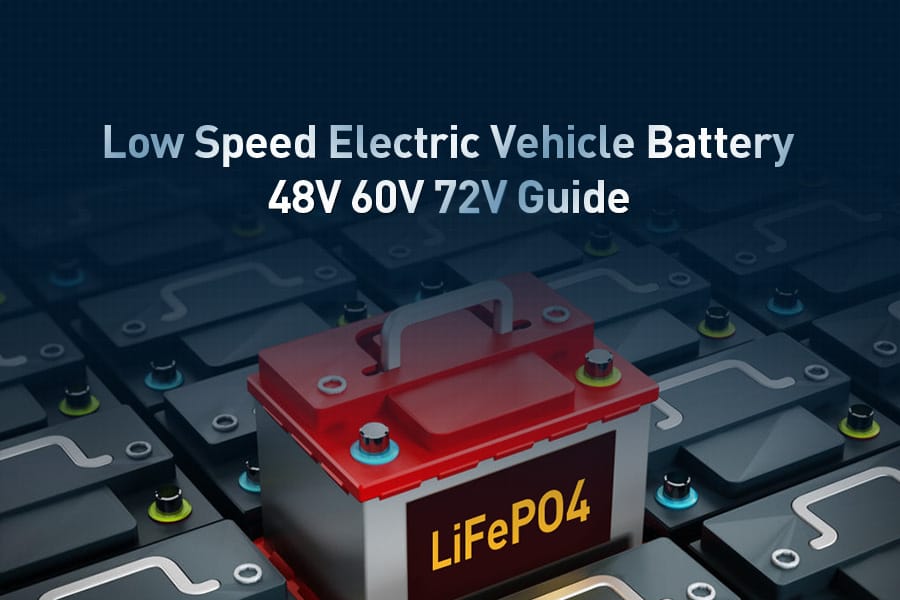
48V 60V 72V Low Speed EV Battery Voltage and Capacity
Voltage and amp-hour capacity directly shape how much power your EV can deliver and how far it can run. In low speed EVs, the most common platforms are 48V, 60V, and 72V. Each is designed for a different level of motor power and usage scenario. Matching them correctly is key to stable performance and safe operation.
1. Different Voltage Systems and Where They Fit
-
48V battery: Commonly used in small electric tricycles or elderly mobility vehicles. Motors range from 800W–1500W. Works well for light loads and short daily trips.
-
60V battery: Found in mid-sized quadricycles with 1500W–2500W motors. Suitable for family rides, daily commuting, and short-distance passenger use.
-
72V battery: The go-to for higher performance or long-range models. Motors reach 3000W or more. Handles hills, heavy loads, and faster runs. Often chosen for delivery vehicles, sightseeing shuttles, or industrial EVs.
2. Capacity vs Real-World Range
Capacity in amp-hours (Ah), combined with voltage, gives total energy in watt-hours (Wh). For example:
-
60V 100Ah = 6kWh
-
72V 100Ah = 7.2kWh
But range isn’t just about numbers on a spec sheet. It depends on the vehicle’s actual energy use per 100 km. A quadricycle that consumes 18kWh/100km would only get around 33 km with a 60V 100Ah pack, or 40 km with 72V 100Ah. Claims like “60V 100Ah runs 100 km” are marketing exaggerations, not physics.
3. Motor Power and Battery Match
The motor and battery must be balanced. A powerful motor with a small battery will cause overheating and shortened lifespan. A small motor with a big pack wastes potential. General rule:
-
1500–2500W motor → 60V battery
-
3000W+ motor → 72V battery
Example: a 3000W motor at 60V draws 50A, which stresses the pack. At 72V, the current is only approximately 42A, thereby achieving more stable operating performance.
Bottom line: 72V EVs generally deliver more power and longer range than 60V ones.
Battery Types Compared: Lead Acid, LiFePO4, Graphene, and NiMH
1. Lead Acid Battery: Cheap but Short-Lived
Lead-acid batteries are popular among users due to their low initial cost and ease of replacement. But it’s heavy (a 60V 100Ah unit weighs 120+ kg), low in energy density, and typically lasts only 300–500 cycles. Cold weather drains it quickly. Long-term, frequent replacements drive up cost. Best for budget buyers using under 30 km per day.
2. LiFePO4 Battery: Safe, Long-Lasting, and Now Mainstream
Lithium iron phosphate (LiFePO4) is now the preferred choice for mid-to-high-end low speed EVs. It lasts 2000+ cycles (5–8 years), weighs half of lead acid, and charges fast (full in 3–5 hours). It’s safer too—thermal runaway is rare even under puncture. For anyone driving 80+ km per day, LiFePO4 delivers the best long-term value.
3. Graphene Lead Acid Battery: An Upgraded Stopgap
So-called “graphene batteries” are mostly enhanced lead acid packs with graphene additives. Lifespan is better (500–800 cycles), but still far behind lithium. Costs 30–50% more than regular lead acid, but doesn’t deliver true lithium performance. Works for those who want a little more durability without switching to lithium.
4. Ternary Lithium & NiMH: Niche Applications
Ternary lithium packs offer higher energy density but carry greater safety risks, so they’re rarely used in low speed EVs. NiMH performs well in cold weather but is costly and less energy-dense. Mainly for hybrids or special industrial equipment.
For most buyers, LiFePO4 remains the best choice for a low speed electric vehicle battery.
EV Battery Safety Standards and BMS for Low Speed Vehicles
1. Cell-Level Safety
LiFePO4’s crystal structure is stable up to 600°C, compared to just 200°C for ternary lithium. Even under puncture or crushing, it resists fire and explosion. For example, a 72V 50Ah pack passed GB/T safety testing at 130°C without ignition.
2. BMS: The Brain of the Battery
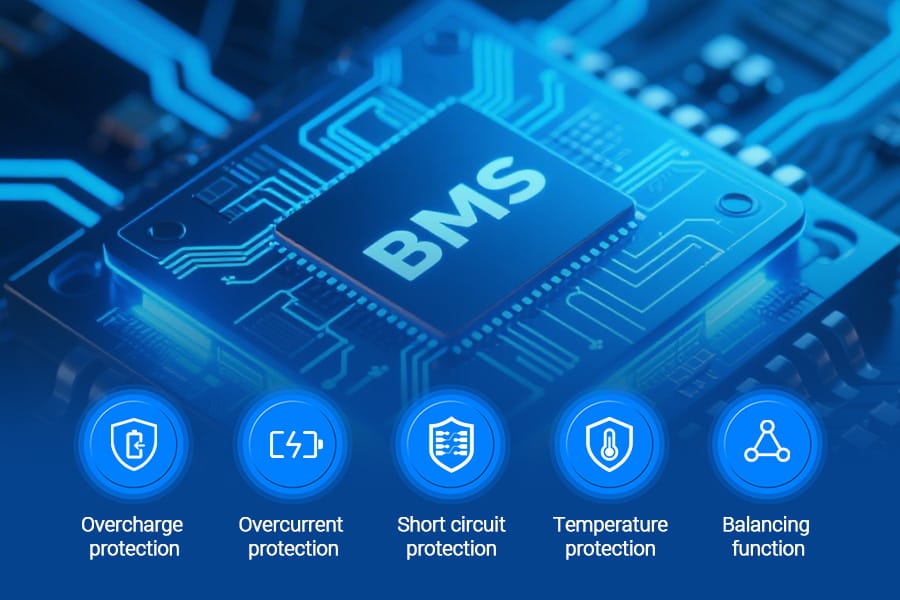
The Battery Management System (BMS) continuously monitors voltage, current, and temperature. It prevents overcharge, over-discharge, overcurrent, and short circuits. High-end versions support CAN bus or RS485 communication for real-time monitoring and integration with EV controllers.
3. Structural & Environmental Protection
A quality pack should use V-0 flame-retardant ABS+PC casing and IP67 waterproofing. Some models still deliver 85% of rated capacity at -20°C, ideal for northern winters. By contrast, unprotected lead acid packs risk swelling, leaking, and even fire under stress.
Best Battery for Electric Tricycle, Quadricycle and Shuttle
-
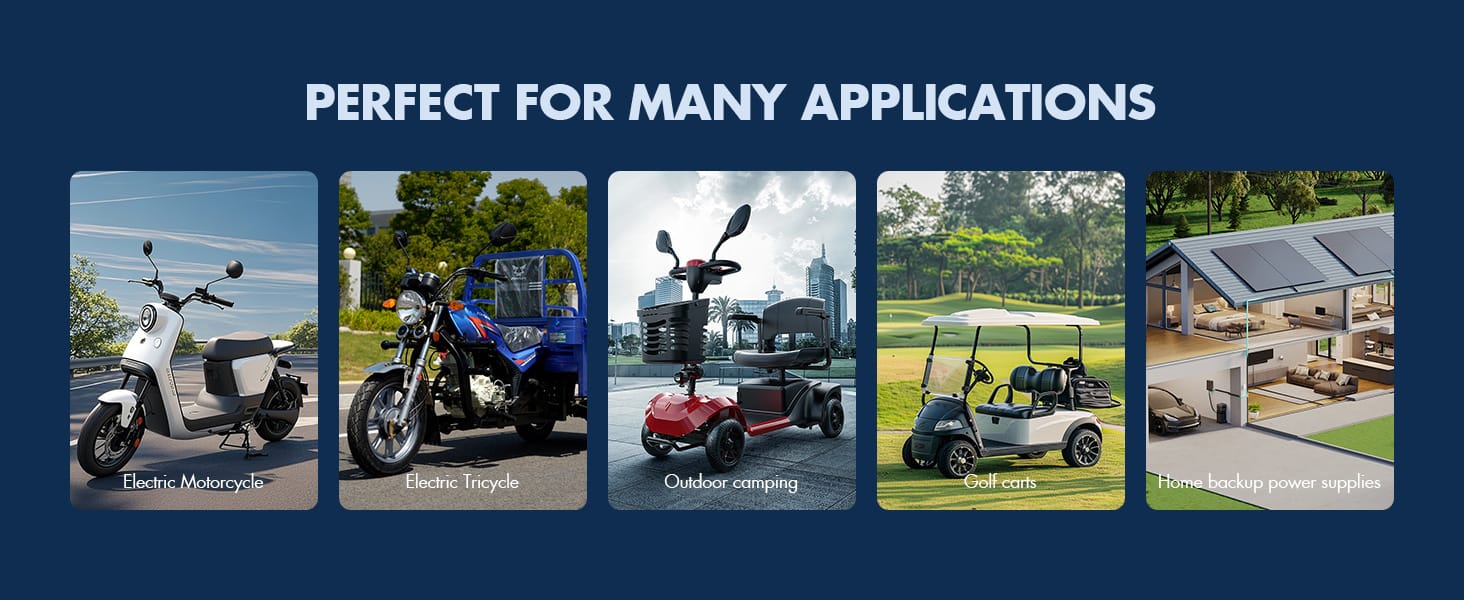
Daily commuting and mobility for individuals with limited mobility: 60V lead acid or LiFePO4 packs. Affordable, simple, and good for 20–30 km per day.
-
Courier and delivery use: 72V 100Ah or 120Ah LiFePO4 packs with 3000W+ motors. Long range, fewer charges, better efficiency.
-
Sightseeing & industrial EVs: 72V LiFePO4 packs with high discharge rates. Handles heavy loads and frequent stops. CAN/RS485 support enables fleet monitoring.
-
Cold climates: Lithium packs with low-temp heating or protection. Maintain 80%+ discharge capacity even at -10°C.
Buying Tips: How to Spot a Quality EV Battery
-
Check certifications: Look for UN38.3, CE, RoHS compliance.
-
Warranty: Reputable suppliers offer at least 3 years. Beware of only 1-year coverage.
-
Test reports: Ask for third-party cycle life, thermal, and puncture testing data.
-
Ignore hype: Phrases like “graphene black tech” or “200 km ultra-long range” are marketing, not reality.
Conclusion: Choose the Right Battery, Drive with Peace of Mind
The best battery isn’t just about price. It’s about matching your needs with performance, lifespan, and safety. Lead acid fits budget-conscious users. LiFePO4 is the smarter long-term choice for fleets and daily riders.
For businesses, OEM custom battery solutions can optimize pack size, voltage, and communication protocols for maximum efficiency.
Call to Action
Looking for a reliable low speed EV battery?
We offer high-performance, long-life LiFePO4 packs tailored for tricycles, quadricycles, delivery EVs, and sightseeing shuttles.
Choosing the right low speed electric vehicle battery ensures longer range, better safety, and lower operating costs for tricycles, shuttles, and other EVs.
📩 Contact us today to get:
-
Free battery selection advice
-
Datasheets & real test reports
-
Wholesale pricing & OEM solutions
-
Technical support for CAN bus, wiring, and CAD drawings
👉 Let our expert team help power your fleet with confidence.
Low Speed EV Battery FAQ | 48V 60V 72V Options
Q1: What is the best battery for an electric tricycle or quadricycle?
For short daily trips under 30 km, 60V lead acid works. For longer use and better lifespan, a 60V 100Ah or 72V 100Ah LiFePO4 battery pack is the best option.
Q2: How far can a 60V 100Ah battery run?
A: On a mid-sized quadricycle consuming about 18kWh per 100 km, a 60V 100Ah pack runs around 33 km. Actual range depends on load, temperature, operating conditions, and driving style.
Q3: What’s the difference between 48V, 60V, and 72V EV batteries?
48V suits smaller trikes, 60V works for family cars and light quadricycles, and 72V delivers more power for delivery vehicles and sightseeing shuttles.
Q4: Lithium vs lead acid battery lifespan—what’s better for EVs?
Lead acid lasts 300–500 cycles. LiFePO4 lithium batteries last 2000+ cycles, making them safer and more cost-effective in the long run.
Q5: What is the best EV battery solution for cold climates?
LiFePO4 batteries with built-in low temperature protection or heating. They retain 80%+ capacity even at -10°C, far outperforming lead acid in winter.
Related Article
72V Lithium Battery: The Ultimate 2025 User Guide
60V vs 72V Battery: What’s the Difference and Which One Should You Choose?
How to Charge Lithium Batteries for E-Bikes Properly | Expert Charging & Care Guide
Related Posts
 https://anengjibattery.com/wp-content/uploads/2026/09/AnengJIBattery-Best-LiFePO4-Battery-How-to-Choose-the-Right-One.webp
675
1000
Battery Expert Team
https://anengjibattery.com/wp-content/uploads/2025/06/logo2-300x138.png
Battery Expert Team2026-09-17 08:52:142026-09-18 09:19:29How to Choose the Best LiFePO4 Battery
https://anengjibattery.com/wp-content/uploads/2026/09/AnengJIBattery-Best-LiFePO4-Battery-How-to-Choose-the-Right-One.webp
675
1000
Battery Expert Team
https://anengjibattery.com/wp-content/uploads/2025/06/logo2-300x138.png
Battery Expert Team2026-09-17 08:52:142026-09-18 09:19:29How to Choose the Best LiFePO4 Battery https://anengjibattery.com/wp-content/uploads/2026/09/anengjiBattery-lifepo4-battery-cell-packaging-wholesale.webp
675
1000
Battery Expert Team
https://anengjibattery.com/wp-content/uploads/2025/06/logo2-300x138.png
Battery Expert Team2026-09-16 09:52:342026-09-18 09:20:12LiFePO4 Battery Wholesale Guide: Best Suppliers in Spain
https://anengjibattery.com/wp-content/uploads/2026/09/anengjiBattery-lifepo4-battery-cell-packaging-wholesale.webp
675
1000
Battery Expert Team
https://anengjibattery.com/wp-content/uploads/2025/06/logo2-300x138.png
Battery Expert Team2026-09-16 09:52:342026-09-18 09:20:12LiFePO4 Battery Wholesale Guide: Best Suppliers in Spain https://anengjibattery.com/wp-content/uploads/2026/09/anengjibattery-Top-Lithium-Ion-Battery-Producers-for-Spain-Market-Growth.webp
675
1000
Battery Expert Team
https://anengjibattery.com/wp-content/uploads/2025/06/logo2-300x138.png
Battery Expert Team2026-09-16 01:13:392026-09-16 01:14:05Top Lithium Ion Battery Producers for Spain’s Market Growth
https://anengjibattery.com/wp-content/uploads/2026/09/anengjibattery-Top-Lithium-Ion-Battery-Producers-for-Spain-Market-Growth.webp
675
1000
Battery Expert Team
https://anengjibattery.com/wp-content/uploads/2025/06/logo2-300x138.png
Battery Expert Team2026-09-16 01:13:392026-09-16 01:14:05Top Lithium Ion Battery Producers for Spain’s Market Growth https://anengjibattery.com/wp-content/uploads/2026/09/Bulk-Lithium-Ion-Battery-Cells-Procurement-Guide-B2B-Sourcing.webp
675
1000
Battery Expert Team
https://anengjibattery.com/wp-content/uploads/2025/06/logo2-300x138.png
Battery Expert Team2026-09-14 09:47:322026-09-14 09:47:48Bulk Lithium-Ion Battery Cells Procurement Guide | B2B Sourcing
https://anengjibattery.com/wp-content/uploads/2026/09/Bulk-Lithium-Ion-Battery-Cells-Procurement-Guide-B2B-Sourcing.webp
675
1000
Battery Expert Team
https://anengjibattery.com/wp-content/uploads/2025/06/logo2-300x138.png
Battery Expert Team2026-09-14 09:47:322026-09-14 09:47:48Bulk Lithium-Ion Battery Cells Procurement Guide | B2B Sourcing


Leave a Reply
Want to join the discussion?Feel free to contribute!